
AC Condensate Line Clogs & the Water Damage They Cause in Phoenix Homes
The stain came back. Maybe it started as a faint ring on the hallway ceiling in July, and you painted over it, and it looked fine until the next hot stretch. Or the carpet by the closet where the air handler sits went damp again, with no leak anywhere near it, no pipe overhead, nothing you can point to. It is a strange kind of frustrating, because nothing dramatic happened. No burst line, no flood. Just water that keeps showing up in the same spot without explaining itself, and a quiet worry that whatever is doing this has been doing it longer than you have known about it.
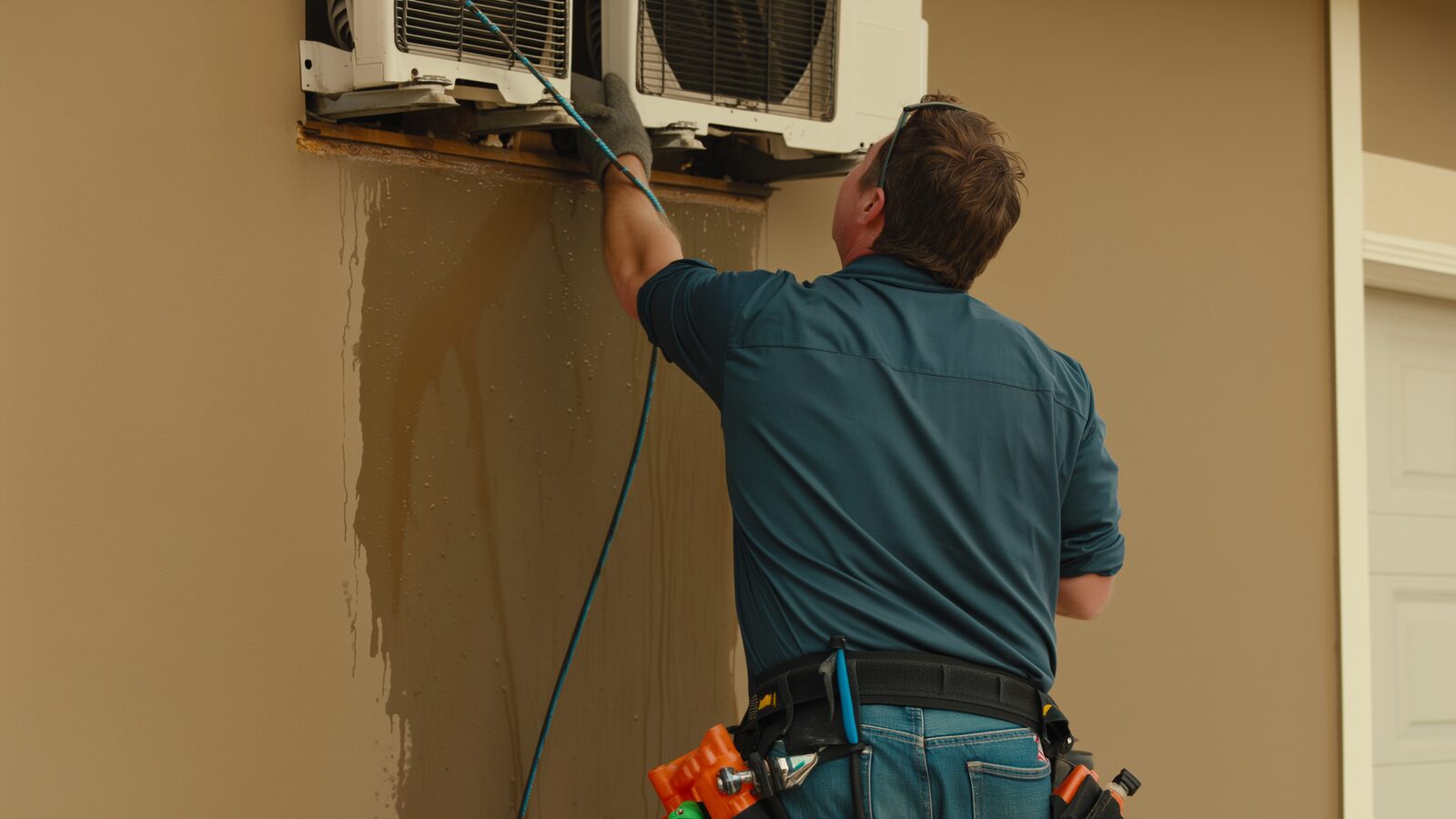
AC Condensate Line Clogs & the Water Damage They Cause in Phoenix Homes
Your air conditioner makes water all summer, and it has to go somewhere
An air conditioner does not just cool air, it pulls moisture out of it. Warm indoor air passes over the cold evaporator coil, the water vapor in that air condenses on the coil the same way it beads on a cold glass, and it drips into a shallow pan underneath. From that pan, a PVC drain line carries it outside, usually by gravity. In a Phoenix summer, a system running most of the day can move a meaningful amount of water through that line every single day for months. That is the part most homeowners never picture: there is a small, continuous stream of water traveling through a plastic pipe inside your walls or above your ceiling, all season, and the only thing keeping it out of your house is that the pipe stays clear. The line is also a dark, constantly wet, room-temperature tube, which is close to ideal conditions for biological growth. Algae and slime build up on the inside wall, dust and drywall grit pulled through the return air stick to it, and over a couple of seasons the passage narrows. Eventually it stops draining faster than the coil produces water. The pan overflows. Because the pan is often in an attic, a closet ceiling, or a platform above finished space, the water does not land where you would look for it.
Signs it is the condensate line and not something else
Condensate damage has a signature, and once you know it, it is hard to miss. It is seasonal: it appears in the hot months and stops in winter, because in winter the system is not producing condensate at all. That alone rules out most plumbing. It is also tied to runtime, so the wettest days are the hottest days, not the days it rained. Look for these specifics: a ceiling stain directly below or slightly downhill from an attic air handler; water pooling around the base of an indoor unit in a closet; a rusted or mineral-crusted rim on the drip pan; the secondary drain line (the pipe stubbed out over a window or eave) actively dripping, which is a warning device, not a normal condition; standing water sitting in the pan when the unit has been running; a musty smell near a vent or in a closet with no visible water at all. A float switch that shuts the system off is another tell, and one people misread badly. If your AC keeps cutting out on hot afternoons and restarting later, that is often the safety switch sensing a full pan, not a failing compressor. The unit is telling you the drain is blocked.
Clearing the line, and the limits of doing it yourself
Preventive maintenance on a condensate line is genuinely simple, and doing it before summer is far easier than dealing with it in August. Find where the drain line exits your house, typically a PVC stub near the foundation or through an exterior wall. With the system off at the thermostat and breaker, a wet/dry vacuum sealed against that outdoor end for a minute or two will often pull the clog out in one piece, along with a slug of dark water. At the indoor end there is usually a capped access tee near the air handler; some homeowners pour a cup of distilled vinegar down it a few times a season to slow the growth back down. Bleach is common advice but it can corrode metal pan components and degrade some fittings, so vinegar is the gentler habit. Keep the pan itself clean and dry, and replace air filters on schedule, because the debris that clogs the line largely arrives as dust that got past the filter. What clearing the line does not do is undo what already got wet. That is the part homeowners underestimate, because the visible stain is almost never the full extent. Water from an overflowing pan follows framing, runs along the top of drywall, soaks insulation flat, and wicks up the paper facing of gypsum board where nothing shows on the surface. Blown-in attic insulation that has been wet loses most of its value and stays damp long after the ceiling below looks dry. A slow overflow that has been happening for six weeks has been feeding moisture into materials the whole time, at Phoenix attic temperatures, which is exactly the condition mold needs.
Why the stain keeps coming back even after the clog is gone
This is the loop a lot of people get stuck in. The line gets cleared, the dripping stops, the ceiling is patched and repainted, and the following July the mark is back in the same place. Sometimes that is a new clog, because nothing changed about the conditions that created the first one. But often the drywall, insulation, and framing above were never dried out, only allowed to stop getting wetter, and the stain is old moisture and staining bleeding back through fresh paint. Drying a wet building assembly is not the same as waiting for it to feel dry. Materials release moisture at very different rates, and a cavity that is closed off from air movement can hold water for a long time while the surface reads dry to the touch. Proper drying means measuring moisture content in the actual materials, opening what needs to be opened, and moving air and removing humidity until the readings come back to normal, not just until the visible spot fades. If the affected area is small and caught early, that may be a limited job. If it has been running behind a ceiling all summer, it can mean removing saturated drywall and insulation and rebuilding that section. That is the bridge between drying and repair: water damage restoration handles the moisture and the affected materials, and reconstruction and rebuild handles putting the ceiling, texture, and paint back so the repair does not read as a patch. If you want someone to look at what you are seeing and tell you plainly which one of those you are dealing with, reach out.
Seasonal timing
Damage that appears in summer and stops in winter points at condensate, not plumbing. Track when it shows up.
Look above, not at
The stain is where water landed. The source is usually uphill: the pan, the line, or a joint that came apart.
Test the drywall, not the paint
A surface that feels dry can sit against insulation that is still saturated. Moisture readings settle the question.
Fix the cause first
Clearing the clog and adding a maintenance habit is what keeps the repair from being a yearly expense.
Questions people ask us
How do I know if my AC drain line is clogged or if I have a roof leak?
Timing is the clearest test. Condensate overflow tracks with hot weather and AC runtime, so it worsens on the hottest days and disappears in winter when the system is not producing condensate. A roof leak tracks with rain and monsoon storms and does nothing during a dry heat wave. If you can, note the date each time the stain grows and compare it to the weather that week. Also check whether the secondary drain line stubbed out over a window or eave is dripping, since that pipe only runs when the primary drain has failed.
Is a little water around the air handler actually a problem?
Usually yes, because it is rarely a one-time event. A condensate overflow repeats every day the system runs, so a small amount of water is a small amount arriving continuously for weeks. That is different from a single spill. Continuous wetting of drywall, insulation, and framing in a warm attic or closet is the condition mold growth needs, and the material damage often extends well past the wet spot you can see.
Why does my AC shut off by itself on hot afternoons?
One common reason is a float switch in the drip pan or drain line doing exactly its job. When the pan fills because the drain is blocked, the switch cuts power to the system so it stops producing condensate and stops the overflow. The water level drops slowly, the switch resets, and the unit runs again. If your system cycles off during the hottest part of the day and comes back later, have the condensate drain checked before assuming the problem is the compressor.
Can I just paint over the ceiling stain once the line is clear?
Only if the materials behind it are genuinely dry, and that is worth confirming rather than assuming. Paint over a still-damp assembly will bubble, and the staining will bleed back through. Wet blown-in insulation above the ceiling also stays damp long after the drywall surface feels dry, and it loses much of its insulating value once it has been compressed by water. Checking moisture content in the drywall and framing before closing anything up is what prevents doing the same repair again next summer.
The standard our team works to
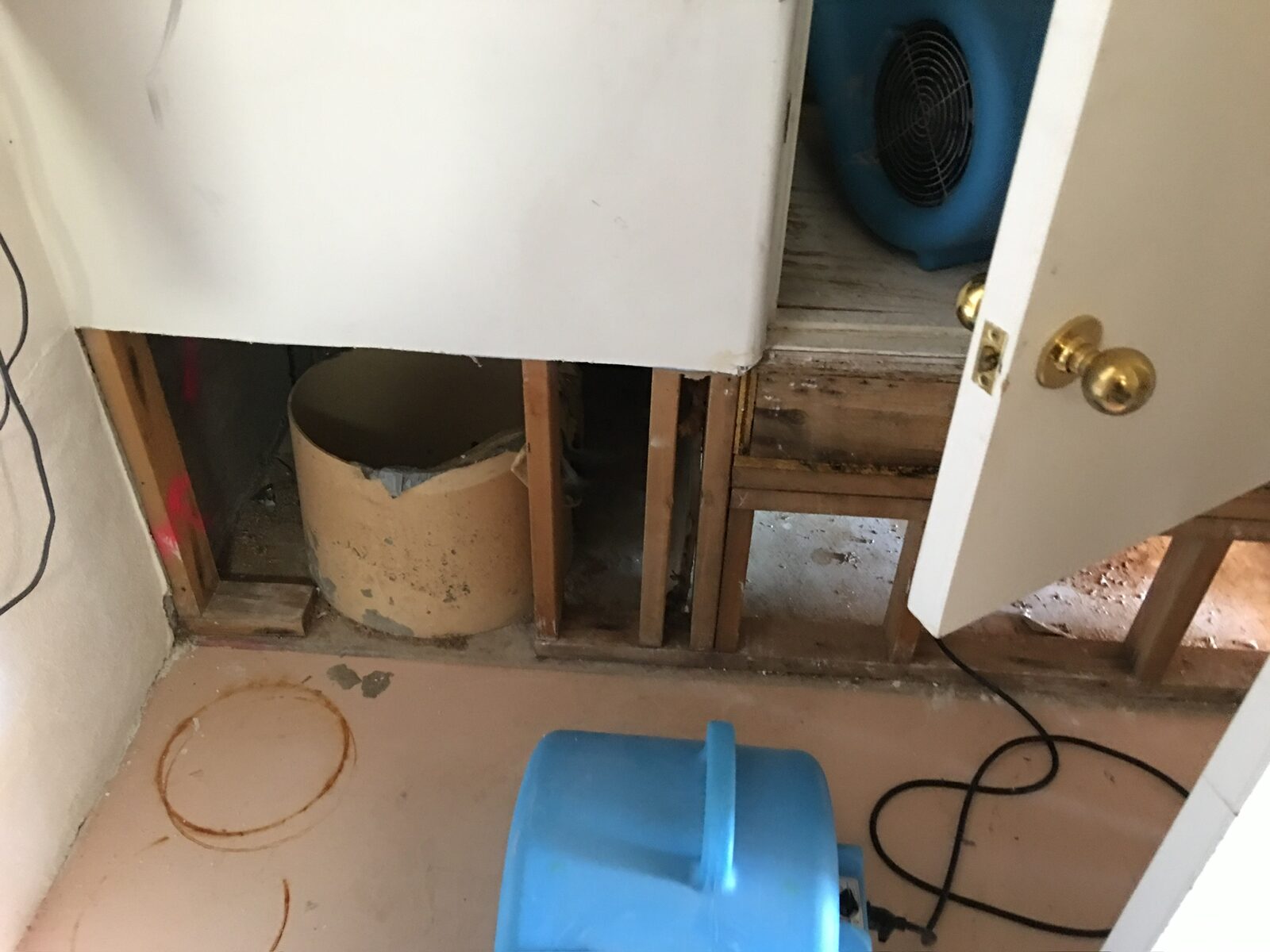
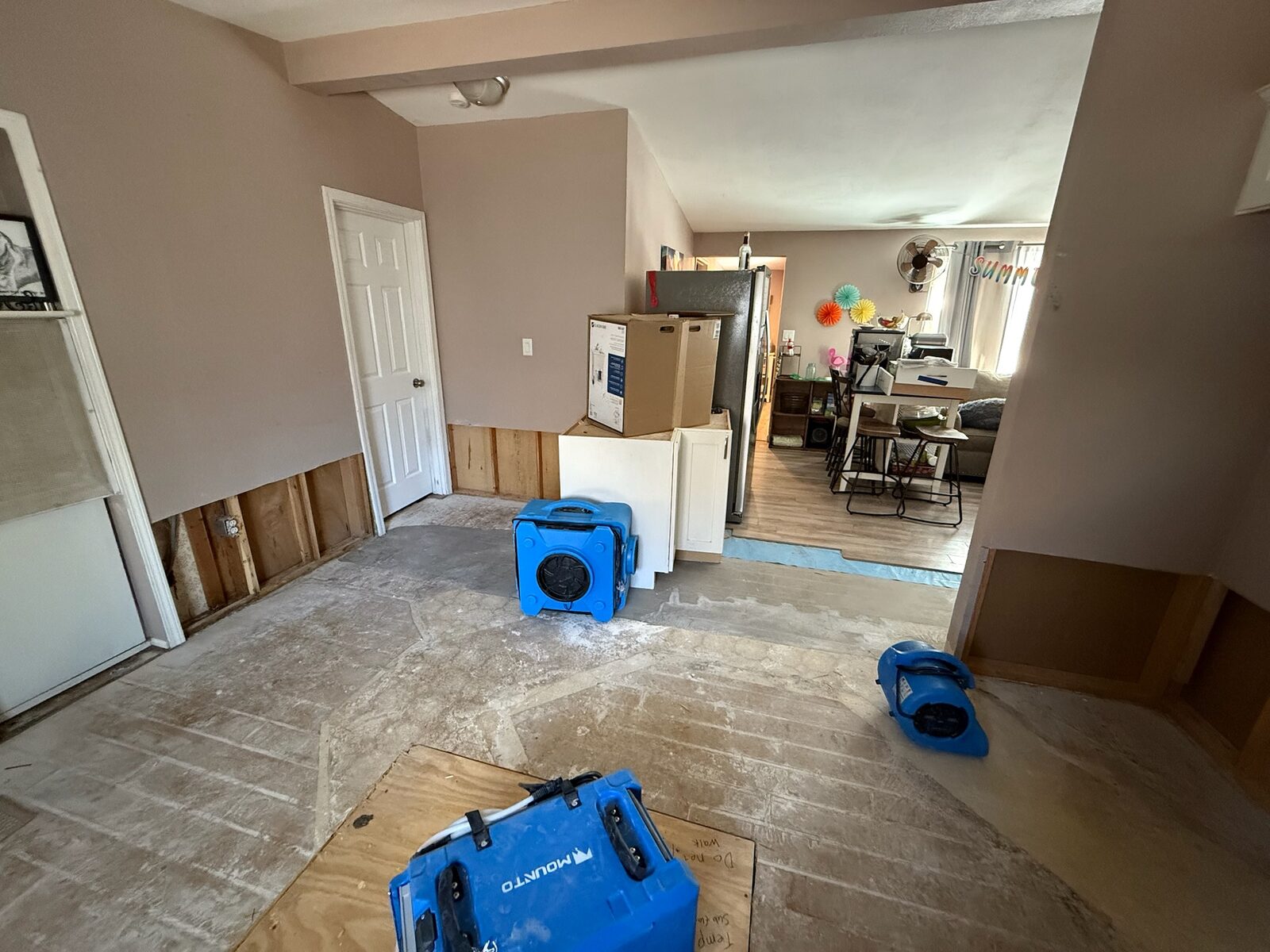
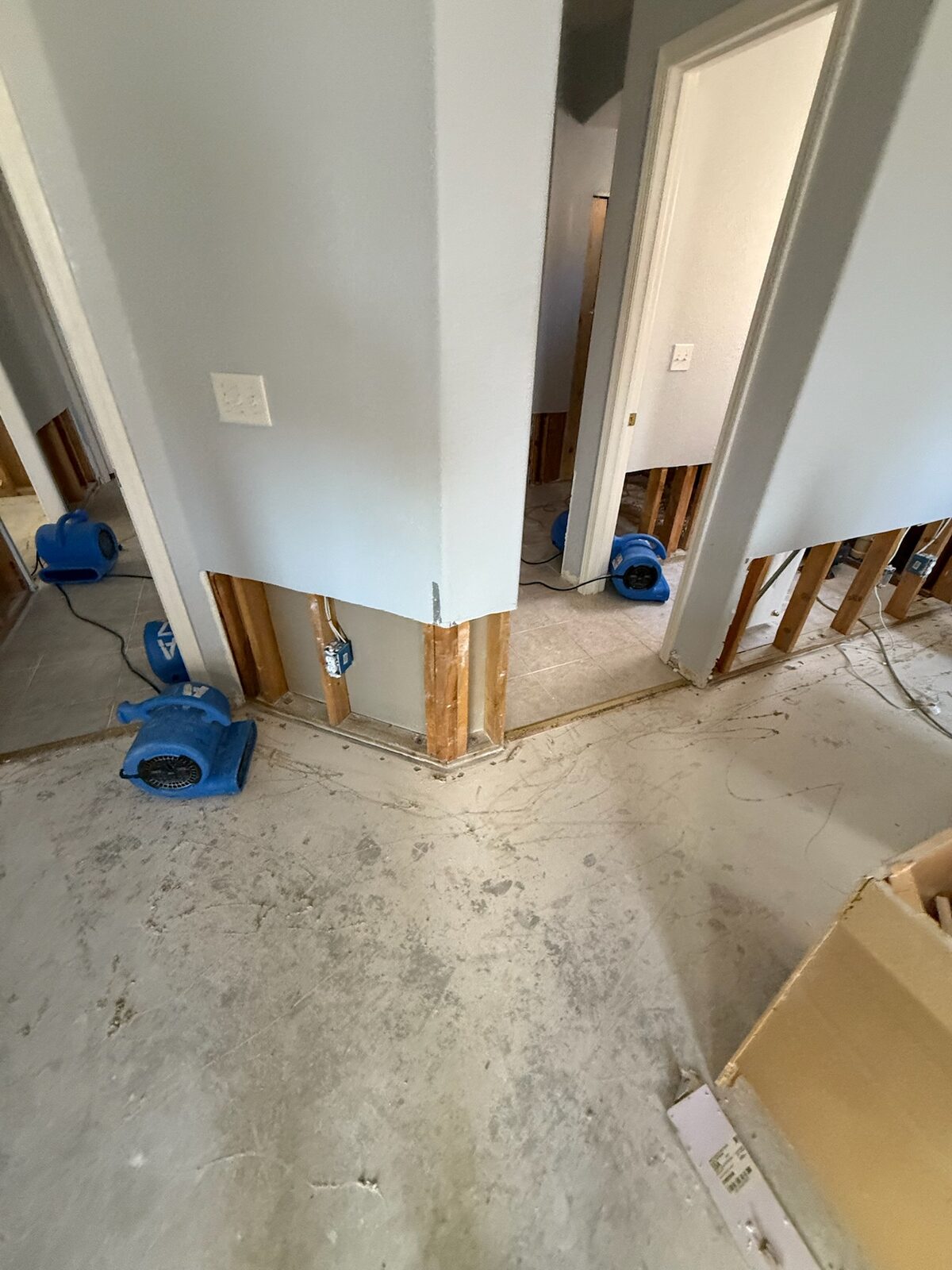
Residential reconstruction work by members of our team. See the full gallery →
More from Gold Water Fire
Abrasive Cleaning Methods for Soot on Framing and Masonry
A look at how abrasive cleaning methods remove soot from wood framing and masonry after a fire, and when each method fits the material.
Actual Cash Value vs Replacement Cost: Why Your Check Might Not Match the Repair Bill
Confused why your insurance check seems short after fire or water damage? Learn the difference between actual cash value and replacement cost coverage.
What Additional Living Expenses Coverage Means When a Home Is Temporarily Uninhabitable
A plain explanation of additional living expenses coverage: what ALE pays for when a home is temporarily uninhabitable, what it does not, and how to document it.
Not sure what you are looking at? Ask.
If you have a stain that keeps returning every summer, or water near an air handler and no idea how far it has spread, Gold Water Fire can look at it and tell you what is actually wet. Call (480) 999-3339 or email Help@goldwaterfire.com. We work across the Phoenix metro area, from Peoria and Avondale out to Queen Creek, San Tan Valley, and Apache Junction.
Call (480) 999-3339Water Damage Restoration · Reconstruction & Rebuild · Contact Gold Water Fire · About Gold Water Fire