
What a Second Floor Leak Does to the Ceiling Below, & Why the Stain Is the Smallest Part
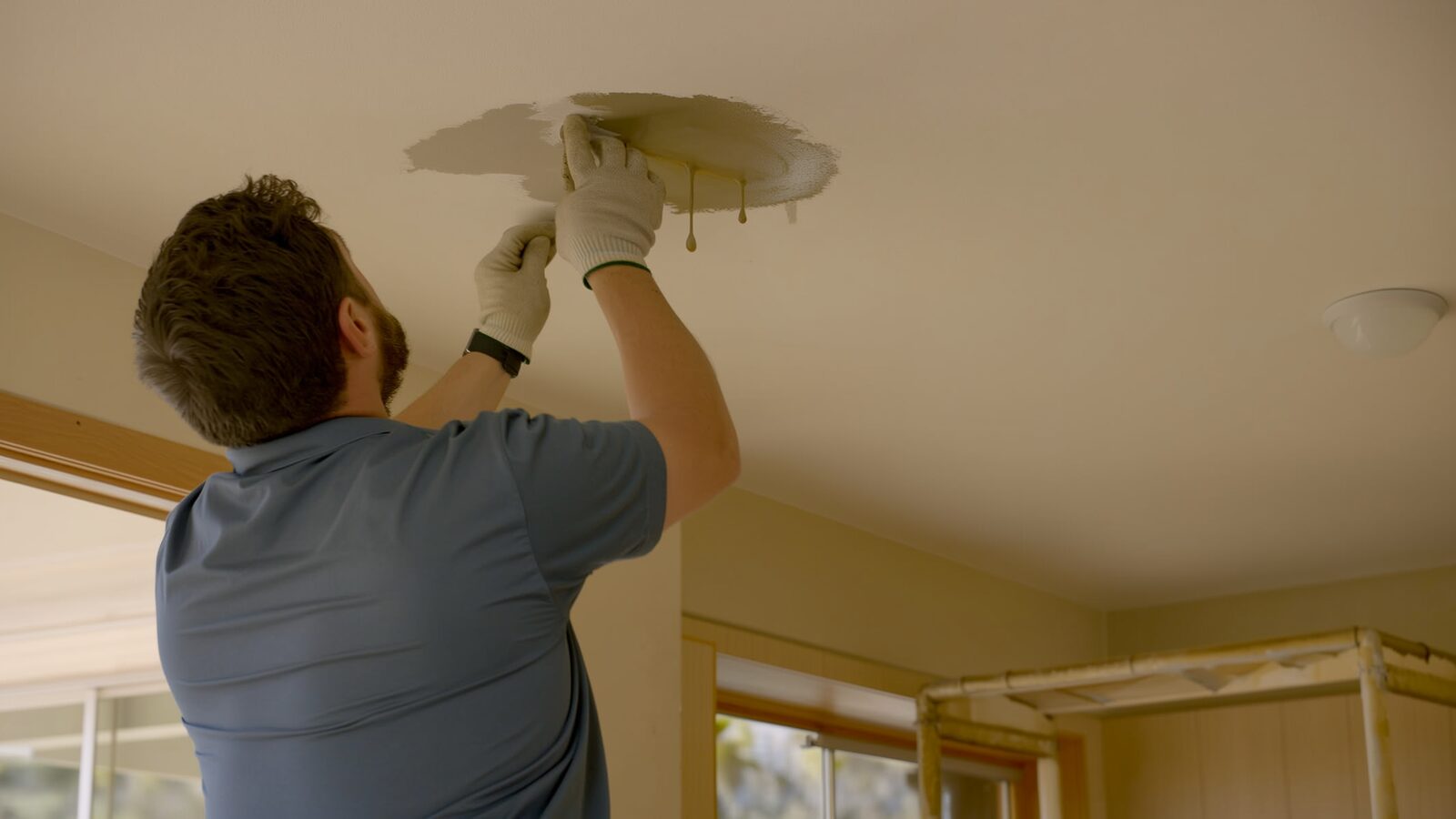
You painted over it. Maybe twice. It came back, a little wider each time, and now you find yourself standing in the hallway looking up at that same soft brown ring, trying to work out what you are actually looking at. Nobody has told you anything is wrong. There is no puddle. The bathroom upstairs works fine. And still there is this feeling you cannot quite put into words, that the house is telling you something and you do not have the vocabulary for it yet. That feeling is worth taking seriously. A ceiling stain is not the damage. It is the one part of the damage that happens to be visible from where you are standing.
What a Second Floor Leak Does to the Ceiling Below, & Why the Stain Is the Smallest Part
The stain is the end of the story, not the beginning
Water from a second floor leak does not travel straight down. It hits the subfloor, spreads sideways along the plywood until it finds a seam or a nail hole or a pipe penetration, and drops through there. That means the wet spot you can see is often several feet from the actual source. A stain in the middle of the living room ceiling can come from a shower pan on the far side of the upstairs wall. By the time the discoloration shows on painted drywall, water has already passed through several other things. It has soaked the paper facing on the back of the drywall sheet. It has wet the bottom edge of the floor joists. It has run along the top of any wire or duct in that cavity and pooled wherever there was something flat to pool on. Drywall wicks water outward from the entry point, so the stain is a rough map of where the moisture stopped, not where it came in. The reason repainting fails is simple. Paint is a film. It covers a stain, it does not remove the mineral and tannin residue in the drywall that caused the stain, and it does nothing at all about the moisture that keeps arriving. A stain that returns after painting is one of the clearest signals in a house that a leak is active, not historical.
What the ceiling is actually telling you
Ceilings communicate in a small number of patterns, and each one narrows down what kind of leak you are dealing with. Before anything gets opened up, it is worth standing there and reading what is already in front of you.
A hard-edged brown ring
Concentric rings with defined edges usually mean repeated wetting and drying cycles. Each ring is roughly one event. That pattern points to something intermittent, a shower used twice a day, a supply line that seeps only under pressure, an appliance drain that overflows when full loads run.
Sagging or a soft bulge
Drywall loses structural strength when saturated. Gypsum holds water and gets heavy, and the paper facing that gives the sheet its stiffness comes apart. A ceiling that bows downward or feels spongy to light pressure is carrying weight it was not designed to carry, and there may be trapped water sitting above it.
Nail pops and seam cracks
When a joist gets wet it swells, then shrinks as it dries. That movement pushes fasteners out of the drywall and opens taped seams. A line of small round bumps or a hairline crack following a seam can be a moisture signature even where there is no visible stain at all.
A smell before a mark
Musty odor in a room with no visible damage often means microbial growth inside a wall or ceiling cavity, where it is dark and there is paper facing to feed on. In Phoenix the outside air is dry enough that a cavity can stay damp and still show nothing on the surface for a long time.
The parts nobody photographs
Between the upstairs floor and the downstairs ceiling there is a cavity, usually somewhere around ten to fourteen inches deep, and it contains most of what a leak actually damages. The floor joists are the first concern. Engineered I-joists and laminated beams are common in newer Phoenix-area two-story homes, and they behave differently from solid lumber when wet. The web of an I-joist is often oriented strand board, which swells and delaminates rather than simply drying out. Sustained wetting at a joist end where it bears on a wall is the kind of thing that needs to be looked at rather than assumed to be fine. Insulation, where present in an interior floor cavity, holds water and stops holding air. Wet fiberglass or cellulose loses its function and becomes a reservoir that keeps the surrounding wood damp long after the leak itself is fixed. Blown insulation in particular does not drain. Electrical is the reason not to poke at a wet ceiling with a screwdriver. Junction boxes, can light housings, and cable runs sit in that cavity, and recessed lights are a common place for water to appear because the fixture cut is an opening. Water coming out of a light fixture means a live circuit is in contact with water somewhere upstream of it. And then there is the flooring above. Water that came through a bathroom or laundry floor has usually gone under the tile or the vinyl plank first. Tile can look perfect while the mortar bed and the subfloor under it are saturated, because the grout and the tile itself are the least absorbent part of the assembly.
A sensible order of operations
There is no rush to a conclusion here, but there is an order that keeps a small problem from becoming a large one. First, stop using the fixture or appliance upstairs that sits nearest the stain, if you can identify one, and see whether the ceiling changes over a few days. That single step separates active leaks from finished ones better than almost anything else. Second, do not puncture a sagging ceiling to drain it unless you have turned off the circuit for that room and you understand what is above it. A bulge can release a surprising volume at once. Third, photograph and date what you see. Take the same photo from the same spot every few days. Growth in a stain is evidence, and evidence matters both for finding the source and for an insurance claim later. Fourth, understand that finding the source usually requires moisture meters and often a thermal camera, because the visible stain is not where the leak is. A proper assessment traces moisture back through the cavity rather than guessing from the mark on the paint. When a ceiling has been wet, the work usually splits into two halves: drying and removing what cannot be dried, then putting the ceiling, the finishes, and anything else that came out back the way it was. You can read more about how each half works on our water damage restoration page and our reconstruction and rebuild page. If you want to talk it through with someone before deciding anything, our contact page has our number and email, and about page tells you who you would be talking to.
Questions people ask us
Can I just paint over a ceiling water stain with stain-blocking primer?
You can, and it will hide the mark, but only if the leak has genuinely stopped and the drywall and framing behind it are dry. A stain-blocking primer seals residue. It does not dry anything and it does not fix a source. If a stain has come back after being painted before, painting again will hide the one piece of information you currently have. Confirm the cavity is dry first, then cosmetics.
How far from the leak can a ceiling stain appear?
It can be several feet, sometimes on the other side of a wall. Water runs sideways along the top of the subfloor or along a joist until it finds a hole to drop through. That is why a stain near a hallway light can trace back to a shower or a washing machine that is nowhere near it, and why guessing at the source from the stain location is unreliable.
Does a dry-feeling ceiling mean the leak is over?
Not necessarily. Painted drywall dries on the surface faster than the framing, insulation, and subfloor above it. Phoenix air is dry, which helps the visible face and can leave the cavity damp for a long time behind a sealed surface. A moisture meter reading in the material tells you what a hand on the paint cannot.
Why does mold get mentioned with ceiling leaks so often?
Because a floor cavity is dark, unventilated, and full of paper-faced drywall and wood, which are food sources. Microbial growth generally needs sustained moisture rather than a single quick wetting, so the leaks that matter most for that reason are the slow, repeated ones, exactly the kind that produce a stain that keeps coming back.
The standard our team works to
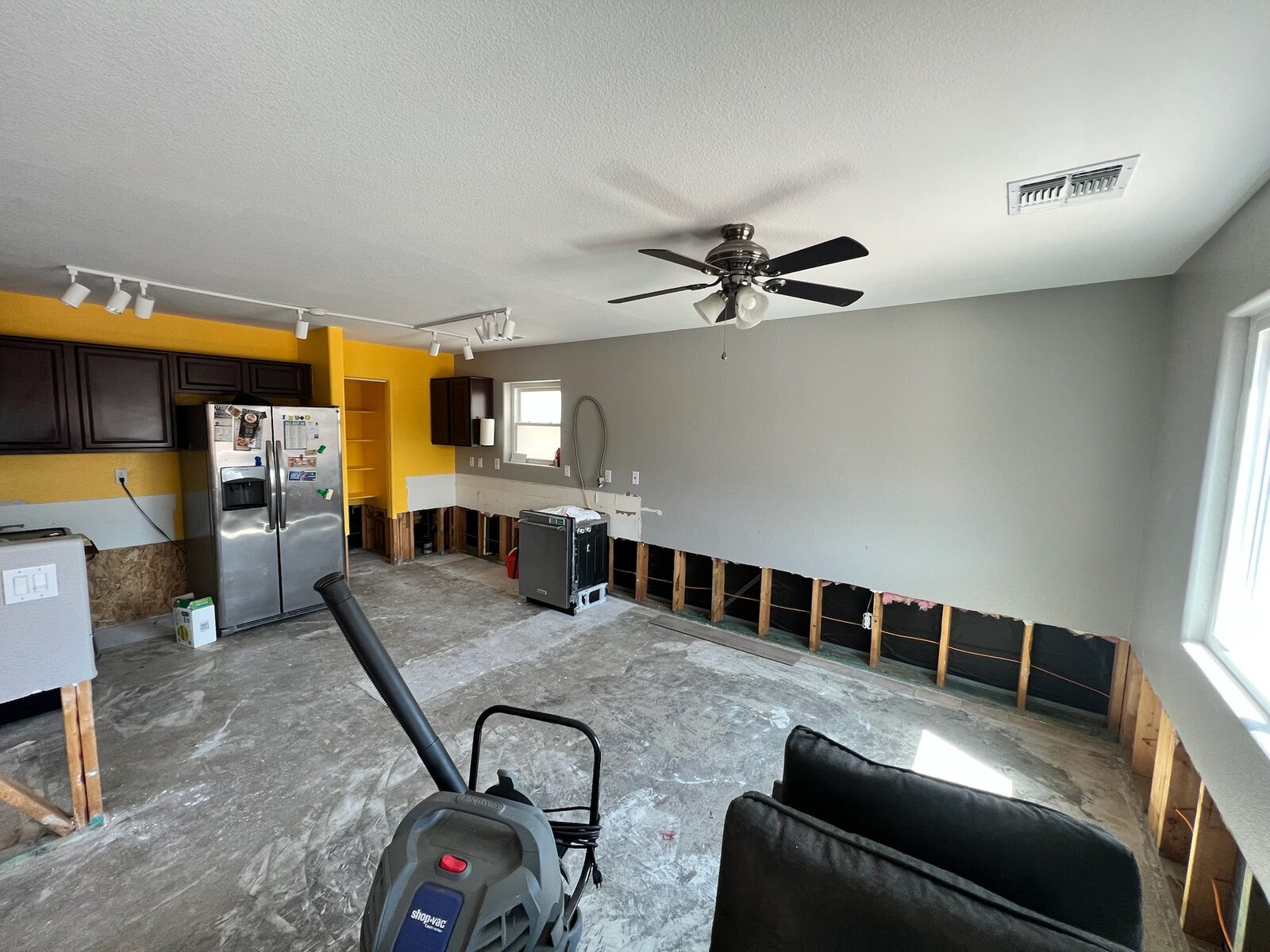
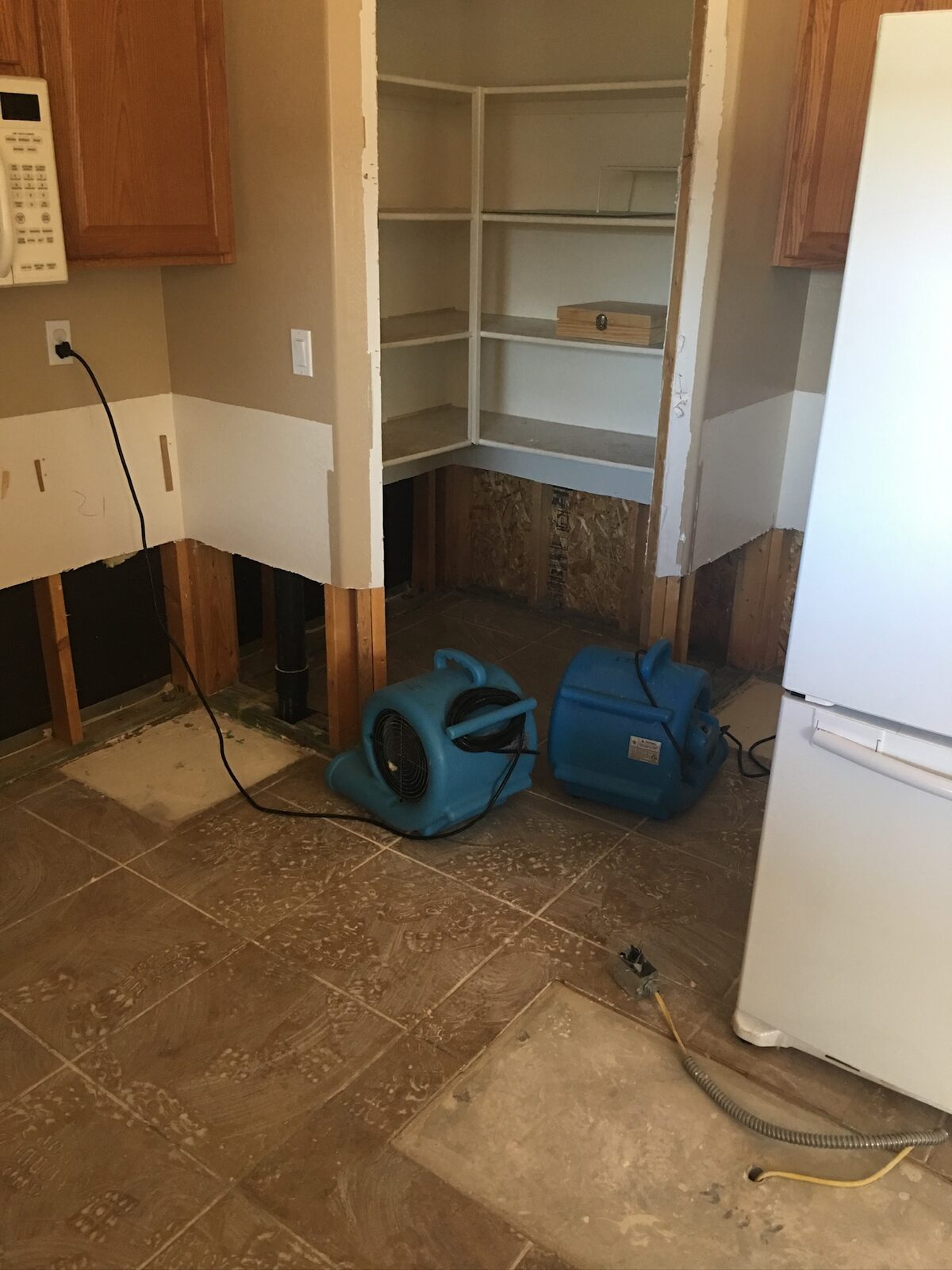
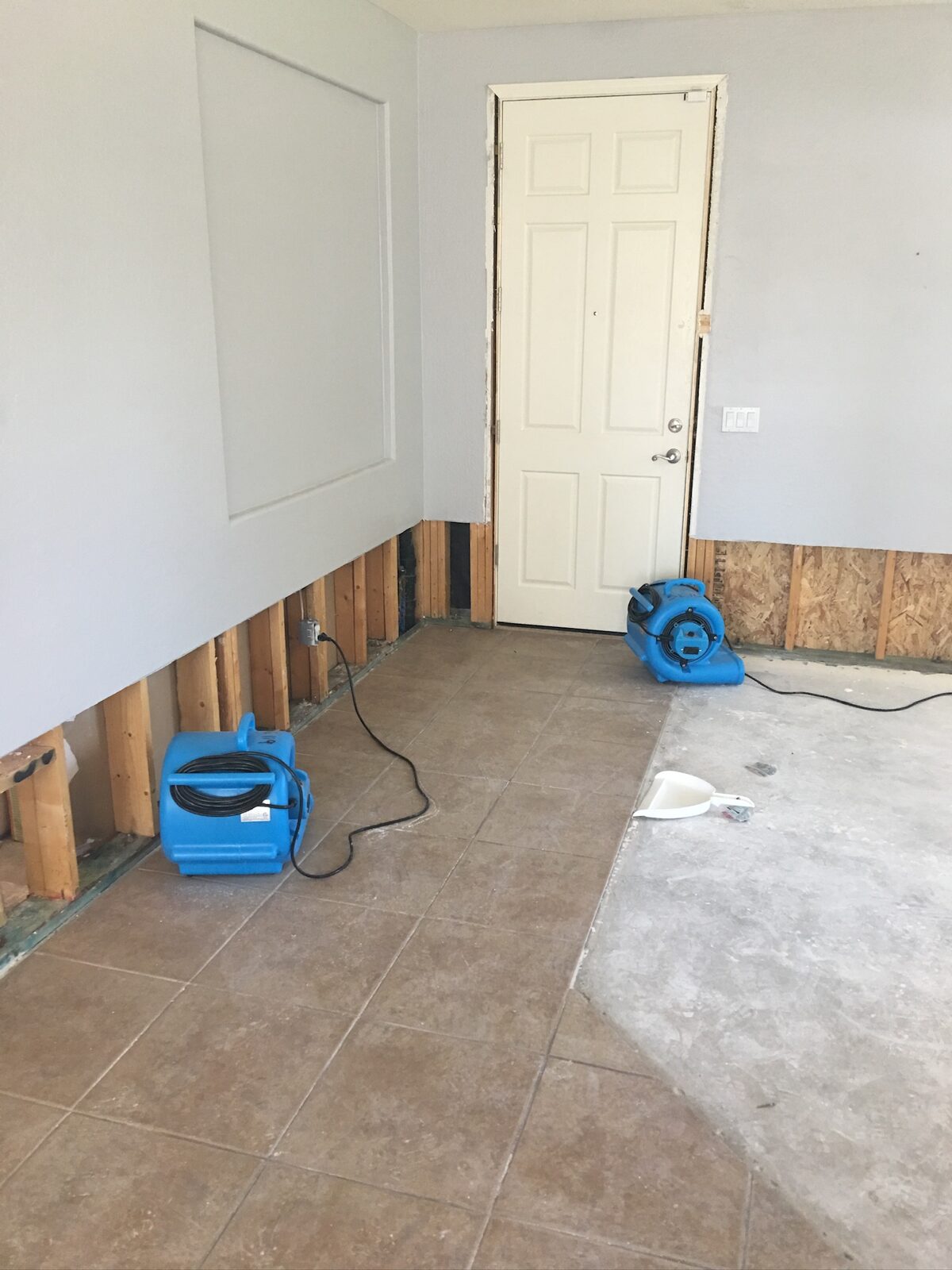
Residential reconstruction work by members of our team. See the full gallery →
More from Gold Water Fire
Abrasive Cleaning Methods for Soot on Framing and Masonry
A look at how abrasive cleaning methods remove soot from wood framing and masonry after a fire, and when each method fits the material.
AC Condensate Line Clogs & the Water Damage They Cause in Phoenix Homes
Why Phoenix AC condensate lines clog every summer, what the water damage looks like, and how to find the source before the ceiling stain spreads again.
Actual Cash Value vs Replacement Cost: Why Your Check Might Not Match the Repair Bill
Confused why your insurance check seems short after fire or water damage? Learn the difference between actual cash value and replacement cost coverage.
If you have been looking at that stain for a while
You do not need to have it figured out before you call. Describing what you see and when it started is enough to begin with. Gold Water Fire covers the Phoenix metro area, from NW Peoria to SE Avondale, SW San Tan Valley, NW Apache Junction, and outlying areas further than that. Call (480) 999-3339 or email Help@goldwaterfire.com.
Call (480) 999-3339Water Damage Restoration · Reconstruction & Rebuild · Contact Gold Water Fire · About Our Team