
What to Do in the First Hour After a Pipe Bursts or You Find Water Damage
You are standing in water, or you just pulled up a rug and found the pad underneath is soaked, and you have no idea how long it has been like that. Your first thought is probably not a plan. It is the sick feeling of not knowing how bad this is or how much it will cost. That reaction is normal. Water moves fast and quietly, and most homeowners have never had to deal with this before. The next hour matters more than the next week, and the steps below are the ones that actually change the outcome.
What to Do in the First Hour After a Pipe Bursts or You Find Water Damage
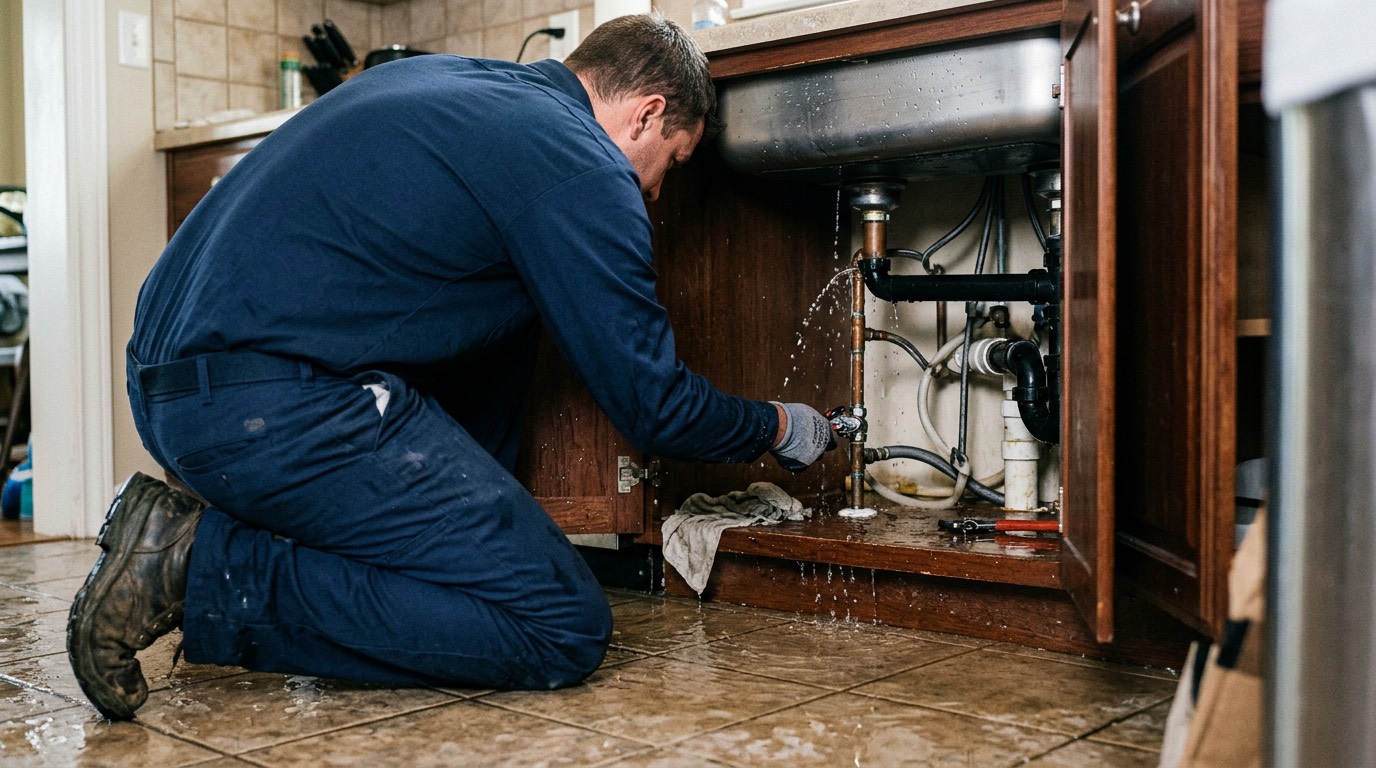
Stop the water and cut the risk
Everything else waits until the water stops and the area is safe. Shut off the water. Most Arizona homes have a main shutoff where the supply line enters the house, commonly in a box near the street, in a wall box on the exterior, or in the garage near the water heater. Turn it clockwise until it stops. If the leak is at one fixture (toilet, sink, water heater, washing machine), there is usually a smaller local valve at that fixture you can close instead. If the valve is stuck or corroded, go to the main. If water is near outlets, light fixtures, or a panel, do not walk into it. Cut power to that area at the breaker if you can reach the panel from a dry spot. If you cannot reach it safely, leave the area and call an electrician or your utility. If the water came from a sewer line, a toilet backup, or an unknown source outside the house, treat it as contaminated. Keep kids and pets out. Do not touch it without gloves and boots. If the leak is a water heater and you smell gas, or the heater is gas-fired and now sitting in water, shut off the gas supply to it and leave gas repairs to a licensed technician.
Document before you clean anything
Once the water is off, take pictures and video before you move a single item. Insurance adjusters reconstruct what happened from what you captured in the first half hour. Cleaning up first is the most common and most expensive mistake homeowners make. Capture: wide shots of each affected room, the water line on the walls and baseboards, the actual source of the leak (the pipe, the failed supply hose, the appliance), the ceiling if water came from above, and close-ups of damaged furniture, flooring, and belongings. Get the whole scene, not just the worst spot. Write down the time you found it and the time the water stopped. Save the broken part or hose if it came loose. It is evidence of what failed. Then call your insurance carrier and open a claim. Ask what your policy covers, what your deductible is, and whether they need anything specific documented. You are allowed to choose your own licensed contractor for the repair; you are not required to use a company the carrier suggests.
Move what you can and start airflow
Now start limiting the spread. Water travels along the flattest path and wicks upward into porous material, so damage keeps growing even after the leak stops. Get items up off wet flooring: cardboard boxes, books, papers, electronics, upholstered furniture, and anything wood. Put foil or plastic under furniture legs so stain does not bleed into carpet. Take up small area rugs. They will transfer dye. Pull standing water with a wet/dry vac or a squeegee toward a drain if the water is clean. Do not use a household vacuum. Do not run a wet/dry vac if you have not confirmed power in that area is safe. Open interior doors and closet doors so trapped air can move, and run ceiling fans. In Phoenix, outdoor air is usually dry enough that running the AC helps pull moisture out, but during monsoon humidity, keep windows closed and rely on the AC instead of outside air. What not to do: do not use a heater to "dry it out faster" (heat plus moisture inside a wall accelerates mold growth), do not lift or tear out wet tile or wood flooring yourself, and do not put fans directly on a wall you suspect has sewage water behind it.
What still needs a professional look
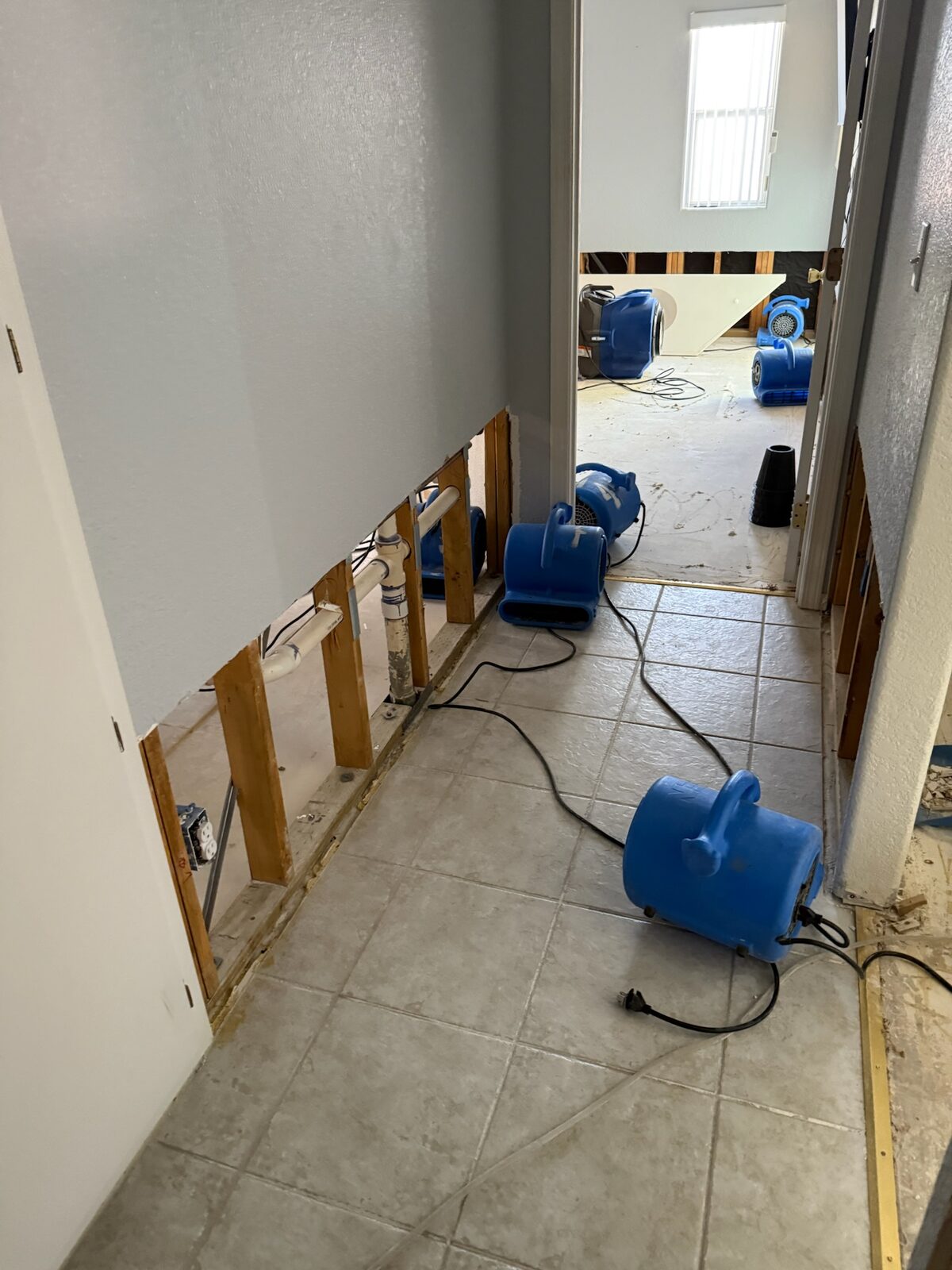
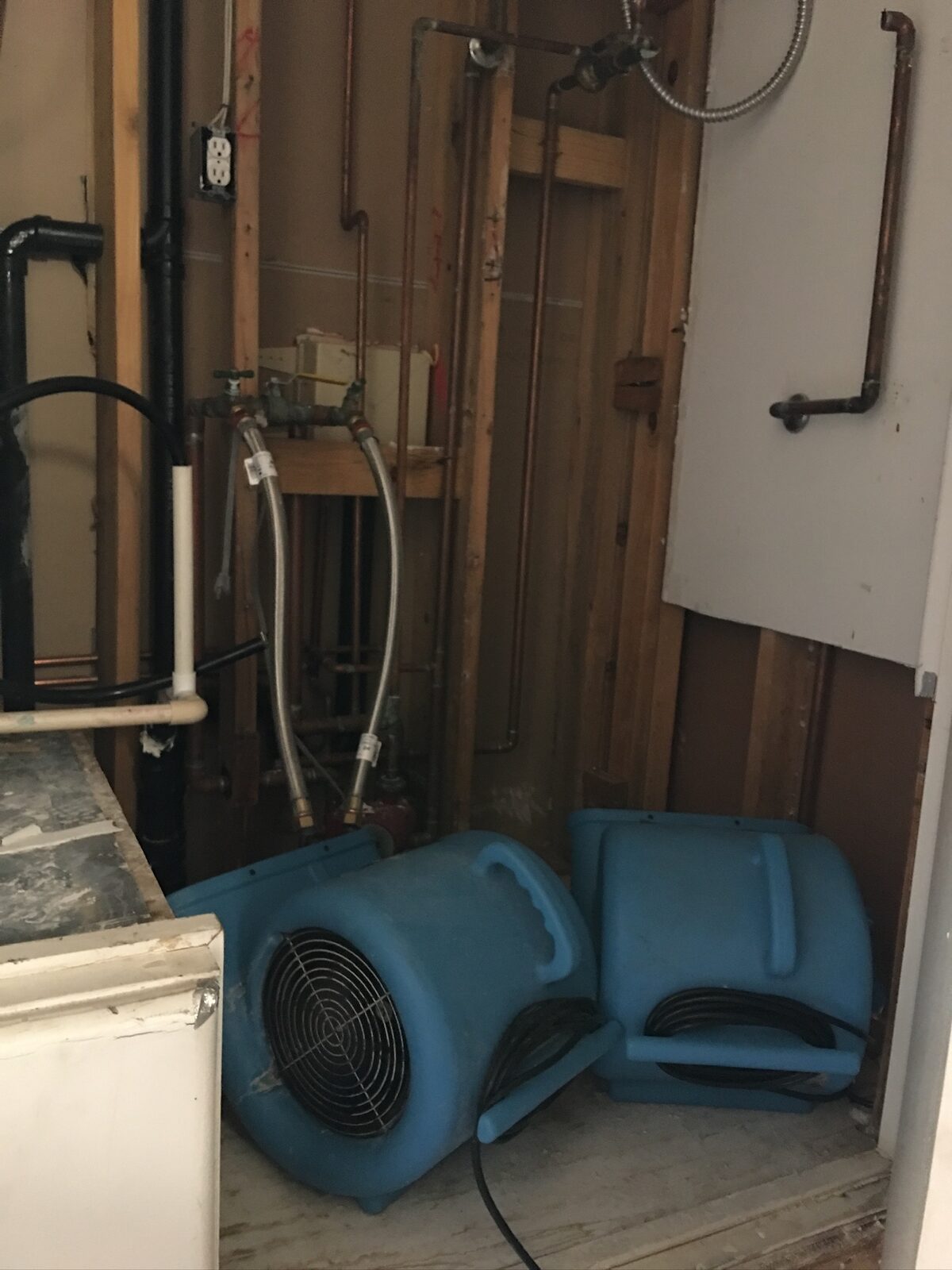
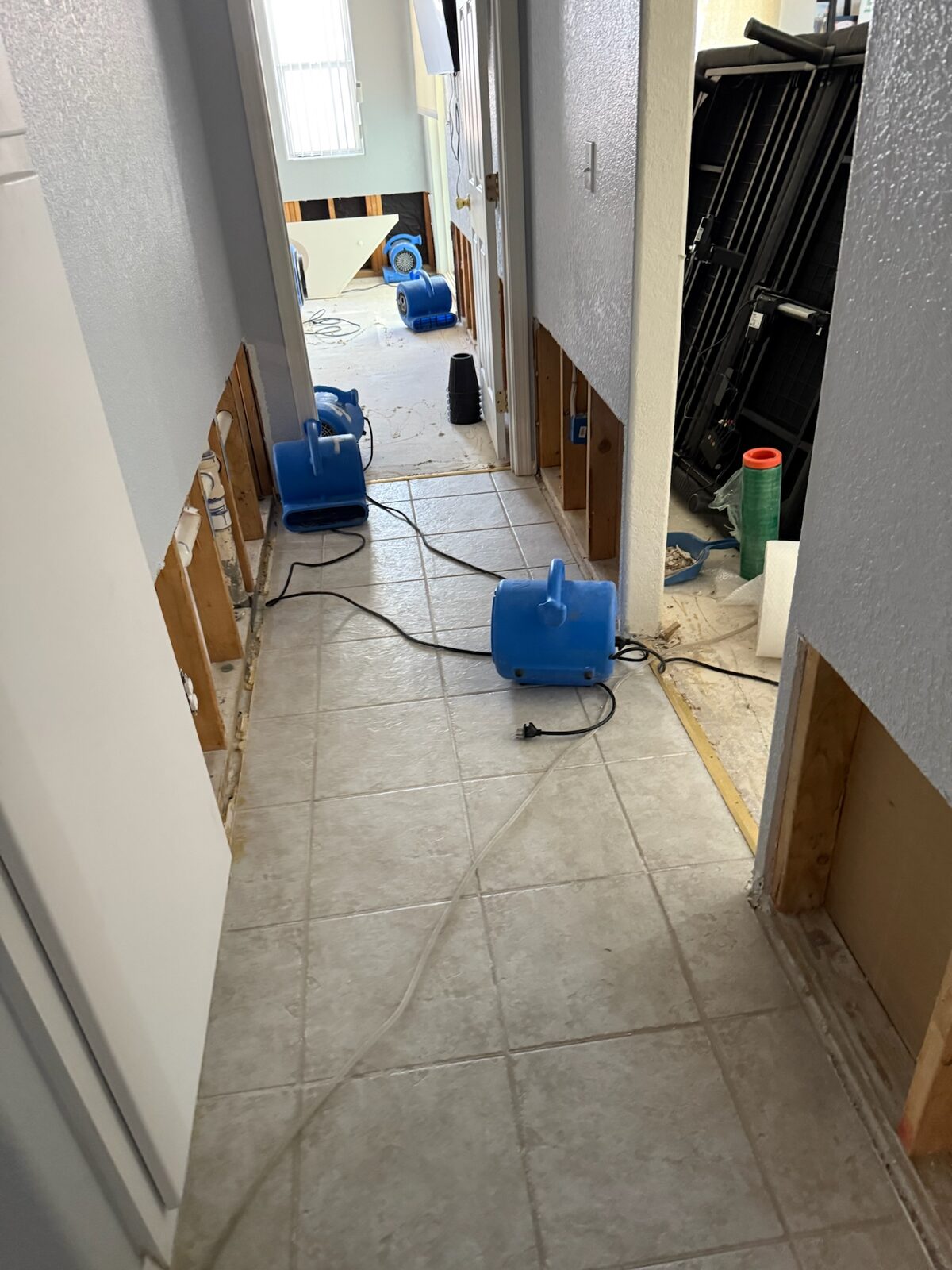
Surface dry is not dry. Drywall, framing, insulation, subfloor, and cabinet toe-kicks hold water you cannot see or feel, and mold can begin developing in that hidden moisture within roughly a couple of days under the right conditions. Professional drying uses moisture meters and thermal imaging to find the wet edge, then places air movers and dehumidifiers to dry the structure to a measured target, not just until it feels dry to the touch. Call for help right away if: water came through a ceiling, the source was a sewer line or toilet overflow, the water sat for more than a day, water reached more than one room, it got under hardwood, laminate, or tile, or the wet area includes drywall you cannot open up yourself. Gold Water Fire handles both sides of this: the drying and cleanup, and the rebuild of drywall, flooring, paint, and cabinetry once the structure is dry. See Water Damage Restoration and Reconstruction & Rebuild. If the water came from a fire response, see Fire Damage Restoration. AZ ROC #264344 · KB-2. Serving the Phoenix metro area including Chandler, Mesa, Gilbert, Tempe, Scottsdale, Glendale, Peoria, Queen Creek, and San Tan Valley.
Questions people ask us
Where is my water shutoff valve?
Look for a main shutoff where the supply line enters the house, often in an in-ground box near the street or sidewalk, in a wall box on the exterior of the home, or in the garage near the water heater. Individual fixtures like toilets, sinks, and washing machines usually have their own smaller valve nearby. It is worth locating both now, before an emergency, so you are not searching in the dark.
Should I clean up the water before I take photos?
No. Photograph and video everything first: the source of the leak, the water line on walls, and every affected room and item. Adjusters rely on that documentation to evaluate the claim, and once you have cleaned up, the evidence is gone. Stopping the water comes first; photos come immediately after.
Can I just dry it out with fans myself?
Fans help with surface moisture, but they do not dry inside walls, under flooring, or behind cabinets. Water wicks upward into drywall and insulation where it stays wet for days, and hidden moisture is where mold starts. If water reached drywall, subfloor, or more than one room, it should be checked with moisture readings rather than judged by touch.
Does insurance cover a burst pipe?
Coverage depends on your specific policy and what caused the failure, so call your carrier and ask directly about your deductible and what is included. Two things worth knowing: sudden pipe failures are treated differently than long-term seepage or neglected maintenance, and you generally have the right to choose your own licensed contractor for the repair work.
The standard our team works to
Residential reconstruction work by members of our team. See the full gallery →
More from Gold Water Fire
Abrasive Cleaning Methods for Soot on Framing and Masonry
A look at how abrasive cleaning methods remove soot from wood framing and masonry after a fire, and when each method fits the material.
AC Condensate Line Clogs & the Water Damage They Cause in Phoenix Homes
Why Phoenix AC condensate lines clog every summer, what the water damage looks like, and how to find the source before the ceiling stain spreads again.
Actual Cash Value vs Replacement Cost: Why Your Check Might Not Match the Repair Bill
Confused why your insurance check seems short after fire or water damage? Learn the difference between actual cash value and replacement cost coverage.
Water in your home right now?
Once the water is shut off and you have photos, call Gold Water Fire at (480) 999-3339 or email Help@goldwaterfire.com. Tell us what happened and where the water reached, and we can talk through what needs to happen next in your home. We work across the Phoenix metro area from our office at 221 E Willis Rd Ste 8, Chandler, AZ 85286.
Call (480) 999-3339Water Damage Restoration · Fire Damage Restoration · Reconstruction & Rebuild