
What Additional Living Expenses Coverage Means When a Home Is Temporarily Uninhabitable
You are somewhere that is not your house. Maybe a hotel off the freeway, maybe a relative's spare room, maybe a short-term rental you found in an hour because the fans were running and nobody could sleep. And there is a question sitting underneath everything else, the one you keep not quite asking out loud: who is paying for all of this? Every receipt feels like it might matter, or might not, and nobody has told you which. That uncertainty is its own kind of exhausting, separate from the damage itself. It is not a sign you are handling this badly. Additional living expenses is one of the least explained parts of a homeowners policy, and most people meet it for the first time on the worst week of their year.
What Additional Living Expenses Coverage Means When a Home Is Temporarily Uninhabitable
What ALE actually is
Additional living expenses, usually shortened to ALE and sometimes called Coverage D or loss of use, is the part of a standard homeowners policy that covers the extra cost of living somewhere else while your home is being repaired after a covered loss. The word doing the most work in that sentence is additional. ALE is not designed to pay your whole life. It pays the difference between what your life normally costs and what it costs now that you are displaced. A simple example: if your household normally spends 600 dollars a month on groceries and now spends 1,100 dollars because you are eating restaurant meals in a hotel room with no kitchen, the claim is for the difference, not the whole 1,100. Your mortgage keeps getting paid by you, because you would be paying it either way. The hotel is entirely new, so it is entirely additional. Two other conditions matter. The loss has to be covered by your policy in the first place, so a denied cause of damage generally means no ALE either. And the home usually has to be genuinely uninhabitable or unfit to live in, which is a judgment call made between you, your adjuster, and often the documentation from whoever is drying or repairing the structure.
What typically counts, and what usually does not
Policies vary and yours is the one that governs, so read the loss of use section or ask your adjuster to read it to you. That said, the categories below are common across most standard homeowners forms and give you a sense of what to start tracking.
Lodging
Hotel, extended stay, or a short-term rental. Insurers generally expect a reasonable comparison to your home, not an upgrade. A four-bedroom house does not automatically mean a four-bedroom rental, but a family of six is not expected to share one hotel room for three months either. If you are staying with family for free, some policies still allow a reasonable payment to them, so ask.
Food above normal
The increase in food cost while you have no kitchen. Keep restaurant and grocery receipts, and if you can, pull three months of pre-loss grocery spending from your bank statements. That baseline is what turns a pile of receipts into a defensible number.
Mileage and transportation
If the temporary housing adds distance to your commute, school run, or regular errands, the extra mileage is often reimbursable. Log the date, the trip, and the miles. Parking fees at a hotel and any additional tolls generally fall in the same bucket.
The small recurring costs
Laundry when you have no washer, pet boarding when the rental will not take the dog, storage for furniture pulled out of the house, a second internet or utility setup, and sometimes replacing basic household items you cannot access. These are individually small and collectively significant.
What is usually excluded
Your mortgage or rent on the damaged home, expenses you would have had anyway, entertainment, and the damage repairs themselves, which come out of dwelling and contents coverage instead. New furniture for the temporary place is generally not covered, though a rental furniture package sometimes is.
The limits that end it
Most policies cap ALE either as a percentage of your dwelling coverage or as a time period, commonly stated as a number of months, or both. Find out which applies to you early. Knowing whether you have a dollar ceiling or a calendar ceiling changes how you make decisions in month one.
Documenting so the money actually arrives
ALE is reimbursement based more often than not. That means the burden of proof sits with you, and the single biggest reason legitimate expenses get denied is that nobody kept the paper. Start a running log the day you leave the house. One document, one line per expense: date, what it was, how much, and a note on why it was necessary. Photograph every receipt with your phone the moment you get it, because thermal paper fades and hotel folios get lost. If you are keeping a folder, keep a digital copy too. Before you book anything longer than a couple of nights, get your adjuster's agreement in writing, even if it is just an email confirming the nightly rate and the property. Verbal approvals are real and also disappear. Ask directly whether the carrier will advance funds rather than reimburse, because many will issue an ALE advance if you ask, and that changes whether you are floating months of housing on a credit card. Ask one more question early: how long is the repair expected to take? A realistic timeline from whoever is handling the drying, demolition, and rebuild is what lets you decide between a hotel and a month-to-month rental. Guessing low and moving twice costs more than committing once. If reconstruction work follows the initial mitigation, the total displacement is often longer than the first estimate anyone gives you, because the rebuild scope is not fully known until the wet or burned material is out.
Why the timeline is the real variable
The size of your ALE claim is mostly a function of how long you are out, and how long you are out depends on the sequence of work. After water intrusion, structural drying comes first and has to be verified with moisture readings before anything gets closed back up. Rushing that stage is how you end up displaced twice. After a fire, there is usually a period of securing the structure, removing damaged material, and addressing smoke odor before any rebuilding starts, and smoke travels far beyond the room that burned. In Phoenix, some of this cuts in your favor. Low ambient humidity helps drying, and that can shorten the mitigation window compared to a wetter climate. Other things cut the other way. Slab foundations mean water spreads laterally and wicks up into wall bases, so what looks like a small area on the surface is often larger underneath. Monsoon roof damage frequently involves both water and wind scope. None of that is something you can control, but understanding it helps you ask your adjuster and your contractor better questions about the schedule that your ALE clock is running against. If you want the general sequence spelled out, we have written it up for water damage and for fire and smoke damage separately.
Questions people ask us
Does ALE pay my mortgage while I am out of the house?
Generally no. Your mortgage is an expense you would have had regardless of the damage, so it is not additional. ALE covers the gap between your normal cost of living and your displaced cost of living. This surprises a lot of people, because it means you may be paying a mortgage and a hotel at the same time, with only the hotel reimbursed.
Do I have to leave the house for ALE to apply?
Usually the home has to be unfit to live in, which is not always the same as unsafe. No working kitchen, no functioning bathroom, no power, or running equipment and containment through the main living space can all support a claim that the home is uninhabitable. Some policies also cover partial displacement situations. Ask your adjuster to state the standard your policy uses, and get the answer in writing.
How long does additional living expenses coverage last?
That depends entirely on your policy. Many are capped by a percentage of the dwelling limit, a stated number of months, or the time reasonably required to repair or replace, whichever comes first. Find your specific limit early rather than at the point you hit it, because it affects whether a hotel or a longer-term rental is the better decision.
What if my repairs take longer than expected and I run out of coverage?
Talk to your adjuster before you get close to the limit, not after. Some carriers will extend ALE if delays were outside your control, and a documented repair timeline from your contractor supports that request. Keeping a written record of every schedule change is the most useful thing you can do to protect that conversation.
The standard our team works to
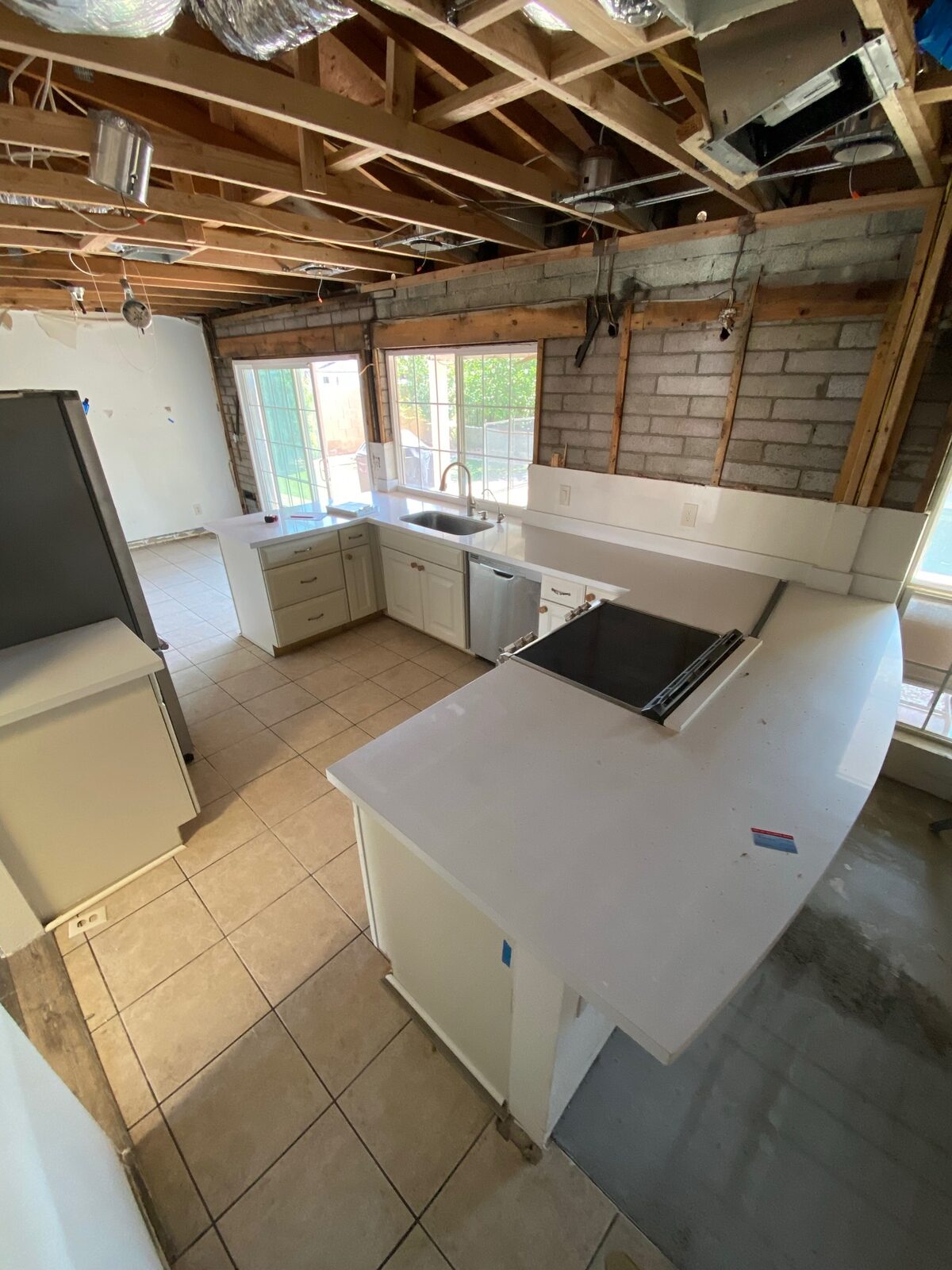
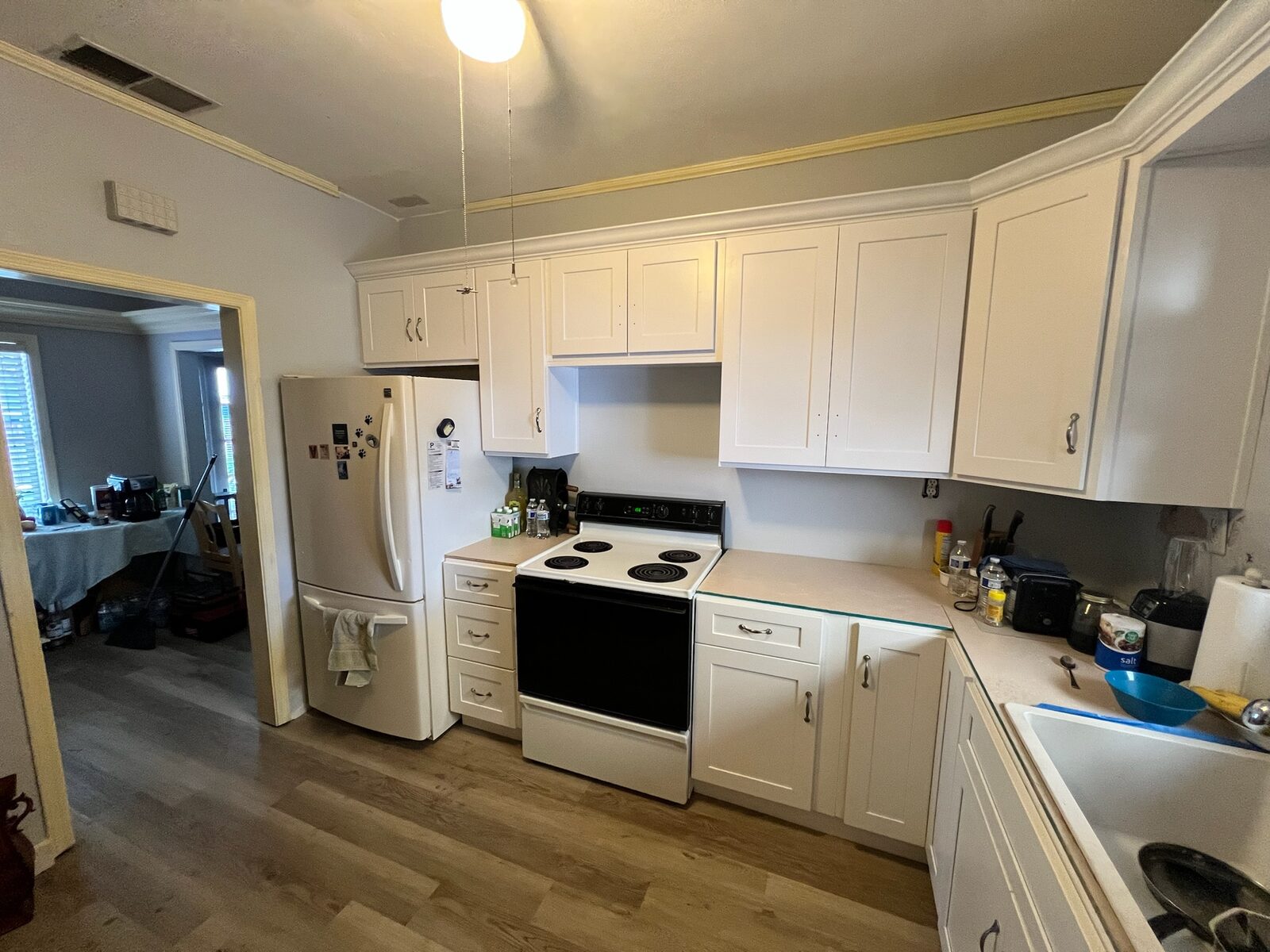
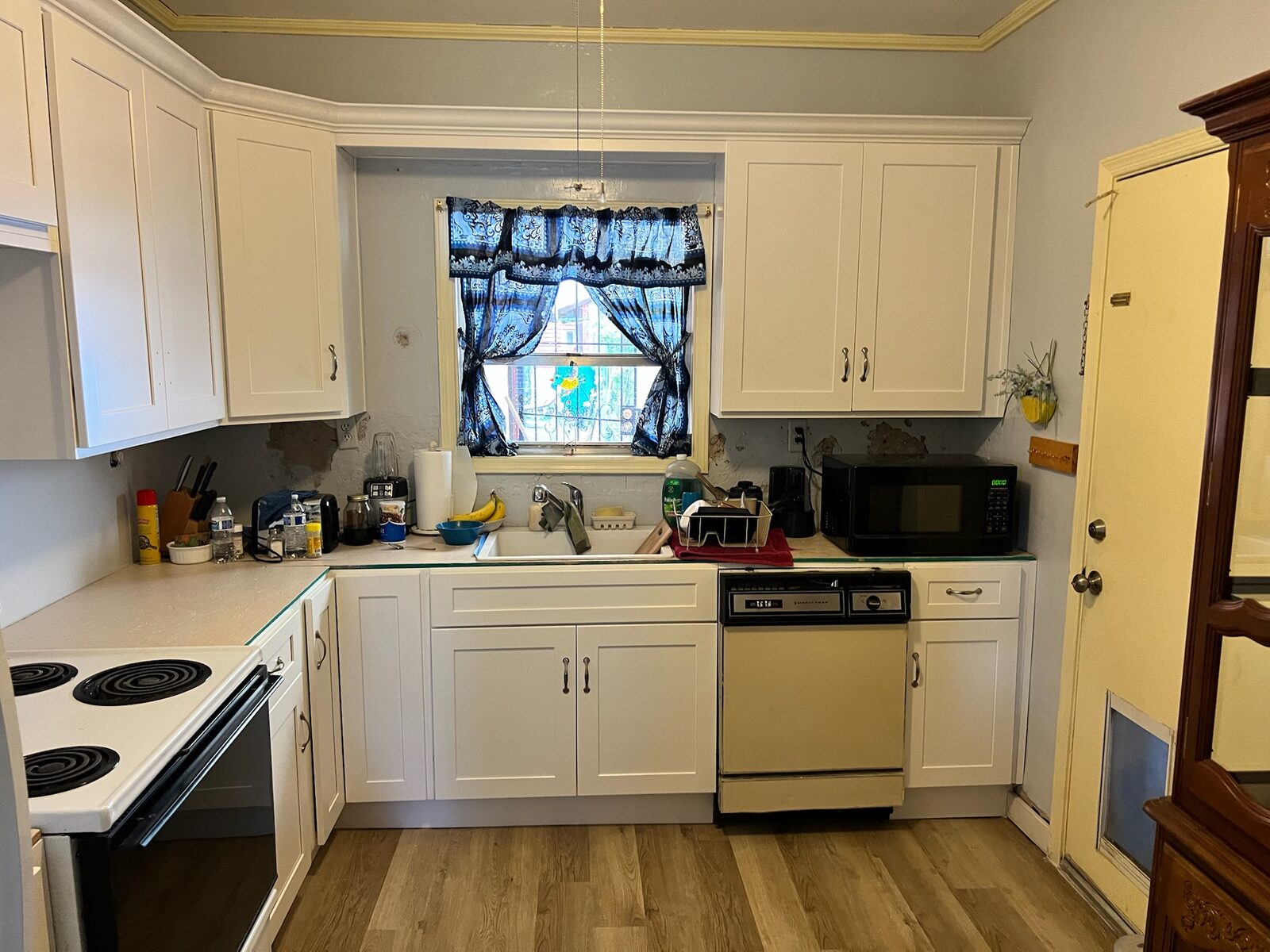
Residential reconstruction work by members of our team. See the full gallery →
More from Gold Water Fire
Abrasive Cleaning Methods for Soot on Framing and Masonry
A look at how abrasive cleaning methods remove soot from wood framing and masonry after a fire, and when each method fits the material.
AC Condensate Line Clogs & the Water Damage They Cause in Phoenix Homes
Why Phoenix AC condensate lines clog every summer, what the water damage looks like, and how to find the source before the ceiling stain spreads again.
Actual Cash Value vs Replacement Cost: Why Your Check Might Not Match the Repair Bill
Confused why your insurance check seems short after fire or water damage? Learn the difference between actual cash value and replacement cost coverage.
If you need a realistic timeline to plan around
A clear picture of how long the drying and rebuild will take is what makes your housing decisions easier. Call Gold Water Fire at (480) 999-3339 or email Help@goldwaterfire.com and we can walk through what the work on your home likely involves. We serve the Phoenix metro area, from Peoria and Avondale out through Gilbert, Queen Creek, San Tan Valley, and Apache Junction.
Call (480) 999-3339Water Damage Restoration · Fire Damage Restoration · Reconstruction & Rebuild · Contact Gold Water Fire · About Our Team