
Water damage restoration in the Phoenix metro
Water where it should not be is a hard thing to walk into. Most people have never dealt with it before, and nobody tells you what to do first. That is what this page is for.
Stop the water, then get it out and dried within a day or two, because that is the window the EPA gives to keep mold from starting. The meter readings, not how the room looks, decide when it is dry enough to rebuild.
What is water extraction?
Extraction is pulling the standing and soaked-in water out of the house before drying starts. Crews use truck-mounted or portable pumps and wands on floors, carpet and pad. It removes far more water, far faster, than fans can. Drying equipment then handles what is left inside walls, cabinets and the slab.
Why speed matters for a Phoenix homeowner
The desert air outside is dry, but the inside of a wet wall is not. Water wicks up drywall, sits under cabinets and soaks into baseboard, where your hand never feels it. Left there, it becomes the swollen trim, peeling paint and musty smell that show up weeks later, and a bigger bill than drying it now.
What usually causes it here
Burst or leaking supply lines
Braided lines under sinks and toilets, washing machine hoses, ice maker lines and water heaters fail without warning, often when nobody is home.
Slab and pinhole leaks
Copper lines under or inside the slab can leak for days before a warm spot on the floor or a jump in the water bill gives them away.
AC condensate and the attic
A clogged condensate line or a failed drain pan in the attic sends water down through the ceiling, usually in the middle of summer.
Monsoon storms and roof leaks
The National Weather Service dates monsoon season June 15 to September 30. Wind-driven rain finds lifted tiles, flashing and roof penetrations, then the ceiling below. For the roof itself, our sister company Gold Water Roof handles the repair, tarping and replacement; we dry and rebuild the house underneath.
How the work goes, start to finish
- 1
Stop the source and make it safe
Shut the water off at the fixture or the main. If you can reach the breaker without standing in water, cut power to the wet rooms. Then call us; the line is answered 24/7.
- 2
Inspect and map the moisture
We come out, find where the water went with moisture meters and thermal readings, and photograph everything before anything is moved. You see the plan before work starts.
- 3
Extract the water
Standing water comes out of floors, carpet and pad with pumps and extraction wands. Wet materials that cannot be dried in place are removed.
- 4
Dry the structure
Air movers and dehumidifiers are set for the rooms and checked with daily readings, so drying is measured instead of guessed.
- 5
Confirm it is dry
Nothing gets closed up until the readings in the wet area match the dry part of the house.
- 6
Rebuild
Drywall, baseboard, flooring, cabinets and paint go back in, handled by the same company, with no second contractor to find.
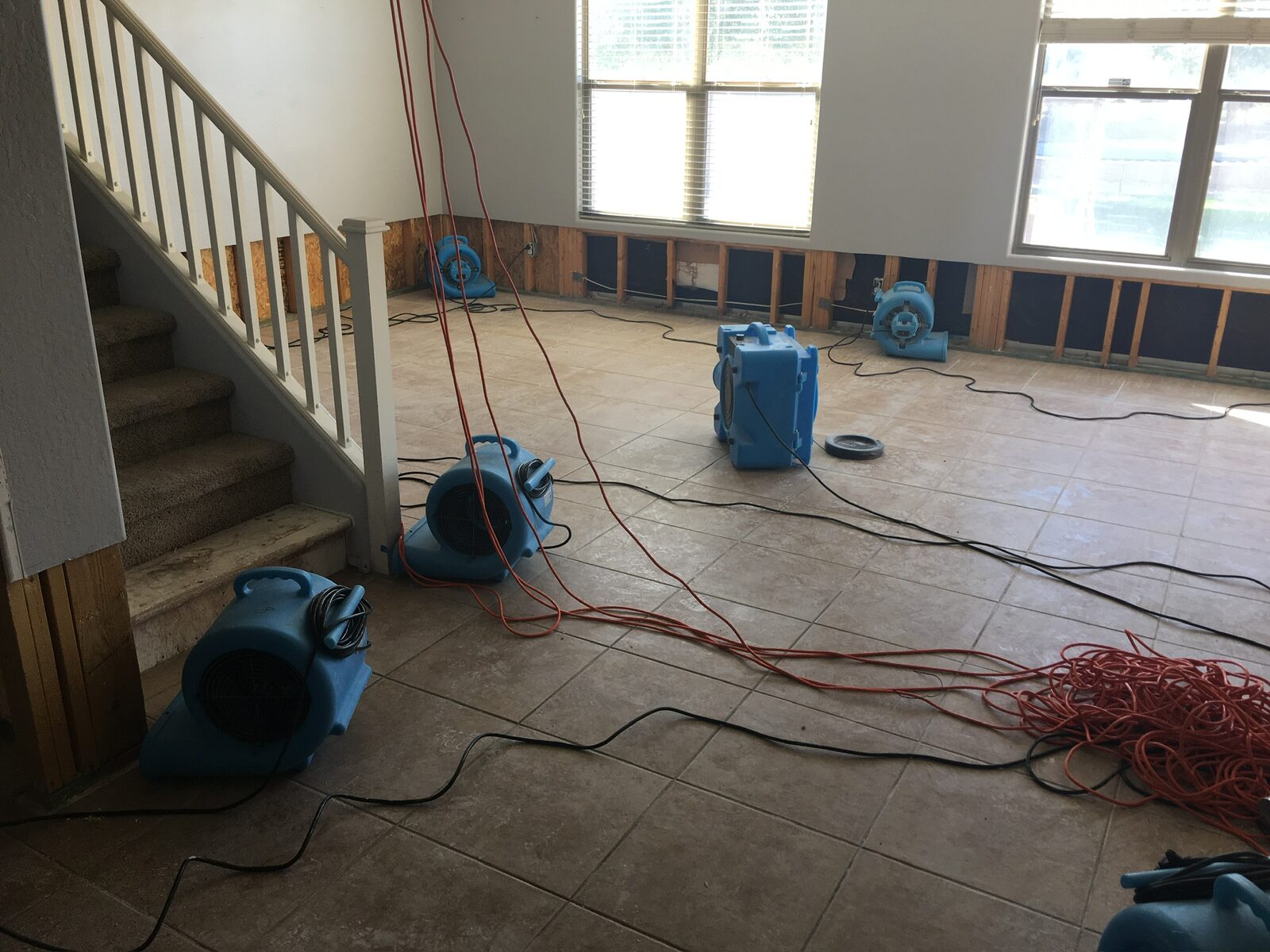
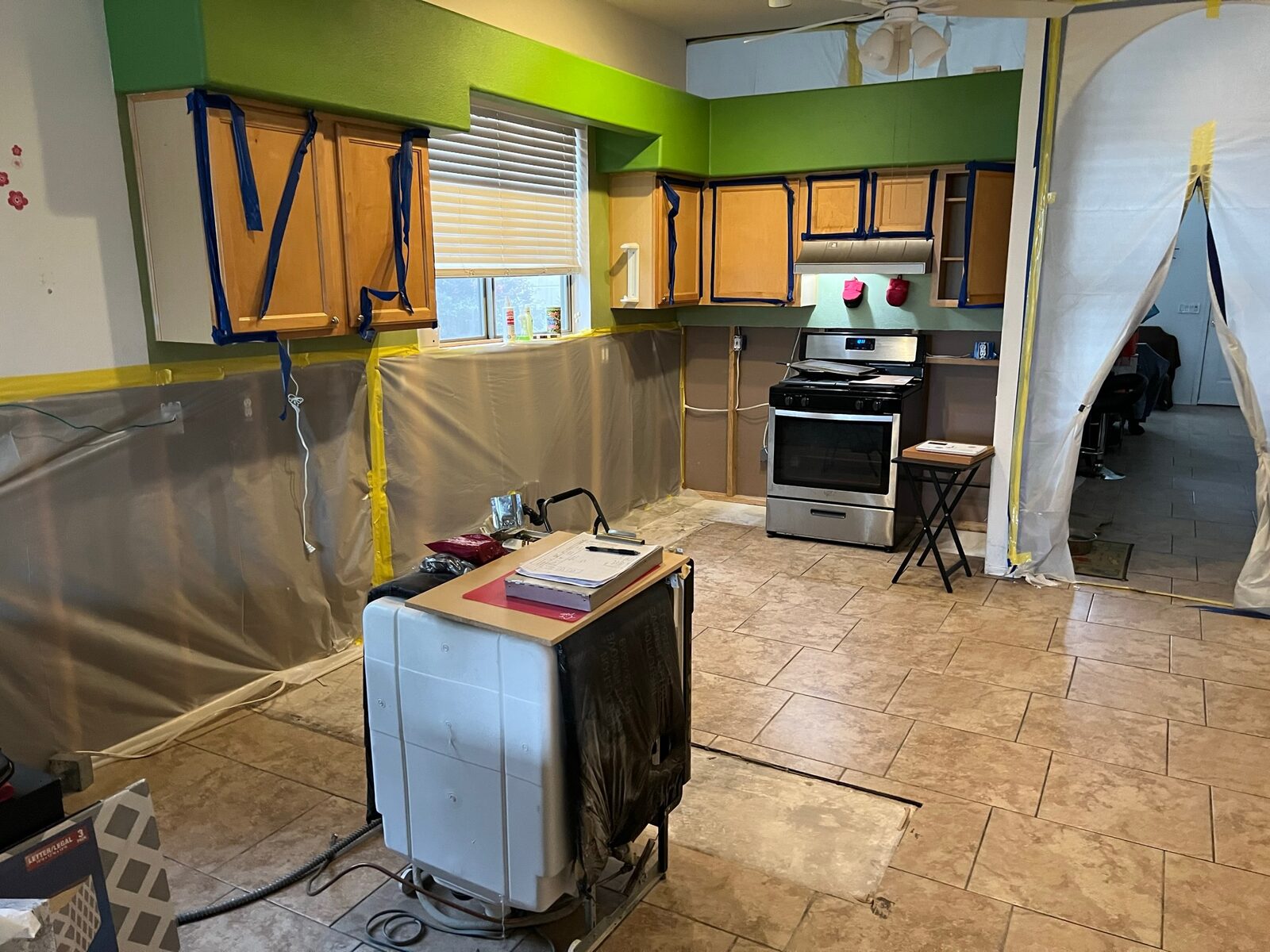
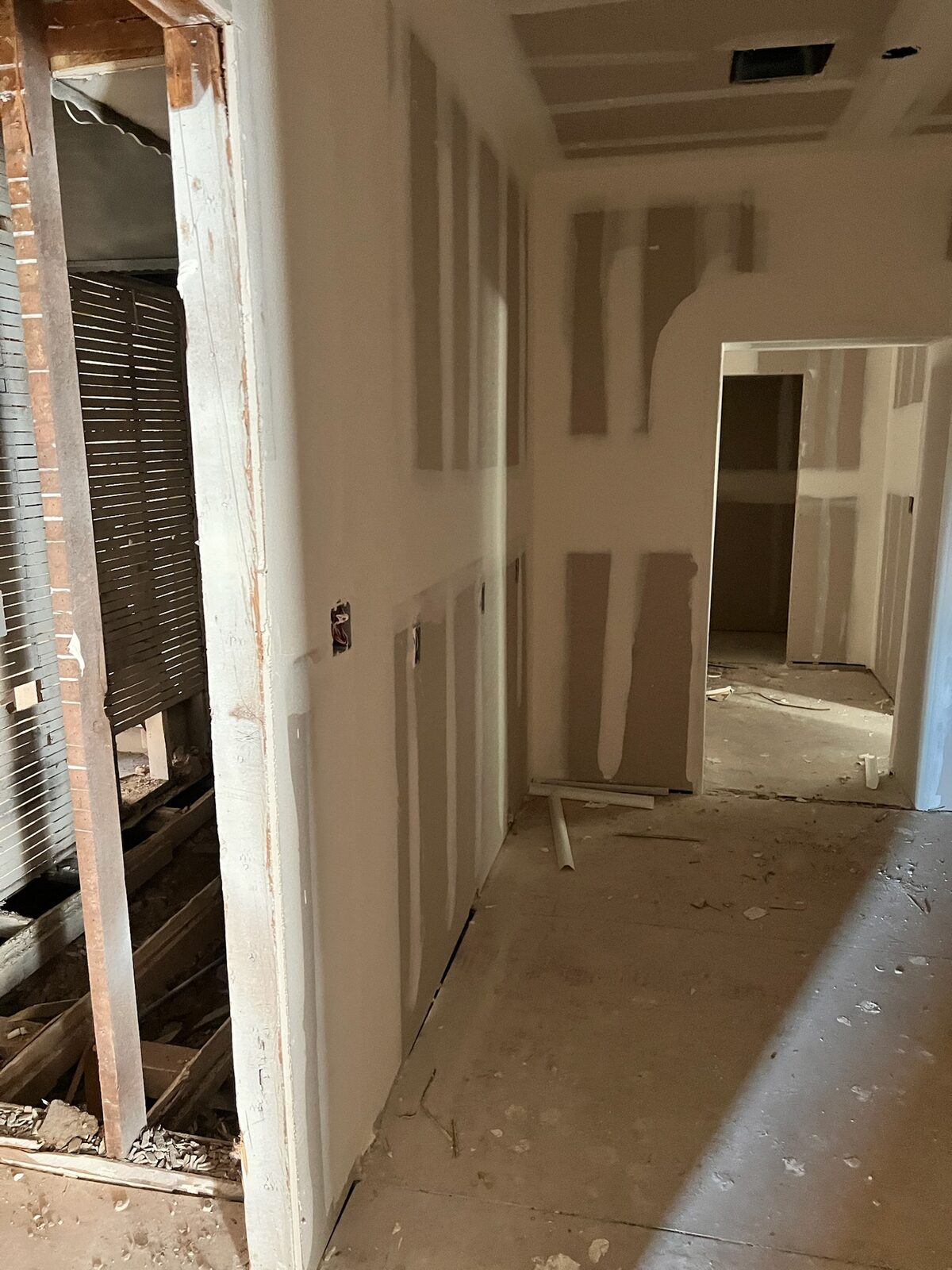
Residential reconstruction work by members of our team. See the full gallery
What drives the cost
Every job is priced from what is actually wet, which is why the inspection comes first and costs you nothing. These are the things that move the number.
How far the water spread
One bathroom floor is a different job from water that ran under walls into three rooms and the hallway.
What kind of water it is
Clean water from a supply line is handled differently from dirty water or sewage, which means removing more materials and more cleaning.
What got wet
Tile and slab often dry in place. Carpet pad, laminate, swollen particleboard cabinets and insulation usually come out.
How long it sat
Water caught in the first day or two is mostly a drying job. Water that sat longer means more removal and rebuild.
How long it takes
Inspection, moisture mapping, photos and, if you want to go ahead, extraction and equipment set the same visit.
Usually several days. The daily readings decide when it is done, not the calendar.
Depends on what came out. A strip of drywall and baseboard is quick; floors and cabinets take longer, partly on material lead times.
Working with your insurance
Most homeowners policies are written to cover sudden, accidental water damage, like a burst supply line, more than slow leaks or flood water from outside. Your policy wording decides. Take photos before anything is thrown out, keep every receipt, and call your insurer early.
If you call your insurer simply to ask questions about your coverage, explicitly state that you are making an "inquiry" and not filing a claim.
One call, from the roof to the last coat of paint.
- 1The roofTarped, then repaired or replaced.
- 2The water and smokeExtracted, dried, cleaned and checked.
- 3The rebuildDrywall, floors, cabinets and paint, put back.
A wet house is a drying job if you act in the first day or two; wait, and it becomes a rebuild.
Questions people ask us
Water is on my floor right now. What do I do first?
Shut off the water at the fixture or the main, keep people and pets out of wet rooms with outlets or cords, cut power to those rooms if you can reach the breaker from a dry spot, take photos, then call (480) 999-3339. The line is answered 24/7.
How fast does it need to be dried?
The EPA says to dry water-damaged areas and items within 24 to 48 hours to prevent mold growth. That is why extraction and drying start as soon as the source is stopped.
Can I just run fans and let the dry Arizona air do it?
Fans dry surfaces. They do not pull water out of a wall cavity, a cabinet base or a slab, and that hidden moisture is what turns into mold and swollen materials later. Meter readings are the only way to know.
Is the inspection really free?
Yes. It costs nothing to have us come out, find where the water went and walk you through what we find.
Are you licensed, bonded and insured?
Yes. Gold Water Fire works under Arizona ROC license #264344 (KB-2), carries the license bond and is insured. IICRC certification is held on our team.
Will my homeowners insurance pay for this?
Often for sudden, accidental water damage, like a burst line, but your policy wording decides. Photograph everything, keep receipts, and call your insurer early. If you only want to ask questions, Arizona's insurance department suggests saying it is an inquiry, not a claim.
Do you also do the repairs after it is dry?
Yes. Drywall, baseboard, flooring, cabinets and paint are handled by our own reconstruction team, led by Construction Manager Brandon Gurr, so you keep one company and one phone number.
What if the water came through the ceiling from the roof?
We handle that too. Gold Water Fire tarps and repairs roofs, dries the house underneath and puts the ceiling back, so a monsoon leak is one call.
What areas do you serve?
The whole Phoenix metro, from Peoria and Surprise in the northwest to San Tan Valley and Apache Junction in the southeast, and the cities in between. Our office is in Chandler.
Anywhere in the Phoenix metro.
From Peoria to San Tan Valley and Avondale to Apache Junction, plus the outlying towns past them. Our office is in Chandler.
Water on the floor right now?
Call and we will walk you through the next step. The line is answered day and night. Or tell us what happened, and we call you back and come out. It costs nothing to have us look.
Last updated 2026-11-03 by Gold Water Fire, Chandler, Arizona.
Sources
- US EPA, A Brief Guide to Mold, Moisture and Your Home
- National Weather Service Phoenix, 2025 Monsoon Season Review (season dates)
- Arizona DIFI, Homeowners Insurance consumer information
Fire Damage Restoration · Reconstruction & Rebuild · Roofing