
How a Refrigerator Ice Maker Water Line Fails Slowly, & the Floor Damage It Causes Before Anyone Notices
There is a particular kind of frustration in a problem that will not hold still long enough to be named. The kitchen floor has a soft spot near the fridge, or a plank that lifts at one edge and clicks under your heel. You mopped, you checked the dishwasher, you looked under the sink and found everything dry. Maybe you decided it was old flooring, or a bad install, or the house settling. Then it got a little worse, and the baseboard darkened, and the same thought came back around: something is going on here, and I still do not understand what. That feeling of watching a house change without knowing why is exhausting in a way that is hard to explain to anyone who has not lived with it.
How a Refrigerator Ice Maker Water Line Fails Slowly, & the Floor Damage It Causes Before Anyone Notices
Why the line fails quietly instead of bursting
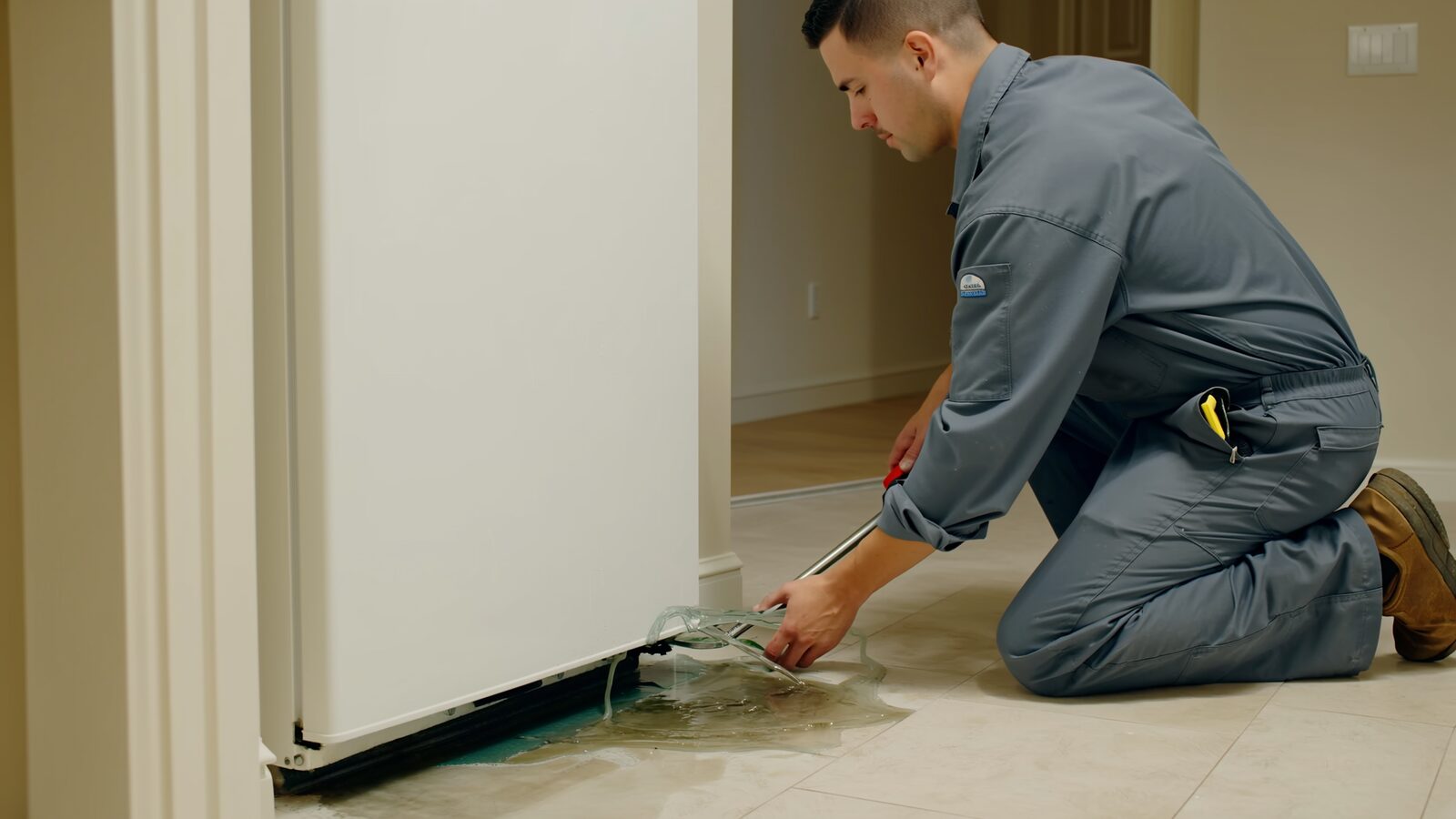
A refrigerator ice maker is fed by a small supply line, usually quarter inch, that runs from a valve under the sink or a saddle valve tapped into a nearby cold water pipe, then behind the cabinets to the back of the fridge. It is the smallest and least inspected water line in most houses, and it is under pressure every hour of every day. When it fails, it almost never fails dramatically. Three things wear it down. First, movement: every time the refrigerator is pulled out for cleaning or repair, the line is bent, kinked, and pushed back against the wall, and each bend work hardens the tubing at the same spot. Second, the fittings: compression nuts and saddle valve piercings loosen with vibration from the compressor cycling, and a fitting that weeps a drop every few minutes will never make a sound. Third, material age: the old gray or clear plastic tubing common in kitchens becomes brittle over years, and copper lines develop pinholes where they contact a cabinet edge or a screw. What comes out of any of these is not a stream. It is a slow seep, sometimes a few ounces a day, aimed directly at the floor under a heavy appliance that nobody moves.
Saddle valves
A saddle valve clamps around a copper pipe and pierces it with a small needle. They are convenient and they are notorious for weeping at the gasket years after installation. If your ice maker line starts at one, that valve is worth a look with a flashlight and a dry paper towel.
Compression fittings
The nut at the back of the fridge and the nut at the shutoff both rely on a ferrule seated tightly on the tube. Compressor vibration plus the tug of moving the appliance is enough to back one off slightly. The leak that follows is measured in drops.
Kinked plastic tubing
Push the fridge back too far and the tubing folds against the wall. The fold restricts flow, stresses the wall of the tube, and eventually splits along the crease. Often it splits partway, so it seeps rather than sprays.
The damage happens under the floor, not on top of it
A slow leak behind a refrigerator does not spread across the room. It goes down and sideways, into the seams of the flooring and along the subfloor, and it stays there because the refrigerator itself blocks evaporation and airflow. On a wood subfloor, the plywood or OSB absorbs the moisture and swells, and OSB in particular swells irreversibly, so the surface stays humped even after it dries. Laminate is often the first thing to show it: the fiberboard core wicks water, and edges peel and crown. Engineered wood cups. Solid hardwood cups and then buckles as boards press against each other. Vinyl plank and sheet vinyl are more forgiving to look at and worse in practice, because they hold the water underneath and hide it, so what you eventually notice is the adhesive letting go or a bubble that moves under your foot. On a concrete slab, which is common across the Phoenix area, the water spreads flat across the slab and travels under the flooring far past the refrigerator, and the first sign is often a lifted plank six feet away or a musty smell that comes and goes. Because the water is trapped, microbial growth becomes likely well before anyone sees a stain, and the cabinet toe kicks and the bottom of the base cabinet next to the fridge absorb moisture and start to swell and delaminate.
Signs on the surface
Cupped or crowned boards near the fridge, a plank edge you can catch with a fingernail, a soft or springy spot in the floor, discolored or swelling baseboard, a toe kick that looks darker at the bottom, or laminate seams that feel rough.
Signs you smell before you see
A musty or earthy smell in the kitchen that is stronger when you open the cabinet next to the fridge, or when the room has been closed up. Trapped moisture under flooring will smell before it will show.
Signs somewhere else entirely
Water on a slab or across a subfloor does not stay in the kitchen. Buckling at a doorway, a damp baseboard in an adjoining room, or staining on a ceiling below a second floor kitchen can all trace back to a quarter inch line.
How to find out what is actually happening behind the fridge
Do this carefully and in order. Lay a towel or cardboard runner down first, because pulling a refrigerator across a floor that is already compromised can gouge it. Unplug the refrigerator and pull it straight out, not at an angle, so the water line does not catch. Look at the floor where the unit was sitting: standing water, a ring of staining, a chalky mineral outline, or rust on the leveling feet all point to water that has been there a while. Then follow the line. Run a dry paper towel around the fitting at the back of the fridge, the fitting at the shutoff valve, and along the tubing itself, especially at bends. A fitting that is weeping will darken a paper towel in under a minute. Check the shutoff valve body too, not just the connection. Look at the bottom of the adjacent base cabinet, and press the toe kick with your thumb: if it gives, it has been wet. If the floor near the fridge feels soft, that is subfloor, and subfloor does not recover by drying alone. If you find a leak, close the shutoff valve, or close the main if the valve will not turn, and leave the refrigerator pulled out so air can reach the floor. Do not put it back and hope. The one thing worse than a slow leak is a slow leak with a heavy appliance parked back on top of it.
Why this kind of leak often turns into a repair, not just a dry out
Water that has been under a floor for weeks or months has already done structural work. Proper drying means getting moisture out of the subfloor and the framing, not just off the surface, which usually involves pulling the affected flooring, sometimes removing a section of base cabinet or toe kick, and reading moisture levels in the material rather than guessing. Once the material is dry, the question becomes what has to be rebuilt: flooring that swelled will not return to flat, damaged subfloor sheathing gets cut out and replaced, and cabinets that wicked water at the base often need the box repaired or replaced. That is the part homeowners rarely plan for, and it is why a leak that produced a few ounces a day can end up touching the floor, the cabinets, and the trim. Gold Water Fire handles both halves of that in the Phoenix metro area, the water damage restoration work of drying the structure and the reconstruction and rebuild work of putting the kitchen back together. If you want to talk through what you are seeing before you decide anything, you can reach us here or call (480) 999-3339.
Questions people ask us
How long can an ice maker line leak before anyone notices?
Often months. A weeping fitting can release a small enough volume that it never pools in the open, and the refrigerator blocks both the view and the airflow. The usual first clue is not water at all, it is a floor that feels different underfoot, a lifting plank edge, or a musty smell near the cabinet beside the fridge.
My floor is buckled but everything looks dry now. Is the problem over?
Not necessarily. Surface dryness tells you little about the subfloor or the slab beneath the flooring, and buckling means the material already absorbed enough water to swell. Materials like OSB subfloor and laminate core do not return to their original shape after drying, so the visible damage tends to stay even if the source has stopped.
Should I turn off the water to the whole house or just the fridge?
Just the fridge, if you can. There is normally a small shutoff valve under the kitchen sink or on a nearby cold water pipe that feeds only the ice maker line. If that valve is seized, corroded, or leaking at the body itself, shut off the main until it can be replaced.
Does a leak this small really need mold consideration?
Trapped moisture is what matters, not volume. Water held under flooring or inside a cabinet base with no airflow creates the conditions microbial growth needs, and it can happen well before there is a visible stain. That is the main reason a slow leak behind a refrigerator gets treated more seriously than its size suggests.
The standard our team works to
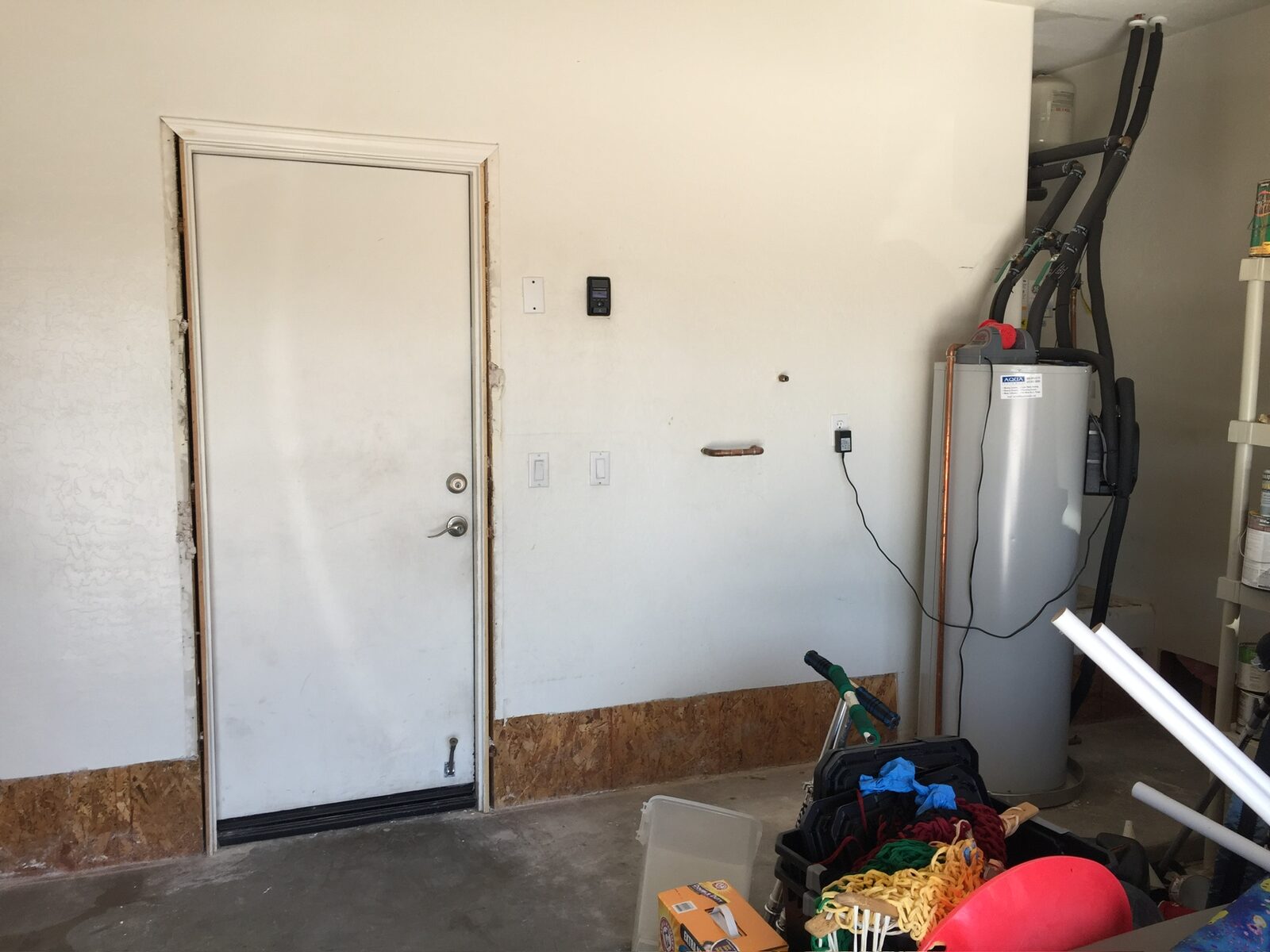
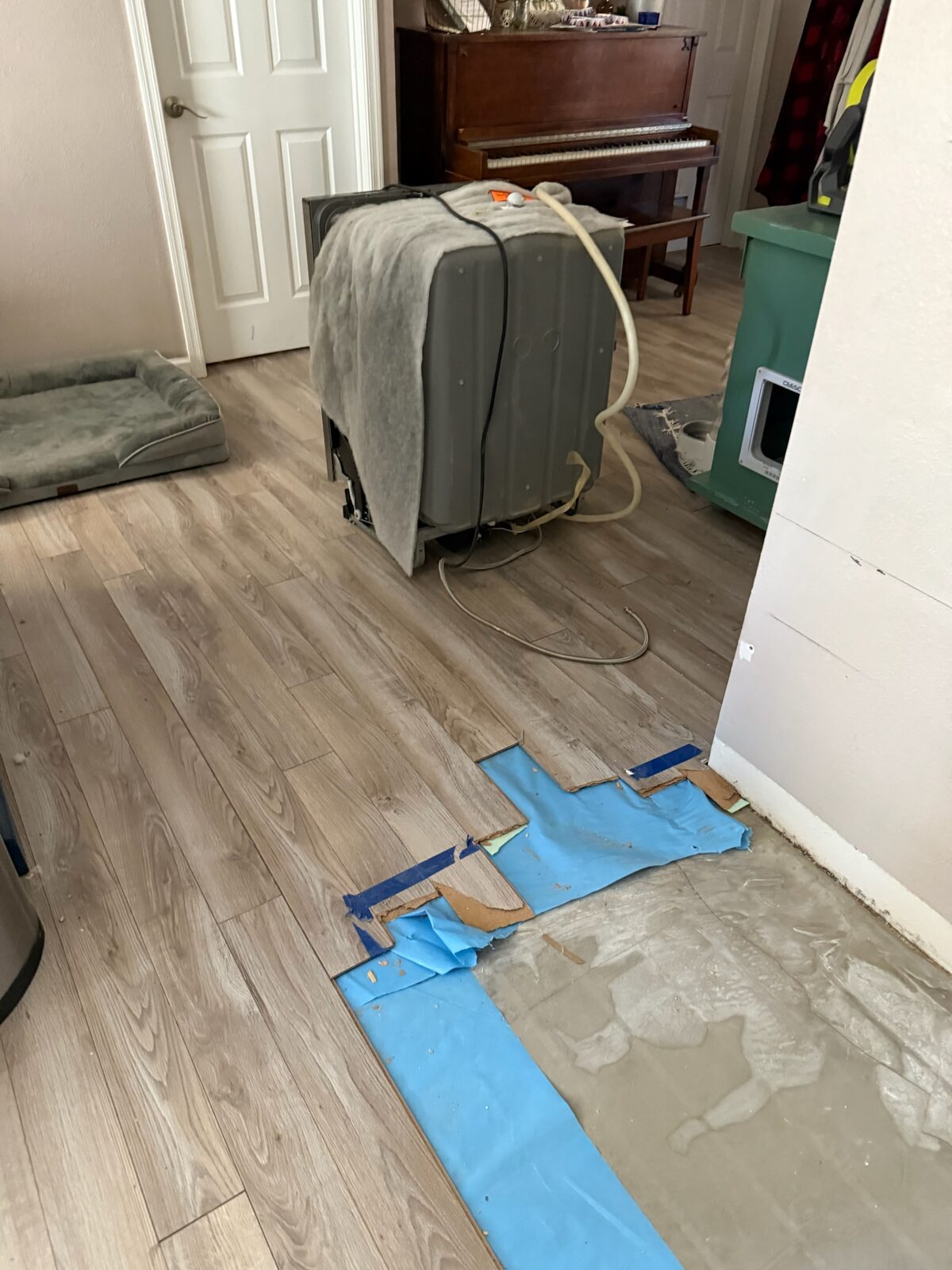
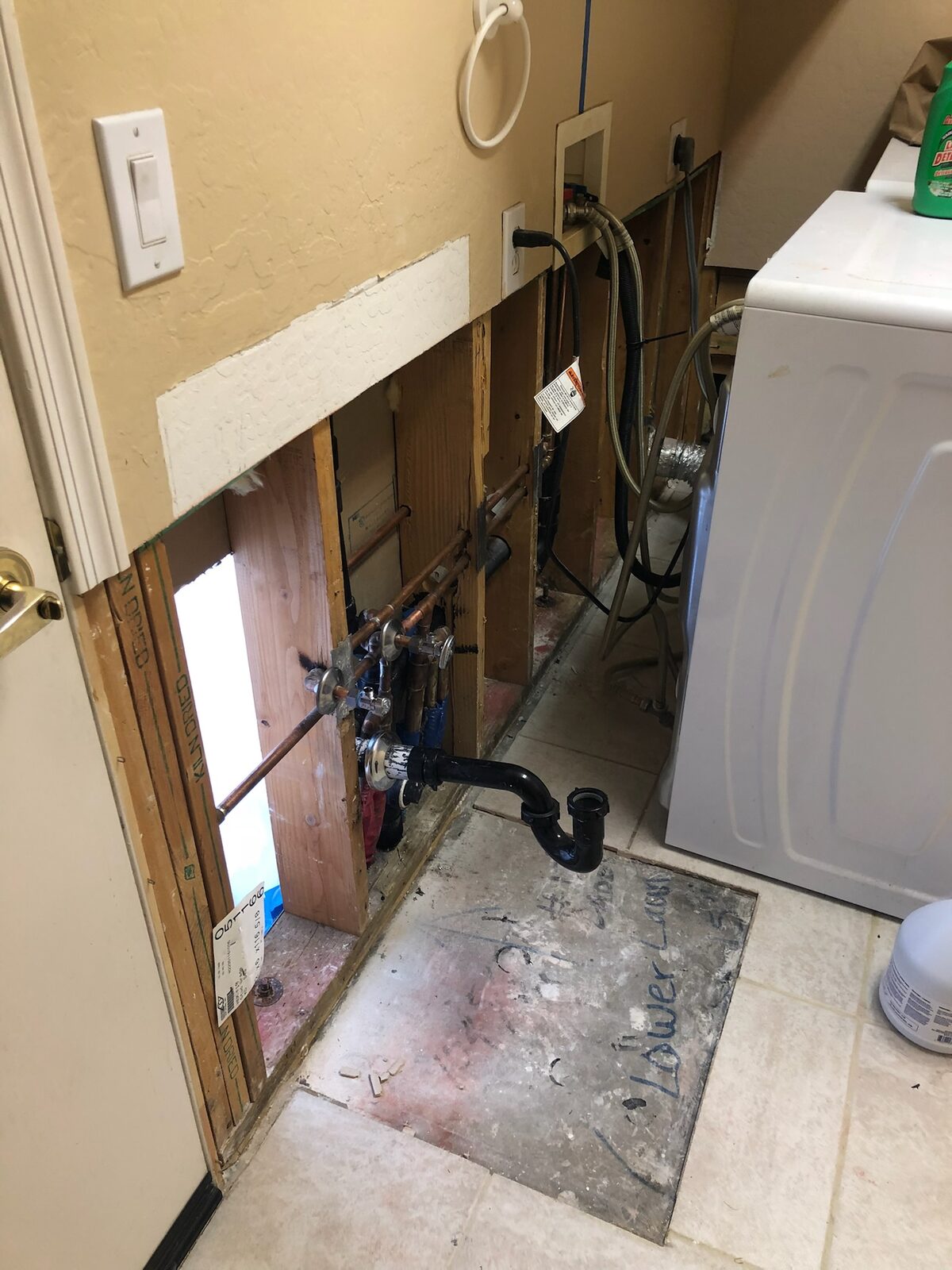
Residential reconstruction work by members of our team. See the full gallery →
More from Gold Water Fire
Abrasive Cleaning Methods for Soot on Framing and Masonry
A look at how abrasive cleaning methods remove soot from wood framing and masonry after a fire, and when each method fits the material.
AC Condensate Line Clogs & the Water Damage They Cause in Phoenix Homes
Why Phoenix AC condensate lines clog every summer, what the water damage looks like, and how to find the source before the ceiling stain spreads again.
Actual Cash Value vs Replacement Cost: Why Your Check Might Not Match the Repair Bill
Confused why your insurance check seems short after fire or water damage? Learn the difference between actual cash value and replacement cost coverage.
If the floor by your fridge has been telling you something
You do not have to have it figured out before you call. Describe what you are seeing, the soft spot, the lifted plank, the smell, and we will walk through what is likely happening under there and what checking it would involve. Gold Water Fire serves the Phoenix metro area, from Peoria and Avondale out to Queen Creek, San Tan Valley, and Apache Junction. Call (480) 999-3339 or email Help@goldwaterfire.com.
Call (480) 999-3339Water Damage Restoration · Reconstruction & Rebuild · Contact Gold Water Fire · About Our Team