
Tracing Attic Water Stains Back to the Real Entry Point
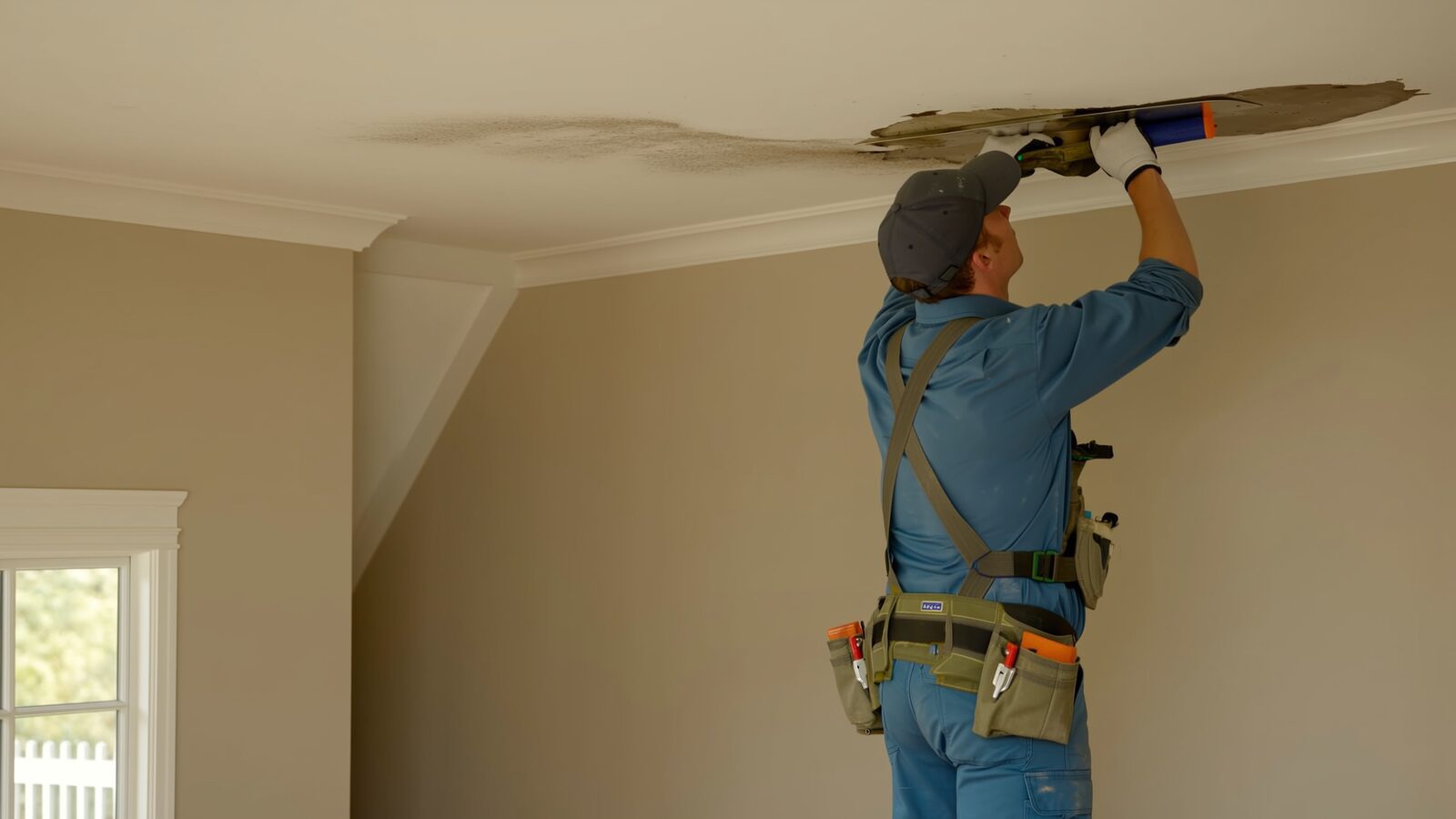
You noticed the stain a while ago. Maybe it was small enough to ignore, a faint yellow-brown ring near a light fixture or a corner where the ceiling meets the wall. Then it came back after the last rain, or it never really left, and now you're standing under it wondering how water got in when the roof "looks fine" from the ground. It's a strange kind of frustrating: you can see the evidence but not the cause, and every guess you make feels like it might be wrong. That gap between what you see and what's actually happening above your ceiling is exactly where this gets confusing, and it's worth understanding before anyone starts cutting into drywall.
Tracing Attic Water Stains Back to the Real Entry Point
Why the stain and the leak are rarely in the same spot
Water follows the path of least resistance, not a straight line down. Once it gets past roofing material, it travels along the underside of the roof deck, runs down a rafter or truss chord, follows a nail, pools on top of insulation, or wicks along a wire or vent pipe before it finally soaks through drywall far from where it entered. On a sloped roof, that entry point is almost always upslope from the stain, sometimes by several feet. This is the single biggest reason homeowners misjudge attic leaks: they patch the roof directly above the ceiling stain and the leak comes back next season, because the actual gap was never touched.
Where to actually look in the attic
Start at the stain, but treat it as a starting point, not the destination. Trace upward and outward from there, checking for darkened wood, mineral staining (a whitish or rust-colored trail), soft or sagging insulation, and any point where something penetrates the roof deck. Roof penetrations are the most common culprits: plumbing vent boots, HVAC curb flashing, swamp cooler pads, satellite dish mounts, chimney flashing, and valleys where two roof planes meet. Cracked or dried-out pipe boot rubber is especially common in Phoenix because of sustained UV exposure and heat cycling, and it can leak for a long time before a stain becomes visible from inside.
Reading the stain itself for clues
The shape, color, and edges of a stain tell you something about how the water arrived. A stain with a sharp, defined ring usually means an intermittent leak that dried between events, each ring marking a separate wetting. A soft-edged, spreading stain suggests ongoing or recent moisture, possibly still active. Dark brown or black staining can point to wood rot or mold growth, meaning the moisture has been present long enough for organic breakdown to start. A stain that appears only after wind-driven rain from one direction, but not after straight-down rain, usually means the entry point is a wall-to-roof transition or flashing joint that only fails when water is pushed sideways under a shingle or tile.
When it isn't the roof at all
Not every attic stain starts at the roof. HVAC condensate lines that have come loose or clogged, condensation on undersized or poorly sealed ductwork, a leaking evaporative cooler line, or even a bathroom exhaust fan that vents into the attic instead of outside can all produce staining that looks identical to a roof leak from below. In Phoenix, the swing between extreme daytime heat and cooler nights can cause condensation on ducting and metal fittings that mimics a slow roof leak over time. Before assuming roofing damage, it is worth checking every mechanical line and duct run that passes near the stained area.
Why this matters before repair work starts
Repairing drywall or repainting a ceiling without finding the true entry point almost always means doing the work twice. Wet insulation loses its effectiveness even after it dries, wood framing that has been repeatedly wetted can weaken or begin to rot, and hidden moisture is one of the conditions mold needs to take hold. Tracing the path correctly, from stain to entry point, is what determines whether a repair actually solves the problem or just covers it up for a season.
Questions people ask us
Why does the stain keep coming back after I patch the ceiling?
Because the drywall patch addresses the symptom, not the source. If the true entry point, often a cracked pipe boot, damaged flashing, or a gap at a roof penetration, is never repaired, water will keep entering the attic and finding its way to the same or a nearby spot on the ceiling.
Can a stain appear far from the actual leak?
Yes. Water travels along rafters, sheathing, insulation, and even wiring before it soaks through drywall, so the entry point on the roof is often upslope and to the side of where the stain shows up inside the house.
How can I tell if a stain is old and dry or an active leak?
Press gently on the stained area if it's safe to reach. Soft, spongy, or damp drywall suggests active or recent moisture. A hard, dry stain with a clearly defined ring usually means the leak occurred in the past and may or may not still be active, which is worth confirming during the next rain.
Is every attic stain caused by a roof leak?
No. Condensate lines, poorly sealed ductwork, evaporative cooler connections, and misdirected exhaust vents can all cause staining that looks the same as a roof leak, so it's worth checking mechanical systems in the attic before assuming the roof is at fault.
The standard our team works to
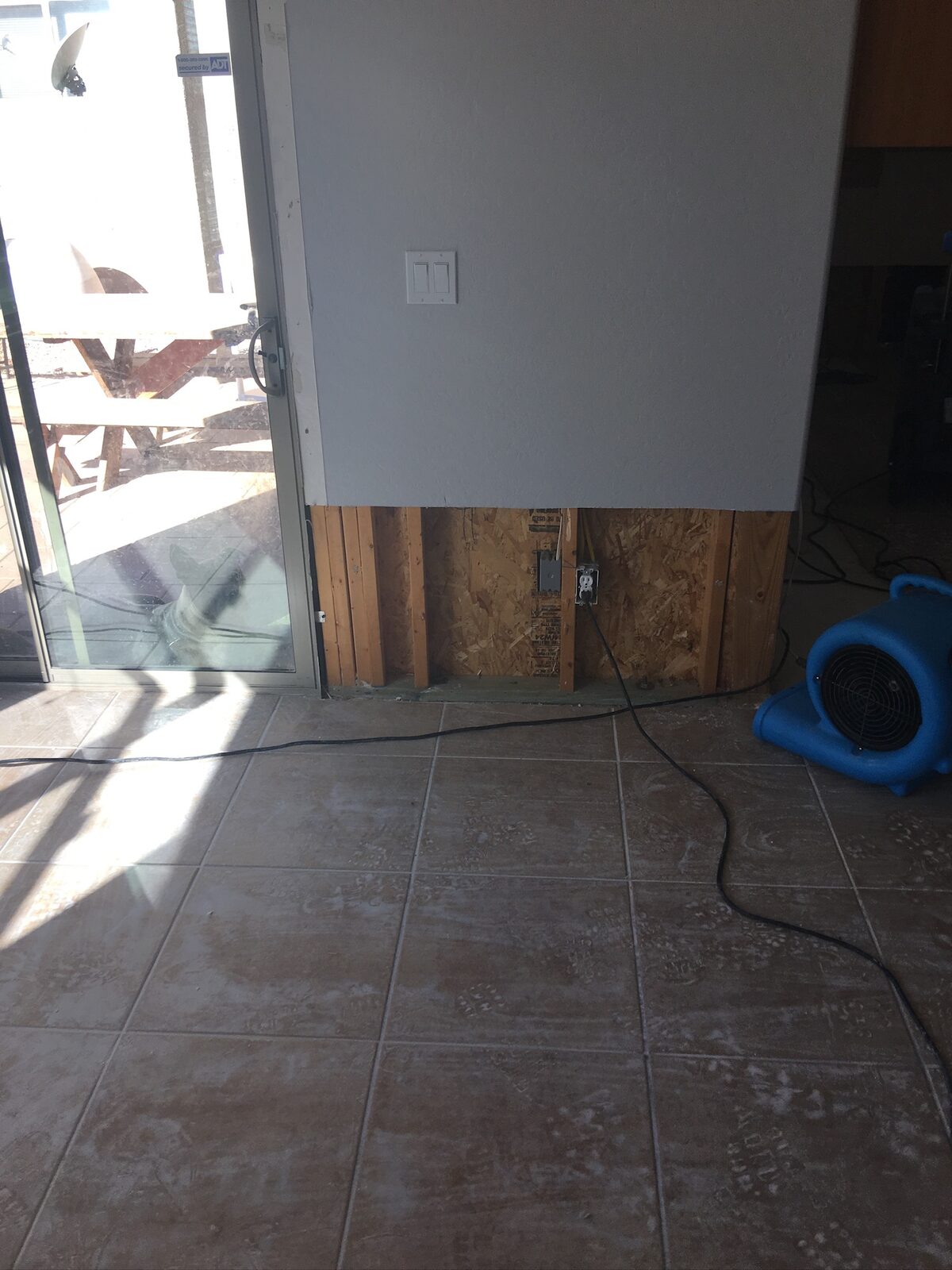
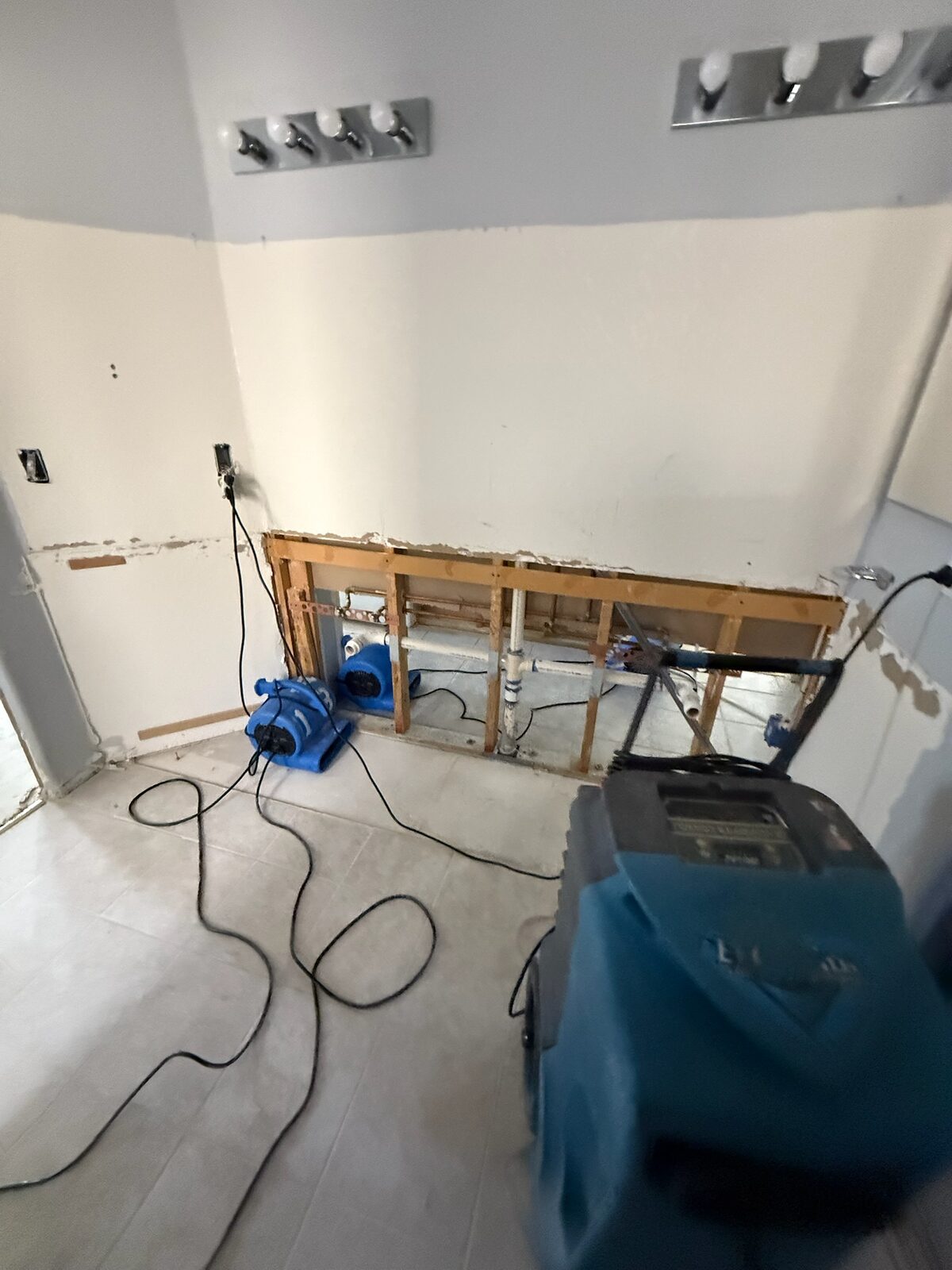
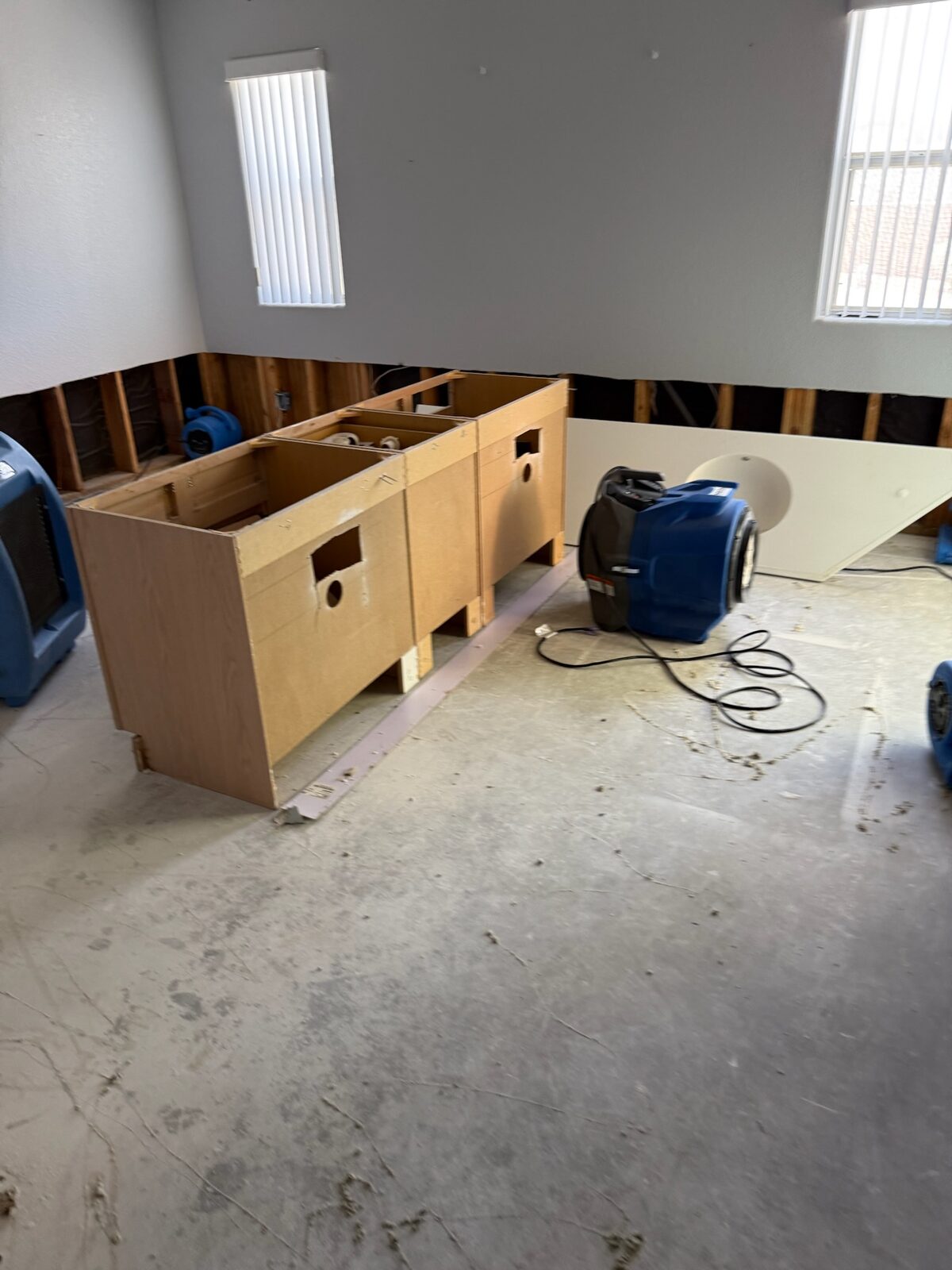
Residential reconstruction work by members of our team. See the full gallery →
More from Gold Water Fire
Abrasive Cleaning Methods for Soot on Framing and Masonry
A look at how abrasive cleaning methods remove soot from wood framing and masonry after a fire, and when each method fits the material.
AC Condensate Line Clogs & the Water Damage They Cause in Phoenix Homes
Why Phoenix AC condensate lines clog every summer, what the water damage looks like, and how to find the source before the ceiling stain spreads again.
Actual Cash Value vs Replacement Cost: Why Your Check Might Not Match the Repair Bill
Confused why your insurance check seems short after fire or water damage? Learn the difference between actual cash value and replacement cost coverage.
Not sure what you're looking at up there?
If you've traced a stain as far as you can and still aren't certain where the water is getting in, Gold Water Fire can take a closer look and explain what's actually happening before any repair work begins. Reach out through <a href="/contact.html">our contact page</a> or learn more about <a href="/water-damage-restoration.html">water damage restoration</a>.
Call (480) 999-3339