
Scuppers and Canales: Keeping Flat-Roof Drainage Clear Before Monsoon Season
If you've got a flat roof in the Phoenix area, you already know the drainage system is doing more work than most people realize, until it doesn't work at all. A clogged scupper or canale doesn't announce itself until water is pooling somewhere it shouldn't, and by then you're dealing with the aftermath instead of the cause. With monsoon season bringing sudden, heavy rain to a roof built for slow drainage, it's worth understanding how these systems work and what to check before the storms start.
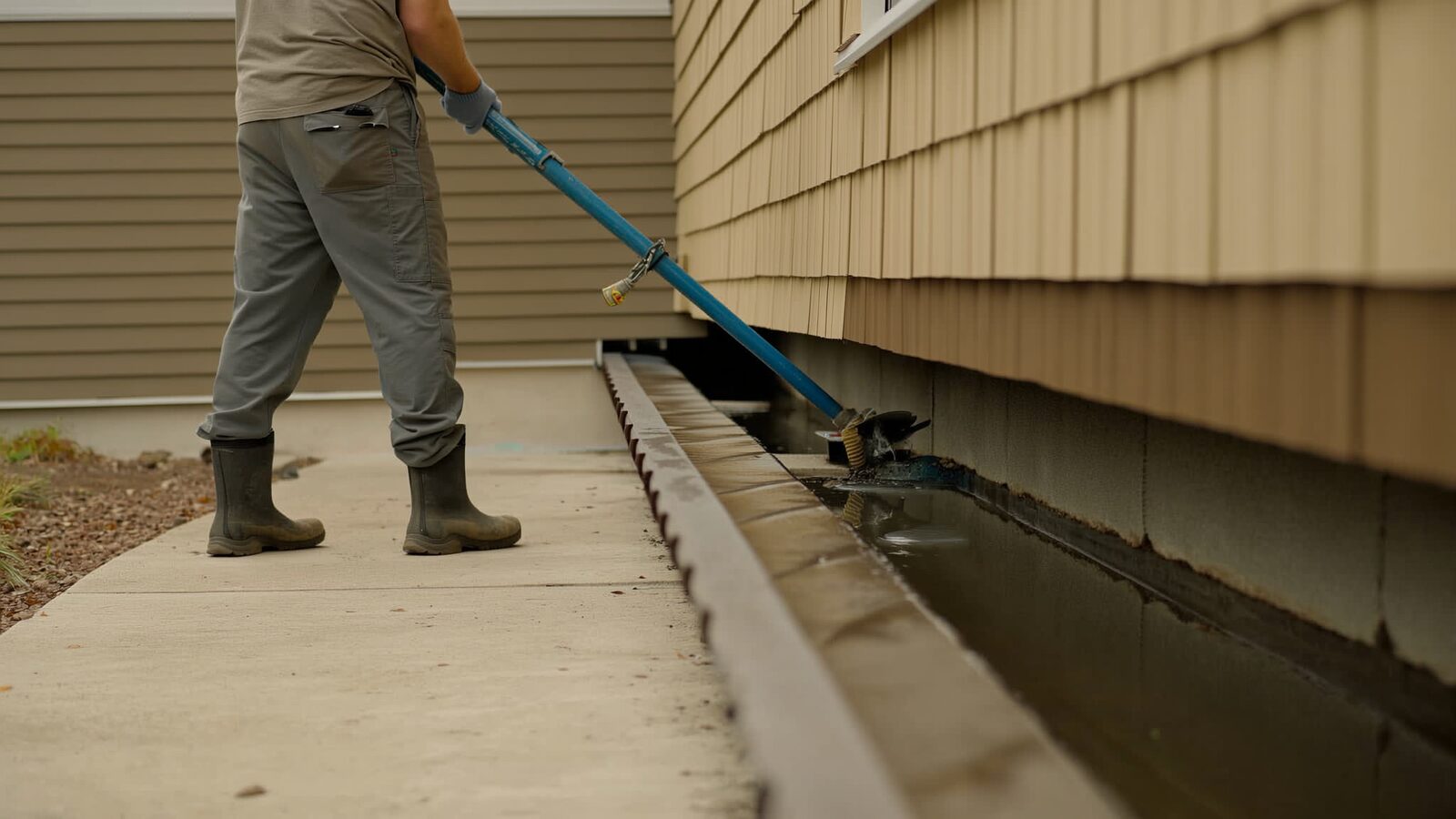
Scuppers and Canales: Keeping Flat-Roof Drainage Clear Before Monsoon Season
Why flat roofs depend on scuppers and canales
Flat roofs aren't perfectly flat. They're built with a slight slope, and sometimes with tapered insulation underneath, so rainwater moves toward specific low points instead of sitting evenly across the surface. Those low points lead to scuppers or canales built into the parapet wall, the raised edge that runs around a flat roof. Without a clear path through that wall, water has nowhere to go but up and over, or down through any weak spot in the roofing membrane. In a region where roofs are mostly flat or low-slope, these openings are doing the job that gutters and downspouts do on a pitched roof, just with far less margin for error.
What clogs them, and why monsoon season makes it worse
Between storms, scuppers and canales collect whatever blows or washes onto the roof: dust, dead leaves, palm fronds, seed pods from mesquite and palo verde trees, and grit that settles out of the air during Arizona's dry, dusty stretches. None of that is a problem in light rain. It becomes a problem when a monsoon cell drops a large amount of water in a short window, because a partially blocked opening that could handle a slow drizzle can't keep up with a downpour. The debris that built up quietly over months of dry weather suddenly has to move all at once, and often it can't.
A pre-monsoon drainage check you can do from the ground and the roof
Before the season starts, walk the perimeter of the building and look up at every canale opening for visible blockage, staining, or a dried mud line that shows where water backed up in a past storm. If you can safely access the roof, check each scupper opening for leaves, dirt, or nesting debris, and clear away anything within reach using gloved hands or a soft brush, not a metal tool that could damage the flashing. Run a hose through each opening to confirm water exits freely and quickly on the other side. Check the roof surface itself for standing water, low spots, or ponding well away from any drain, which can mean the roof's slope has settled over time and needs more than just a cleared opening.
Look for staining or dried mud lines
A ring or line of dirt below a scupper or canale opening is a sign water backed up there in a past storm, even if the opening looks clear now.
Test with a hose, not just a visual check
A clear-looking opening can still be partially blocked further down the channel. Running water through confirms it actually drains.
Note any ponding away from drains
Standing water in the middle of the roof, not near a scupper, often points to a slope or structural issue rather than a simple clog.
When a clog turns into a bigger repair
A scupper or canale that's been blocked through a storm can leave more than a mess behind. Standing water on a flat roof adds significant weight and pressure on the membrane, and it doesn't take much of a gap, a cracked seam, a lifted flashing edge, for that water to work its way into the roof deck, the parapet wall, or the interior ceiling below. If you've had water intrude after a storm, drying it out properly matters more than it might seem, since moisture trapped in roofing layers, insulation, or drywall can lead to problems well after the rain stops. That's the kind of situation covered in more detail on our water damage restoration page. If the water intrusion damaged roofing materials, framing, or interior finishes, that repair work falls under reconstruction and rebuild.
Questions people ask us
What is the difference between a scupper and a canale?
A scupper is a rectangular or round opening built into a parapet wall that lets water drain off a flat roof, often fitted with a metal box or sleeve. A canale is a similar opening but usually refers to the decorative scupper style common on Southwest and territorial-style homes, often a simple channel or spout without a downspout attached. Both do the same basic job: give roof water a way off the roof instead of pooling behind a parapet wall.
How many scuppers or canales does a flat roof need?
It depends on the roof's size, slope, and the number of low points (called crickets or valleys) built into the roofing membrane to direct water. Most flat roofs have at least two drainage points so that if one clogs, the other can still handle water. A roofing contractor can tell you whether your roof's drainage points are adequate for its size.
Can I clean a scupper or canale myself?
Clearing visible debris like leaves, palm fronds, and dirt from the opening and the first foot or two of the channel is something many homeowners handle themselves with gloves and a garden hose, as long as they can safely access the roof or use a ladder from the ground for low canales. Anything beyond that, or any sign the roofing membrane around the opening is damaged, is worth having a professional look at before you climb up there.
What happens if a scupper stays clogged during a monsoon storm?
Water backs up behind the parapet wall faster than it can drain through a single blocked opening, since monsoon storms often drop a large amount of rain in a short time. That standing water adds weight to the roofing membrane, can find any seam or crack to leak through, and in bad cases can rise high enough to spill over the parapet wall itself and run down exterior walls or into the building.
The standard our team works to
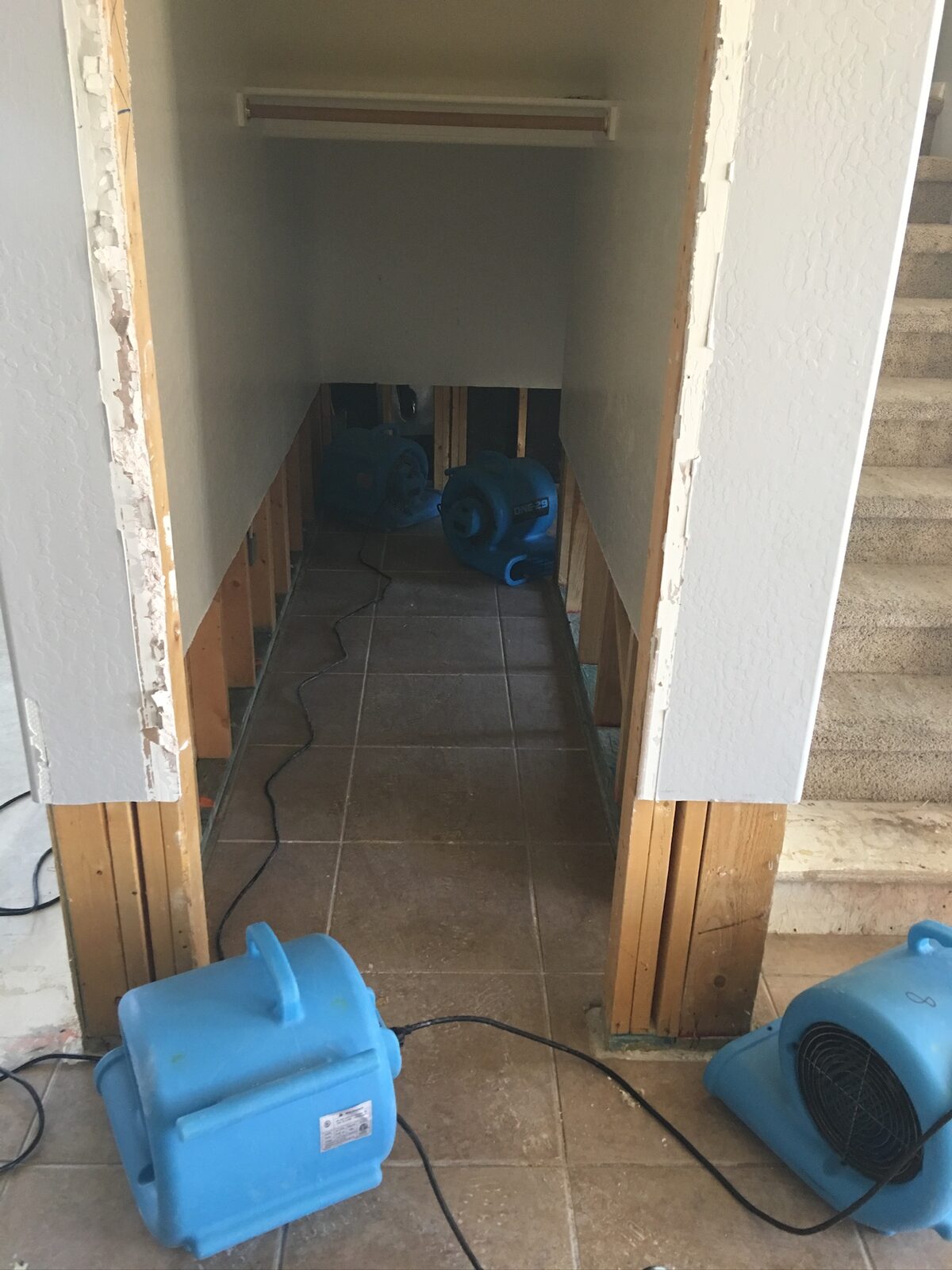
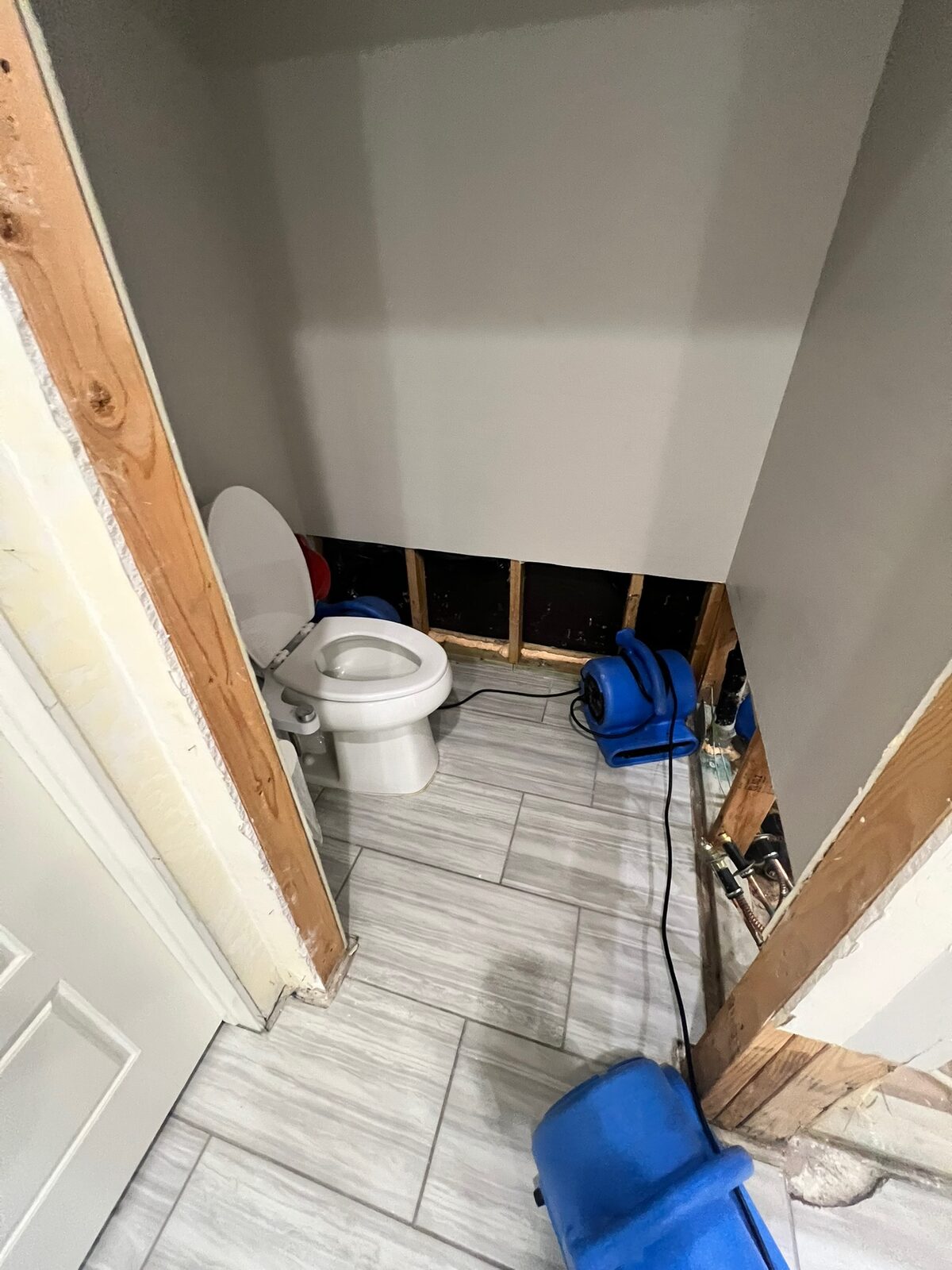
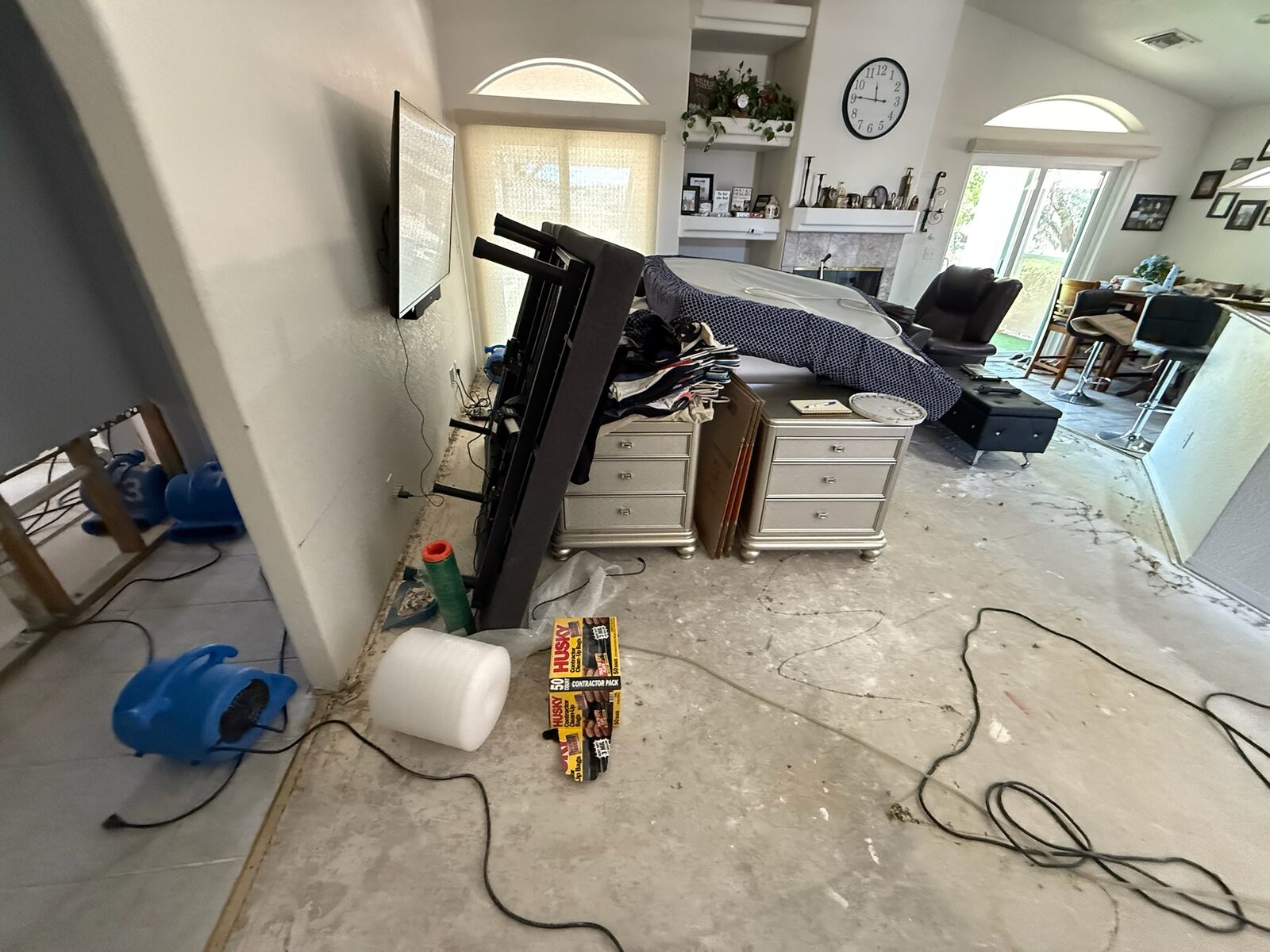
Residential reconstruction work by members of our team. See the full gallery →
More from Gold Water Fire
Abrasive Cleaning Methods for Soot on Framing and Masonry
A look at how abrasive cleaning methods remove soot from wood framing and masonry after a fire, and when each method fits the material.
AC Condensate Line Clogs & the Water Damage They Cause in Phoenix Homes
Why Phoenix AC condensate lines clog every summer, what the water damage looks like, and how to find the source before the ceiling stain spreads again.
Actual Cash Value vs Replacement Cost: Why Your Check Might Not Match the Repair Bill
Confused why your insurance check seems short after fire or water damage? Learn the difference between actual cash value and replacement cost coverage.
Already seeing water where it shouldn't be?
If a clogged scupper or canale let water sit on your roof or run down your walls, it helps to have someone look before monsoon season adds more rain. Reach out to Gold Water Fire and we'll talk through what you're seeing.
Call (480) 999-3339Water Damage Restoration · Reconstruction & Rebuild · Contact Gold Water Fire