
A Leaking Garbage Disposal & the Cabinet Damage It Hides
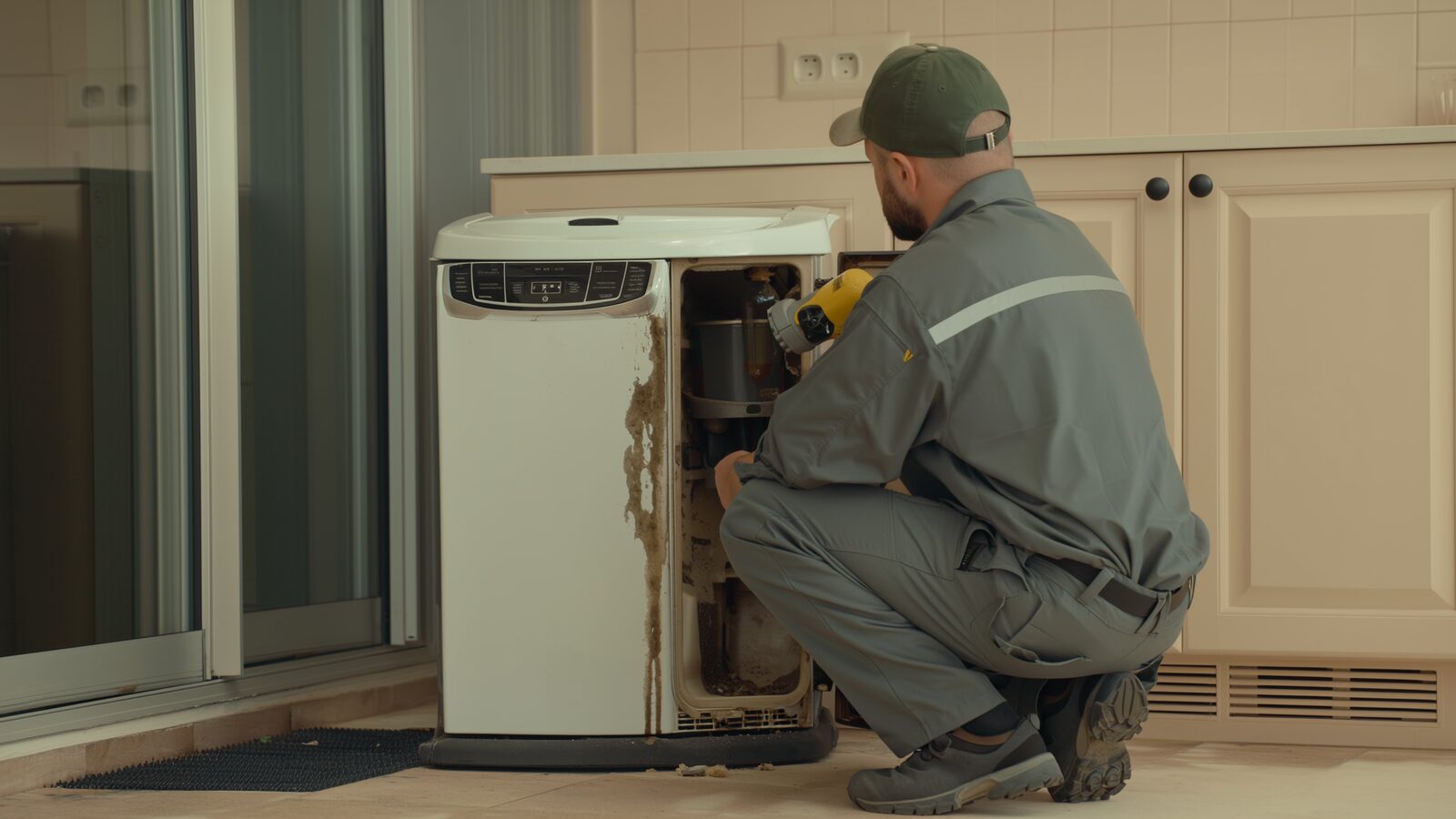
You put a towel down under the sink a while back. Then you replaced it. Then you started keeping the dish soap and the sponges on the counter instead, because the bottom of the cabinet had gone soft and dark and nothing you set there stayed dry. Maybe you tightened something and it seemed better for a week. Maybe a plumber came out and it stopped, and then months later there was that smell again, sour and closed-in, the one you notice most when you open the cabinet door in the morning. It is a small leak. That is the strange part. It is so small that it never feels like the day to deal with it, and yet here you are again, wondering why this keeps happening and what exactly is going on down there that you cannot see.
A Leaking Garbage Disposal & the Cabinet Damage It Hides
Why the Same Leak Keeps Coming Back
A garbage disposal is not one seal. It is a stack of connections, and each one fails in its own way, which is why fixing the obvious drip often just moves the problem. Sink flange at the top: the plumber's putty or gasket where the disposal meets the sink basin dries out and shrinks, so water runs down the outside of the disposal body every time you fill the sink and looks like it came from the bottom. Dishwasher inlet on the side: a hose clamp loosens or the rubber hose hardens, and it only leaks during a dishwasher cycle, which is often at night when nobody is watching. Discharge tube gasket: the flat rubber washer where the drain pipe bolts on compresses over years and weeps a little under every drain. And then the housing itself. When water shows up from the bottom seam of the disposal, the internal seal between the motor and the grinding chamber has usually gone, and no amount of tightening fixes that, because the unit is leaking through itself. That is the leak people chase for a year.
Only leaks when the sink is full
Points up, at the sink flange. Standing water finds the gap that a running faucet never reaches.
Only leaks after the dishwasher runs
Points sideways, at the dishwasher inlet hose and its clamp.
Constant slow damp with no clear source
Often the discharge gasket, weeping a small amount every time anything drains.
Water at the bottom seam of the unit
Usually an internal seal failure. Tightening connections will not stop it.
What Water Does to Cabinet Materials
Most sink base cabinets are built from particleboard or MDF with a thin laminate or melamine skin. That skin is the only thing keeping water out, and once it is cut for a drain hole or scratched by a bucket, the raw core is exposed. Particleboard is wood chips held together with glue and pressed. Water breaks the glue bond and the chips swell, so the board does not just get wet, it gets thicker, and it stays thicker after it dries. That is the swollen, crumbly edge you feel at the back of the cabinet floor. Because the swelling is permanent, a cabinet deck that has taken repeated wetting cannot be dried back to sound material, and it will hold moisture longer each time. Meanwhile the water has not stayed in the cabinet. The cabinet deck usually sits above a toe kick void and the subfloor, and water tracks along the seam where the deck meets the back panel, down into places nobody opens. Signs worth checking: flooring buckling or cupping in front of the sink, a baseboard on the far side of the wall that has darkened, a drywall stain low on the wall in an adjacent room or hallway, and any cabinet door or drawer front near the sink that has started to swell at its bottom edge.
Mold, Smell & the Air Under the Sink
Mold does not need standing water. It needs a material that stays damp, and the cabinet deck under a sink is close to ideal: cellulose-based board, no air movement, dark, warm, and reliably re-wetted before it can fully dry. In Phoenix, low outdoor humidity fools people here. The room air is dry, the house feels dry, so a homeowner reasonably assumes anything wet will dry on its own. Inside a closed cabinet with a slow supply of water, it will not. The musty smell you notice when you open the door is not the leak itself, it is microbial growth on the board and on the back panel. If you decide to look, take everything out, put a flashlight low and shine it sideways across the deck rather than straight down, because sidelight shows swelling and staining that overhead light flattens out. Check the underside of the sink basin and the top of the disposal for hard white mineral crust, which marks where water has been evaporating for a long time. Press the deck at the back corners with your thumb. Firm board resists. Compromised board gives, or flakes. That test tells you more than the surface appearance does.
When a Repair Stops Being a Plumbing Job
Stopping the leak and fixing what the leak did are two separate pieces of work, and it helps to see them that way. A plumber or a disposal replacement addresses the source. It does not address a swollen cabinet deck, a wet subfloor, damp drywall behind the cabinet, or growth on the framing. If the water has been going for a while, the honest sequence is: stop the source, find out how far the moisture actually traveled, dry the structure, then remove and rebuild what cannot be dried. Materials like particleboard, insulation and pad are usually removed rather than dried, because they do not return to their original strength. Framing, plywood and drywall can often be dried in place if the drying starts before growth sets in. Where the cabinet deck, the toe kick, or a section of subfloor has to come out, that is carpentry, and putting a kitchen back so the sink, the countertop and the flooring meet correctly is reconstruction and rebuild work rather than a patch. The water damage restoration side is what happens between those two, and skipping it is the reason some kitchens smell the same after the repair as they did before it. If you want to talk through what you are seeing before deciding anything, you can reach out or call (480) 999-3339.
Questions people ask us
Can I just dry out the cabinet bottom with a fan?
Air movement helps, but only if the water source is stopped first and only if the material is still sound. Particleboard and MDF swell permanently once the glue bond breaks, so a deck that is already thickened and crumbling at the edges will not come back with drying. A fan also does nothing for water that has already tracked past the cabinet into the subfloor or the wall cavity behind it.
How do I tell if the leak is the disposal itself or something else?
Dry everything completely, then test one thing at a time. Fill the sink and release it, and watch the top flange. Run the dishwasher and watch the side inlet hose. Run the faucet and watch the discharge pipe joint. If nothing shows during those tests but water reappears at the bottom seam of the disposal housing, the internal seal has likely failed and the unit needs replacing rather than tightening.
The leak was small. Do I really need to look past the cabinet?
Small and long-running does more hidden damage than large and short. A slow leak keeps a material wet without ever making a puddle that gets noticed. Check the flooring in front of the sink, the baseboard on the other side of that wall, and the lower drywall in any adjacent room. If those are clean and the cabinet deck is still firm, you likely caught it early.
Does Gold Water Fire work in my part of the Phoenix area?
Gold Water Fire serves the full Phoenix metro area, roughly northwest to Peoria, southeast to Avondale, southwest to San Tan Valley, northwest to Apache Junction, and outlying areas further than that. That includes Phoenix, Mesa, Chandler, Scottsdale, Gilbert, Tempe, Glendale, Queen Creek and the surrounding cities. You can learn more about the team or call (480) 999-3339.
The standard our team works to
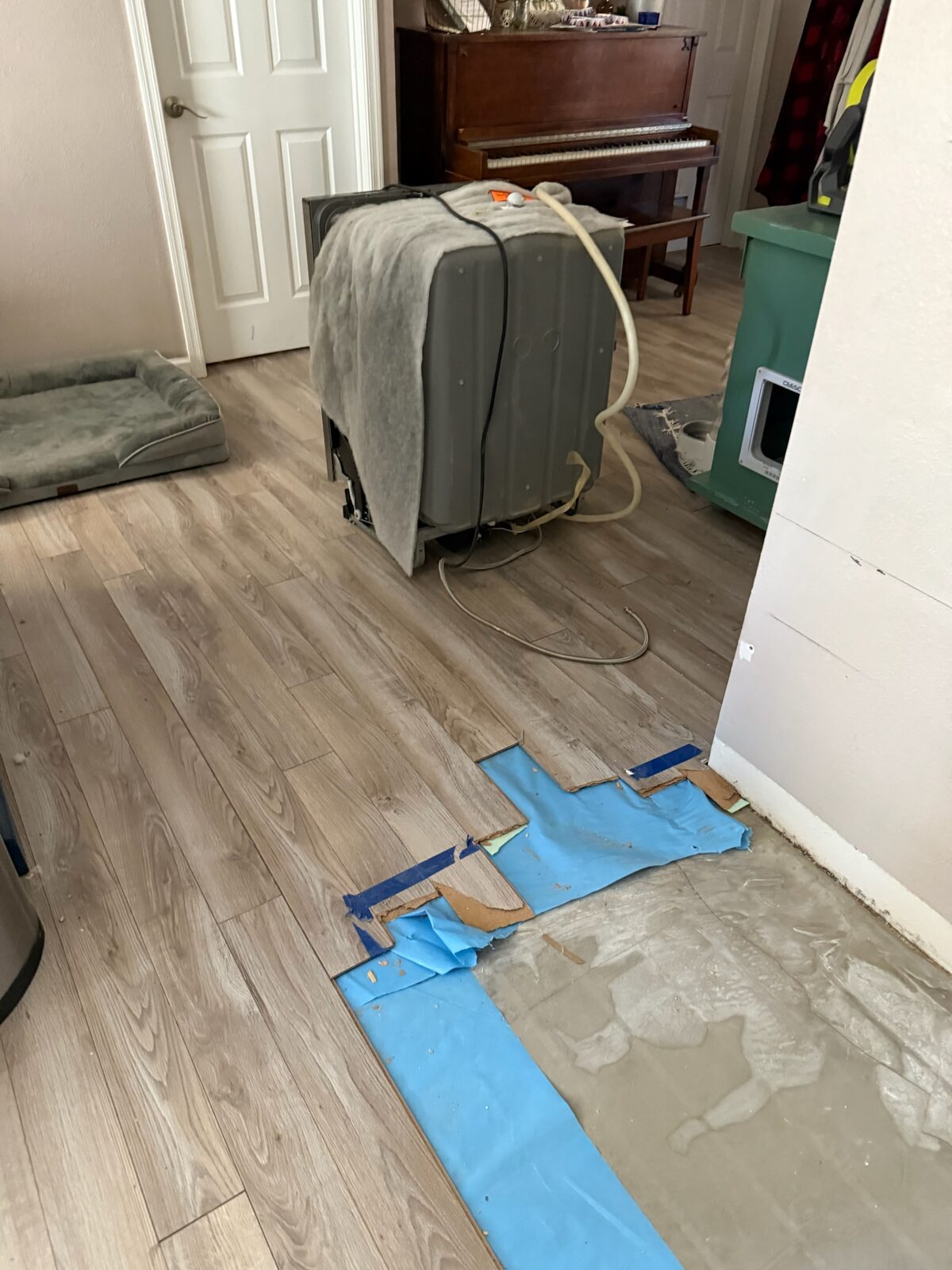
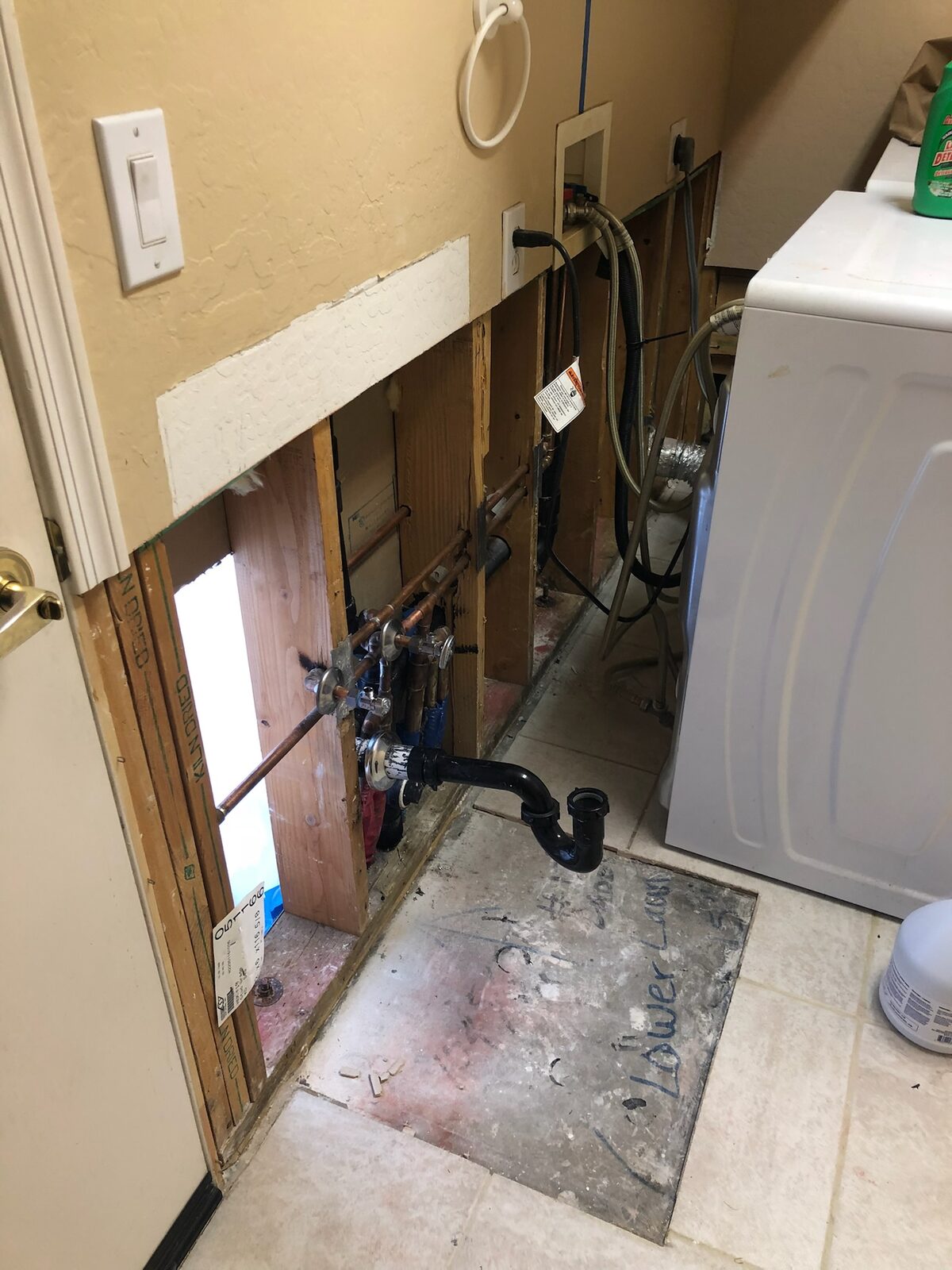
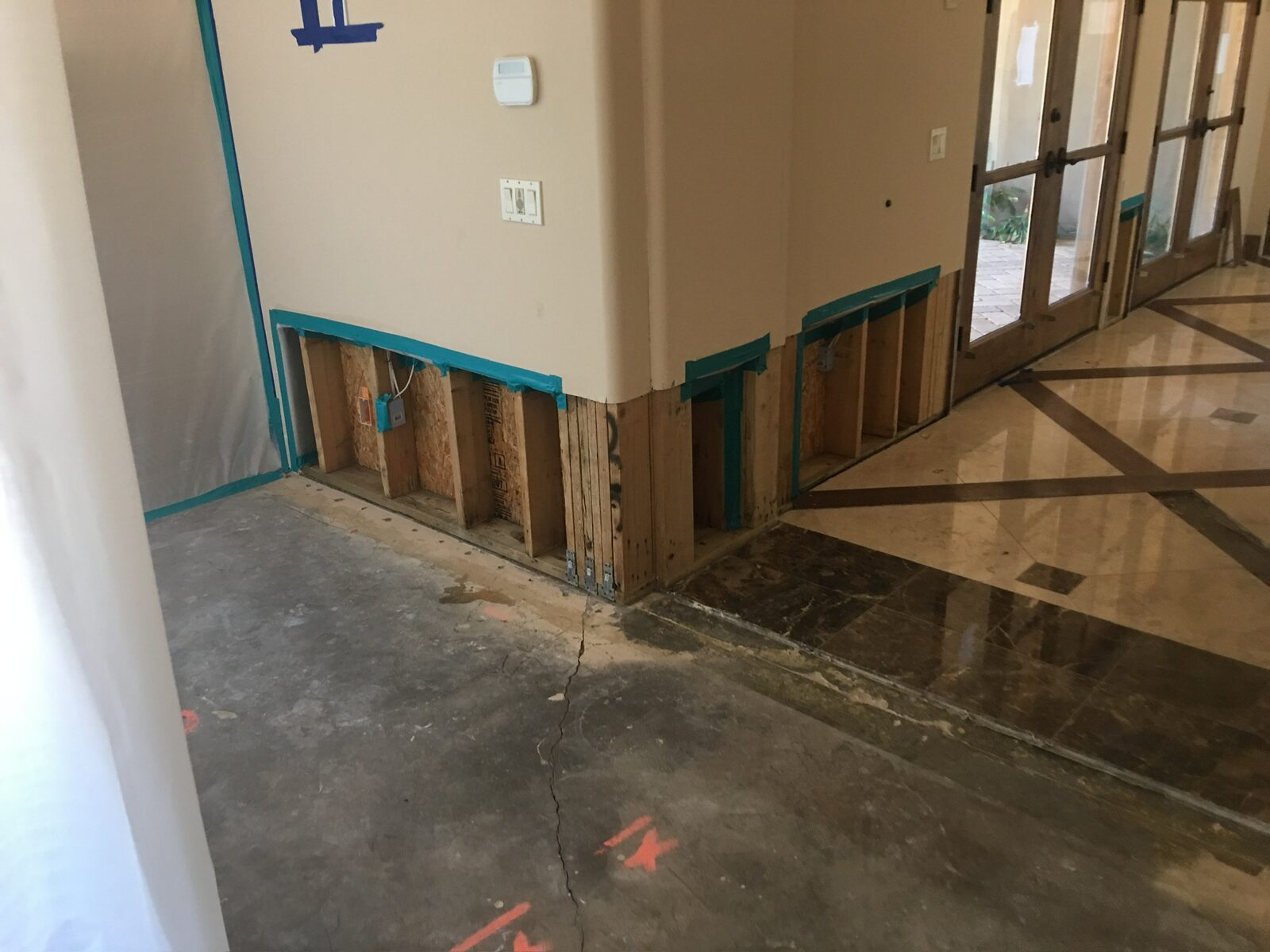
Residential reconstruction work by members of our team. See the full gallery →
More from Gold Water Fire
Abrasive Cleaning Methods for Soot on Framing and Masonry
A look at how abrasive cleaning methods remove soot from wood framing and masonry after a fire, and when each method fits the material.
AC Condensate Line Clogs & the Water Damage They Cause in Phoenix Homes
Why Phoenix AC condensate lines clog every summer, what the water damage looks like, and how to find the source before the ceiling stain spreads again.
Actual Cash Value vs Replacement Cost: Why Your Check Might Not Match the Repair Bill
Confused why your insurance check seems short after fire or water damage? Learn the difference between actual cash value and replacement cost coverage.
Not Sure How Far the Water Went
If you have been chasing the same damp cabinet for months and want someone to look at what is under and behind it, call Gold Water Fire at (480) 999-3339 or email Help@goldwaterfire.com. Based in Chandler, serving the Phoenix metro area. AZ ROC #264344 KB-2.
Call (480) 999-3339Water Damage Restoration · Reconstruction & Rebuild · About Gold Water Fire · Contact Us