
Laminate Flooring and Water: Why It Swells and Rarely Recovers
You wiped up the water within minutes. Maybe it was a leaking dishwasher, a pet accident, or a spill you caught almost as soon as it happened. But a day or two later, the boards along that spot are puffed up, the seams are lifting, and no amount of drying seems to bring it back down. It feels like it shouldn't have caused this much damage, and that confusion, wondering if you did something wrong or waited too long, is a very common place to land with laminate floors.
Laminate Flooring and Water: Why It Swells and Rarely Recovers
What laminate floor actually is, and why that matters
Laminate flooring is not solid wood. It is a core layer of high-density fiberboard (HDF) or medium-density fiberboard (MDF), essentially compressed wood fibers and resin, topped with a printed image layer and a clear wear layer for protection. That core is what gives laminate its strength and its low price compared to hardwood. It is also the reason water is so unforgiving to it. Wood fiberboard is made by breaking wood down into fibers, then compressing them under heat and pressure with resin binders. That process is essentially the opposite of what water does to wood. When water reaches the core, the compressed fibers absorb moisture and expand, and the resin bonds that held everything tightly compressed start to break down. The fibers don't just get wet, they physically swell apart from each other.
Why it swells instead of just getting wet
Solid wood can absorb and release moisture repeatedly over its life because its cell structure is intact and somewhat elastic. Fiberboard cores are made of fibers that were mechanically pressed together, not grown that way, so once water forces them apart, there is nothing holding them back into their original shape. The expansion usually shows up first at the seams and edges of each plank, since that is where water finds the easiest path into the core, and where the wear layer is thinnest or interrupted. This is also why laminate swelling often looks worse at joints between boards than in the middle of a plank. Water travels along the seam, wicking sideways under the surface long after the visible puddle is gone. That is part of why damage can keep appearing or worsening for a day or two after a spill has already been cleaned up.
Why drying it out doesn't reverse the swelling
Once the fiberboard core has swollen and the resin bonds have broken down in that area, removing the moisture does not put the fibers back into their original compressed state. Think of it less like a sponge that bounces back and more like a piece of paper that has been soaked and dried: it may no longer be wet, but it is wavy, thicker, and structurally different than before. The board itself has changed shape permanently, even if a fan or dehumidifier successfully removes all the moisture in the air around it. This is the single most important thing to understand about laminate and water: fast drying can prevent the problem from spreading to more boards and can stop mold growth in the subfloor beneath it, but it will not un-swell boards that have already absorbed water into the core.
How to tell if a board is affected
A few signs point to core damage rather than just surface moisture. Look for edges or seams that feel raised when you run a hand across the floor, boards that appear slightly darker or discolored along the joint lines, a soft or spongy feel underfoot, or gaps that have appeared between boards that used to sit flush. Sound can be a clue too: a hollow or crackling noise when you walk over a spot that used to be silent often means the core has separated from the layer above it. Because laminate is installed as a floating floor in interlocking rows, damage rarely stays contained to a single board. If one plank has swollen, the boards connected to it at the seams are often absorbing moisture too, even if they don't look affected yet.
Why the subfloor matters as much as the flooring
Water that reaches laminate almost always reaches what is underneath it, whether that is a plywood subfloor, an underlayment pad, or a concrete slab. On concrete, trapped moisture between the slab and the flooring can sit for a long time without evaporating, which is part of what allows mold to develop out of sight. On plywood subfloors, prolonged moisture can cause the same kind of fiber swelling and delamination that happens to the laminate itself. Addressing only the visible flooring while leaving the subfloor's moisture level unchecked often means the same problem resurfaces later, sometimes as a smell rather than a visible sign.
Questions people ask us
Can swollen laminate flooring go back to normal once it dries?
Generally, no. Once the fiberboard core has absorbed enough water to swell, the compressed wood fibers and resin bonds have already changed shape. Drying stops the damage from spreading but does not reverse the swelling in boards that were already affected.
How long does it take for laminate to swell after water exposure?
It varies with how much water was involved and how long it sat before cleanup, but visible swelling at seams can appear within hours, and it can continue to worsen over a day or two as moisture wicks sideways under the surface.
Do I need to replace the whole floor or just the affected boards?
It depends on how far the water traveled. Because laminate is a floating floor of interlocking boards, moisture at one seam often affects neighboring boards even before they show visible signs, so the affected area is usually larger than what looks damaged on the surface.
Is it safe to just cover swollen laminate with a rug and leave it?
Covering swollen boards does not address moisture that may still be present in the subfloor beneath them. If that moisture isn't fully dried out, it can support mold growth that stays hidden under the covering.
The standard our team works to
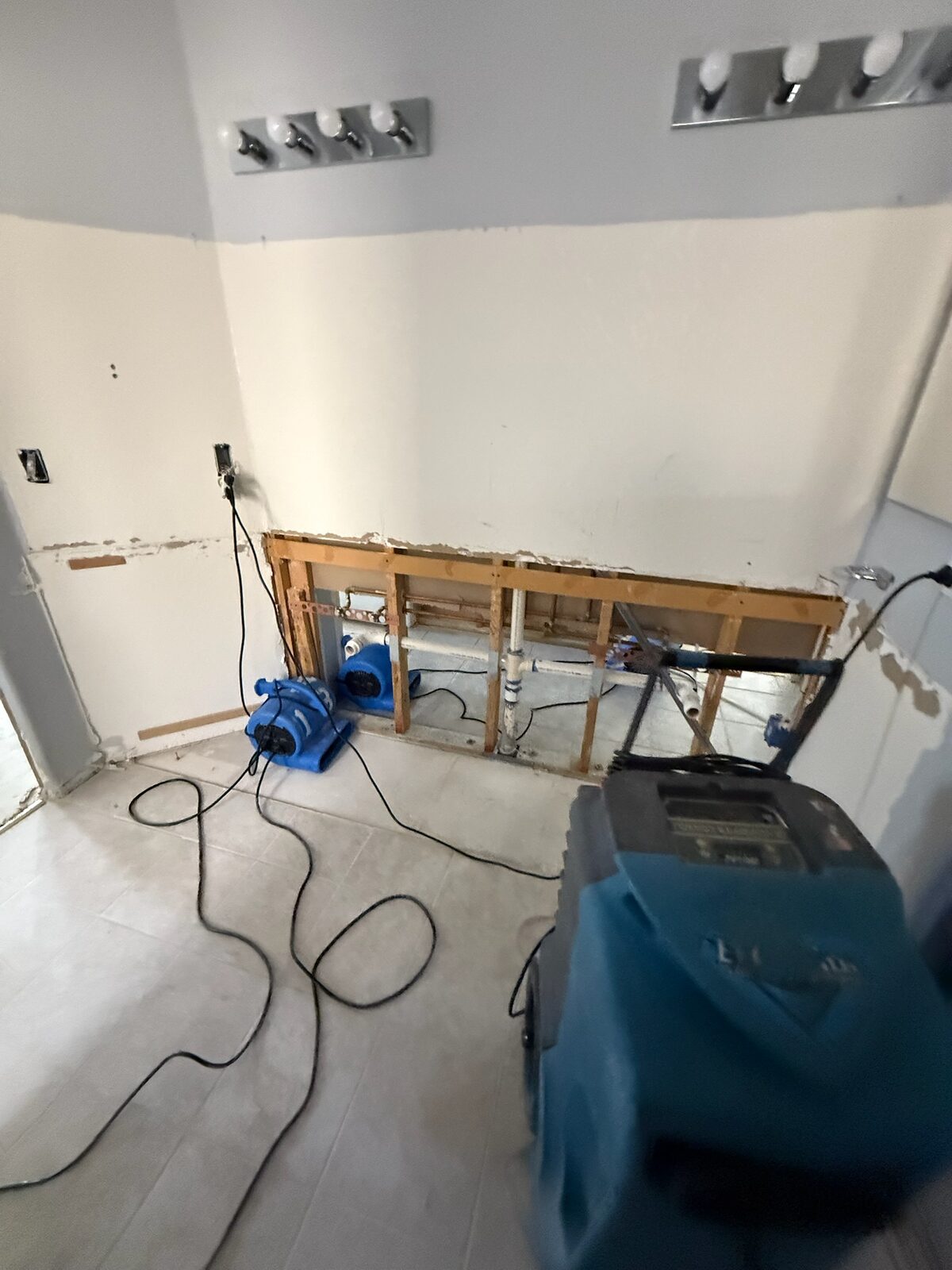
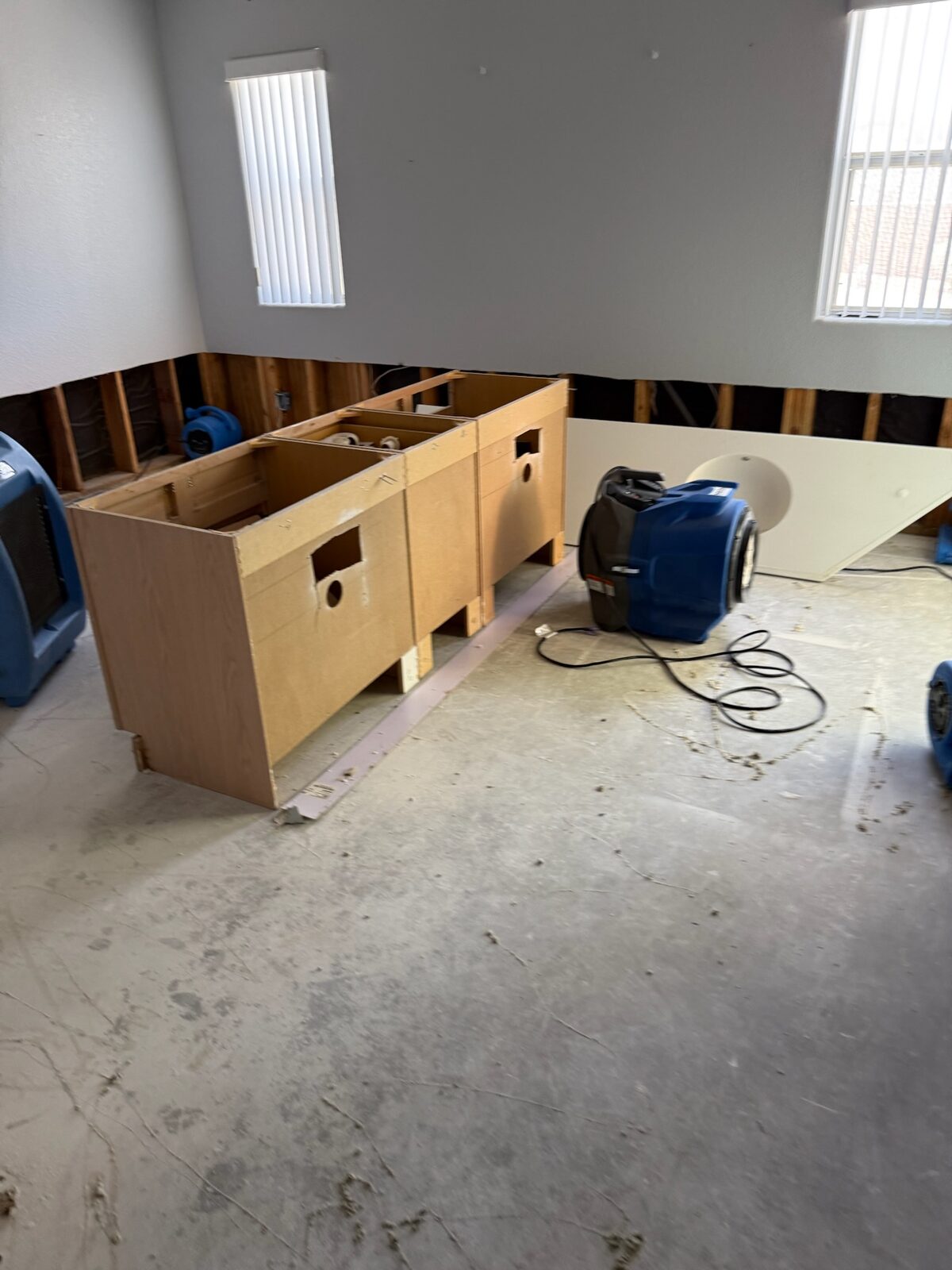
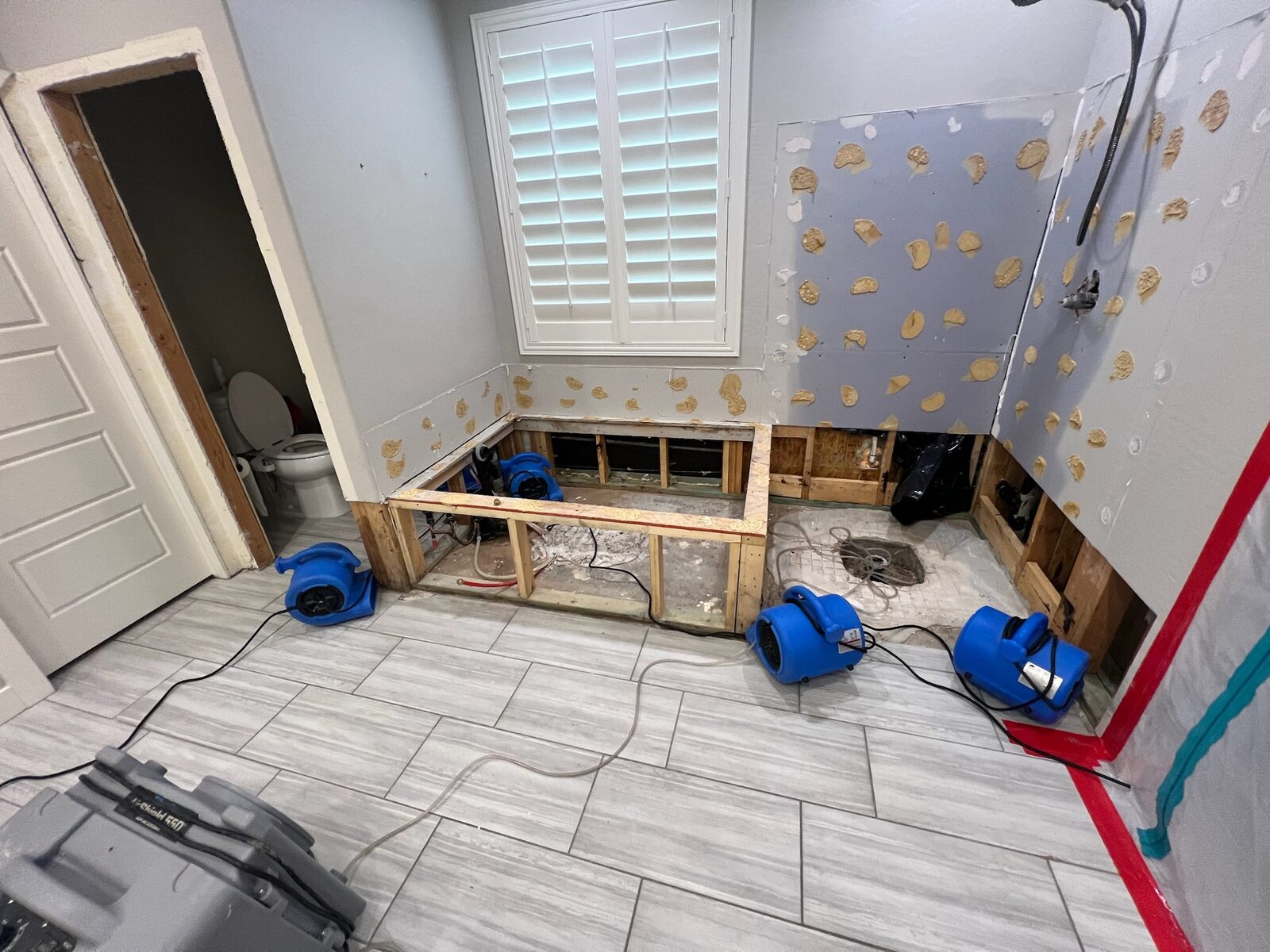
Residential reconstruction work by members of our team. See the full gallery →
More from Gold Water Fire
Abrasive Cleaning Methods for Soot on Framing and Masonry
A look at how abrasive cleaning methods remove soot from wood framing and masonry after a fire, and when each method fits the material.
AC Condensate Line Clogs & the Water Damage They Cause in Phoenix Homes
Why Phoenix AC condensate lines clog every summer, what the water damage looks like, and how to find the source before the ceiling stain spreads again.
Actual Cash Value vs Replacement Cost: Why Your Check Might Not Match the Repair Bill
Confused why your insurance check seems short after fire or water damage? Learn the difference between actual cash value and replacement cost coverage.
Dealing with water-damaged flooring right now?
Gold Water Fire serves homeowners across the Phoenix metro area, including Chandler, Mesa, Gilbert, Scottsdale, and surrounding communities. Reach out at (480) 999-3339 or Help@goldwaterfire.com to talk through what you're seeing.
Call (480) 999-3339Water Damage Restoration · Reconstruction & Rebuild · Contact Gold Water Fire · About Gold Water Fire