
Luxury Vinyl Plank After Water: Waterproof Flooring Over a Floor That Is Not
You did the math when you picked luxury vinyl plank. It was supposed to be the flooring that could take a spill, a leaky dishwasher, a slow drip from somewhere you couldn't see, and just shrug it off. So when water got in anyway and something still feels wrong underneath, weeks or months later, it's hard to even explain what you're noticing. The floor looks fine on top. But it doesn't feel fine. And nobody told you that the part that matters most in a water event is usually the part you can't see at all.
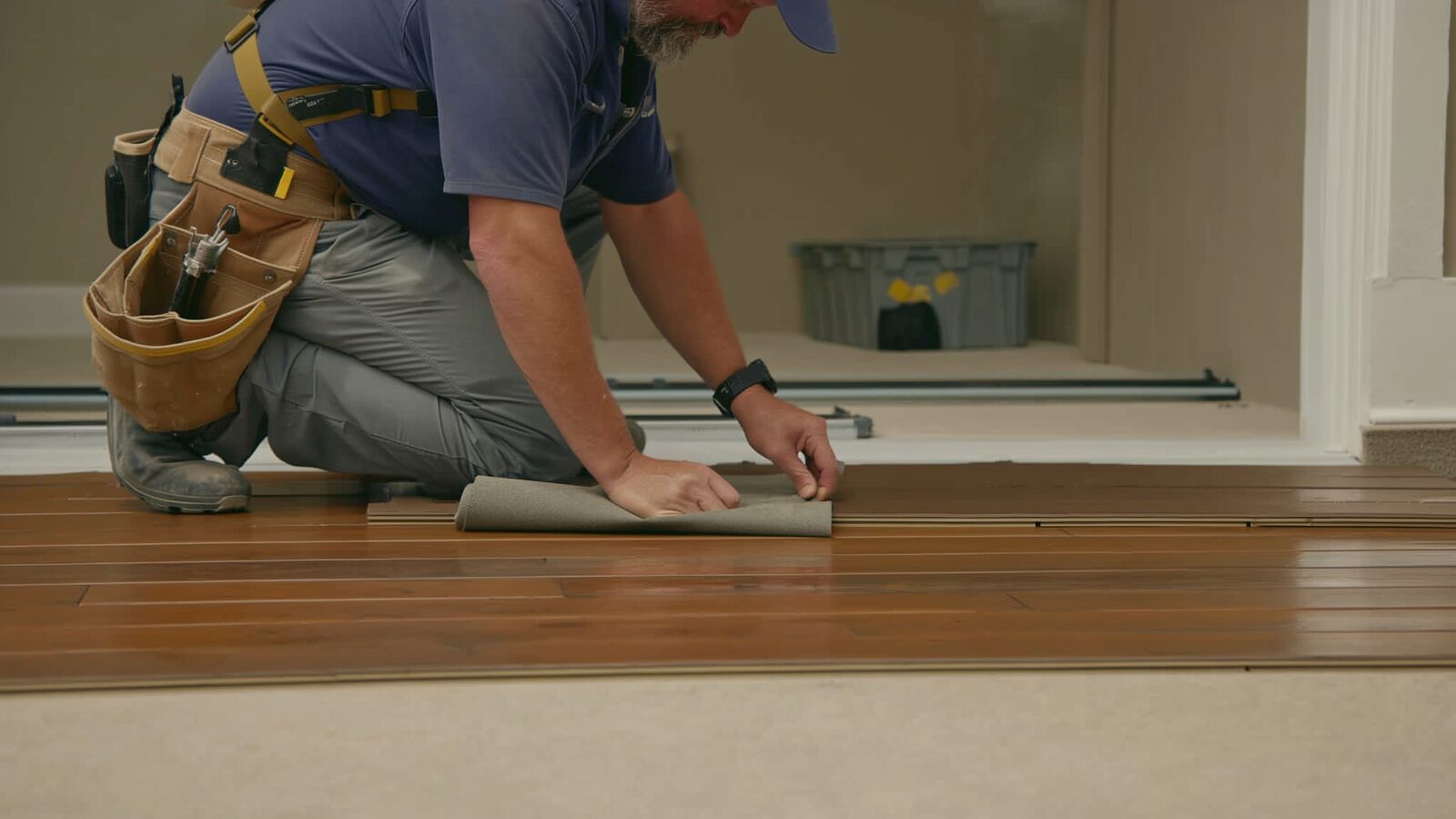
Luxury Vinyl Plank After Water: Waterproof Flooring Over a Floor That Is Not
Why waterproof flooring didn't mean a waterproof floor
Luxury vinyl plank is genuinely waterproof as a material. The plank itself, the wear layer, the core, none of it breaks down when it gets wet. That part of the promise is real. But LVP is installed as a floating floor or glued down over something else: plywood subfloor, OSB, old particleboard, sometimes a concrete slab. Water doesn't need to damage the vinyl to cause a problem. It needs to find a seam, a transition strip, a cut edge near a wall or cabinet, or a spot where the click-lock joints aren't perfectly sealed, and then travel sideways underneath the planks where you can't see it happening. The plank stays intact and looking normal while the layer underneath it absorbs everything.
Where water actually gets in
Not through the plank face. Almost always through a seam, a wall transition, a floor vent cutout, or the gap behind a baseboard where standing water had time to sit before anyone noticed.
What happens to the subfloor
Plywood and OSB swell, delaminate, or soften when they stay wet. Particleboard breaks down fastest. None of this shows on the LVP surface until the floor starts to feel different underfoot.
Signs the subfloor took on water even though the plank looks fine
Because the top layer hides the damage, you're often relying on feel and smell rather than sight. A soft or slightly bouncy spot when you walk across a specific section is one of the clearest signs, especially if it's near a kitchen, bathroom, laundry area, or an exterior wall. Planks that have started to separate at the seams, lift slightly at the edges, or peak in the middle are another. A musty smell that comes and goes, or gets stronger in one room, points to trapped moisture with nowhere to evaporate. If you press on the floor near where the original water event happened and it flexes more than the rest of the room, that's the subfloor telling you something the vinyl can't.
Soft spots and flex
Walk the room slowly in socks. A section that gives slightly under your weight, especially compared to the rest of the floor, usually means the subfloor underneath has softened.
Seam and edge changes
Planks that used to sit flush and now show a slight gap, ridge, or lift at the joints are reacting to something moving or swelling below them.
Why drying the surface isn't the same as drying the structure
A wet-vac and a few fans on the visible floor will pick up standing water fast, and that matters. But LVP's own waterproof design works against you once water is trapped underneath it: the vinyl doesn't let moisture evaporate back up through it the way carpet or even some tile setups might. That moisture has almost nowhere to go except sideways, further under the floor, or slowly through whatever small gaps exist. Professional drying for this kind of situation typically involves pulling planks in the affected area so the subfloor itself can dry directly, along with air movers and dehumidification aimed at the open cavity rather than the room air. Skipping that step and just drying the surface can leave a hidden wet subfloor for weeks, which is exactly the setup for the delayed odor and soft-spot problems that show up later.
What to check before you reinstall or replace anything
If LVP has already been pulled up, or you're deciding whether it needs to be, a few things are worth confirming before new flooring goes down over the same subfloor. None of this requires special equipment, just attention and a little patience.
Moisture content, not just dryness by feel
Wood subfloor that feels dry to the touch can still hold moisture well above a safe range internally. A moisture meter reading, not a guess, is what tells you it's actually ready to cover again.
Structural integrity of the panel
Press, flex, and inspect edges for delamination or softness. A subfloor panel that swelled and dried can still be structurally compromised even after it's no longer wet.
Source of the original water is actually resolved
Reinstalling flooring over a subfloor that dried out, without fixing whatever caused the leak, just resets the clock on the same problem happening again.
Questions people ask us
Can luxury vinyl plank be saved and reused if it's pulled up for drying?
Sometimes, if it was floating and not glued, and the planks themselves weren't damaged during removal. Click-lock LVP is designed to come apart without adhesive, which makes it one of the more salvageable flooring types in a water event, but the subfloor underneath is what determines whether it's safe to put back down.
How long does a wet subfloor take to dry under LVP?
It depends heavily on the subfloor material, how much water it absorbed, and whether the flooring above it was removed to let air reach it directly. There's no single timeline that applies to every situation, which is part of why moisture readings matter more than a calendar guess.
Does a musty smell always mean the subfloor is still wet?
Not always, but it's one of the more reliable early signals when a room looks normal but doesn't smell right. A lingering or intermittent musty odor near where water was present is worth investigating before it turns into a larger repair.
Is it worth replacing LVP with something else after a water event?
That depends on the specific home and situation more than on the flooring type itself. The bigger factor is almost always getting the subfloor fully dry and structurally sound first, regardless of what finish flooring goes on top of it.
The standard our team works to
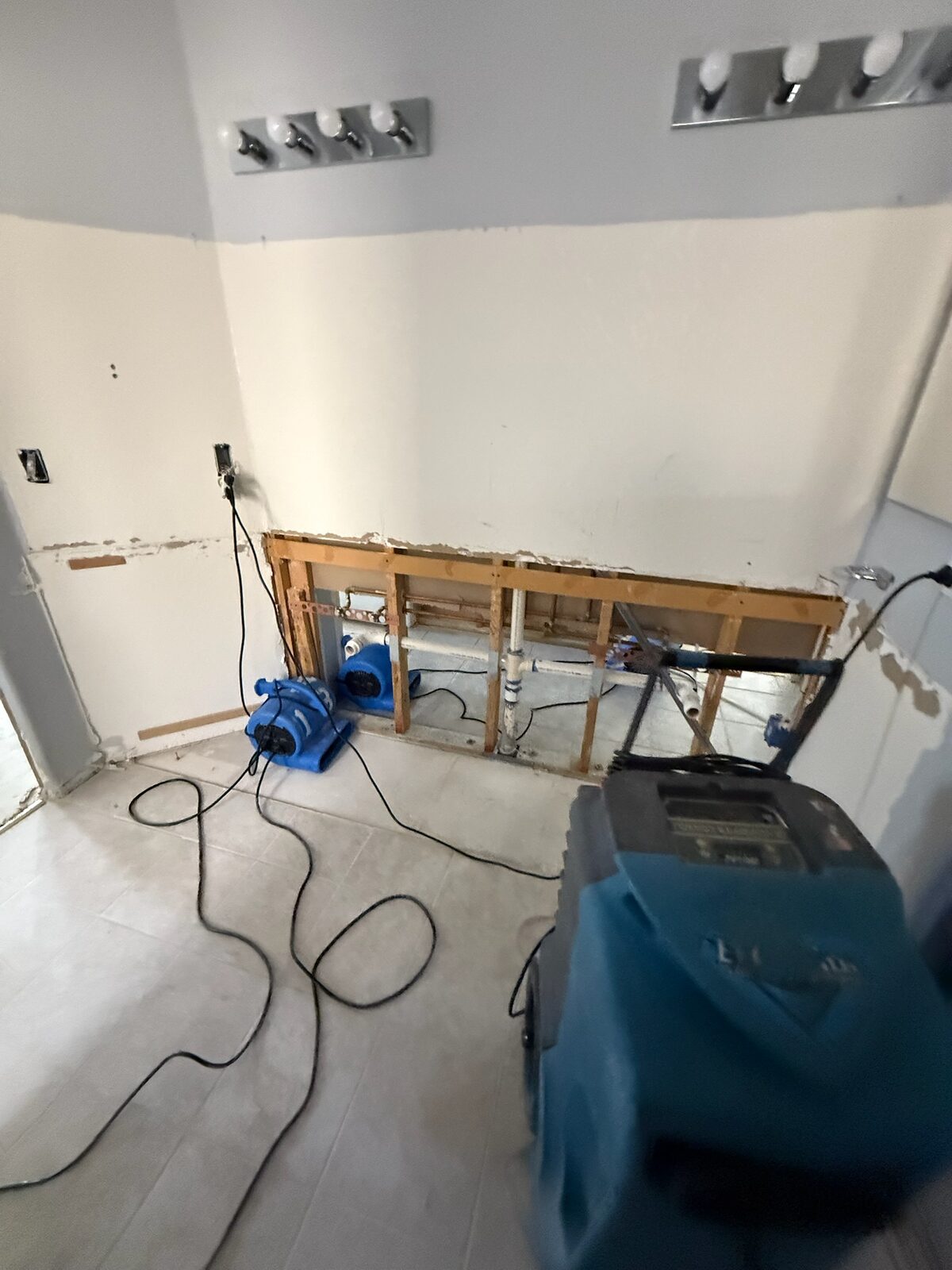
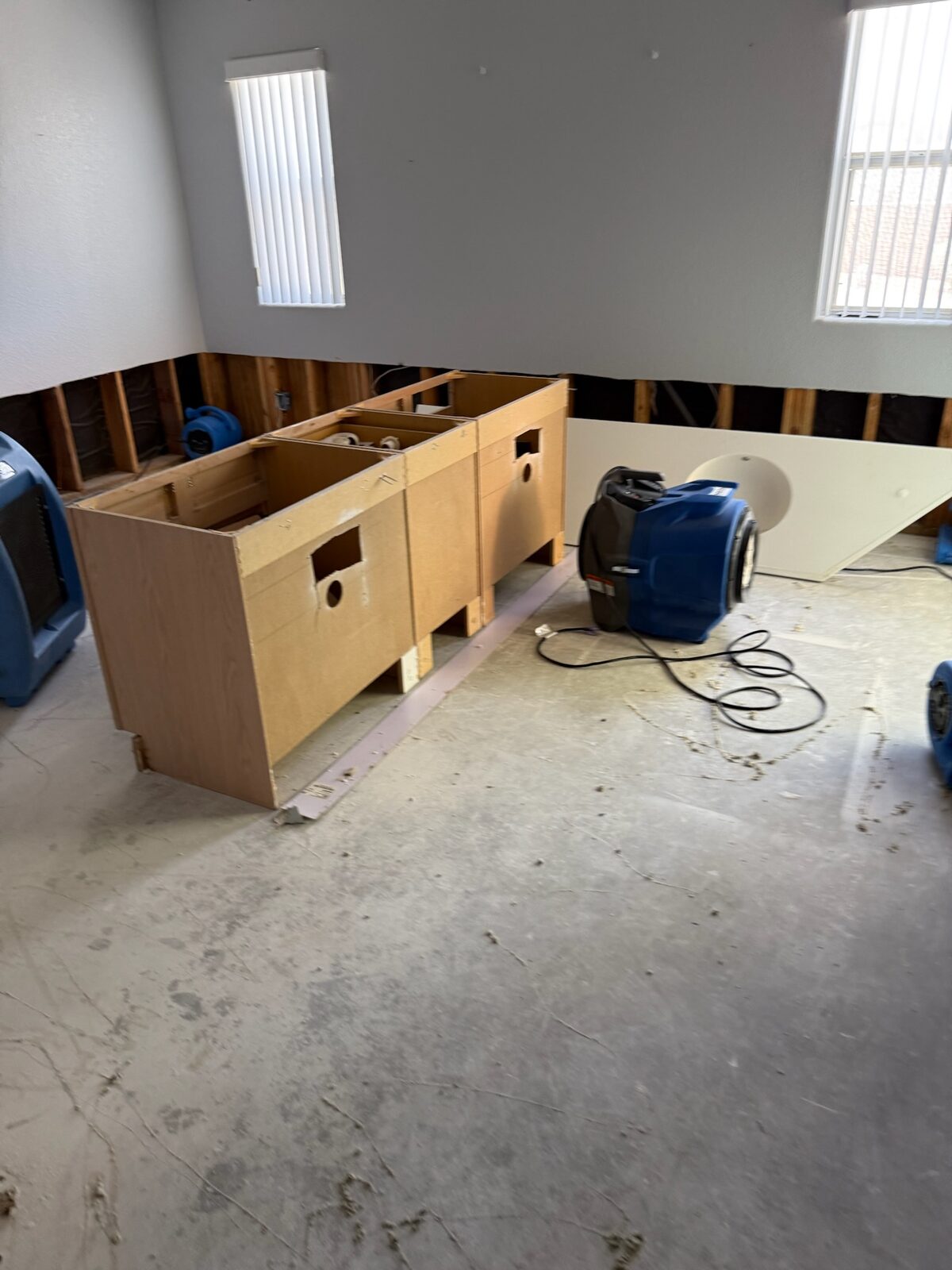
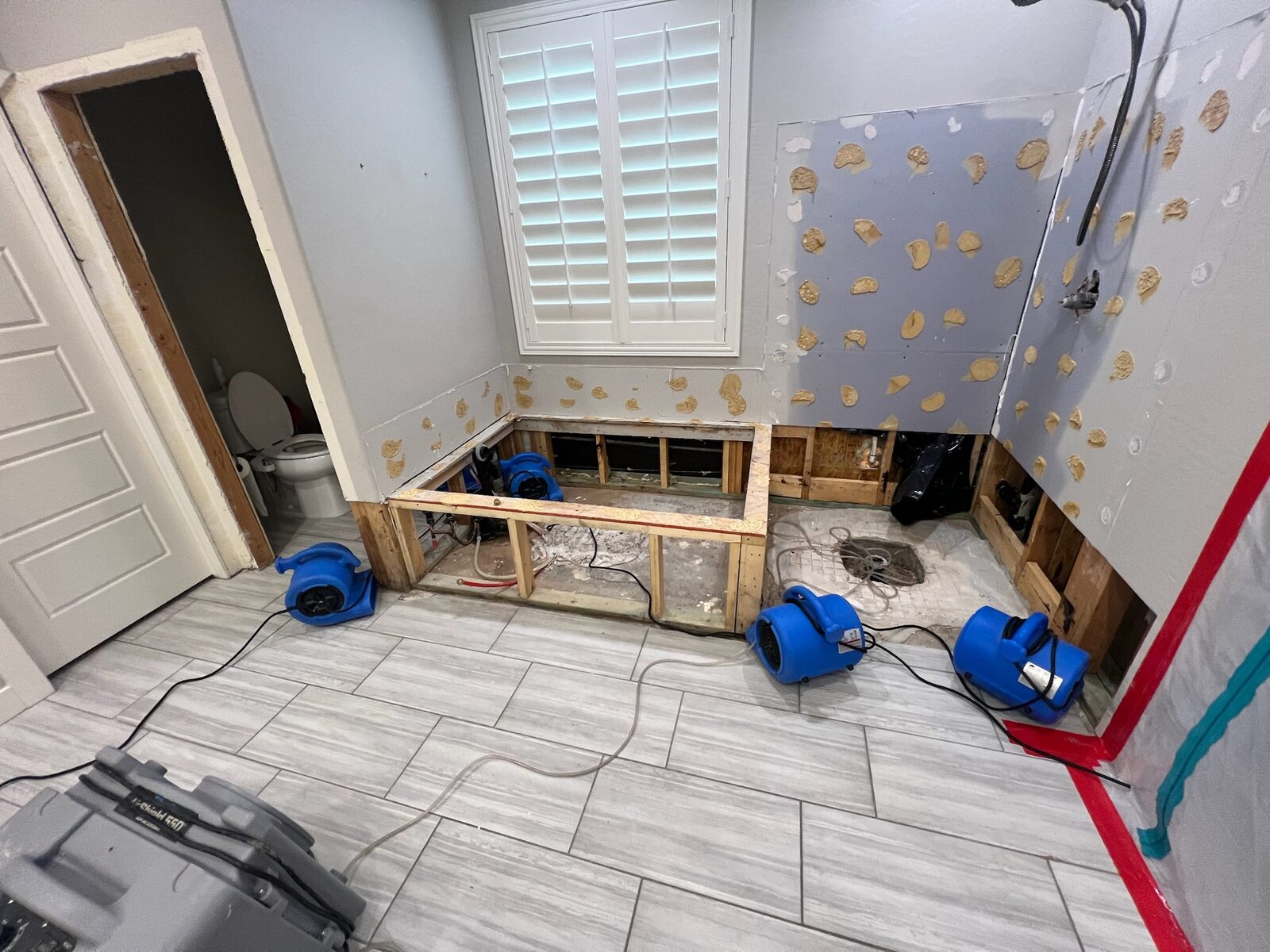
Residential reconstruction work by members of our team. See the full gallery →
More from Gold Water Fire
Abrasive Cleaning Methods for Soot on Framing and Masonry
A look at how abrasive cleaning methods remove soot from wood framing and masonry after a fire, and when each method fits the material.
AC Condensate Line Clogs & the Water Damage They Cause in Phoenix Homes
Why Phoenix AC condensate lines clog every summer, what the water damage looks like, and how to find the source before the ceiling stain spreads again.
Actual Cash Value vs Replacement Cost: Why Your Check Might Not Match the Repair Bill
Confused why your insurance check seems short after fire or water damage? Learn the difference between actual cash value and replacement cost coverage.
Not sure what's happening under your floor?
If you're dealing with soft spots, lifting seams, or a smell that won't go away after a water event, Gold Water Fire can take a look at what's really going on beneath the surface. Call (480) 999-3339 or reach out through our contact page to talk through what you're seeing.
Call (480) 999-3339