
What Thermal Imaging Can and Cannot Show During a Water Loss Inspection
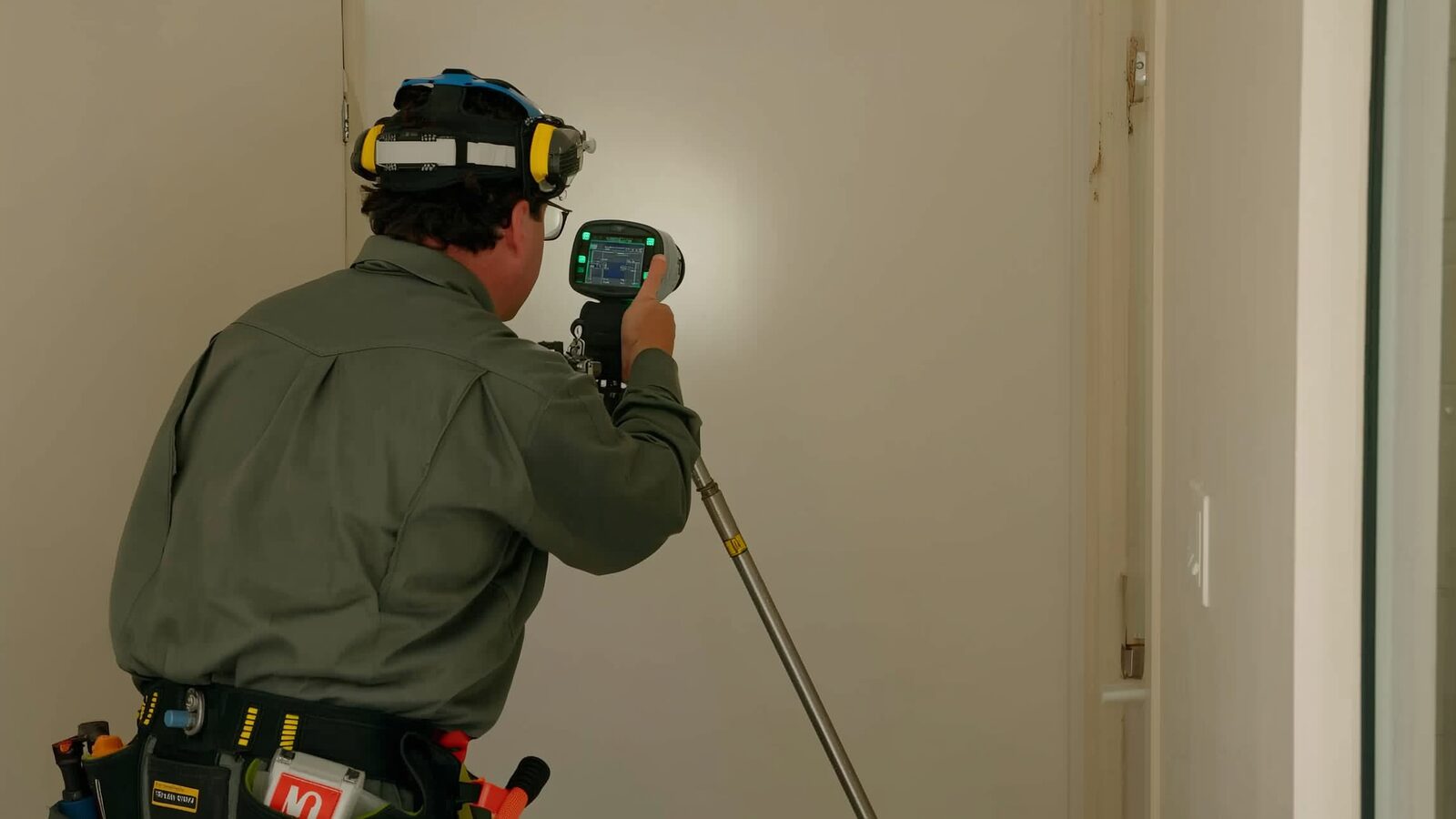
You just watched someone point a camera at your wall and nod like it told them something. Maybe it did. But if you're standing there wondering whether that little screen actually "sees" the water, or whether you're supposed to just trust the process and hope the drywall doesn't fall apart in six months, that uncertainty makes sense. Water damage is already hard to see with your own eyes. Adding a piece of technology into the mix without knowing what it actually does can leave you more unsettled, not less.
What Thermal Imaging Can and Cannot Show During a Water Loss Inspection
What a thermal camera is actually reading
A thermal imaging camera, sometimes called an infrared camera, does not see water. It sees surface temperature differences. Wet materials tend to conduct and hold heat differently than dry ones, often reading cooler on a thermal image because evaporation pulls heat from the surface, or because the water itself is cooler than the surrounding air and material. On the screen, this shows up as a pattern, a shadow or gradient across drywall, flooring, or a ceiling, that looks different from the surrounding area. That pattern is a clue. It tells an inspector where to look closer, not a confirmed diagnosis on its own.
What it's genuinely good at
Used correctly, thermal imaging is fast and non-invasive. It can scan a large wall or ceiling in seconds and flag temperature anomalies that would take much longer to find by touch or by guesswork. It's especially useful for spotting patterns behind a finished surface, like a cool streak running down from a ceiling penetration, or a broad cool zone spreading from a baseboard, without cutting into anything first. That means less unnecessary demolition early in an inspection, and a faster path to knowing where the moisture meter and other tools need to go next.
Where it runs into real limits
A thermal camera cannot tell you how wet something is, how deep the water has traveled, or what the moisture content actually is. It also cannot distinguish water from other causes of a temperature difference, a gap in insulation, an air leak, a shaded area, or even a difference in the material itself can create a similar-looking pattern. Older or already-dried water damage can be invisible to a thermal camera entirely, because once the moisture and evaporation cooling are gone, the temperature signature is gone too. Reflective surfaces, direct sunlight on a wall, and HVAC airflow can all throw off a reading. That's why a thermal image on its own is never treated as proof of anything, it's a starting point for further testing.
How thermal imaging fits into a full inspection
In practice, thermal imaging works alongside moisture meters, not instead of them. A penetrating or non-penetrating moisture meter gives an actual reading of moisture content in a material, which is the data that confirms or rules out what the thermal image suggested. A thorough inspection typically means scanning broadly with thermal imaging first, then confirming with moisture meters at the specific spots the scan flagged, and checking areas the camera might miss altogether, like inside wall cavities, under flooring, or in spaces with no clear line of sight. If you want to understand how that full inspection connects to drying and repair work, our water damage restoration page walks through the stages after detection.
Questions worth asking about your own inspection
If someone points a thermal camera at your walls, it's fair to ask what specifically it flagged, and whether that was followed up with a moisture meter reading. It's also fair to ask whether the whole affected area was checked, not just the spot that was visibly stained or reported. A pattern on a thermal screen that never gets confirmed with a direct moisture reading is an unfinished inspection, not a finished one.
Questions people ask us
Can thermal imaging find water damage inside a wall without cutting it open?
It can often flag a temperature pattern consistent with moisture behind a wall surface, which helps narrow down where to look. It cannot confirm the water is there or how much there is, that requires a moisture meter or, in some cases, a small inspection opening.
Why didn't the thermal camera pick up water damage that was found later?
Thermal imaging depends on a temperature difference existing at the moment of the scan. Water that has already dried, water that has equalized to the same temperature as surrounding material, or water hidden behind insulation or a dense material can all be missed even though it's real.
Is thermal imaging enough on its own to confirm a room is dry?
No. Thermal imaging can suggest a suspicious pattern is gone, but confirming dryness for insurance or repair purposes generally relies on moisture meter readings taken at multiple points over time.
Does sunlight or air conditioning affect a thermal imaging reading?
Yes. Direct sunlight on a wall, a nearby air vent, or even a recently used appliance can create temperature differences that look similar to a moisture pattern. That's part of why a trained eye interprets the image rather than reading it at face value.
The standard our team works to
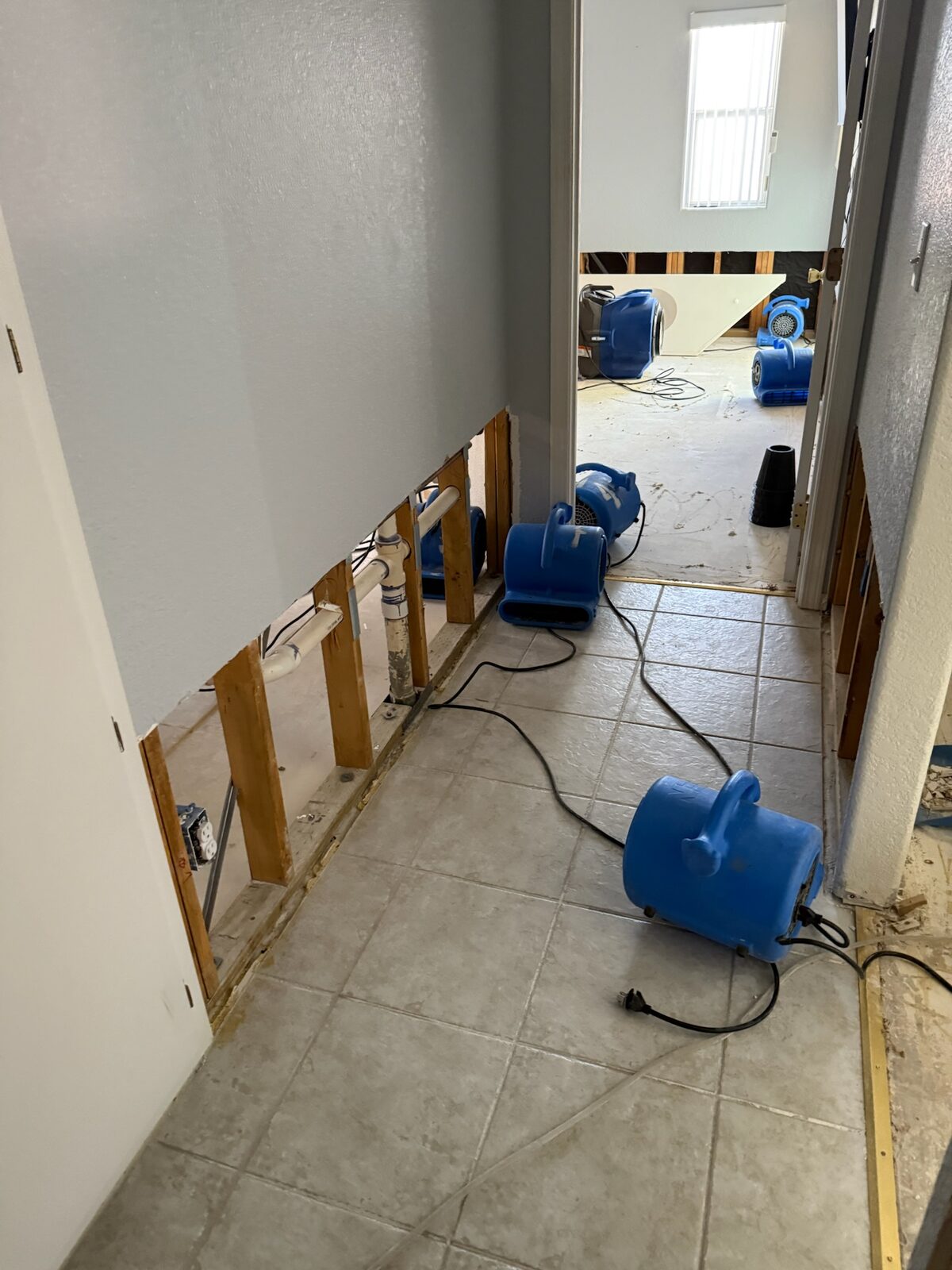
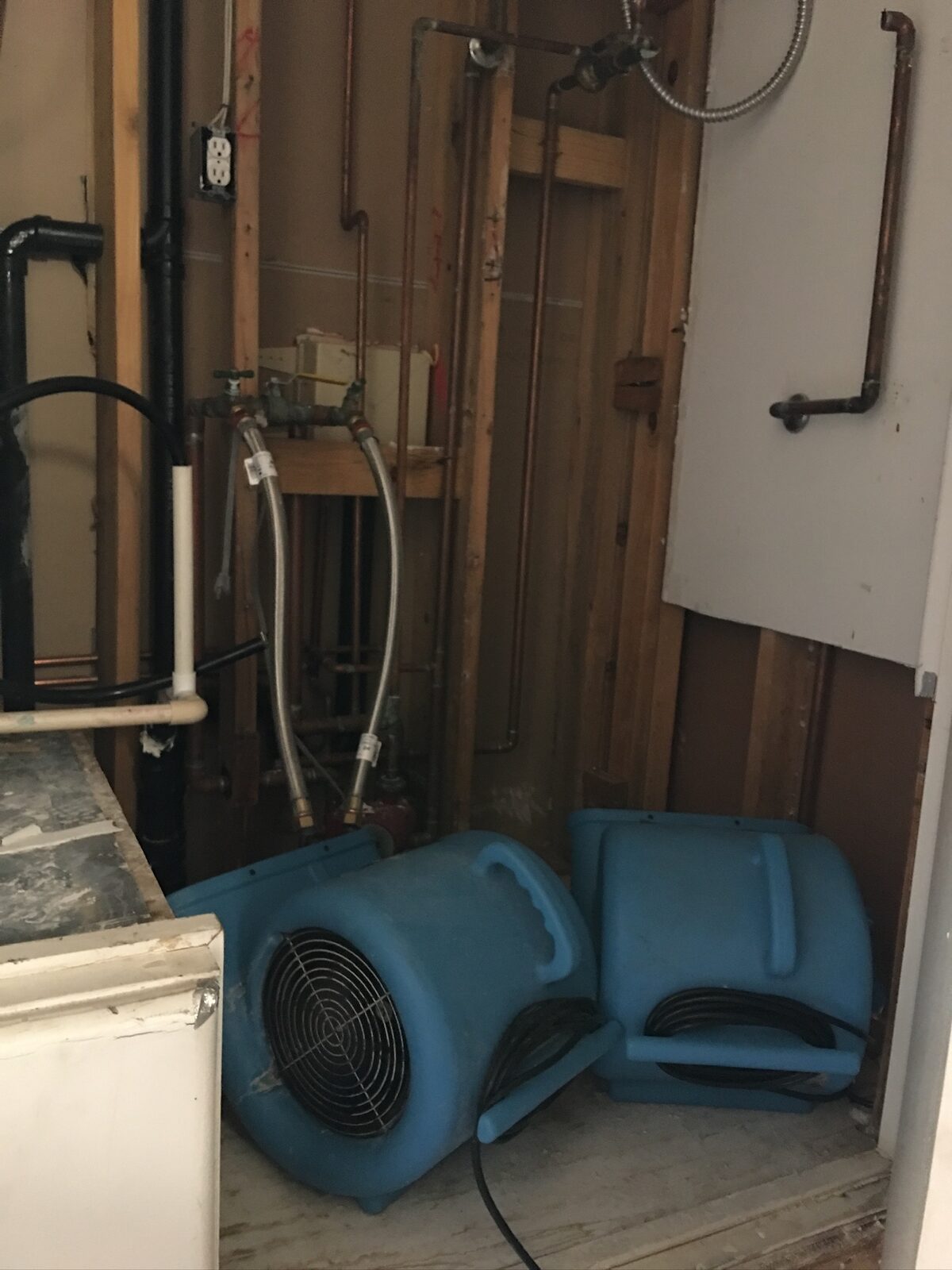
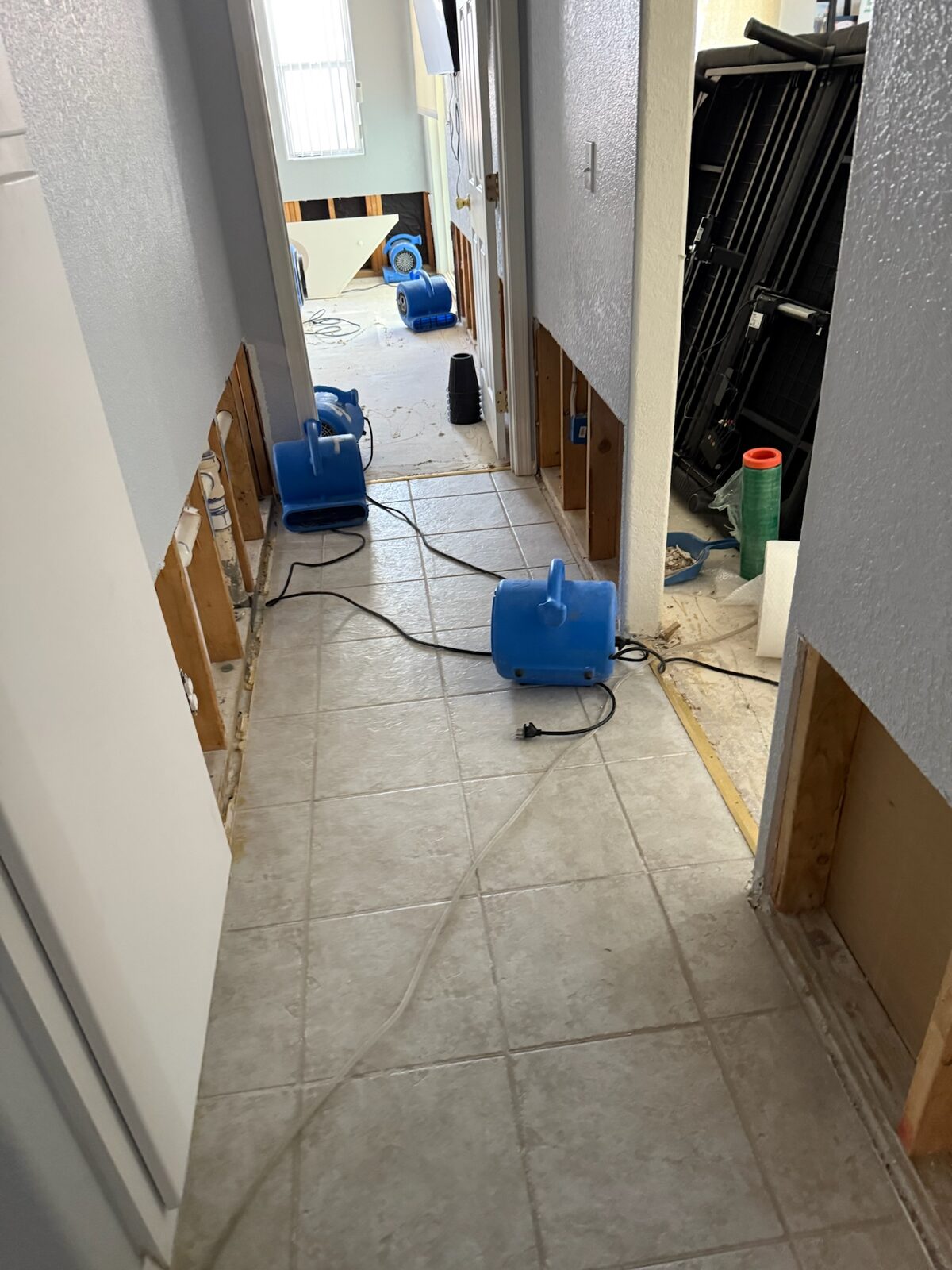
Residential reconstruction work by members of our team. See the full gallery →
More from Gold Water Fire
Abrasive Cleaning Methods for Soot on Framing and Masonry
A look at how abrasive cleaning methods remove soot from wood framing and masonry after a fire, and when each method fits the material.
AC Condensate Line Clogs & the Water Damage They Cause in Phoenix Homes
Why Phoenix AC condensate lines clog every summer, what the water damage looks like, and how to find the source before the ceiling stain spreads again.
Actual Cash Value vs Replacement Cost: Why Your Check Might Not Match the Repair Bill
Confused why your insurance check seems short after fire or water damage? Learn the difference between actual cash value and replacement cost coverage.
Not sure what's behind your walls?
If you're dealing with a leak or suspect hidden moisture in your Phoenix area home, Gold Water Fire can walk you through a full inspection, not just a scan. Call (480) 999-3339 or reach out through our contact page to talk through what you're seeing.
Call (480) 999-3339Water Damage Restoration · Contact Gold Water Fire · About Gold Water Fire