
A Practical Home Prep Checklist Ahead of Arizona's Monsoon Season
Maybe it is the third summer in a row that the same corner of the ceiling has darkened, or water has come in under the same door, or the patio has held a puddle for two days after a storm that lasted twenty minutes. You dried it, you painted over it, you told yourself it was a freak storm. Then it happened again. There is a particular kind of tiredness in that, not the drama of an emergency but the low hum of a problem you have never quite gotten your hands around. You are not careless. Most Phoenix area homes are built for heat and dust, not for two inches of rain falling in forty minutes onto ground that cannot absorb it, and the places where that mismatch shows up are rarely obvious until water finds them.

A Practical Home Prep Checklist Ahead of Arizona's Monsoon Season
Monsoon water does not behave like ordinary rain
Understanding the mechanism usually explains the pattern. Desert soil in the Valley is often caliche, a hard calcium carbonate layer that sheds water rather than absorbing it, so rainfall that would soak into soil elsewhere runs across the surface here looking for the lowest point. If that low point is your foundation, your side yard, or a sunken patio, the water goes there every single time, which is why the same spot floods every year while the rest of the property stays dry. Wind is the other half of it. Monsoon storms often arrive with a dust-laden outflow gust before the rain, which drives water sideways into surfaces designed to shed water falling straight down. Wind-driven rain gets under tile edges, past weep holes in stucco, behind flashing at chimneys and skylights, and through door thresholds that handle normal rain fine. That is also why leaks show up in places that look nowhere near the roof damage causing them. Water travels along the underside of decking and along truss chords before it drops through drywall, sometimes many feet from where it entered.
The outside checklist, in order of what fails first
Work from the top down and from the water's point of view. Ask where a gallon of water landing on the roof ends up, and follow it.
Roof surface and penetrations
On tile roofs, the tile is a rain shield and the underlayment beneath it is the actual waterproofing. Look from the ground with binoculars for slipped, cracked, or missing tiles, and for exposed felt. On flat or low-slope foam and modified bitumen roofs, look for blisters, cracks, ponding stains, and separations at parapet walls. Check the seals around every penetration: vent stacks, swamp cooler curbs, HVAC package units, skylights, and satellite mounts. These fail before the field of the roof does.
Scuppers, drains, and gutters
Flat roofs in the Valley drain through scuppers and roof drains, and a single tumbleweed, palm frond, or nest can dam one completely. Standing water on a flat roof adds serious weight and finds every seam. Clear scupper openings, overflow scuppers, and any gutters and downspouts, then run a hose on the roof and watch that water actually leaves where it is supposed to.
Grading and the first ten feet
Soil should fall away from the foundation. Over years, landscape rock gets raked flat, planters get built up, and irrigation trenches settle, all of which can leave dirt sloping back toward the house. Walk the perimeter and look for low spots against the stem wall, mulch or rock piled above the weep screed at the base of the stucco, and downspouts dumping right at the wall instead of several feet out.
Doors, windows, and stucco
Check weatherstripping and door sweeps on any door that faces the direction storms usually come from. Look at caulk joints where window frames meet stucco, at control joints, and at any cracks wider than a credit card edge. On block walls and stucco, hairline cracks are common, but stair-step cracks and horizontal cracks at the weep screed deserve a closer look before rain drives water into them.
Yard, trees, and loose objects
Monsoon wind brings down limbs, and limbs bring down roof tiles and rip fascia. Thin and prune trees before the season rather than during it, especially mesquite, palo verde, and eucalyptus, which are prone to failing in saturated soil and wind. Secure or store patio umbrellas, shade sails, trampolines, and light furniture. A shade sail left up in a sixty mile per hour gust can pull its anchors out of the wall.
Pool, irrigation, and pumps
Lower the pool a few inches ahead of a storm so it does not overflow into the deck and back toward the house. Clear the pool deck drains. If you have a sump, basement, or below-grade entry, test the pump with a bucket of water and confirm the discharge line is clear and directed away from the structure.
What to check indoors, and what to have ready
Interior prep is less about hardware and more about noticing and being able to act fast when something starts. Find and label your main water shutoff now, before you need it in the dark. In most Valley homes it is at the front of the house near the hose bib or in a box near the street. Turn it to confirm it actually moves; old gate valves seize. Do the same for the shutoffs under sinks, behind toilets, and at the water heater. Walk the ceilings under the roof planes with a flashlight held at a low angle. Old stains that have been painted over will still show as a slightly different texture or a faint ring. Note where they are, so that if one darkens after a storm you know it is active and not history. Check the attic if you can access it safely: look for daylight, dark staining on the underside of the sheathing, matted or displaced insulation, and rust on nail points, all signs water has been getting in. Check the ground level of interior walls in rooms that back up to problem spots outside. Baseboards that are swollen, separating, or bubbling at the paint mean moisture has been present, and moisture behind drywall does not need much time or much water to start growing mold in Arizona summer humidity. Have a small kit ready in one place: a shop vacuum, a few towels and old sheets, a couple of plastic bins to catch a drip, painter's tape, and your phone charger. Photograph the exterior of the house and the main rooms before the season starts. Insurance conversations go very differently when there is a clear before.
The first 24 hours matter more than most people expect
Water damage is a clock, not an event. Drywall, baseboard, carpet pad, and cabinet toe kicks wick moisture upward and outward, and in warm weather mold growth can begin within roughly a day or two of materials staying wet. Air moving over a wet surface is the single most useful thing you can do in the meantime: open interior doors, run fans, and pull wet items off the floor and away from walls. Do the obvious safety things first. If water is near outlets, panels, or ceiling fixtures, keep the power off in that area. Do not walk into standing water in a room with live electrical. If a ceiling is sagging or holding water, stay out from under it. Then document. Photos and video of the water while it is still there, of the source, and of every affected room. Keep damaged items until they have been recorded. Write down what time you noticed it and what you did. The part people miss is what stays wet after the visible water is gone. Water gets into wall cavities, under vinyl plank and tile, into the paper facing of drywall, and into insulation, where a surface that feels dry to the hand can still be saturated inside. Moisture meters and thermal imaging exist for exactly that reason, and drying is done with controlled airflow and dehumidification, monitored until readings come back to normal for the materials in that house. If the moisture is left, the damage shows up later as a smell, a stain, warped trim, or mold, and by then repairs cost more than the drying would have. If you want to see how that process works end to end, our water damage restoration page walks through it, and when the drying is done and walls, flooring, or cabinets need to be put back, that is reconstruction and rebuild work. Monsoon storms also bring lightning, and a lightning strike or a resulting electrical fire is a different problem again, covered on our fire damage restoration page.
Questions people ask us
When should I do this prep?
Arizona's monsoon season generally runs through the summer months, so the useful time is before it starts rather than between storms. Roof work, tree trimming, and grading changes all need dry weather and a contractor's availability, both of which get scarce once the first storm hits. If you are reading this mid-season, prioritize the roof drains, the shutoff valve, and the grading right at the house, since those give the most protection for the least time spent.
My ceiling stain appeared during a storm but the roof looks fine. How is that possible?
Water rarely drops straight down from where it entered. It runs along the top of the ceiling drywall, along truss chords, and down the underside of the roof deck until it finds a low point or a seam, which can be well away from the actual entry point. Wind-driven rain can also come in at a wall penetration or a stucco crack and travel down inside the wall before it shows on the ceiling below. Finding the real source usually means tracing the path rather than looking directly above the stain.
The same spot floods every monsoon. Does that mean something is wrong with my house?
Not necessarily wrong, but something about how water moves across the property is predictable and repeating. Common causes are grading that has settled or been changed over the years, hardscape that channels runoff toward the house, a blocked or undersized scupper, or a downspout discharging too close to the foundation. Because it is a pattern and not an accident, it is fixable once the path is identified, and watching where water goes during the next storm is genuinely useful information.
Do I need help, or can I dry a small leak myself?
A small amount of clean water caught immediately on a hard surface can often be handled with towels, fans, and time. The judgment call is whether water got into materials you cannot see: wall cavities, under flooring, into insulation or cabinetry. If drywall is soft, if trim has swelled, if there is a musty smell, if the water was gray or came from outside across the ground, or if you simply cannot tell how far it went, that is the point to have it measured rather than guessed at.
The standard our team works to
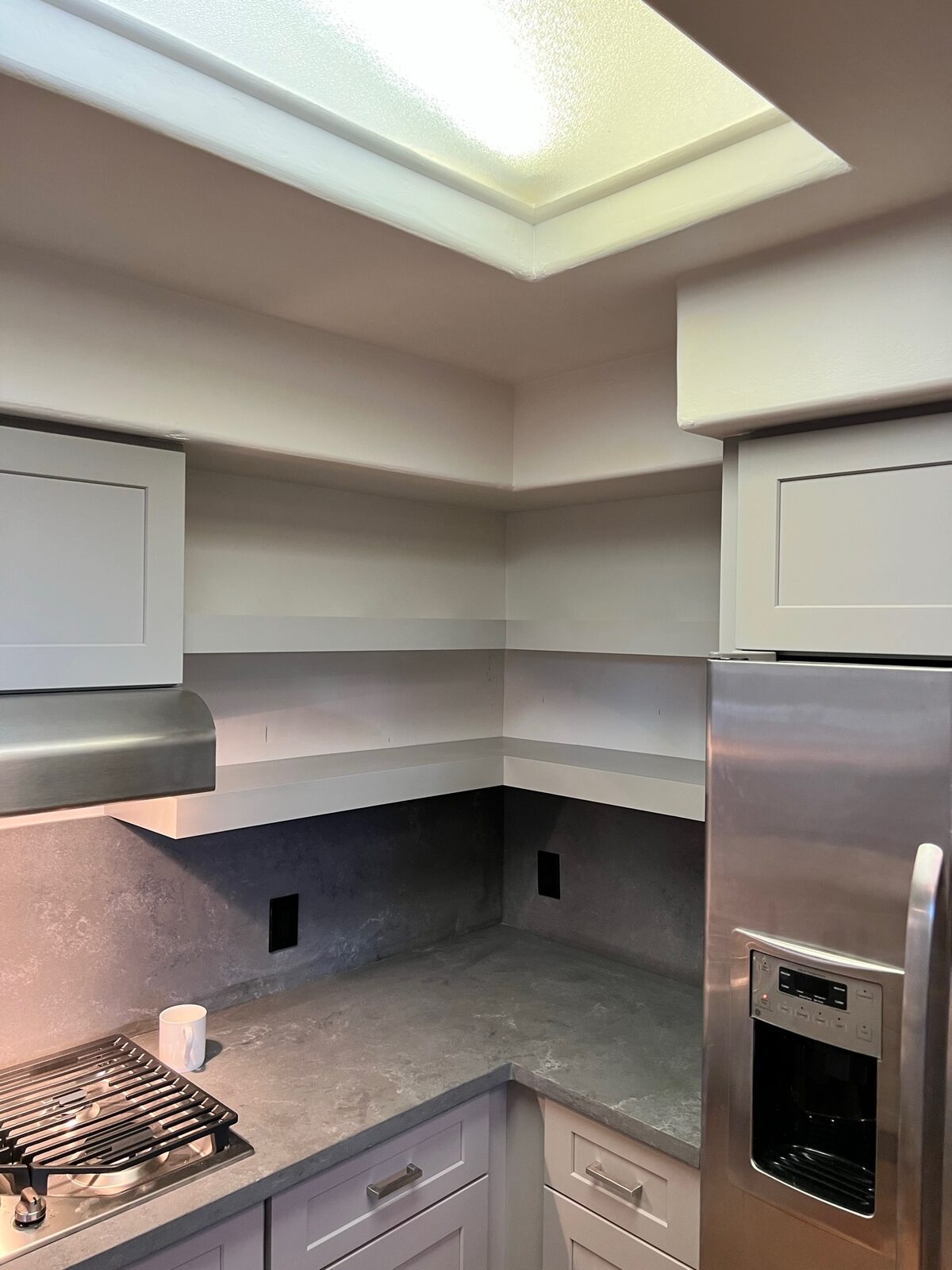
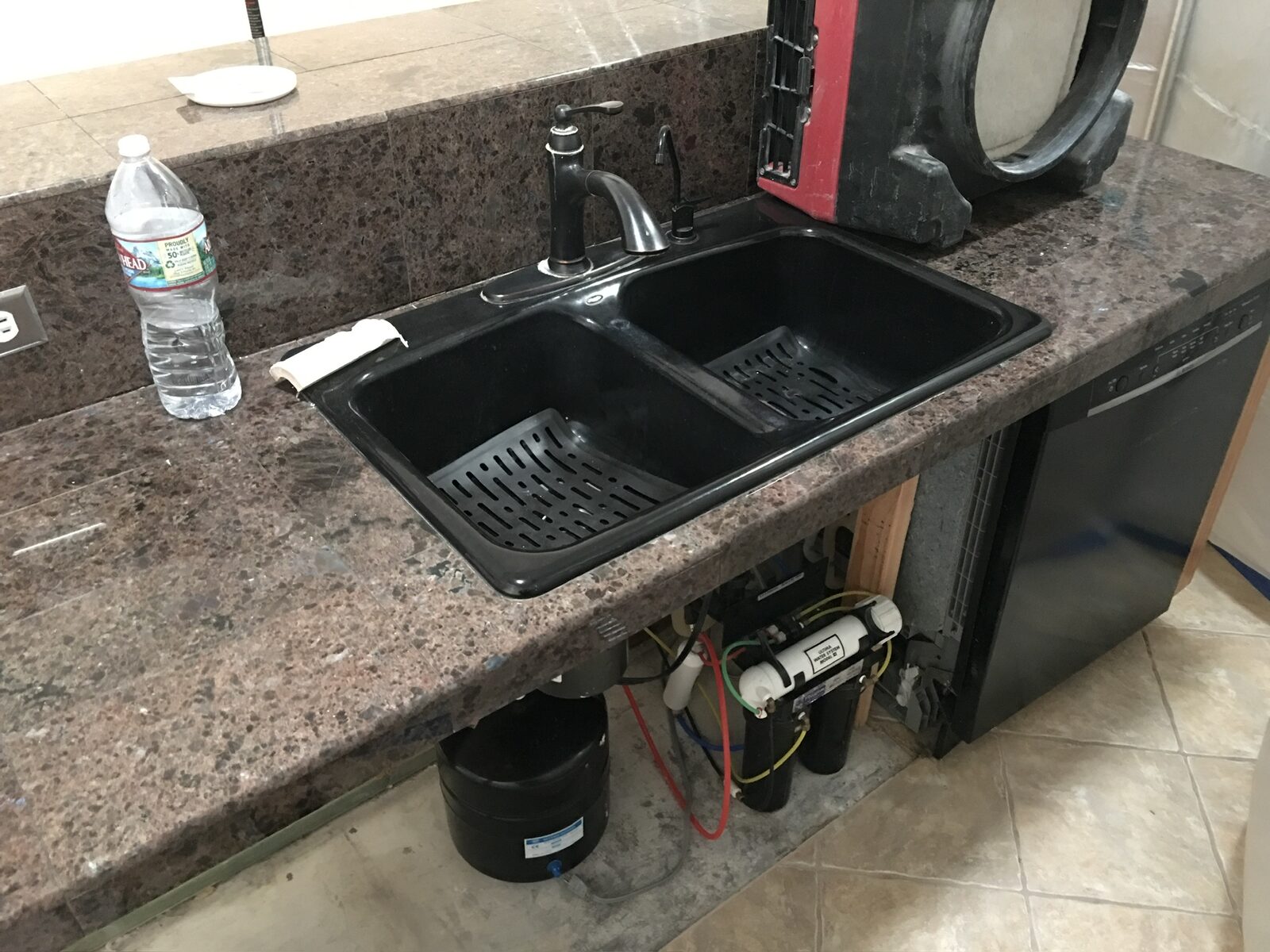
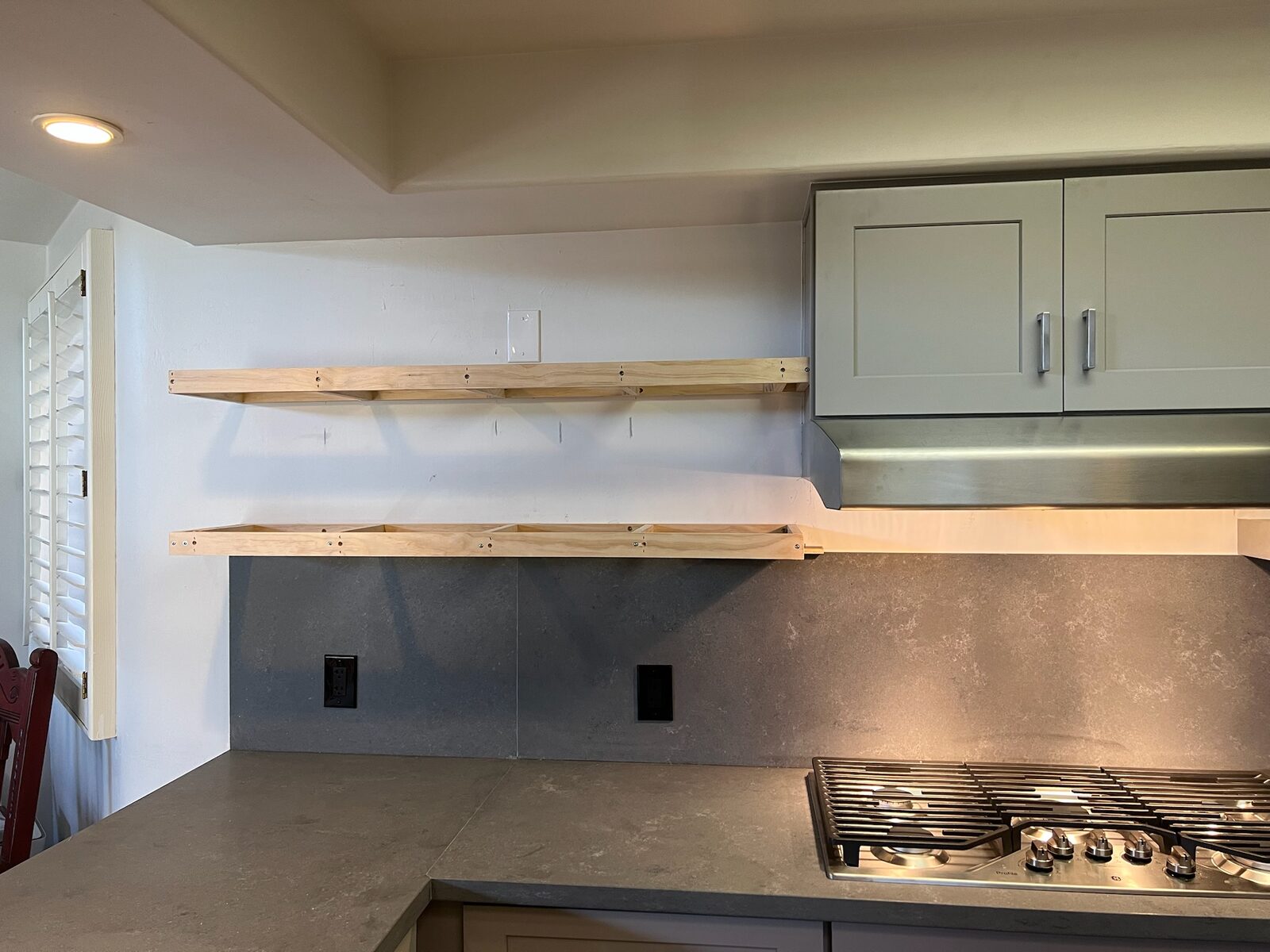
Residential reconstruction work by members of our team. See the full gallery →
More from Gold Water Fire
Abrasive Cleaning Methods for Soot on Framing and Masonry
A look at how abrasive cleaning methods remove soot from wood framing and masonry after a fire, and when each method fits the material.
AC Condensate Line Clogs & the Water Damage They Cause in Phoenix Homes
Why Phoenix AC condensate lines clog every summer, what the water damage looks like, and how to find the source before the ceiling stain spreads again.
Actual Cash Value vs Replacement Cost: Why Your Check Might Not Match the Repair Bill
Confused why your insurance check seems short after fire or water damage? Learn the difference between actual cash value and replacement cost coverage.
If you are not sure what you are looking at, ask
You do not have to have it figured out before you call. If there is a stain that keeps coming back, a spot that floods every year, or water that came in during the last storm and you cannot tell how far it went, Gold Water Fire will talk it through with you. Call (480) 999-3339 or email Help@goldwaterfire.com. We serve the Phoenix metro area, from Peoria and Avondale out to Queen Creek, San Tan Valley, and Apache Junction.
Call (480) 999-3339Water Damage Restoration · Fire Damage Restoration · Reconstruction & Rebuild · About Gold Water Fire · Contact Us