
Water Damage That Started in a Neighbor's Unit
You didn't do anything wrong. The water came from somewhere else, through a wall or a ceiling or a shared pipe, and now it's your floor that's buckling or your closet that smells wrong. There's something particularly disorienting about damage you can't trace back to your own actions. You start replaying it: did I miss something, should I have noticed sooner, whose problem is this actually. And underneath that, a more practical worry that doesn't have an easy answer yet: who pays for this, who calls who, and how long does it take before someone actually shows up and does something about the water sitting in your unit.
Water Damage That Started in a Neighbor's Unit
Why this situation feels harder than a normal leak
When water damage originates in your own unit, the path forward is usually straightforward: find the source, stop it, call your insurance, start drying out. When it comes from a neighbor's unit, a shared wall, or a building-wide pipe, every one of those steps gets more complicated. You may not have access to the source. You may not even know what caused it. Condo and apartment living means plumbing, roofing, and structural elements are often shared or stacked on top of each other, so a failure two floors up can show up as a stain on your ceiling with no obvious explanation. That gap between seeing the damage and understanding its cause is part of what makes this kind of loss feel so unsettling.
Common sources when the damage isn't yours
A few patterns show up again and again in multi-unit buildings. A washing machine supply line or drain hose fails in the unit above and water travels down through the subfloor before it ever reaches your ceiling. A shared or recessed pipe inside a wall corrodes or bursts, sending water sideways into an adjoining unit rather than down. A water heater in a neighboring unit leaks slowly for days before anyone notices, and the moisture works its way through drywall and insulation before it's visible. Roof or balcony drainage issues on upper floors can also travel through multiple units before settling somewhere lower. In each case, the first sign you get is rarely at the actual source, which is part of why these losses often go on longer than they need to before anyone catches them.
Figuring out who is actually responsible
Responsibility in these situations usually comes down to a few things: where the failure occurred, whether it was a shared building system or something inside a private unit, and what the condo association's governing documents or the property's lease say about maintenance responsibility. In many condo associations, the HOA's master policy covers common elements like main plumbing lines and building structure, while unit owners are responsible for their own fixtures and the interior finishes inside their unit. In a rental, the property management company or landlord may be responsible for repairs regardless of which unit the water started in. None of this is something you're expected to sort out on your own in the moment. It's worth documenting what you see (photos, video, the date and time you noticed it) before anything gets cleaned up or repaired, because that record matters later regardless of who ends up paying.
What matters most in the first hours
Regardless of fault, standing water and wet building materials don't wait for the responsibility question to get sorted out. The clock that matters most here isn't a legal one, it's the one tied to how quickly moisture spreads and how long drywall, subfloor, and insulation stay wet. Water moves along the path of least resistance, which often means it travels further than the visible stain suggests, following joists, wall cavities, and flooring seams. Getting affected areas ventilated, notifying the property manager or HOA, and starting a written record of what you're seeing are the things within your control while the bigger questions get worked out. If you're in the Phoenix area and want to understand what the drying and repair process actually looks like, our water damage restoration page walks through it in more detail, and our reconstruction page covers what happens once materials need to be replaced rather than dried.
Questions people ask us
Do I have to pay for damage that started in someone else's unit?
It depends on your building's governing documents, whether the failure involved a shared system or a private fixture, and your own insurance policy's terms. This is a case-by-case determination, not something with one universal answer, so it's worth reviewing your HOA documents or lease and talking with your insurance adjuster about the specific facts.
Should I wait to find out who's responsible before drying anything out?
Wet materials continue to absorb moisture and can develop secondary problems the longer they sit, regardless of whose responsibility the repair turns out to be. Documenting the damage first (photos, video, notes on when you noticed it) protects your position, but that documentation doesn't require leaving standing water untouched.
How do I know if the water is still an active leak or if it's already stopped?
Look for whether the stain or wet area is spreading, changing shape, or growing over a few hours. An active leak often keeps expanding or dripping, while a stopped leak may still be wet but stable. If you can safely check, a moisture meter or even a paper towel pressed to the area can help tell you whether it's still actively wet.
What should I tell my HOA or property manager when I report it?
Give them the date and time you first noticed the damage, which rooms or areas are affected, whether the source appears to be above, below, or beside your unit, and any photos or video you've taken. The more specific and time-stamped your report, the easier it is for everyone involved to trace the source.
The standard our team works to
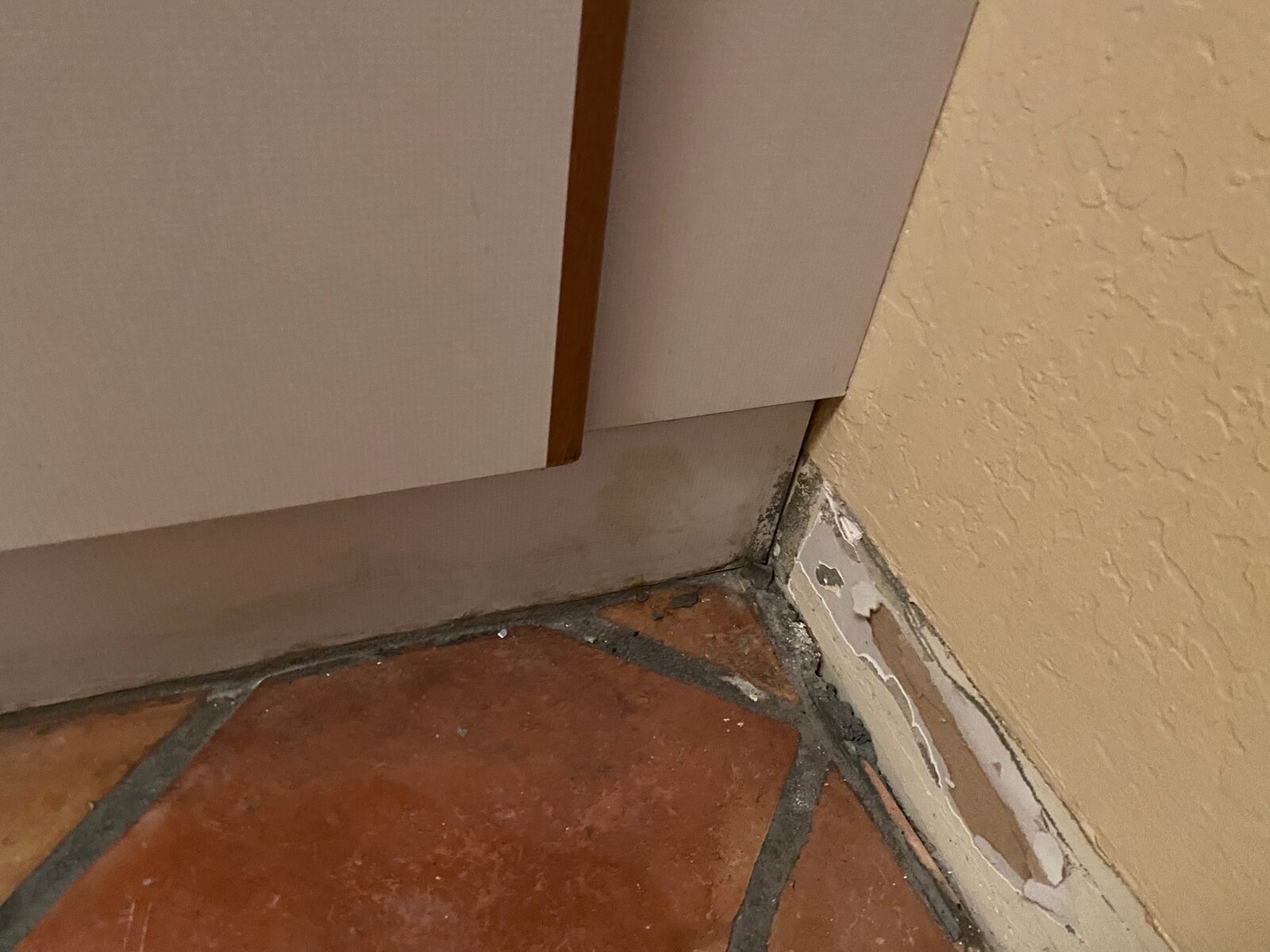
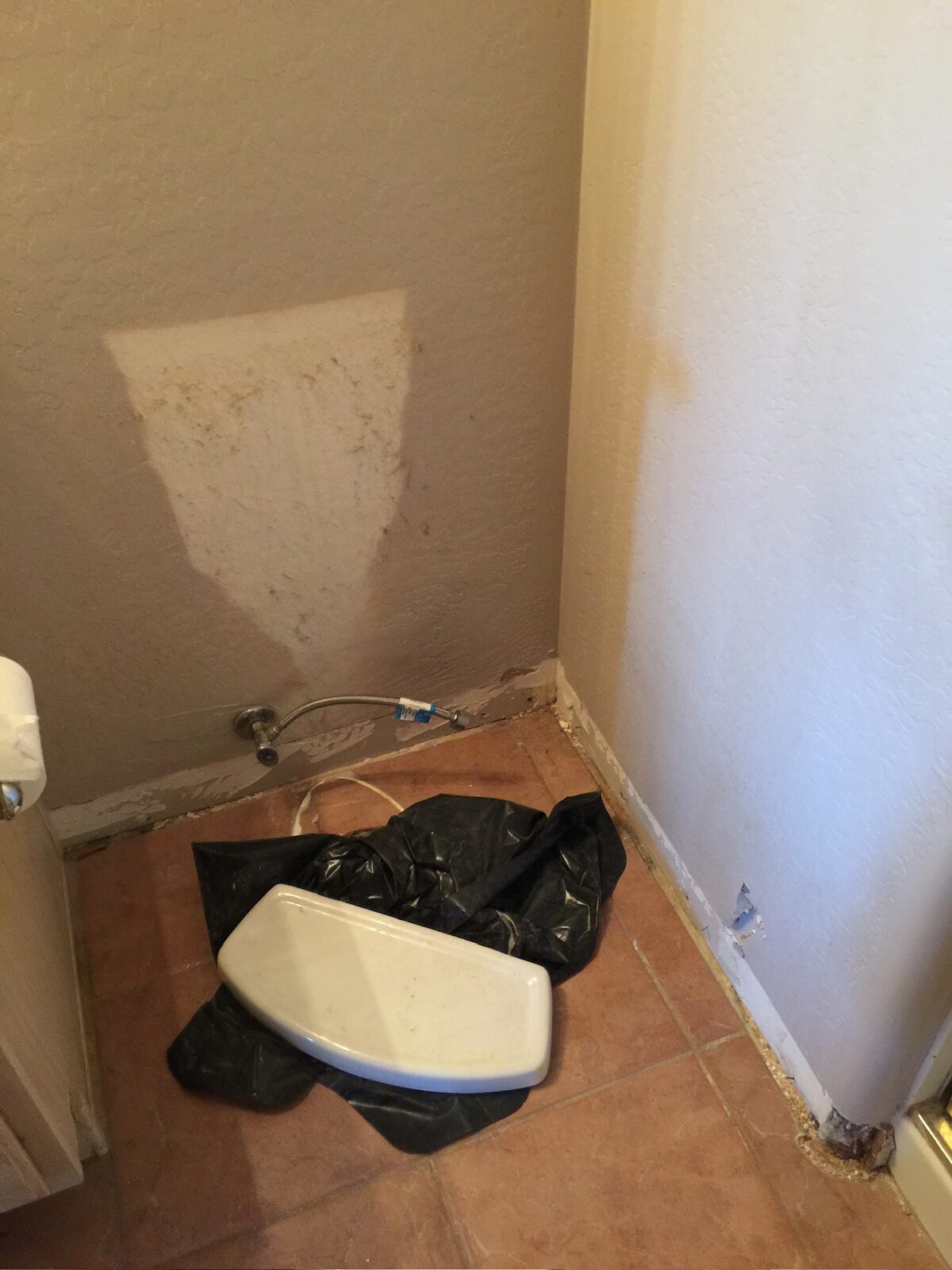
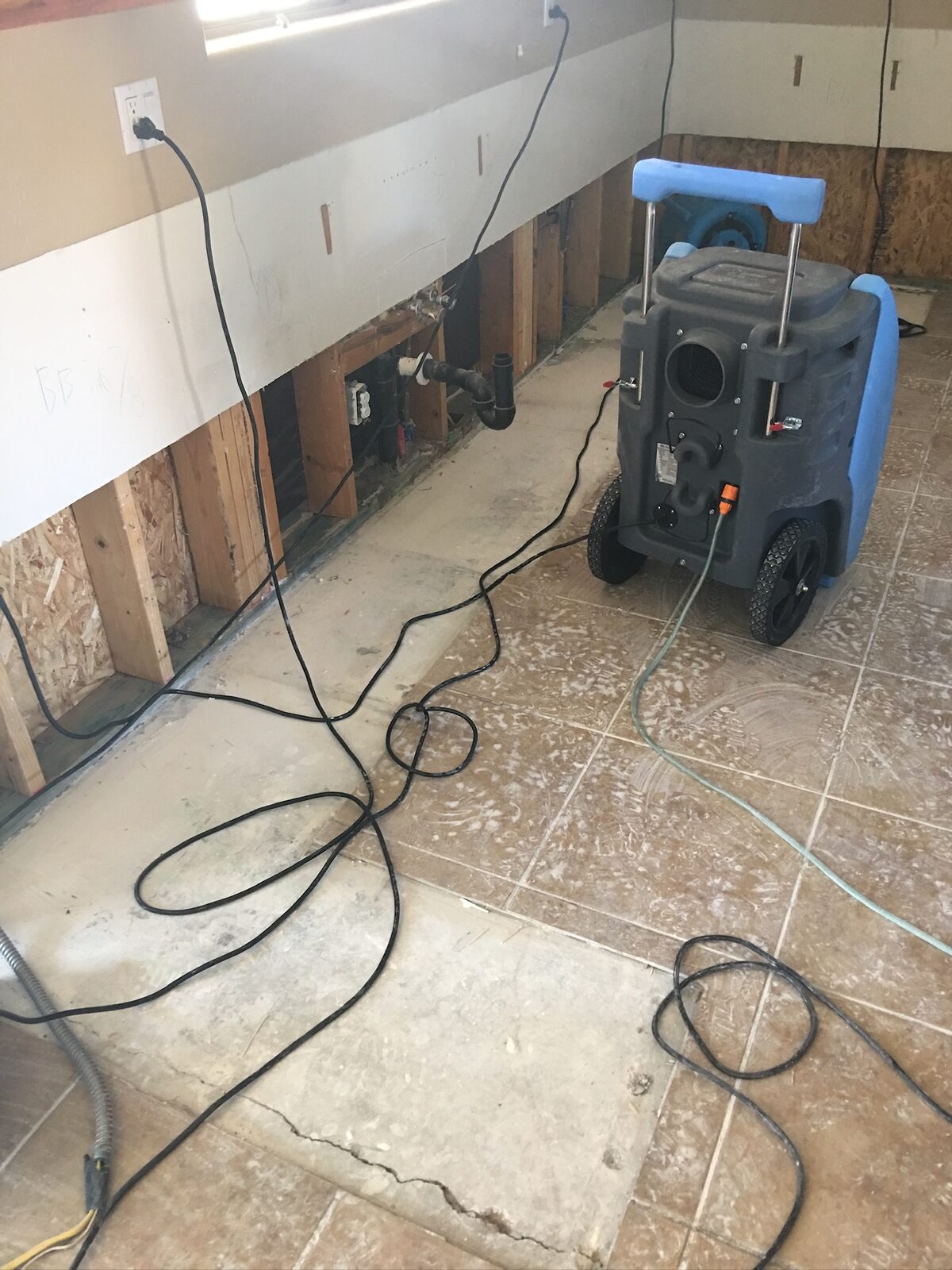
Residential reconstruction work by members of our team. See the full gallery →
More from Gold Water Fire
Abrasive Cleaning Methods for Soot on Framing and Masonry
A look at how abrasive cleaning methods remove soot from wood framing and masonry after a fire, and when each method fits the material.
AC Condensate Line Clogs & the Water Damage They Cause in Phoenix Homes
Why Phoenix AC condensate lines clog every summer, what the water damage looks like, and how to find the source before the ceiling stain spreads again.
Actual Cash Value vs Replacement Cost: Why Your Check Might Not Match the Repair Bill
Confused why your insurance check seems short after fire or water damage? Learn the difference between actual cash value and replacement cost coverage.
Not sure what to do next with the damage you're looking at?
Gold Water Fire works with homeowners across the Phoenix metro area on water damage assessment and drying, including situations where the source isn't in your own unit. Call (480) 999-3339 or reach out through our contact page to talk through what you're seeing.
Call (480) 999-3339Water Damage Restoration · Reconstruction & Rebuild · Contact Gold Water Fire · About Gold Water Fire