
What Happens to a Subfloor After a Toilet Overflow
You mopped it up. You ran the fan. The floor looked dry by that evening, and you told yourself it was handled. But months later the grout line by the toilet has gone dark, or the vinyl has lifted at one corner, or there is a smell in that bathroom that comes back every time the house warms up. And the part that sits with you is not the mess, it is the not knowing: you did the thing you were supposed to do, so why is this still happening. That question is worth taking seriously before anyone hands you an answer, because the reason is usually sitting somewhere you never got to look.
What Happens to a Subfloor After a Toilet Overflow
The water you wiped up was the smallest part of it
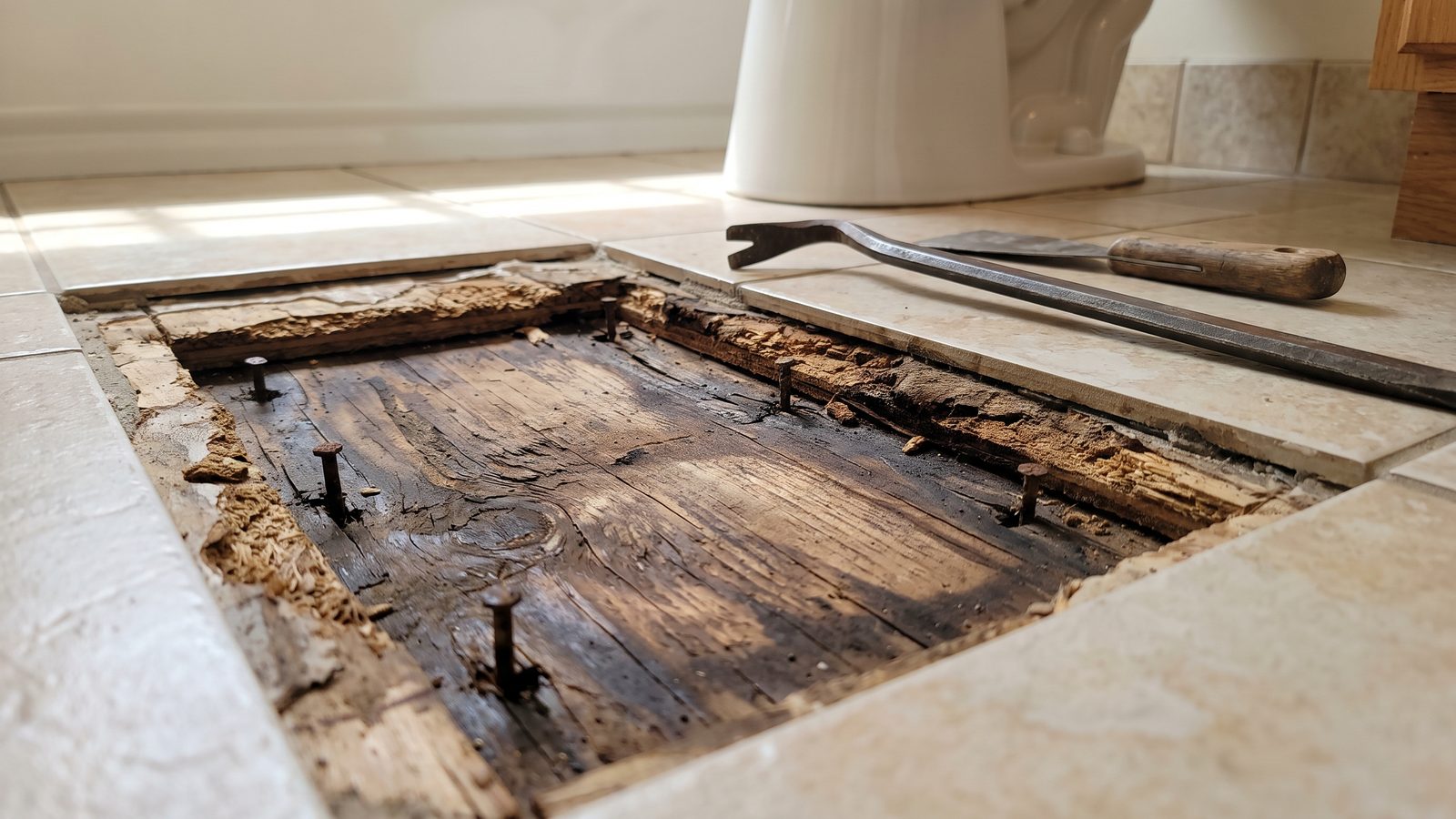
A bathroom floor is built in layers. On top is the finish you can see: tile, sheet vinyl, laminate, engineered wood. Under that is usually a thin underlayment, and under that is the structural subfloor, most often oriented strand board (OSB) or plywood sitting on joists. When a toilet overflows, water does not sit politely on the surface waiting for a towel. It runs to the lowest point in the room, finds the perimeter where the finish flooring meets the wall, and follows the path of least resistance down through the seams, the fastener holes, the expansion gap, and the opening cut around the toilet flange. Once it is between the layers, the finish floor works against you. Tile and sheet vinyl are close to waterproof from above, which is why the surface looked dry so fast. That same property means the water underneath has almost no way to evaporate upward. It stays trapped between an impermeable top and a subfloor that will absorb it. The visible water you removed may have been a small fraction of the total volume. The rest went sideways and down. This is the honest answer to why it keeps coming back. Nothing failed on your end. The drying just never reached the layer that was actually wet.
OSB and plywood do not simply dry out and return to normal
OSB is made of wood strands compressed with adhesive. When it takes on water, the strands swell, and the swelling is not fully reversible. Even after the moisture leaves, the board can stay thickened and soft at the edges, which is why you sometimes feel a slight ridge or a spongy spot near the toilet long after any water is gone. Plywood handles wetting a little better because the veneers are continuous, but repeated or prolonged saturation causes the plies to delaminate and separate. There is a structural side to this and a biological side. Structurally, a softened subfloor loses its ability to hold fasteners. Tile grout cracks and hollow-sounding tiles appear because the panel underneath is flexing where it used to be rigid. Vinyl bubbles or curls at the seams because the adhesive bond has released from a swollen surface. Biologically, wet cellulose plus a dark enclosed cavity is a straightforward recipe for microbial growth, and that is usually the source of the smell that returns on hot days when the material warms and off-gasses. There is also the sewage question, and it matters. A toilet overflow that comes from the bowl side of the trap, meaning it contains waste, is treated as contaminated water in the restoration industry. Contaminated water does not just need drying, it needs the affected porous material either cleaned to a verified standard or removed. Clean water from the supply line or tank is a different situation, but the tank water still spreads exactly the same way and still swells the same board.
The flange, the wall base, and the joist cavity
Three places take the damage that people almost never check. The toilet flange opening. The hole cut in the subfloor for the closet flange is the single most direct route to the framing below. Water pooling around the base of a toilet runs down that opening, wets the joist or blocking beside it, and drips into the ceiling cavity if there is a room below. If your overflow happened on a second floor and you later noticed a stain on the ceiling downstairs, that stain is the tail end of the same path. The wall base. Water tracks along the floor to the wall, gets under the baseboard, and wicks up into the drywall by capillary action. Drywall pulls moisture upward well past the waterline, which is why a wall can be wet a foot above where any water ever stood. Behind that drywall, the bottom plate of the wall and the insulation in the cavity hold moisture much longer than anything in open air. Cabinet toe kicks. The base of a vanity is often bare particleboard sitting directly on the floor. Particleboard acts like a sponge, swells fast, and rarely recovers. A vanity kick that has gone soft or swollen at the bottom edge is one of the clearest signs that water sat there for a while.
Signs the drying was never finished, and what a real inspection looks for
Things worth checking yourself: press the floor around the toilet and in front of the vanity with your foot and feel for any give or slight sponginess. Look at grout lines near the toilet for darkening or hairline cracking that was not there before. Tap tiles lightly and listen for a hollow sound compared to tiles elsewhere in the room. Check whether the baseboard has separated from the wall, cupped, or lost paint adhesion at the bottom edge. Open the vanity and look at the bottom shelf and the back corners. Notice whether an odor is stronger low to the floor, or stronger on warm afternoons. What a restoration inspection adds is measurement rather than guessing. A non-penetrating moisture meter reads through finish flooring to compare wet areas against a dry baseline elsewhere in the house. A pin meter takes readings inside the material itself. Thermal imaging shows temperature differences from evaporative cooling, which points to where moisture is sitting even under tile. In some cases a small inspection opening in the drywall or the removal of a section of baseboard is the only way to see the bottom plate and the cavity. When the subfloor is confirmed wet but still structurally sound and the water was clean, controlled drying can sometimes save it, often by lifting the finish floor or drilling to get airflow into the layer that is actually holding water. When the panel has swollen, delaminated, or been exposed to contaminated water, replacement of that section is the outcome, followed by new underlayment and new finish flooring. Understanding which situation you are in is the whole point of looking. If you want to talk it through with someone, water damage restoration covers drying and moisture inspection, and reconstruction and rebuild covers the subfloor, flooring, and cabinetry work when material has to come out. You can also reach us here.
Questions people ask us
How long does it take for a wet subfloor to cause real damage?
There is no single number, because it depends on the material, how much water got through, and whether any air could reach it. What is consistent is that wood-based subfloor sealed under tile or vinyl stays wet far longer than the same material in open air, and microbial growth in a dark enclosed cavity begins well before anything is visible from above. The practical answer is that if water got below the finish floor, time is working against the material from that point forward, not from the point you first notice a problem.
My floor looked dry within a day. Could the subfloor still be wet?
Yes, and this is the most common version of the story. Tile and sheet vinyl are close to impermeable, so the surface dries quickly while trapping moisture underneath with no upward escape route. A surface that feels dry to the hand tells you very little about the panel two layers down. Moisture meter readings compared against a dry area of the same house are how that gets answered rather than guessed.
Does a toilet overflow always mean the subfloor has to be replaced?
No. If the water was clean, the volume was small, and the panel has not swollen or delaminated, controlled drying can often save it, though that usually means lifting or perforating the finish floor to get airflow to the wet layer. Replacement becomes the answer when the board is soft, thickened at the edges, separating in plies, or when contaminated water reached it, since porous material exposed to sewage is removed rather than dried.
Why does the bathroom only smell bad on hot days?
Warmth increases the rate at which materials release odor compounds and increases microbial activity in damp material. A cavity that holds moisture will be noticeably more noticeable in the afternoon heat than in the morning, and odor that is strongest close to the floor generally points to the source being in or under the floor assembly rather than in the drain or the air.
The standard our team works to
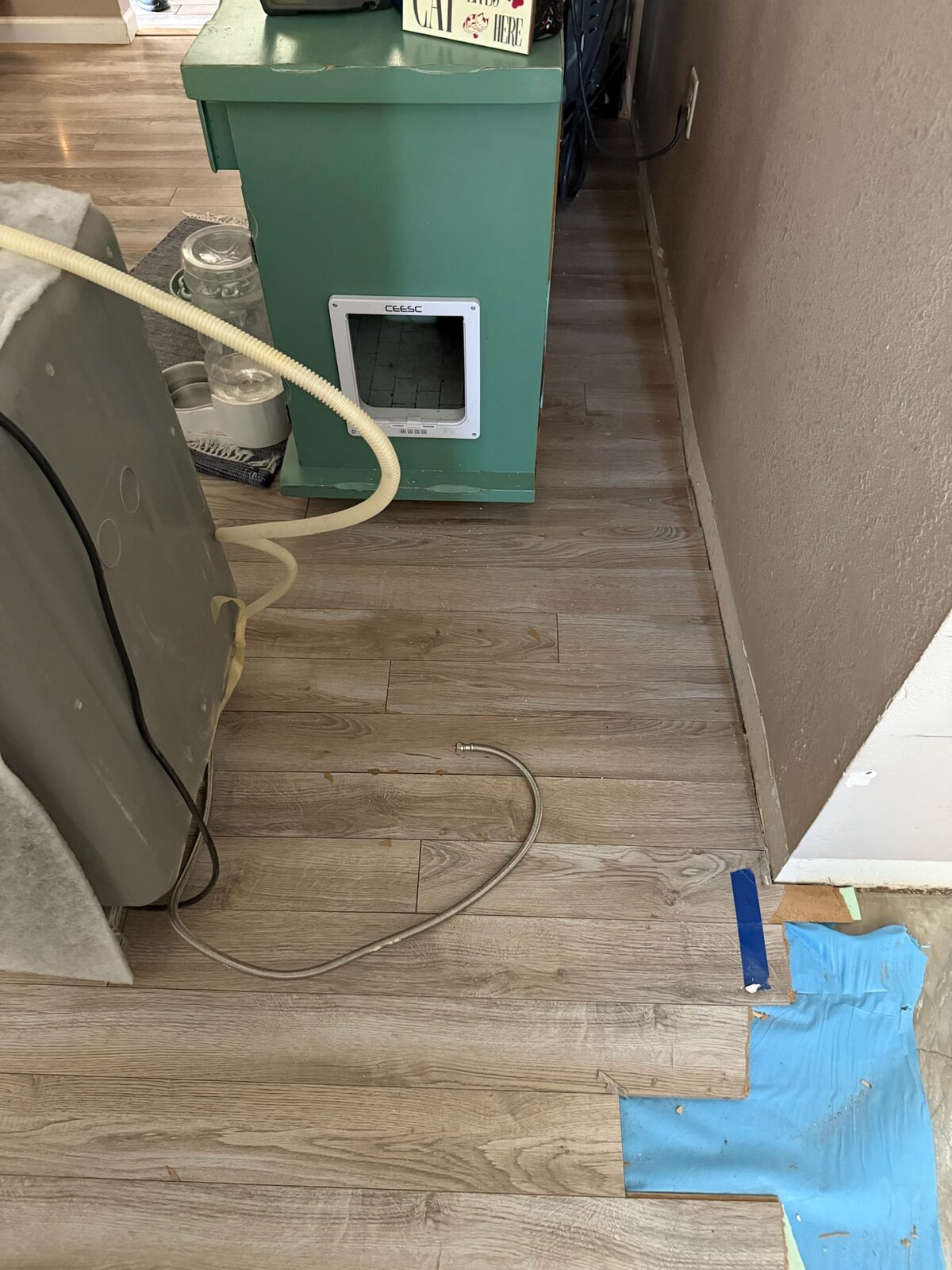
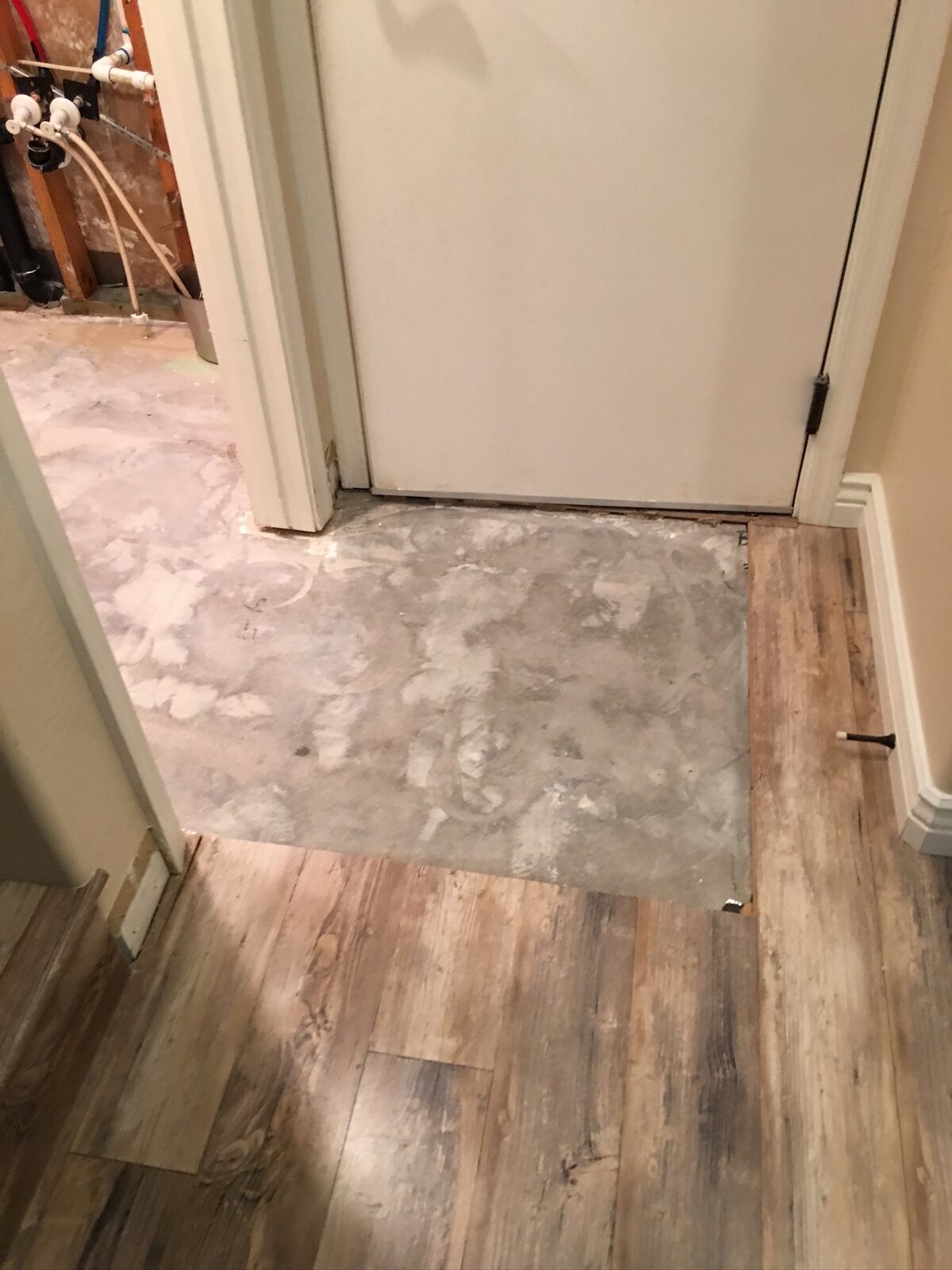
Residential reconstruction work by members of our team. See the full gallery →
More from Gold Water Fire
Abrasive Cleaning Methods for Soot on Framing and Masonry
A look at how abrasive cleaning methods remove soot from wood framing and masonry after a fire, and when each method fits the material.
AC Condensate Line Clogs & the Water Damage They Cause in Phoenix Homes
Why Phoenix AC condensate lines clog every summer, what the water damage looks like, and how to find the source before the ceiling stain spreads again.
Actual Cash Value vs Replacement Cost: Why Your Check Might Not Match the Repair Bill
Confused why your insurance check seems short after fire or water damage? Learn the difference between actual cash value and replacement cost coverage.
If something under that floor still does not add up
You are allowed to want a straight answer about what is actually under there. Gold Water Fire works throughout the Phoenix metro area, from Peoria and Avondale out to Queen Creek, San Tan Valley and Apache Junction. Call (480) 999-3339 or email Help@goldwaterfire.com and describe what you are seeing. AZ ROC #264344 KB-2.
Call (480) 999-3339Water Damage Restoration · Reconstruction & Rebuild · About Gold Water Fire · Contact