
Water Damage Under Tile and What Grout Tells You About It
You've noticed something off with the grout lines in your kitchen or bathroom, maybe a darker line that won't scrub away, a tile that shifts slightly when you step on it, or a musty smell that seems to come from the floor itself. It's easy to tell yourself it's just old grout, or hard water, or the house settling. But that nagging feeling that something underneath isn't right doesn't come from nowhere, and it's worth taking seriously before you decide what it means.
Water Damage Under Tile and What Grout Tells You About It
Why grout is often the first sign, not the damage itself
Grout is porous. It's designed to fill the gap between tiles, not to seal out water on its own, that job belongs to the underlying membrane, mortar bed, and subfloor. When water gets underneath tile, whether from a slow leak in a supply line, a failed shower pan, or moisture wicking up from a slab, it often shows up in the grout long before the tile itself looks wrong. That's because grout absorbs and holds moisture differently than the ceramic or porcelain tile surrounding it, which is why discoloration tends to trace the grout lines rather than spread evenly across the floor.
What different grout symptoms usually mean
Dark or discolored grout lines
Grout that has turned gray, brown, or black in a pattern, especially near a tub, shower, toilet, or appliance, often points to moisture wicking up from below rather than surface dirt. If cleaning doesn't lift the color, the staining may be coming from underneath, not on top.
Grout that crumbles or feels soft
Grout is cement based and should feel hard when you press on it. Soft, crumbly, or pitted grout, particularly in one section of a floor, can mean it's been sitting in moisture long enough to break down structurally.
Tiles that shift, click, or feel hollow
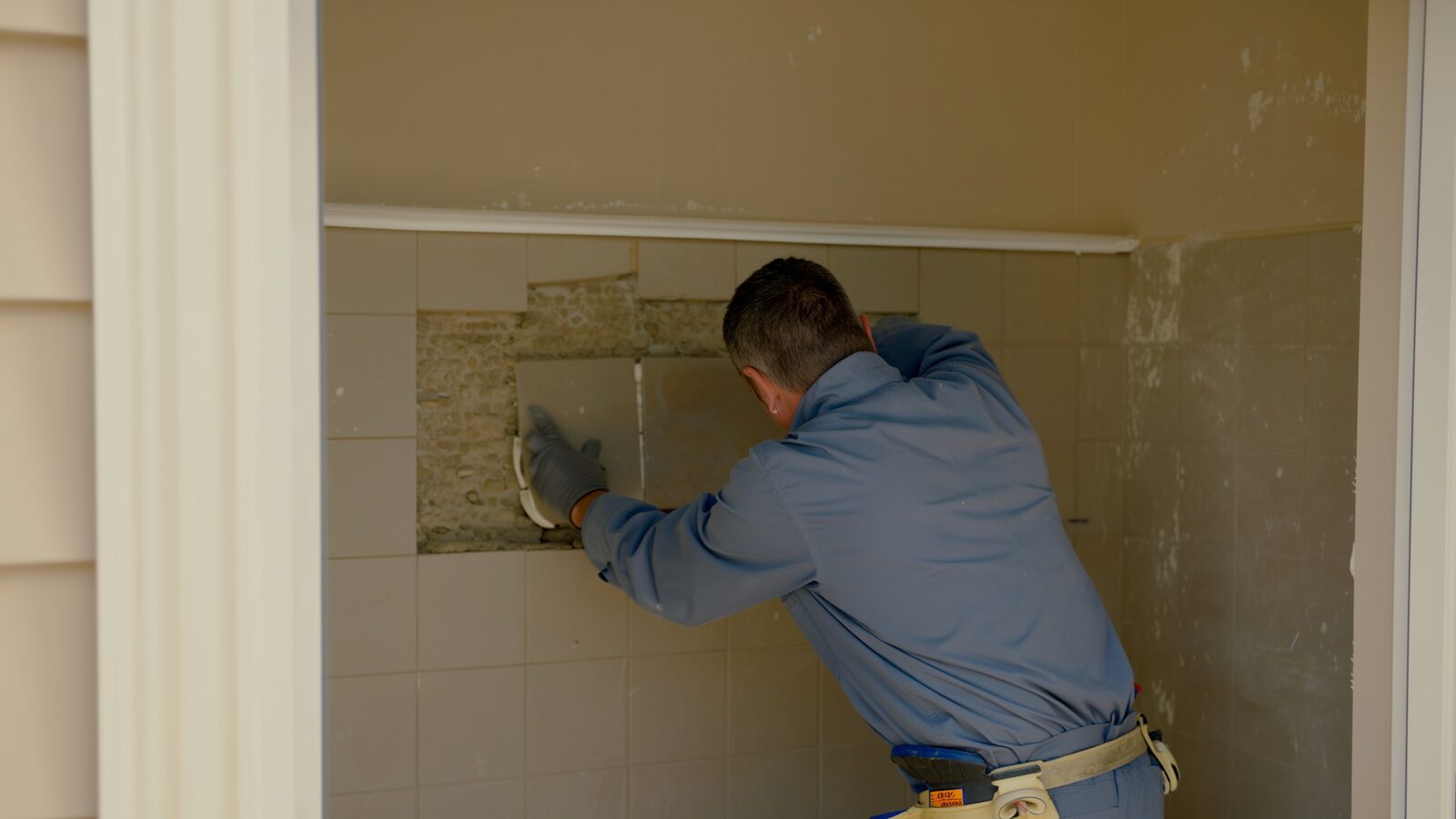
Tap a few tiles with a coin or the back of a screwdriver handle. A solid tile gives a sharp, consistent sound. A hollow or dull sound, or a tile that rocks slightly underfoot, can mean the mortar or adhesive beneath it has failed, often because water broke the bond between tile and substrate.
Efflorescence or a chalky white residue
A white, powdery buildup on grout or at tile edges is efflorescence, mineral deposits left behind as water evaporates through porous material. It's a strong indicator that moisture is actively moving through the grout or tile assembly, not just sitting on the surface.
Where to look, and why location matters
The location of the affected grout is a clue in itself. Staining that follows the perimeter of a shower or tub often traces back to a failed pan liner or worn caulk joint letting water behind the tile. Discoloration near a toilet base can point to a wax ring or supply line issue. Problems near a dishwasher, refrigerator water line, or under a kitchen sink usually mean a slow leak that's been feeding moisture into the subfloor for a while, since these areas are rarely inspected closely and small leaks can go unnoticed for months. Damage that shows up in the middle of an open floor, away from any plumbing, is more likely tied to slab moisture or a leak in a line running underneath the house.
Why tile can hide the problem for so long
Tile and grout are rigid, so they don't show damage the way drywall or wood flooring do, they don't sag, warp, or bubble in the early stages. Water can sit in the mortar bed or subfloor underneath a tile installation for an extended period before enough moisture reaches the surface to change the grout's appearance or loosen a tile. This is part of why tile floors can mask a leak that's already caused real damage to the structure below, insulation, or even framing, by the time anything is visible above the surface. If a smell is present but the visible signs are minor, the smell is often the more reliable indicator that something has been wet for a while.
What this means for your next step
None of these signs on their own tell you exactly how much damage exists below the tile, only that moisture has likely been present. Confirming what's actually happening under the surface, and how far it's spread, usually requires moisture readings and sometimes lifting a tile or two to check the substrate directly. If you're seeing more than one of these signs together, especially discoloration paired with hollow-sounding tile, it's worth having it looked at before flooring is repaired or replaced, since regrouting or recaulking over an active moisture source won't resolve what's underneath. For background on how water damage progresses more broadly, see our page on water damage restoration, and if the damage has advanced enough to require rebuilding flooring or subfloor, our reconstruction page covers what that process typically involves.
Questions people ask us
Can I just regrout over discolored grout without checking underneath?
You can, but if the discoloration is caused by moisture from below, regrouting only covers the surface symptom. The underlying leak or moisture source will keep affecting the mortar bed and subfloor, and the staining will likely return.
Does hollow-sounding tile always mean water damage?
Not always. Hollow sounds can also come from installation issues, like inadequate mortar coverage when the tile was set. But when hollow tile is paired with staining, odor, or crumbling grout, water damage becomes a much more likely explanation.
How can I tell if a leak is coming from plumbing or from the slab itself?
Location is the best general clue: issues clustered near a specific fixture (toilet, tub, sink, appliance) usually point to plumbing, while damage in open floor areas away from any fixture is more often tied to slab moisture. Confirming the source usually requires moisture testing rather than visual inspection alone.
Is efflorescence dangerous, or just cosmetic?
Efflorescence itself is just mineral residue and isn't harmful on its own, but its presence means water is actively moving through the material. It's a signal to investigate the moisture source, not something to treat as purely cosmetic.
The standard our team works to
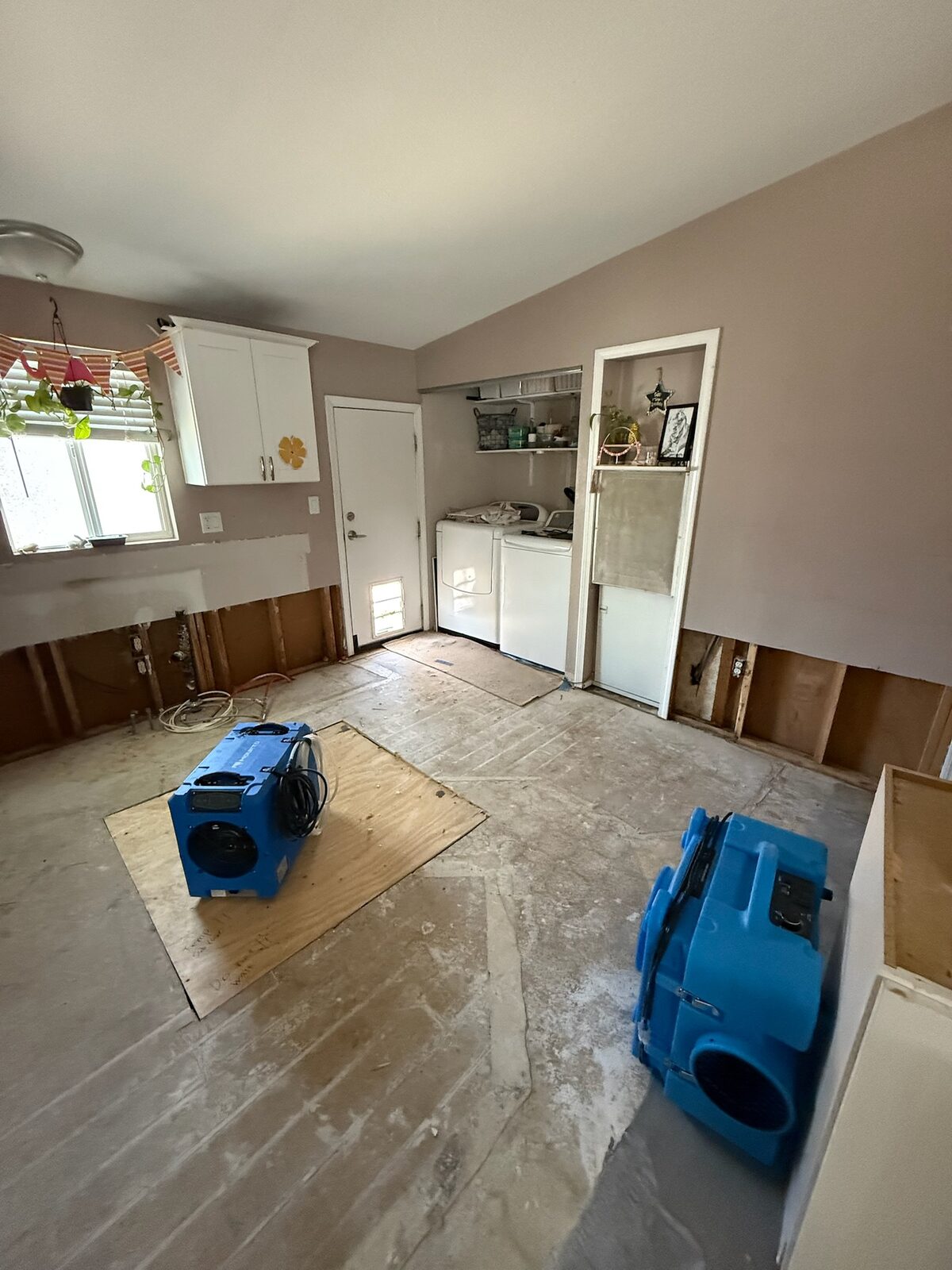
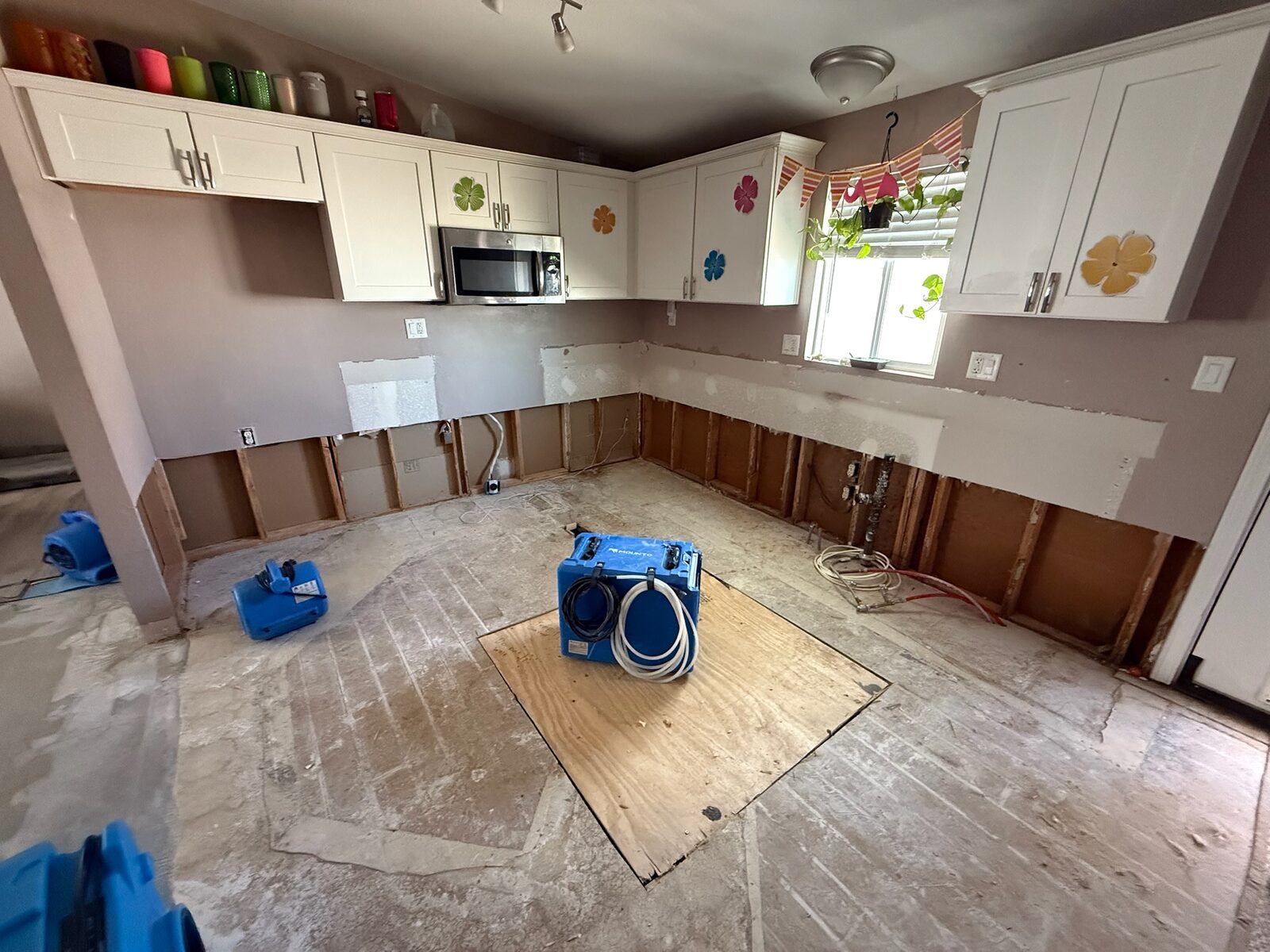
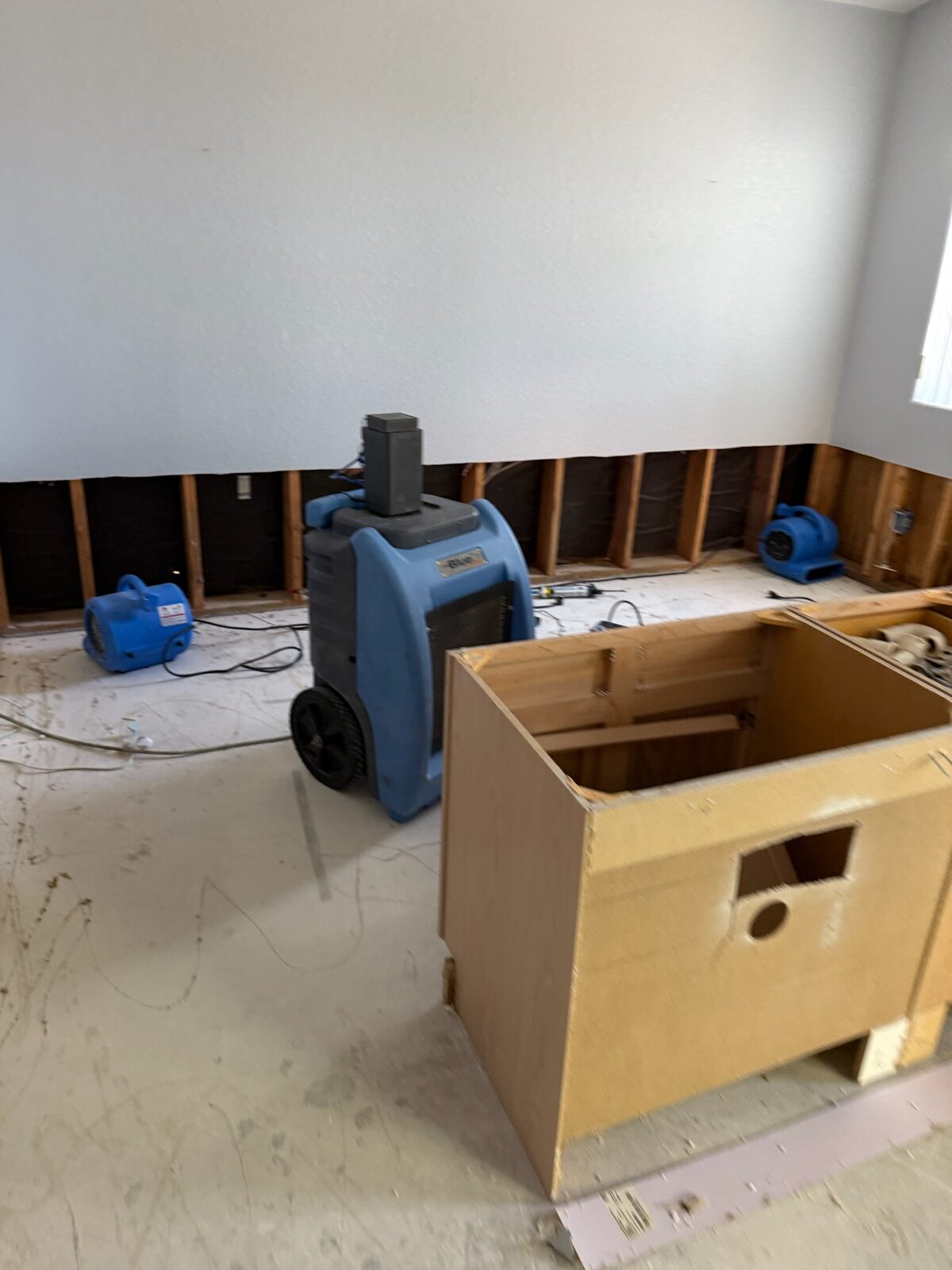
Residential reconstruction work by members of our team. See the full gallery →
More from Gold Water Fire
Abrasive Cleaning Methods for Soot on Framing and Masonry
A look at how abrasive cleaning methods remove soot from wood framing and masonry after a fire, and when each method fits the material.
AC Condensate Line Clogs & the Water Damage They Cause in Phoenix Homes
Why Phoenix AC condensate lines clog every summer, what the water damage looks like, and how to find the source before the ceiling stain spreads again.
Actual Cash Value vs Replacement Cost: Why Your Check Might Not Match the Repair Bill
Confused why your insurance check seems short after fire or water damage? Learn the difference between actual cash value and replacement cost coverage.
Not sure what's happening under your tile?
If you're seeing staining, hollow spots, or a smell you can't place, Gold Water Fire can take a closer look and explain what's actually going on before any repair decisions are made. Call (480) 999-3339 or reach out through our contact page.
Call (480) 999-3339Water Damage Restoration · Reconstruction & Rebuild · Contact Gold Water Fire