
Ponding on Flat and Low-Slope Roofs: Where the Water Actually Goes
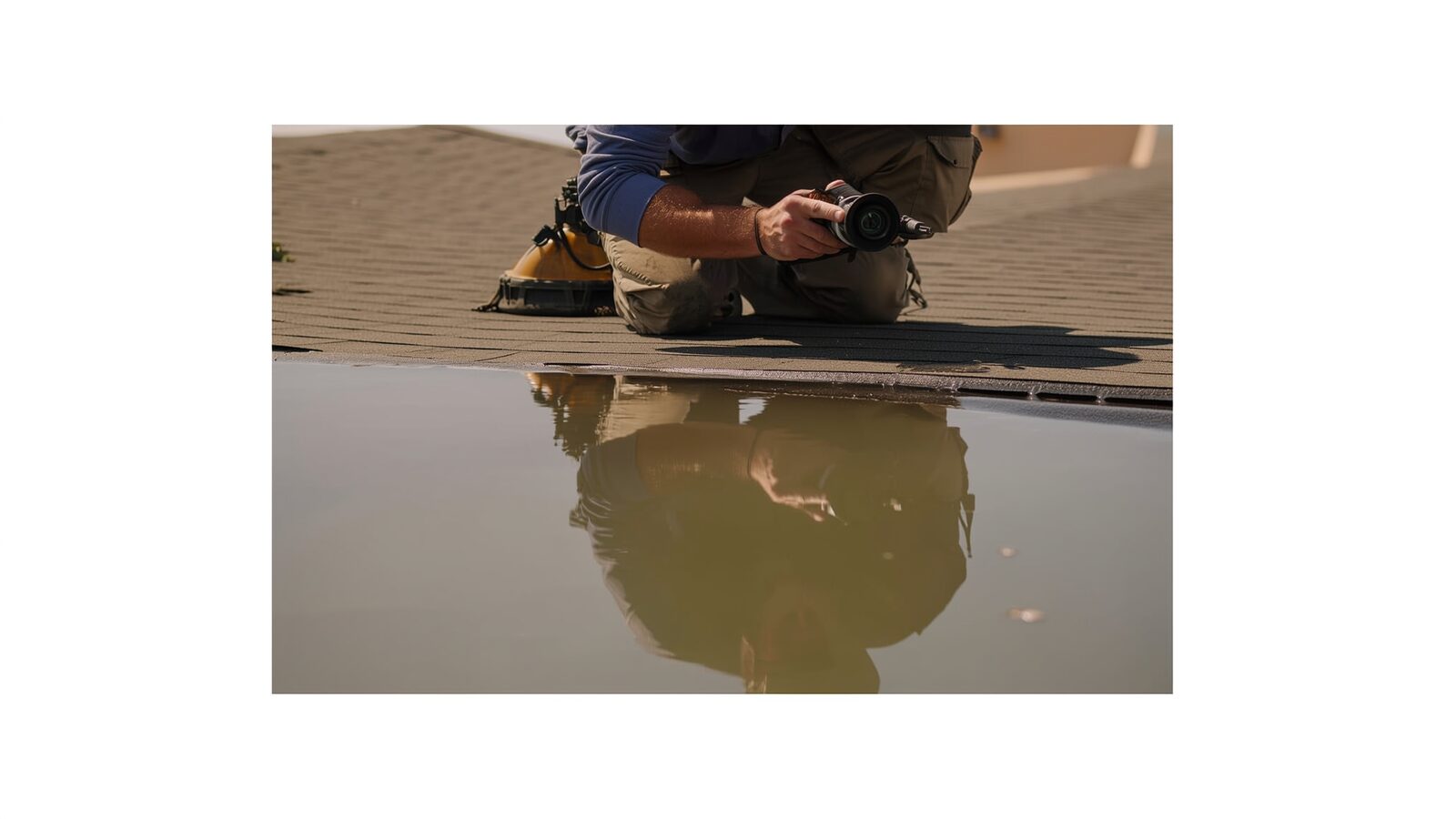
You went up on the roof, or maybe you just saw it from a ladder or a drone photo, and there it was: a dark patch of standing water that hasn't gone anywhere in days. Maybe it happens after every monsoon storm now. Maybe it's just one spot that never used to be a problem and suddenly is. It's hard to know if this is something to worry about or just how flat roofs are in the desert. And it's even harder to know what's happening underneath that puddle, out of sight, while you're standing there trying to decide.
Ponding on Flat and Low-Slope Roofs: Where the Water Actually Goes
Flat roofs were never actually flat
Every flat or low-slope roof is built with a slight pitch, usually just a fraction of an inch per foot, meant to carry water toward drains, scuppers, or roof edges. In Phoenix and across the Valley, that gentle slope gets worked against constantly: monsoon downpours that dump more water in twenty minutes than a slow winter rain does in a day, UV exposure that softens and reshapes roofing material over time, and rooftop equipment (AC units, solar mounts, vent stacks) that gets added after the original roof was sloped and graded. Any one of those can create a low spot where water used to move and now just sits. Ponding is technically defined as water that remains on a roof more than 48 hours after rainfall, which under Arizona's sun and heat is rarely the water's fault alone. It usually means the slope has changed.
Where the water goes once it's on the roof
Ponded water has three possible paths. It can evaporate, which Arizona heat does efficiently once monsoon humidity clears, and this is the outcome that makes ponding feel harmless for years. It can drain, if the roof's slope and drainage system are doing their job, moving water to scuppers, internal drains, or the roof edge. Or it can find a way through: a pinhole in membrane roofing, a cracked or dried-out roof coating, a flashing seam around a vent pipe or HVAC curb, or a seam in built-up or modified bitumen roofing that has separated after years of thermal cycling. Once water gets under the roofing membrane, it doesn't fall straight down. It follows the deck, the insulation layers, and structural framing, often traveling several feet horizontally before it finds a gap, a light fixture, a wall top plate, or a ceiling seam to show up as a stain.
What ponding is trying to tell you
Not all standing water means a leak is coming, but certain patterns are worth paying attention to. Water that clears within a day or two after a storm is doing what it's supposed to. Water that sits for a week, especially in the same spot every time, is telling you the slope or drain system has a problem in that location. A ceiling stain that shows up days after a monsoon storm, not during it, is consistent with water traveling along the roof deck before finding its way in, which is why the wet spot on the ceiling and the source of the leak are often not in the same place. Discoloration on a roof coating, blistering, or a soft or spongy feel underfoot on a walk-pad area are all signs the membrane has been compromised even if you can't see standing water that day.
What happens after water gets past the roof
Once moisture is inside the building envelope, it behaves according to gravity and whatever materials it touches, not according to where the roof problem started. It can sit inside insulation for a long time before a ceiling ever shows a visible stain, which is part of why a small ongoing leak is often more damaging than a single dramatic one: the water has more time to spread through drywall, insulation, and framing before anyone notices. In Arizona's dry climate, mold growth is slower to establish than in humid regions, but it is not prevented, especially in insulation cavities or wall spaces where moisture gets trapped away from airflow and sun. That combination, hidden moisture plus a dry-climate assumption that leaks 'just dry out on their own,' is what turns a roof drainage issue into a longer repair than it needed to be.
Questions people ask us
Is any ponding on a flat roof normal?
Brief ponding after a storm, water that clears within a day or two, is common on low-slope roofs and not automatically a sign of failure. It becomes a concern when the same area holds water repeatedly, when it lingers well past 48 hours, or when it's near equipment, drains, or seams.
Why does the leak show up in a different room than where the water is pooling?
Water doesn't fall straight down once it gets under a roof membrane. It travels along the roof deck, insulation, and framing until it finds a gap, so the ceiling stain can be several feet from the actual entry point.
Can a roof coating fix a ponding problem?
A coating can seal small surface issues and slow deterioration, but it doesn't correct the underlying slope. If the low spot itself isn't addressed, water will keep collecting in the same place and eventually find a new weak point.
Does Arizona's dry heat mean roof leaks aren't a big deal?
The heat does help surface water evaporate faster than in humid climates, but any moisture that gets trapped inside insulation, wall cavities, or framing is shielded from that sun and airflow. It can sit and cause damage for a long time before it's visible.
The standard our team works to
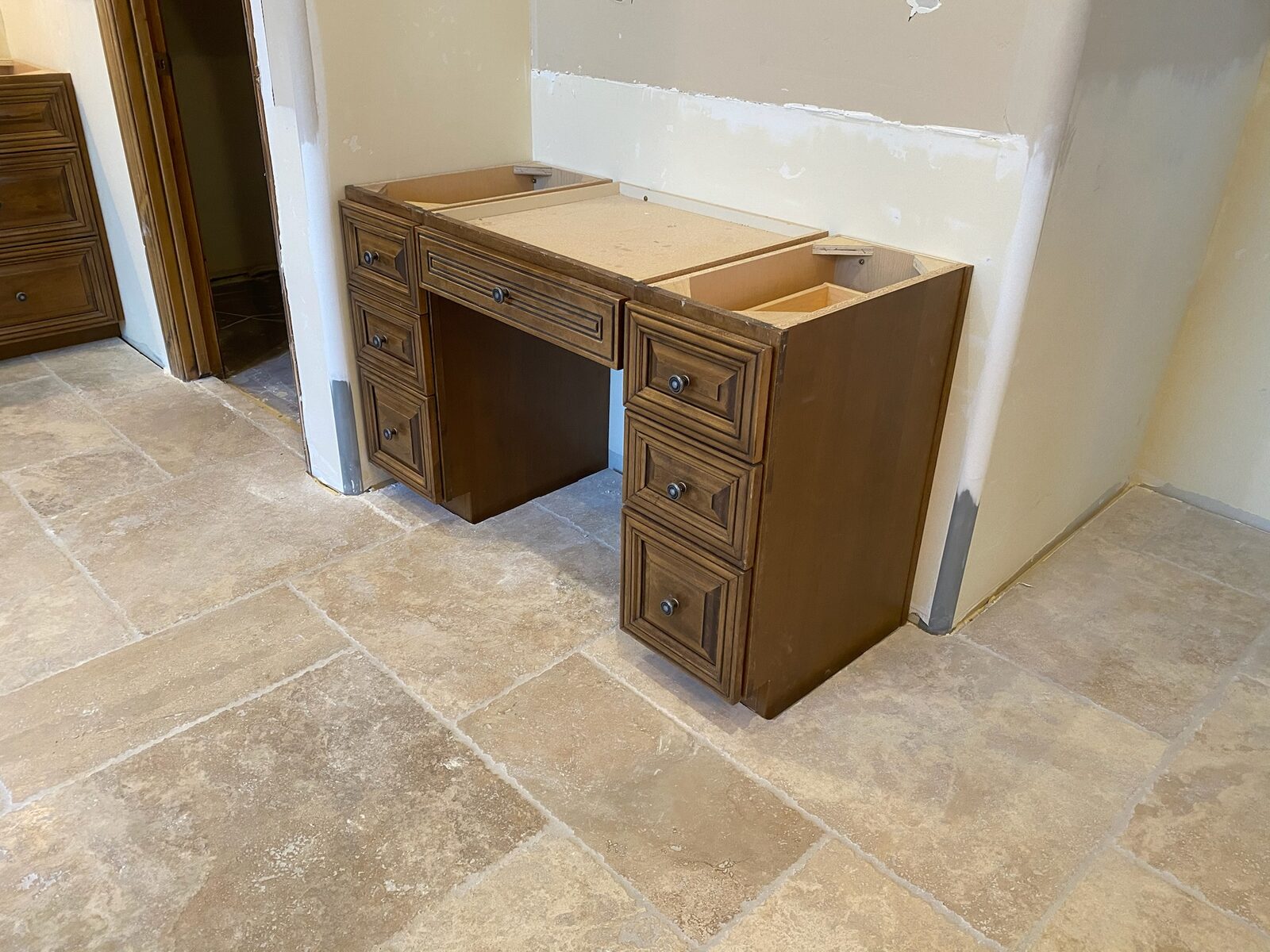
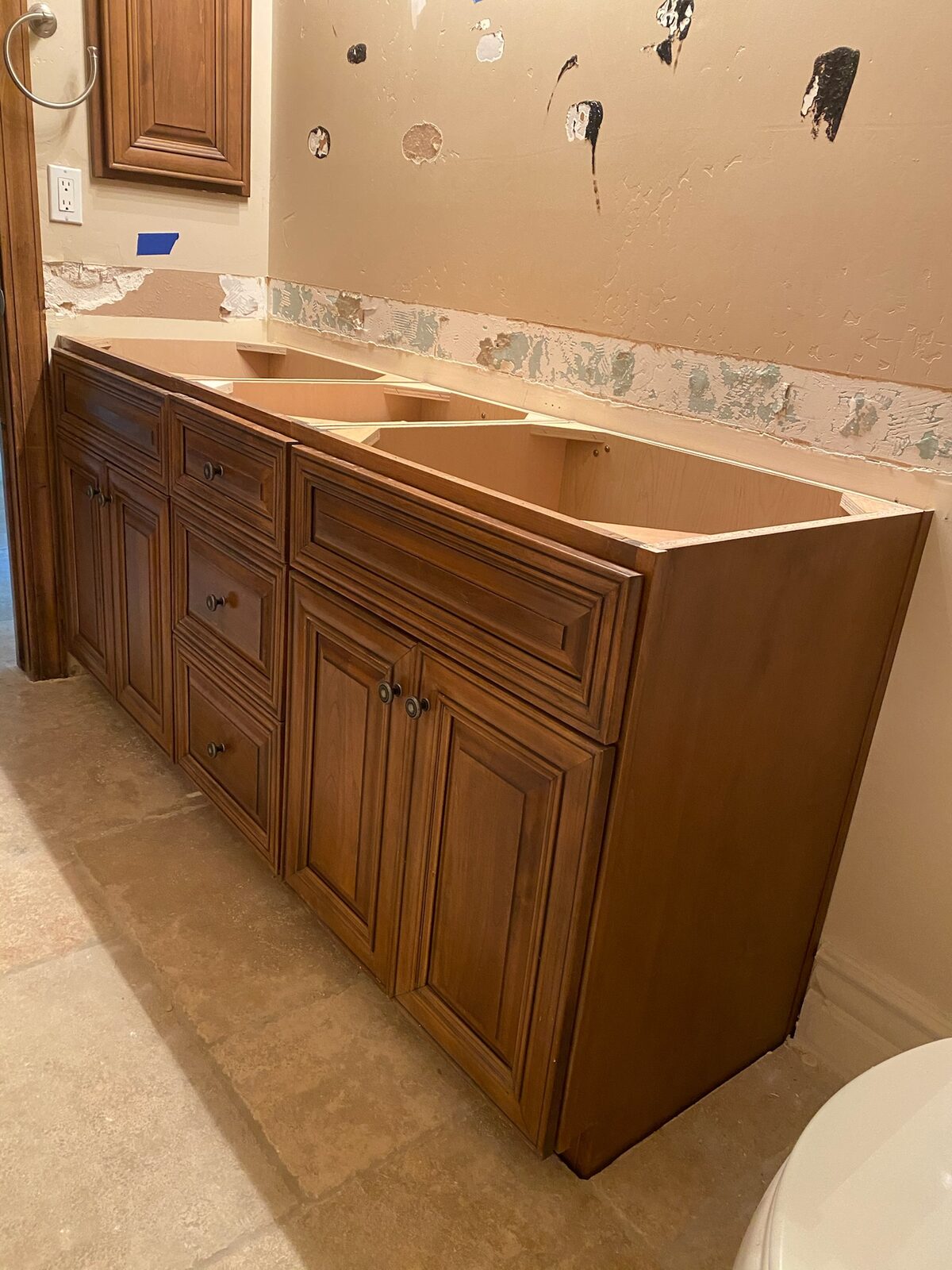
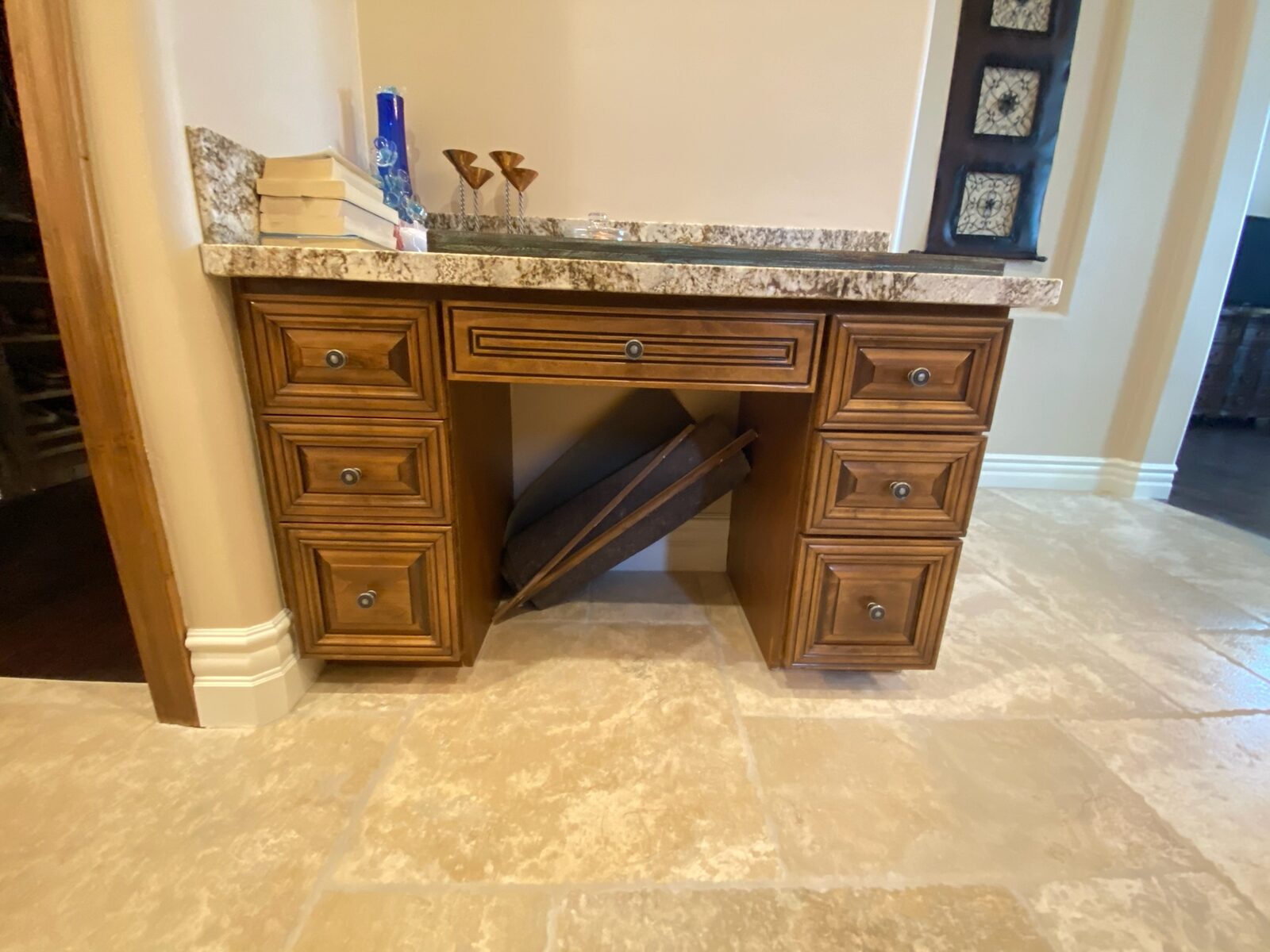
Residential reconstruction work by members of our team. See the full gallery →
More from Gold Water Fire
Abrasive Cleaning Methods for Soot on Framing and Masonry
A look at how abrasive cleaning methods remove soot from wood framing and masonry after a fire, and when each method fits the material.
AC Condensate Line Clogs & the Water Damage They Cause in Phoenix Homes
Why Phoenix AC condensate lines clog every summer, what the water damage looks like, and how to find the source before the ceiling stain spreads again.
Actual Cash Value vs Replacement Cost: Why Your Check Might Not Match the Repair Bill
Confused why your insurance check seems short after fire or water damage? Learn the difference between actual cash value and replacement cost coverage.
Seeing water stains or a roof that won't drain?
Gold Water Fire works with homeowners and property owners across the Phoenix metro area on water damage from roof leaks, from tracing where the water traveled to repairing what it affected. Call (480) 999-3339 or reach out through our contact page to talk through what you're seeing.
Call (480) 999-3339Water Damage Restoration · About Gold Water Fire · Contact Gold Water Fire