
Water Softener & Filtration System Failures as a Household Flooding Source
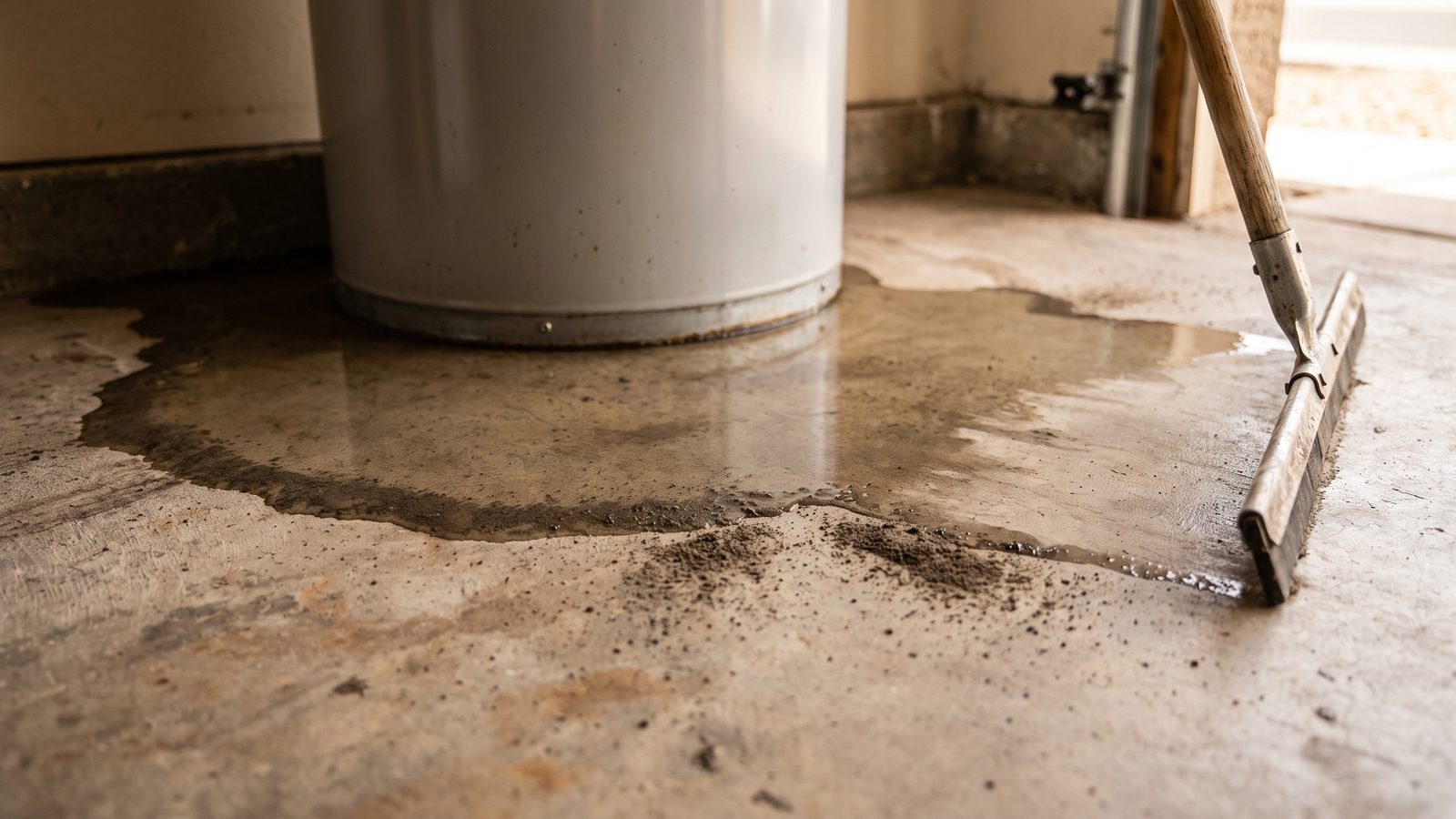
You have mopped up the same corner of the garage more than once now. The first time you blamed the car, or a hose left running, or a monsoon that pushed water under the door. The second time you noticed the drywall behind the softener tank had gone soft and chalky at the bottom edge, and you started to wonder how long that had actually been happening. There is a particular kind of tiredness that comes with a problem you cannot name yet: not a burst pipe, not an obvious emergency, just water that keeps showing up where it should not be, and a piece of equipment sitting there that you have never really understood. Most people never think about the softener until it does something. It is not a failure of attention. These systems are built to run quietly in a corner, and when they start going wrong they usually do it slowly, in small amounts, in a spot nobody stands in.
Water Softener & Filtration System Failures as a Household Flooding Source
A softener is a pressurized appliance that no one inspects
Every water softener and whole-house filtration system is a pressurized vessel sitting on the supply side of your plumbing, which means anything that fails on it fails with full house pressure behind it. Unlike a water heater, which most people know has a lifespan, softeners tend to be installed and then forgotten, often in a garage or a side yard where a slow leak has somewhere to go before anyone notices. In the Phoenix area the mineral load in municipal water is genuinely hard, so these systems work constantly, cycling brine and backwashing on a schedule you probably never set yourself. Constant cycling means constant stress on the parts that move and the parts that seal. It also means the failure often shows up as repeated small events rather than one dramatic one, which is exactly why it takes so long to identify.
The bypass valve and inlet fittings
The plastic bypass assembly on the back of the control head is a common failure point. The O-rings inside dry out and the plastic becomes brittle with age and heat. A garage in Arizona summer heat cooks these parts season after season. When one lets go it can weep for months first, staining the wall behind it before it ever puddles.
The brine tank overfilling
If the float or the brine valve sticks, the tank keeps taking water and does not stop. That tank holds a lot of salt water, and salt water is worse for flooring, baseboards, and metal framing than clean water is. An overflowing brine tank usually means water spreading across a flat garage slab and finding the doorway into the house.
Drain line problems
Softeners discharge to a drain during regeneration. If that line is kinked, disconnected, backed up, or run to a standpipe that is partly clogged, the discharge comes out on the floor instead. Because regeneration usually runs overnight, nobody sees it happen.
Filter housings and cartridge changes
Whole-house filter canisters leak at the housing O-ring, especially after a cartridge change where the seal was pinched or not lubricated. Cross-threading the housing during reassembly is another one. These leaks are pressurized and steady rather than intermittent.
Resin tank and internal failure
Resin beads breaking down can foul the control valve or clog the distributor tube, which changes flow and pressure through the unit. In older tanks, corrosion or a cracked liner can allow seepage from the base, which shows up as a persistent wet ring under the tank.
Supply lines to and from the unit
The flexible connectors linking the unit to your copper or PEX are often the oldest, weakest link. Braided stainless lines fail from the inside. If the braiding shows a rust bloom or a bulge anywhere along its length, it is telling you something.
Signs you may have been reading as something else
The reason this problem goes unnamed for so long is that its early signs look like other, smaller things. A salt crust on the floor gets swept up. A musty smell in the garage gets blamed on storage boxes. Efflorescence, the white powdery bloom on concrete or block wall, is read as normal aging when it is actually a sign that water has been moving through masonry repeatedly. Watch for drywall that is discolored or soft only in the lowest few inches, baseboard that has separated from the wall, a warped bottom shelf on a cabinet near the unit, rust on the base of the water heater or a nearby metal stand, and a garage floor that stays darker in one spot longer than the rest after you hose it out. Check your water bill too. A softener stuck in a continuous regeneration cycle can send a surprising volume of water to the drain without any of it ever showing on the floor, and the bill is sometimes the first honest signal you get.
Look behind, not just under
Pull the unit forward if you can safely do so, or use a flashlight and a phone camera. Wall staining behind the equipment often predates any floor water by a long time.
Check the salt bridge
A hard crust of salt spanning the brine tank can hide standing water underneath it. Break it gently with a broom handle and look at the level below.
Note when it happens
If water appears on a rough schedule, every few days or always in the morning, you are almost certainly watching the regeneration cycle, not a random leak.
Feel the wall, do not just look
Cool, slightly soft drywall near the floor when the rest of the wall is dry and firm means moisture is in the material even if the surface looks fine.
How to stop water coming from a softener or filter
Most softeners have a bypass valve built into the head, usually a knob or a pair of push-in stems marked with arrows. Setting it to bypass routes water around the unit and lets you keep water in the house while the softener stops taking any. If the bypass itself is what is leaking, or if you cannot tell, go to the main shutoff for the house instead. In Phoenix area homes that is often at the front of the property near the meter, or on an exterior wall on the side of the house where the supply enters. If a filter housing is spraying, shut the water off before you touch the housing, because the canister is under pressure. Once flow has stopped, get standing water off the slab and away from wall bases quickly. Water that is left to sit will wick upward into drywall and into the bottom plate of the framing, and salt water from a brine tank will keep drawing moisture and damaging materials longer than plain water does. Move stored boxes, especially cardboard, off the floor entirely.
Bypass first, main second
Bypass isolates the appliance. The main shutoff stops everything. Know where both are before you need them, and try the main valve occasionally so it does not seize.
Power matters too
The control head is electric. If there is water near an outlet or a cord, kill the circuit at the panel before working around it.
Do not assume the slab is fine
Water on a garage floor travels along the slab under the wall plate and into an adjoining room. Carpet in the room on the other side is worth checking even if it looks dry at the edge.
Photograph everything
Before you dry anything or move anything, take pictures with a phone. Insurers ask for documentation of the source and the extent, and it is easier now than from memory later.
Why the damage is often larger than the puddle
The part of this that surprises people is how much material can be affected by a leak that never looked serious. Repeated small wettings do more cumulative damage than one large spill that gets dried fast, because each cycle rewets material that never fully dried and keeps a moisture level going in wall cavities and under baseboard. That is the condition where microbial growth begins, and it is why a wall that looks stained can be soft several feet up from the floor. Drying properly means measuring moisture in the materials themselves, not just running a fan until the surface feels dry, and it often means removing wet insulation and affected drywall so the cavity can dry rather than sealing the problem behind paint. If materials have to come out, putting the room back is its own scope of work: drywall, texture, paint, baseboard, sometimes flooring and cabinetry. That is where water damage restoration and reconstruction and rebuild meet, and it helps when the same team carries the job from drying through finish work so nothing gets lost between trades.
Questions people ask us
Is water damage from a water softener covered by homeowners insurance?
Coverage depends on your specific policy and how the failure is classified. In general terms, policies often treat a sudden and accidental discharge differently from damage that resulted from long-term seepage or lack of maintenance, which is one reason documenting when you first noticed water matters. Photograph the unit, the water, and the affected materials before cleanup, keep any failed parts, and talk to your carrier directly about your policy language rather than relying on a general rule.
The garage floor dried on its own. Do I still need to do anything?
A concrete slab can look dry on the surface while drywall, bottom plates, insulation, and the underside of stored items are still holding moisture. Concrete itself also holds and releases water slowly. If there was any contact with wall material, baseboard, or an adjoining room, it is worth having moisture measured in the materials rather than assuming the surface tells the whole story.
Is brine tank water worse than regular water damage?
Salt water behaves differently. It is corrosive to metal fasteners, framing connectors, and appliance bases, it attracts and holds moisture in porous material, and it leaves a residue that can keep drywall damp and cause finishes to fail later even after drying. Affected material generally needs to be cleaned or removed rather than just dried.
How can I reduce the chance of this happening again?
Put a drain pan with a drain line under the unit if the location allows it, check the flexible supply connectors for rust or bulging when you add salt, make sure the drain line is secured and not kinked, and note the age of the system. Many homeowners also install a leak sensor on the floor near the unit, since these failures usually start small and overnight.
The standard our team works to
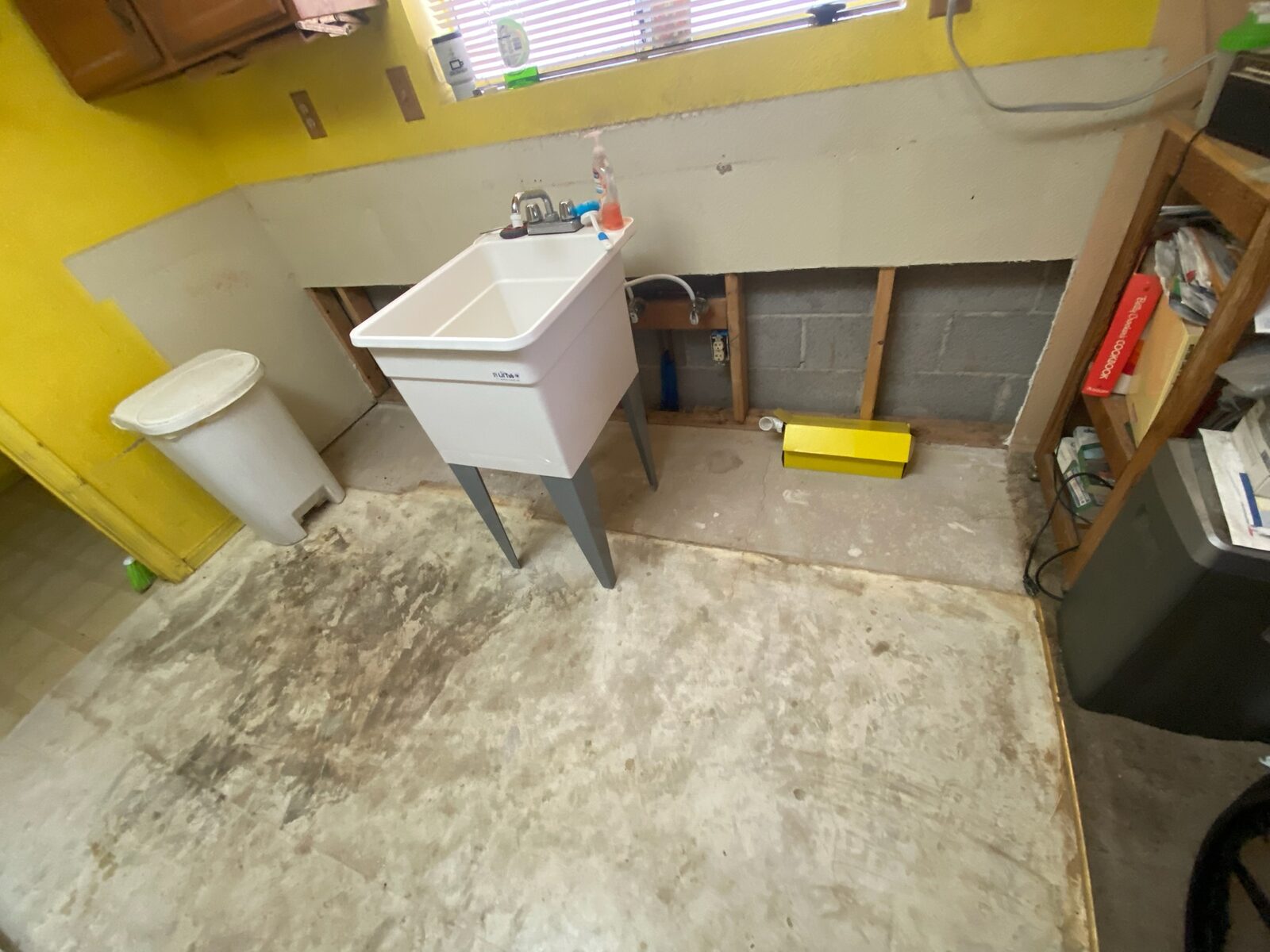
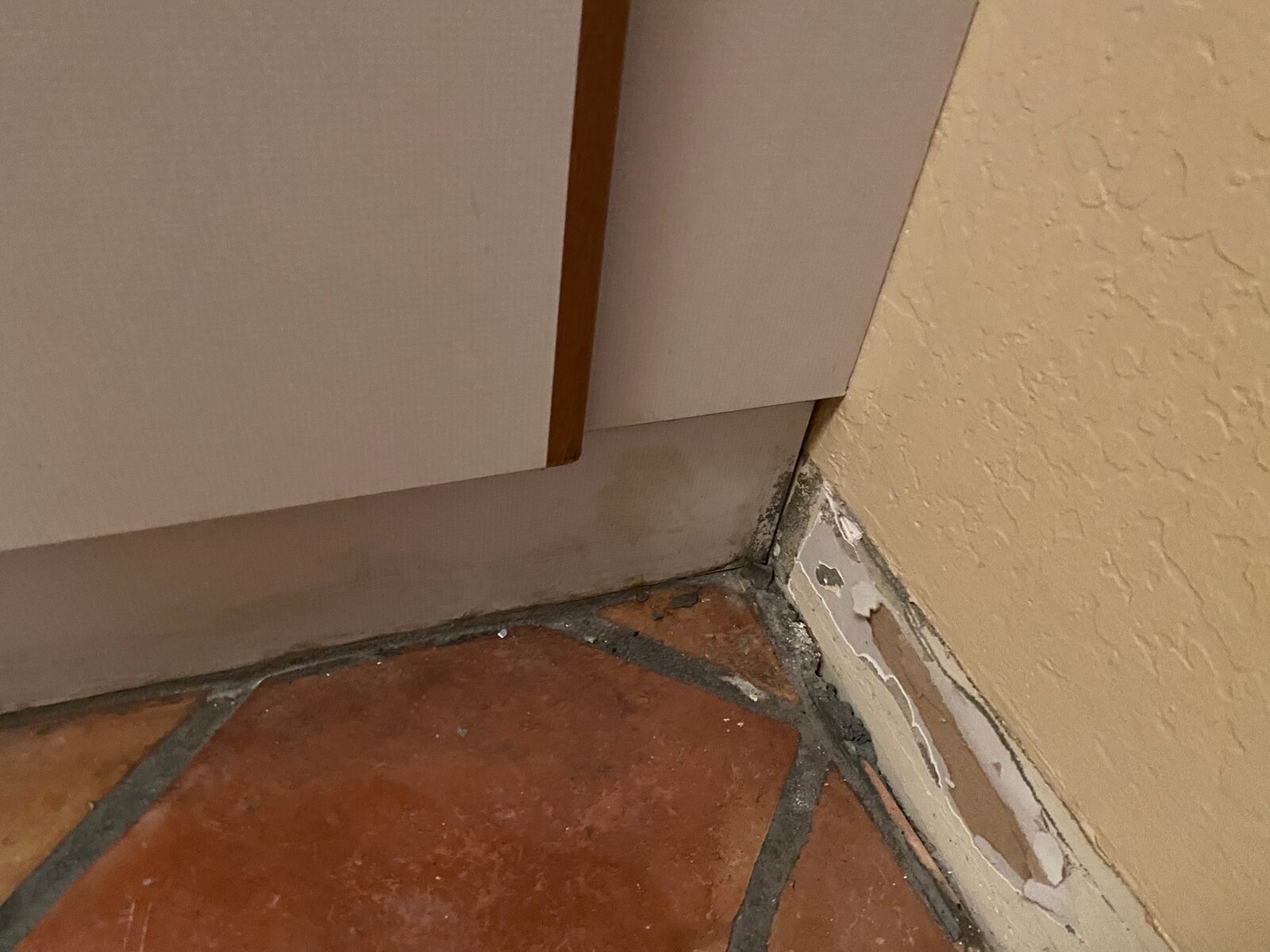
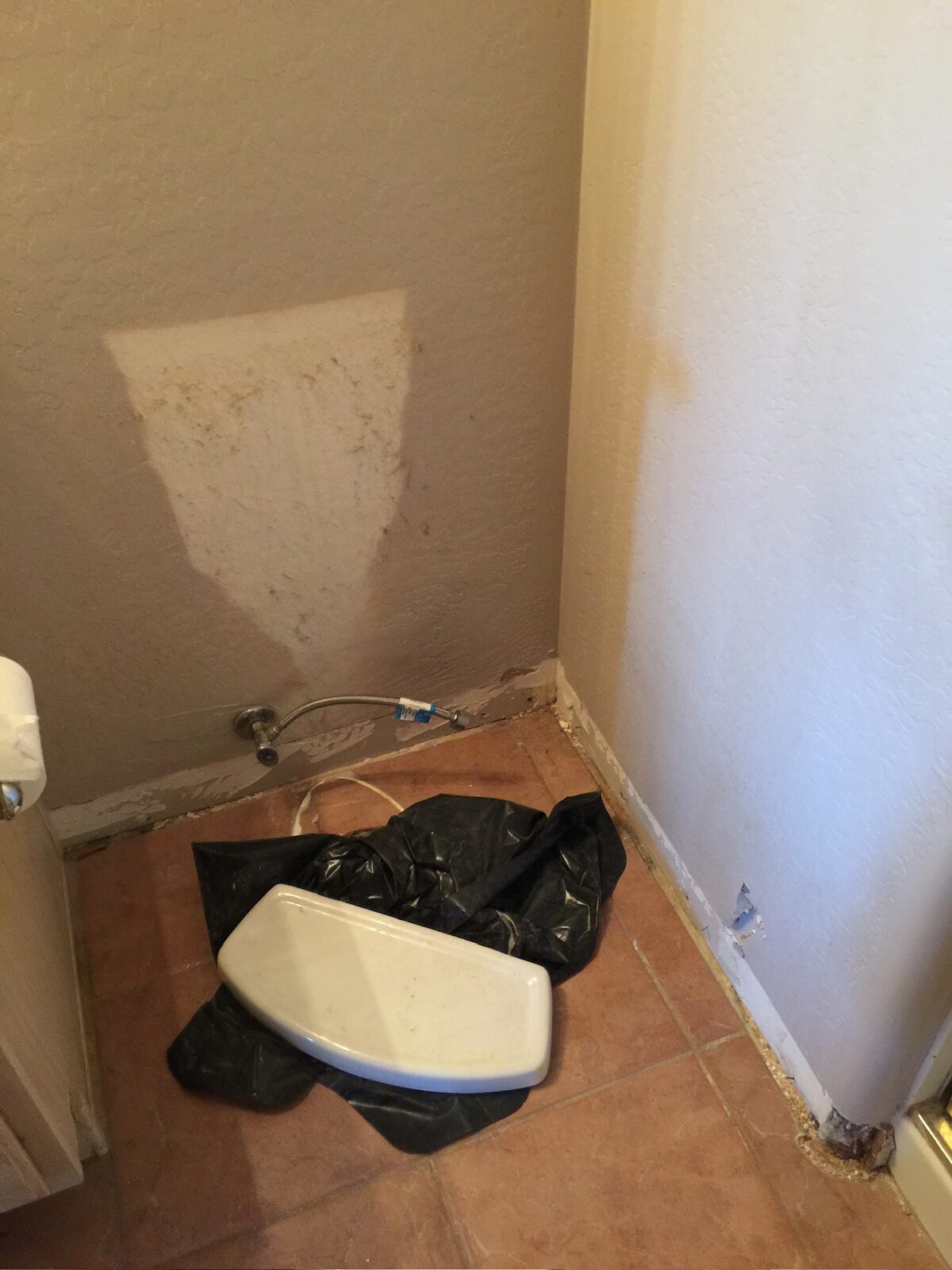
Residential reconstruction work by members of our team. See the full gallery →
More from Gold Water Fire
Abrasive Cleaning Methods for Soot on Framing and Masonry
A look at how abrasive cleaning methods remove soot from wood framing and masonry after a fire, and when each method fits the material.
AC Condensate Line Clogs & the Water Damage They Cause in Phoenix Homes
Why Phoenix AC condensate lines clog every summer, what the water damage looks like, and how to find the source before the ceiling stain spreads again.
Actual Cash Value vs Replacement Cost: Why Your Check Might Not Match the Repair Bill
Confused why your insurance check seems short after fire or water damage? Learn the difference between actual cash value and replacement cost coverage.
If the water has been coming back for a while, you can have someone look at it
A leak you have been managing for months is still worth having assessed, especially if drywall, baseboard, or an adjoining room got wet more than once. Gold Water Fire handles water damage restoration and the reconstruction work that follows across the Phoenix metro area, from Peoria and Avondale out to San Tan Valley and Apache Junction. Call (480) 999-3339 or email Help@goldwaterfire.com to talk through what you are seeing.
Call (480) 999-3339Water Damage Restoration · Reconstruction & Rebuild · Contact Gold Water Fire · About Our Team