
The Signs of a Failing Shower Pan & the Damage Happening Under the Tile
You keep noticing the same things. The grout in one corner never really dries. There is a faint smell in the bathroom that comes and goes and never quite has a source. The baseboard on the far side of the wall, in the hallway or the bedroom closet, has started to lift at the bottom edge, and you have caulked it, painted it, run the fan longer, and it comes back. Nobody has told you anything is wrong. There is no puddle, no burst pipe, no moment where something obviously broke. Just a slow, quiet wrongness you have been living beside for months, maybe longer, without a name for it. That is a hard place to sit. It is not an emergency, so it never gets urgent, and it is not nothing, so it never goes away.
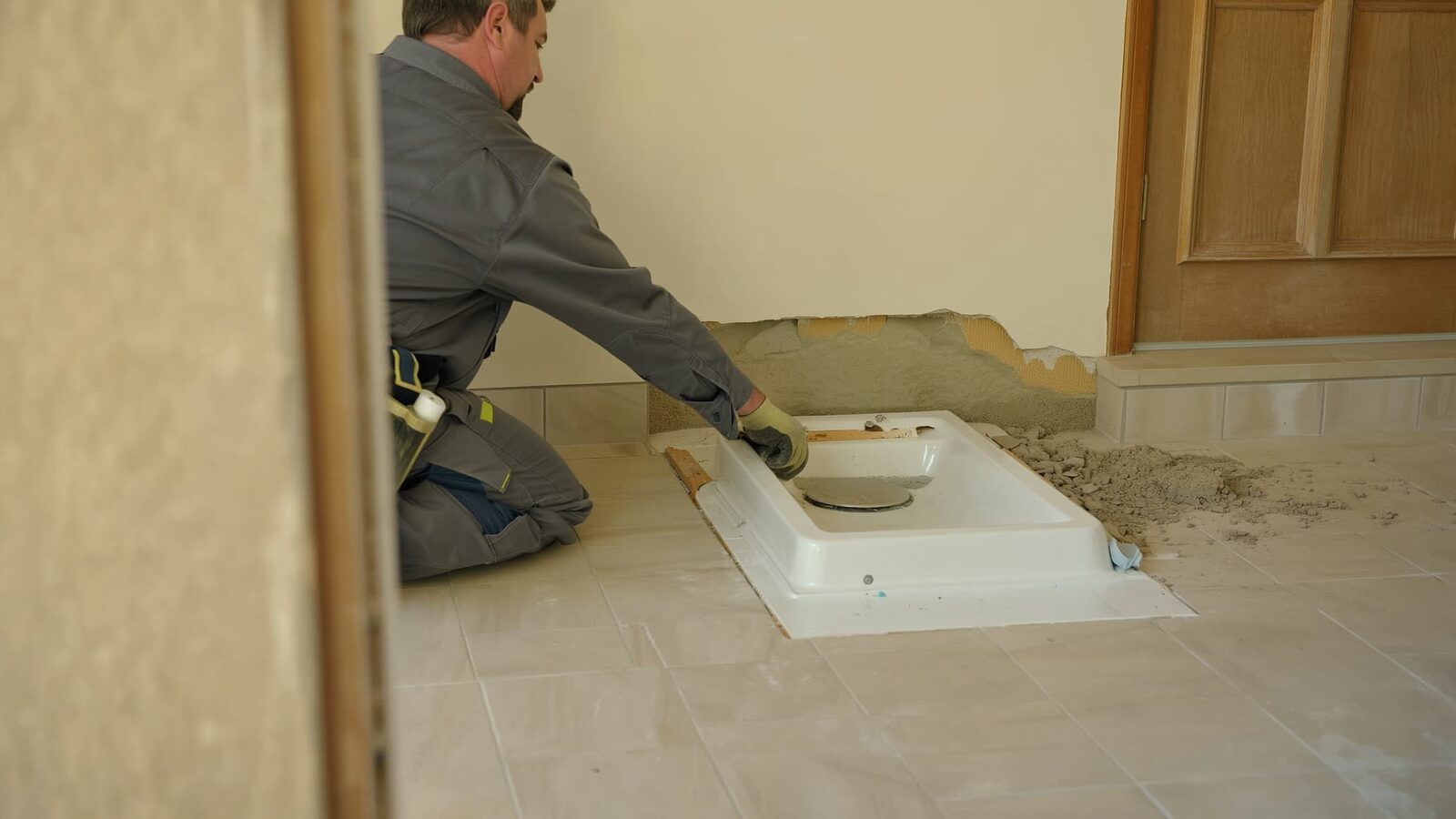
The Signs of a Failing Shower Pan & the Damage Happening Under the Tile
A shower pan is a waterproof basin, and tile is not the waterproofing
This is the part most homeowners were never told. Tile and grout are not waterproof. Grout is porous by design, and water passes through it constantly, every single shower. What keeps that water out of your framing is the layer underneath: a shower pan. Depending on when and how your shower was built, that is either a preformed acrylic or fiberglass pan, or a traditional mud-set pan with a sheet membrane (PVC or CPE) draped over the subfloor, turned up the walls a few inches, and clamped into a two-part drain assembly. Above that membrane sits a mortar bed, then thinset, then tile. Water that soaks through the grout is supposed to travel down through the mortar bed, hit the membrane, run to the drain, and exit through weep holes in the drain body. When that system works, the wet layer under your tile is normal and harmless. When it stops working, water leaves the basin and goes into wood, and nothing on the surface changes to tell you.
The common failure points, and why they take so long to show
Pans rarely fail all at once. Common failures: the membrane was cut or punctured during installation and the hole sat there for years before the mortar bed saturated enough to matter; the membrane was not turned up the walls high enough, so water wicks over the top edge at the curb; the weep holes in the drain got packed with mortar during the tile job, so the mortar bed stays permanently saturated instead of draining; the drain's clamping ring bolts were never fully tightened, leaving a slow gap right at the lowest point; the curb was never properly wrapped, so water exits at the threshold; or a preformed acrylic pan flexed and cracked because it was set on an uneven floor without a full mortar bed supporting it. Movement matters too. Slab shifting, common in parts of the Phoenix metro, can crack a rigid mortar bed and tear a membrane at the corners. The delay is the cruel part: a mortar bed can absorb water for a long time before it saturates and starts releasing it into the framing, so by the time you see a symptom, the leak is usually not new.
Signs, in roughly the order they appear
You can check most of these yourself in ten minutes. None of them alone proves a pan failure, but two or three together is a strong pattern.
Loose or hollow tile near the drain
Tap the shower floor tiles with a knuckle or the handle of a screwdriver. A crisp, solid sound is good. A hollow or drummy sound means the tile has debonded from the mortar bed underneath, usually because that bed has been wet a long time.
Grout that stays dark, or crumbles
Grout that is still visibly darker than the rest 24 hours after anyone showered is holding water. Grout you can scrape out with a fingernail has lost its bond. Recurring cracks at the floor-to-wall joint and at the corners are movement plus moisture, not a cosmetic issue.
Damage on the other side of the wall
Look at the hallway, closet, or bedroom that shares a wall with the shower. Lifting or swollen baseboard, bubbling paint low on the wall, a soft spot in the drywall a few inches off the floor, or laminate and wood flooring cupping along that wall. Water follows the framing and often surfaces where you are not looking.
Odor, staining below, and pests
A musty smell that returns after cleaning is a sign of growth in a cavity, not on the surface. In a two-story home, look at the ceiling below the bathroom for a stain, sag, or nail pops. In a slab home, look at the flooring at the bathroom door threshold. Persistent silverfish or ants in a bathroom also point to a chronically damp cavity.
A shifting or spongy floor
Stand in the shower and shift your weight. Any flex, sponginess, or movement in the pan means the support under it is compromised. In an upstairs bath that can mean subfloor and joist damage, which is a structural question, not a bathroom question.
The flood test
The standard way to confirm a pan leak: plug the drain with a test plug or a tightly wrapped rag, fill the pan with water to just below the curb, mark the water line with tape, and leave it for 24 hours. If the level drops, the pan does not hold water. Watch the ceiling below and the adjoining walls during the test.
What a slow pan leak does to the structure over time
Once water gets past the membrane it stops being a bathroom problem. It soaks the subfloor plywood, which delaminates and loses strength. It wicks into the bottom plate of the wall framing and up the studs by capillary action. Wet wood at sustained moisture content supports fungal growth and, in the right conditions, decay that softens the framing itself. Insulation in an exterior wall packs down and stops working. In a two-story home, water tracks along a joist and drips onto the ceiling drywall below, which is why a stain can appear several feet away from the shower. Because the wet materials are sealed inside a cavity with no airflow, they do not dry on their own. This is also why fixing only the visible part fails. Re-grouting, re-caulking, or replacing a few tiles does nothing if the membrane is torn or the weep holes are blocked, and it hides the evidence for another year while the framing keeps taking on water. Resolving it properly means finding the real boundary of the wet material, usually with a moisture meter and sometimes a thermal camera, drying or removing what is saturated, correcting the failure at the pan, and rebuilding the tile assembly and any framing or drywall that was lost. That last part, putting the room back, is often where a project stalls, which is why water damage work and reconstruction and rebuild belong in the same conversation rather than two separate phone calls.
Questions people ask us
Can I just re-grout the shower and be done with it?
Only if the grout is the whole problem, which is uncommon once you are seeing symptoms outside the shower. Grout is not the waterproofing layer, the pan membrane is. New grout on a failed pan slows the surface symptoms and lets water keep entering the framing. If tiles sound hollow, the floor flexes, or there is damage on the other side of the wall, the failure is below the tile.
How do I tell a shower pan leak from a supply or drain line leak?
A supply line leak usually leaks whether or not anyone is using the shower, and can show up as a running water sound or an unexplained water bill increase. A pan leak typically only worsens after use. A drain line leak shows up when water goes down the drain, including from the sink or tub. The 24 hour flood test is the cleanest way to isolate the pan: if the standing water level drops with nothing running, the pan is the source.
Does a slow shower leak get covered by homeowners insurance?
It depends entirely on your policy and the cause, and only your carrier or adjuster can answer it for your situation. Policies commonly treat sudden and accidental water differently from damage that developed gradually over time. Documenting what you found and when you found it, with photos and dates, helps whatever conversation follows.
How much of the bathroom has to come apart?
That is set by how far the water traveled, not by the size of the shower. At minimum a failed pan means removing the shower floor tile and the mortar bed to reach the membrane and the drain. If moisture readings show wet framing or subfloor beyond that, the removal follows the water into the wall or the adjoining room until the material is dry and sound. A moisture meter, not a guess, should define that line.
The standard our team works to
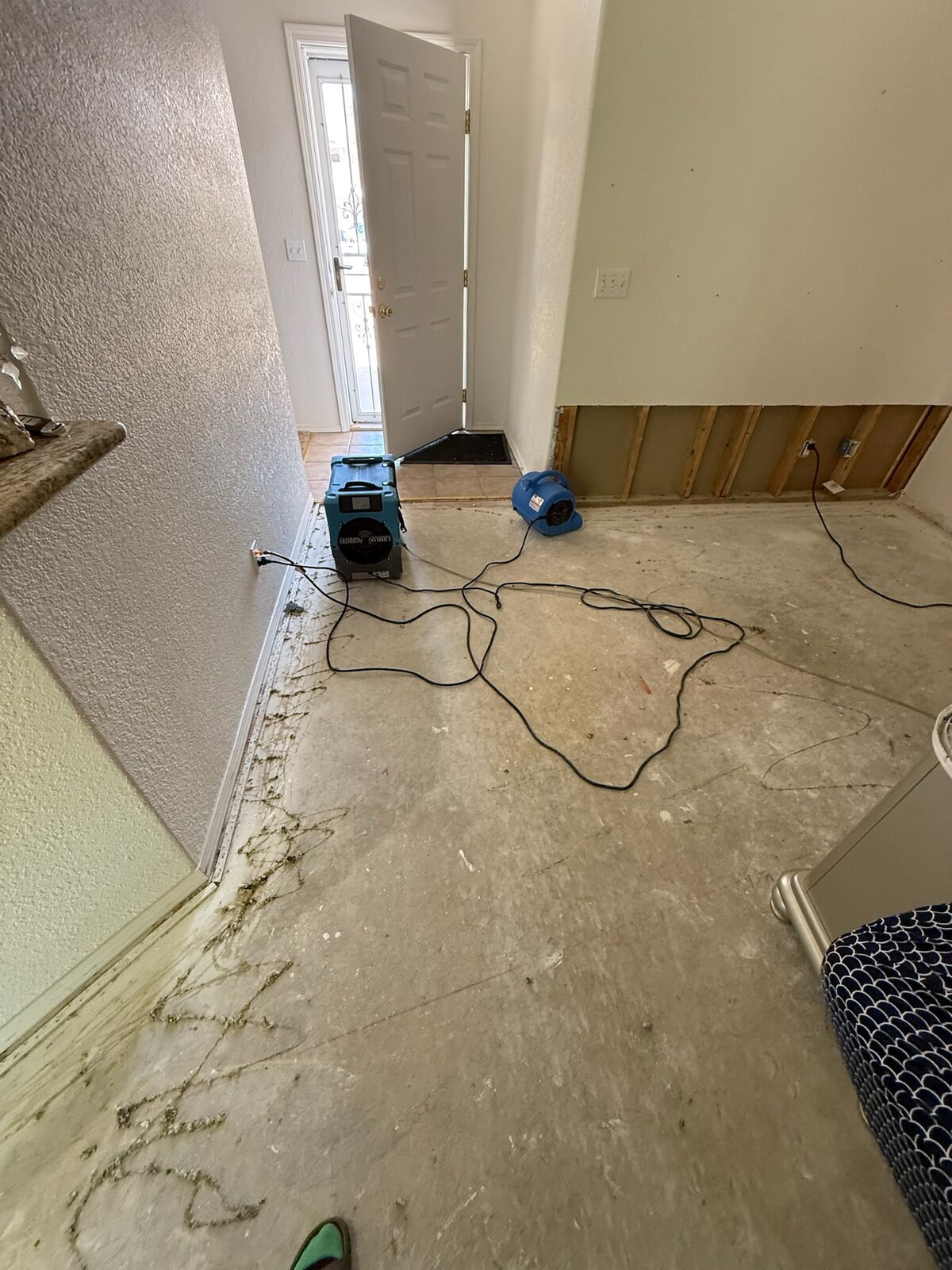
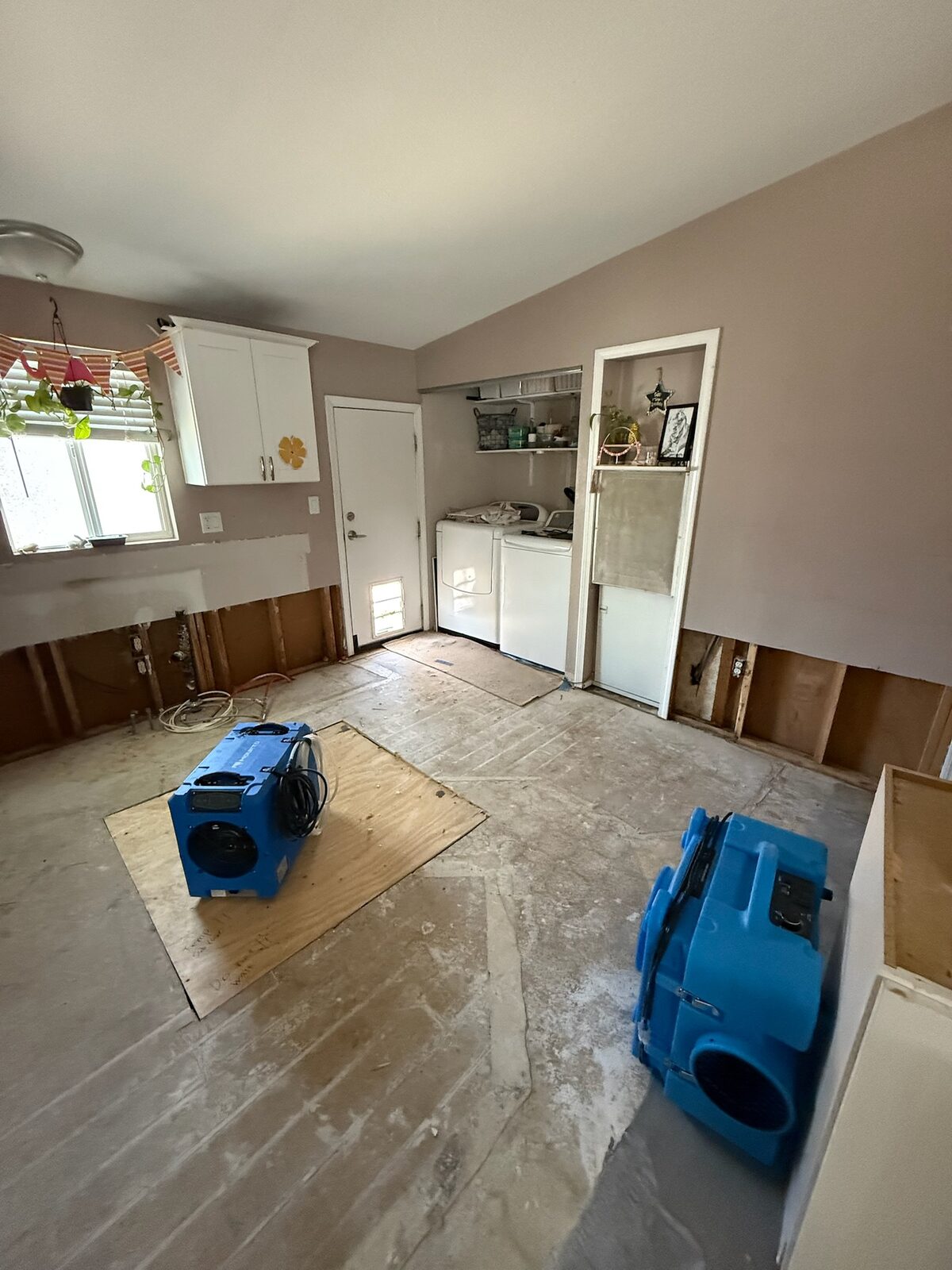
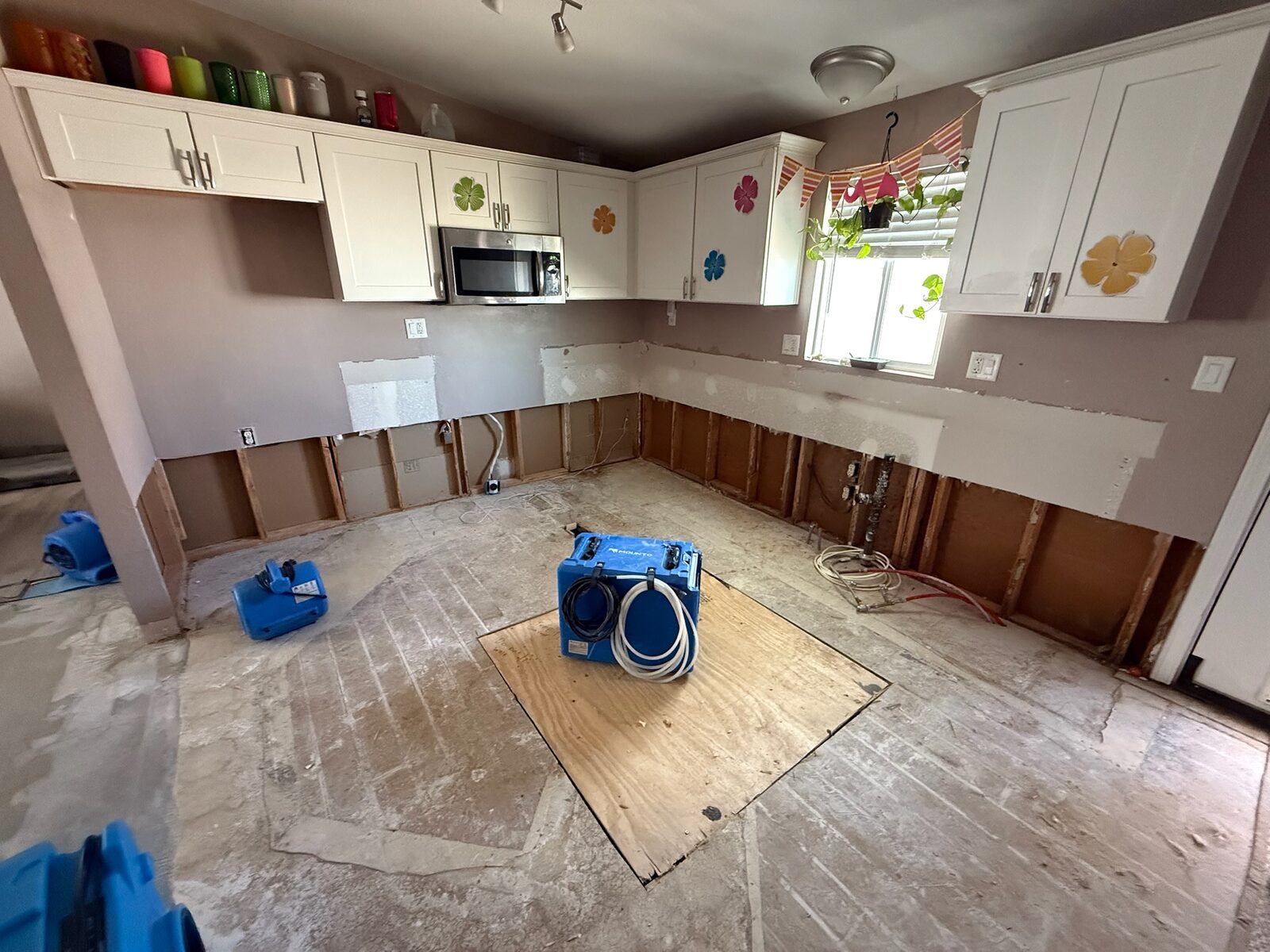
Residential reconstruction work by members of our team. See the full gallery →
More from Gold Water Fire
Abrasive Cleaning Methods for Soot on Framing and Masonry
A look at how abrasive cleaning methods remove soot from wood framing and masonry after a fire, and when each method fits the material.
AC Condensate Line Clogs & the Water Damage They Cause in Phoenix Homes
Why Phoenix AC condensate lines clog every summer, what the water damage looks like, and how to find the source before the ceiling stain spreads again.
Actual Cash Value vs Replacement Cost: Why Your Check Might Not Match the Repair Bill
Confused why your insurance check seems short after fire or water damage? Learn the difference between actual cash value and replacement cost coverage.
If you want someone to look at it before you decide anything
You do not have to have it figured out first. If you are seeing a couple of these signs and are not sure what you are dealing with, Gold Water Fire works across the Phoenix metro area, from Peoria and Avondale out to Queen Creek, San Tan Valley, and Apache Junction. Call (480) 999-3339 or email Help@goldwaterfire.com, or use the contact page at /contact.html. AZ ROC #264344, KB-2.
Call (480) 999-3339Water Damage Restoration · Reconstruction & Rebuild · Contact Gold Water Fire · About Our Team