
Coordinating a Water Loss Across a Multi Family Building
A pipe breaks in one unit and suddenly it is not your problem anymore, it is everyone's. Water does not respect the lines on a lease or a condo plat map. It moves through a shared wall, drops through a ceiling into the unit below, wicks into a hallway, and within a day you are fielding calls from a property manager, two or three unhappy neighbors, an HOA board member, and maybe an insurance adjuster who keeps asking who is responsible for what. If you are standing in the middle of that right now, trying to figure out whose problem this actually is and how to stop it from getting worse, that confusion is normal. Multi family water losses are genuinely more complicated than a single family home, and almost nobody explains why until you are already living it.

Coordinating a Water Loss Across a Multi Family Building
Why multi family water losses get complicated fast
In a single family home, one person usually owns the decision about what happens next. In a duplex, condo building, or apartment complex, that authority is split. The unit owner or tenant where the water started, the neighbors affected below or beside them, the property manager or HOA, and sometimes a master insurance policy for the building itself all have a stake in what happens. Each of those parties may have a different insurance carrier, a different deductible, and a different opinion about who caused the loss and who should pay to fix it. None of that gets sorted out on day one, and it does not need to be sorted out before the water gets addressed. Drying the structure and stopping further damage comes first. The financial and responsibility questions get worked out afterward, often over weeks.
Figuring out where the water actually came from
Before anyone can talk about responsibility, someone has to trace the source. A ceiling stain in a downstairs unit could come from a supply line failure directly above it, a slow roof leak that traveled sideways through trusses, an HVAC condensate line that has been dripping for weeks, or a shared plumbing chase that runs through several units. Shared walls and stacked plumbing in multi family construction mean water can travel further from its source than it would in a detached home, sometimes affecting a unit that shares no direct wall with the origin point. A thorough inspection usually involves moisture mapping across multiple units, not just the one where the damage is visible, because dampness inside a wall cavity does not always show up as a stain right away.
Who typically needs to be looped in, and roughly when
The property manager or HOA usually needs to know immediately, since they may be responsible for common areas, shared plumbing, or the building envelope itself. The unit owner or landlord where the water originated needs to know so they can start their own claim if it is their fixture or plumbing at fault. Any affected neighboring units need to be notified even if the damage looks minor, because moisture behind a wall can take days to become visible. If a master policy covers the building structure while individual unit owners carry separate policies for their own contents and interior finishes, more than one insurance claim may end up running at the same time for the same event, each covering a different piece of it.
Property manager or HOA
Often responsible for common areas, roofs, and shared plumbing systems, and usually the first call for access and building-wide notifications.
Unit of origin
The owner or tenant where the water started typically needs to document the cause and notify their own insurance carrier.
Affected neighboring units
Even units with no visible damage yet should be checked, since water travels through shared framing and can surface later.
Insurance carriers
A master policy and individual unit policies may each need separate claims filed, sometimes with different adjusters assigned.
Drying multiple units without making the damage worse
One of the hardest parts of a multi family loss is that drying equipment, air movers, dehumidifiers, and containment barriers often need to run across several units at once, which means coordinating access with residents who did not cause the problem and may not want strangers in their home. Shared HVAC systems can also spread moisture or odor between units if not isolated properly during drying. A methodical approach usually means mapping which units are affected, setting drying equipment based on actual moisture readings rather than guesswork, and rechecking those readings over several days rather than assuming a single visit dried everything. Rushing this step, or skipping units that seem unaffected, is a common reason mold or hidden damage shows up weeks later.
Documentation that protects everyone involved
Because responsibility in a multi family loss is often split between multiple parties, thorough documentation matters more here than almost anywhere else. Photos and moisture readings from every affected unit, not just the unit of origin, timestamps showing when each unit was inspected, and a clear written record of what was found where all help later when insurance carriers or a board are trying to figure out how to divide the cost. Without that record, disputes over who pays for what can drag on far longer than the actual repair work.
Questions people ask us
If a pipe in my unit floods my downstairs neighbor, whose insurance pays?
It depends on the building's governing documents and the cause of the loss. Sometimes the unit of origin's policy covers the neighbor's damage, sometimes a building master policy applies to certain elements, and sometimes both carriers end up involved. This is usually sorted out between the insurance companies and the HOA or property manager rather than between neighbors directly.
Do all affected units need to be inspected, even if they look fine?
Yes, generally. Water can travel through shared walls, floor assemblies, and plumbing chases well beyond where it first became visible. A unit with no visible staining can still have damp framing or insulation that will cause problems later if it is not checked and dried.
How is access handled when multiple units need drying equipment?
This usually gets coordinated through the property manager or HOA, since they often have keys or the authority to require access for building-wide issues. Clear communication about timing and what to expect helps reduce friction with residents who were not involved in causing the loss.
Can one water loss trigger more than one insurance claim?
Yes, this is common in multi family buildings. A master policy covering the structure and separate policies covering individual units or contents may each need a claim filed for the same event, and they may be handled by different adjusters on different timelines.
The standard our team works to
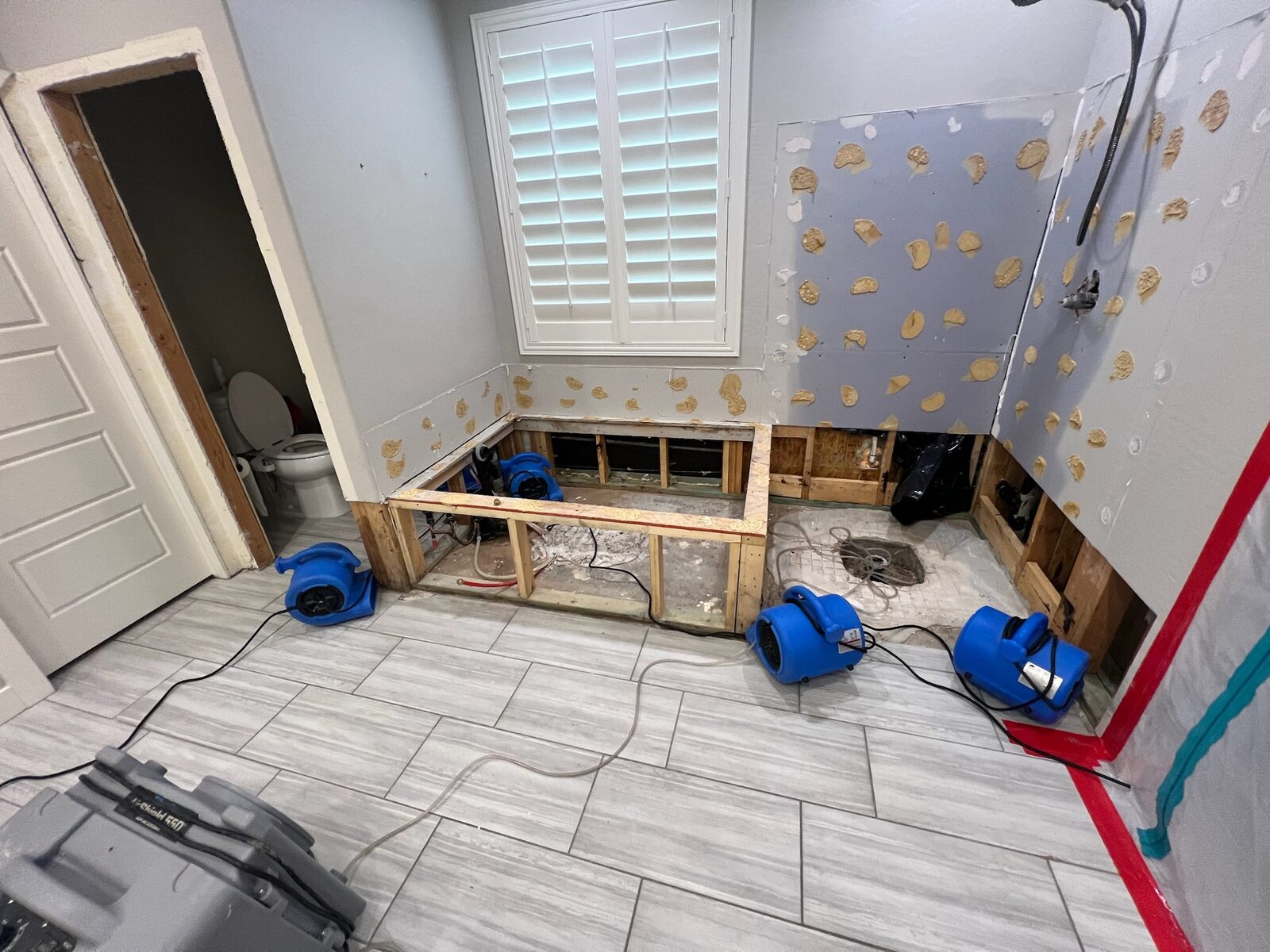
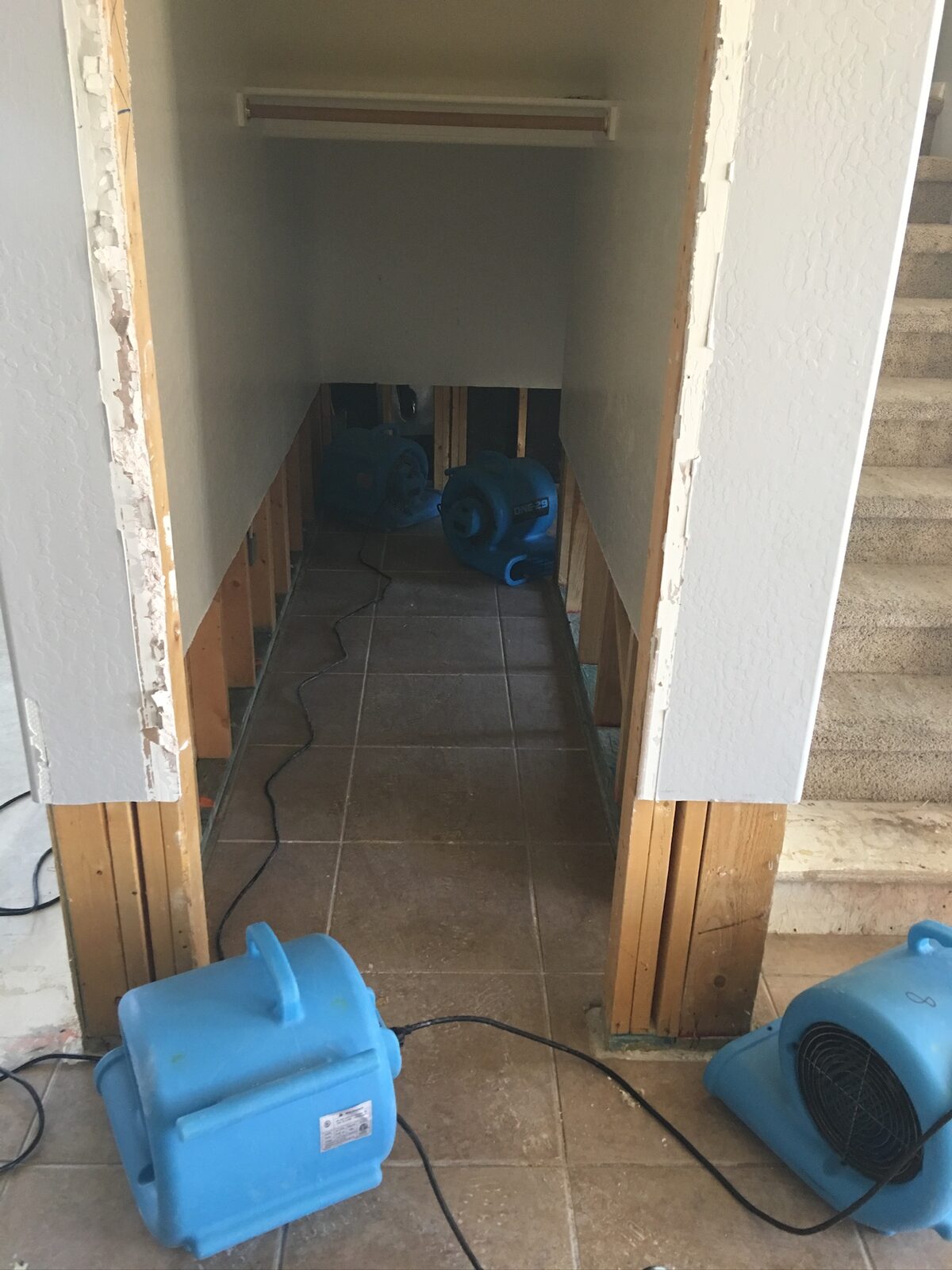
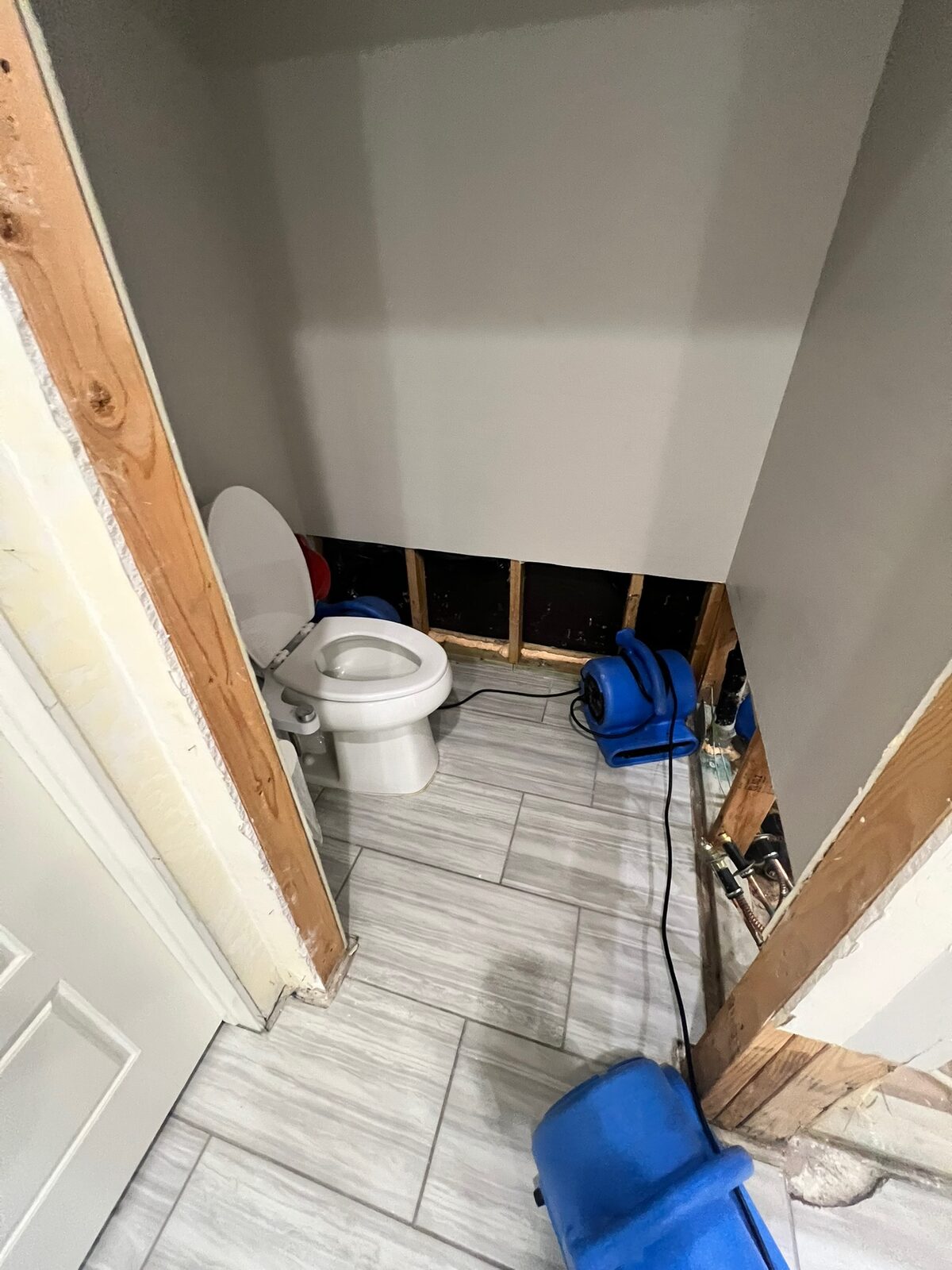
Residential reconstruction work by members of our team. See the full gallery →
More from Gold Water Fire
Abrasive Cleaning Methods for Soot on Framing and Masonry
A look at how abrasive cleaning methods remove soot from wood framing and masonry after a fire, and when each method fits the material.
AC Condensate Line Clogs & the Water Damage They Cause in Phoenix Homes
Why Phoenix AC condensate lines clog every summer, what the water damage looks like, and how to find the source before the ceiling stain spreads again.
Actual Cash Value vs Replacement Cost: Why Your Check Might Not Match the Repair Bill
Confused why your insurance check seems short after fire or water damage? Learn the difference between actual cash value and replacement cost coverage.
Dealing with a water loss that spans more than one unit
Gold Water Fire works with property managers, HOA boards, and individual unit owners across the Phoenix metro area to assess and coordinate water damage that affects multiple units. Call (480) 999-3339 or reach out through the contact page to talk through what you're facing.
Call (480) 999-3339Water Damage Restoration · Reconstruction & Rebuild · About Gold Water Fire · Contact Gold Water Fire