
Finding & Using Your Main Water Shutoff Before You Need It
Most people learn where the water shutoff is on the worst possible night, standing in a hallway with water spreading across the floor, phone flashlight in one hand, trying doors and cabinets. If you have lived in your house for years and still could not point to it, you are in very ordinary company. Nobody hands you a tour of the valves when you get the keys, and there is no reason you would have gone looking. The good news is that this is a fifteen minute errand on a calm afternoon, and it is one of the few things about water damage you get to decide in advance.
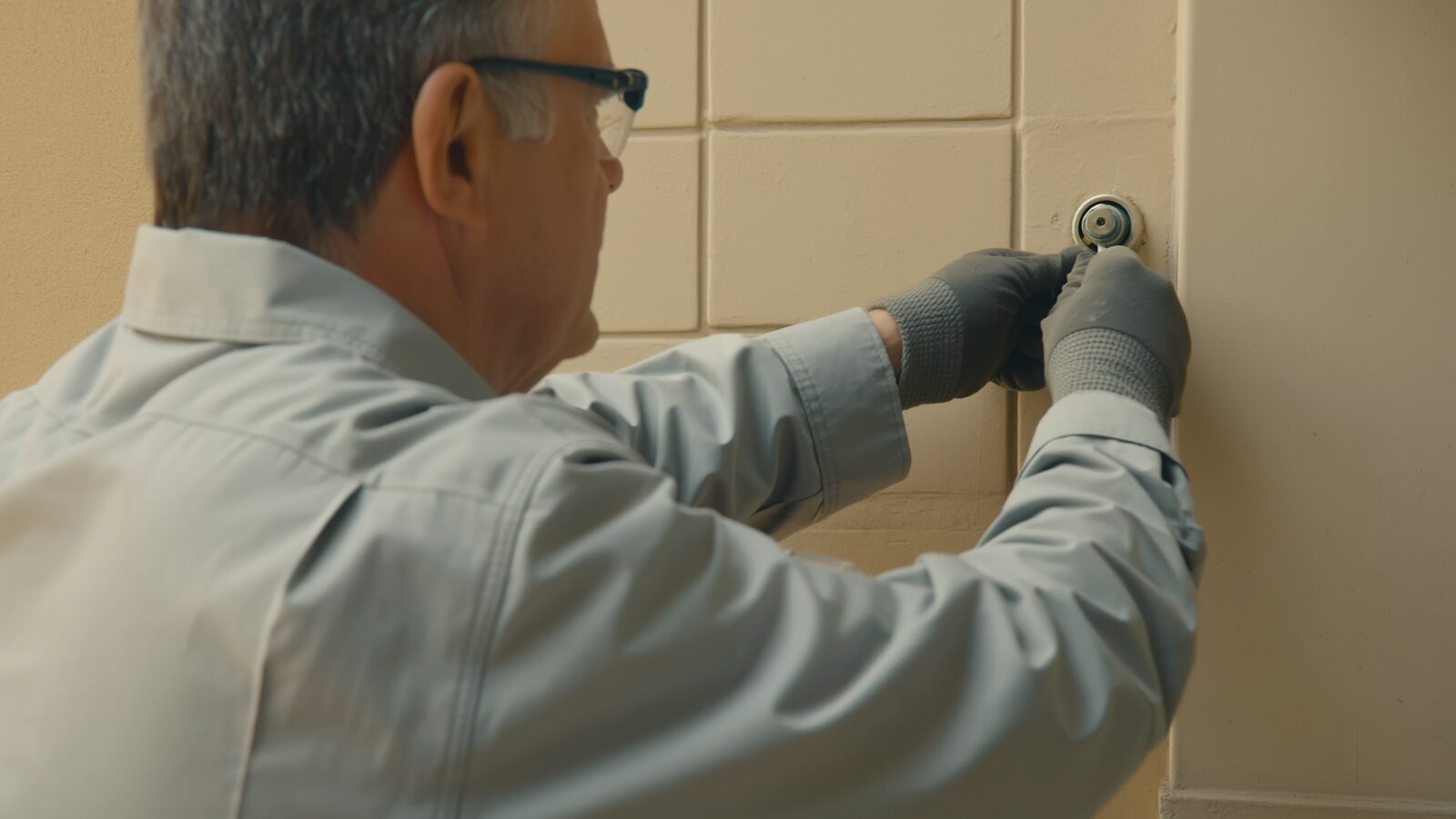
Finding & Using Your Main Water Shutoff Before You Need It
The three places it usually is in a Phoenix-area home
Arizona houses have shallow or no basements, so the valves are almost always at ground level, outdoors or in the garage. Give yourself fifteen minutes and check these in order.
The exterior wall on the street side
Walk to the outside of the house that faces the street or the water meter. On slab-built homes you are looking for a copper or plastic pipe coming out of the stucco with a valve on it, often behind a small hinged access panel, inside a hose-bib box, or tucked behind a shrub. It may be a round wheel handle (a gate valve) or a lever you turn a quarter turn (a ball valve).
The garage, near the water heater
Many tract homes route the main line up through the garage wall. Look low on the wall the garage shares with the house, behind or beside the water heater, and behind storage shelves. If you find a valve with the pipe running straight up into the ceiling and no other fixture nearby, that is a strong candidate.
The meter box at the curb
Out by the sidewalk you will find a concrete or plastic lid, often marked WATER. Inside is the meter and, on the street side of it, the utility's valve. This one usually needs a meter key or a curb key from a hardware store, and it is the backup, not your first choice. Do not force the utility side of the meter.
Test the valve while nothing is wrong
Finding the valve is only half of it. A valve that has not moved in fifteen years can be seized, or can fail the moment you finally need it, and that is much better to discover on a Saturday than at 2 a.m. Open a bathroom faucet upstairs or at the far end of the house so you can hear the water stop. Then close the main: turn a wheel-style handle clockwise until it stops, or swing a lever handle a quarter turn until it is crosswise to the pipe. The faucet should sputter and go quiet within a few seconds. Open the valve again slowly, then let the faucet run until the air burps out and the stream is steady. Two things to watch for. If the handle will not budge with normal hand pressure, stop and have a plumber replace it rather than snapping the stem off. And if the valve closes but water keeps running, it is passing, which also means a plumber, not an emergency. Older wheel-style gate valves are the usual culprits for both.
The smaller shutoffs that solve most problems faster
Killing the whole house is the right move for a burst supply line or a break inside a wall. For a single fixture, a local valve is quicker and leaves the rest of the house with water. Learn these too, and while you are at it, tell everyone in the household where the main is. A shutoff only one person can find is half a plan.
What to do in the first thirty minutes of a leak
Shut the water off first, then kill power to the affected area at the breaker if water is anywhere near outlets, cords, or light fixtures. Do not stand in water to reach a panel. Photograph and video everything before you move furniture or pull up carpet, wide shots and close-ups, because that footage matters to your insurance claim later. Then get water moving out and air moving through: towels, a wet/dry vacuum, fans, and the AC running to pull humidity down. In Phoenix the dry air works in your favor on surfaces, but it does not reach water that has wicked under baseboards, into drywall bottoms, into cabinet kick plates, or under tile and laminate. That trapped moisture is what turns a one-day cleanup into weeks of problems, and it is the part that needs meters and drying equipment rather than fans. If you are past the point of towels, water damage restoration is where to start, and if the water opened up walls, flooring, or cabinetry that has to be rebuilt, reconstruction and rebuild handles that side. Either way, a phone call to ask what you are looking at is a small thing, and it costs you nothing to make it.
Questions people ask us
Which way do I turn the valve to shut the water off?
Clockwise for a round wheel handle, and keep turning until it stops firmly. For a lever handle, a quarter turn so the lever sits crosswise to the pipe. The old saying is righty tighty, and tight means closed.
My main shutoff will not turn. What now?
Stop pushing. Corroded gate valves can shear off at the stem and leave you with an open pipe you cannot close. Call a plumber to replace it with a quarter-turn ball valve. In the meantime, locate the meter box at the curb and buy a curb key so you have a working option.
Should I shut the water off when I leave town?
It is a reasonable habit, especially for a trip longer than a weekend during Arizona summer. Closing the main means a supply line that fails while you are gone leaks a few cups instead of running for a week. If you have irrigation or a soft water system, check how they are plumbed first so you do not shut off something that needs to keep running.
Does turning off the main also stop water from the water heater?
No. The tank holds its water and will keep draining into a break downstream of it by gravity. If the leak is at or near the heater, close the cold inlet valve on top of the tank as well, and shut off the gas or the heater breaker before draining it.
The standard our team works to
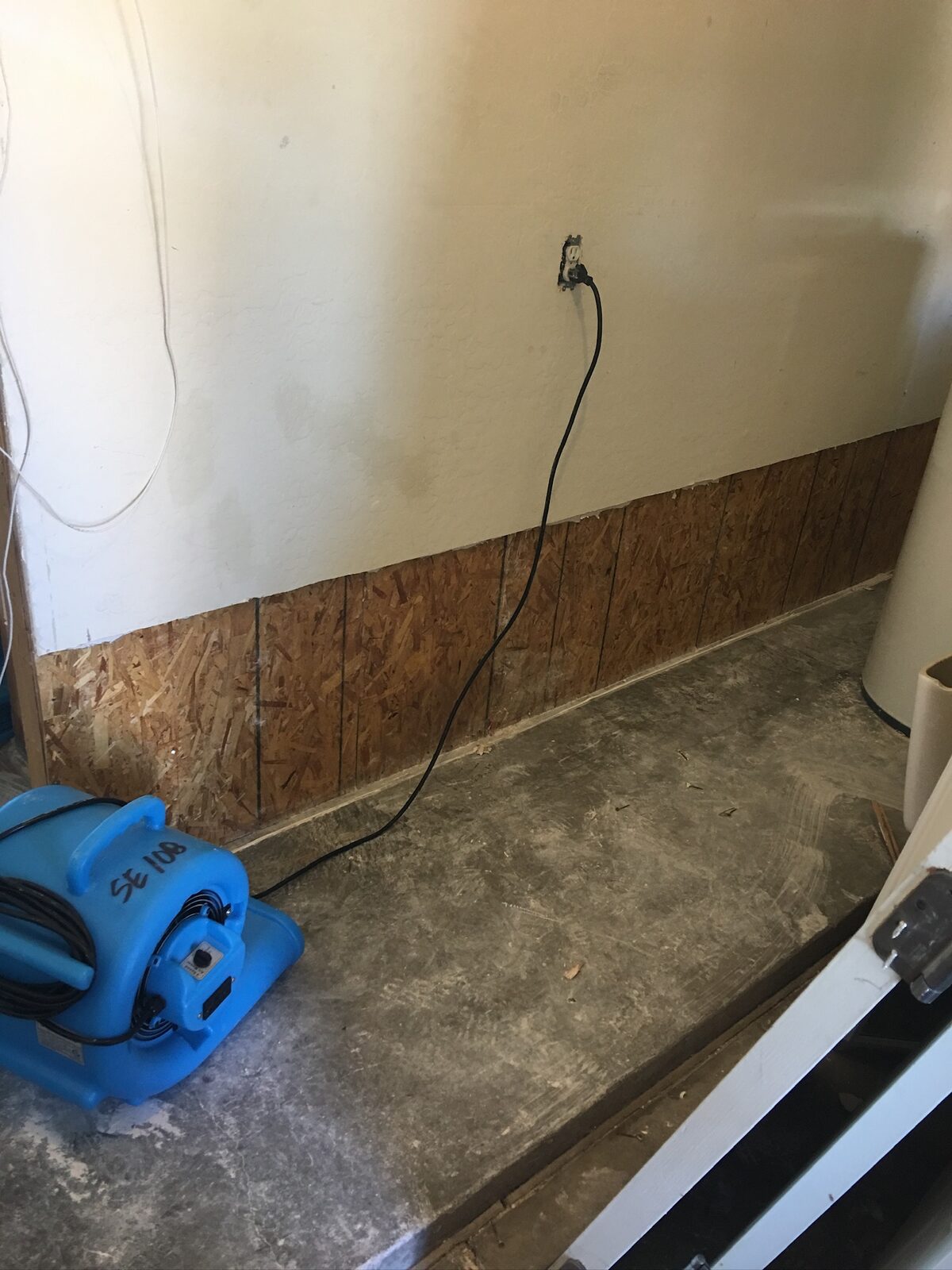
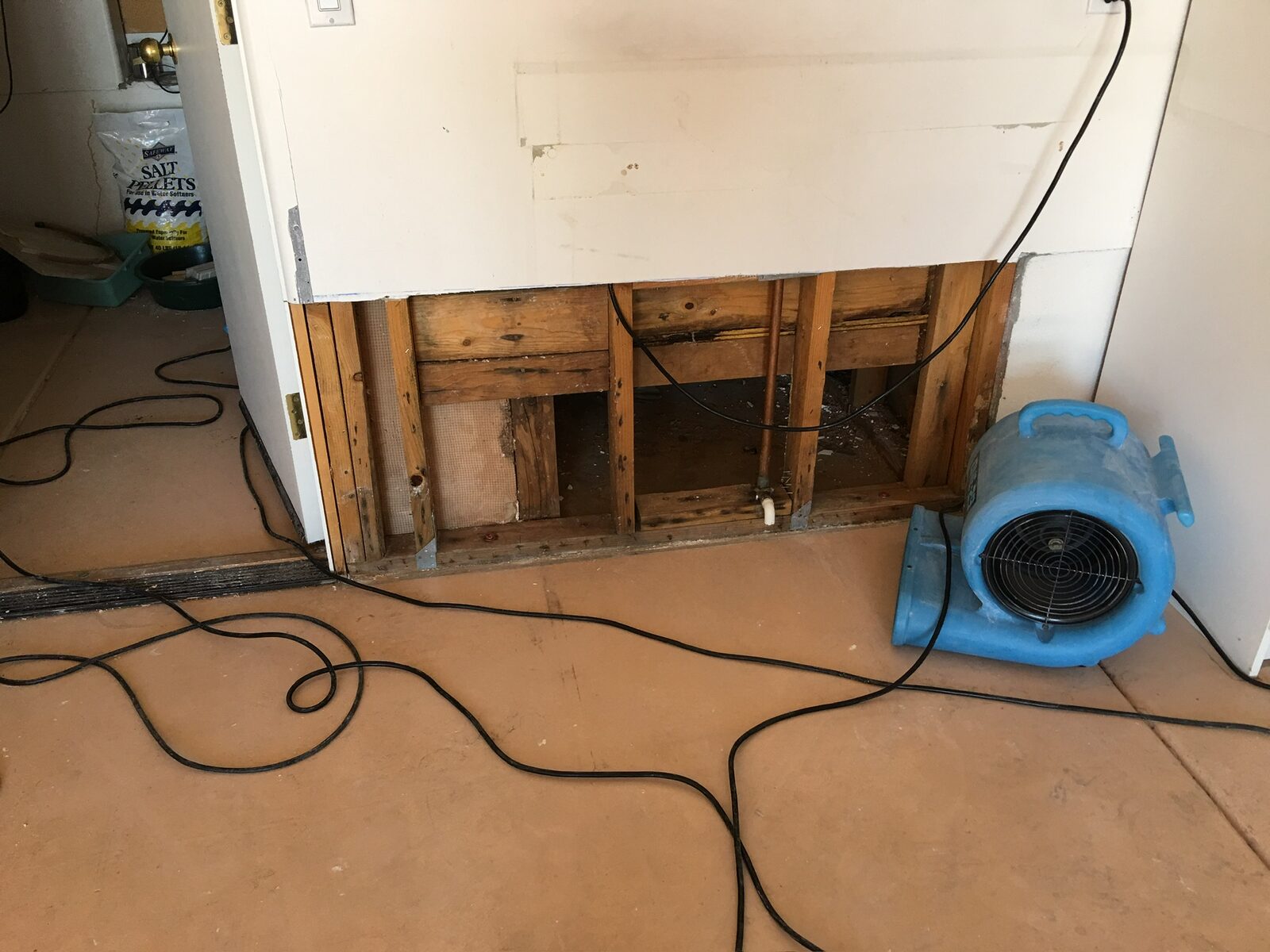
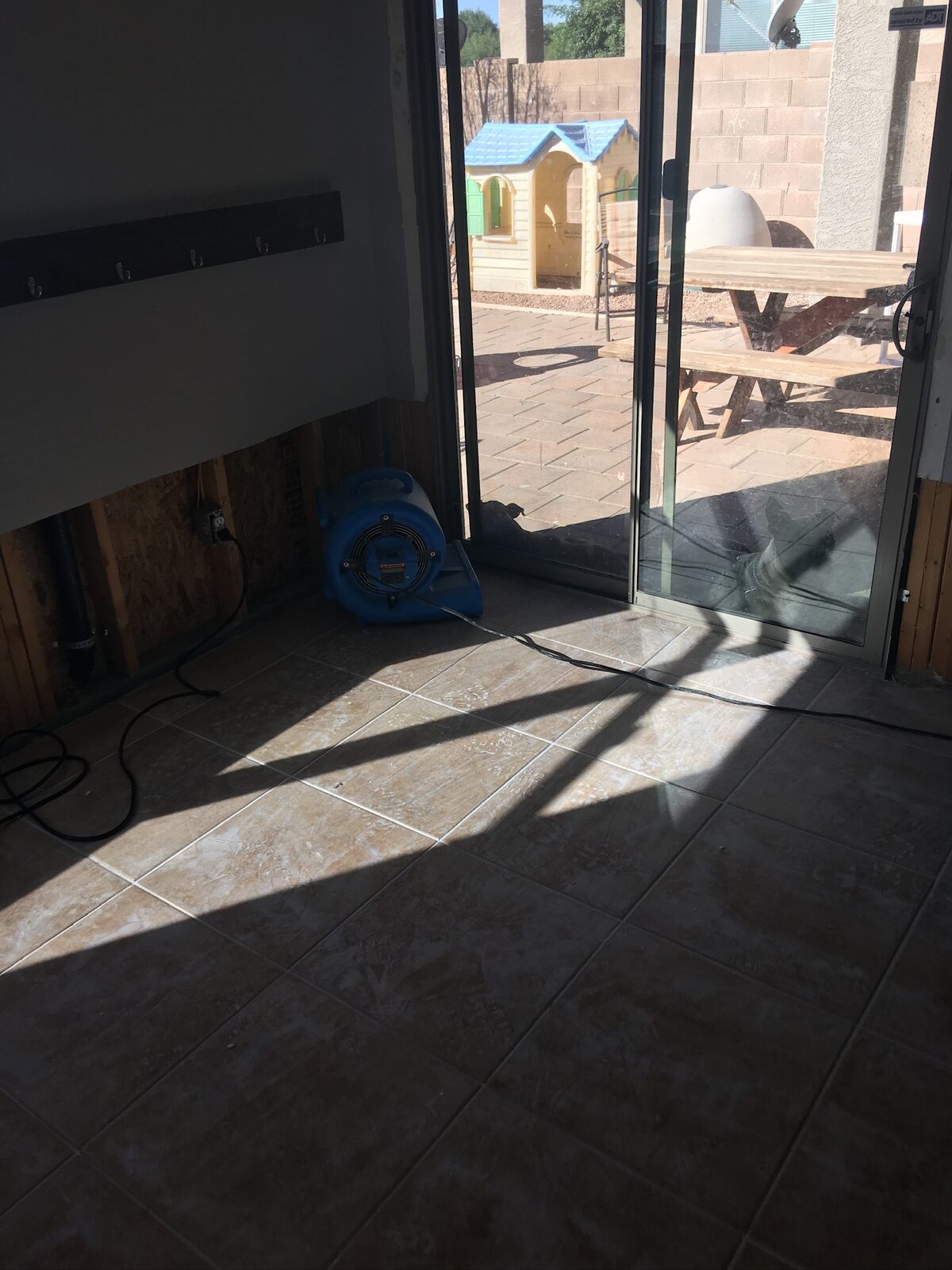
Residential reconstruction work by members of our team. See the full gallery →
More from Gold Water Fire
Abrasive Cleaning Methods for Soot on Framing and Masonry
A look at how abrasive cleaning methods remove soot from wood framing and masonry after a fire, and when each method fits the material.
AC Condensate Line Clogs & the Water Damage They Cause in Phoenix Homes
Why Phoenix AC condensate lines clog every summer, what the water damage looks like, and how to find the source before the ceiling stain spreads again.
Actual Cash Value vs Replacement Cost: Why Your Check Might Not Match the Repair Bill
Confused why your insurance check seems short after fire or water damage? Learn the difference between actual cash value and replacement cost coverage.
Not sure how bad it is? Ask.
If you shut the water off and you are standing there wondering whether this dries out on its own or needs help, call (480) 999-3339 or email Help@goldwaterfire.com and describe what you are seeing. No obligation, no visit required to ask a question. Gold Water Fire works across the Phoenix metro area, from Peoria and Avondale out to Queen Creek, San Tan Valley, and Apache Junction. AZ ROC #264344 KB-2.
Call (480) 999-3339Water Damage Restoration · Reconstruction & Rebuild · Contact Gold Water Fire · About Our Team