
How to Tell a Roof Leak From a Plumbing Leak When Water Shows Up on a Ceiling
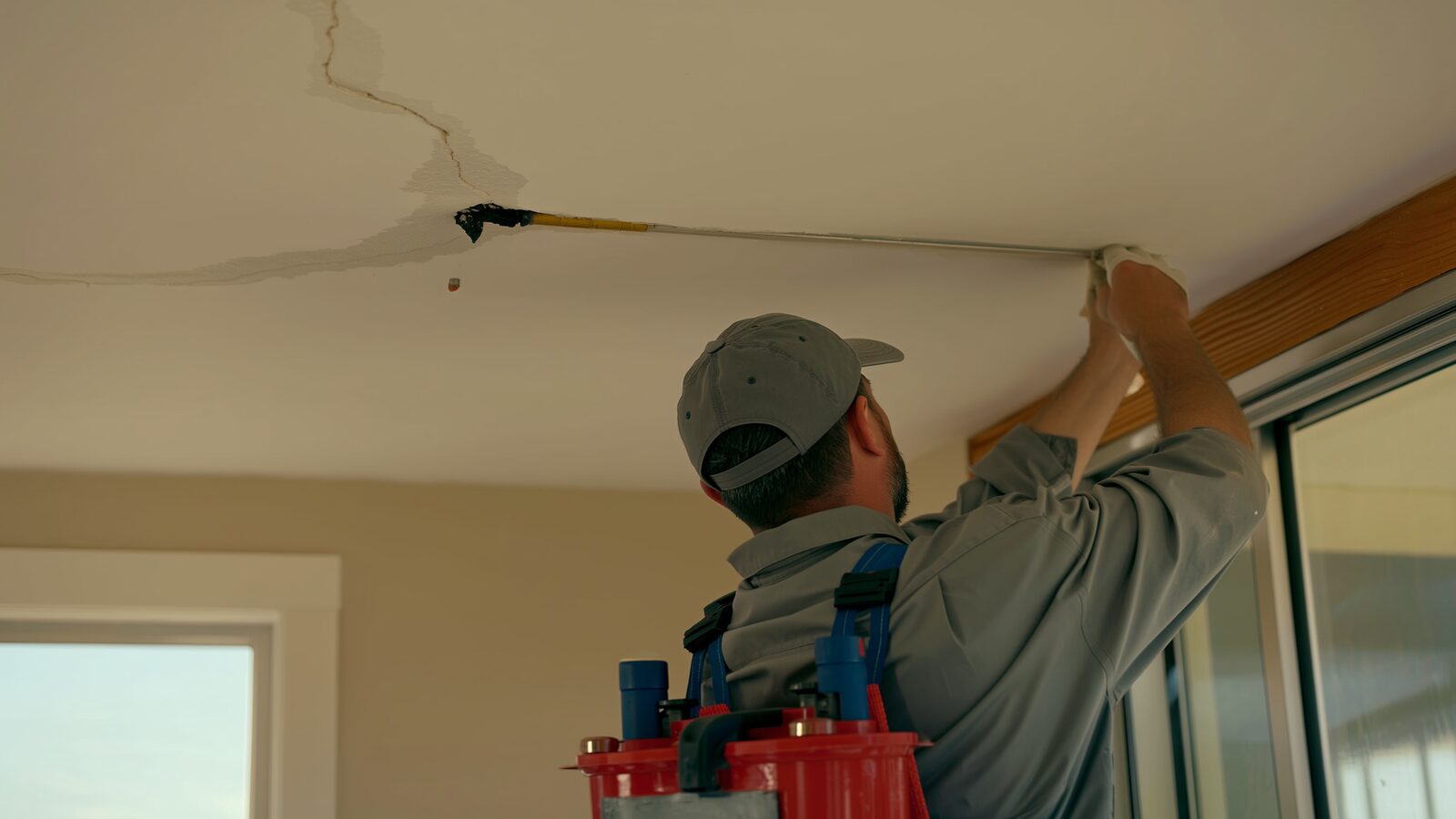
You noticed it a while ago. A faint ring on the ceiling, the size of a hand, that you told yourself was probably old. Then it got a little wider, or a second one showed up a few feet away, and now you are standing under it at night trying to remember whether it rained last week. What makes this kind of thing hard is not the water. It is not knowing what you are looking at. A stain does not tell you where it started, and until you know that, every guess you make about what it will cost or who to call feels like a coin flip. That uncertainty is its own kind of weight, and it is reasonable to feel it before you have a single answer.
How to Tell a Roof Leak From a Plumbing Leak When Water Shows Up on a Ceiling
The first question is not where, it is when
Before you look at the ceiling again, look at the pattern of when the water appears. This one observation separates the two causes more reliably than anything else you can see from the floor. A roof leak is weather-driven. It shows up during or shortly after rain, and it may take a few hours to travel from the entry point to the drywall. In the Phoenix area that means the stain can look completely dormant for weeks, then grow after a single monsoon cell, then sit still again. If the ceiling only changes when the sky does, you are almost certainly looking at the building envelope: roof, flashing, parapet wall, or a vent boot. A plumbing leak is use-driven, or constant. Supply lines are under pressure all the time, so a supply leak drips whether anyone is home or not, and it tends to get steadily worse rather than pausing. Drain leaks are different again: they only leak when something upstairs is used. If the stain darkens after someone showers, after the washing machine drains, or after a toilet on the floor above is flushed, that is a drain or a fixture connection, not the roof. A simple test: go to the water meter, turn off every fixture in the house, and note the reading. Come back in an hour with no water used. If the meter has moved, something under pressure is leaking somewhere in the system. That does not prove it is the ceiling leak, but it strongly points away from the roof.
What the stain itself is telling you
Once you have the timing, the physical characteristics fill in the rest. None of these is proof on its own, but together they usually settle it.
Color and edge
Roof water travels across dusty attic framing, insulation and decking before it reaches drywall. It picks up tannins and grit, so it tends to dry brown, tan or rust colored with a hard ringed edge from repeated wet and dry cycles. Clean supply water from a copper or PEX line often leaves a paler, grayer, softer-edged mark because it has picked up much less on the way down. Very dark, uneven staining with an odor points toward a drain line carrying waste water.
Where it sits in the room
Map the stain against what is directly above it. A stain under an upstairs bathroom, kitchen, laundry or water heater closet has an obvious plumbing suspect. A stain in the middle of a room with nothing wet above it, or one that lines up with a roof penetration such as a vent stack, swamp cooler, skylight or an HVAC unit curb, points at the roof. Remember that water runs along the top of drywall and along framing before it drops, so the entry point can be several feet away from the stain in any direction.
Single story homes
In a single story house with an attic, plumbing is mostly below the ceiling, not above it, which shifts the odds toward the roof. The exceptions matter though: attic-mounted air handlers with condensate drain pans, water heaters installed in the attic, and refrigerant lines that sweat in summer all produce ceiling water with no rain involved. A clogged condensate line is one of the most common sources of a summer ceiling stain in Arizona, and it has nothing to do with the roof.
How fast it grows
Track the edge. Mark the current outline lightly in pencil and date it. If it grows on a dry day, it is not the roof. If it stops growing entirely for weeks of dry weather and then jumps, it is. If it grows a little every day at the same rate, that is a slow pressurized supply leak, and those rarely improve on their own.
Checking the attic, safely
If you have safe attic access and are comfortable getting up there, a flashlight tells you more in five minutes than a week of staring at the ceiling. Go on a dry day so you can tell old water from new. Work from the stain: find its position relative to a wall or a light fixture below, then find that same spot from above. Look at the underside of the roof decking directly over and uphill from the wet area. Dark streaking, white mineral trails, rusted nail shanks or delaminated plywood all indicate water coming through the roof. Follow the path uphill along rafters, because water rarely falls straight down. Check around every penetration: vent boots crack in the sun, flashing separates from parapet walls, and the seams around roof-mounted equipment fail long before the field of the roof does. Then look for pipes. If you find copper or PEX running through that bay, check the fittings for green corrosion, white crust or an active bead of water. Check the condensate pan under any attic air handler and the drain line leaving it. A pan holding standing water means the primary drain is blocked. Do not walk on the ceiling drywall or insulation, stay on the framing or on a laid board, and stop if the attic is over roughly the temperature you can tolerate. Phoenix attics get dangerously hot in the afternoon, so go early. If access is tight or the wiring is a mess, it is fine to stop and let someone else look.
Why the answer changes what has to happen
Knowing the source matters because it determines the order of the work. A roof leak has to be dried out and repaired at the roof before anything gets closed back up, or the new drywall will stain again in the next storm. A plumbing leak has to be isolated and repaired first, and it usually means opening more material than you expect, because water inside a wall cavity travels down and sideways and can wet framing several feet away from where it entered. Either way, there is a step people skip. The visible stain is the last part of the assembly to show damage, not the first. Insulation loses its value once saturated, drywall paper feeds mold growth within a couple of days at normal indoor temperatures, and wet framing holds moisture long after the surface feels dry to the hand. Drying has to be verified with a meter, not by touch, and material that stays above a safe moisture content has to come out. If you want a second set of eyes on it, or you already know the ceiling has been wet for a while, you can reach Gold Water Fire at (480) 999-3339 or through the contact page. Our water damage restoration work covers finding the extent of the moisture and drying the structure, and when the opened-up areas need to be put back, our reconstruction and rebuild team handles the drywall, texture, paint and trim. You can read about who does that work on the about page.
Questions people ask us
The ceiling stain appeared with no rain and no bathroom above it. What else could it be?
The most likely candidates are an HVAC condensate problem or a sweating refrigerant line. In summer, an air handler pulls a large amount of moisture out of the air, and that water leaves through a drain line that can clog with algae and dust. When it backs up, the overflow pan fills and spills onto the ceiling below. Uninsulated or poorly insulated refrigerant lines in a hot attic can also condense enough water to wet drywall over time. An attic-installed water heater is another possibility worth ruling out.
Can a roof leak show up weeks after it rained?
The stain can, yes. Water that enters the roof assembly can soak into insulation and sit there, then wick into the drywall slowly and darken the surface days later. What a roof leak will not do is grow steadily through a long dry stretch. If the mark keeps expanding with no weather to explain it, look at plumbing or the HVAC system instead.
Is it safe to poke a hole in a bulging ceiling to let the water out?
A ceiling that is sagging or bulging is holding weight it was not built for, and it can come down all at once. If you choose to relieve it, first turn off the electrical circuit for that room, since ceiling water and light fixtures often share the same space. Keep people and pets out from underneath, put a container down, and stand to the side rather than directly below. If the bulge is large or you are unsure about the wiring, do not open it yourself.
The drywall feels dry now. Do I still need to do anything?
Surface dryness is not the same as a dry assembly. Insulation, the top face of the drywall, and framing all hold moisture that you cannot feel from below, and that trapped moisture is where mold growth starts. Drying is confirmed with a moisture meter reading on the actual materials, and the source has to be fixed regardless, because a stain that has appeared once will appear again under the same conditions.
The standard our team works to
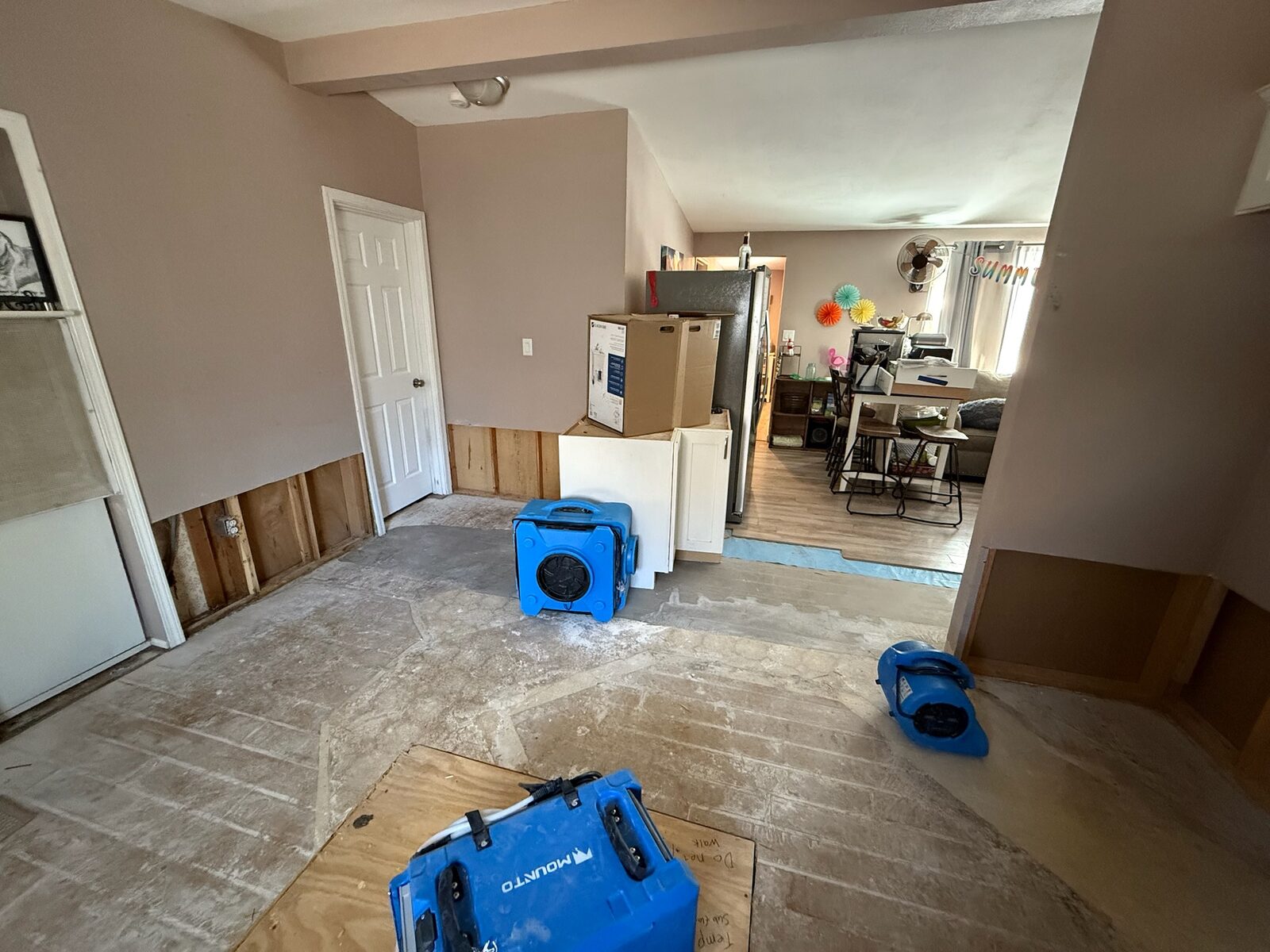
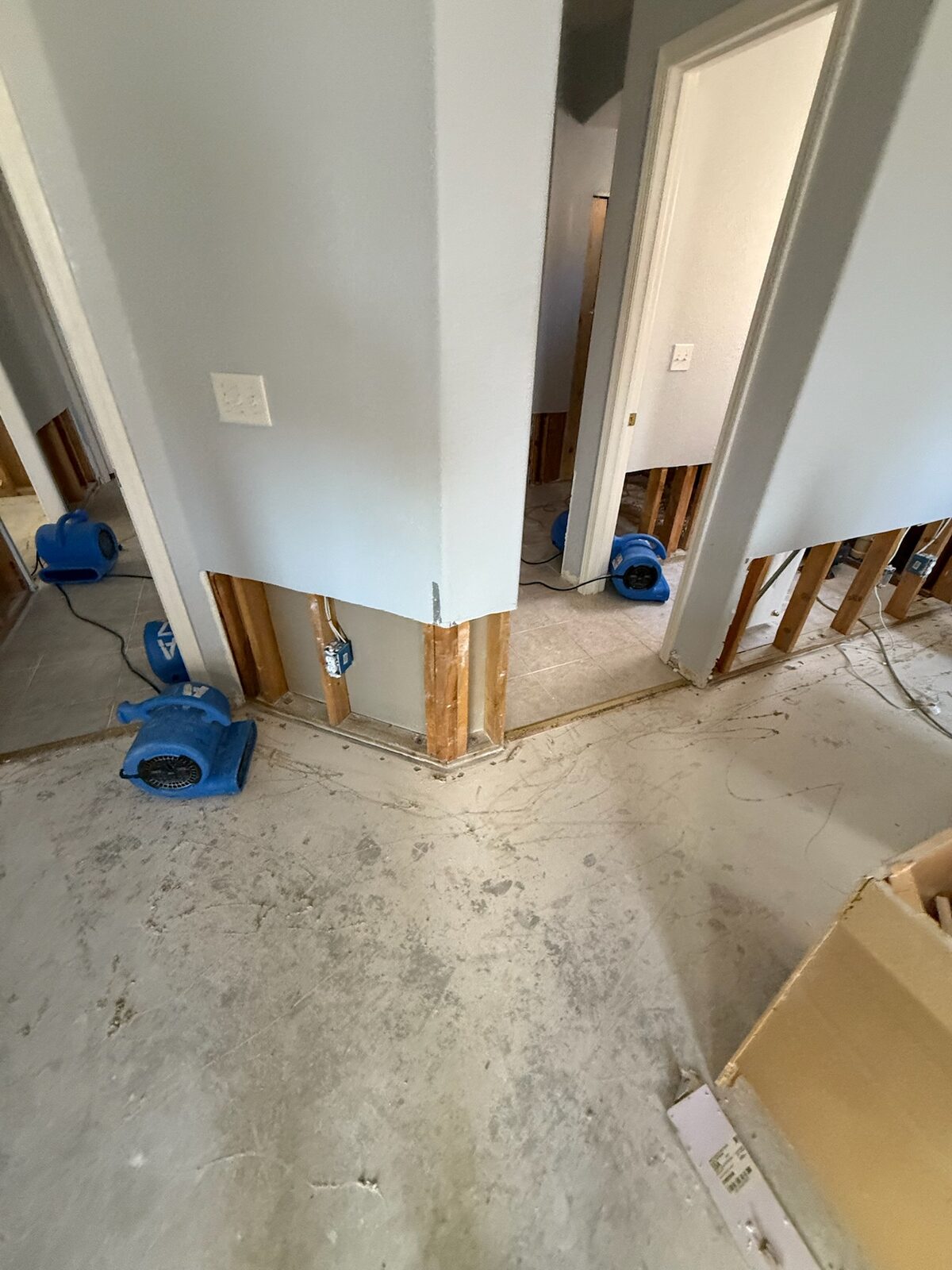
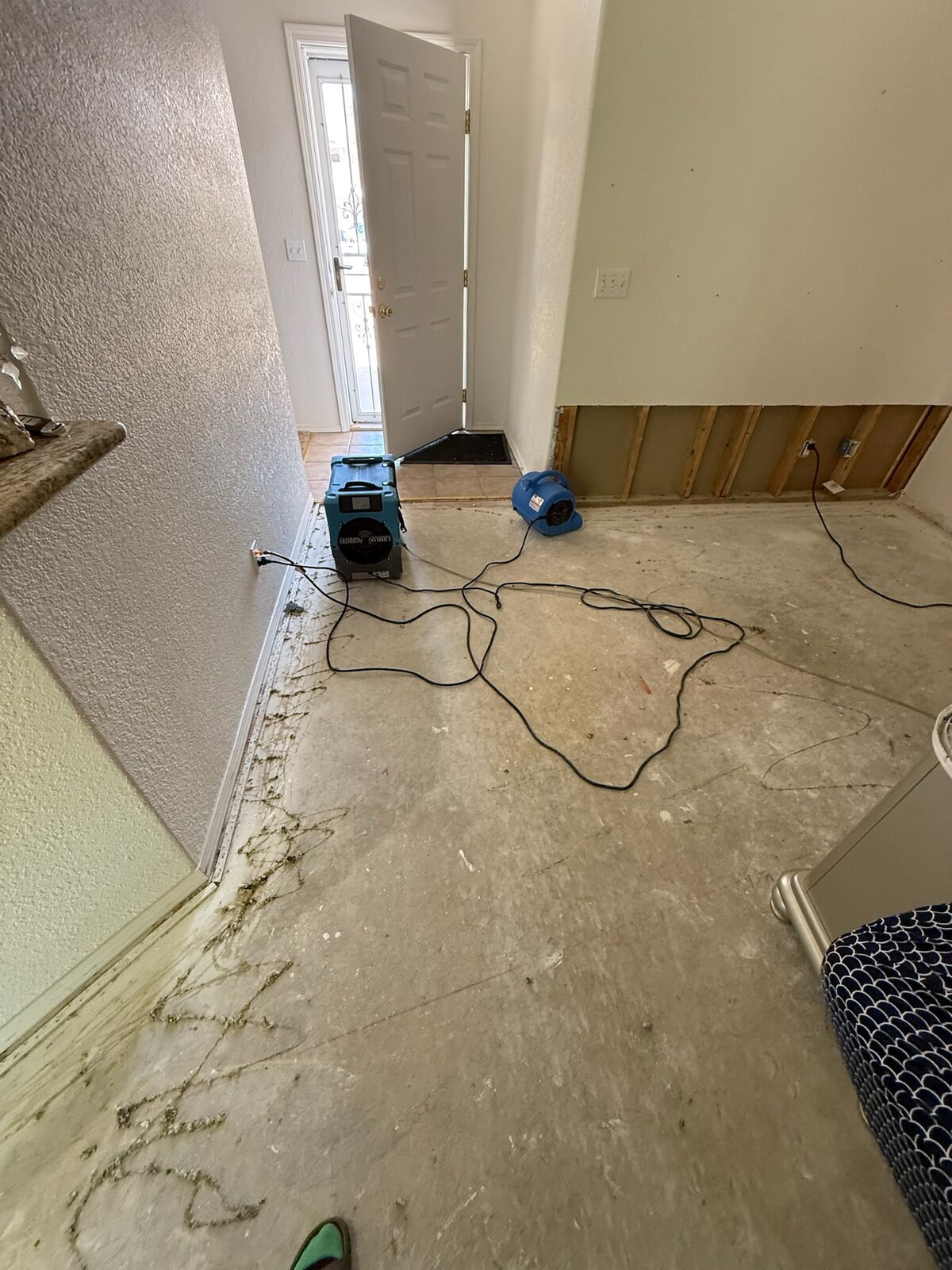
Residential reconstruction work by members of our team. See the full gallery →
More from Gold Water Fire
Abrasive Cleaning Methods for Soot on Framing and Masonry
A look at how abrasive cleaning methods remove soot from wood framing and masonry after a fire, and when each method fits the material.
AC Condensate Line Clogs & the Water Damage They Cause in Phoenix Homes
Why Phoenix AC condensate lines clog every summer, what the water damage looks like, and how to find the source before the ceiling stain spreads again.
Actual Cash Value vs Replacement Cost: Why Your Check Might Not Match the Repair Bill
Confused why your insurance check seems short after fire or water damage? Learn the difference between actual cash value and replacement cost coverage.
Not sure what you are looking at?
If the ceiling has been wet and you want someone to identify how far the moisture actually went, call Gold Water Fire at (480) 999-3339 or email Help@goldwaterfire.com. We work throughout the Phoenix metro area, from Peoria and Avondale out to Queen Creek, San Tan Valley and Apache Junction. AZ ROC #264344, KB-2.
Call (480) 999-3339Water Damage Restoration · Reconstruction & Rebuild · Fire Damage Restoration · Contact Gold Water Fire · About Our Team