
How Landscaping Irrigation & Sprinkler Systems Cause Water Intrusion Against a Home's Foundation
The strange part is that nothing broke. No pipe burst, no washer hose let go, no storm came through. And yet there is a soft spot in the baseboard along the back wall, or a shadow on the tile grout that darkens some mornings and fades by afternoon, or a smell in the closet that you notice only when you have been out of the house for a few hours. You have checked the obvious things. You have looked under the sinks. You have watched the water meter. Nothing explains it, so the question sits there and turns over: why does this keep coming back, and why can nobody point at the cause. That not-knowing is its own kind of weight, heavier sometimes than a clear emergency would be, because an emergency at least tells you where to stand.
How Landscaping Irrigation & Sprinkler Systems Cause Water Intrusion Against a Home's Foundation
Why the water is outside and the damage is inside
Most homes in the Phoenix valley sit on a slab poured over compacted soil, with the finished grade of the yard intended to fall away from the house. Irrigation quietly undoes that arrangement. A drip emitter or a spray head placed within a few feet of the wall puts water into the soil on a schedule, several times a week, year after year. The soil there does not get a chance to fully dry between cycles. Once that band of earth stays damp, a few things start happening at the same time. Water in soil does not only move down. It moves sideways and it moves by capillary action, wicking through fine-grained soil and then through the concrete itself, because concrete is porous. It will travel under the slab edge and up through the slab, carrying dissolved salts with it. That is why the first visible sign is often not a puddle but a chalky white bloom on the concrete or on the bottom inch of drywall, or grout that stays a shade darker in one spot. Vapor moving up through a slab has to go somewhere, and where the flooring is sealed, vinyl plank, sheet vinyl, epoxy, tile with a dense setting bed, it collects at the underside and lifts the adhesive. The second thing that happens is soil movement. Clay-heavy soils common in parts of the valley swell when wet and shrink when they dry. A sprinkler zone that soaks one corner of the house while the opposite corner bakes creates uneven moisture, and uneven moisture creates uneven support under the footing. That is the origin of a diagonal crack over a doorway, a door that closes cleanly in November and drags in July, or a hairline stair-step crack in a block fence that ties into the house.
The specific things to walk out and look at
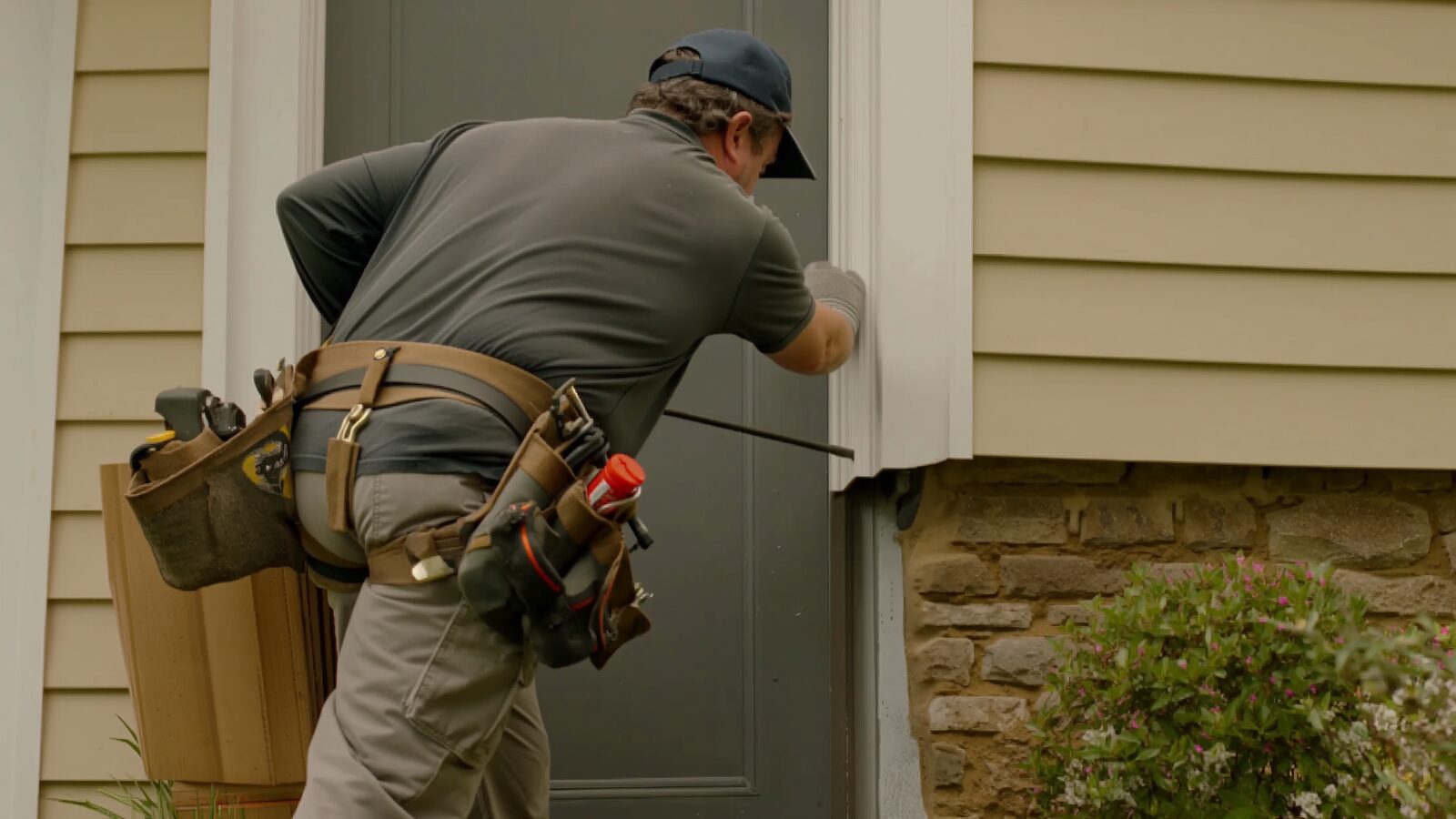
You do not need instruments to make real progress on this. You need to be in the yard at the right time of day, which usually means during an irrigation cycle rather than after it. Run each zone manually and watch it. Spray heads drift out of alignment over years as they are bumped by mowers, dogs, and settling. A head that once threw its arc across turf may now be putting a third of its water on stucco. Watch for spray hitting the wall directly, and for the fine mist that carries on a breeze and lands on the wall even when the arc looks correct. Stucco absorbs that mist. Repeated soaking of the lower wall degrades the paint film and drives moisture behind the weep screed at the base of the wall, which is the one detail specifically designed to let water escape, not enter. Check the weep screed line itself. On a stucco home there should be a metal edge near the bottom of the wall with its drainage holes clear and above grade. If soil, decomposed granite, mulch, a raised planter bed, or a poured patio slab has come up over that line, water in the soil has a direct path into the wall assembly. This is one of the most common and most invisible causes of chronic interior moisture on the valley's homes, and it never looks like a plumbing problem because it isn't one. Find the drip emitters. Count how many are within three feet of the foundation. A tree on drip within a few feet of the house is delivering many gallons per cycle into the exact zone that should stay dry. Look for emitters that have popped off the tubing, which turns a metered drip into an open hose, and for tubing that has been buried and then cut by a shovel. Walk the grade. Put your eye down low and look at whether the ground falls away from the wall over the first several feet or whether it has settled flat or back toward the house. Landscaping added after the home was built, raised beds, new decomposed granite, an extended patio, frequently reverses the original slope without anyone intending it. Finally, look up. Downspouts and scuppers that discharge into a planter bed against the wall are doing the same thing as a misaligned sprinkler, just less often and with much more volume at once. In a monsoon burst that concentrated discharge can undo months of good drainage in twenty minutes.
Reading the damage the way a restorer reads it
Chronic, low-volume intrusion looks different from a burst supply line, and that difference is why it goes unnamed for so long. A pipe break gives you a lot of water fast, over a wide area, and it announces itself. Irrigation intrusion gives you a small amount continuously, in a narrow band along one exterior wall, and it is often at its most visible on the mornings after a watering cycle.
Baseboard and drywall
The bottom edge of the baseboard swells, the paint bubbles or the caulk line at the floor opens up. Drywall wicks moisture upward a few inches and holds it. Press with a thumbnail low on the wall in the suspect area and compare it to the same spot on an interior wall.
Flooring separation
Vinyl plank cups or the seams lift. Tile sounds hollow when tapped because the thinset bond has released. Wood flooring crowns. Carpet at the tack strip along an exterior wall stays cool and faintly damp to the back of the hand.
Odor before anything visible
Microbial growth on the back of drywall and inside the baseboard cavity produces a musty smell long before a stain appears on the painted side. If the smell is strongest at floor level and along one exterior wall, that is a location clue, not a whole-house problem.
Efflorescence and staining
White powdery deposits on exposed concrete, on the garage slab near a shared wall, or at the base of a block wall are mineral salts left behind by water that came through and evaporated. It confirms water has been moving through the masonry.
Fixing the source, then dealing with what the water already did
These are two separate jobs and they get confused constantly. Drying a wall that is still being watered every other morning accomplishes nothing, and repairing drywall over a wall cavity that never dried out buys a few months at best. The source work is usually straightforward and is largely landscape and grading work: cap or relocate emitters and heads so nothing wets the soil within a few feet of the wall, adjust arcs so no spray touches the building, reduce run times on zones adjacent to the house, clear soil and granite back down below the weep screed so the drainage holes breathe, restore positive slope away from the foundation, and move downspout discharge away from planter beds against the wall. Where a patio or planter has been built over the screed line, the fix can mean cutting back or reworking that hardscape. The restoration work starts with finding the actual boundary of the wet area, not the visible one. Moisture readings taken in a grid across the wall and floor tell you where the material is still holding water, and that line is almost always farther out than the stain. From there it is a question of whether the affected materials can be dried in place or have to come out. Wet insulation in a wall cavity generally comes out. Drywall that has wicked and stayed wet through repeated cycles generally comes out to a clean line above the moisture. Flooring that has debonded does not re-bond. Where growth has established on the back side of materials, containment matters so that the removal does not distribute spores through the rest of the house. Once the assembly is genuinely dry and confirmed dry with readings rather than by appearance, it can be put back: insulation, drywall, texture, paint, base, flooring, trim. If that second half is where you are, water damage restoration covers the drying and removal side, and reconstruction and rebuild covers putting the wall, floor, and finishes back. If you want to talk through what you are seeing before deciding anything, reach out or call (480) 999-3339. You can also read about who you would be working with.
Questions people ask us
Can sprinklers really cause damage inside my house without any leak?
Yes. Concrete and stucco are porous, and water in the soil against a foundation moves sideways and upward through those materials by capillary action. It does not need a hole or a crack. A spray head that mists the lower wall, or drip emitters running a few feet from the slab several times a week, can keep that band of material damp indefinitely. Interior signs show up as swollen baseboard, lifting flooring, or a musty smell along one exterior wall rather than as visible running water.
What is a weep screed and why does it matter so much?
On a stucco home it is the metal edge near the bottom of the exterior wall with small drainage openings. Any moisture that gets behind the stucco is supposed to run down and exit there. It only works if it sits above the soil with clearance. When landscaping, decomposed granite, mulch, a raised bed, or a poured patio buries that line, the openings that were meant to let water out become a path for wet soil to feed water into the wall assembly instead.
How do I tell the difference between irrigation intrusion and a plumbing leak?
Timing and location are the strongest clues. Irrigation intrusion tends to be worst in the hours after a watering cycle, follows a narrow band along one exterior wall, and often affects the wall nearest a specific sprinkler zone or planter. A supply leak usually spreads from a fixed point regardless of the irrigation schedule and often shows on the water meter with everything in the house shut off. Turning the irrigation controller off for a week or two and watching whether the wall behaves differently is a simple test.
If I fix the sprinklers, will the wall dry out on its own?
Sometimes the surface will look better, but a wall cavity that has been wet through repeated cycles usually holds moisture in the insulation and the back of the drywall where air never reaches. Materials that have already lost bond, such as lifted vinyl plank or hollow-sounding tile, do not recover. Moisture readings taken through the assembly are the only reliable way to know whether it is actually dry or just dry on the painted side.
The standard our team works to
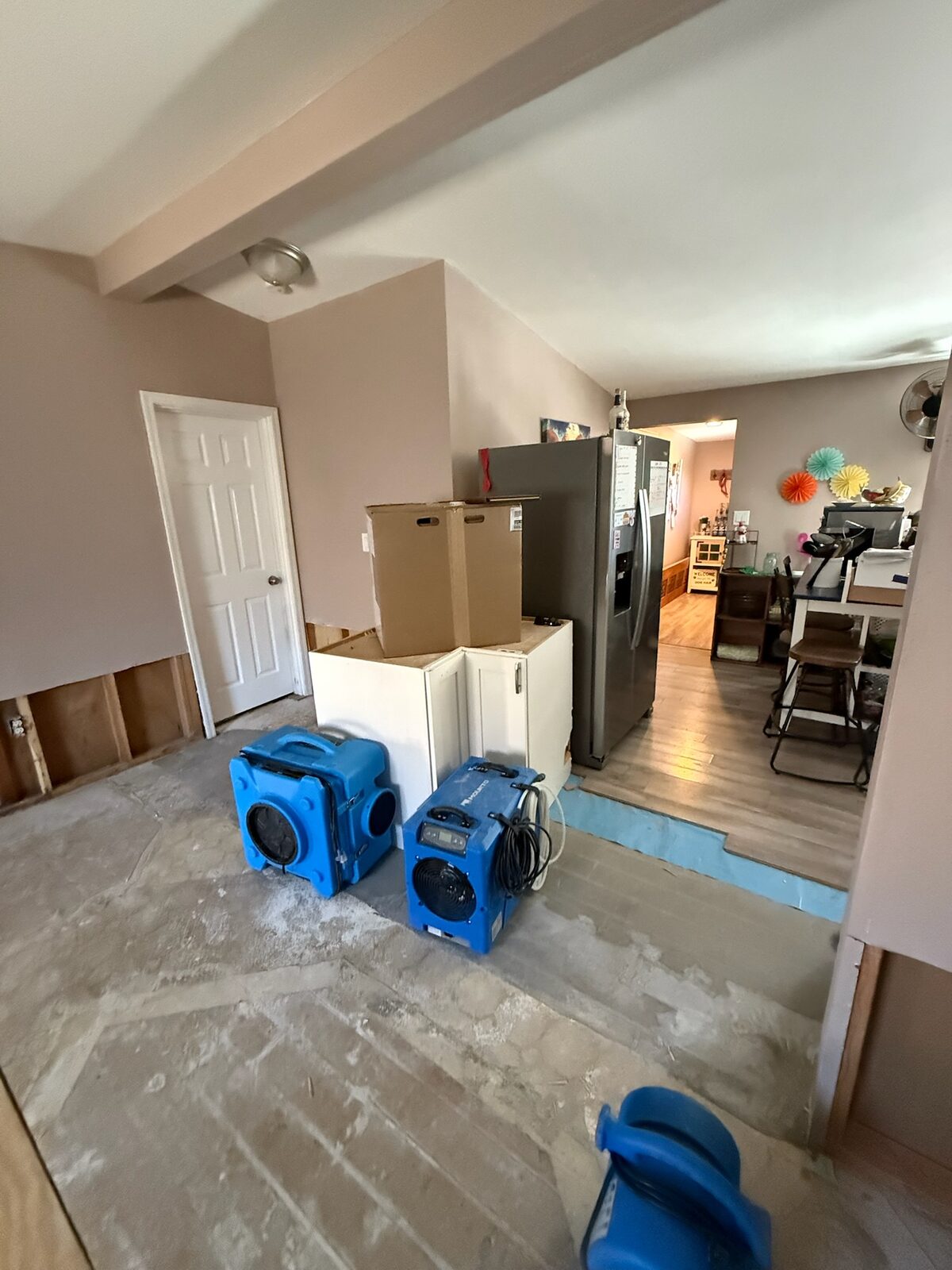
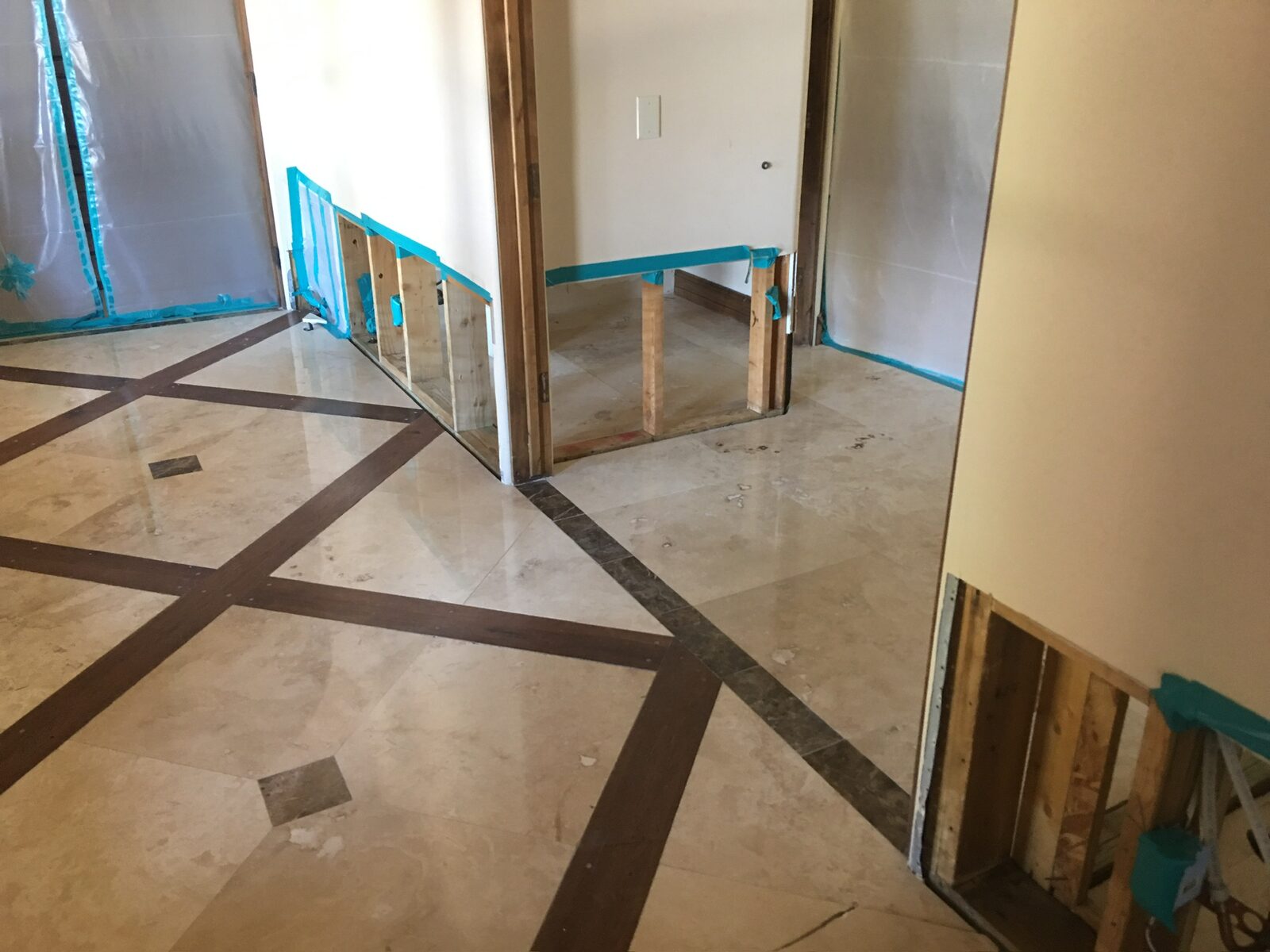
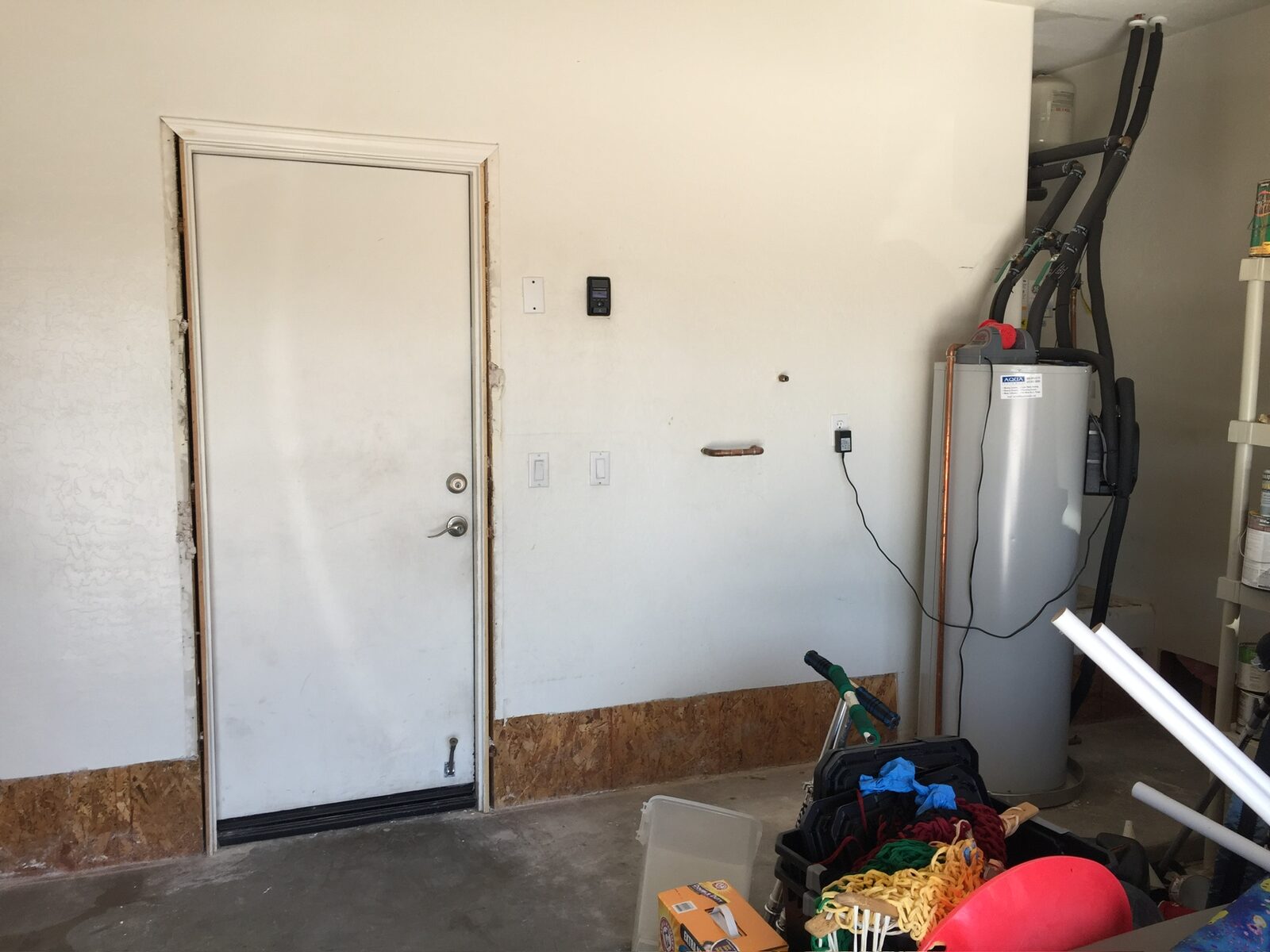
Residential reconstruction work by members of our team. See the full gallery →
More from Gold Water Fire
Abrasive Cleaning Methods for Soot on Framing and Masonry
A look at how abrasive cleaning methods remove soot from wood framing and masonry after a fire, and when each method fits the material.
AC Condensate Line Clogs & the Water Damage They Cause in Phoenix Homes
Why Phoenix AC condensate lines clog every summer, what the water damage looks like, and how to find the source before the ceiling stain spreads again.
Actual Cash Value vs Replacement Cost: Why Your Check Might Not Match the Repair Bill
Confused why your insurance check seems short after fire or water damage? Learn the difference between actual cash value and replacement cost coverage.
If you have been chasing this one for a while
A recurring damp spot with no obvious source is worth having someone look at with moisture meters rather than guesswork, because the wet area is usually larger than the stain. Call Gold Water Fire at (480) 999-3339 or email Help@goldwaterfire.com. We work across the Phoenix metro area, from Peoria and Avondale out through Chandler, Gilbert, Queen Creek, San Tan Valley, and Apache Junction. AZ ROC #264344 KB-2.
Call (480) 999-3339Water Damage Restoration · Reconstruction & Rebuild · Contact Gold Water Fire · About Our Team