
Shower Enclosure Leaks at the Glass and Curb
You've probably wiped up the same puddle outside the shower door more times than you can count, or watched a small dark line creep along the baseboard near the bathroom and told yourself it's nothing new. It's easy to assume a shower is either working or it's broken, but glass enclosures fail slowly, a little water at a time, and by the time you're noticing a stain or a soft spot in the floor, the leak has usually been going on for a while. That gap between "this seems fine" and "something is actually wrong" is where a lot of quiet damage happens, and it's worth sitting with that unease instead of brushing it off.
Shower Enclosure Leaks at the Glass and Curb
Why glass enclosures leak in the first place
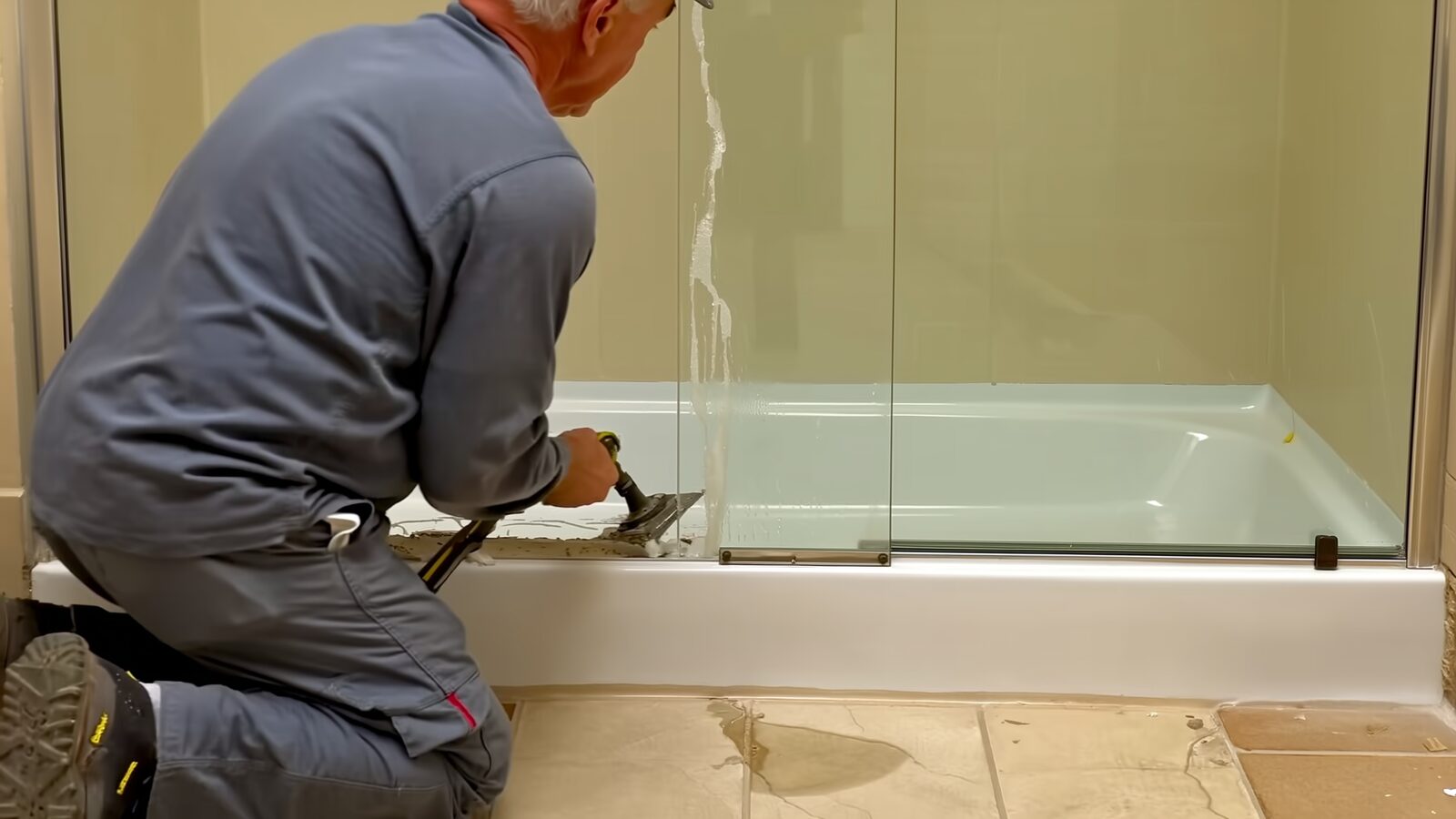
A frameless or semi-frameless glass shower enclosure relies on a few small parts to keep water inside the shower: a bottom sweep or seal at the base of the door, silicone caulk where the glass meets the curb or wall, and sometimes a magnetic strip where two glass panels meet. Any one of these can fail on its own. Silicone shrinks and cracks with age and heat cycling. A door sweep wears down from being dragged open and closed thousands of times. A hinge that's slightly out of adjustment lets the door hang a few degrees off, which means water hits the seal at an angle it wasn't designed for. None of these failures are dramatic. They just mean a small amount of water gets past the barrier every time the shower runs, and that water has to go somewhere.
The curb is doing more work than it looks like
The shower curb, the raised lip you step over to get in, is supposed to be sloped and sealed so water runs back toward the drain instead of over the edge. When the caulk between the glass and the curb cracks, or when the curb itself was built without a proper slope, water starts tracking along the top of the curb and finding the grout lines or the seam where the curb meets the bathroom floor tile. This is a slow process. It might take months of small overflow before enough water gets underneath the tile to reach the substrate. That's part of why this kind of leak is easy to miss: the shower still looks fine from the outside long after the damage has started underneath it.
What rotted framing actually looks like once you find it
Bathrooms are usually framed with standard dimensional lumber, and that wood is not designed to handle repeated exposure to moisture. Once water gets past the curb or the wall assembly behind the tile, it can sit against the studs and sill plate for a long time before anyone notices anything on the surface. Signs to look for include a curb that feels slightly spongy or gives when you step on it, tile that has started to crack or feels loose even though nothing hit it, a bathroom door or nearby flooring that no longer sits flush, or a musty smell that doesn't go away with cleaning. By the time wood framing is visibly discolored or soft to the touch, the deterioration has usually been present for a while, and it rarely stays contained to just the one stud or section it started in.
Checking your own enclosure before it gets worse
You don't need special tools to do a basic check. Run your hand along the bottom door sweep and look for gaps, cracking, or a sweep that's pulled away from the glass. Look at the caulk line where the glass meets the curb and the walls; if it's cracked, yellowed, or you can see a gap you could slide a fingernail into, that's a point where water is getting through. Step on the curb itself and see if it flexes. Check the grout on the curb top and the floor just outside the enclosure for cracking or discoloration. If you find one of these signs, it doesn't necessarily mean the framing is already compromised, but it does mean water has a path, and that path only gets used more over time, not less.
When a caulk fix isn't enough anymore
Resealing a door sweep or recaulking a curb is a reasonable first step if you catch the problem early and there's no sign of water having reached the wood underneath. But if the curb feels soft, if tile is loose or cracking without an obvious cause, or if there's a persistent musty smell, resealing the surface just traps the moisture that's already inside. At that point the issue isn't the seal anymore, it's what the seal failed to stop for however long it was compromised. Getting a clear look at what's happening behind the tile and under the curb is the only way to know whether you're dealing with a caulk job or a framing repair.
Questions people ask us
How do I know if my shower leak has reached the framing or it's just surface water?
Surface water usually shows up as a puddle right after showering that dries within an hour or two. Signs the leak has gone deeper include a spongy or flexing curb, tile that cracks or loosens without impact, discoloration on the wall or floor outside the shower, or a musty smell that persists even when the bathroom is dry. Those signs point to moisture already sitting in the wall or floor structure rather than just on the surface.
Can I just recaulk the shower door and curb myself?
Recaulking is a reasonable step if the enclosure looks and feels solid, the curb doesn't flex, and there's no discoloration or odor nearby. It addresses a cracked seal before it becomes a bigger problem. If you're already seeing soft spots, loose tile, or a smell, recaulking the surface won't address moisture that's already inside the wall or curb structure.
Why does my shower door leak even though the caulk looks fine?
Caulk isn't the only seal point. A worn or misaligned door sweep, a hinge that lets the door hang off-angle, or a magnetic seal between two glass panels can all let water through even when the visible caulk lines look intact. It's worth checking the sweep and door alignment separately from the caulk.
How long does it usually take for a slow shower leak to damage framing?
There's no fixed timeline since it depends on how much water is getting through and how often the shower is used, but it's typically a matter of months rather than days. Wood framing can absorb and hold moisture for a long stretch before visible signs like softness or discoloration appear on the surface.
The standard our team works to
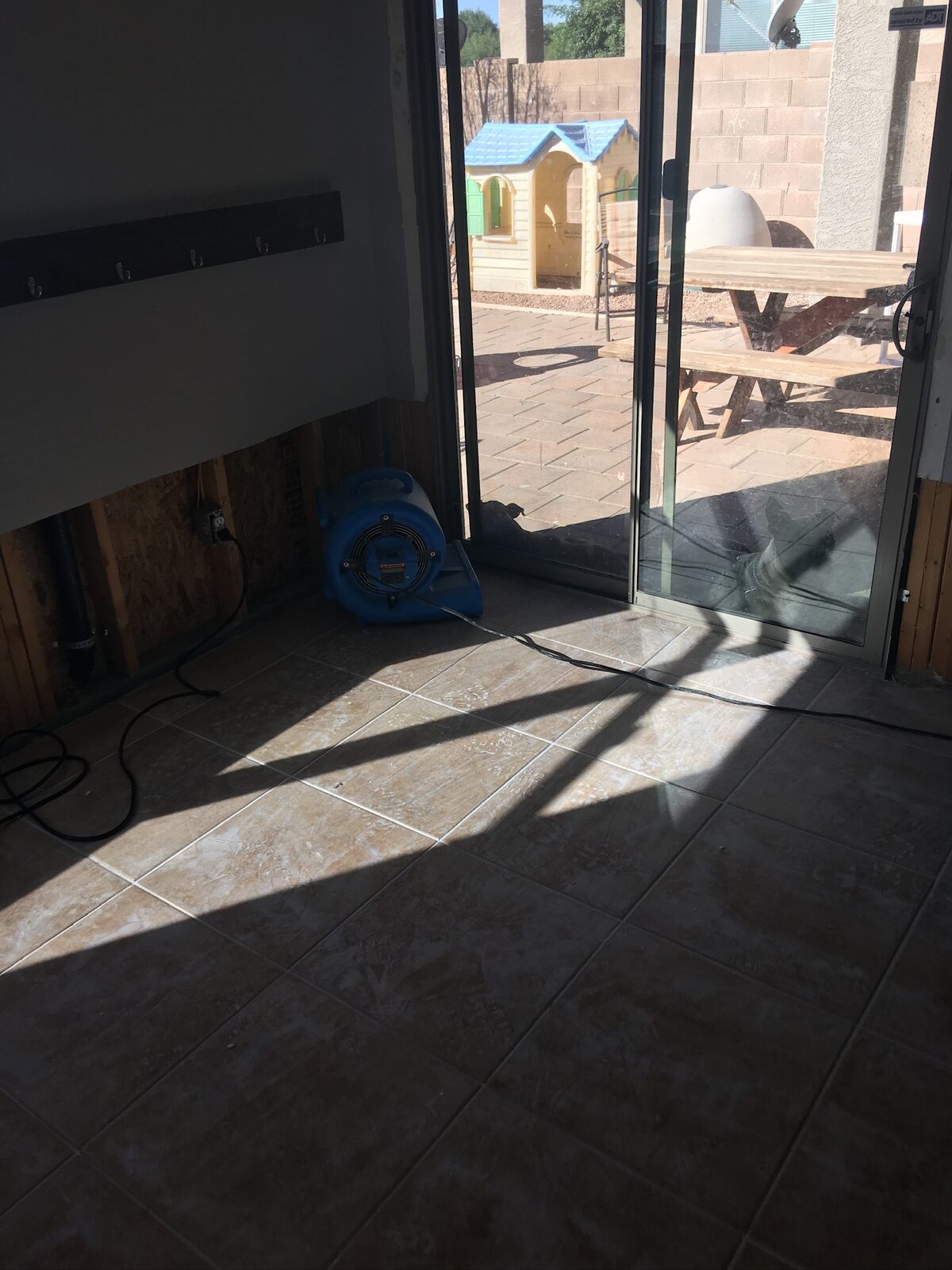
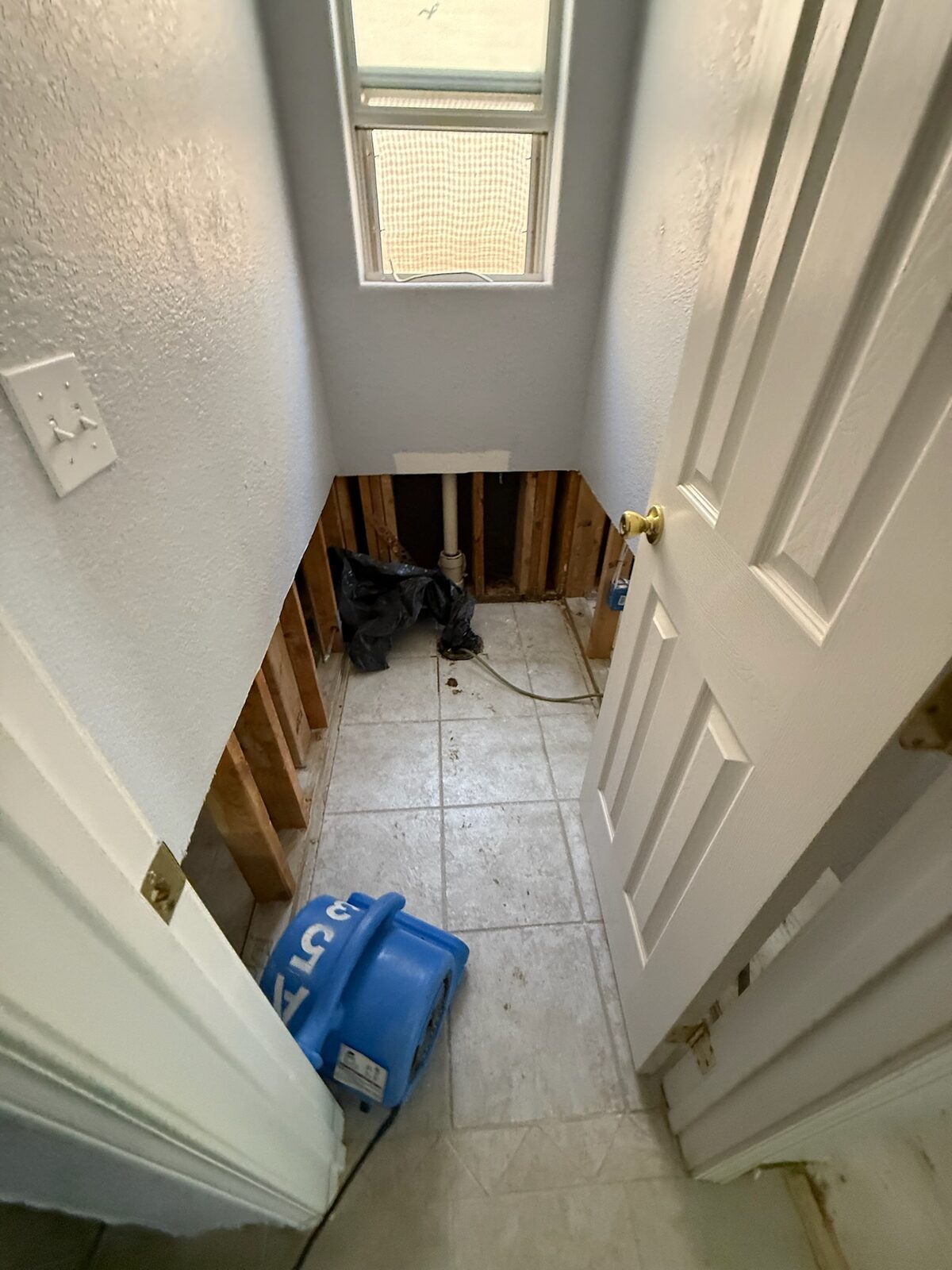
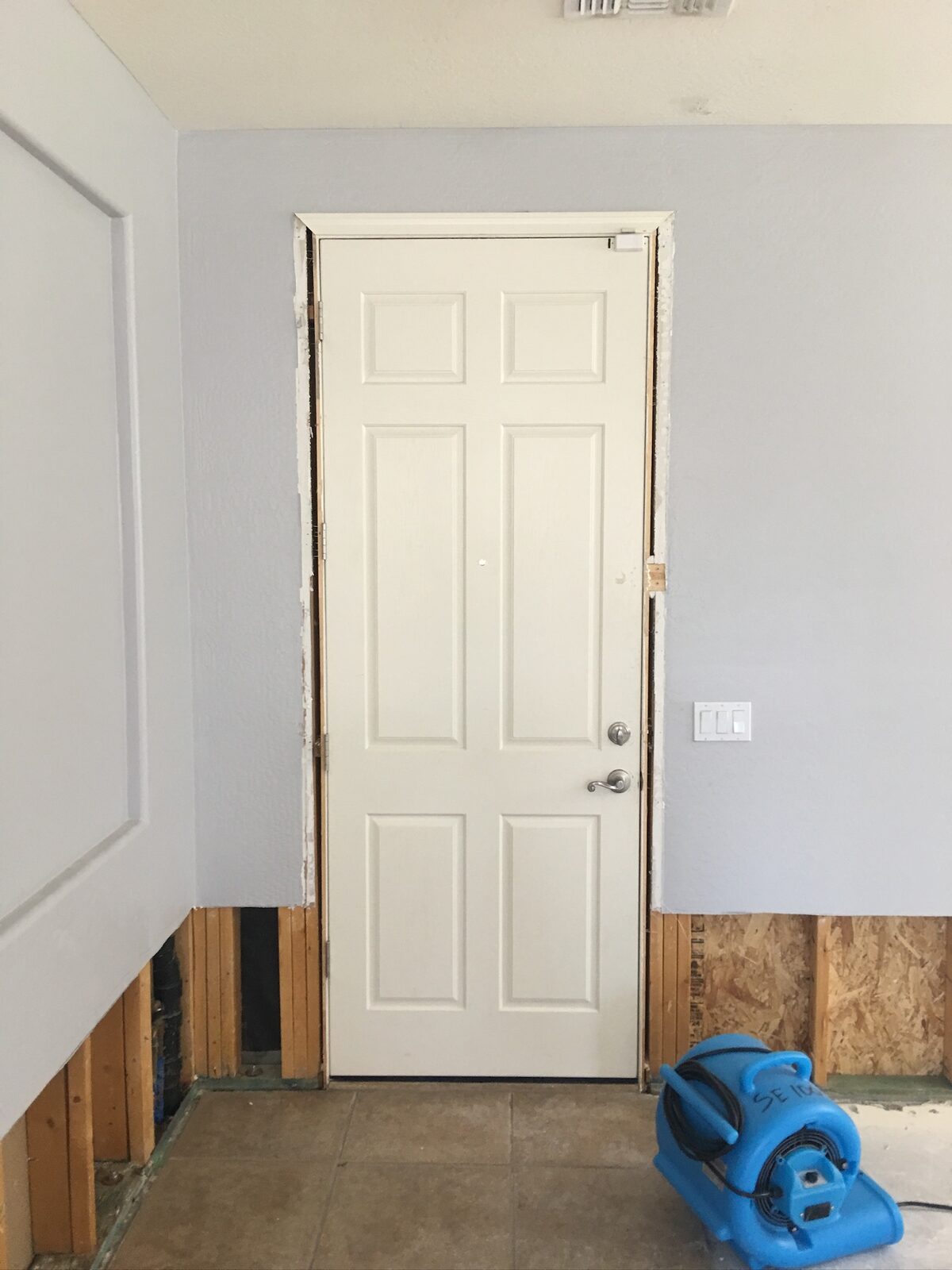
Residential reconstruction work by members of our team. See the full gallery →
More from Gold Water Fire
Abrasive Cleaning Methods for Soot on Framing and Masonry
A look at how abrasive cleaning methods remove soot from wood framing and masonry after a fire, and when each method fits the material.
AC Condensate Line Clogs & the Water Damage They Cause in Phoenix Homes
Why Phoenix AC condensate lines clog every summer, what the water damage looks like, and how to find the source before the ceiling stain spreads again.
Actual Cash Value vs Replacement Cost: Why Your Check Might Not Match the Repair Bill
Confused why your insurance check seems short after fire or water damage? Learn the difference between actual cash value and replacement cost coverage.
Seeing signs of a deeper leak?
If your curb flexes, tile is loosening, or there's a smell that won't go away, it's worth having someone look at what's happening beneath the surface. Gold Water Fire serves the Phoenix metro area and can help you understand what you're dealing with. Reach out through our <a href="/contact.html">contact page</a> or learn more about our <a href="/water-damage-restoration.html">water damage restoration</a> work.
Call (480) 999-3339Water Damage Restoration · Reconstruction & Rebuild · Contact Gold Water Fire