
Balcony and Deck Waterproofing Failures Above Living Space
If you've noticed a stain spreading across the ceiling under your balcony, or a soft spot in the deck boards that wasn't there last year, you're probably running through a list of explanations that don't quite add up. Maybe it only happens after certain storms. Maybe someone already patched it once and it came back. That in-between feeling, knowing something is wrong but not knowing how bad it is underneath, is exactly where most people are standing when they start looking into this.
Balcony and Deck Waterproofing Failures Above Living Space
The waterproofing layer you can't see is the one that matters
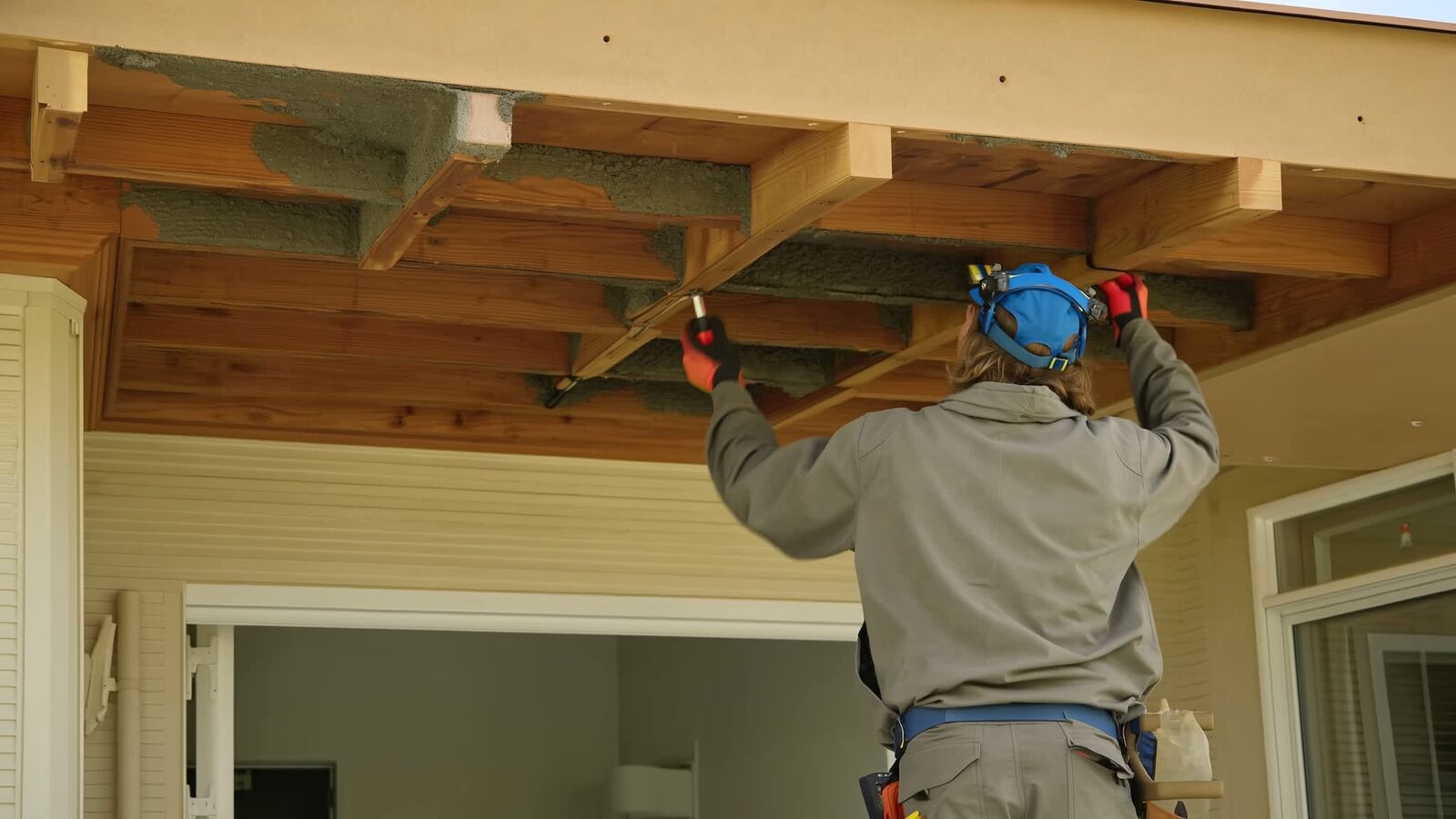
A balcony or deck built over living space relies on a waterproof membrane underneath the walking surface, whether that's tile, pavers, wood decking, or coated concrete. That membrane is doing all the real work. The surface layer on top is cosmetic and takes weather abuse, but it was never meant to be the thing keeping water out. When the membrane below fails, whether from age, a bad original install, foot traffic movement, or sun exposure breaking down the material, water starts getting through the surface and pooling on top of the membrane, or worse, finding a gap and dropping straight into the framing and ceiling below.
Signs that show up long before anyone sees standing water
Ceiling stains directly under a balcony or deck edge are the most obvious sign, but they're often a late-stage symptom, not an early one. Earlier clues include a slightly spongy feel underfoot on wood decking, tile that sounds hollow when tapped in one spot but not another, efflorescence (a white, chalky mineral residue) on the underside of a concrete balcony, caulking or sealant that has visibly shrunk or cracked at the wall-to-deck transition, and a musty smell in the room below that doesn't clear with airing out. Any one of these on its own might be nothing. Two or more together usually means water has already found a path.
The transition points are almost always the weak spot
Waterproofing rarely fails in the middle of a flat surface. It fails at the joints: where the deck meets the exterior wall, around a door threshold, at drain penetrations, at railing posts bolted through the membrane, and at the outer edge where the surface meets a fascia or drip edge. Every one of these is a place where the continuous waterproof layer had to be interrupted and then sealed back up, and every seal has a service life. In Phoenix's climate, intense UV exposure and repeated summer heat cycles break down sealants and coatings faster than in milder climates, even though the desert gets less rainfall overall. When the monsoon storms do arrive, they hit a membrane that's already been baking and cracking for months.
Why a small leak on top can mean a bigger problem underneath
Once water gets past the waterproofing, it doesn't just sit there. It follows the framing, running along joists or rafters until it finds a low point, a nail, or a seam in the ceiling material below. That means the wet spot on your ceiling can be several feet from where the actual leak is happening above. Wood framing that stays damp for extended periods is at risk for rot and, in the right conditions, mold growth, and that damage is invisible from both above and below until it's advanced. This is part of why a repair that only addresses the visible ceiling stain, without finding and fixing the source, tends to come back.
Questions people ask us
Can I just reseal the surface of my balcony myself?
Surface sealants and caulking can buy time at minor cracks, but they don't address a failed membrane underneath. If water has already gotten past the surface layer, resealing the top won't stop it, and it can mask the problem by hiding new surface cracks while trapped moisture keeps working on the framing below.
How do I know if the damage has reached the framing?
Visible signs like ceiling staining, sagging drywall, a musty odor, or soft/spongy decking suggest moisture has moved past the membrane. Confirming how far it's spread usually requires opening up a section of ceiling or removing decking material to inspect the framing directly, since surface appearance alone doesn't tell the full story.
Does this only happen with older balconies?
No. Waterproofing failures happen on new construction too, most often from installation gaps at transition points (wall junctions, drains, railing posts) rather than simple aging. An older membrane that was installed correctly can still outlast a newer one that had a flawed detail from the start.
Is this a bigger issue in Phoenix than other places?
The intense UV exposure and heat cycling common across the Phoenix metro area break down sealants and coatings faster than in milder climates. Monsoon storms then deliver concentrated rainfall to membranes that have already been stressed by months of sun, which is a different failure pattern than steady year-round rain would cause.
The standard our team works to
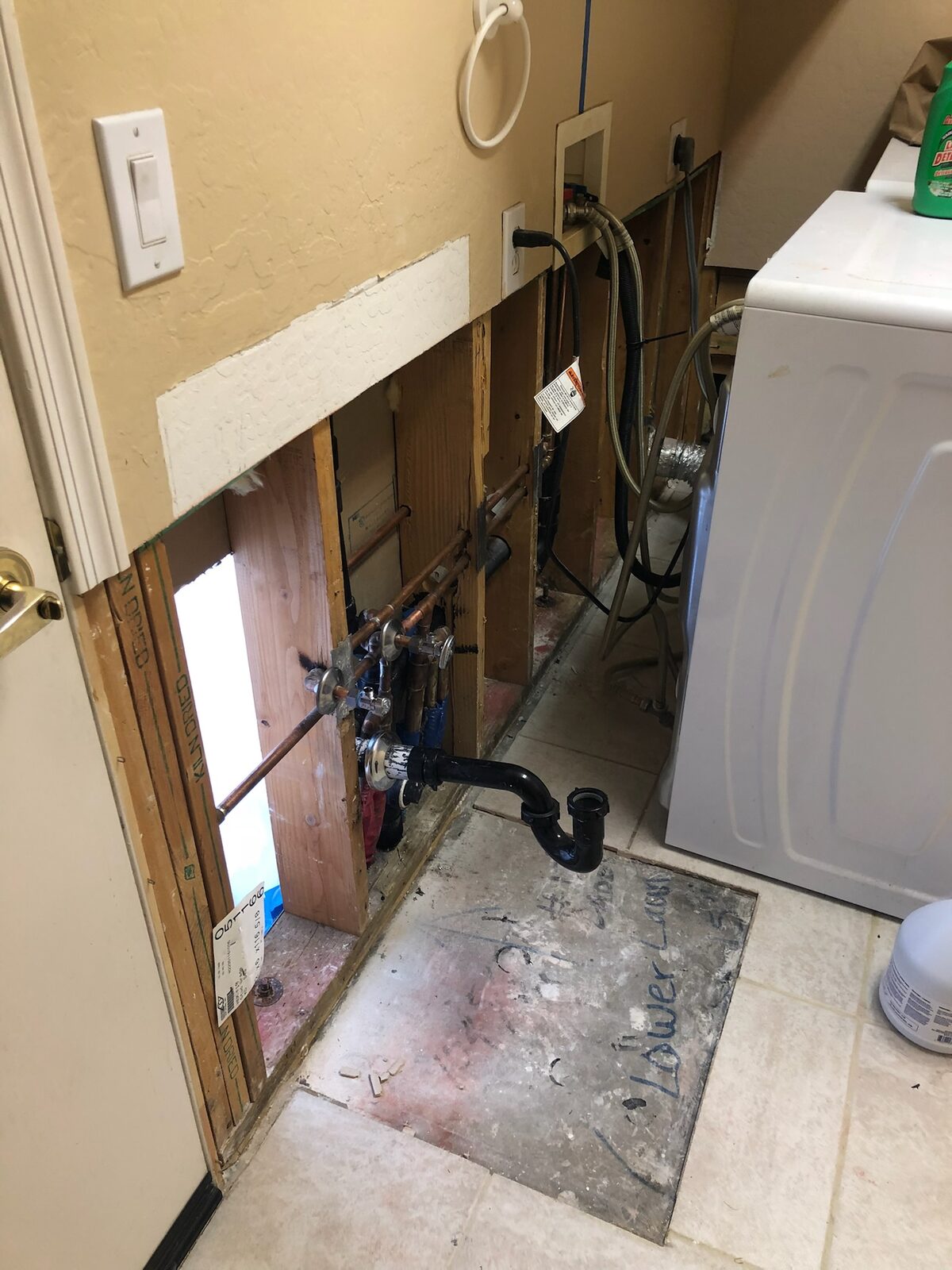
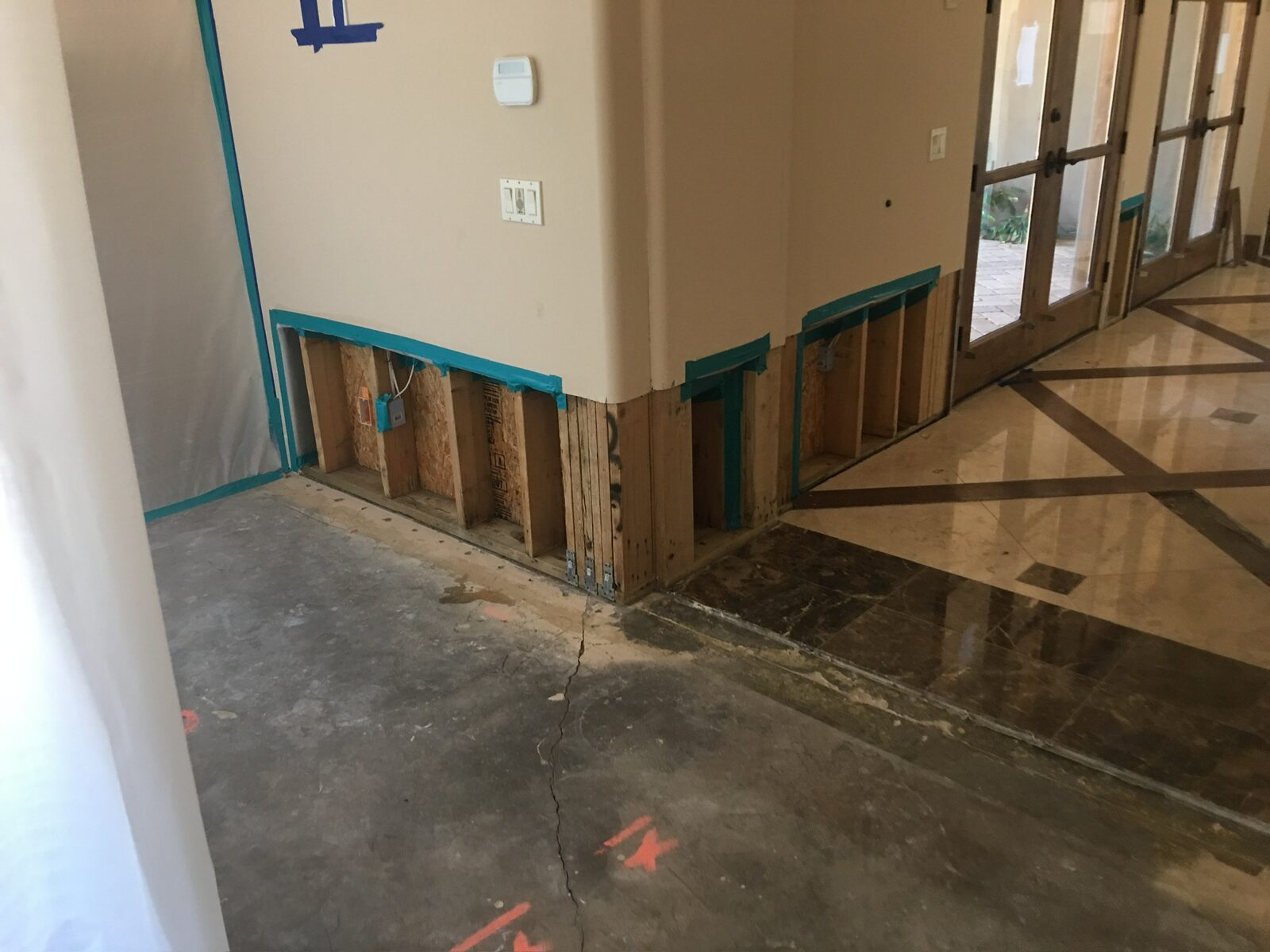
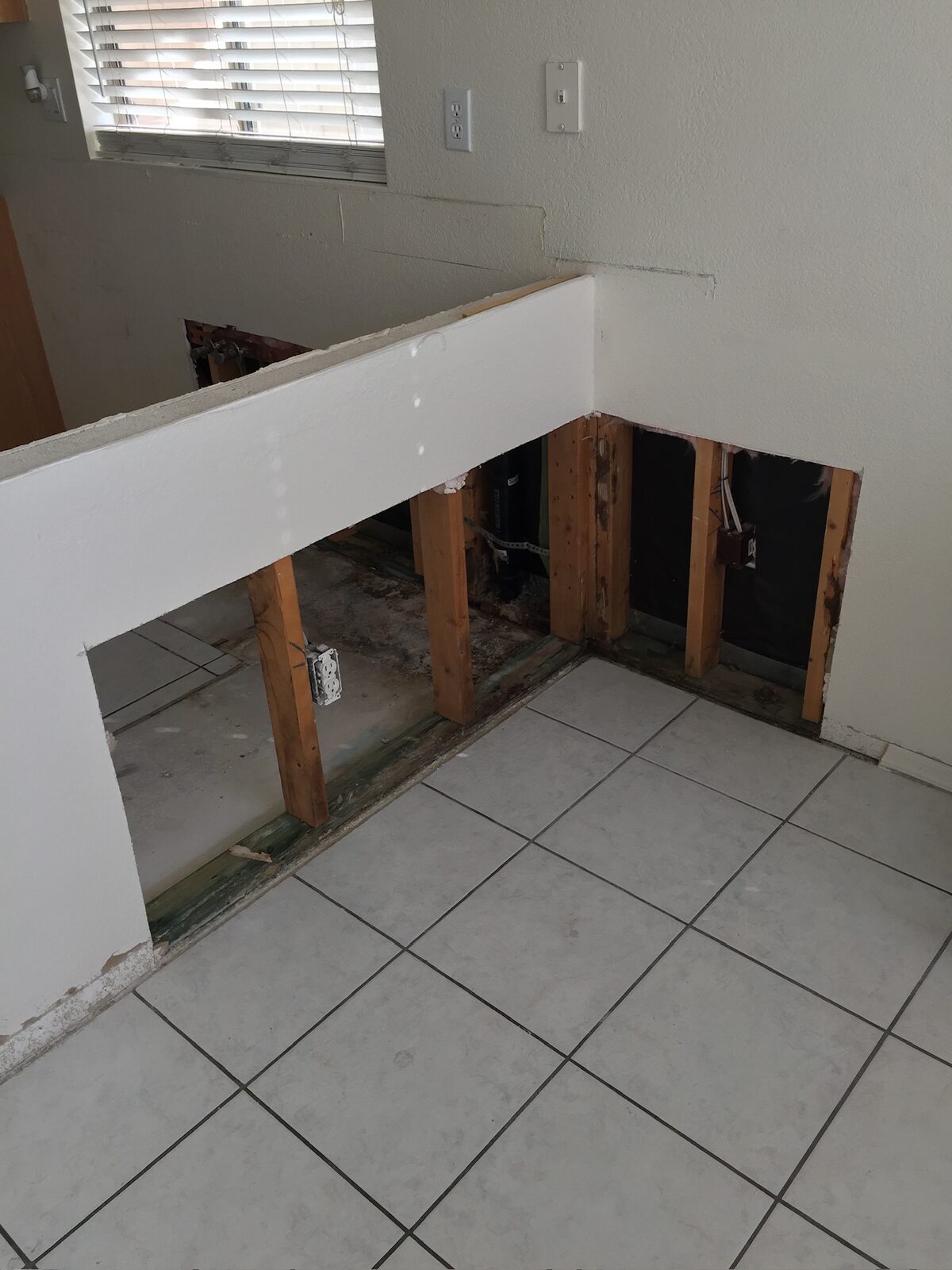
Residential reconstruction work by members of our team. See the full gallery →
More from Gold Water Fire
Abrasive Cleaning Methods for Soot on Framing and Masonry
A look at how abrasive cleaning methods remove soot from wood framing and masonry after a fire, and when each method fits the material.
AC Condensate Line Clogs & the Water Damage They Cause in Phoenix Homes
Why Phoenix AC condensate lines clog every summer, what the water damage looks like, and how to find the source before the ceiling stain spreads again.
Actual Cash Value vs Replacement Cost: Why Your Check Might Not Match the Repair Bill
Confused why your insurance check seems short after fire or water damage? Learn the difference between actual cash value and replacement cost coverage.
If you're seeing signs of a leak above a living space
Gold Water Fire works across the Phoenix metro area on water damage restoration and the reconstruction that follows it. If you want a clearer picture of what's happening behind your ceiling or deck, reach out and talk it through with our team.
Call (480) 999-3339Water Damage Restoration · Reconstruction & Rebuild · Contact Gold Water Fire