
Failed Window Seals & Flashing as a Slow Water Intrusion Path
There is a particular kind of frustration in a stain that will not stay gone. You painted over it. It came back a shade darker. Someone told you it was condensation, so you ran the fan, cracked the window, wiped the sill every morning through the winter. Then the drywall under the corner went soft, and the baseboard cupped a little, and now you are standing there in the afternoon light running your thumb along a seam you have looked at a hundred times without really seeing it. It is not that you have been careless. It is that nothing about this has announced itself. Water that comes in slowly does not behave like water that comes in fast, and the reason it keeps happening is almost never where the mark shows up.
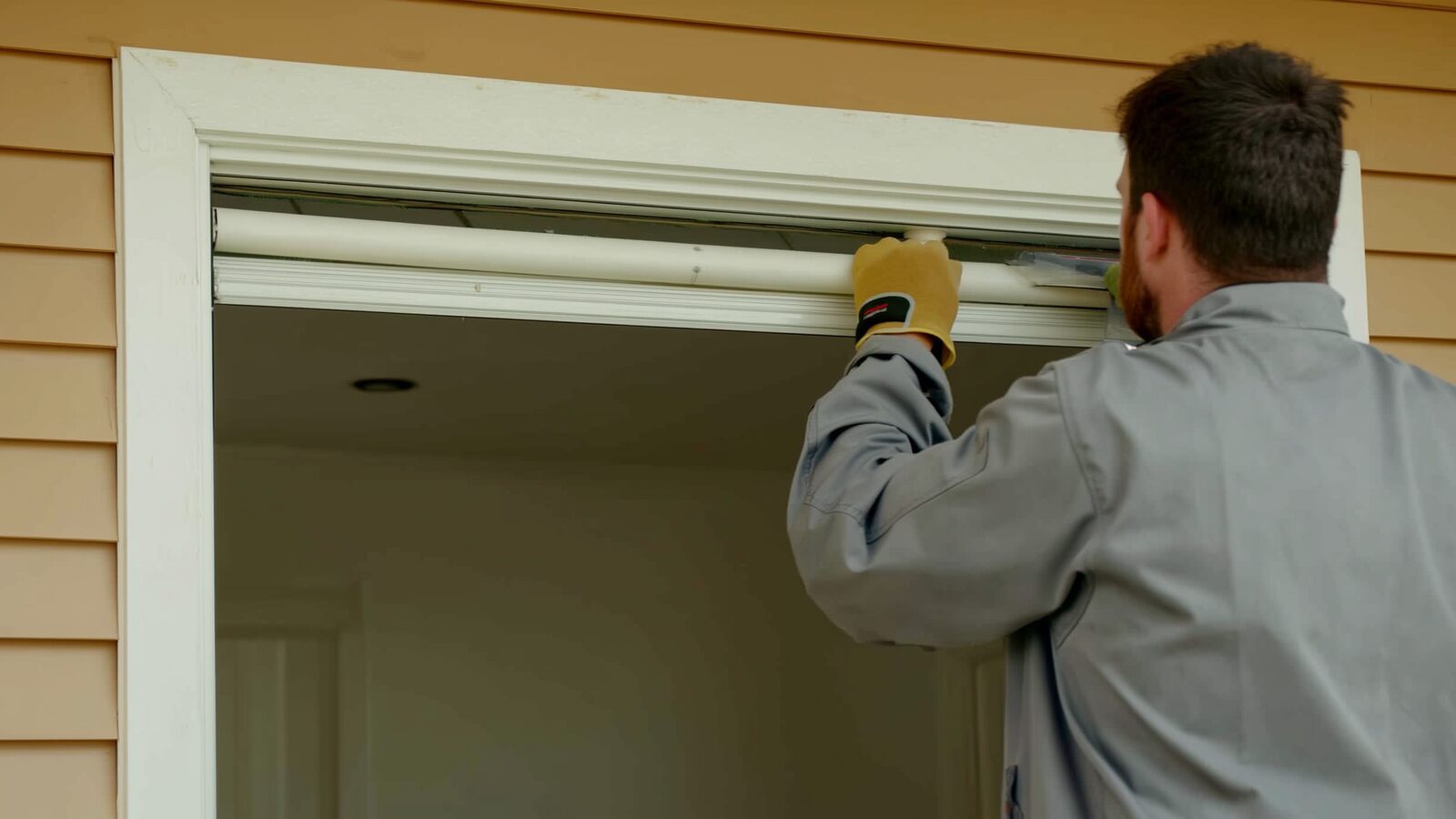
Failed Window Seals & Flashing as a Slow Water Intrusion Path
A window does not keep water out by being watertight
Most people assume a window is sealed against the weather the way a jar lid is. It is not. A properly installed window is built to accept that some water will get past the glass and the frame, and to give that water a controlled path back out. The exterior sealant, the flashing, the weather-resistive barrier behind the siding or stucco, and the sill pan under the window all work as a layered system, each one catching what the layer in front of it let through. That matters because it changes what failure looks like. When the system works, water that gets behind the frame runs down the sill pan, out through weep holes, and back onto the face of the wall. When one layer fails, the water does not stop. It just finds the next available path, and that path runs into your wall cavity instead of out of it. Nothing gushes. Nothing sprays. A few tablespoons per storm, over a few years, is enough to rot a sill plate.
Sealant that has aged out
Exterior caulk at the window perimeter hardens, shrinks, and pulls away from one side of the joint. In Arizona sun the failure is usually a hairline separation at the top edge of the bead, visible only if you get close and press on it. UV exposure and the daily expansion and contraction of a metal or vinyl frame do this to every sealant eventually.
Flashing installed out of order
Head flashing above a window has to tuck behind the weather barrier, not on top of it, so water sheds over the flashing and back out. When it is lapped the wrong way, or omitted at the head entirely, every drop running down the wall above the window is delivered directly behind the frame. This is a construction-sequence error, so it is present from day one and shows up years later.
Sill pan missing or blocked
The pan under the window is the last line of defense. If there is no pan, or if the weep holes at the bottom of the frame are painted shut, caulked shut, or packed with dust and insect debris, water that gets in has nowhere to drain. It backs up and soaks into the framing and the bottom edge of the drywall.
Stucco cracks near the corners
Stucco moves and cracks, and the cracks concentrate at the corners of openings where stress is highest. A crack running diagonally off a window corner is a direct route into the wall assembly. It can look cosmetic and still carry meaningful water during a driving monsoon rain.
Failed insulated glass units
When the seal between the panes of a dual-pane window fails, you get fog, haze, or a mineral film between the glass. This one usually does not wet your wall, but it tells you the window has been under thermal and moisture stress, and it often keeps company with perimeter seal failure.
Roof and wall junctions above
Sometimes the window is fine. Water enters at a roof-to-wall intersection, a deck ledger, or a poorly flashed penetration above, travels down inside the cavity, and exits at the first horizontal interruption it hits, which is the top of the window frame. The stain appears at the window because the window is in the way, not because it is the source.
What the damage is telling you about where the water came from
Before anyone opens a wall, the pattern of the damage narrows things considerably. Slow intrusion leaves a signature that is different from a plumbing leak or condensation, and it is worth learning to read it. Timing is the first clue. If the stain darkens after wind-driven rain and stays quiet during a still, soaking rain, that points to the wall assembly rather than the roof, because it takes horizontal pressure to push water through a sidewall opening. If it worsens on cold mornings with no rain at all, condensation is more likely. If it is steady and indifferent to weather, look at plumbing in the wall. Location is the second. Damage centered below the sill usually means water is entering at or near the sill and draining straight down. Damage that starts at the head casing and runs down one side of the jamb usually means water entered higher up and is tracking. Damage at the base of a wall several feet away from any window can still be window-related, because water inside a cavity runs along the bottom plate until something stops it. The third clue is texture. Chalky white deposits on the interior of the sill or on the wall below are efflorescence, minerals left behind as water evaporates, and they mean water has been arriving repeatedly over time rather than once. Bubbled or blistered paint means moisture behind the film. Drywall that crumbles instead of tearing has been wet and dried more than once. A musty smell that gets stronger when the HVAC runs means the cavity air is being pulled into the living space.
Why patching the inside almost never ends it
The most common outcome after slow window intrusion is that someone cuts out the stained drywall, replaces it, textures and paints, and the homeowner has a good six months before the mark returns. That is not bad workmanship. It is a repair aimed at the symptom, because the symptom is on the inside and the cause is on the outside. A repair that actually holds usually has to go in this order. First, find and stop the entry point, which means inspecting the exterior perimeter, the head flashing, and the wall above, sometimes with a water test that runs a hose on one section at a time from the bottom up so the entry can be isolated. Second, dry the cavity and confirm it is dry with a moisture meter rather than by eye, because framing and the back of drywall hold water long after the surface looks fine. Third, remove materials that cannot be saved. Wet insulation loses its value and holds moisture against the framing. Drywall that has been wet repeatedly does not recover. Fourth, address any microbial growth in the cavity before it is closed up. Fifth, repair the framing, sill plate, or sheathing if the wood has softened, and only then rebuild the wall, trim, and finish. That last stretch, the part where the wall goes back together and the texture matches and the baseboard sits flat again, is reconstruction work, and it is a different trade from the drying itself. When the two are handled by the same team, nobody has to guess whether the cavity was actually dry before it got closed. You can read more about how the drying and mitigation side works, or about the people who do this work.
What makes Phoenix windows fail the way they do
Arizona is dry, which makes people assume water intrusion is a rare problem here. The dryness is exactly what causes it. Sealants cure hard and then crack under intense UV. Stucco takes on and sheds heat all day, and the movement opens hairline fractures at every opening corner. Frames expand and contract through a large daily temperature swing, working the joint at the perimeter loose over years. Then the monsoon arrives. Rain here does not fall gently and often, it falls hard and sideways for twenty minutes, driven against one face of the house at a time. A gap that never leaks in a normal shower will take on water under that kind of pressure. And because the air is dry, the wall often dries partway back out between storms, which is precisely why the problem hides. You get wetting and partial drying, wetting and partial drying, season after season, and no single event large enough to make anyone look. By the time it becomes visible, the damage represents years, not a storm. That is not a failure of attention on your part. It is how this specific failure mode behaves, everywhere in the valley, from Peoria and Surprise across to Mesa, Gilbert, Queen Creek and San Tan Valley. If what you are looking at is further along than a stain, the same principles apply to other kinds of structural damage: find the cause, dry and remove what is compromised, then rebuild.
Questions people ask us
How can I tell if it is a window leak or condensation?
Condensation forms on the coldest surface, so it shows up on the glass and the interior sill first, it is worst on cold mornings, and it improves with ventilation or a dehumidifier. A seal or flashing leak tends to track with rain, especially wind-driven rain, and it usually shows damage in the wall or trim rather than only on the glass. Chalky mineral deposits and repeated staining below the sill point toward intrusion rather than condensation.
The stain is above the window, not below it. Does that still mean the window failed?
Not necessarily. Water entering higher on the wall, at a roof-to-wall junction or a penetration, runs down inside the cavity and stops at the first horizontal obstruction, which is often the head of the window. The window is where it becomes visible, not where it got in. That is why an exterior inspection usually needs to look at the whole wall above the opening, not just the frame.
Can I just recaulk the outside myself?
Recaulking helps when the failure really is a worn perimeter bead, and it is reasonable maintenance. It will not fix flashing lapped in the wrong order, a missing sill pan, or a crack in the stucco field, and caulk applied over the weep holes at the bottom of the frame makes things worse by trapping water that was supposed to drain out. If the stain returns after recaulking, the entry point is somewhere else.
How much of the wall has to come out?
That depends on how far the water traveled and how long it has been happening, and it is not something anyone can honestly say from the outside. A moisture meter reading through the wall and, where needed, a small inspection opening tell you how far the wet area extends. The removal follows the moisture, not the stain, because the stain is usually smaller than the wet area behind it.
The standard our team works to
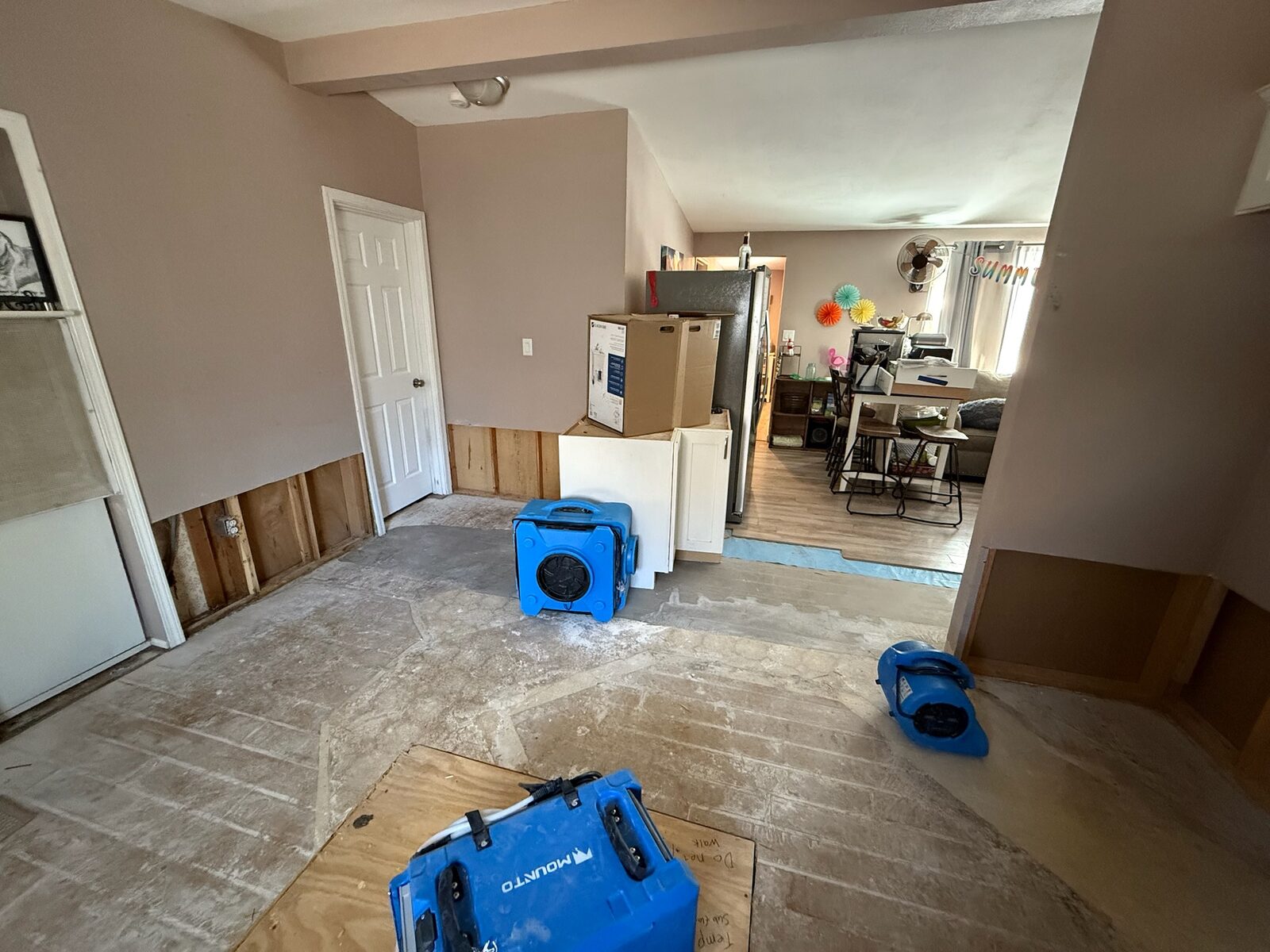
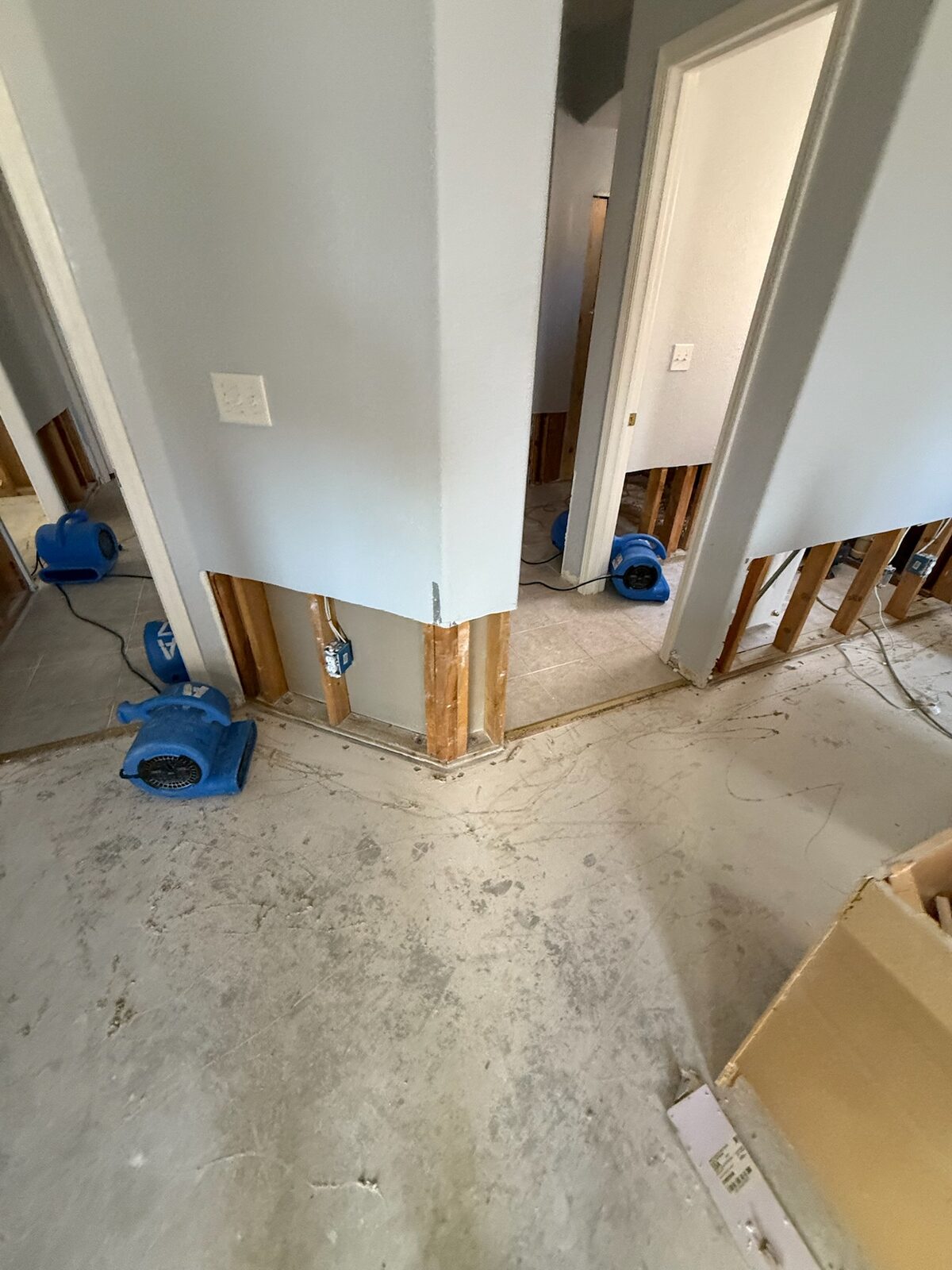
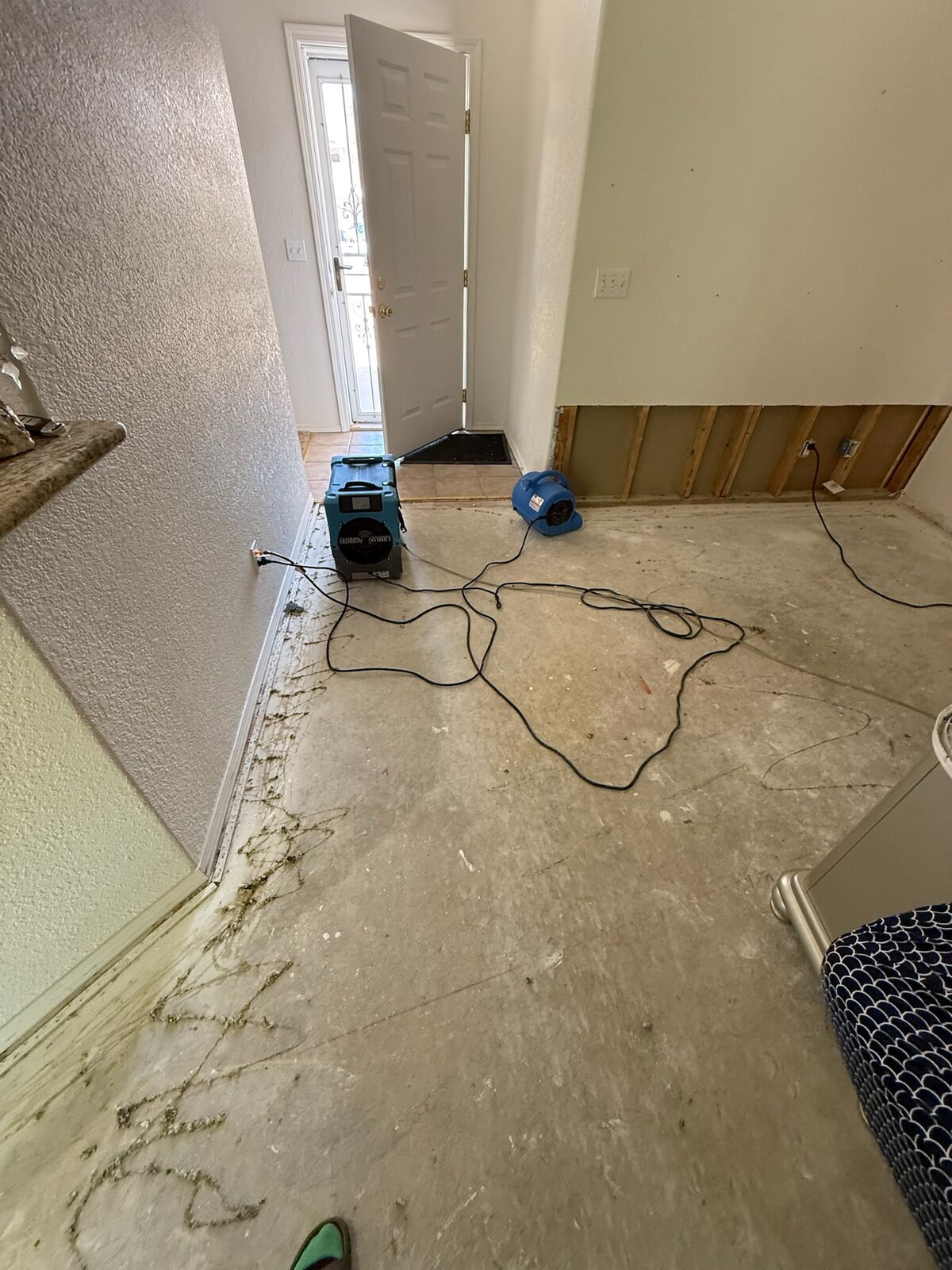
Residential reconstruction work by members of our team. See the full gallery →
More from Gold Water Fire
Abrasive Cleaning Methods for Soot on Framing and Masonry
A look at how abrasive cleaning methods remove soot from wood framing and masonry after a fire, and when each method fits the material.
AC Condensate Line Clogs & the Water Damage They Cause in Phoenix Homes
Why Phoenix AC condensate lines clog every summer, what the water damage looks like, and how to find the source before the ceiling stain spreads again.
Actual Cash Value vs Replacement Cost: Why Your Check Might Not Match the Repair Bill
Confused why your insurance check seems short after fire or water damage? Learn the difference between actual cash value and replacement cost coverage.
If the stain keeps coming back, it is worth having someone look at the wall, not just the paint
Gold Water Fire handles water damage restoration and the reconstruction that follows, across the Phoenix metro area. Call (480) 999-3339 or email Help@goldwaterfire.com and describe what you are seeing, when it gets worse, and what has already been repaired. AZ ROC #264344 KB-2.
Call (480) 999-3339Water Damage Restoration · Reconstruction & Rebuild · Contact Gold Water Fire