
How a failed pressure regulator quietly stresses every pipe and fixture in the house
Maybe it started with a small thing. A washer supply line that split. A faucet that suddenly drips no matter how tight you turn it. A water heater that fails years before it should have. None of it seemed connected, so you fixed each one on its own and moved on, and now something else is happening and you're starting to wonder if it's all the same problem wearing different faces. That instinct is usually right, and it's a frustrating thing to sense without being able to name it.
How a failed pressure regulator quietly stresses every pipe and fixture in the house
The part of your plumbing you never think about
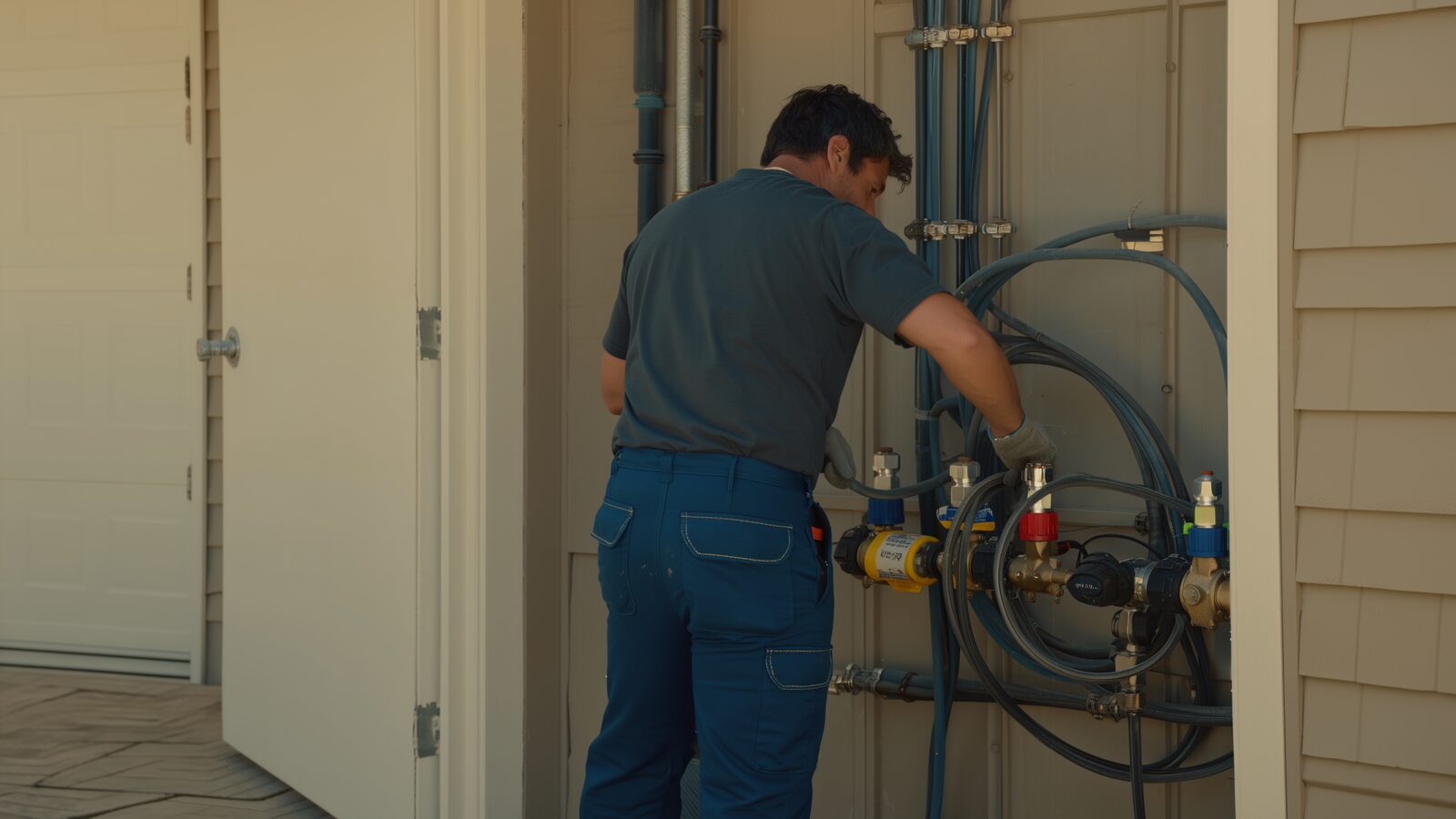
A pressure regulator (sometimes called a pressure reducing valve, or PRV) sits where the municipal water line enters your home, usually near the front hose bib or in a utility area. Its job is simple: the water utility sends water down the street at a pressure that would be too hard on household plumbing, so the regulator steps that down to a safer range before it ever reaches your fixtures. When it's working, you never notice it. When it starts failing, it doesn't announce itself. It just lets more pressure through than your pipes were built to handle, day after day, and everything downstream absorbs the difference.
Why the damage shows up everywhere except the regulator
This is the part that confuses most homeowners. A failed regulator itself rarely floods anything. Instead, it pushes elevated pressure into every pipe, joint, valve, and appliance connection in the house at once. Copper joints that were soldered decades ago start to weep. Braided supply lines rated for normal pressure begin to bulge and eventually split. Toilet fill valves run louder and wear out faster. Water heater tanks, already under thermal stress from heating cycles, take on additional mechanical stress they weren't designed for. None of these individual failures look like a plumbing system problem. They look like a bunch of unrelated bad luck, one appliance or fitting at a time, which is exactly why the underlying cause so often goes unnoticed for years.
Signs the regulator, not the fixture, is the real issue
A few patterns tend to show up together when a regulator is failing rather than a single part just wearing out on its own. Watch for more than one of these at the same time, since any one alone could have an unrelated explanation.
Water hammer or banging pipes
A loud thud or knock when a faucet or valve shuts off suddenly is a classic sign that pressure in the system is running higher than the plumbing was designed to absorb.
Repeated small failures
More than one supply line, fill valve, or fitting failing within a year or two, especially in different parts of the house, points to a system-wide pressure issue rather than coincidence.
Fixture behavior changes
Faucets that suddenly spray harder, toilets that run longer to fill, or a water heater relief valve that starts dripping can all trace back to pressure creeping upward.
Visible regulator wear
If the regulator itself is old, corroded, or has never been tested, that age alone is a reason to have it checked, since these valves do have a working life and don't fail with a warning label.
What actually happens inside a failing regulator
Most residential regulators use a spring-loaded diaphragm that flexes to control how much water passes through as pressure changes on the supply side. Over years of constant flexing, that diaphragm and the seat it presses against wear down, mineral deposits build up in the mechanism, and the spring loses tension. The result usually isn't a sudden total failure. It's a gradual creep, where the regulator lets through a little more pressure than it should, then a little more, often over months or years. Because the change is slow, homeowners rarely notice it in the moment, they just notice a faucet fails, then another, and start replacing parts without connecting the dots.
Why this matters for the whole house, not just one pipe
Plumbing systems are built as a network, not a series of isolated parts, so pressure that exceeds design limits doesn't concentrate its wear on one weak point and leave the rest alone. It stresses every joint, every washer, every supply line, and every appliance connection at roughly the same time, just at whatever rate each individual part can tolerate. That's why a regulator problem can look like it's causing unrelated issues in a laundry room, a bathroom, and a water heater closet all in the same season. If a fixture failure leads to a leak that goes unnoticed for even a short time, the resulting water intrusion can affect drywall, flooring, and cabinetry well beyond the point of failure. Understanding that connection is worth more than fixing each symptom in isolation, since it's the difference between solving the problem once and solving it repeatedly. For homeowners already dealing with water damage from a failed line or fixture, it helps to understand what the water damage restoration process actually involves, and if the damage has extended into structural repairs, reconstruction and rebuild work is a separate stage worth understanding on its own terms.
Questions people ask us
How do I know if my home even has a pressure regulator?
Not every home does, older homes on some municipal systems may not have needed one at installation, but most modern homes on city water do. It's typically a bell-shaped or bolt-shaped valve where the main water line enters the house, often near the front hose bib or in a basement or utility area.
Can I test my water pressure myself?
Yes, a simple pressure gauge that screws onto an outdoor hose bib will give you a reading in a few seconds. This is general information worth checking any time you notice banging pipes or repeated fixture failures, regardless of who eventually does the repair.
Does a failing regulator always cause a flood?
No. Often it causes small, slow failures such as a weeping joint or a split supply line rather than a dramatic burst. That gradual pattern is part of what makes the underlying cause easy to miss for a long time.
Is high water pressure actually dangerous to a house?
Sustained pressure above what residential plumbing is designed for accelerates wear on joints, fittings, valves, and appliances. It doesn't usually cause immediate damage, but it shortens the working life of nearly everything connected to the water system.
The standard our team works to
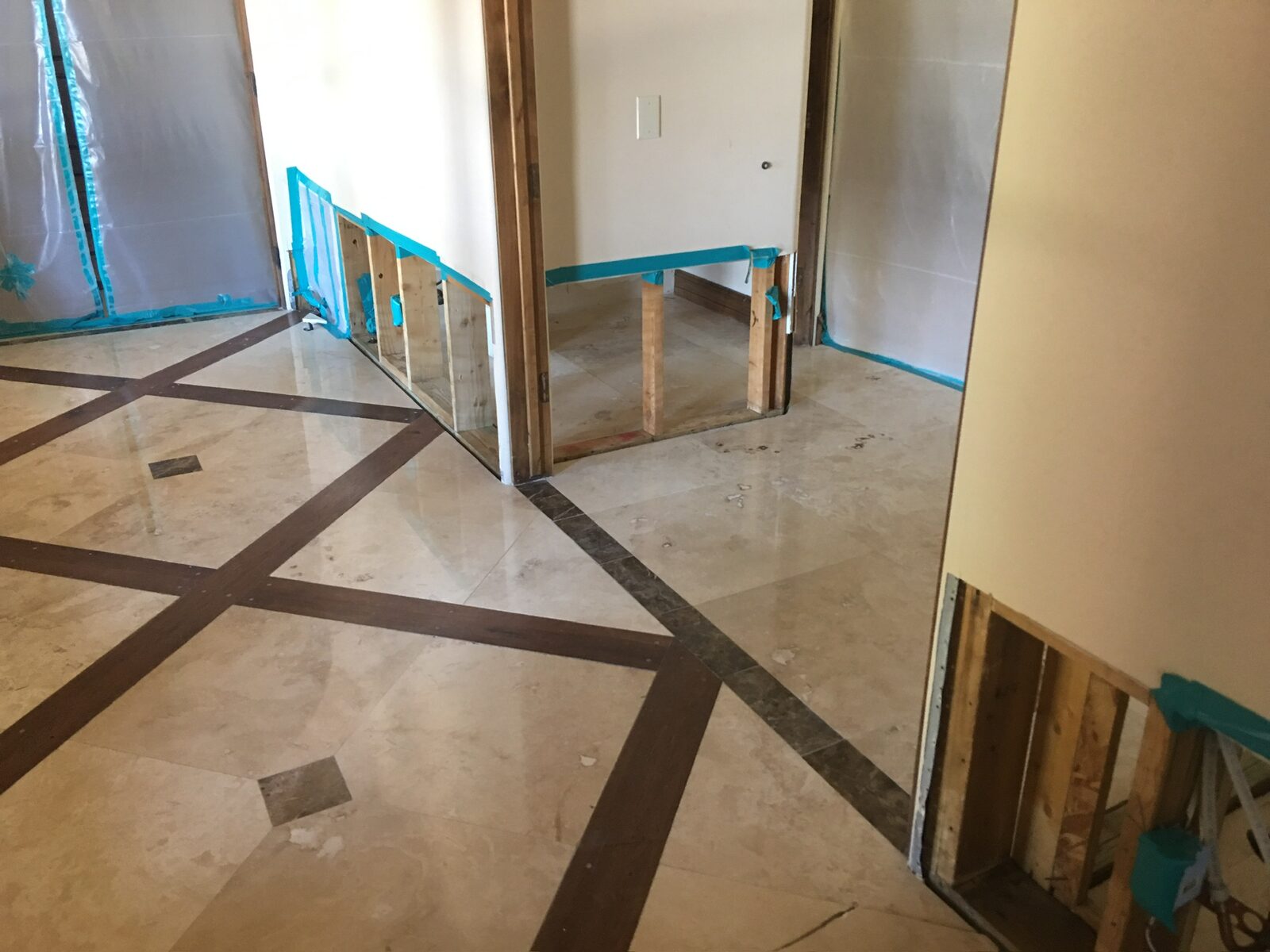
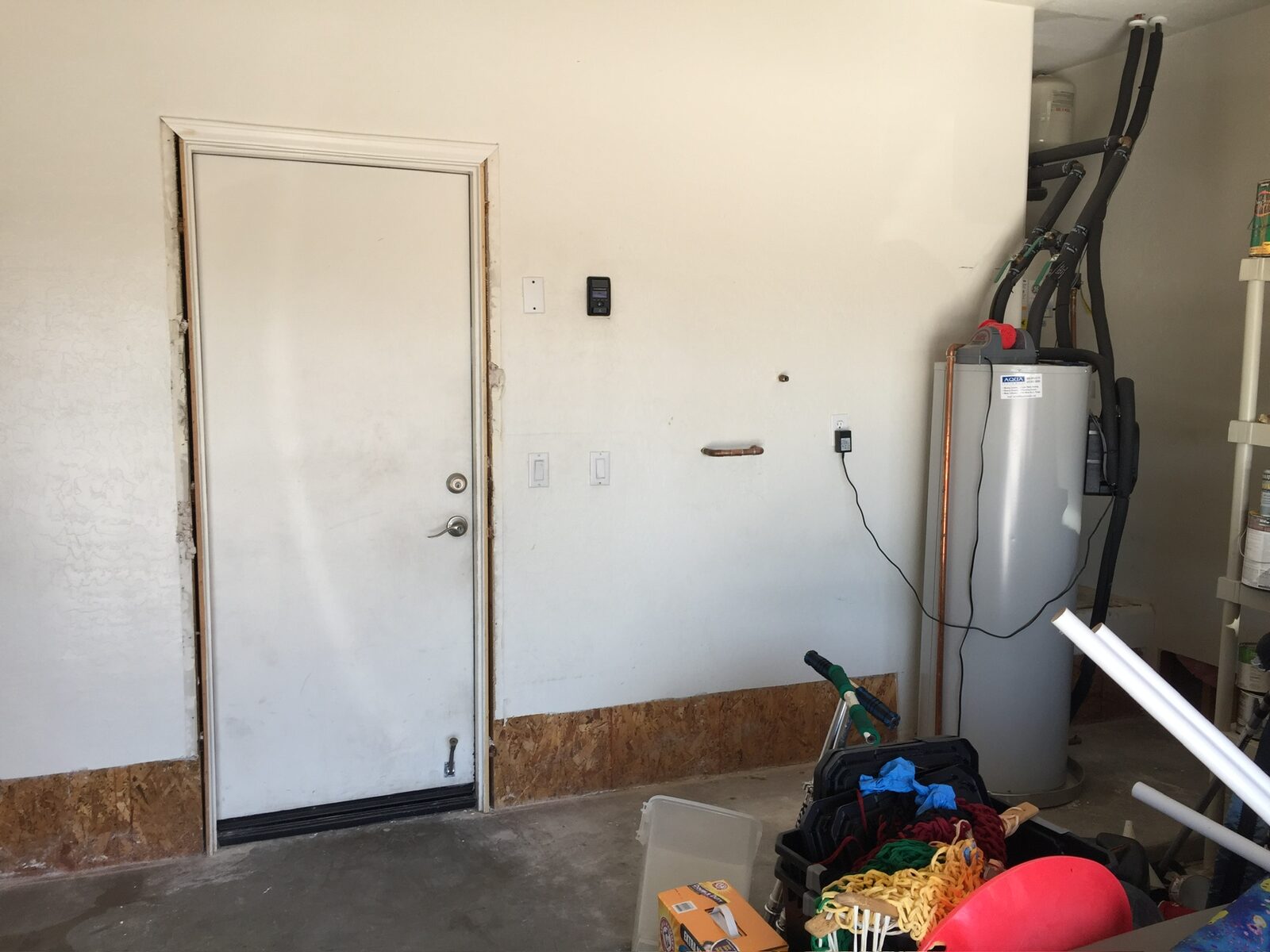
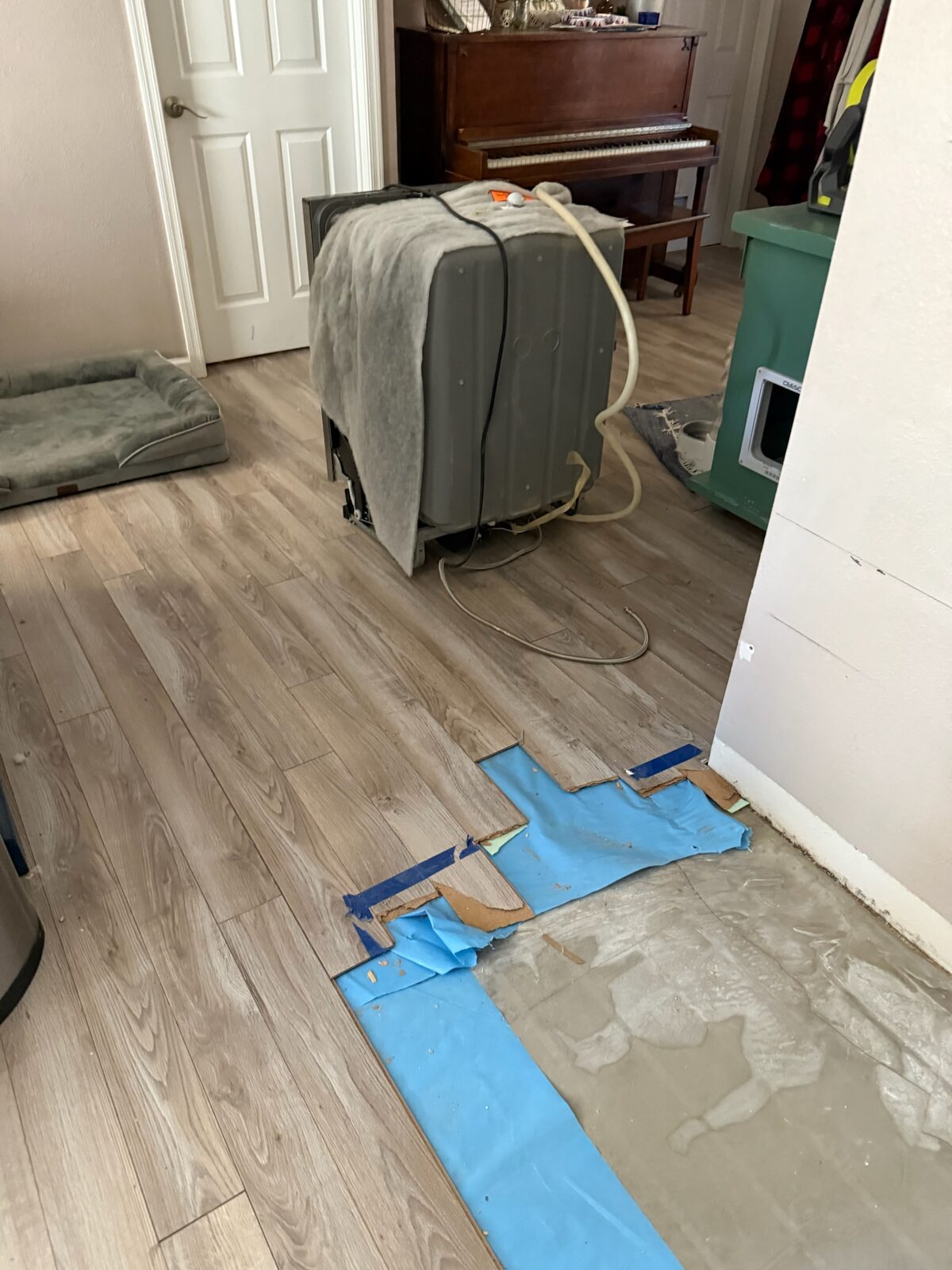
Residential reconstruction work by members of our team. See the full gallery →
More from Gold Water Fire
Abrasive Cleaning Methods for Soot on Framing and Masonry
A look at how abrasive cleaning methods remove soot from wood framing and masonry after a fire, and when each method fits the material.
AC Condensate Line Clogs & the Water Damage They Cause in Phoenix Homes
Why Phoenix AC condensate lines clog every summer, what the water damage looks like, and how to find the source before the ceiling stain spreads again.
Actual Cash Value vs Replacement Cost: Why Your Check Might Not Match the Repair Bill
Confused why your insurance check seems short after fire or water damage? Learn the difference between actual cash value and replacement cost coverage.
Noticing a pattern like this in your own home?
If repeated fixture or pipe issues have you wondering what's really going on, Gold Water Fire is available to talk through what you're seeing and help you understand your options. Call (480) 999-3339 or reach out through the <a href="/contact.html">contact page</a> anytime.
Call (480) 999-3339