
How Arizona Monsoon Season Causes Flooding in Homes, & What Actually Goes Wrong
It is probably not the first time. Maybe last August there was a damp patch on the hallway ceiling that dried out on its own, and you told yourself it was nothing. Then a storm came through in July and water was standing along the baseboard in the back bedroom, and now you are looking at that same wall again wondering what you missed. That is the part that wears on people. Not the water itself, but the sense that something in the house has been quietly wrong for a while and nobody has ever explained it in a way that made sense. You have had a roofer out. You have caulked things. You have watched the sky in the afternoon the way people here do. And still it happens, and still you do not have a name for why.
How Arizona Monsoon Season Causes Flooding in Homes, & What Actually Goes Wrong
Why monsoon rain behaves differently than normal rain
Arizona monsoon storms are not steady rain. They are short, violent, and often sideways. A storm can drop an inch or more in under an hour, driven by outflow winds that arrive before the rain does. Two things follow from that. First, the volume of water hitting your roof and yard in a short window is far more than the drainage was ever asked to handle in a slow winter rain, so systems that work fine in December back up in July. Second, the wind pushes water horizontally, which means water gets under and behind things that only ever shed water falling straight down: flashing, tile overlaps, weep screeds, door thresholds, window head flashing. This is the reason a roof can pass a hose test and still leak in a monsoon. The hose points down. The monsoon points sideways. Add the ground itself: much of the Valley sits on hard caliche and compacted desert soil that absorbs water slowly. Rain that would soak into a lawn elsewhere sheets across the surface here and goes looking for the lowest point, which is very often the slab of a house.
The specific places monsoon water actually gets in
Most monsoon water intrusion traces back to a short list of entry points. Knowing which one you have changes everything about the repair, and it is why generic patching so often fails to stop a recurring leak.
Flat roof drains and scuppers
Many Valley homes have flat or low-slope roofs that drain through scuppers or interior drains. A single monsoon can pack those with palo verde debris, gravel, and blown dust in minutes. Water then ponds on the roof, rises above the parapet flashing, and enters through the wall assembly. The interior stain usually shows up along the exterior wall or at a ceiling corner, not directly under a hole, which is why people look in the wrong place.
Tile roof underlayment
On a tile roof the tile is a rain shield, not the waterproofing. The underlayment beneath it is what actually keeps water out, and it degrades under Arizona sun and heat over time. When wind drives rain under the tile, aged or torn underlayment lets it through. Because water travels along the roof deck before it drops, the leak inside can appear several feet from where it entered.
Grading, patios, and door thresholds
If the soil, decorative rock, or a poured patio slopes toward the house rather than away, sheeting water arrives at the base of the wall and pools. It then comes in under a slider track, through a weep screed on the stucco, or through the cold joint where the slab meets the block. Landscaping added years after the house was built is a common culprit because it quietly raised the grade above the slab line.
Roof penetrations and stucco cracks
Every vent, swamp cooler stand, satellite mount, skylight, and pipe boot is a hole with a seal around it. Those seals dry out and crack. Stucco develops hairline cracks that are harmless in still air and become funnels under wind-driven rain. A single failed pipe boot can put a gallon a minute into an attic during a hard cell.
What goes wrong in the days after the storm
The flooding is the event. The damage is mostly what happens afterward, and it is slower and quieter than people expect. Water that reaches drywall wicks upward through the paper facing, often twelve to twenty-four inches above the visible waterline, so the wet zone is bigger than the stain. Water that gets under vinyl plank, laminate, or a glued-down floor has nowhere to evaporate to and sits against the slab. Baseboards and door jambs made of MDF swell from the bottom edge. Insulation in a wall cavity holds moisture against the framing and dries very slowly even in Arizona air, because the cavity is sealed off from that air. Mold growth in wet organic material can begin within roughly a day or two under the right conditions, and monsoon season pairs heavy water with high humidity and hot attics, which is close to ideal for it. The other slow failure is repeat intrusion. If the actual entry point was never identified, the wall dries out between storms and re-wets with the next one. Over a few seasons that cycle rots framing, corrodes fasteners, delaminates drywall, and stains the same ceiling again and again. That is usually the real answer to why this keeps happening: nobody ever traced the path the water takes, they only treated the place where it came out. General information on how water moves through a structure and how drying is approached is covered further under water damage restoration, and when materials have to be opened up and rebuilt, that work falls under reconstruction and rebuild.
Practical steps during and after a monsoon flood
During the storm, safety comes first: stay away from standing water near outlets, panels, or anything with a cord in it, and do not walk on a ceiling that is sagging or bulging with trapped water. If you can do so safely, shut off power to the affected area at the breaker. Once it is safe, get photographs and video before you move anything, including the outside of the house and the yard, because the source matters as much as the interior damage. Pull rugs off wet flooring, get furniture legs up on blocks or foil, and move anything porous out of the wet zone. Open windows only if the outside air is drier than the inside air, which after a monsoon it often is not. Then look for the source while the evidence is fresh: check the roof drains and scuppers for debris, look at where water pooled in the yard, and note which direction the rain was blowing. Mark the height of the water on the wall with painter's tape. Do not seal, paint, or close up a wet cavity, because trapping moisture behind a finished surface is what turns a one-time leak into a recurring problem. If you want to talk through what you are seeing, reach out.
Questions people ask us
Why does my ceiling leak in monsoon storms but not in winter rain?
Monsoon rain is wind-driven and comes in high volume over a short period. Winter rain usually falls closer to straight down at a lower rate. Entry points like tile overlaps, flashing laps, pipe boots, and stucco cracks only leak when water is pushed sideways or when drainage backs up and water ponds above a flashing line. That is why a roof can seem fine for months and then fail in a single afternoon cell.
The wall dried out on its own. Do I still need to do anything?
Surface drying does not tell you what is happening inside the cavity. Insulation and framing behind sealed drywall dry far more slowly than the painted face, and repeated wet and dry cycles across a season damage materials and can support mold growth. More importantly, if the entry point was never found, the same wall will get wet again with the next storm. Finding the path the water takes matters more than the appearance of the drywall.
How fast can mold start after a monsoon flood?
As a general rule, mold can begin growing in wet organic materials such as drywall paper, wood, and insulation within about a day or two when moisture, warmth, and a food source are all present. Monsoon season supplies all three at once, so time matters more in July and August than it would in a dry month.
Which parts of the Phoenix area does Gold Water Fire serve?
Gold Water Fire covers the full Phoenix metro area, roughly bounded by northwest Peoria, southeast Avondale, southwest San Tan Valley, and northwest Apache Junction, plus outlying areas beyond that. That includes Phoenix, Mesa, Chandler, Scottsdale, Glendale, Gilbert, Tempe, Peoria, Surprise, Avondale, Goodyear, Buckeye, Queen Creek, San Tan Valley, Apache Junction, Fountain Hills, Paradise Valley, Cave Creek, El Mirage, Tolleson, and Litchfield Park.
The standard our team works to
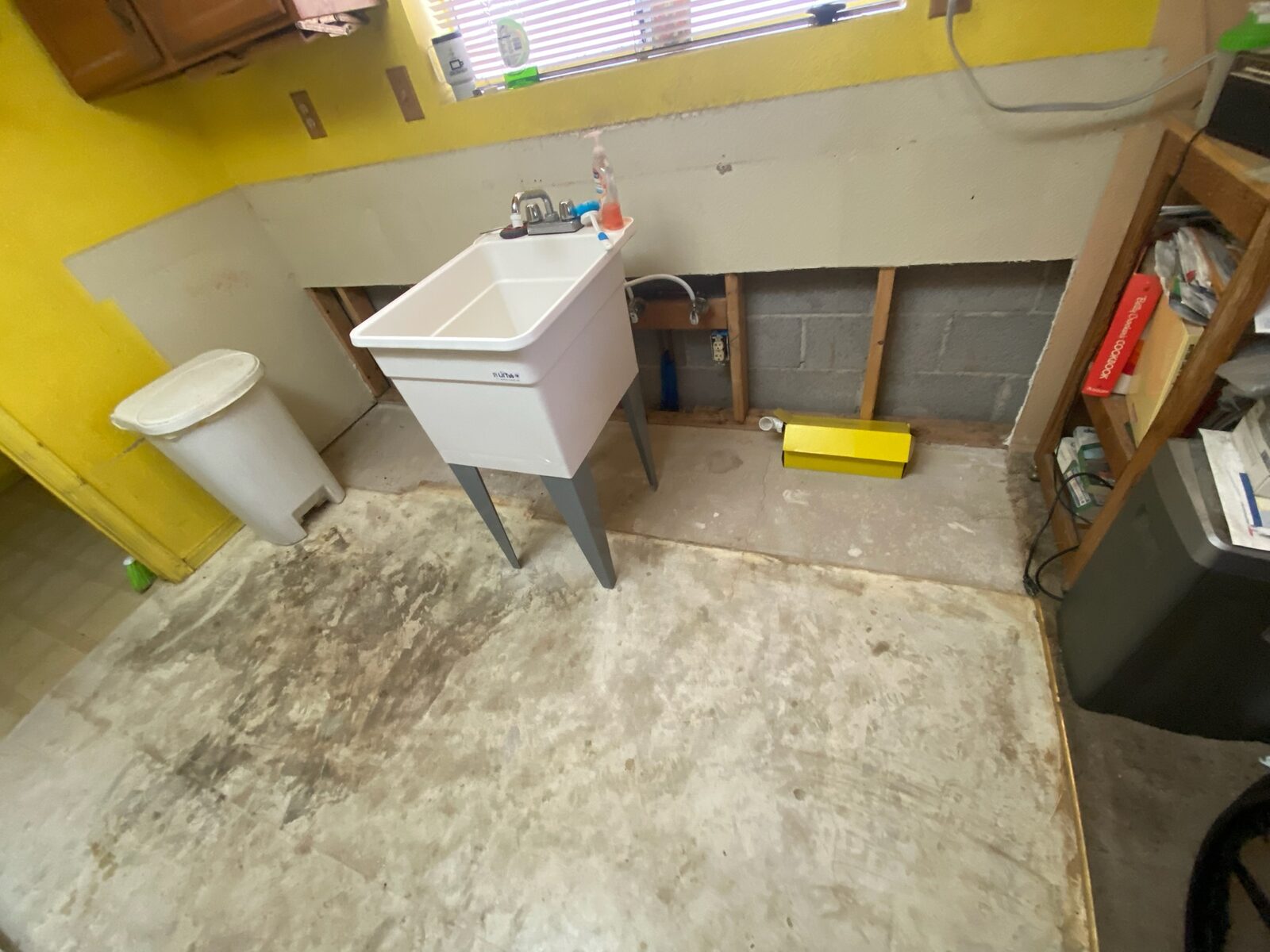
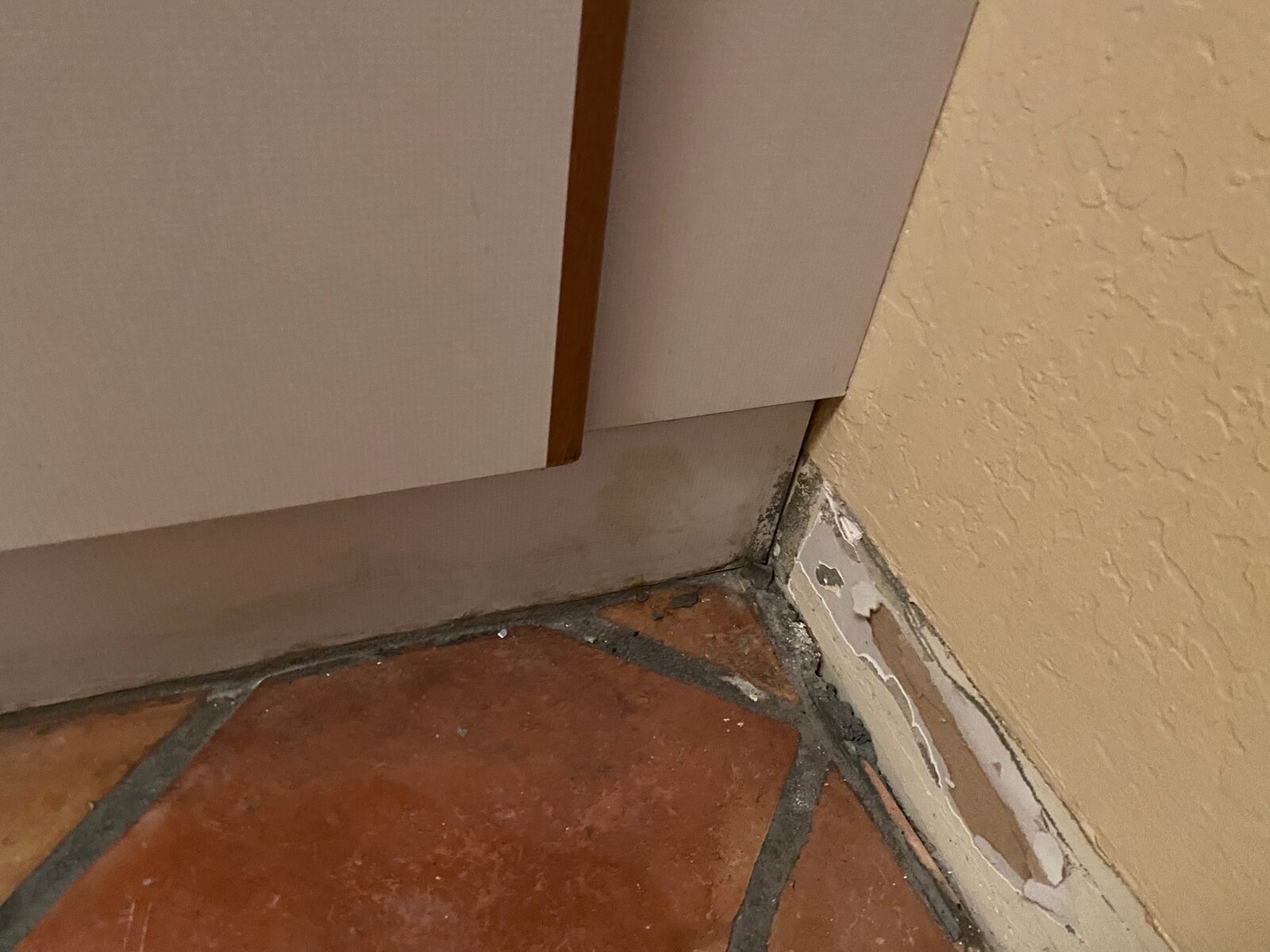
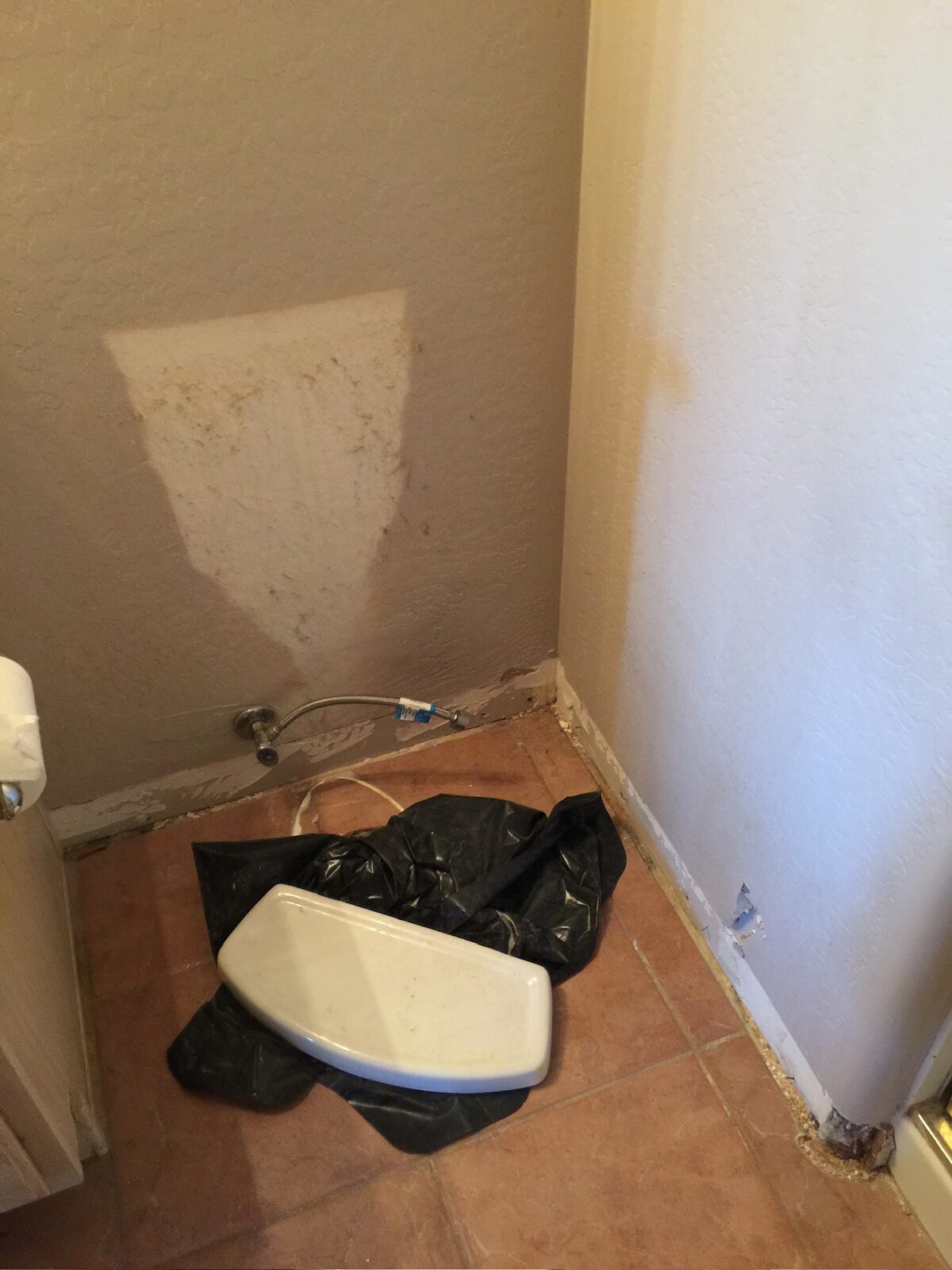
Residential reconstruction work by members of our team. See the full gallery →
More from Gold Water Fire
Abrasive Cleaning Methods for Soot on Framing and Masonry
A look at how abrasive cleaning methods remove soot from wood framing and masonry after a fire, and when each method fits the material.
AC Condensate Line Clogs & the Water Damage They Cause in Phoenix Homes
Why Phoenix AC condensate lines clog every summer, what the water damage looks like, and how to find the source before the ceiling stain spreads again.
Actual Cash Value vs Replacement Cost: Why Your Check Might Not Match the Repair Bill
Confused why your insurance check seems short after fire or water damage? Learn the difference between actual cash value and replacement cost coverage.
If the same wall keeps getting wet, it is worth tracing why
Gold Water Fire handles water damage restoration, fire damage restoration, and reconstruction across the Phoenix metro area. If you are looking at a stain you have seen before, or water came in during the last storm and you are not sure how far it went, call (480) 999-3339 or email Help@goldwaterfire.com and describe what you are seeing. AZ ROC #264344 KB-2.
Call (480) 999-3339Water Damage Restoration · Reconstruction & Rebuild · Fire Damage Restoration · Contact Gold Water Fire · About Gold Water Fire