
Water Coming In at Sliding Door Tracks During Storms
You've probably stood there with a towel more than once, watching water creep in along the bottom of the sliding door while the storm keeps going outside, wondering how it's getting in when the door is closed and locked. It feels like it shouldn't be happening, especially if the door looked fine yesterday. That confusion is normal. Sliding door tracks are one of the most common places water finds its way into a home during heavy rain, and the reasons are rarely obvious just from looking at the puddle.
Water Coming In at Sliding Door Tracks During Storms
Why sliding doors leak when other windows and doors don't
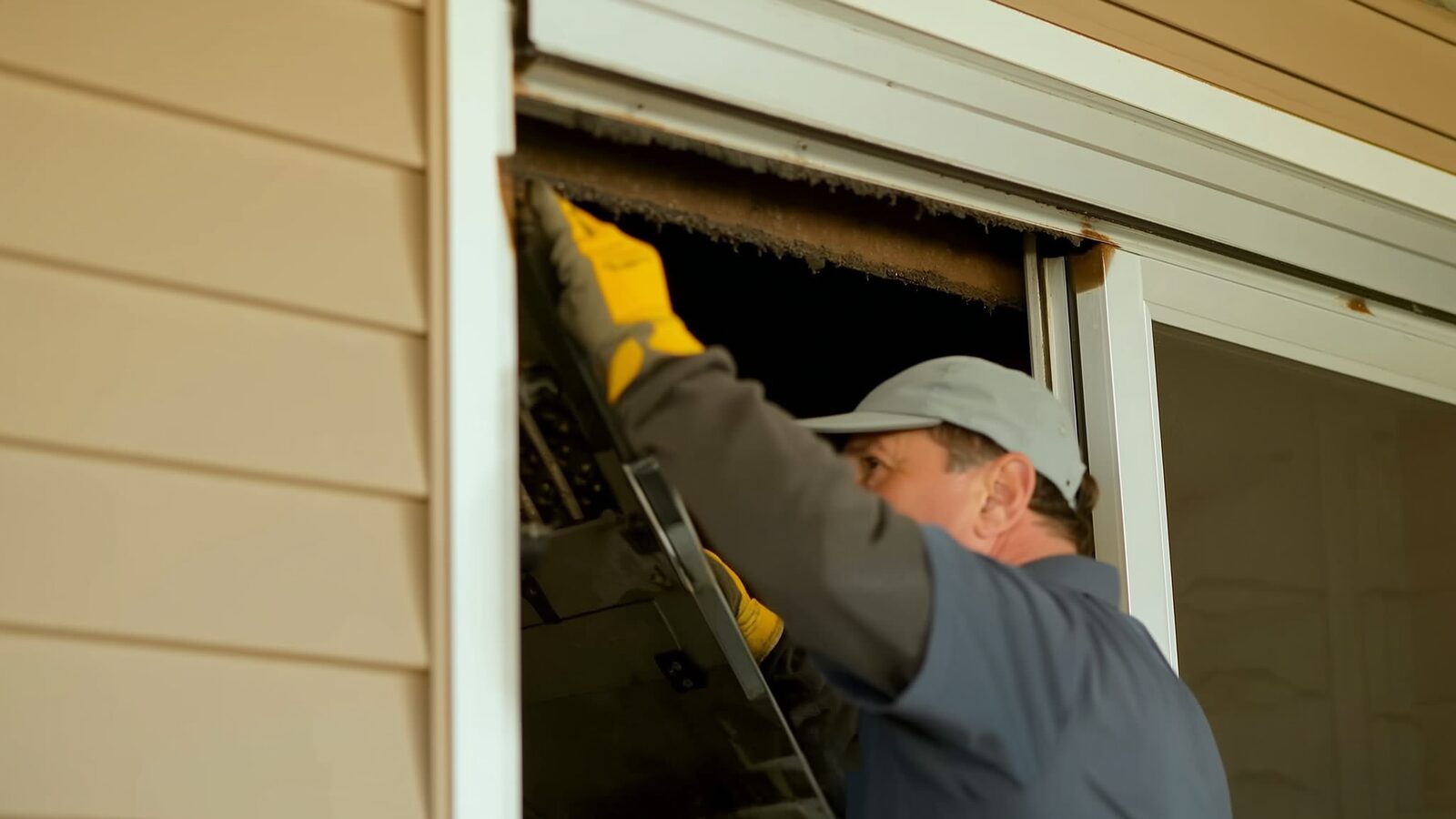
A sliding door track is essentially a shallow channel sitting at floor level, right where wind-driven rain collects and where the seal has to work against gravity instead of with it. Unlike a swinging door with a threshold designed to shed water outward, a sliding door depends on weep holes, a sloped sill, and a tight-fitting bottom seal all working together. If any one of those is compromised, water that would normally drain back outside starts finding its way in instead. Add wind pushing rain sideways against the glass and door face, and even a small gap becomes an entry point.
The usual suspects behind track leaks
A few conditions show up again and again in homes dealing with this problem.
Blocked or damaged weep holes
Weep holes are small openings at the base of the track designed to let water drain back outside. Dirt, dead insects, or hardened caulk can plug them, trapping water inside the track until it has nowhere to go but into the house.
Worn or missing bottom seal
The vinyl or brush seal along the bottom of the door panel wears down over years of use. Once it's compressed, cracked, or gapped, wind-driven rain slides right underneath it.
Settling or sill slope issues
If the slab or subfloor has settled even slightly, the sill can tilt toward the interior instead of away from it, meaning water pools inward instead of draining out no matter how good the seal is.
Failed exterior sealant
The caulk or flashing where the door frame meets the stucco or siding is a common failure point. Once it cracks, water bypasses the door entirely and travels behind the frame.
What to check during or right after a storm
While it's raining, watch where the water is actually entering, at the corners, along the middle of the track, or seeping up from underneath the frame. That location tells you a lot. Water at the corners often points to failed exterior sealant or flashing. Water pooling in the middle of the track and rising over the lip usually means blocked weep holes. Water that seems to come from underneath the frame itself can mean a slab-level problem, which is a different repair altogether than resealing the door.
Why this becomes a bigger problem than it looks
The visible puddle on the tile or wood floor is only part of what's happening. Water that has been sitting in a track or working its way under a sill has usually already reached the subfloor, the framing beneath the door, or the wall cavity behind it. Because this area often gets mopped up and forgotten once the storm passes, moisture can sit unnoticed in those materials for days, which is exactly the kind of condition that leads to warped subfloor, soft drywall, or mold growth well before anyone realizes the damage extends past the door itself. If this has happened more than once, or if the flooring near the door feels soft, discolored, or has an odor, it's worth having the area checked rather than just wiping it up again. Our water damage restoration page walks through how that kind of hidden moisture gets identified and dried out.
When it's a repair job versus a bigger issue
Cleaning out weep holes or replacing a worn bottom seal is often something a homeowner or handyman can address directly. But if the leak keeps returning after those fixes, or if you notice the sill sloping the wrong way, staining on the wall above or beside the door, or soft spots in the surrounding floor, that points to a structural or drainage issue rather than a simple seal problem. At that point it's less about stopping the next storm and more about understanding what's already been affected. If repairs to the door frame, subfloor, or surrounding wall are needed, our reconstruction and rebuild team handles that kind of work after the moisture issue itself is resolved.
Questions people ask us
Why does my sliding door only leak during heavy storms and not light rain?
Wind is usually the deciding factor. Light rain falls mostly straight down and sheds off the exterior surfaces normally, but wind-driven rain during a storm gets pushed sideways and upward against the door, forcing water into gaps and weep holes that would otherwise handle a small amount of moisture just fine.
Can I fix a leaking sliding door track myself?
Clearing debris from weep holes and replacing a worn bottom seal are reasonable DIY steps. If the leak continues after that, or if you notice soft flooring, staining, or a sill that seems to slope inward, the underlying cause is likely beyond a simple seal fix.
How do I know if water has reached the subfloor and not just the surface?
Look and feel for softness, discoloration, or a slight give in the flooring near the door, especially once it has fully dried on the surface. A musty smell that lingers after the area looks dry is another sign moisture is still present underneath.
Is a leaking sliding door track a sign of a bigger foundation problem?
Not always, but a sill that consistently slopes toward the interior or a track that fills with water even when weep holes are clear can indicate settling. It's worth having that distinction checked rather than assuming it's only a worn seal.
The standard our team works to
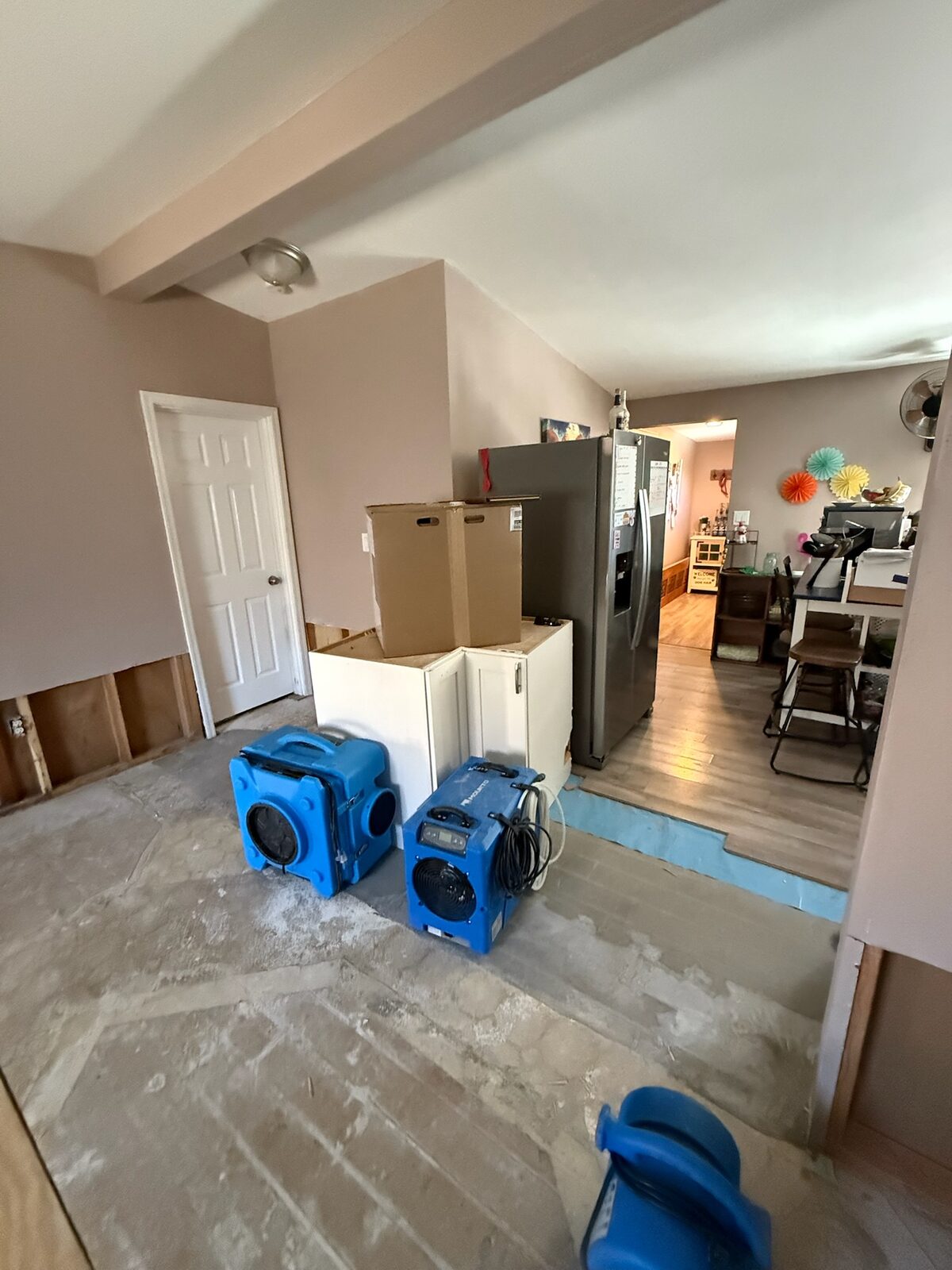
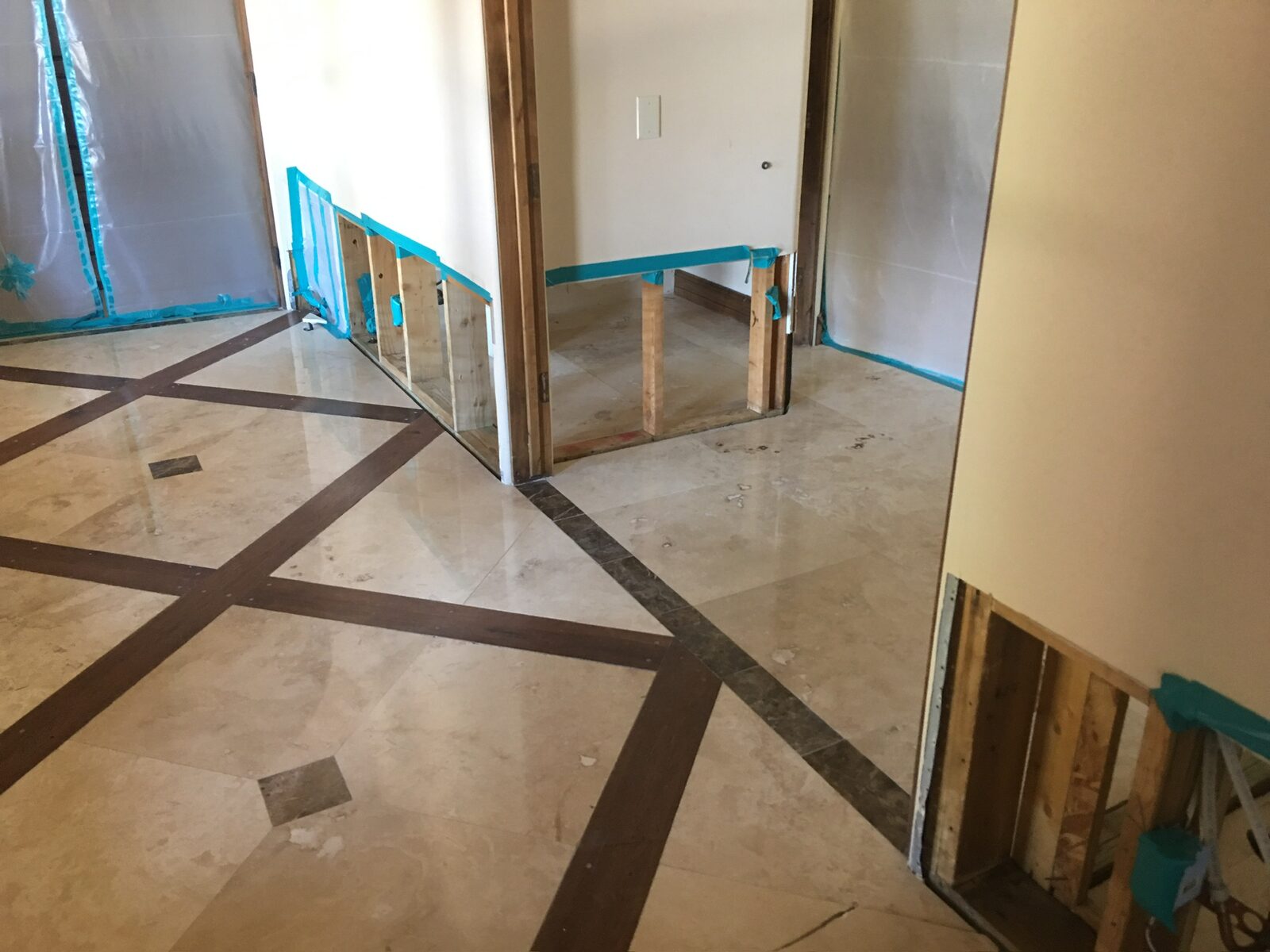
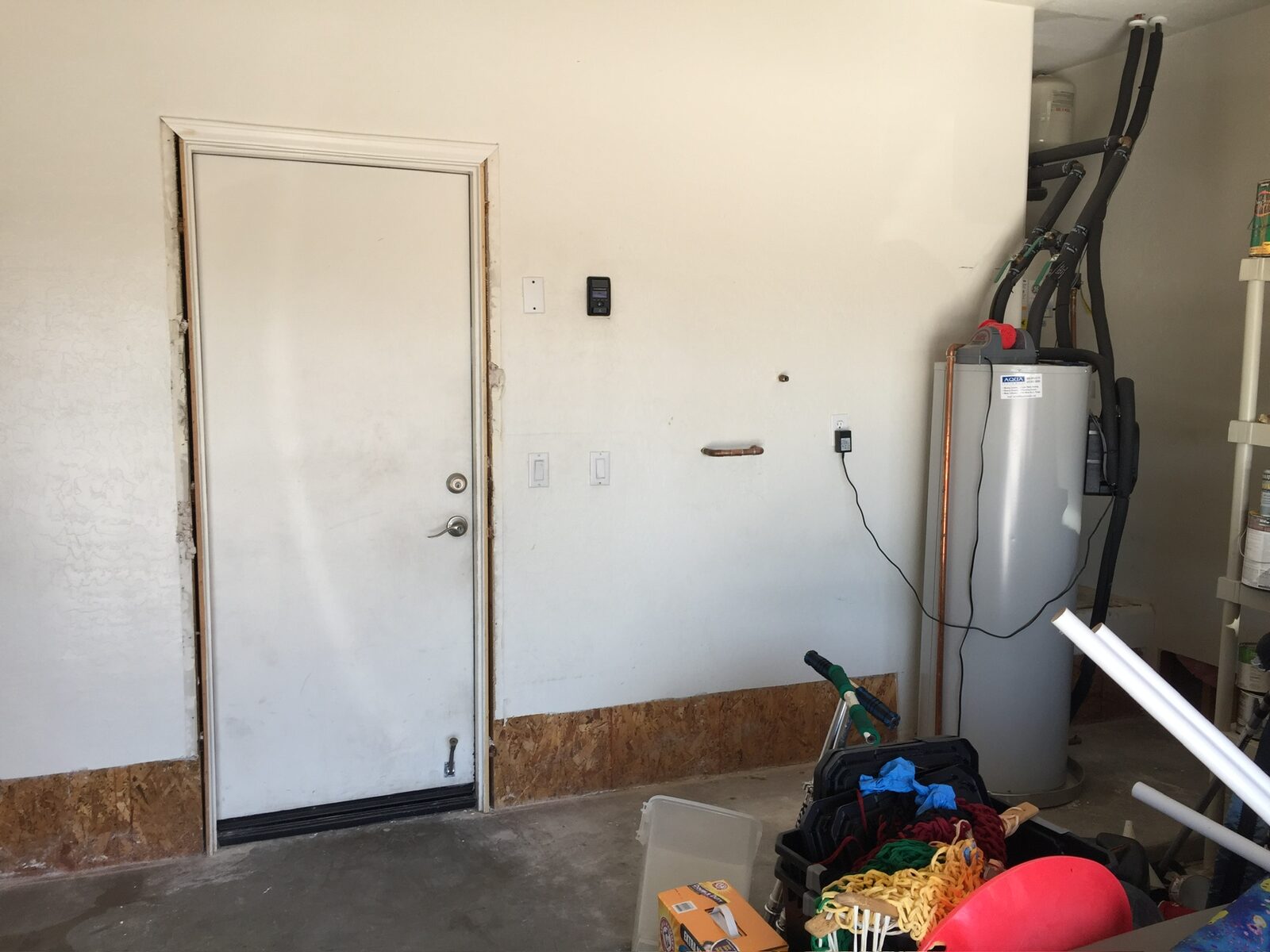
Residential reconstruction work by members of our team. See the full gallery →
More from Gold Water Fire
Abrasive Cleaning Methods for Soot on Framing and Masonry
A look at how abrasive cleaning methods remove soot from wood framing and masonry after a fire, and when each method fits the material.
AC Condensate Line Clogs & the Water Damage They Cause in Phoenix Homes
Why Phoenix AC condensate lines clog every summer, what the water damage looks like, and how to find the source before the ceiling stain spreads again.
Actual Cash Value vs Replacement Cost: Why Your Check Might Not Match the Repair Bill
Confused why your insurance check seems short after fire or water damage? Learn the difference between actual cash value and replacement cost coverage.
Notice soft flooring or staining near the door?
If water has been finding its way in for a while, it may have already reached the subfloor or framing. Reach out to Gold Water Fire at (480) 999-3339 or Help@goldwaterfire.com and we'll help you understand what's actually going on.
Call (480) 999-3339Water Damage Restoration · Reconstruction & Rebuild · Contact Gold Water Fire