
What a Burst Pipe Does to a House Over Days When Nobody Is Home
You opened the door expecting the house you left. Instead there is water where water should not be, a smell that was not there before, and a floor that feels soft under your shoes. Nobody was here to catch it, and the first thing most people feel is not panic, it is a kind of stalled disbelief while their brain tries to work out how long it has been running. That feeling is normal. A pipe that fails inside a wall or under a sink does not announce itself, and there is no version of leaving town that would have made you psychic.
What a Burst Pipe Does to a House Over Days When Nobody Is Home
How the damage builds, day by day
Water damage is not one event. It is a sequence, and each stage changes what the repair looks like. A supply line under pressure can push out several gallons a minute, so the volume question is settled fast. What changes over days is where the water went and what it did once it got there. Here is the general progression restoration crews see in a house left empty.
Hours 1 to 24
Water spreads outward along the flattest path and wicks upward into drywall, baseboards, and the paper backing of cabinets. Laminate and engineered wood swell at the seams. Carpet pad soaks and holds many times its own weight. Water is still considered clean at this stage if it came from a supply line, which matters, because clean water is the easiest category to recover from.
Days 1 to 3
Absorbed water starts migrating up wall cavities and under wall plates into adjoining rooms, often rooms that look completely dry from the doorway. Particleboard cabinet bases and furniture legs begin to delaminate. Humidity in a closed house climbs and stays high, so materials nowhere near the leak start absorbing moisture out of the air. Mold growth generally begins in this window on damp organic surfaces.
Days 3 to 7
Odor becomes noticeable. Drywall that took on water may look dry on the surface while the cavity behind it is still saturated. Hardwood cups and then crowns. Baseboards and door casings swell and separate from the wall. Standing water that sat still long enough is no longer treated as clean water, because it has picked up whatever it ran across.
Week two and beyond
Structural framing and subfloor stay wet with no airflow to release the moisture. Sheet vinyl traps water underneath it. Drywall softens enough to sag or crumble. This is usually where a mitigation job turns into a job that also needs rebuild work, because materials have moved past drying and into replacement.
What to do in the first few minutes
None of this has to be handled all at once. There is a short list of things worth doing before anything else, and then the rest can wait until you have someone helping you think it through.
Shut the water off
Find the main shutoff, usually at the street side of the house near the hose bib or in a box near the sidewalk in Arizona homes. Turn it clockwise until it stops. If the leak is at a fixture, the local angle stop under the sink or behind the toilet may be enough.
Be careful with electricity
If water is near outlets, a panel, or standing anywhere you would have to walk through to reach a breaker, do not wade in. Kill power at the panel only if you can reach it dry, otherwise leave it and call an electrician or your utility.
Photograph before you move anything
Wide shots of each room, then close shots of the source, the water line on the wall, and any damaged contents. Take video walking through. Insurance adjusters work from this, and once cleanup starts the evidence is gone.
Do not start tearing things out
Pulling baseboards or cutting drywall before it is documented and measured can complicate a claim. Moving small items up off wet floors is fine. Demolition can wait for someone who is tracking moisture readings.
The damage you cannot see from the hallway
The most common surprise in a delayed-discovery water loss is that the visible wet area is not the actual wet area. Water travels along framing, drops through penetrations for plumbing and electrical, and pools on top of a bottom wall plate where nothing on the surface hints at it. Restoration work uses moisture meters and thermal imaging for exactly this reason, to map the boundary of the affected area rather than guessing from stains. A few specifics worth knowing. Tile floors can look untouched while the mortar bed and subfloor underneath stay saturated for weeks. Insulation in an interior wall holds water and stops drying almost completely. A second-story leak will follow the ceiling joists sideways before it finds a light fixture or seam to drip through, which is why the ceiling stain is often several feet from the actual break. And in a house that was closed up in Phoenix summer heat, high indoor humidity works against you even in rooms the water never reached. Drying is measured, not eyeballed. The standard approach is to establish a dry standard from an unaffected part of the house and then bring the wet materials back to that reading with air movers and dehumidifiers, checking daily. If you want the full sequence, our page on water damage restoration walks through mitigation and drying, and reconstruction and rebuild covers what happens when materials have to be replaced rather than dried.
Insurance, and the words that matter
Most homeowners policies cover sudden and accidental discharge of water from a plumbing system. What gets argued about in a delayed-discovery loss is usually not the burst itself but the duration, so keep anything that establishes when you left and when you returned: travel receipts, boarding passes, a neighbor who can say when they last saw the house dry, a water bill showing the spike. Call your carrier and open a claim before cleanup, if you can. Ask for the claim number, the adjuster's name, and whether your policy has a separate deductible for water loss. You are allowed to choose your own contractor in Arizona, and you are allowed to ask for the moisture documentation that supports the scope of work. A restoration contractor should be able to hand you daily readings, a room-by-room scope, and photos, all of which go to the adjuster. If you would rather just have someone look at it and tell you what you are dealing with, that is a fine place to start. You can reach out here or call (480) 999-3339, and you can read about who you would be talking to on our about page.
Questions people ask us
How long does it take for mold to start after a burst pipe?
As a general rule in the restoration industry, mold growth can begin on damp organic materials like drywall paper, wood, and carpet backing within a couple of days of them staying wet. Whether it actually does depends on temperature, airflow, and how saturated the material got. A house closed up with no ventilation is close to ideal conditions for it, which is why a leak found on return from a trip is treated differently than one caught the same hour.
The floor looks dry now. Is the damage over?
Not necessarily. Surfaces dry long before the material behind and beneath them does. Drywall can feel dry to the hand while the bottom of the wall cavity is still holding water, and tile can be completely dry on top with a saturated subfloor under it. The only way to know is a moisture meter reading compared against a dry area of the same material elsewhere in the house.
Should I rip out the wet carpet and drywall myself before anyone comes?
It is usually better to wait. Photograph everything first, and let whoever is documenting the loss see it in place, because the extent of the demolition is part of what supports the claim. Moving furniture and personal items off wet floors is helpful and safe to do right away. Cutting into walls or pulling flooring before it is measured can make the scope harder to justify later.
What can I do to lower the risk next time I travel?
Shut off the main water supply if the house will be empty for more than a few days, and drain the lines by opening a low faucet. Replace braided supply lines at toilets, sinks, and the washing machine if they are old or corroded at the crimp. Check the water heater for rust at the base. A leak sensor near the heater, under sinks, and behind the washer is inexpensive and will catch most of the common failure points.
The standard our team works to
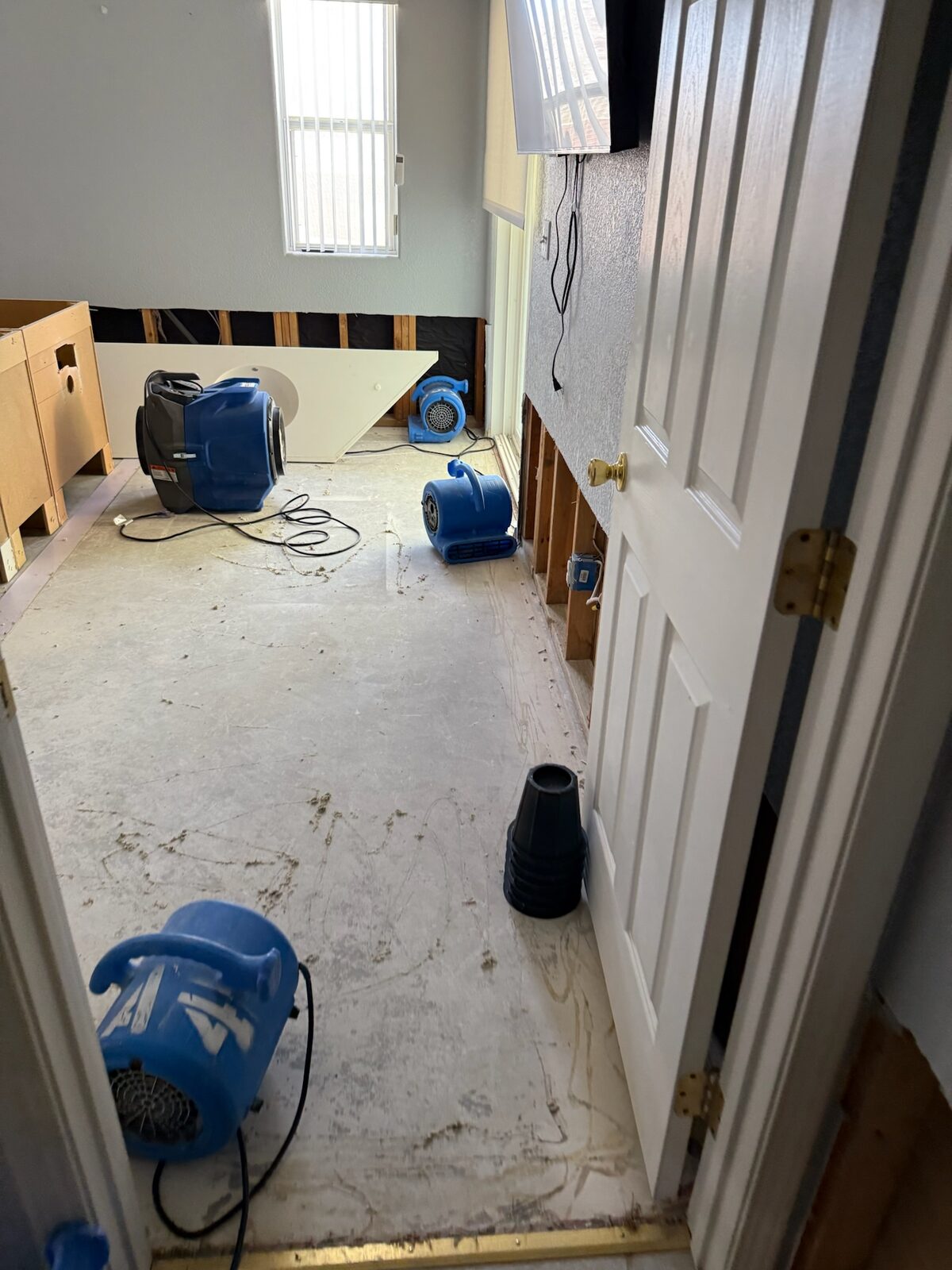
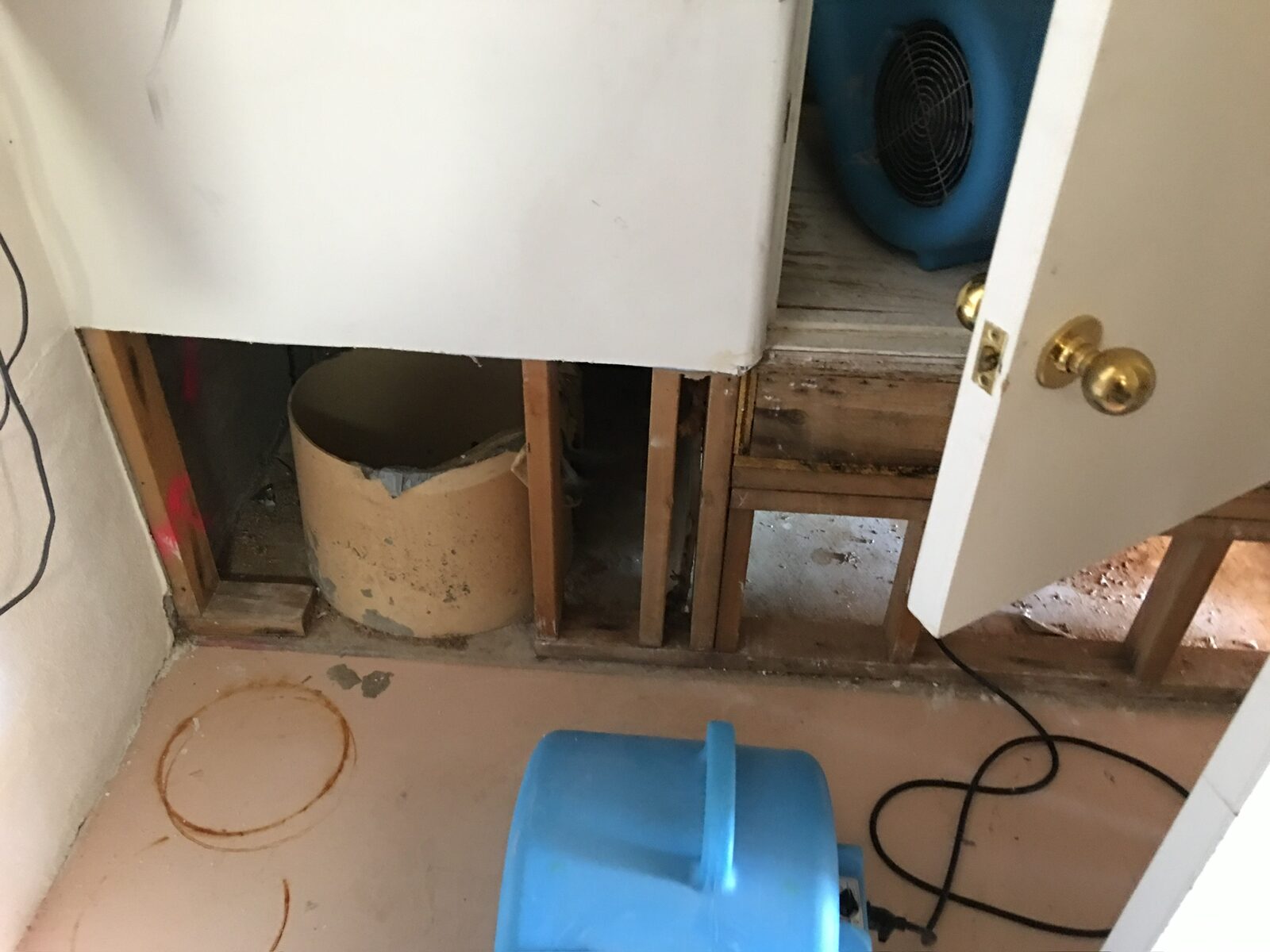
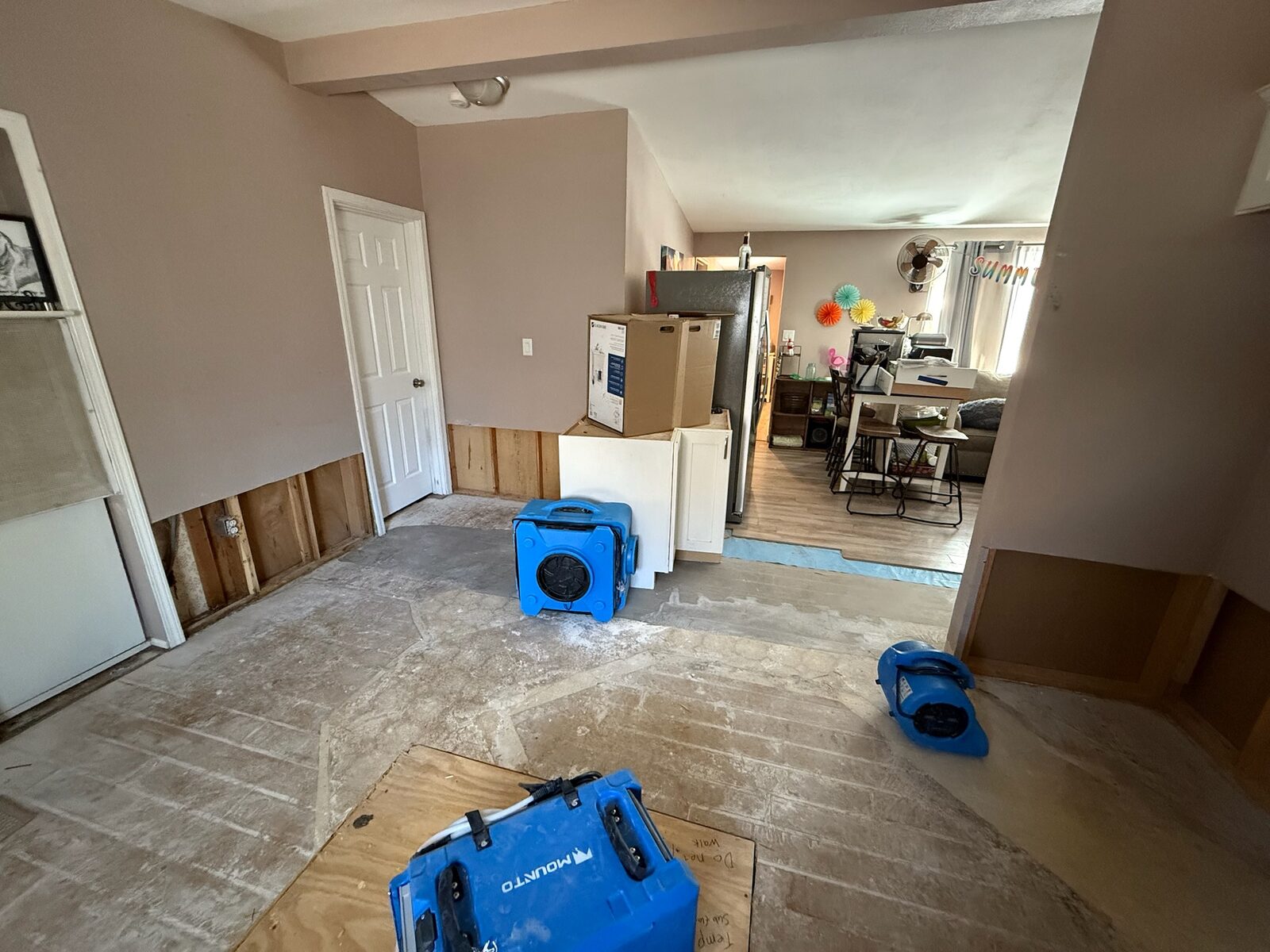
Residential reconstruction work by members of our team. See the full gallery →
More from Gold Water Fire
Abrasive Cleaning Methods for Soot on Framing and Masonry
A look at how abrasive cleaning methods remove soot from wood framing and masonry after a fire, and when each method fits the material.
AC Condensate Line Clogs & the Water Damage They Cause in Phoenix Homes
Why Phoenix AC condensate lines clog every summer, what the water damage looks like, and how to find the source before the ceiling stain spreads again.
Actual Cash Value vs Replacement Cost: Why Your Check Might Not Match the Repair Bill
Confused why your insurance check seems short after fire or water damage? Learn the difference between actual cash value and replacement cost coverage.
Not sure how bad it is? That is a fine reason to call.
If you just walked into a wet house and you are not ready to make decisions yet, you do not have to. Call Gold Water Fire at (480) 999-3339 or email Help@goldwaterfire.com and we can talk through what you are seeing. We work across the Phoenix metro, from Peoria and Avondale out to San Tan Valley, Apache Junction, and past that. AZ ROC #264344 KB-2.
Call (480) 999-3339Water Damage Restoration · Reconstruction & Rebuild · Contact Gold Water Fire · About Our Team