
Foundation Cracks, Water Seepage & Telling a Structural Problem From a Moisture One
You have probably been looking at the same spot for months. A hairline in the slab near the hallway, or a dark patch of baseboard that dries out and then comes back, or a door that used to close cleanly and now needs a shoulder. Nothing about it is an emergency, which is exactly what makes it hard to think about. You mop it, you caulk it, you tell yourself it is the monsoon, and then it returns and you are back where you started without ever learning what it is. That not-knowing has a weight to it. It is one thing to have a problem you can name and price out. It is another to have a house that keeps telling you something in a language you have not learned yet, and to carry a quiet suspicion that the small thing you keep patching is the visible end of something larger you cannot see.
Foundation Cracks, Water Seepage & Telling a Structural Problem From a Moisture One
Not every crack means the same thing
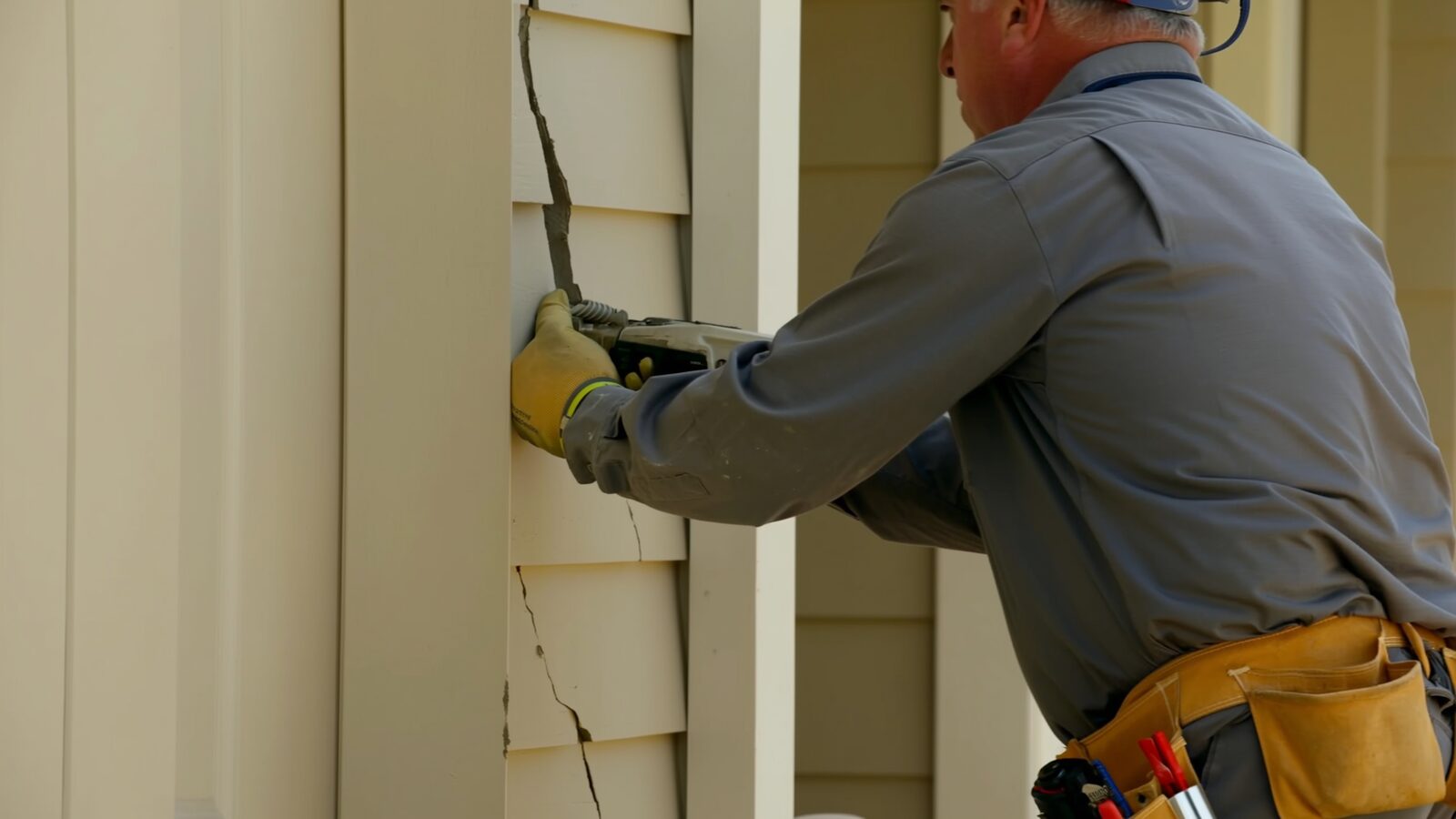
Concrete cracks. That is not a defect, it is chemistry. As a slab cures it shrinks, and shrinkage has to go somewhere. Those cracks are usually thin, wandering, and roughly the same width along their whole length. They tend to show up in the first year or two and then stop changing. A crack that has been the same size since you moved in is behaving like a shrinkage crack. What is worth paying closer attention to is a crack that changes. Width that varies along its run, wider at one end and tapering to nothing at the other, suggests one side of the slab is sitting lower than the other. A vertical lip you can catch a fingernail on means the two sides have moved out of plane, not just apart. Stair-step cracking through block or brick mortar joints, cracks radiating diagonally from the upper corners of doors and windows, doors and windows that stick on one side of the house and not the other, and gaps opening between baseboard and floor in one room are all signs of movement rather than curing. A simple thing you can do today: date the crack. Draw a light pencil line across it, mark the date, and measure the width with a business card edge or a crack gauge. In three months you either have a crack that moved or one that did not, and that single fact separates most of the guessing.
Seepage is a direction problem before it is a foundation problem
Water shows up at the slab edge for a small number of reasons, and most of them have nothing to do with the foundation being broken. Surface water is the most common. Grade that slopes toward the house instead of away, a downspout dumping next to the stem wall, an irrigation line or drip emitter running along the foundation, a patio or walkway that has settled and now tips back toward the slab. In the Phoenix metro this shows up hardest during monsoon storms, when several inches fall faster than caliche soil can absorb it and the water simply goes wherever the ground points it. Plumbing under the slab is the second reason, and it looks different. A supply line leak is steady and indifferent to weather. Signs include a warm spot on the floor if it is the hot side, a water meter that keeps creeping with every fixture off, an unexplained jump in the bill, and damp that stays damp through a dry stretch. If it only appears after rain, it is very likely surface water. If it never stops, look at your plumbing. The third is vapor rather than liquid. Concrete wicks ground moisture upward. Under vinyl plank, sealed tile, or an area rug, that vapor has nowhere to go and you get cupped edges, adhesive failure, or a musty smell with no visible puddle. Tape a two-foot square of clear plastic tightly to the bare slab, leave it a day or two, and see whether moisture beads under it. If it does, the water is coming up through the concrete, not in from the side.
Points to surface water
Appears only during or right after rain, worst near a downspout or low spot, dries out within days, follows one exterior wall.
Points to a plumbing leak
Constant regardless of weather, meter moves with everything shut off, warm floor spot, damp in the middle of a room rather than at the edge.
Points to vapor through the slab
No standing water, but cupped flooring, lifting adhesive, chalky white efflorescence on bare concrete, musty odor in a closed room.
Points to actual movement
Crack width changes over months, vertical offset between sides, diagonal cracks over doorways, doors out of square in one part of the house.
Arizona soil and the cycle you are stuck in
Part of why this feels unsolvable is that the cause and the symptom are often separated by months. Much of the Valley sits on soils that change volume with moisture. Clay-rich soil swells when it gets wet and shrinks back when it dries, and caliche layers shed water sideways instead of letting it drain down. A slab resting on that is being lifted and set down again, unevenly, across a year of dry heat and short violent storms. So the sequence often runs like this: a leak or a badly aimed downspout keeps one area of soil wet for a long stretch. That soil expands and pushes up on part of the slab. The slab cracks along the stress line. The crack becomes the easiest path for the next round of water, so seepage appears at exactly the place the movement happened. Now you have a structural symptom and a moisture symptom in the same six inches of floor, and it is genuinely hard to tell which one started it. That is the honest answer to the question you have been circling: sometimes it is both, and the order matters more than the label. Chasing the crack while the water source is still running usually means doing the work twice. Getting the water controlled first, then watching whether the movement stops, is how most of these get untangled.
Sorting it out in a sensible order
There is a sequence that saves people the most money and frustration. First, stop the obvious water. Extend downspouts well past the foundation, move drip emitters and sprinkler heads away from the stem wall, and re-slope soil so the first several feet run downhill away from the house. This is cheap and it resolves more seepage than people expect. Second, rule out plumbing. Shut off every fixture and watch the water meter for fifteen minutes. If it moves, you have a leak somewhere and that needs to be located before anything else is decided. Third, document. Photograph each crack with a tape measure or coin in frame, note the date, and check again after the next real storm and again in a few months. A crack with a history is a crack a professional can actually interpret. Fourth, know who handles what. Foundation movement itself, meaning underpinning, piering, or slab leveling, is the work of a structural engineer and a foundation contractor. What comes after the water, drying out saturated framing and subfloor, removing wet drywall and insulation before mold takes hold, and rebuilding the flooring, baseboard, and walls that came apart, is restoration and reconstruction work. Gold Water Fire handles that side: water damage restoration for the drying and removal, and reconstruction and rebuild for putting the finished space back. If you want to talk through what you are seeing before deciding anything, reach out or call (480) 999-3339.
Questions people ask us
Is a hairline crack in my slab something to worry about?
On its own, usually not. Thin cracks of even width that have not changed since the house was built are typically shrinkage from the concrete curing. What matters is whether it changes. Mark it with a pencil line, note the date and width, and check again in a few months. A crack that widens, develops a vertical lip between the two sides, or starts letting water through is telling you something different from one that just sits there.
How do I tell if the water under my floor is a slab leak or rainwater getting in?
Timing is the clearest test. Rainwater seepage appears during or just after a storm and dries out afterward. A slab leak does not care about the weather and stays damp through dry stretches. Turn off every fixture in the house and watch the water meter for fifteen minutes. If it is still moving, water is going somewhere it should not. A warm patch on the floor points at the hot water line specifically.
Why does the same spot keep getting wet no matter how many times I seal it?
Sealant treats the opening, not the source. If the ground beside that wall is holding water, from grading, a downspout, irrigation, or a buried leak, the water will keep finding a path and will simply come in beside the patch. Fixing the direction water travels outside the house resolves far more of these than sealing the crack does.
Does Gold Water Fire fix foundations?
Foundation repair itself, meaning piering, underpinning, or slab leveling, belongs to a structural engineer and a foundation contractor. Gold Water Fire works on what the water did: drying out wet framing and subfloor, removing saturated drywall, insulation and flooring, and rebuilding the affected space afterward. Gold Water Fire is licensed in Arizona under AZ ROC #264344 KB-2 and serves the Phoenix metro area.
The standard our team works to
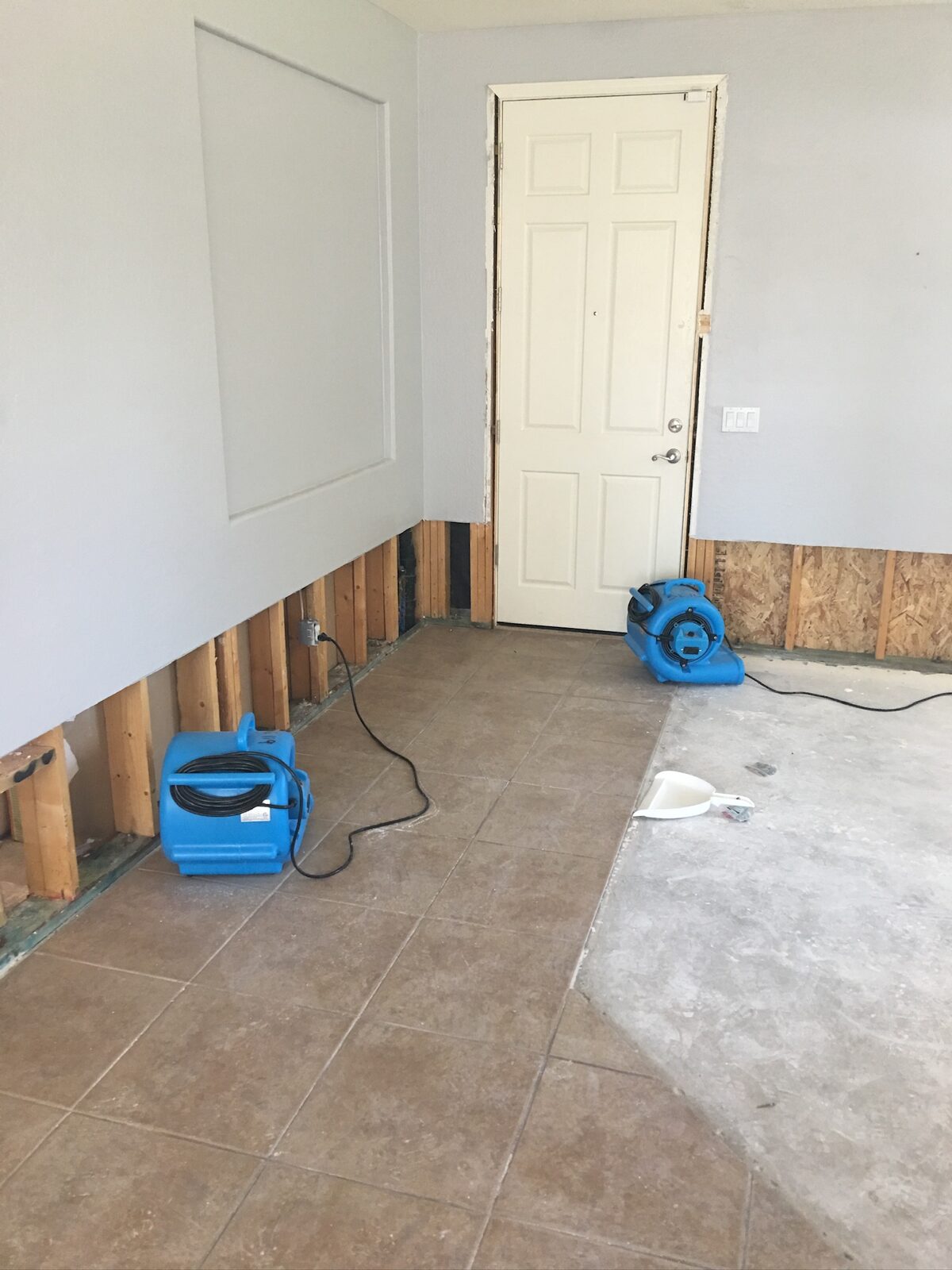
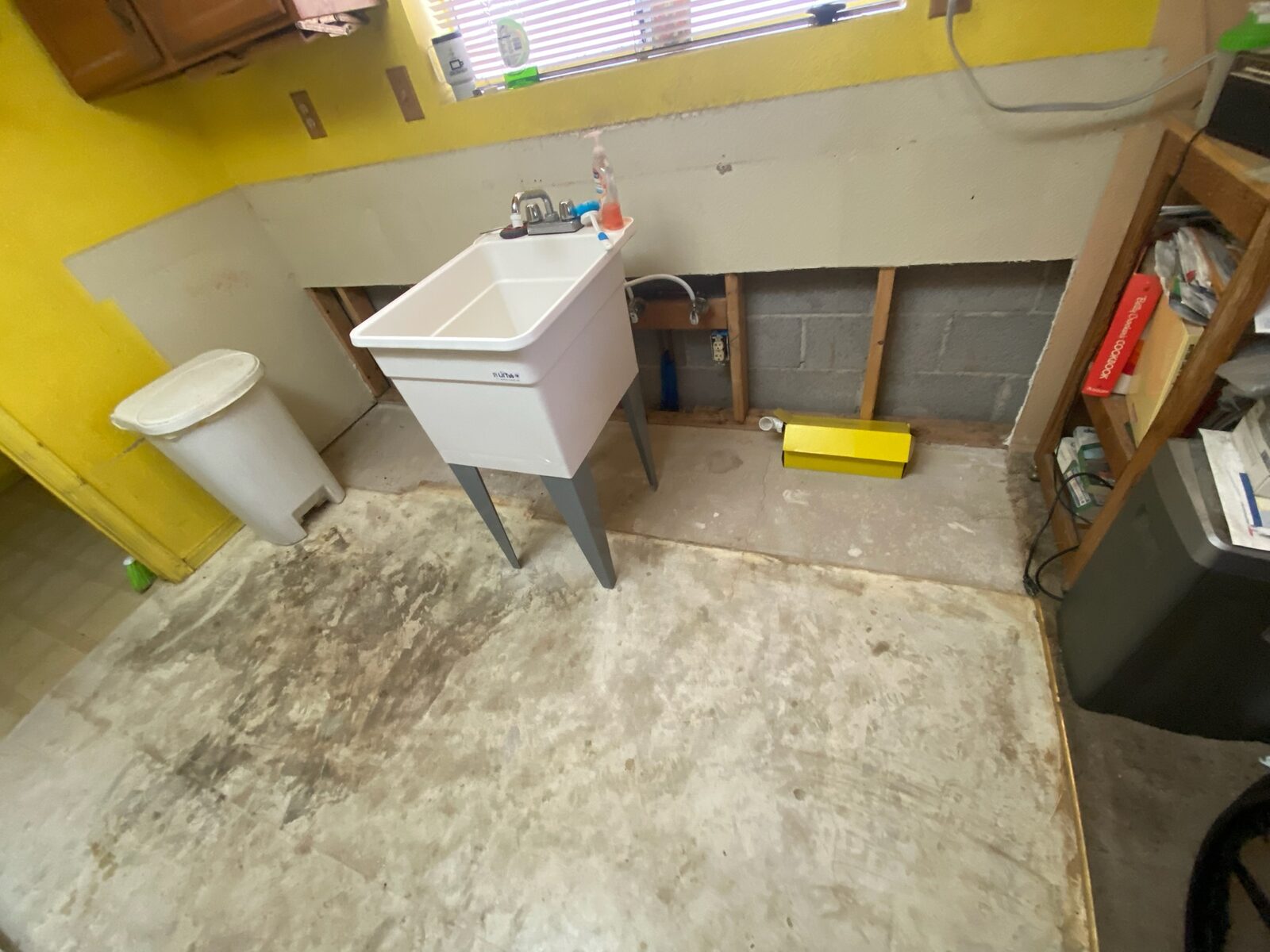
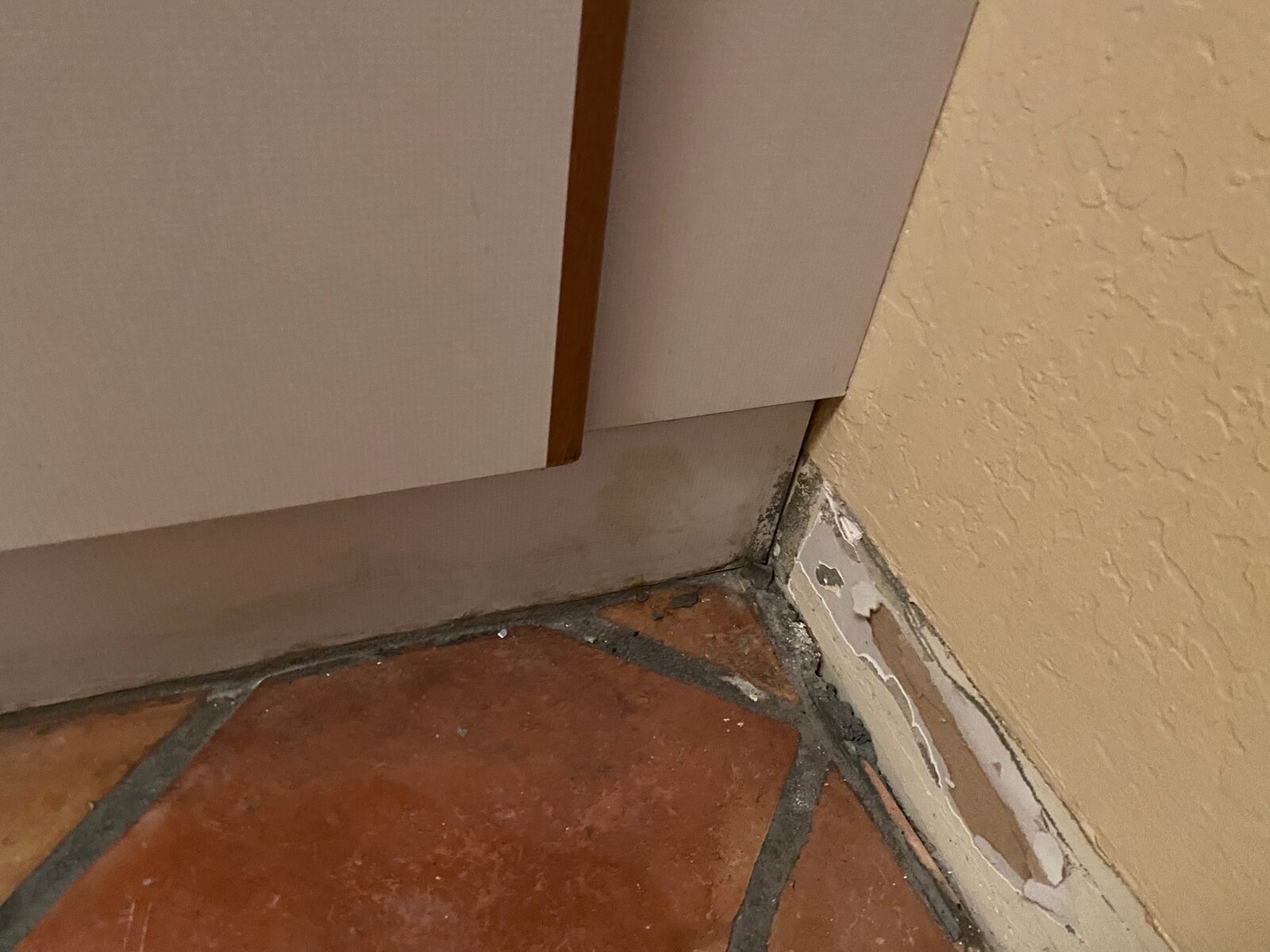
Residential reconstruction work by members of our team. See the full gallery →
More from Gold Water Fire
Abrasive Cleaning Methods for Soot on Framing and Masonry
A look at how abrasive cleaning methods remove soot from wood framing and masonry after a fire, and when each method fits the material.
AC Condensate Line Clogs & the Water Damage They Cause in Phoenix Homes
Why Phoenix AC condensate lines clog every summer, what the water damage looks like, and how to find the source before the ceiling stain spreads again.
Actual Cash Value vs Replacement Cost: Why Your Check Might Not Match the Repair Bill
Confused why your insurance check seems short after fire or water damage? Learn the difference between actual cash value and replacement cost coverage.
Still not sure what you are looking at?
If water has already gotten into flooring, walls, or framing and you want someone to look at the damage side of it, call Gold Water Fire at (480) 999-3339 or email Help@goldwaterfire.com. We work across the Phoenix metro area, from Peoria and Avondale out to Queen Creek, San Tan Valley and Apache Junction.
Call (480) 999-3339Water Damage Restoration · Reconstruction & Rebuild · About Gold Water Fire · Contact Us