
What an Upstairs Laundry Room Means for Leak Risk and What to Check
If your laundry room is on the second floor, you've probably had a moment of unease standing in the room below it, wondering what's happening on the other side of that ceiling. Maybe you noticed a faint stain, a slightly soft spot in the drywall, or a musty smell that comes and goes. It's not paranoia. An upstairs laundry room puts washing machine hoses, drain lines, and a steady flow of water directly above living space, and when something goes wrong up there, gravity does the rest before you ever see it happen.
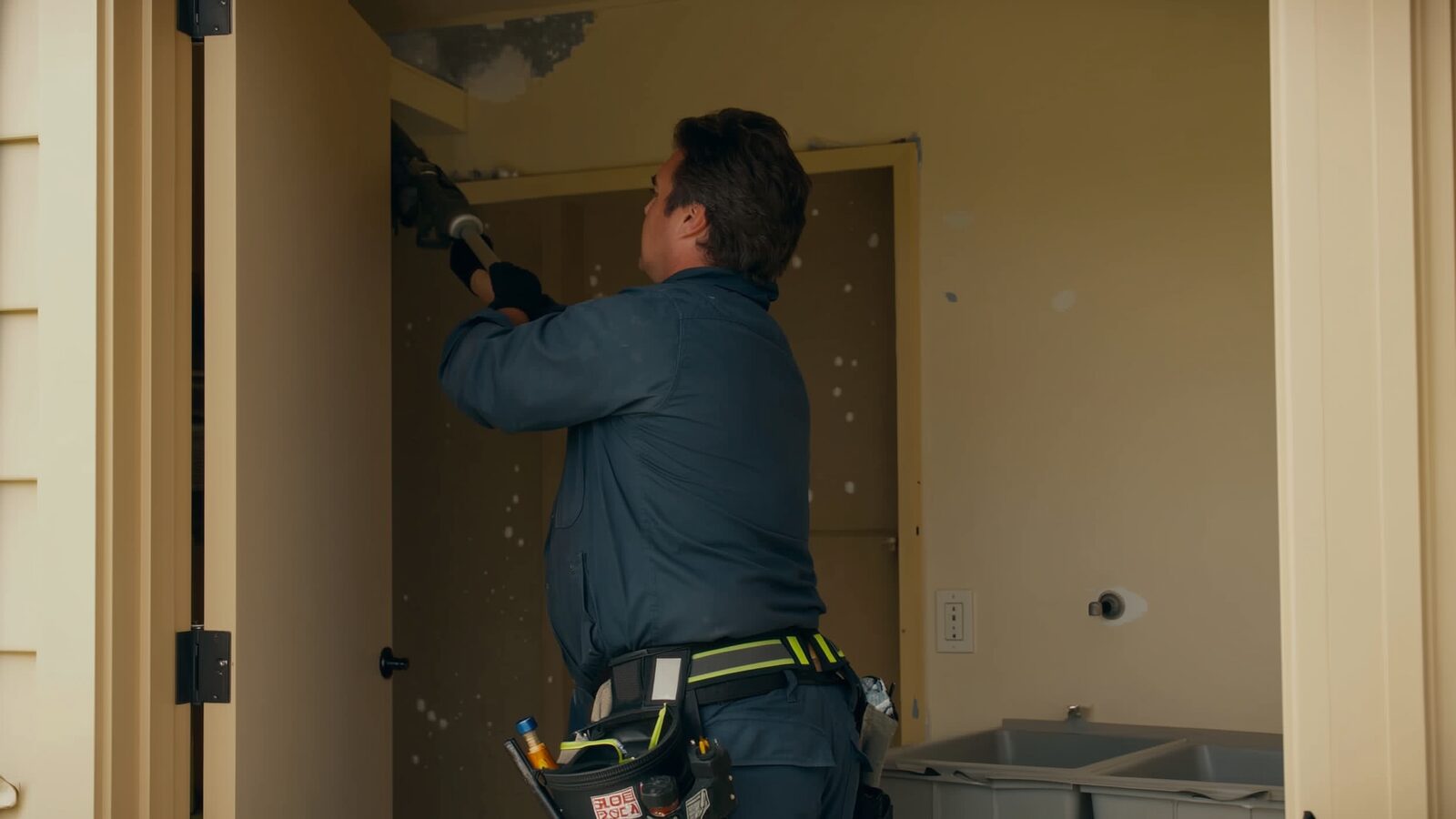
What an Upstairs Laundry Room Means for Leak Risk and What to Check
Why upstairs laundry rooms carry more risk
A ground-floor laundry room that leaks usually spreads across a slab or subfloor where it's easier to spot and dries out on its own soil or foundation. An upstairs laundry room sits on a floor assembly with joists, subfloor, insulation, and a finished ceiling below it. Water from a supply line or drain doesn't just pool, it finds gaps, follows joists, and travels along the path of least resistance until it shows up somewhere far from the original source. By the time a stain appears on a downstairs ceiling, water may have been moving through insulation and framing for days or weeks.
The most common leak sources in an upstairs laundry setup
Most leaks trace back to a handful of predictable points, which is good news because it means you know exactly where to look.
Supply hoses
The rubber or braided steel hoses connecting the wall valves to the washing machine are under constant water pressure, even when the machine is off. Rubber hoses degrade over time and can crack or bulge. Braided hoses last longer but the fittings can still loosen or corrode.
Drain line and standpipe
The drain hose empties into a standpipe that carries wastewater to the sewer line. If the hose isn't seated properly, or if the standpipe backs up during a cycle, water can overflow the drain box or floor drain and go unnoticed until it soaks through.
Water supply valve box
Many upstairs laundry installations use a recessed valve box in the wall. These boxes can leak at the connection points behind the wall, which means the leak stays hidden inside the wall cavity rather than showing on the floor.
Pan and drain pan plumbing
A drain pan under the washer is meant to catch overflow and route it to a drain line. If that drain line is clogged, disconnected, or was never properly plumbed, the pan fills and overflows exactly like the leak it was installed to prevent.
What to check right now
A few minutes of inspection can catch a problem before it becomes a ceiling repair. Start with the washing machine itself and work outward.
Inspect the hoses
Pull the washer away from the wall if you can, and look at both supply hoses along their full length for bulging, cracking, or discoloration. Check that fittings are snug at both the wall valve and the machine.
Check the drain pan
If there's a pan under the machine, look inside it for standing water, mineral deposits, or debris. A dry pan with a clear drain line is doing its job. A pan with residue has likely overflowed before.
Look at the wall and floor around the unit
Discoloration on the wall behind the washer, soft or warped flooring, or a musty smell near the laundry room are all signs that moisture has already made contact with building materials.
Check the ceiling directly below
Go to the room underneath the laundry room and look at the ceiling for staining, sagging, or bubbling paint. Because water travels along joists before it drips through, a stain may appear several feet away from where the laundry room sits directly overhead.
Why small leaks upstairs cause outsized damage
Water damage from an upstairs source rarely stays where it starts. It moves along joists and subfloor, gets absorbed by insulation, and can sit inside a wall or ceiling cavity for a long time before it becomes visible. This matters because the visible sign, a stain or soft spot, usually understates how much material has actually gotten wet. Drywall, insulation, and wood framing that stay damp for an extended period are also more likely to develop mold, which changes what a repair needs to address. Understanding how water damage restoration works can help you see why a fast, thorough response matters more than it might seem to at first glance.
Questions people ask us
How can I tell if my upstairs laundry room has a slow leak versus a one-time spill?
A one-time spill, like an overflow from an unbalanced load, usually shows up once and dries without recurring. A slow leak tends to produce recurring stains, a musty smell that keeps coming back, or flooring that stays slightly soft even after it seems to dry. If the same spot keeps reappearing, that points to an ongoing source rather than a single incident.
Does a drain pan under the washing machine guarantee I'm protected from leaks?
No. A drain pan only helps if it's properly plumbed to a working drain line. If that line is clogged, disconnected, or was never connected to a drain in the first place, the pan will simply fill up and overflow like any other container, sometimes without you noticing until it's already happened.
How often should I replace washing machine supply hoses?
There's no single universal timeline since it depends on the hose material and water pressure in your home, but rubber hoses degrade faster than braided steel ones and should be inspected regularly for cracking, bulging, or brittleness. Many manufacturers recommend replacing hoses proactively rather than waiting for visible failure, since the damage from a burst hose can be extensive.
What should I do if I find a wet ceiling below my laundry room?
Shut off the water supply to the washing machine right away to stop the source, then look for the extent of the staining and check whether the ceiling feels soft or is sagging, which can indicate a larger volume of water than the stain alone suggests. From there, a professional assessment can determine how far the water has traveled and what needs to dry out or be repaired.
The standard our team works to
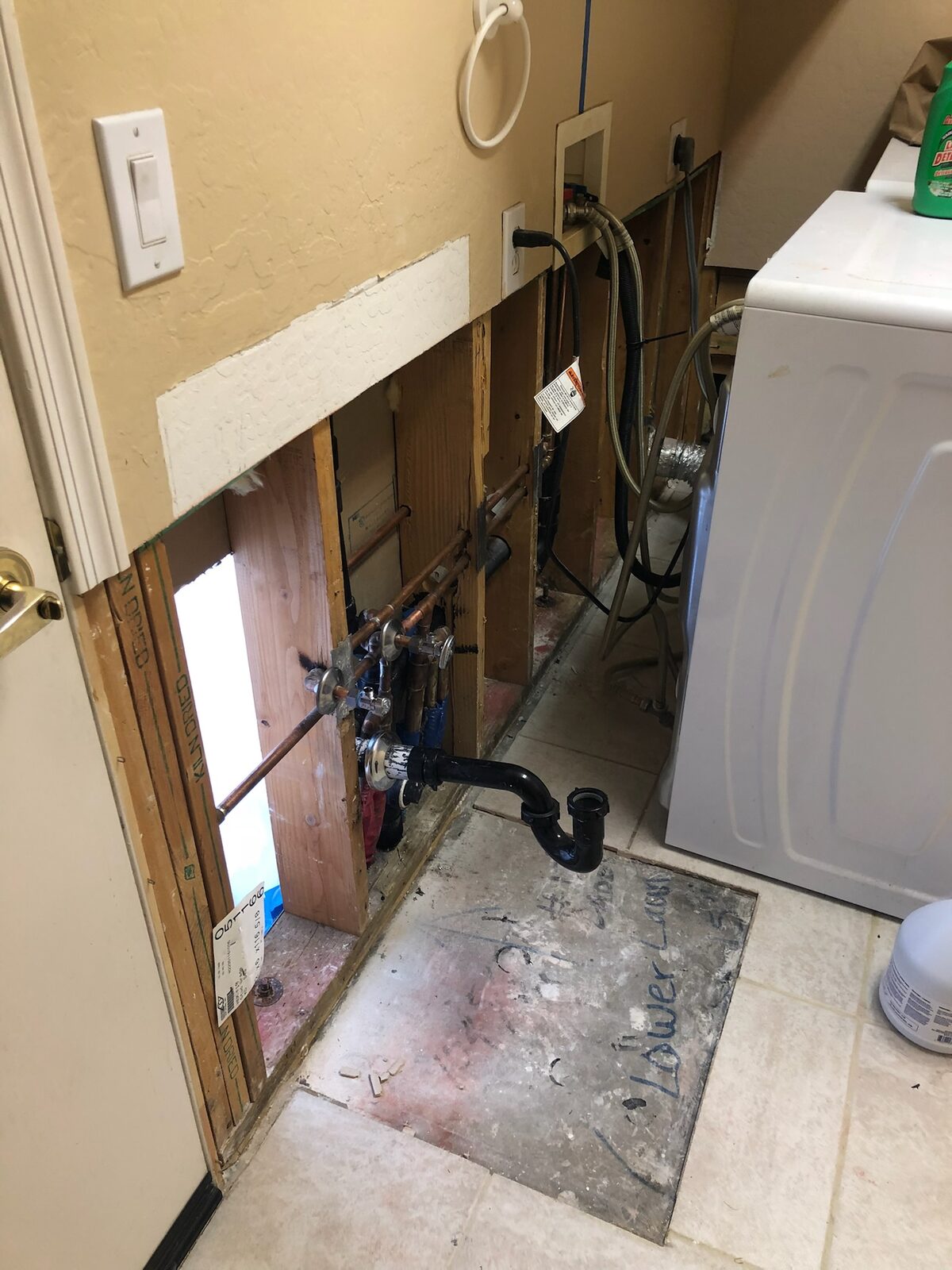
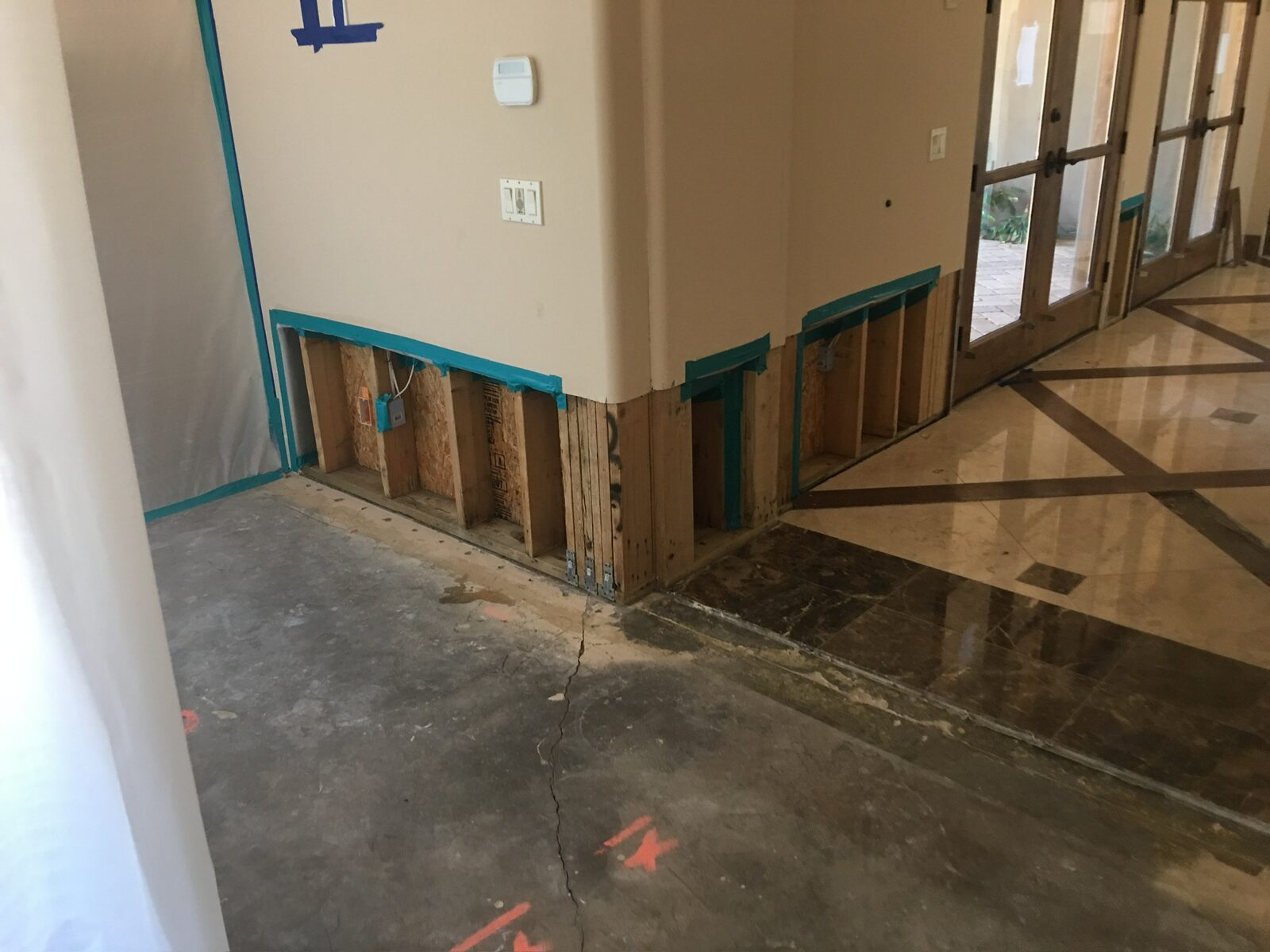
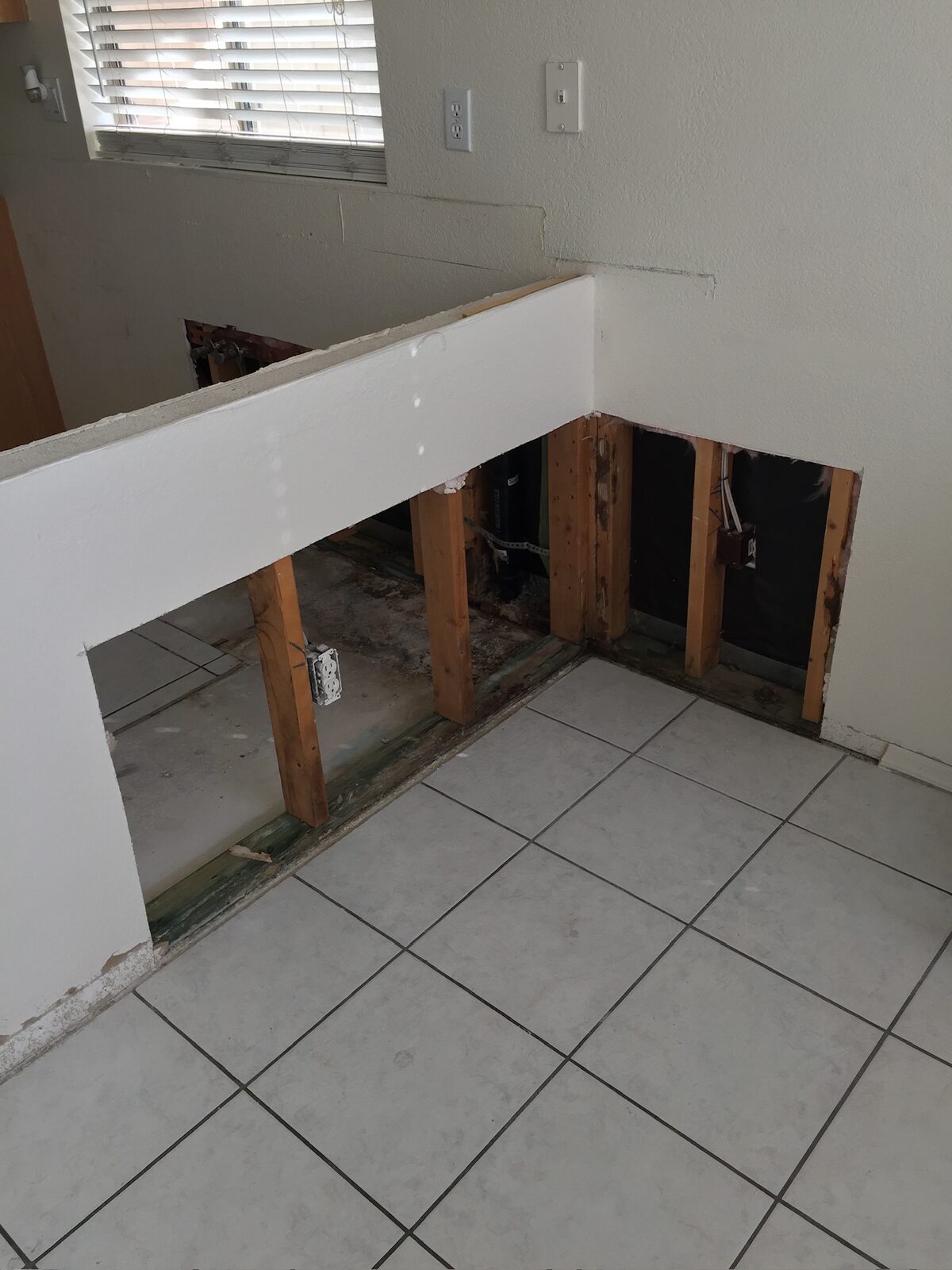
Residential reconstruction work by members of our team. See the full gallery →
More from Gold Water Fire
Abrasive Cleaning Methods for Soot on Framing and Masonry
A look at how abrasive cleaning methods remove soot from wood framing and masonry after a fire, and when each method fits the material.
AC Condensate Line Clogs & the Water Damage They Cause in Phoenix Homes
Why Phoenix AC condensate lines clog every summer, what the water damage looks like, and how to find the source before the ceiling stain spreads again.
Actual Cash Value vs Replacement Cost: Why Your Check Might Not Match the Repair Bill
Confused why your insurance check seems short after fire or water damage? Learn the difference between actual cash value and replacement cost coverage.
Not sure how far the water has traveled?
If you've found signs of a leak from an upstairs laundry room, Gold Water Fire can assess the damage and explain what it will take to dry it out and repair it properly. Reach out at (480) 999-3339 or Help@goldwaterfire.com.
Call (480) 999-3339Water Damage Restoration · Contact Gold Water Fire · About Gold Water Fire