
How Gutter & Site Drainage Failures Push Water Into a Home
It is the same corner every time. The baseboard in the back bedroom goes dark after a hard monsoon night, then dries out over a week, and by the time anyone gets around to looking at it, there is nothing left to see but a faint line and a spot of paint that never quite matched again. Nobody in the house has said the word "leak" out loud, because a leak is something you find, and this is something that comes and goes. So it gets explained away. Humidity. The dog. That one storm. Then it happens again the next season, and the explanation gets a little thinner, and you start to notice you are the only one still thinking about it. That is a real kind of tired, sitting with a problem you cannot name well enough to describe to anybody, let alone fix.
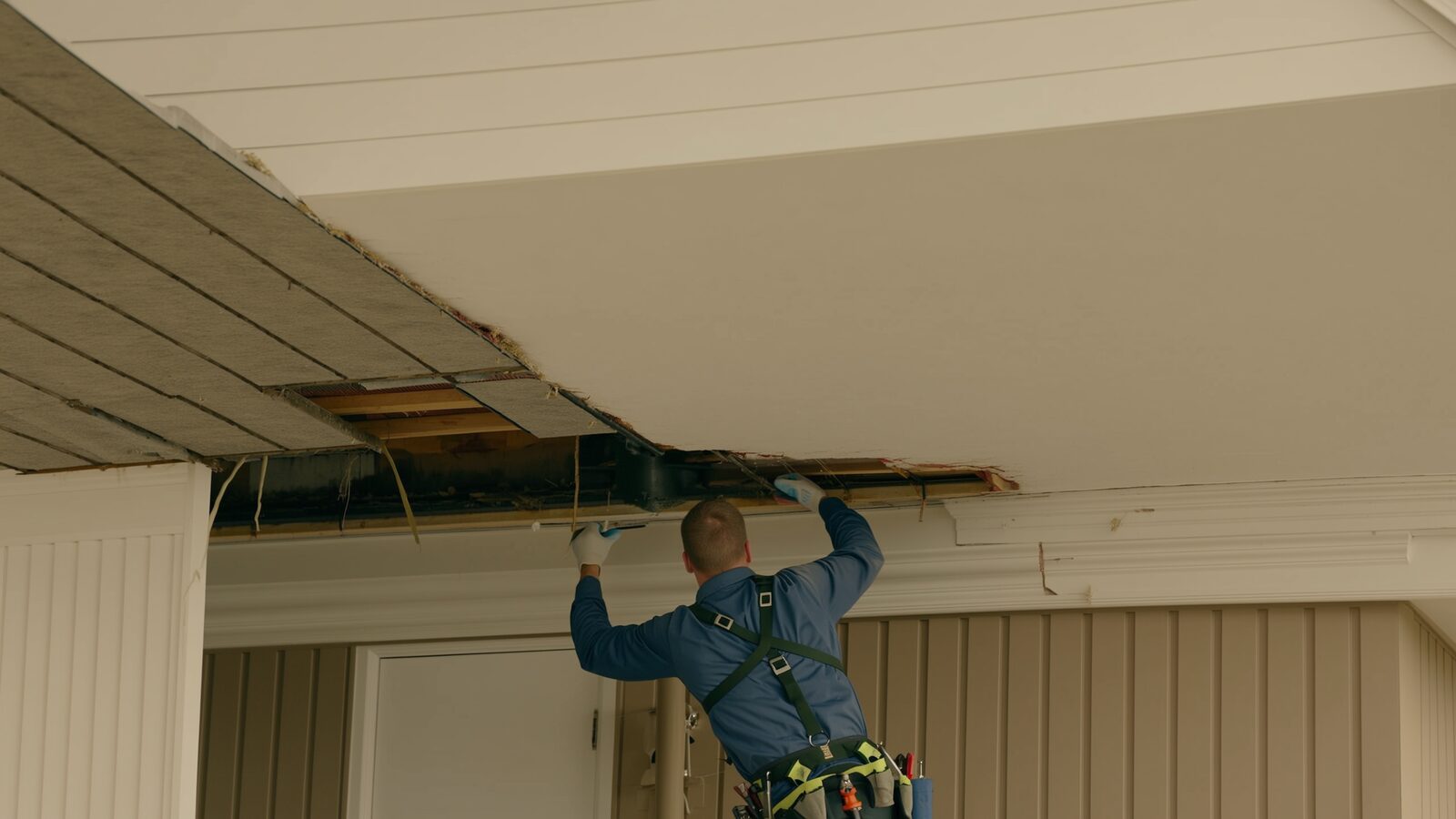
How Gutter & Site Drainage Failures Push Water Into a Home
Recurring water almost always has an outside cause
When water shows up in the same place after weather and nowhere else, the source is usually not inside the wall. Supply line leaks and drain leaks do not wait for a storm. They run whether it rains or not, and they tend to get worse, not better. Water that appears only after rain, or only after irrigation runs, or only in July and August, is being delivered from outside by something that moves it. In most homes, the things that move water are the roof, the gutters and scuppers, the surface of the ground within about ten feet of the foundation, and whatever hardscape sits in between. When one of those hands water off to the next one badly, it ends up against the house instead of away from it. This is why the problem feels unnameable. The failure point can be forty feet from the wet spot. A downspout dumping at the northeast corner can travel under a patio slab and surface in a hallway on the other side of the house. You are looking at the symptom and the cause is around the corner, outdoors, and only misbehaves for twenty minutes a year.
The specific ways drainage puts water inside a wall
Desert roofs and desert lots fail in particular ways. Low-slope roofs common in the Phoenix area drain through scuppers and canales rather than a continuous gutter, which concentrates the entire roof's runoff into a few narrow openings. Anything that restricts one of those openings backs water up onto the roof deck and over the parapet. Elsewhere, sloped-roof homes with gutters fail more conventionally: seams open, hangers pull, the fascia rots, and the whole system sheds water at the wall line instead of at the end of the downspout.
Downspouts that end at the foundation
A downspout with no extension drops the runoff from hundreds of square feet of roof into a two foot circle of soil right at the stem wall. That soil saturates, the water has nowhere to go but down and sideways, and it finds the cold joint where the slab meets the footing. Extensions that discharge four to six feet out, onto a hard surface that slopes away, change the whole picture.
Clogged scuppers and blocked roof drains
Palo verde litter, blown gravel, dust turned to mud, a bird nest. Ponded water on a flat roof is not dangerous by itself, but it stays in contact with the roof membrane and the parapet flashing for days, and any seam or crack that would shrug off a passing rain will eventually let water through under standing pressure.
Negative or flattened grading
Soil settles. Landscapers add rock and mulch year after year until the ground beside the house is higher than it was when built. Once the last few feet of soil tilt back toward the foundation, every irrigation cycle and every storm feeds the base of the wall. This is the single most common site-side cause and the least visible, because a two percent slope reversal looks like flat ground to the eye.
Hardscape that traps and redirects
Patio slabs, walkways and driveway aprons poured tight to the house often settle toward it. Courtyard walls and side yards between houses form channels with no outlet. Weep screed at the base of stucco is meant to sit above finished grade; when concrete or gravel buries it, the wall assembly loses its drainage path and wicks moisture upward instead.
Reading the evidence, inside and out
You do not need instruments to make real progress here. Go outside during the next rain, if you can stand it, and watch. Where does water leave the roof? Does it sheet down a wall? Does it pool anywhere within ten feet of the house? Where does the puddle sit an hour after the rain stops? A phone photo taken mid-storm is worth more than an hour of inspection on a dry day. On dry days, look for the residue. Vertical stains or a chalky white deposit on stucco below a scupper. Erosion channels cut through decorative rock. Rock or mulch washed into a fan shape across a walkway, which shows you the direction water actually travels. A dark, always-damp band along the bottom eight inches of exterior stucco. Rusting at the base of a garage door track. Soil pulled away from the foundation in a gap, which means water has been running down there long enough to carry the fines away. Inside, the tells are quieter. Baseboards that cup or separate from the wall at one end. Flooring that lifts at a seam near an exterior wall. Tile grout that stays a shade darker in one area. Drywall tape lifting near the floor rather than the ceiling. Musty smell in a closet that shares a wall with the outside. And the pattern that matters most: does it correlate with weather, or with the irrigation timer? Write down the dates. Two or three data points will tell you more than any guess.
What slow, repeated intrusion actually does
Water that comes and goes is treated as less serious than water that gushes, and structurally it is often the opposite. A burst supply line makes a mess that everyone can see and that gets dried immediately. Seasonal intrusion wets the same materials over and over, and each cycle leaves the assembly a little more compromised. Bottom plates and sill plates absorb and hold moisture against the slab. Drywall paper feeds microbial growth at the back side, where you will not see it until the paint bubbles. Wood flooring and engineered products swell at the edges permanently, so even a perfect drying job cannot restore the profile. Insulation in a wall cavity mats down and stops working. The practical consequence is that fixing the drainage is necessary but usually not sufficient. Once materials have been wet repeatedly, the wet materials themselves have to be assessed, dried properly with equipment that pulls moisture out of the structure rather than just the air, and in some cases removed and rebuilt. That is the difference between water damage restoration, which addresses what the water did, and reconstruction and rebuild, which puts back the drywall, baseboard, flooring and finish work after. A drainage correction alone leaves the damaged assembly in place. If you want a second set of eyes on what you are seeing, or you want to talk through the pattern before deciding anything, you can reach out or read more about who we are.
Questions people ask us
Why does the water only show up during monsoon season and not other rain?
Monsoon storms in the Phoenix area deliver a large volume of water in a short window, often with wind driving it sideways. A drainage system that handles a slow winter rain adequately can be completely overwhelmed by an inch falling in thirty minutes, and wind-driven rain gets pushed at wall surfaces, windows and door thresholds that vertical rain never touches. So the same house can be fine nine months a year and leak twice in August.
Can irrigation cause the same problem as rain?
Yes, and it is often missed because there is no storm to blame. A drip line that has come loose, a broken emitter, a valve that weeps, or a spray head aimed at the house can put water against a foundation on a schedule, every few days, year round. If your wet spot does not track with weather, check the irrigation timer next. Turning the system off for two weeks is a cheap and very informative test.
Is it worth fixing the drainage if the damage inside seems minor?
Correcting the drainage stops new water from arriving, which is the necessary first step. But minor-looking damage inside is often the visible edge of something larger in the wall cavity, because drywall shows moisture last, not first. It is reasonable to fix the outside cause and then have the affected materials checked for retained moisture, rather than assuming the interior dried out on its own between events.
How do I tell a drainage problem from a plumbing leak?
Timing is the clearest signal. Plumbing leaks are indifferent to weather and generally get worse over time. Drainage intrusion appears after rain or irrigation and then fades. Location helps too: drainage water usually enters low, near the floor and along an exterior wall, while supply leaks often show up higher or in the middle of a room. If the pattern is genuinely ambiguous, moisture readings taken in a few locations will usually separate the two.
The standard our team works to
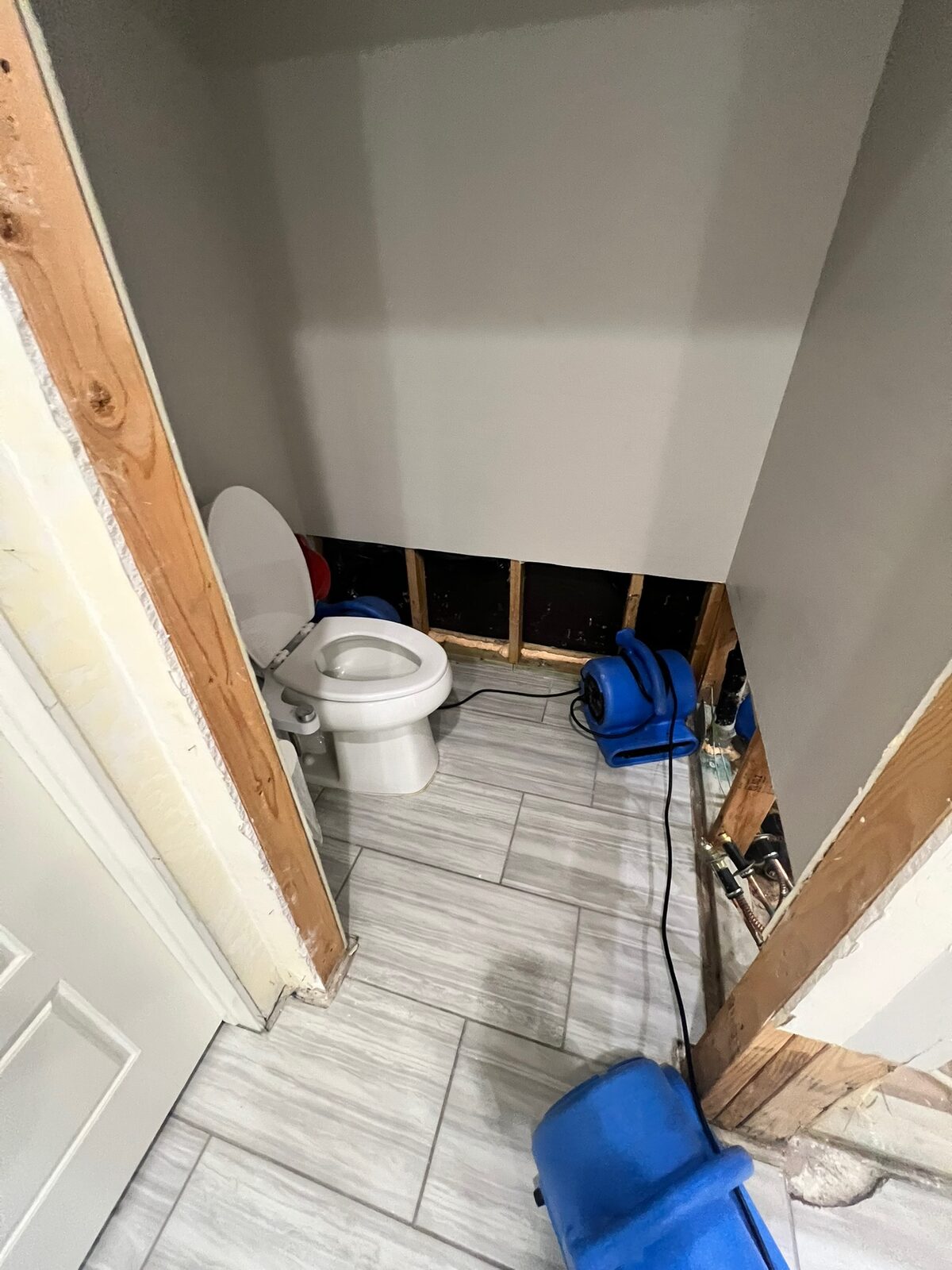
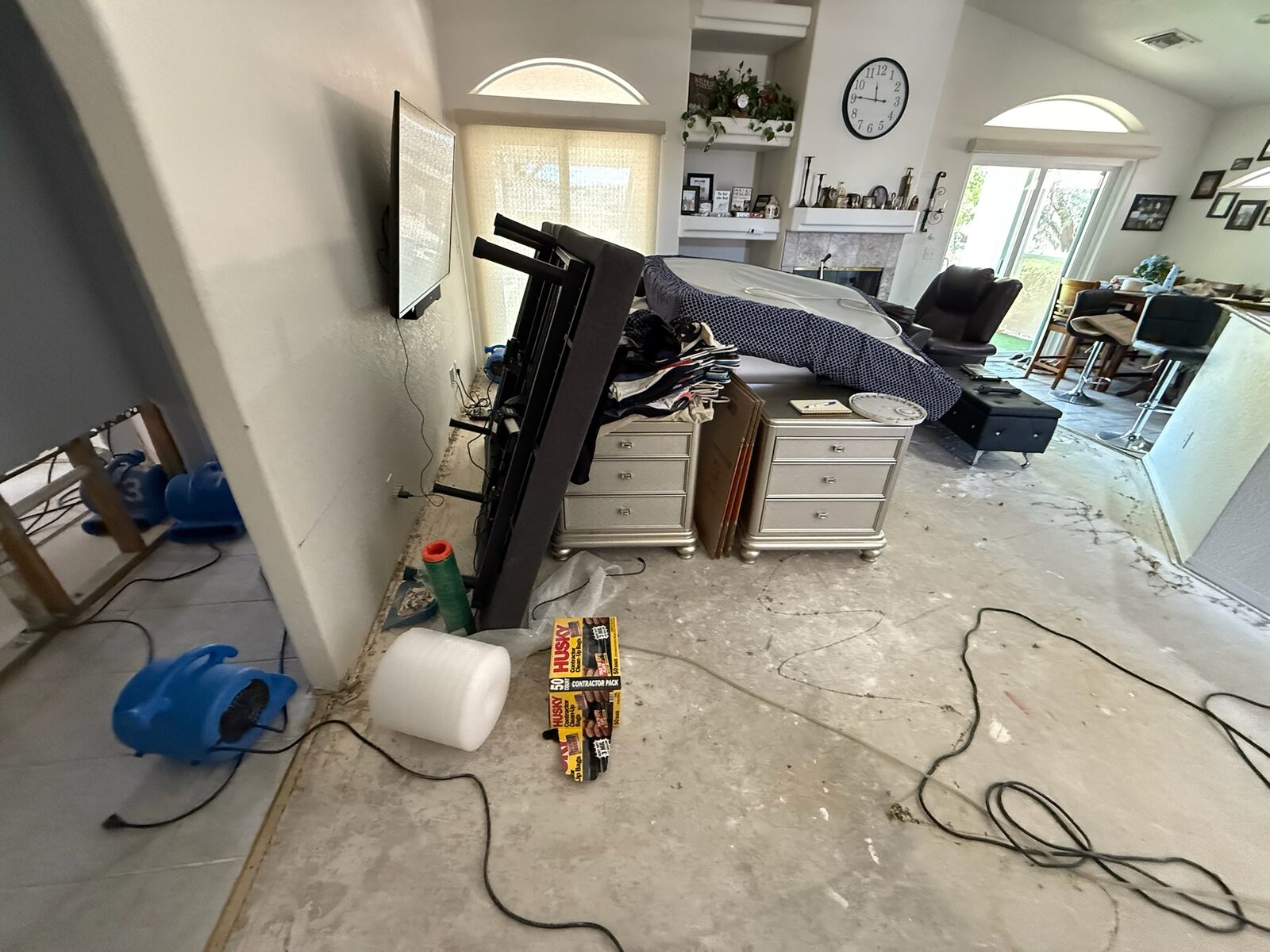
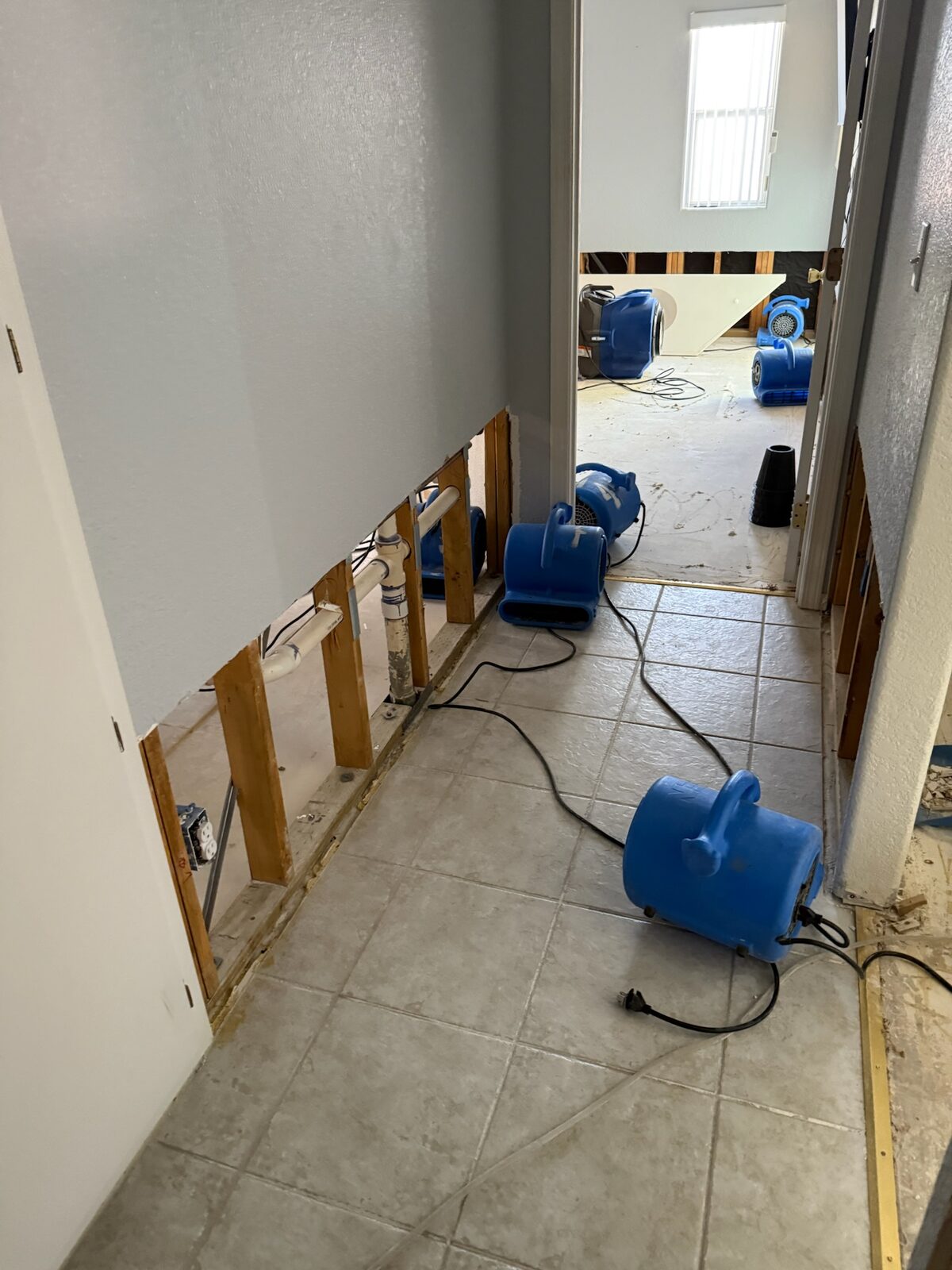
Residential reconstruction work by members of our team. See the full gallery →
More from Gold Water Fire
Abrasive Cleaning Methods for Soot on Framing and Masonry
A look at how abrasive cleaning methods remove soot from wood framing and masonry after a fire, and when each method fits the material.
AC Condensate Line Clogs & the Water Damage They Cause in Phoenix Homes
Why Phoenix AC condensate lines clog every summer, what the water damage looks like, and how to find the source before the ceiling stain spreads again.
Actual Cash Value vs Replacement Cost: Why Your Check Might Not Match the Repair Bill
Confused why your insurance check seems short after fire or water damage? Learn the difference between actual cash value and replacement cost coverage.
If the same spot keeps getting wet, talk it through with someone
Gold Water Fire handles water damage restoration, fire damage restoration, and reconstruction across the Phoenix metro area, from Peoria and Avondale out to San Tan Valley, Apache Junction and beyond. Call (480) 999-3339 or email Help@goldwaterfire.com and describe what you have been seeing, including the parts you are not sure about. AZ ROC #264344 KB-2.
Call (480) 999-3339Water Damage Restoration · Reconstruction & Rebuild · Contact Gold Water Fire · About Gold Water Fire