
Telling a Dishwasher Supply Leak from a Drain Leak, & Why the Repair Differs
You have wiped up the same small puddle at the base of the dishwasher four or five times now. It dries. A few days later it comes back, sometimes bigger, sometimes just a dark line along the edge of the cabinet toe kick. You have checked the door gasket. You have run a cycle and watched. Nothing dramatic happens while you are standing there, which is somehow the worst part, because it means the water is arriving when you are not looking, and it has probably been arriving for longer than the puddle suggests. That gap between what you can see and what is actually happening is a real thing to sit with, and it is not a sign you have missed something obvious.
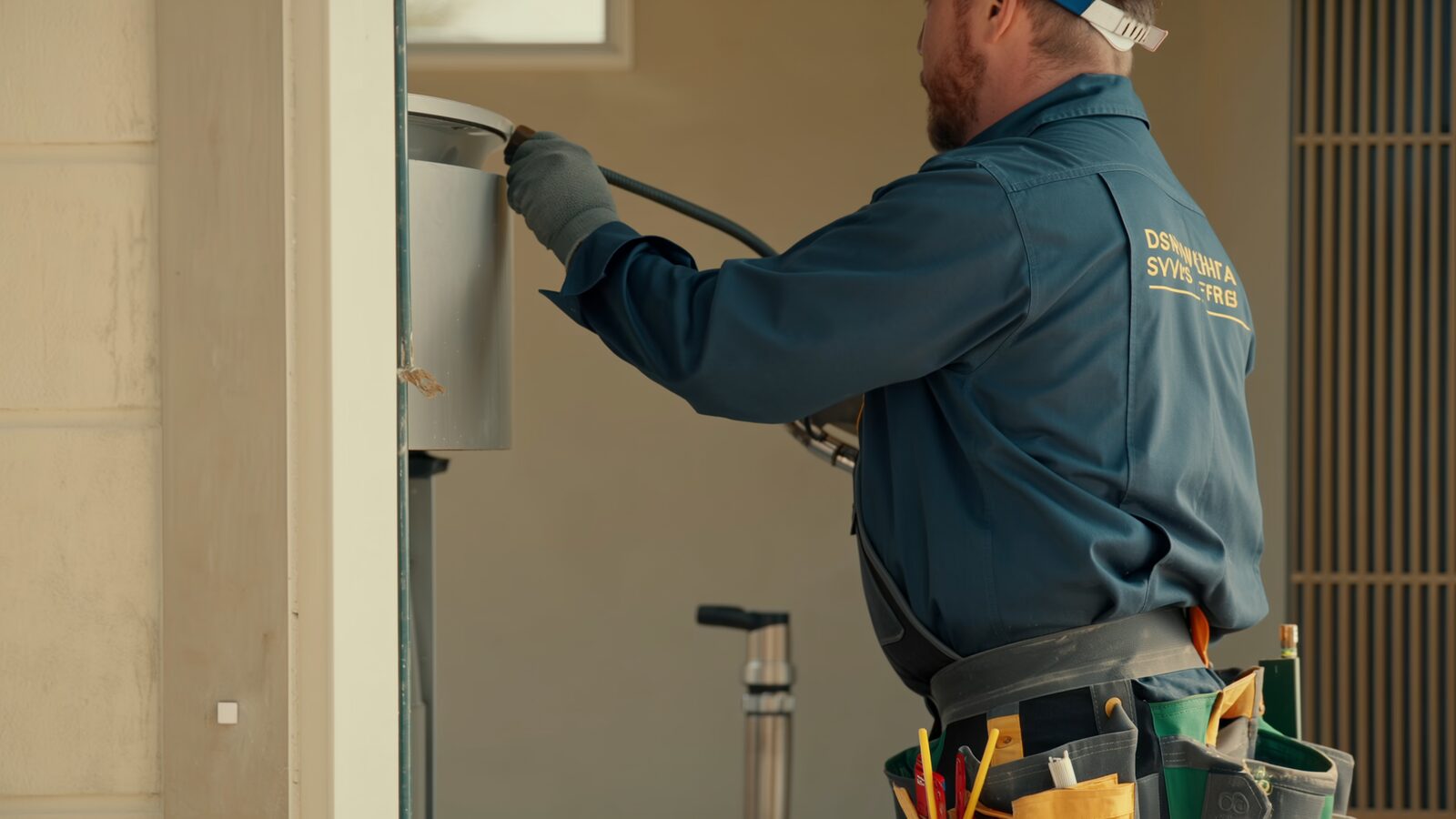
Telling a Dishwasher Supply Leak from a Drain Leak, & Why the Repair Differs
Supply water and drain water behave differently
Under and behind a dishwasher there are two separate water paths, and they fail in ways that look similar on the surface but are not the same problem at all. The supply side is pressurized. A braided or copper line runs from a shutoff valve (usually under the adjacent sink) to the fill valve at the bottom front of the machine. Because that line holds pressure all the time, a failure there leaks whether the dishwasher is running or not. Pinhole or compression-fitting leaks on the supply side tend to produce a steady, clean, odorless weep that soaks the subfloor slowly and constantly, often for weeks before it reaches a spot you can see. The drain side is not pressurized. A corrugated hose runs from the pump up to a high loop or air gap, then to the sink drain or a disposal inlet. It only carries water during the pump-out portion of a cycle, and that water is warm, greasy, and full of food particles. A drain leak therefore appears in pulses, tied to cycles, and the water it leaves behind usually smells and often feels slick or looks cloudy.
Narrowing it down without pulling the machine out
You can get fairly close to an answer with observation alone. None of this requires tools, and it is worth doing before anyone starts opening cabinets.
Time the puddle against the cycle
Dry the floor completely, then leave the dishwasher unused for a full day. If moisture returns with the machine idle, suspect the pressurized supply line or the shutoff valve. If the floor stays dry until the next wash, and specifically until the drain pump kicks on, the drain hose, its clamp, or the disposal connection is the more likely source.
Smell and feel the water
Supply water is potable: clear, odorless, and thin. Drain water carries detergent and food residue, so it often has a sour or musty smell and leaves a faint film on the floor or on a white paper towel. A greasy ring on the towel is a strong hint you are dealing with the drain side.
Look at where it emerges
Supply lines and the fill valve sit at the front left or front center of the base, so that water tends to show at the toe kick or under the front edge. Drain hoses run up the back or side toward the sink cabinet, so drain leaks often show up inside the sink base cabinet, at the back of the dishwasher opening, or on the neighboring cabinet floor first.
Check the sink cabinet floor and the valve
Open the cabinet under the sink and run your hand along the dishwasher shutoff, the compression nut, and the point where the drain hose meets the disposal or tailpiece. Chalky white crust or green staining on a fitting means slow supply weeping. Dark swollen particleboard directly under the drain connection points the other way.
The repair, and the drying, are not the same job
People sometimes assume water is water and any leak gets the same fix. In practice the two failures lead down different roads. A supply-side failure is a plumbing repair under pressure. The shutoff has to be closed and often replaced along with it, because valves that have not been turned in years frequently will not seal again once moved. Braided stainless lines and their fittings get replaced rather than tightened. The important part is that supply leaks run continuously, so by the time they surface they have usually wicked into the subfloor, up the base of the cabinet stiles, and sometimes under the adjacent flooring. Clean water still causes structural swelling and mold growth if it sits, and drying a saturated subfloor under a cabinet run means getting airflow into a cavity that is closed on all four sides. A drain-side failure is usually a hose, clamp, high loop, or air gap issue, and the fix can be as simple as reseating a hose or replacing a cracked corrugated section. But the water itself is dirtier. Drain water carries food waste and bacteria, which changes how the affected materials should be handled. Wet insulation, saturated particleboard cabinet bottoms, and pad under adjacent flooring generally are not worth drying in place when the water was not clean, because the contamination stays even after the moisture leaves. That distinction, clean water versus contaminated water, is what drives whether material gets dried or removed. There is also a third possibility worth ruling out: the dishwasher's internal tub, door gasket, or pump seal. That water is soapy like drain water but appears only during the wash portion of the cycle, and it usually pools directly under the machine rather than tracking toward the sink cabinet.
When the floor is already involved
Once the leak has been running long enough to lift a floor plank, darken a cabinet base, or leave a soft spot in the subfloor, the plumbing repair is only the first half. The drying part decides whether you deal with this once or deal with it again in six months as a smell or a stain that keeps coming back. Meaningful drying under a kitchen means measuring moisture in the subfloor and the cabinet bases, not just running a fan on the visible surface. It can mean removing a toe kick to get air into the cavity, pulling a section of flooring, or taking out a swollen cabinet bottom. When cabinets, flooring, or a section of drywall have to come out, putting the kitchen back is its own scope of work. That is the point where water damage restoration and reconstruction and rebuild overlap, and it helps to understand both halves before decisions get made about what stays and what goes. If you are not sure how far the water has traveled, that uncertainty is the honest answer, and it is worth resolving with measurement rather than guessing. You can reach out to talk through what you are seeing.
Questions people ask us
How do I stop the water right now if I think it is the supply line?
Close the small shutoff valve for the dishwasher, usually located under the adjacent sink where the supply line branches off. If that valve will not turn or keeps weeping after closing, shut off the main water supply to the house. If the leak only happens during a cycle, cancel the cycle and stop using the dishwasher until the source is identified.
Can a slow supply leak really soak a subfloor without me noticing?
Yes. A pressurized line only needs to weep a small amount continuously to keep the subfloor and cabinet bases saturated. Because the water evaporates from the visible surface faster than it does from a closed cavity, the floor can look dry while the material underneath stays wet. That is why moisture readings, rather than appearance, are what tell you how far it went.
Does clean water from a supply line still need professional drying?
Clean water does not carry the contamination that drain water does, but it still causes swelling, delamination, and mold growth when it sits inside a closed space like a cabinet run or under flooring. The question is not how dirty the water was but how long it sat and how much material it reached.
Why would cabinets or flooring have to be removed instead of dried?
Two reasons. Particleboard and MDF cabinet bottoms swell and lose strength once saturated and generally do not recover. And when the water came from the drain side, food waste and bacteria remain in porous materials even after they dry, so removal is the more reliable outcome than drying in place.
The standard our team works to
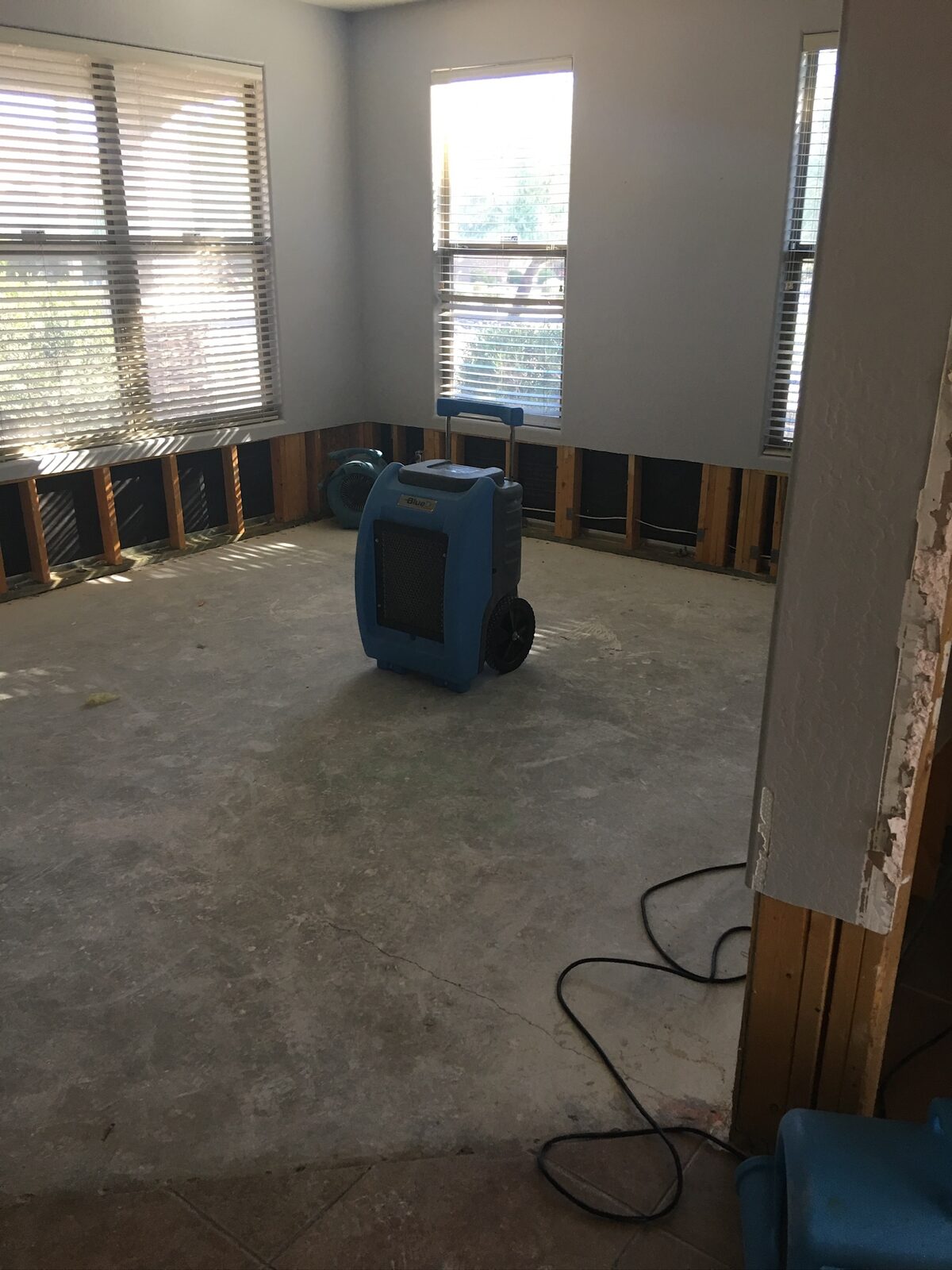
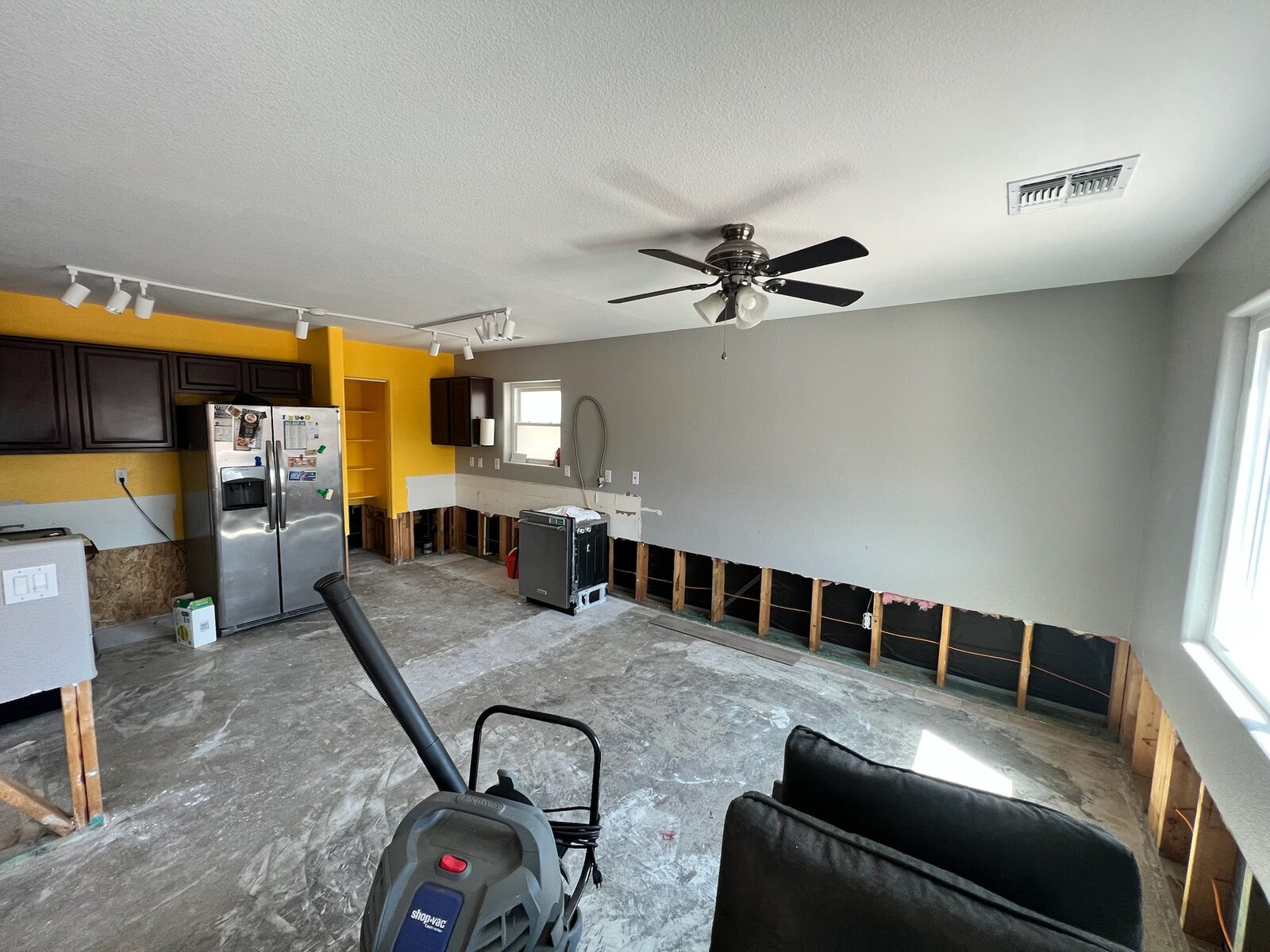
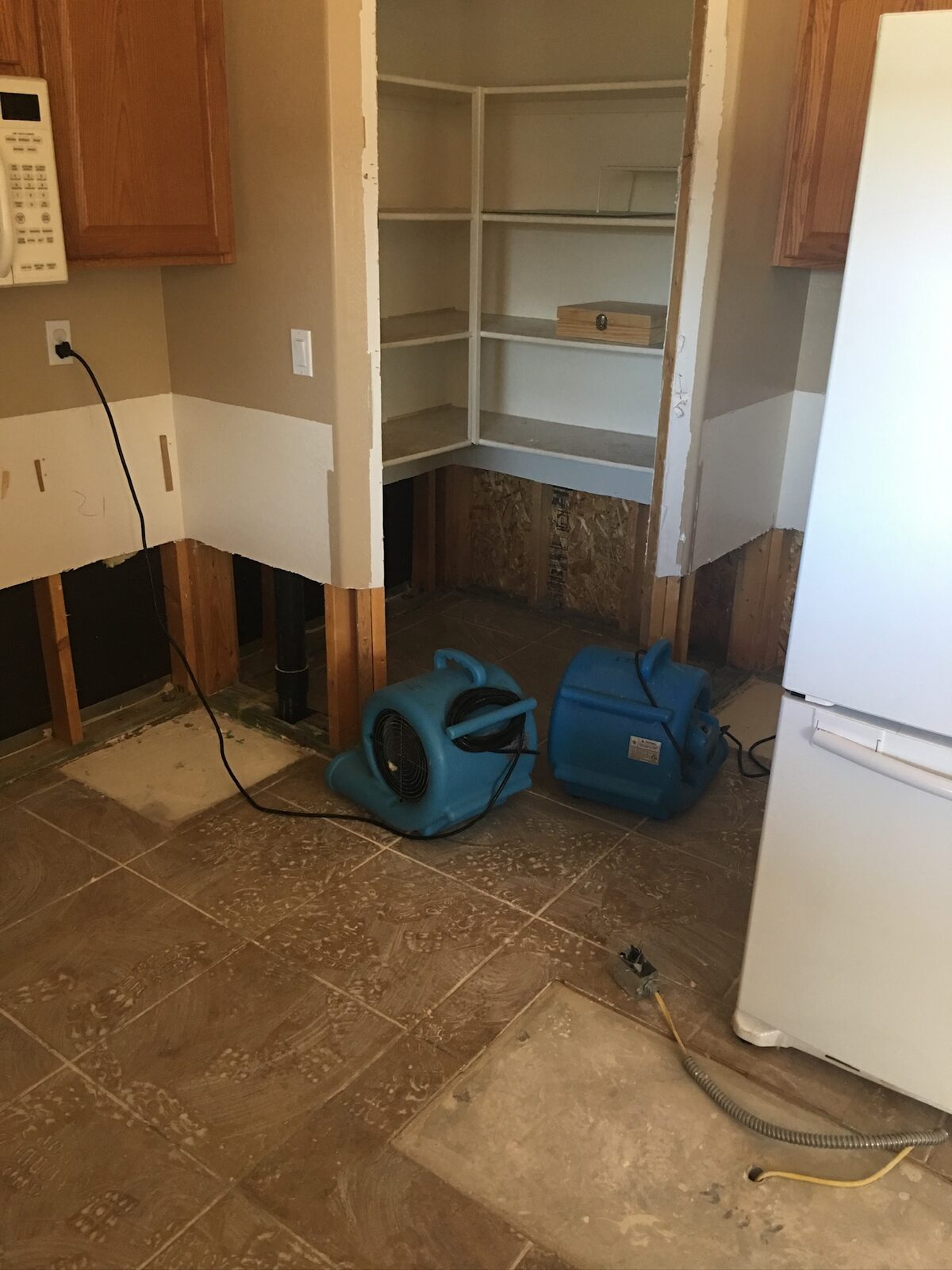
Residential reconstruction work by members of our team. See the full gallery →
More from Gold Water Fire
Abrasive Cleaning Methods for Soot on Framing and Masonry
A look at how abrasive cleaning methods remove soot from wood framing and masonry after a fire, and when each method fits the material.
AC Condensate Line Clogs & the Water Damage They Cause in Phoenix Homes
Why Phoenix AC condensate lines clog every summer, what the water damage looks like, and how to find the source before the ceiling stain spreads again.
Actual Cash Value vs Replacement Cost: Why Your Check Might Not Match the Repair Bill
Confused why your insurance check seems short after fire or water damage? Learn the difference between actual cash value and replacement cost coverage.
Not sure how far the water went
If you have been mopping up the same puddle and want a straight answer about what is wet behind the cabinets, Gold Water Fire serves the Phoenix metro area, from Peoria and Avondale out to San Tan Valley, Apache Junction, and beyond. Call (480) 999-3339 or email Help@goldwaterfire.com.
Call (480) 999-3339Water Damage Restoration · Reconstruction & Rebuild · Contact Gold Water Fire · About Our Team