
Toe Kick and Cabinet Base Water Damage, and How It Is Assessed
You noticed it while you were standing at the sink, or maybe while sweeping: the toe kick under your cabinets looks a little swollen, a little darker than it should be, or the paint along the bottom edge has started to bubble. It's easy to tell yourself it's nothing, a scuff, an old stain, something that's probably been there for a while. But that nagging feeling that something is off underneath is worth paying attention to. Cabinet bases don't discolor or swell for no reason, and the part that's hardest to sit with is that whatever is causing it is likely happening somewhere you can't see, inside the cabinet base, under the floor, behind the wall.
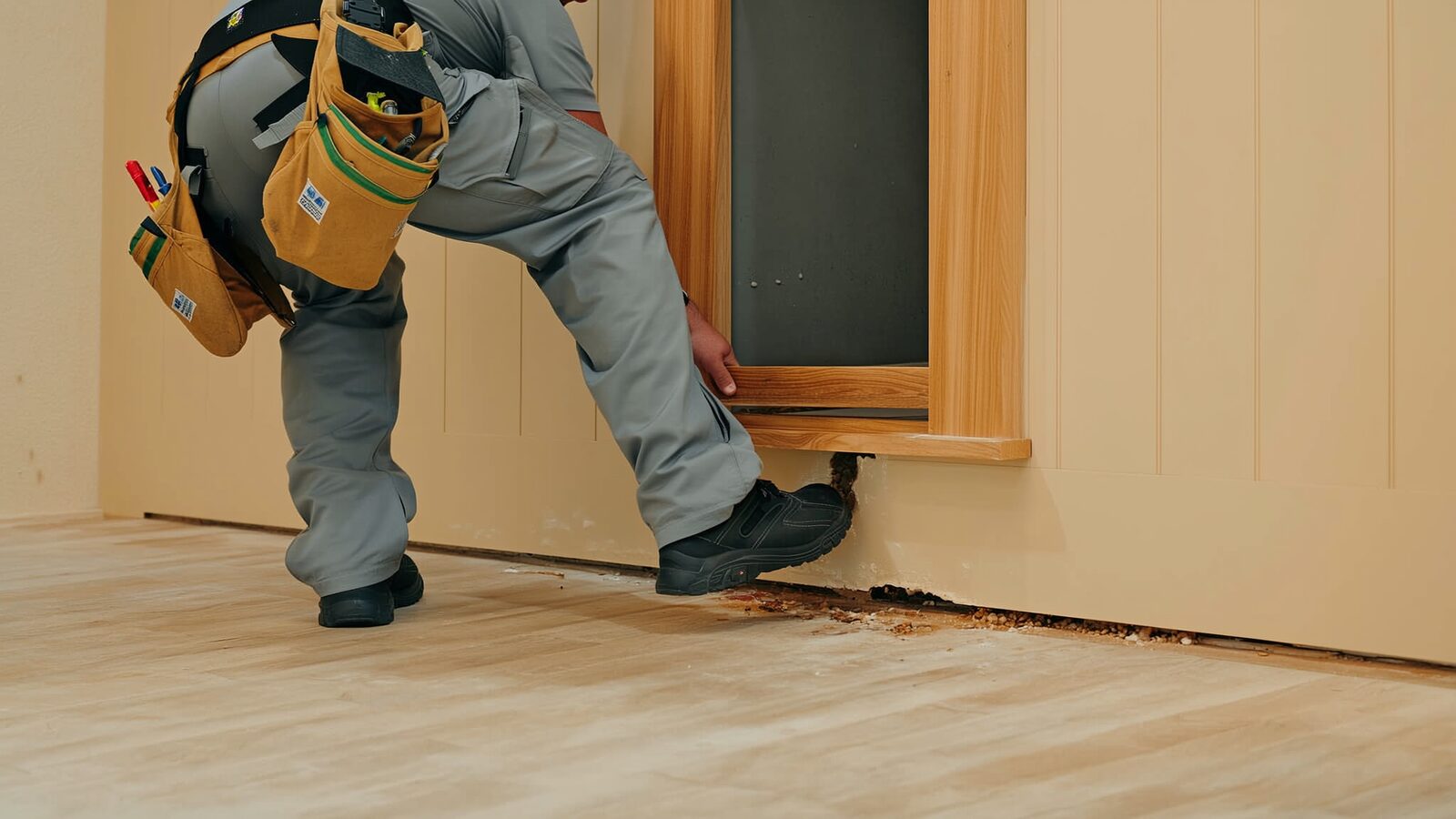
Toe Kick and Cabinet Base Water Damage, and How It Is Assessed
Why the toe kick is often the first place damage shows
The toe kick, that recessed strip at the bottom of your cabinets, sits closest to the floor and is usually made of thin plywood or MDF, materials that absorb moisture fast and show it visibly: swelling, warping, dark staining, or a musty smell. Because it's low, hidden under the counter's overhang, and rarely inspected, it can act as a wick, pulling moisture from a slow leak for weeks before anyone notices. By the time discoloration is visible, water may have already traveled into the subfloor, the cabinet box itself, or the wall cavity behind the base.
Common sources behind cabinet base water damage
Under-sink cabinets are the most frequent site, usually from a slow supply line drip, a loose P-trap connection, or a dishwasher hose that's been seeping instead of leaking outright. Refrigerator water lines and ice maker connections cause similar slow-building damage in kitchens where the fridge sits against a cabinet run. In bathrooms, a failing wax ring at the toilet base or a shower pan that's lost its seal can travel along the floor and reach vanity cabinets several feet away. Because water follows the path of least resistance along subfloor seams and baseboards, the damage you see at the toe kick isn't always directly below the source.
What a thorough assessment actually involves
A proper evaluation starts before any cabinet is touched. A moisture meter is used to test the toe kick, the cabinet floor, the adjacent flooring, and the wall base to map how far the moisture has spread, since visible staining almost never marks the true boundary. The cabinet interior is checked for sagging shelves, delaminating particleboard, or a soft cabinet floor, which indicate saturation has been ongoing rather than a single recent event. Flooring around the cabinet base is checked for lifting, cupping, or soft spots, and in many kitchens and baths this means checking whether water has reached the subfloor beneath tile or vinyl. The source itself has to be identified and confirmed stopped before any drying or repair makes sense, otherwise the same damage returns.
Why hidden moisture matters even after things look dry
Cabinets and toe kicks can feel dry to the touch on the surface while the core material underneath stays saturated for days or weeks, especially with MDF, which swells and loses structural integrity even after the surface has dried out. Trapped moisture in an enclosed cabinet base, with poor air circulation, is also a setting where mold can begin developing within 24 to 48 hours of sustained dampness. This is why an assessment relies on meter readings and physical inspection rather than how the wood looks or feels on a given day.
Questions people ask us
Can a swollen toe kick be repaired without replacing the whole cabinet?
Sometimes. If the moisture is limited to the toe kick piece itself and the cabinet box, floor, and shelving above it are unaffected, the toe kick can often be removed and replaced on its own. If moisture has reached the cabinet floor or side panels, more of the unit may need to come out.
How do I know if the damage has spread under my flooring?
Signs include flooring that feels soft, lifts at seams, or cups near the cabinet base, along with a musty smell that lingers even when the room is otherwise clean. A moisture meter reading on the subfloor is the only way to confirm it, since surface flooring can look fine while the material underneath stays wet.
Is it safe to keep using the cabinet or sink while I sort this out?
It depends on the source. If the leak is active, continuing to use the fixture can add to the damage and delay drying. It's worth shutting off the water supply to that fixture if you can, until the source is identified and addressed.
What makes cabinet base damage different from other water damage in a home?
Cabinets create an enclosed, low-airflow space, which slows natural drying and gives mold more time to establish itself compared to an open room. The materials used in cabinet construction, particleboard and MDF especially, also absorb and hold moisture differently than solid wood framing, which affects how the damage progresses and how it needs to be addressed.
The standard our team works to
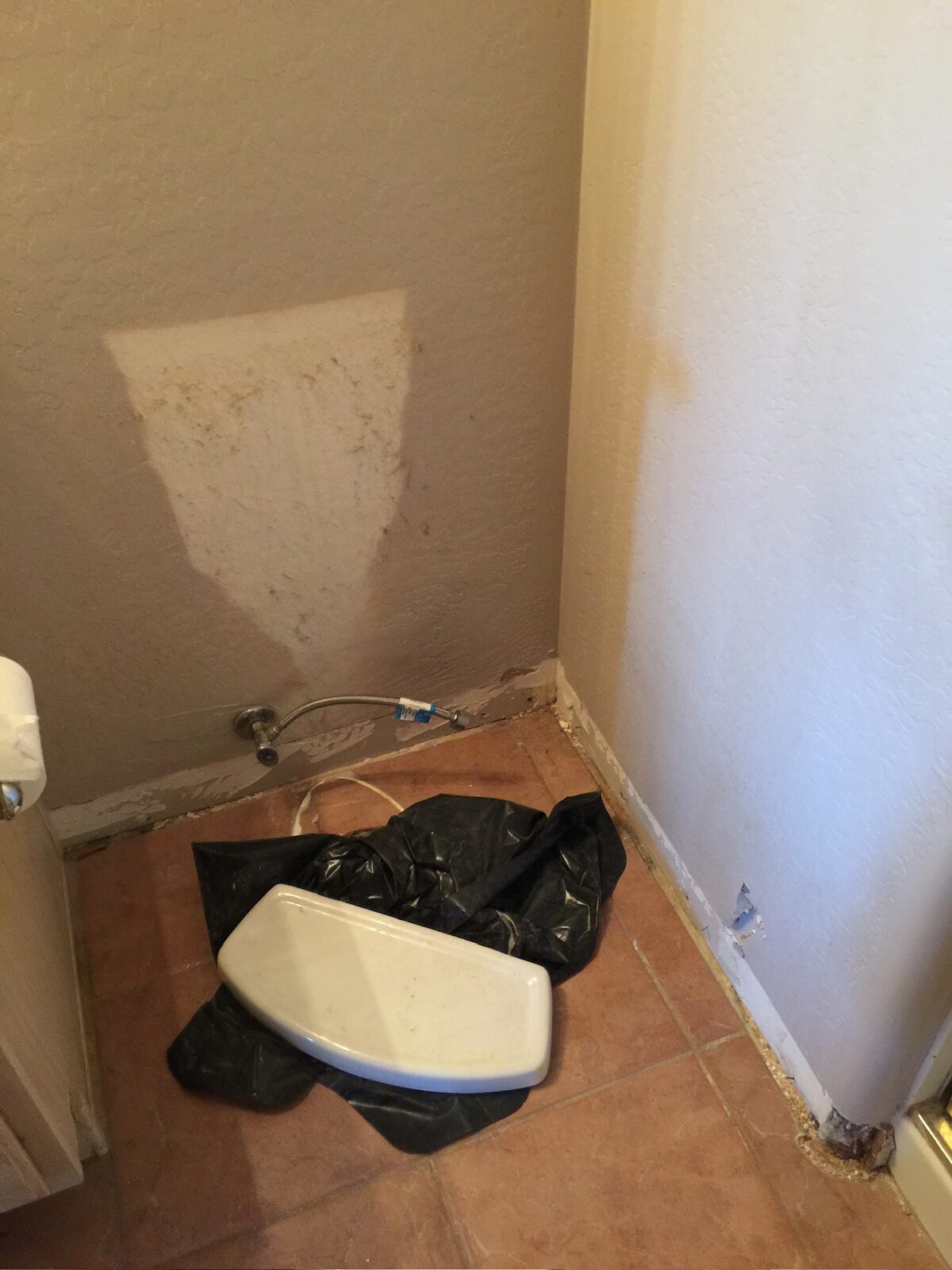
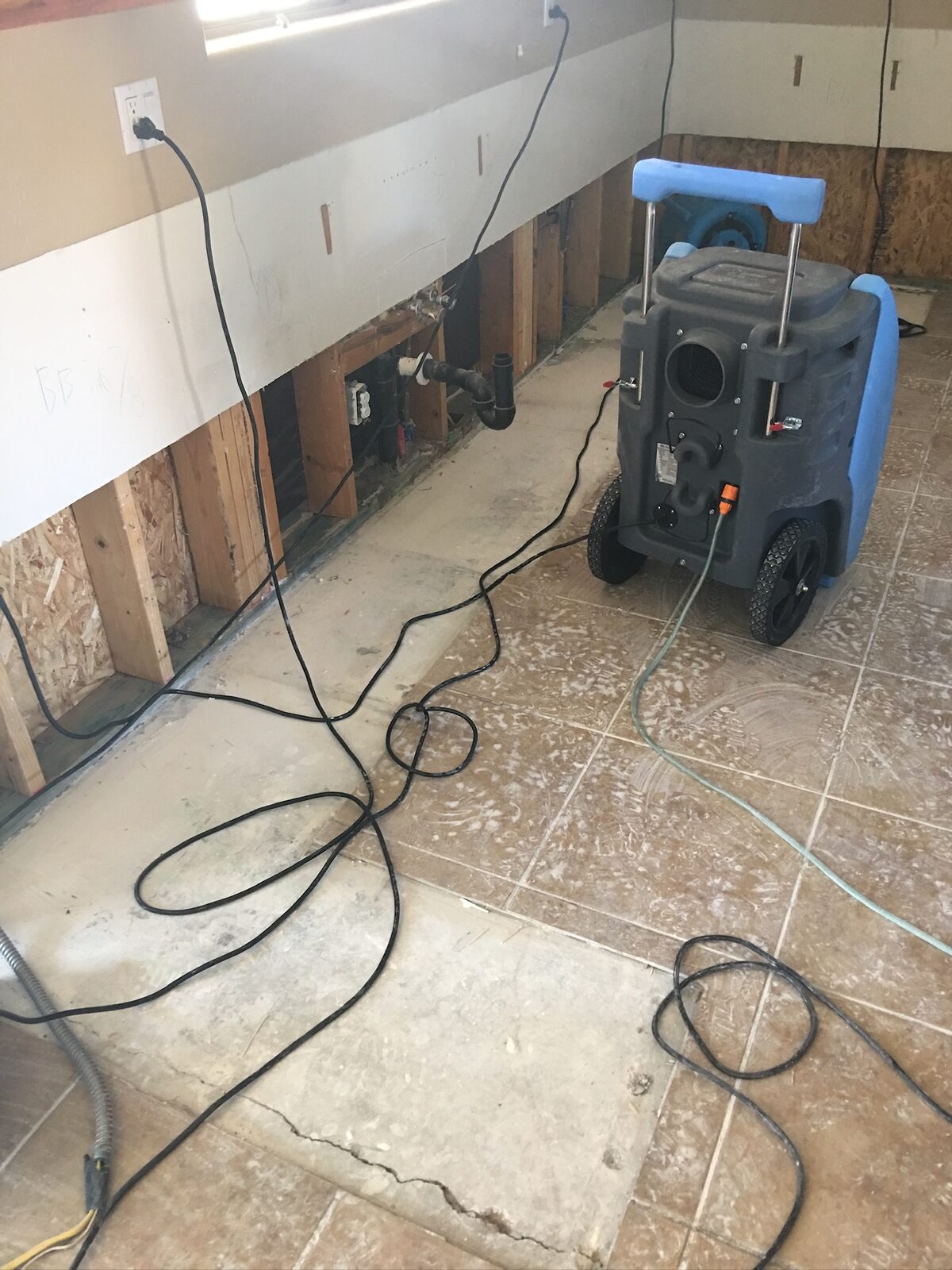
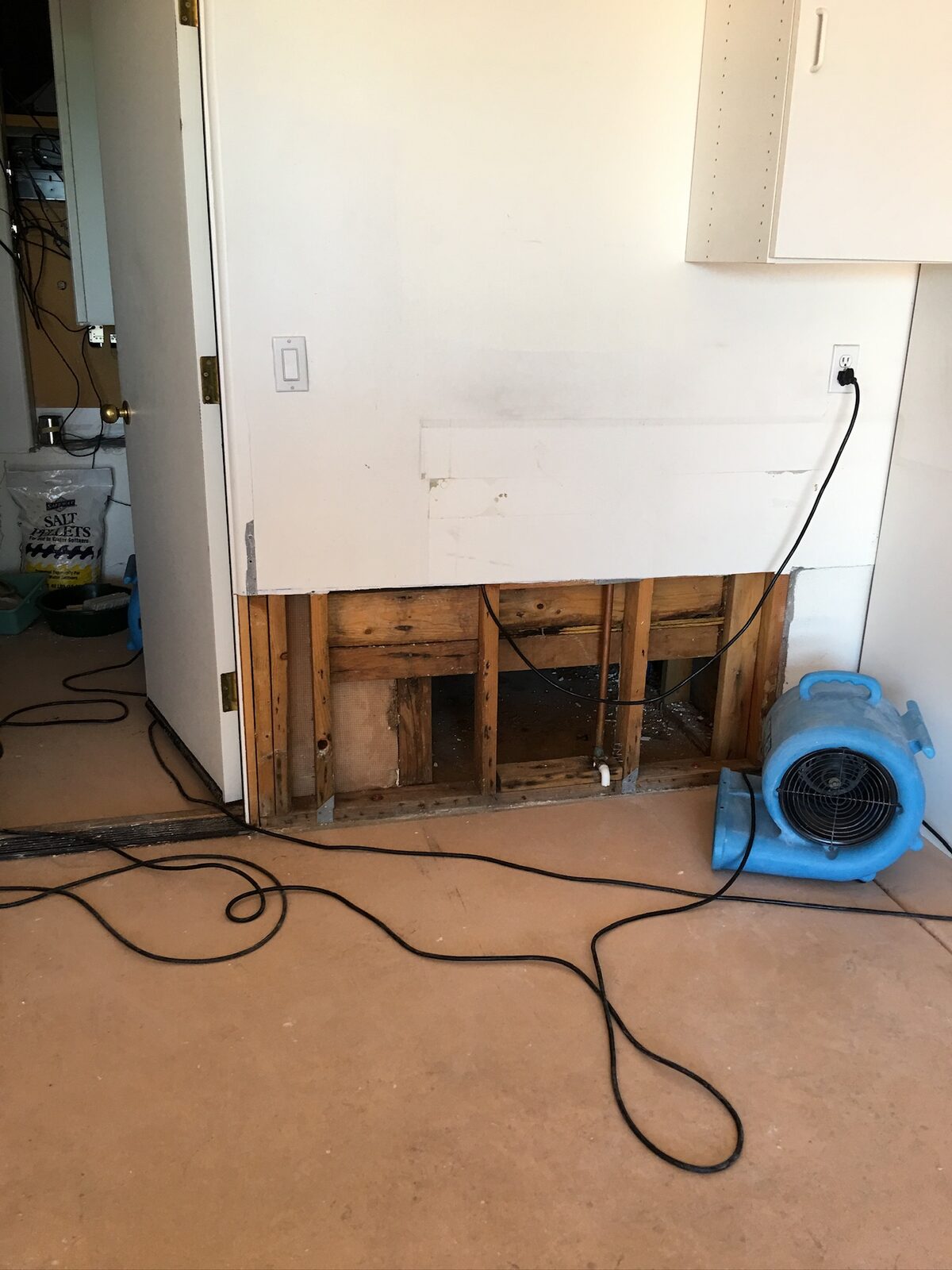
Residential reconstruction work by members of our team. See the full gallery →
More from Gold Water Fire
Abrasive Cleaning Methods for Soot on Framing and Masonry
A look at how abrasive cleaning methods remove soot from wood framing and masonry after a fire, and when each method fits the material.
AC Condensate Line Clogs & the Water Damage They Cause in Phoenix Homes
Why Phoenix AC condensate lines clog every summer, what the water damage looks like, and how to find the source before the ceiling stain spreads again.
Actual Cash Value vs Replacement Cost: Why Your Check Might Not Match the Repair Bill
Confused why your insurance check seems short after fire or water damage? Learn the difference between actual cash value and replacement cost coverage.
Not sure what's happening under your cabinets?
If you're seeing swelling, staining, or a smell you can't explain, it's worth having it looked at before it spreads further. Gold Water Fire serves the Phoenix metro area, from Peoria to San Tan Valley to Apache Junction and beyond. Reach out at (480) 999-3339 or Help@goldwaterfire.com, or visit our <a href="/contact.html">contact page</a> to get started.
Call (480) 999-3339Water Damage Restoration · Reconstruction & Rebuild · About Gold Water Fire · Contact Us