
RV Garages and Workshops: Water Damage in Spaces Nobody Monitors Daily
Something feels off out there. Maybe it's a smell that wasn't there before, a stain creeping up a wall you don't look at often, or a soft spot in the concrete near the slab edge. RV garages, detached workshops, and oversized bays tend to be the part of the property people walk through once a week, if that. Whatever is happening back there has probably been happening for a while, and there's no way to know exactly how long. That uncertainty is its own kind of stress, separate from whatever the actual damage turns out to be.
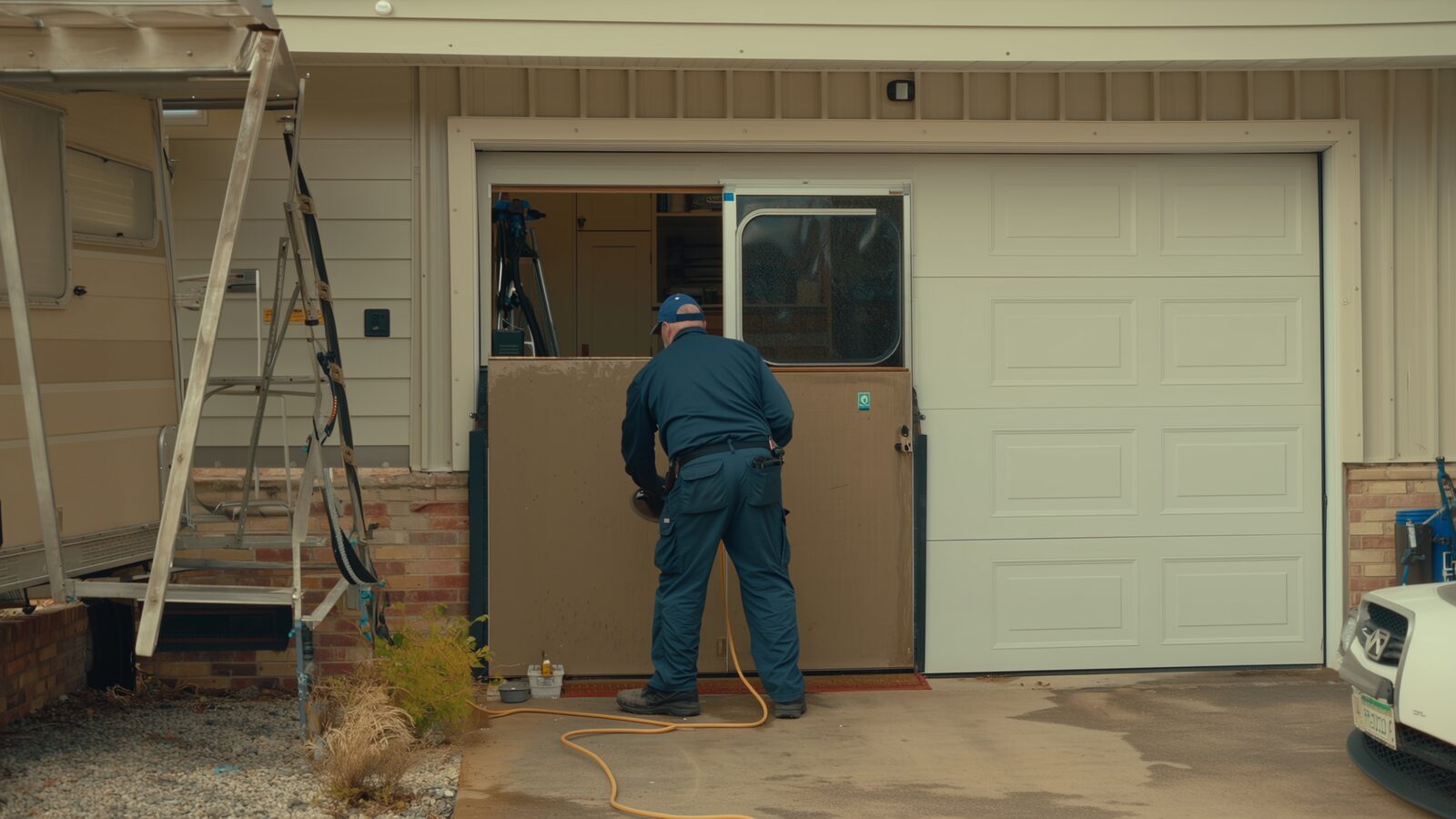
RV Garages and Workshops: Water Damage in Spaces Nobody Monitors Daily
The rooms nobody walks through every day
A kitchen leak gets noticed within hours because someone is standing in that kitchen. An RV garage or a detached workshop doesn't get that kind of daily attention. Many of these structures are used seasonally, checked on a weekend schedule, or treated as storage rather than living space. Add in the fact that RV garages often have taller walls, larger slabs, and plumbing or drainage runs that were added after the original build, and you have a space that is both more exposed to water intrusion and less likely to be inspected when something starts going wrong.
Common sources in garages and workshops
Large overhead doors are one of the most common entry points, since worn weatherstripping or a slab that has settled unevenly can let wind-driven rain in during a monsoon storm. Roof penetrations for vents, swamp coolers, or added electrical runs are another frequent culprit, especially in structures built or modified after the original house. Slab cracks, floor drains that back up, and hose bibs or utility sinks installed for washing down an RV or vehicle can also introduce water at ground level, where it spreads under stored items before anyone notices.
Signs that are easy to miss in a low-traffic space
Check the base of walls for discoloration or a chalky white mineral residue, which often shows up after water has evaporated and left salts behind. Cardboard boxes, wood shelving, or stored fabric that feel damp or smell musty even when the space looks dry are another clue. Concrete that sounds hollow when tapped, baseboards that have started to separate from the wall, or a persistent earthy smell near one corner of the building are all worth investigating rather than dismissing as normal for an older structure.
Why time matters more than it seems
Water that sits under a stored RV, behind a workbench, or beneath boxes doesn't evaporate the way it would in an open, air-conditioned room. Workshops and RV garages are often less climate controlled, which slows drying and gives mold more time to establish itself in drywall, insulation, and wood framing. The longer the space goes unchecked, the more likely the damage has moved from a surface problem into something structural, affecting framing members or the slab itself. None of that is visible from a quick glance through the door.
If you're trying to figure out what you're dealing with
For a closer look at how standing water and moisture damage are typically assessed and addressed, see Water Damage Restoration. If the space has also been affected by a fire, a nearby fire, or smoke drift, Fire Damage Restoration covers that separately. And if the damage has already reached framing or the slab and rebuilding part of the structure is on the table, Reconstruction & Rebuild walks through what that process generally involves.
Questions people ask us
Why does water damage in an RV garage look worse than expected once someone finally checks?
Because these spaces are usually checked on a weekly or even monthly basis rather than daily, water has more time to spread, soak into stored materials, and start supporting mold growth before anyone notices anything wrong. What looks like a small stain on the surface can reflect weeks or months of slow moisture movement underneath.
Is a musty smell in a workshop always mold?
Not necessarily, but a persistent musty or earthy smell that doesn't go away with ventilation is a strong signal that moisture is present somewhere in the space, even if you can't see it. It's worth tracing the smell to its strongest point and checking nearby walls, flooring, and stored items closely.
Does an overhead garage door really let in that much water?
Worn or gapped weatherstripping along the bottom and sides of a large door can let in a surprising amount of wind-driven rain during a monsoon storm, especially if the slab has settled or shifted slightly over time, creating low points where water pools instead of running off.
Should stored items be moved before an inspection?
It's generally helpful to know what's stored where and how long it's been sitting in place, since heavy or long-stationary items can hide the earliest signs of moisture underneath them. Moving things isn't required before someone looks at the space, but being able to describe what's been sitting where can speed up figuring out what's going on.
The standard our team works to
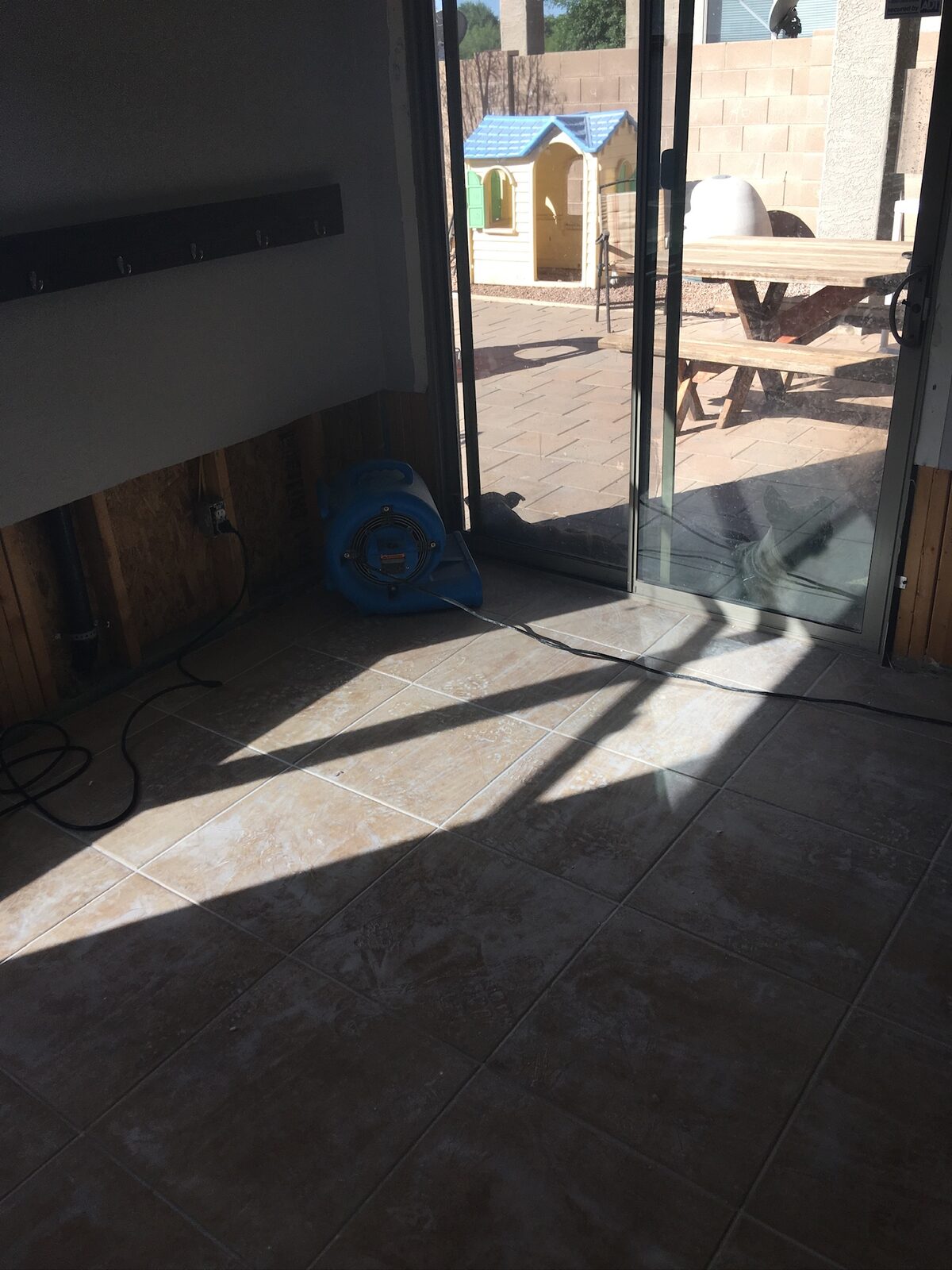
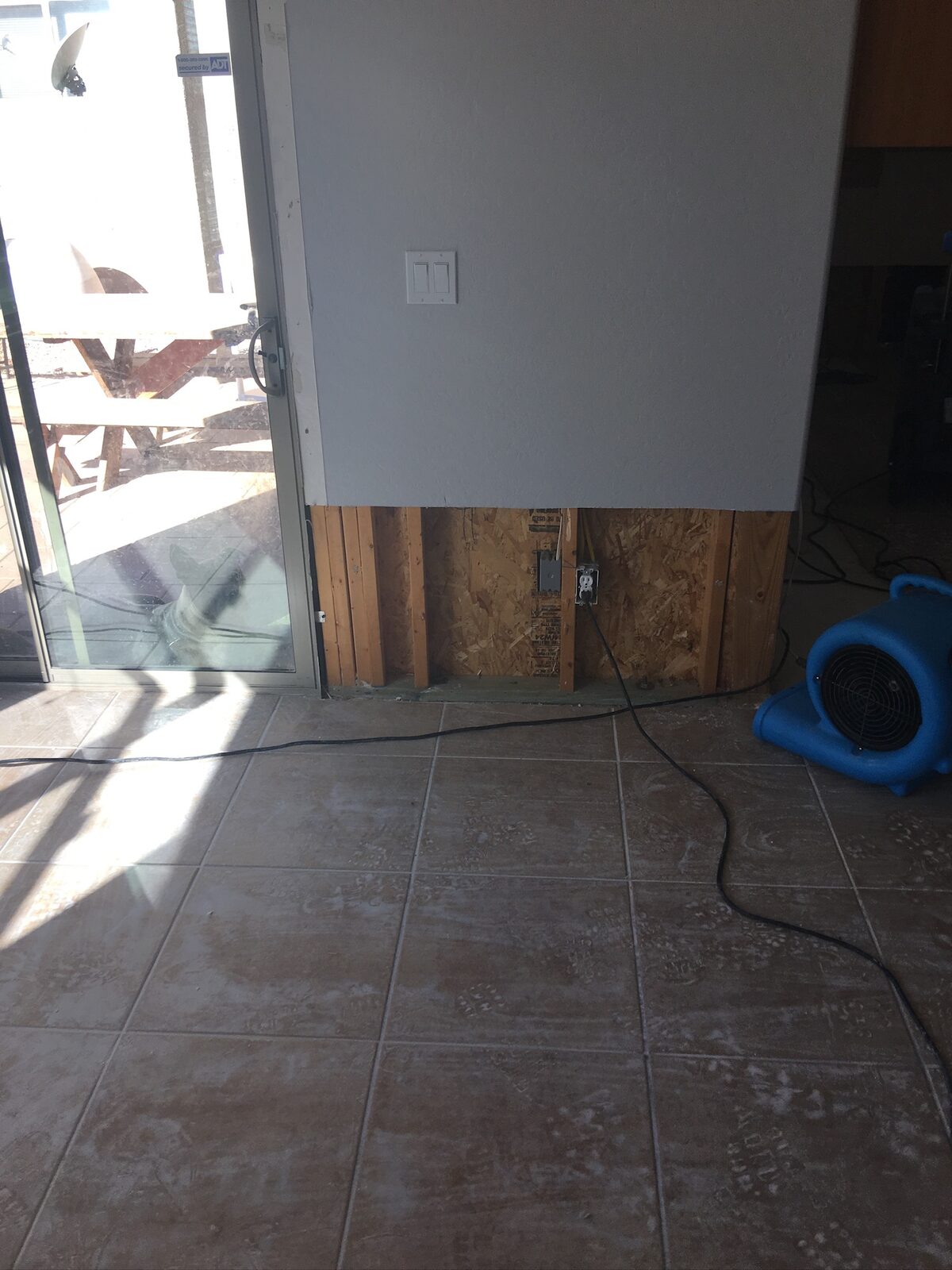
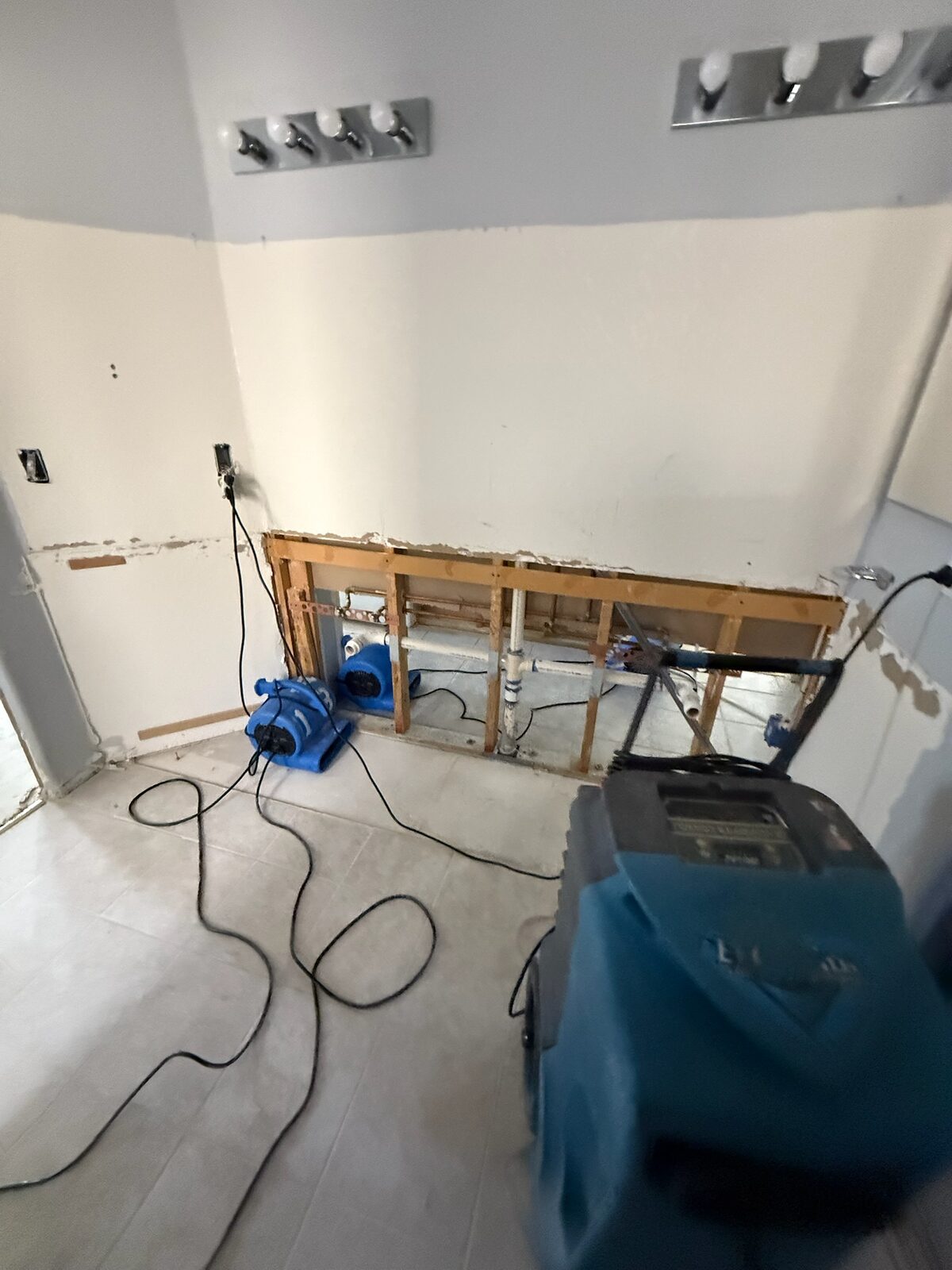
Residential reconstruction work by members of our team. See the full gallery →
More from Gold Water Fire
Abrasive Cleaning Methods for Soot on Framing and Masonry
A look at how abrasive cleaning methods remove soot from wood framing and masonry after a fire, and when each method fits the material.
AC Condensate Line Clogs & the Water Damage They Cause in Phoenix Homes
Why Phoenix AC condensate lines clog every summer, what the water damage looks like, and how to find the source before the ceiling stain spreads again.
Actual Cash Value vs Replacement Cost: Why Your Check Might Not Match the Repair Bill
Confused why your insurance check seems short after fire or water damage? Learn the difference between actual cash value and replacement cost coverage.
Not sure what you're looking at out there?
If something in your RV garage or workshop doesn't add up, a closer look can tell you whether it's surface-level or something more. Reach Gold Water Fire at (480) 999-3339 or Help@goldwaterfire.com to talk through what you're seeing.
Call (480) 999-3339Water Damage Restoration · Fire Damage Restoration · Reconstruction & Rebuild · Contact Gold Water Fire