
How Wildfire Smoke Damages Homes Near Arizona's Wildland-Urban Interface, Even When Flames Never Reach the Property
The fire was miles away. It got contained, the road reopened, the sky went back to that ordinary Arizona blue, and everyone said you got lucky. And you did, in the way that matters most. But something in the house has not gone back. It shows up when you open a closet that has been shut for a week, or when the AC kicks on in the afternoon, or when a guest pauses in the entryway and does not say anything. You have cleaned. You have run the windows open on cool mornings and shut them by ten. You have replaced the filter twice. And you are still standing in your own hallway trying to work out whether you are smelling something real or whether you have just been thinking about fire for so long that you have started imagining it. That is a strange, wearing thing to carry, and it is not imaginary, and it is not a failure of housekeeping.
How Wildfire Smoke Damages Homes Near Arizona's Wildland-Urban Interface, Even When Flames Never Reach the Property
Smoke is not one thing, and that is why it behaves so oddly
When people picture smoke damage they picture soot: black, visible, wipeable. Wildfire smoke is a mix of things, and only some of it is visible. Combustion of chaparral, mesquite, palo verde, juniper, cured grasses and pine produces fine particulate (much of it well under 2.5 microns), a range of volatile and semi-volatile organic compounds, aldehydes, and acidic gases. The particles are small enough to travel with air rather than fall out of it, which means they follow the same paths as your conditioned air: through the return, through the ducts, through the gap under a door, into the fibers of a sofa and the paper backing of drywall. The semi-volatile fraction is the part that confuses homeowners most. It condenses onto cool surfaces as an oily, nearly invisible film, then slowly re-releases into the air as those surfaces warm. That is why the smell comes back on a hot afternoon after a morning that seemed fine. Nothing failed. The film is doing exactly what its chemistry says it will do.
Why homes on the metro edge take it harder than people expect
The wildland-urban interface around the Valley is not a line, it is a fringe: neighborhoods pushed up against desert washes, state trust land, foothill preserve and open range from Cave Creek and Fountain Hills to the far edges of Queen Creek, San Tan Valley and Apache Junction, and out past Buckeye and Surprise on the west side. A few regional conditions make smoke intrusion worse here than the same fire would cause elsewhere. Monsoon and pre-monsoon outflow winds push smoke laterally and fast, in gusts rather than steady drift, which pressurizes one side of a house and drives smoke through envelope leaks that never matter on a calm day. Summer heat means the AC is running nearly constantly, so the house is actively pulling outside air through every unsealed penetration and, in many homes, through ductwork that runs through a scorching attic. Low humidity leaves fine ash dry and easily re-suspended, so it lifts off surfaces again every time someone walks across a rug. And a lot of Valley construction uses tile roofs, foam and truss attics, and block or stucco walls with cavities, giving deposited residue somewhere to sit undisturbed and off-gas for weeks. Even a house that was never in evacuation range can hold the event.
Where the residue collects, and how to check without guessing
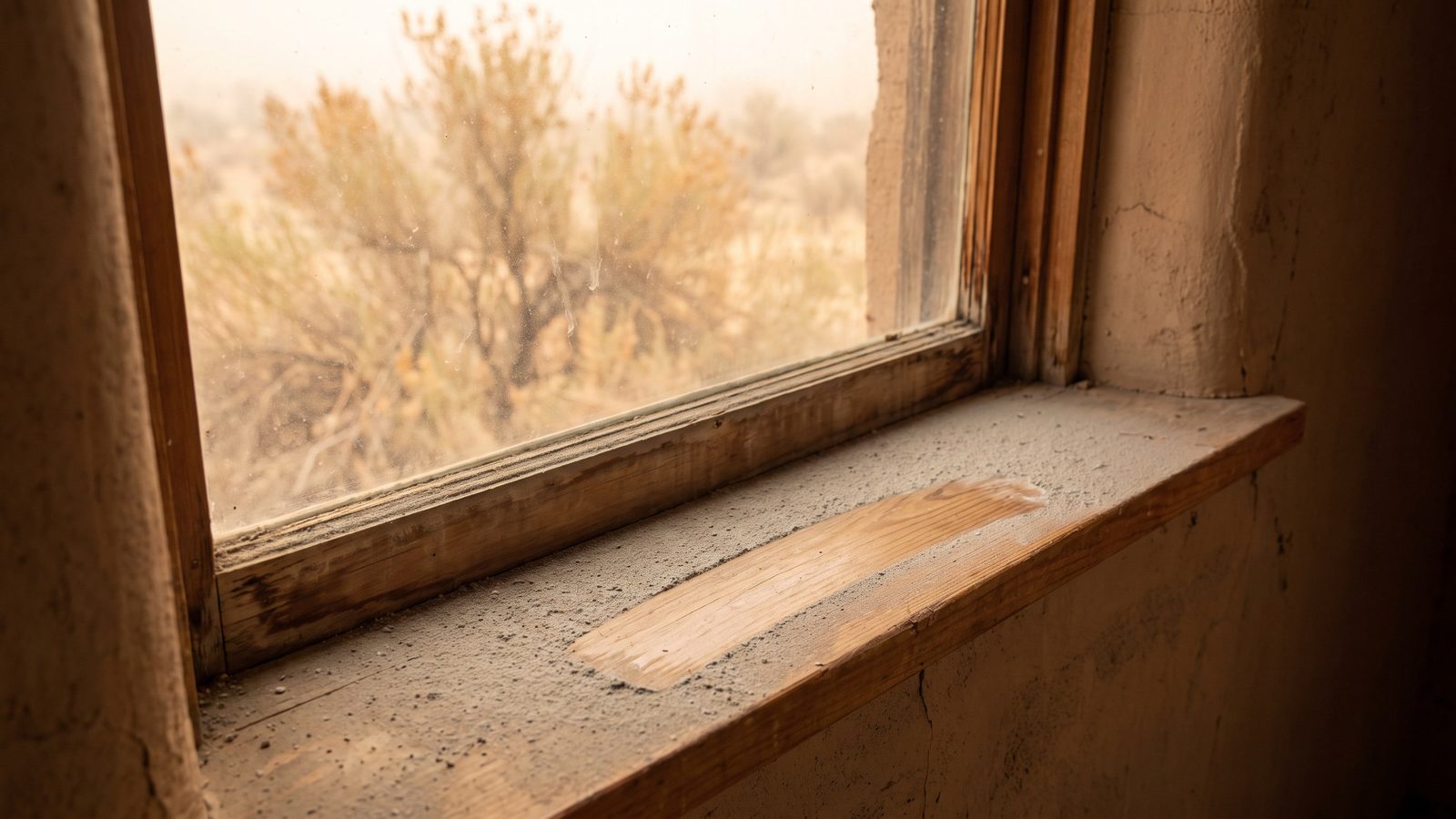
You do not need equipment for a first pass, you need to know where to look. Wipe a white cloth or a coffee filter along the top edge of a door frame, the top of a ceiling fan blade, the upper face of a window sill, and the return air grille. A yellow-tan or gray smear where you expected only dust is a real signal. Pull the HVAC filter and look at the downstream side, not just the loaded side. Check attic insulation near roof vents and eave vents for a fine gray dusting on top of the batts or blown fill. Look at the inside face of window glass on the side of the house the smoke came from, and at the mirrors in bathrooms that get little use, because condensation film shows there first. Open a closet that has stayed closed and smell the air at chest height. Check screens, pool water surface, and the tracks of sliding doors. Then check the soft things: upholstery, mattresses, drapes, area rugs, and clothing in open storage, since porous materials hold odor compounds far longer than glass or tile and are usually the reason a house that looks clean does not smell clean.
The reason it keeps coming back after you have already cleaned twice
Ordinary cleaning removes what is on the surface. It does not address three things. First, the reservoirs: duct interiors, attic spaces, wall cavities, and the insulation itself keep releasing odor into living space every time air moves through them, so cleaned rooms get re-contaminated from above and behind. Second, absorbed odor in porous materials, where compounds have moved into the material rather than sitting on it, and a surface wipe cannot reach them. Third, chemistry: some deposits from vegetation fires are mildly acidic and can etch or discolor certain metals, natural stone, and finishes over time, which is a slow, quiet form of damage that has nothing to do with smell. General industry practice for smoke work follows a sequence rather than a single step: identify the affected areas and materials, contain and control airflow so cleaning does not spread residue, remove source material where it cannot be cleaned (insulation is often in this category), clean surfaces with methods matched to each material, address the HVAC system, then treat remaining airborne and absorbed odor, and only then verify. Skipping straight to a deodorizer or an ozone treatment masks the smell while the reservoirs stay put, which is why so many homeowners feel like they are chasing something that keeps moving. This kind of work overlaps closely with fire damage restoration, and where materials have to come out, with reconstruction and rebuild.
Questions people ask us
Can my house be damaged if the fire never got close?
Yes. Smoke travels far beyond the burn perimeter, and the damage mechanism is deposition and absorption, not heat. A home several miles downwind can end up with fine particulate in the ductwork, residue film on cool surfaces, and odor held in insulation, carpet and upholstery, while the exterior looks untouched.
Why does the smell come back on hot afternoons and disappear at night?
Semi-volatile compounds from smoke condense onto surfaces as a thin film and re-release as those surfaces warm. Heat and running air handlers increase that release, so the odor strengthens in the afternoon and fades when the house cools. It is a temperature-driven cycle, not something you are imagining.
Will running an air purifier or replacing the filter fix it?
Filtration helps with airborne particulate and can make a room more comfortable, but it does not remove residue already deposited in ducts, attic insulation, wall cavities, or the fibers of soft furnishings. Those reservoirs keep feeding odor back into the air until they are cleaned or removed.
Does homeowners insurance usually cover smoke damage without a structure fire?
Coverage depends entirely on your policy and your carrier, so read the policy and call your adjuster before assuming either way. Whatever the answer, document what you find with photos and notes, including dates, affected rooms, and any wipe tests, because a clear record helps any claim conversation go faster.
The standard our team works to
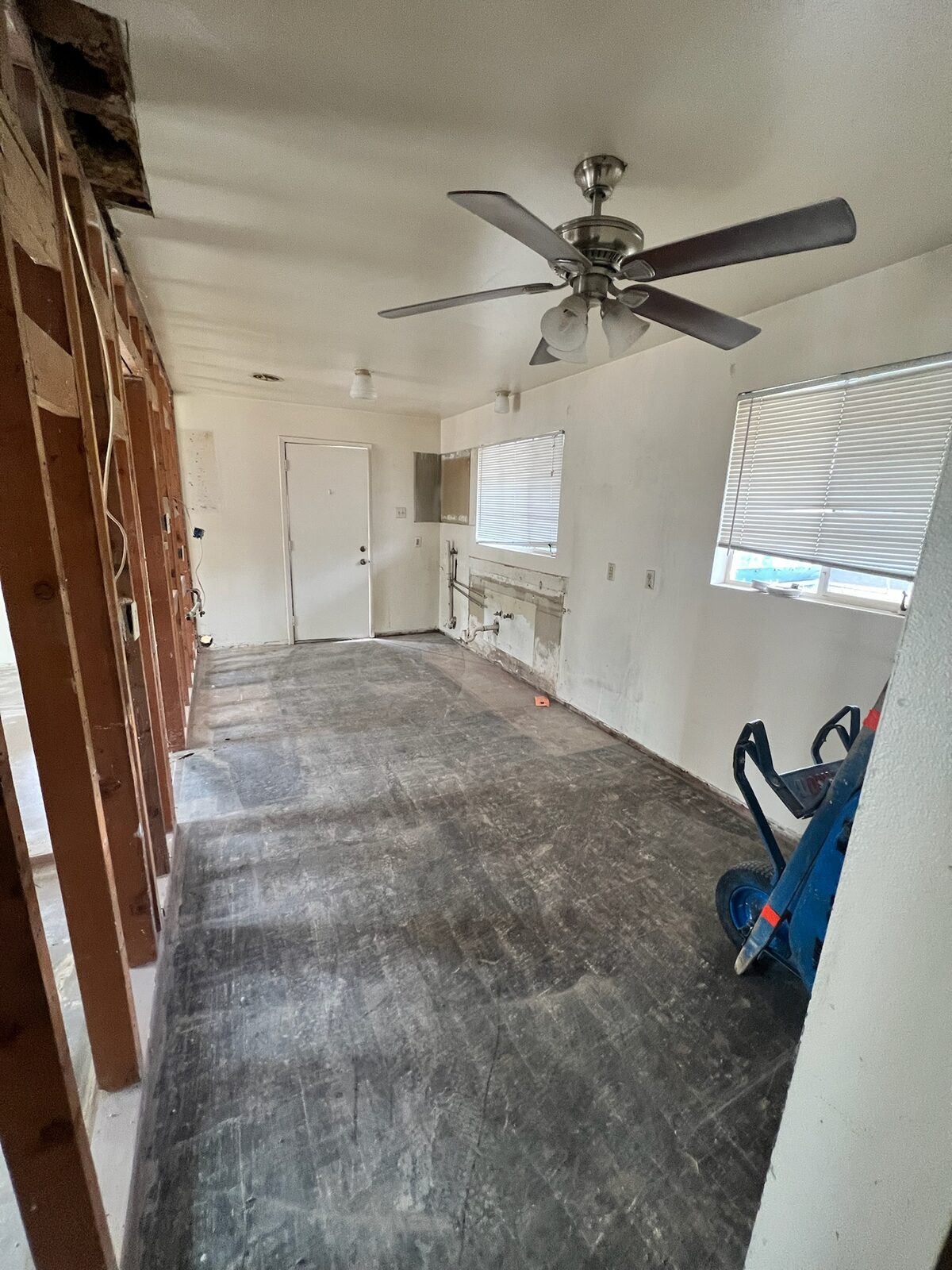
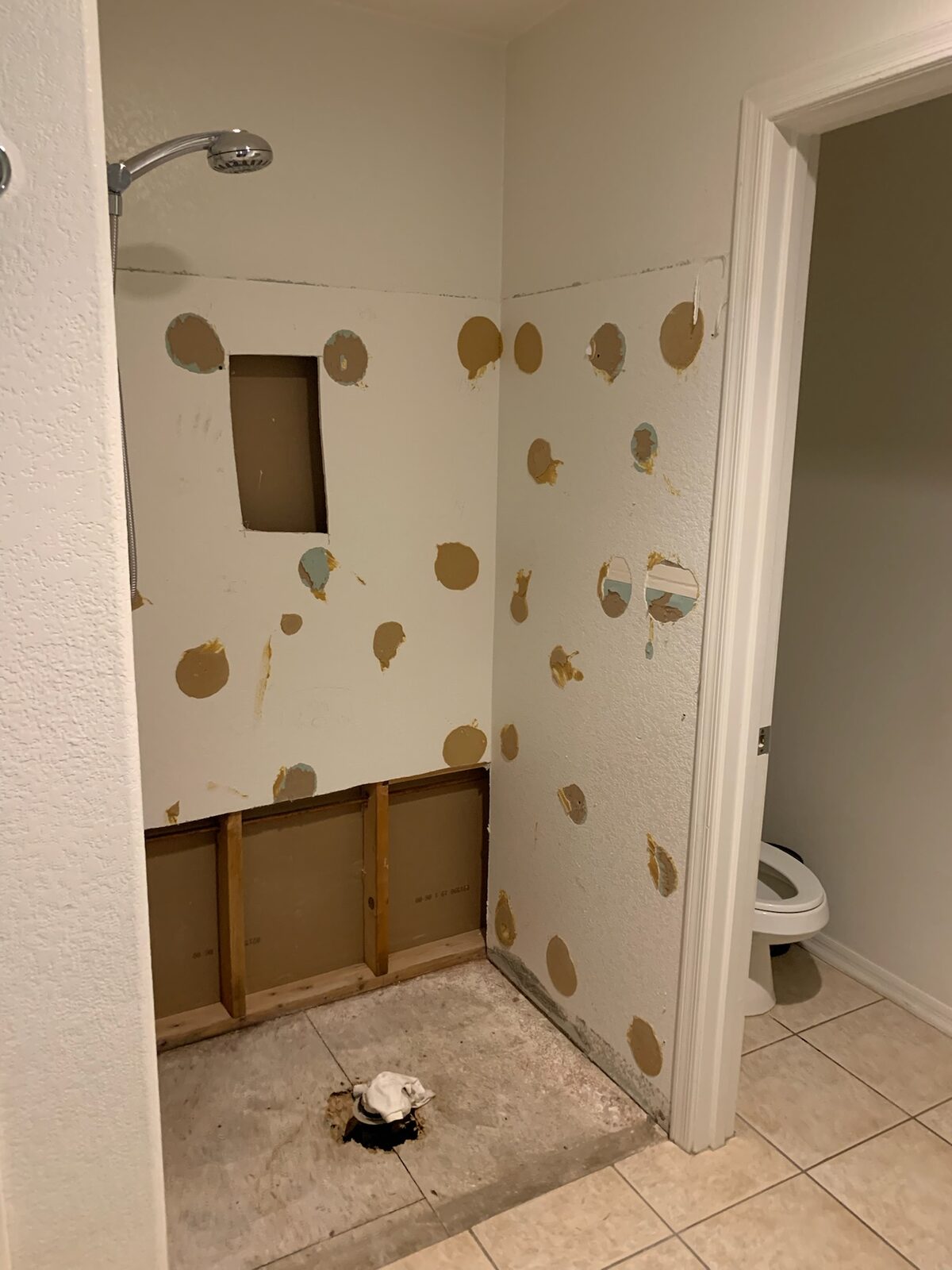
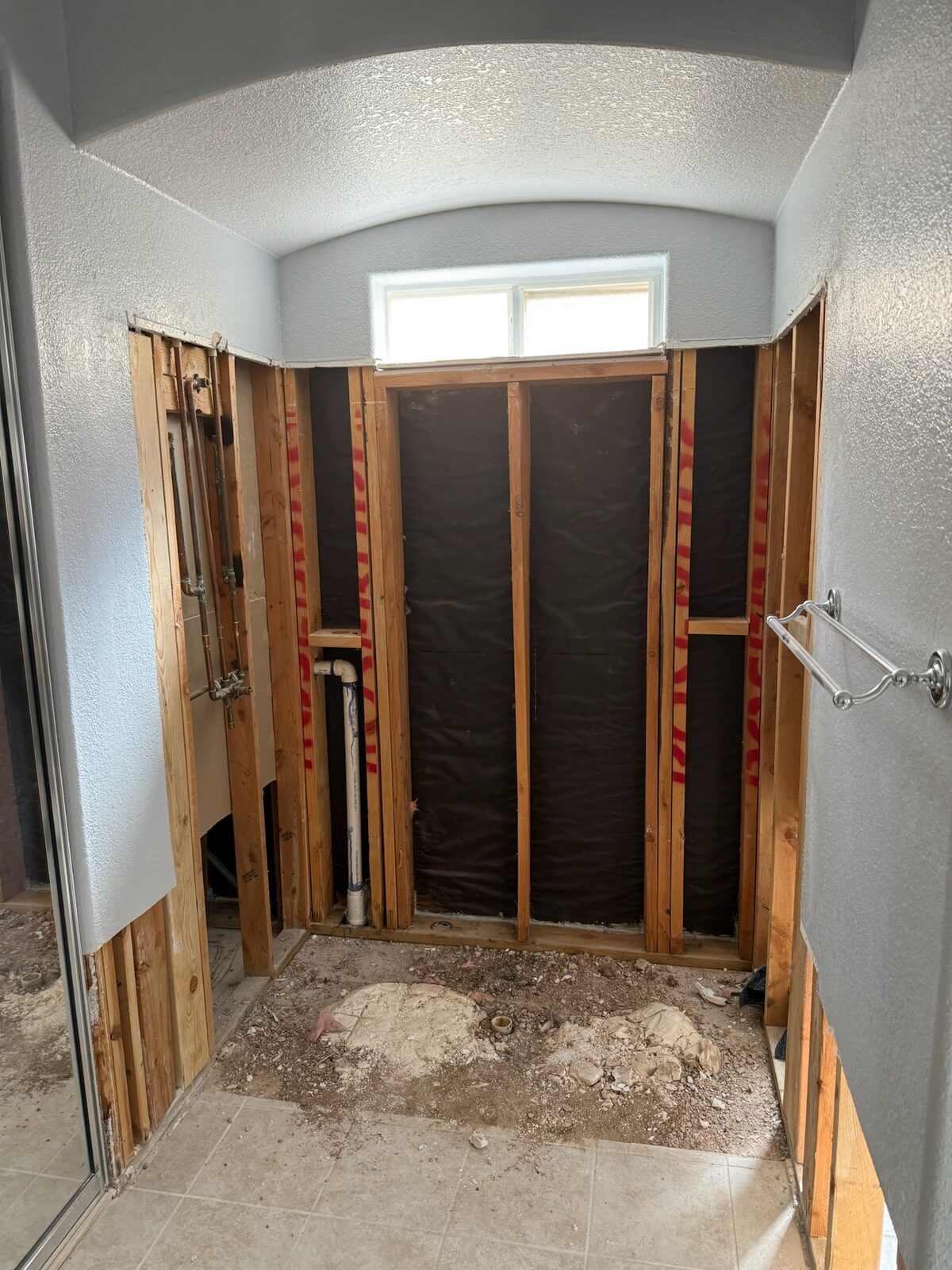
Residential reconstruction work by members of our team. See the full gallery →
More from Gold Water Fire
Abrasive Cleaning Methods for Soot on Framing and Masonry
A look at how abrasive cleaning methods remove soot from wood framing and masonry after a fire, and when each method fits the material.
AC Condensate Line Clogs & the Water Damage They Cause in Phoenix Homes
Why Phoenix AC condensate lines clog every summer, what the water damage looks like, and how to find the source before the ceiling stain spreads again.
Actual Cash Value vs Replacement Cost: Why Your Check Might Not Match the Repair Bill
Confused why your insurance check seems short after fire or water damage? Learn the difference between actual cash value and replacement cost coverage.
If you have been trying to name this for weeks, you can just describe it
You do not need to have it figured out before you call. Tell us which rooms, when the smell is worst, and what you have already tried, and we will talk through what is likely still holding the odor and what it would take to check. Gold Water Fire serves the full Phoenix metro area, from Peoria and Avondale out to Apache Junction, Queen Creek and San Tan Valley. Call (480) 999-3339 or email Help@goldwaterfire.com.
Call (480) 999-3339Fire Damage Restoration · Water Damage Restoration · Reconstruction & Rebuild · About Gold Water Fire · Contact Us