
The Science of Drying a House, Explained Simply
If you've had water get into your home, you've probably noticed the confusing part isn't the flood itself, it's everything after. The carpet feels dry to the touch but the smell doesn't go away. A fan has been running for two days and the drywall still feels cool and damp. You start to wonder if something is actually working, or if you're just waiting and hoping. That confusion is normal, because drying a house isn't as simple as "let it air out." It's a physical process with rules, and once you understand the rules, the situation usually makes a lot more sense.
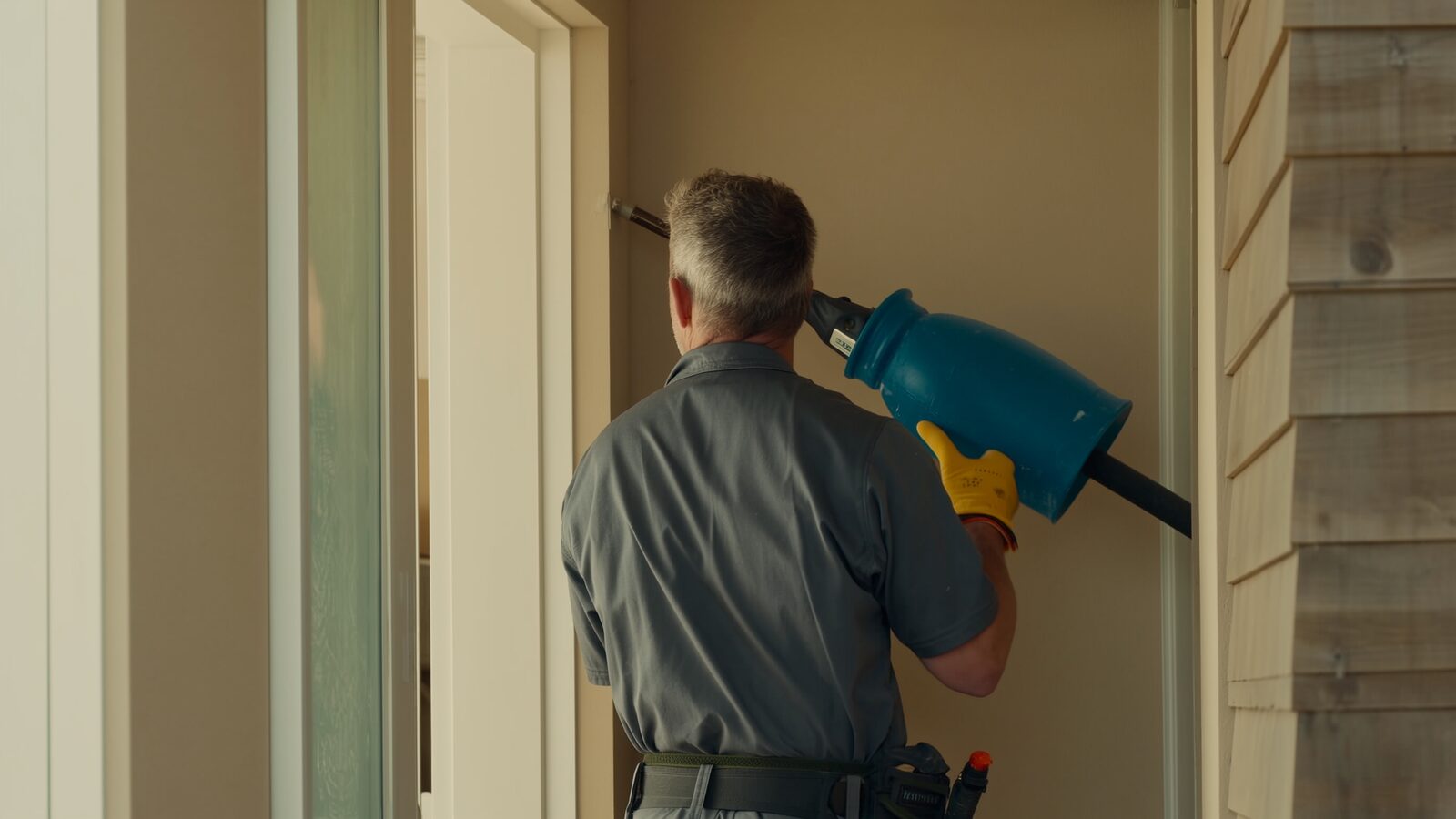
The Science of Drying a House, Explained Simply
Why 'looks dry' and 'is dry' are two different things
Water damage rarely stays where you can see it. Once moisture hits drywall, baseboards, subfloor, or framing, it wicks upward and sideways through the material, sometimes traveling far from the original spot. The surface can feel dry within hours while the material underneath stays saturated for days. That's why a house can look fine and still be actively growing mold behind a wall. Understanding drying means understanding that you're not drying a surface, you're drying the structure underneath it.
The three forces that move moisture: temperature, humidity, and airflow
Drying a house comes down to a basic exchange: moisture has to leave the wet material and become airborne, then that damp air has to be removed and replaced with drier air. Three factors control how fast that happens.
Temperature
Warmer air holds more moisture and speeds up evaporation, which is why controlled heat is often part of a drying setup. But temperature alone doesn't remove moisture, it just pulls it out of the material and puts it into the air, where it has to be dealt with next.
Humidity
This is the ceiling on how much more moisture the air can absorb. If the air in a room is already saturated, evaporation slows down or stops entirely, no matter how warm the room gets. This is why dehumidifiers matter as much as fans, sometimes more.
Airflow
Moving air constantly replaces the humid layer sitting right against a wet surface with drier air, which keeps evaporation going. Without airflow, a pocket of saturated air just sits on the material and evaporation stalls, even in a warm room.
Why these three have to work together
A single fan blowing on wet carpet in a closed, humid room mostly just moves damp air around the room instead of removing it. A dehumidifier running in a cold room works slowly, because cold air doesn't give up its moisture as easily. The reason professional drying setups use heat, air movers, and dehumidifiers together is that each one solves a different part of the same equation. Skip one and the other two are working at a fraction of their potential.
What actually happens during a proper drying process
A structured drying process usually starts with identifying how far the moisture traveled, not just where it's visible. That often means checking behind baseboards, under flooring, and inside wall cavities with a moisture meter rather than guessing from what looks damp. From there, equipment is placed to create a specific airflow pattern through the affected area, humidity is pulled down mechanically, and moisture levels are checked over multiple days to confirm the material has actually returned to a normal, stable reading, not just a drier one.
Signs the drying process isn't working
A few signs suggest that moisture is still trapped even if things seem to be improving: a musty smell that lingers or gets stronger, baseboards or drywall that still feel cool or soft to the touch, visible warping or bubbling that hasn't stopped, or humidity in the room that feels heavy no matter how long a fan has run. Any of these usually mean the airflow, humidity, or heat balance isn't set up correctly for that specific space, not that the situation is hopeless.
Questions people ask us
How long does it actually take to dry out a house after water damage?
It depends heavily on what materials got wet, how much airflow and humidity control is in place, and how far the moisture traveled before anyone noticed. Dense materials like solid wood or layered flooring hold moisture much longer than drywall or carpet padding, which is why drying timelines vary so much from one situation to another.
Can I just open windows and run box fans instead of using special equipment?
In low humidity, open windows can help, but in Phoenix summer conditions or a closed-up house, natural airflow often isn't enough to move real volumes of moisture out of building materials. Fans alone can also spread moisture-laden air into dry areas of the house instead of removing it, which is why humidity control matters as much as air movement.
Why does my house still smell musty after the water is gone?
A lingering musty smell usually means moisture is still trapped somewhere the eye can't see, often inside a wall cavity, under flooring, or in insulation. The smell is a strong signal that the structure isn't fully dry yet, even if the surfaces look fine.
Does temperature or humidity matter more for drying?
Neither works well without the other. Higher temperature speeds up evaporation, but humidity determines how much more moisture the air can actually absorb before that evaporation stalls. Effective drying manages both at the same time, along with airflow to keep exchanging the air.
The standard our team works to
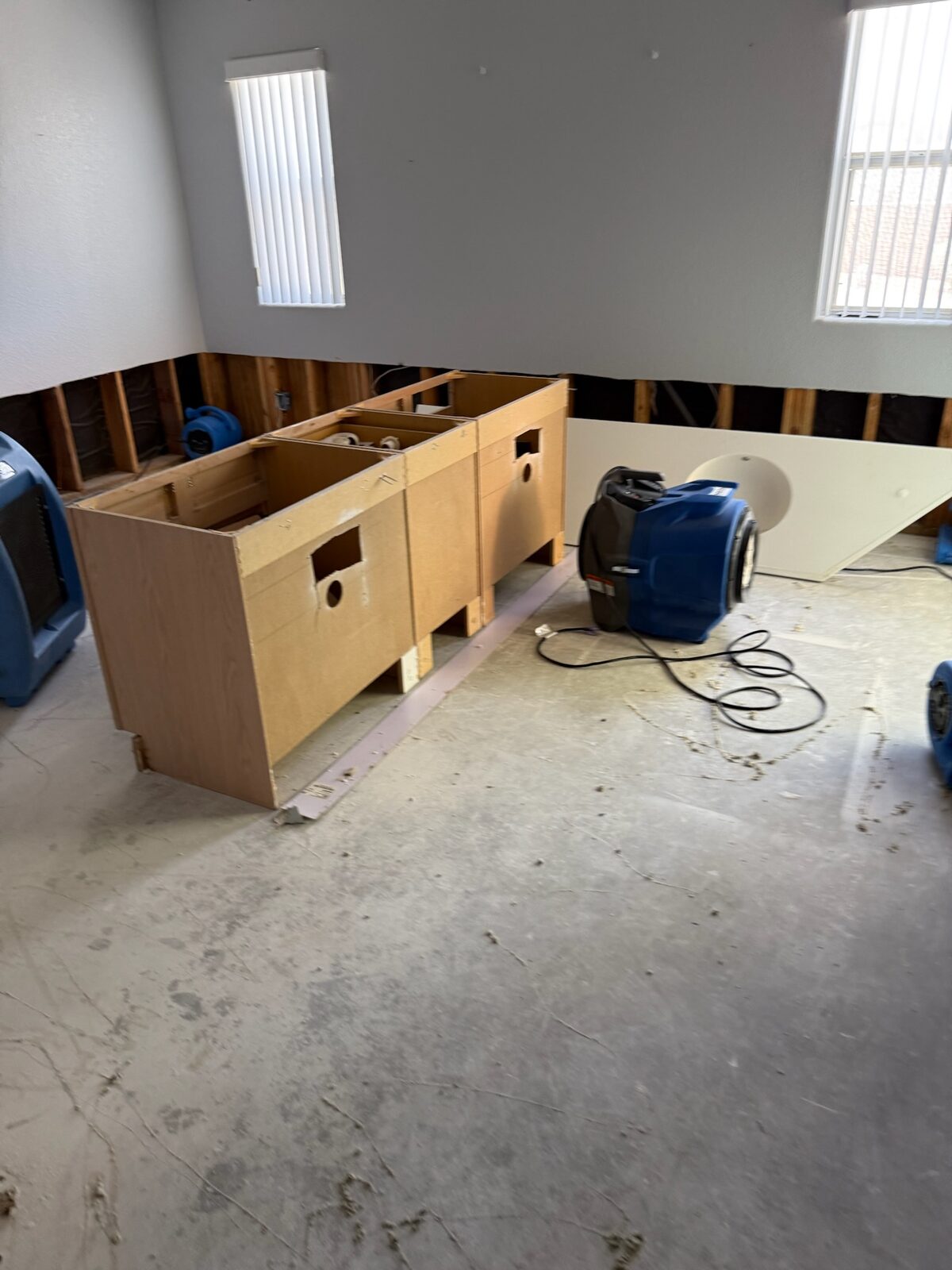
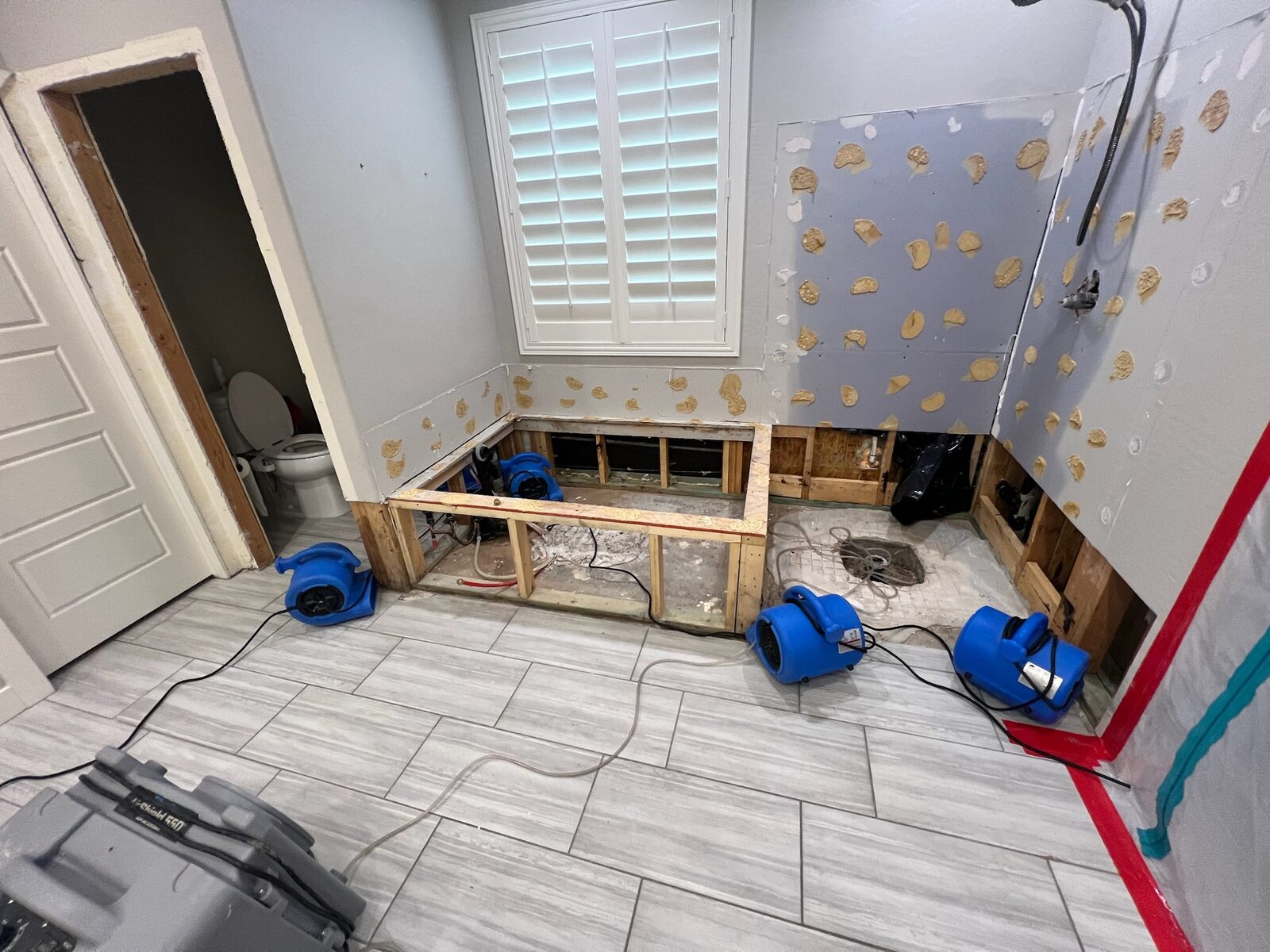
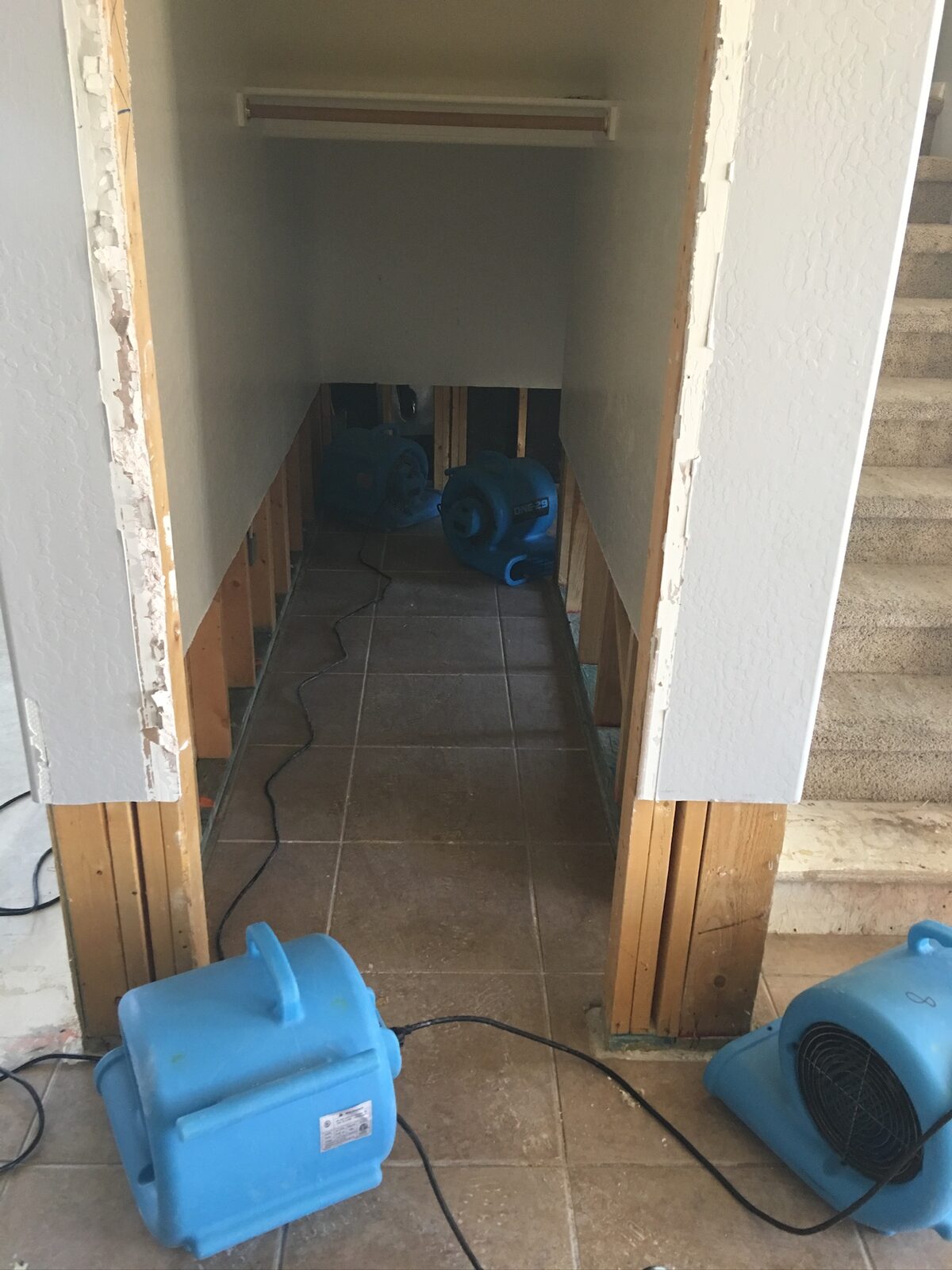
Residential reconstruction work by members of our team. See the full gallery →
More from Gold Water Fire
Abrasive Cleaning Methods for Soot on Framing and Masonry
A look at how abrasive cleaning methods remove soot from wood framing and masonry after a fire, and when each method fits the material.
AC Condensate Line Clogs & the Water Damage They Cause in Phoenix Homes
Why Phoenix AC condensate lines clog every summer, what the water damage looks like, and how to find the source before the ceiling stain spreads again.
Actual Cash Value vs Replacement Cost: Why Your Check Might Not Match the Repair Bill
Confused why your insurance check seems short after fire or water damage? Learn the difference between actual cash value and replacement cost coverage.
Not sure if your home is actually dry?
If you're dealing with water damage and the drying process feels uncertain, Gold Water Fire can walk through what's going on in your home. Reach out at (480) 999-3339 or Help@goldwaterfire.com to talk through what you're seeing.
Call (480) 999-3339Water Damage Restoration · About Gold Water Fire · Contact Gold Water Fire