
Injection Drying Wall Cavities: Drying Inside Walls Without Full Demolition
There's a particular kind of worry that sets in once water has touched a wall. You can see the baseboard is wet, maybe the paint has started to bubble a little, but the rest of the wall looks fine. So now you're stuck wondering: is it fine, actually, or is there water sitting behind that drywall doing damage you can't see? And underneath that question is usually a second one, quieter but just as real: if this has to be fixed, does that mean cutting the whole wall open? That question, whether the fix has to be as bad as the damage, is worth sitting with for a minute, because the honest answer is: not always.
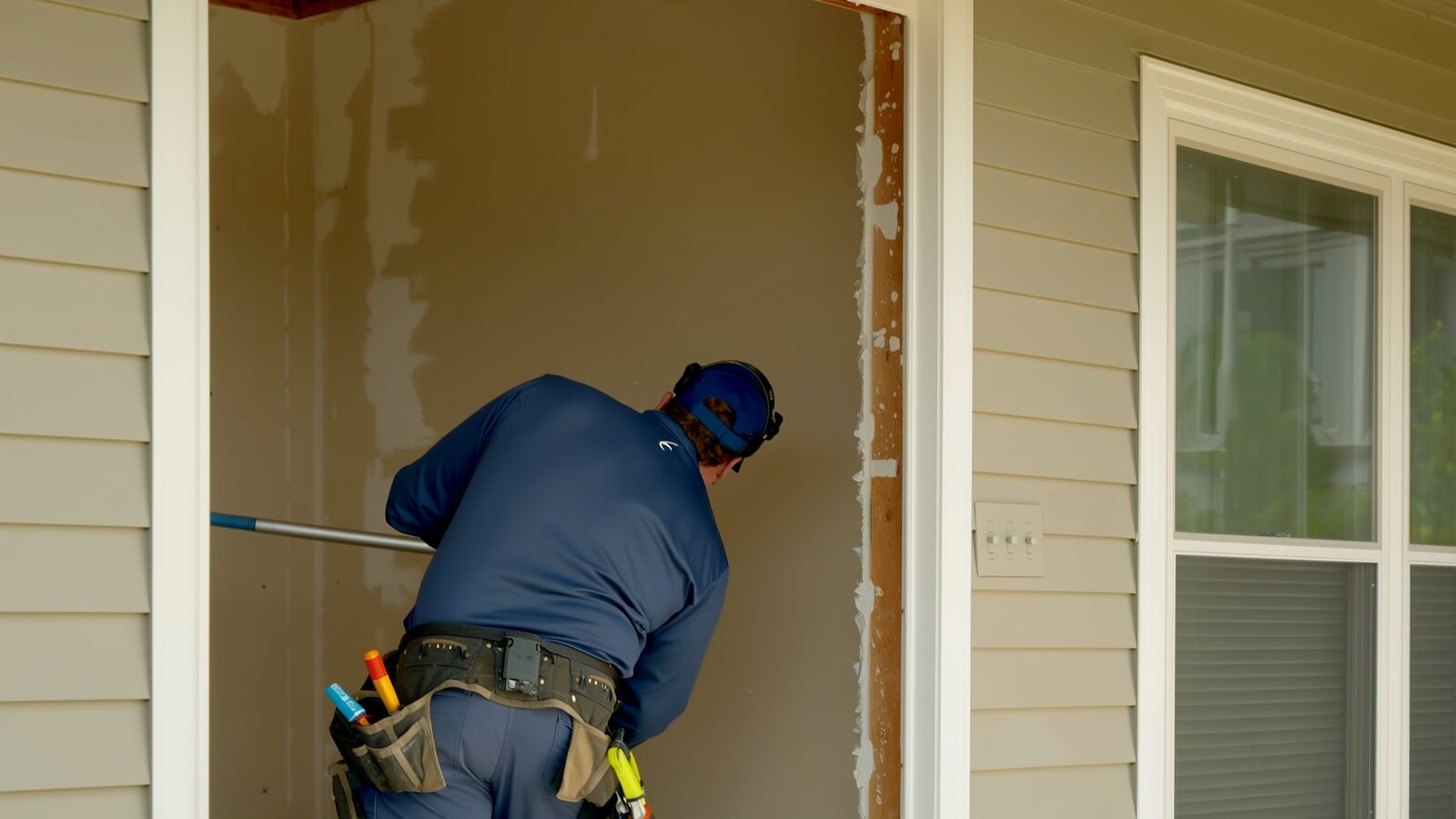
Injection Drying Wall Cavities: Drying Inside Walls Without Full Demolition
What's actually happening inside a wet wall cavity
A wall cavity is mostly empty space, framed by studs, wrapped in drywall, sometimes holding insulation. When water gets in, whether from a slow leak, a burst pipe, or water wicking up from a flooded floor, it doesn't just sit on the surface. It settles into that cavity, soaks into the bottom plate (the wood the wall sits on), saturates insulation if there is any, and clings to the back side of the drywall where you can't see it. Drywall is porous, so it wicks moisture upward too, which is why a wet spot near the floor can slowly creep higher over days. Left alone, this moisture has nowhere to go. There's no airflow inside a closed wall, so it just sits there, and that's the environment mold needs: damp material and no circulation.
How injection drying works
Injection drying is a technique that treats the wall cavity as its own small drying chamber instead of removing the wall to get at it. Small holes, often at or near the baseboard, are drilled into the wall at intervals. Through those holes, drying equipment pushes warm, dry, filtered air directly into the cavity, or in some setups, pulls moist air out of it. The air moves through the empty space inside the wall, passes across the wet framing and the back of the drywall and insulation, and carries that moisture out. It's essentially the same principle as drying a room with air movers and a dehumidifier, just scaled down and aimed at a space you can't otherwise reach without opening it up.
Why this can avoid demolition
The appeal here is obvious: a few small drill holes versus cutting out several feet of drywall, hauling out wet insulation, and rebuilding the wall afterward. When it works, injection drying can dry the framing and back side of the drywall in place, the holes get patched, and the wall is never opened at all. That means no drywall replacement, no repainting, no texture matching, and a much shorter disruption to the room. For a homeowner already dealing with a water event, skipping a demolition and rebuild phase is a real difference in cost, time, and how much of the house gets torn apart.
When injection drying isn't the right call
This method has real limits, and pretending otherwise doesn't help anyone. If the water sat for an extended period before it was caught, or if the source was contaminated water (a sewage backup, or water that picked up contaminants from flooring or soil), the wall may need to come out regardless, because drying doesn't address the biological contamination. If insulation has been thoroughly saturated, it can act like a wet sponge that never fully releases its moisture to airflow alone, and it may need to be removed rather than dried in place. And if the drywall itself has already lost structural integrity, is delaminating, or shows visible mold growth on the surface, drying isn't the point anymore, replacement is. A moisture reading and a look at how long the material has been wet usually tells you which situation you're in.
What tells you it's working
A restoration technician doesn't just guess whether a wall cavity is drying. Moisture readings are taken at the start with a moisture meter, both on the surface and sometimes with pins that reach farther into the material, and then tracked daily over the drying period. A wall cavity is considered dry when its moisture content comes back in line with unaffected areas of the same house, not just when it feels dry to the touch. That daily monitoring is really the whole job: without it, injection drying is just blowing air into a wall and hoping.
Questions people ask us
How long does injection drying take for a wall cavity?
It depends on how saturated the materials are, what the wall is made of, and the humidity in the home, so there's no single number that applies to every situation. A technician tracking daily moisture readings can tell you where a specific wall stands and roughly how much longer it needs.
Will the drill holes be visible after the wall is dry?
The holes are typically small and placed low on the wall, often near or through the baseboard, so once patched and painted they're usually not noticeable. The baseboard itself can often be removed and reinstalled to hide the work entirely.
Can injection drying be used on any wall material?
It works well with standard drywall over a hollow stud cavity. Solid materials, plaster over lath in older construction, or walls with extensive insulation can behave differently, and a technician assessing the wall in person is the only way to know if injection is appropriate versus opening the wall.
How do I know if my wall needs to be opened up instead of dried in place?
Signs that point toward opening the wall include a long gap between when the water entered and when it was discovered, contaminated water sources, visible mold on the surface, or drywall that feels soft or is separating. A moisture assessment is the reliable way to tell which path a specific wall needs.
The standard our team works to
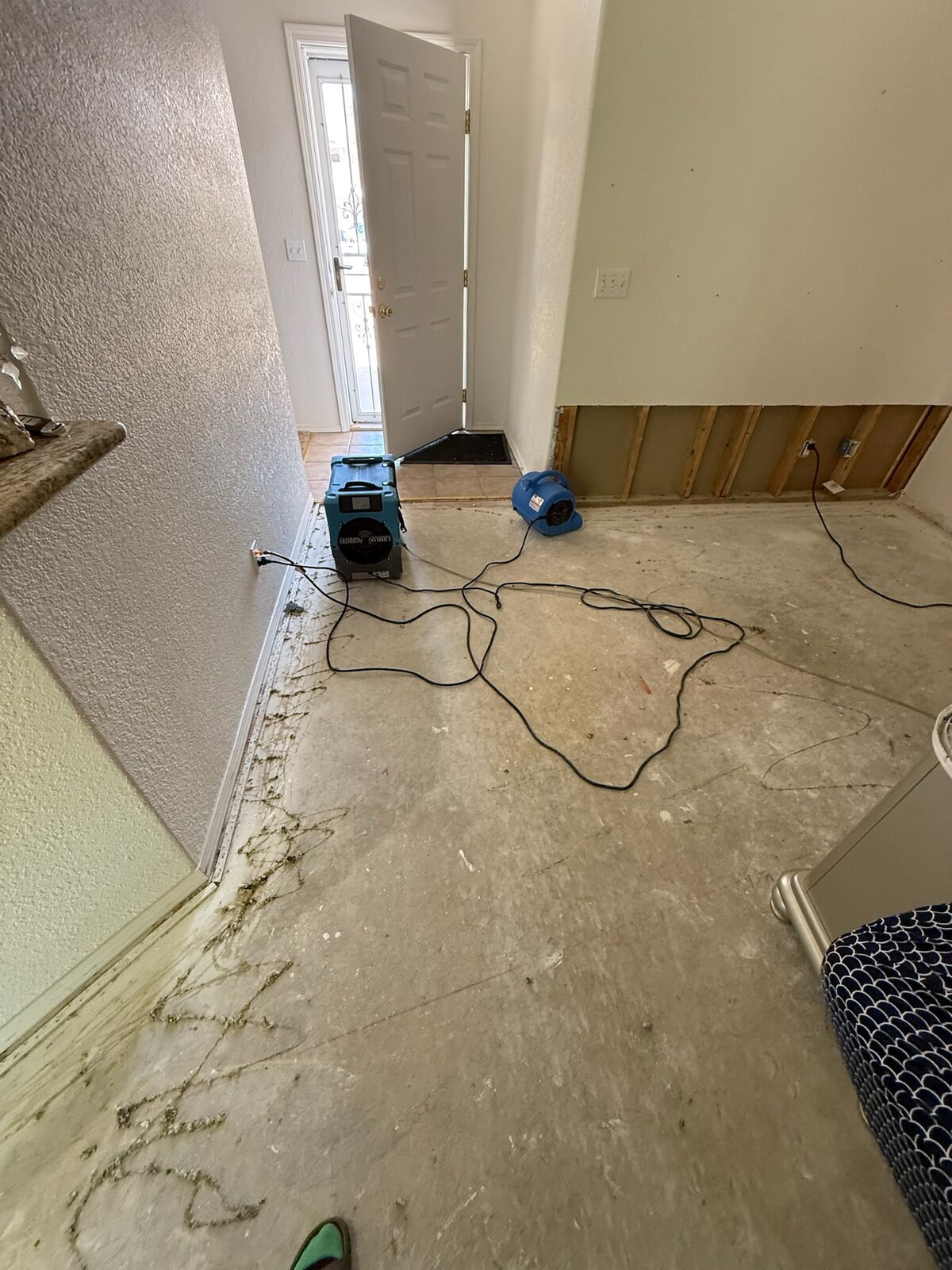
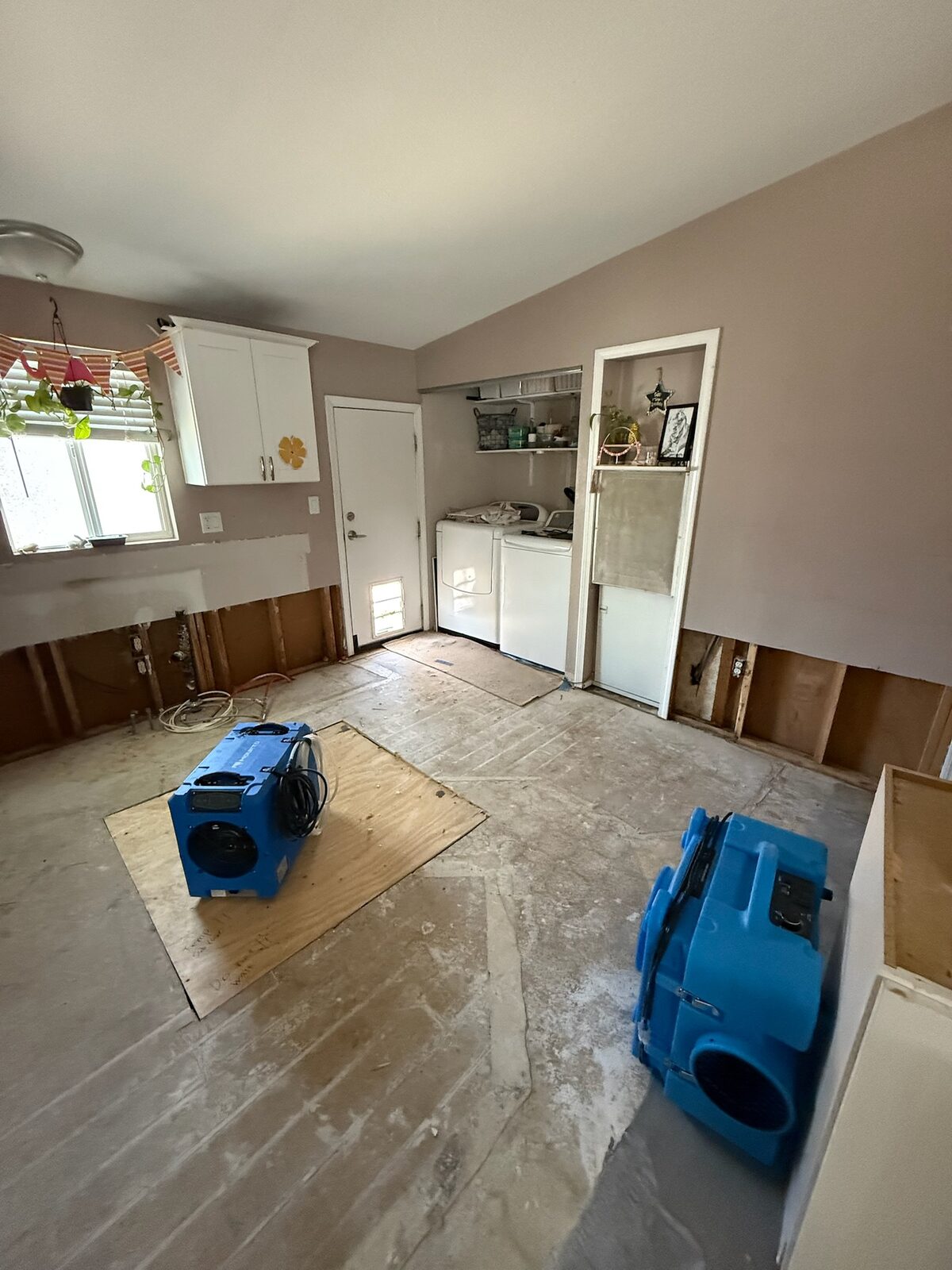
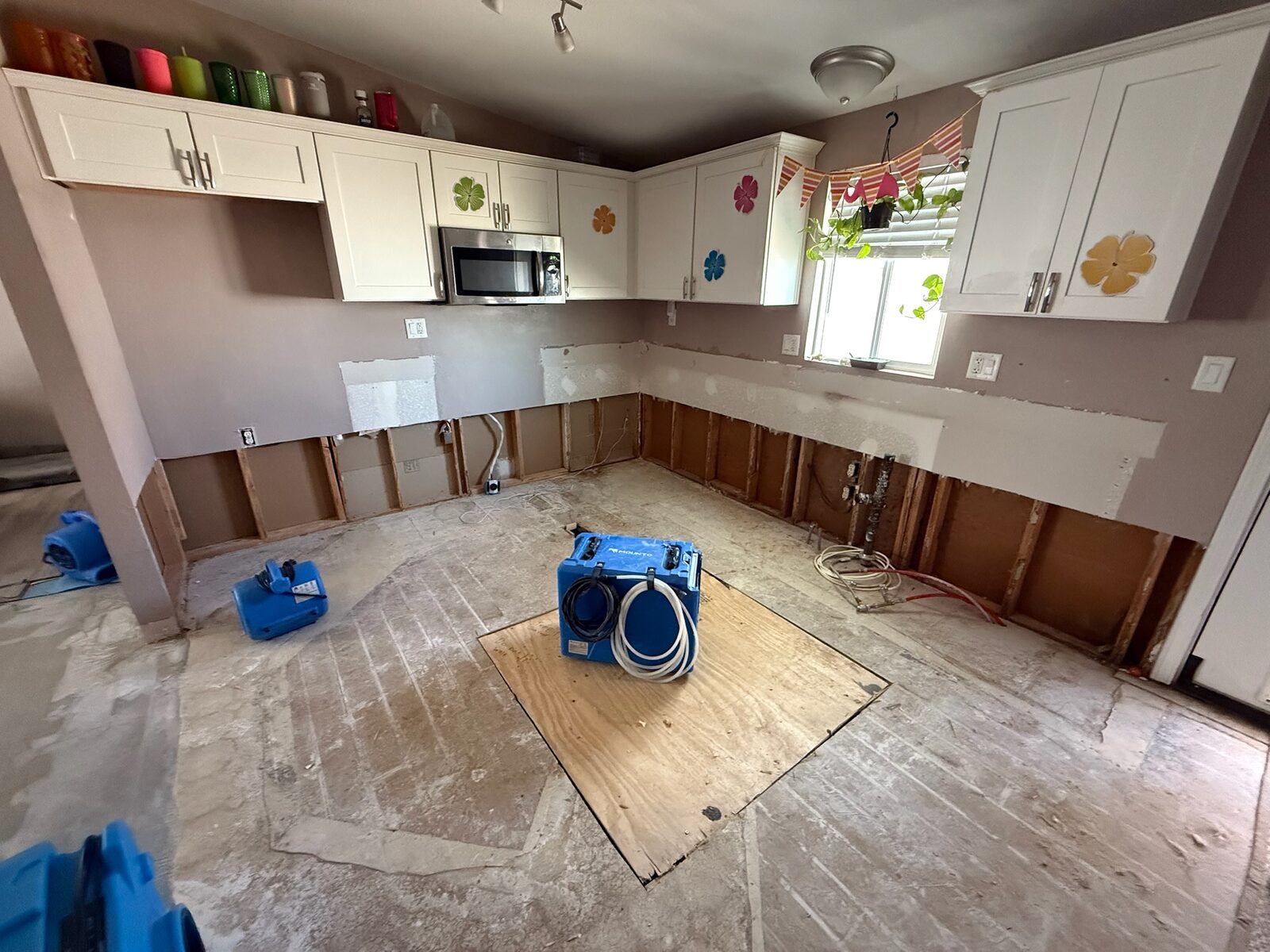
Residential reconstruction work by members of our team. See the full gallery →
More from Gold Water Fire
Abrasive Cleaning Methods for Soot on Framing and Masonry
A look at how abrasive cleaning methods remove soot from wood framing and masonry after a fire, and when each method fits the material.
AC Condensate Line Clogs & the Water Damage They Cause in Phoenix Homes
Why Phoenix AC condensate lines clog every summer, what the water damage looks like, and how to find the source before the ceiling stain spreads again.
Actual Cash Value vs Replacement Cost: Why Your Check Might Not Match the Repair Bill
Confused why your insurance check seems short after fire or water damage? Learn the difference between actual cash value and replacement cost coverage.
Not sure if your wall needs to come out or just dry out?
If you're dealing with a wet wall in the Phoenix area and want a straight answer about what it actually needs, reach Gold Water Fire at (480) 999-3339 or Help@goldwaterfire.com. You can also read more about our approach on the <a href="/water-damage-restoration.html">water damage restoration</a> page or learn about the team on our <a href="/about.html">about page</a>.
Call (480) 999-3339Water Damage Restoration · About Gold Water Fire · Contact Us