
The Practical Difference Between Mold and Mildew in a Home
You spotted something dark and fuzzy in the grout, or a musty smell that won't go away no matter how much you clean, and now you're standing there wondering if this is a quick wipe-down problem or something bigger. It's a fair thing to lose sleep over. The words "mold" and "mildew" get used interchangeably by almost everyone, but they don't mean the same thing, and knowing which one you're actually looking at changes what you should do next.
The Practical Difference Between Mold and Mildew in a Home
What mildew actually is
Mildew is a surface-level fungus. It grows flat, usually in a powdery or downy layer, and it stays on top of whatever it's growing on rather than digging into it. In homes, it shows up most often in damp, low-airflow spots: shower tile, window sills, the top of a washing machine gasket, sometimes on fabric or paper left in a humid room. It's typically white, gray, or light yellow when it starts, and it can turn brown or black as it ages, which is part of why people confuse it with mold. The texture is the giveaway: mildew tends to look dusty or fluffy, almost like a light coating of flour or ash. It wipes off relatively easily with a cloth and cleaner because it hasn't attached itself to the material underneath.
What mold actually is
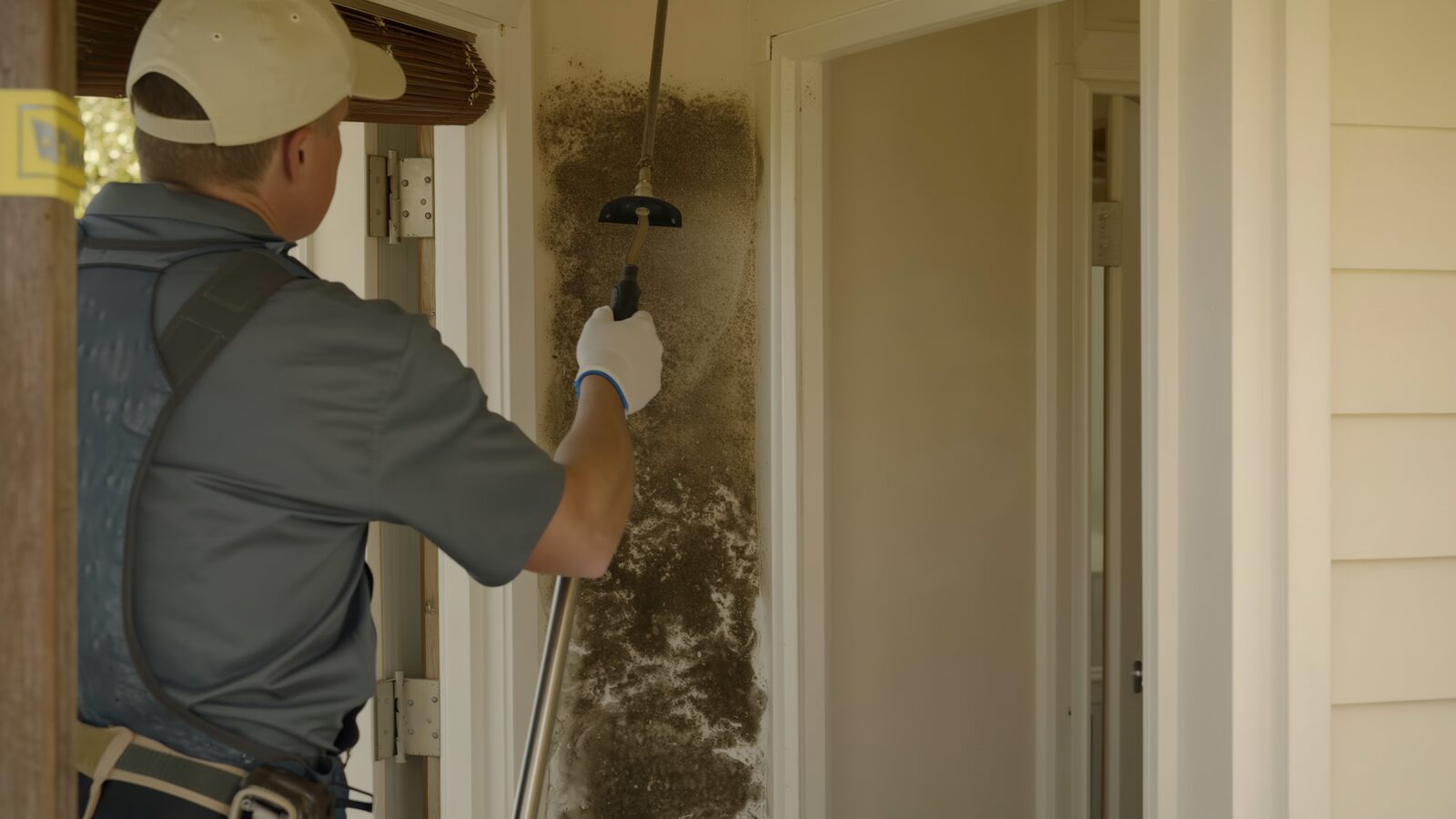
Mold is a broader and more aggressive category of fungus. Instead of sitting on the surface, mold sends threadlike roots (hyphae) into whatever it's growing on, whether that's drywall paper, wood framing, carpet backing, or the paper facing on insulation. That's why mold often looks fuzzy, slimy, or textured rather than flat, and why it comes in a wider range of colors: black, green, blue, orange, even pink. Because it's actually feeding on and breaking down the material it's attached to, mold causes structural and cosmetic damage that goes beyond what you can see on the surface. Wiping the visible spot doesn't remove what's underneath.
How to tell them apart without lab testing
You don't need a lab to make a reasonable call in most cases. Try the wipe test: dab a small amount of diluted bleach on the spot. If it lightens noticeably within a couple of minutes, it's likely mildew, which sits on the surface. If the color stays dark or barely changes, the growth has probably penetrated the material, which points to mold. Also look at texture and depth: flat and powdery leans mildew, raised and fuzzy or slimy leans mold. And consider location: mildew tends to stay confined to consistently humid surfaces like tile and window tracks, while mold can show up anywhere there's been sustained moisture, including inside walls, under flooring, or behind baseboards where you can't see it directly.
Why the distinction matters for your home
If it's mildew, cleaning and improving airflow usually resolves it, since it hasn't damaged the material it's growing on. If it's mold, the visible patch is often only part of the story. Because mold roots into the material, the presence of a small visible spot can mean moisture has been sitting in that area long enough for growth to establish itself, which raises the question of what's happening behind the wall or under the floor. In Phoenix homes, this often traces back to a slow leak, condensation around AC lines, a roof issue, or water intrusion from a past event that never fully dried out. Either way, growth is a signal that moisture got somewhere it shouldn't have, and figuring out the source matters as much as dealing with what's visible now.
When to stop treating it as a cleaning job
A few signs suggest you're dealing with more than a surface issue: the growth keeps coming back in the same spot after cleaning, it's spreading rather than staying contained, you can smell a musty odor in a room where you can't see any visible growth, or the area involved is larger than roughly a couple of square feet. Any of those point to moisture that hasn't been fully addressed, and at that point, scrubbing the surface is treating a symptom rather than the cause. If you're dealing with a known water event, whether that's a slow leak or a larger loss, our water damage restoration page walks through how drying and moisture assessment works. If the growth followed fire damage and the water used to fight it, our fire damage restoration page covers that overlap. And if walls, flooring, or framing need to come out and be rebuilt because of what was found underneath, that's the kind of work covered on our reconstruction and rebuild page.
Questions people ask us
Can mildew turn into mold if I ignore it?
Mildew and mold are different organisms, so mildew doesn't literally transform into mold. But the conditions that let mildew grow (sustained moisture and poor airflow) are the same conditions mold needs, so an ignored mildew problem in a humid spot can end up sharing space with actual mold over time, especially if moisture is getting into a material rather than just sitting on its surface.
Does a musty smell always mean mold?
A musty odor usually means some kind of fungal growth is present, whether that's mold or mildew, even if you can't see it. Smell without visible growth often means the growth is hidden, behind a wall, under flooring, or inside a cabinet, and it's worth investigating rather than assuming it will go away on its own.
Is black growth always mold and not mildew?
Not necessarily. Mildew can darken to a gray or black shade as it ages, so color alone isn't a reliable way to tell the two apart. Texture (flat and powdery versus raised and fuzzy) and how the material behaves after a light cleaning test are better indicators than color.
Why does this keep happening in the same spot in my house?
Recurring growth in one location almost always means there's a consistent moisture source feeding it, whether that's condensation, a slow leak, poor ventilation, or water that never fully dried out after a past event. Cleaning the visible growth without addressing that source usually just means it comes back.
The standard our team works to
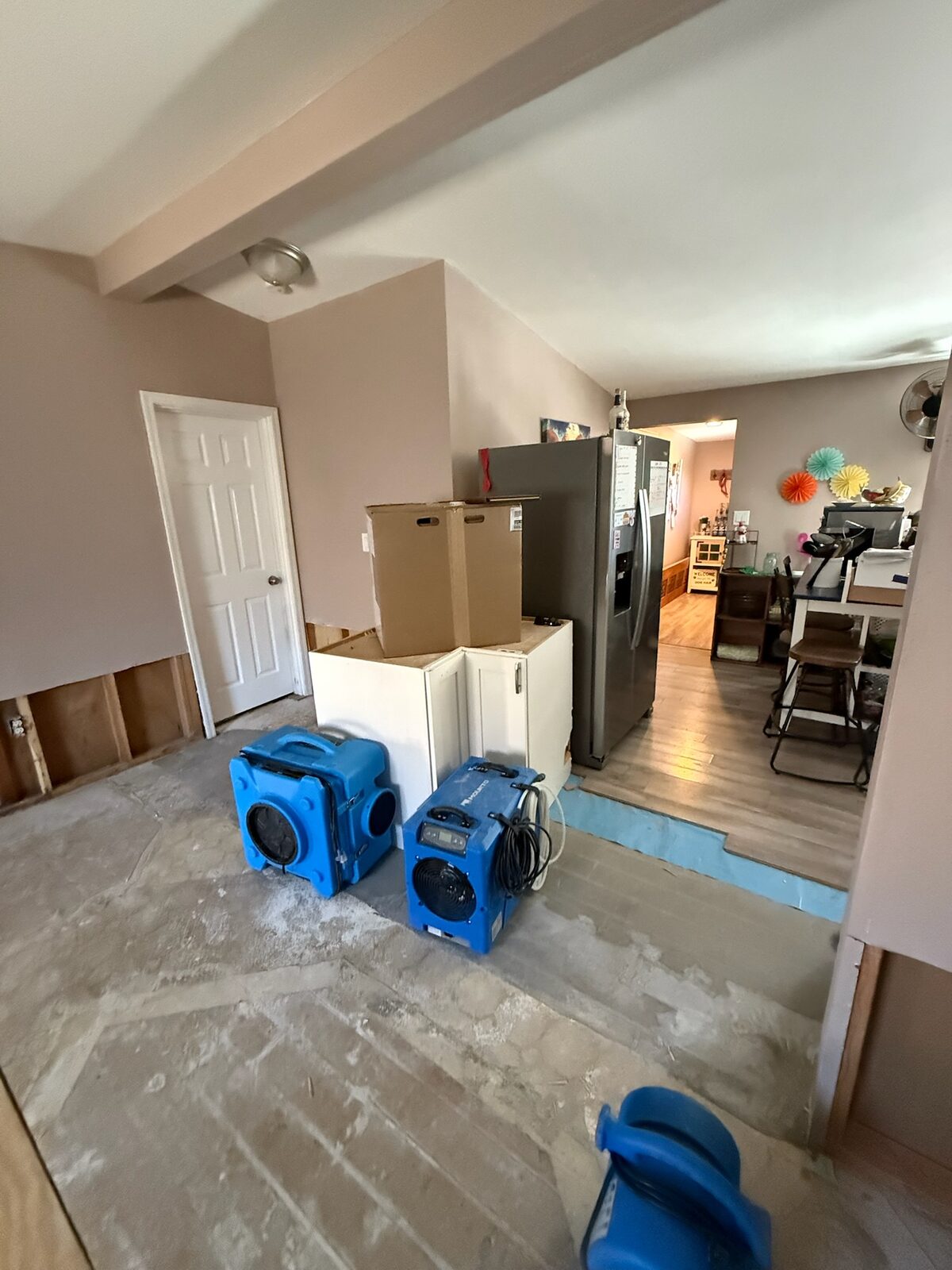
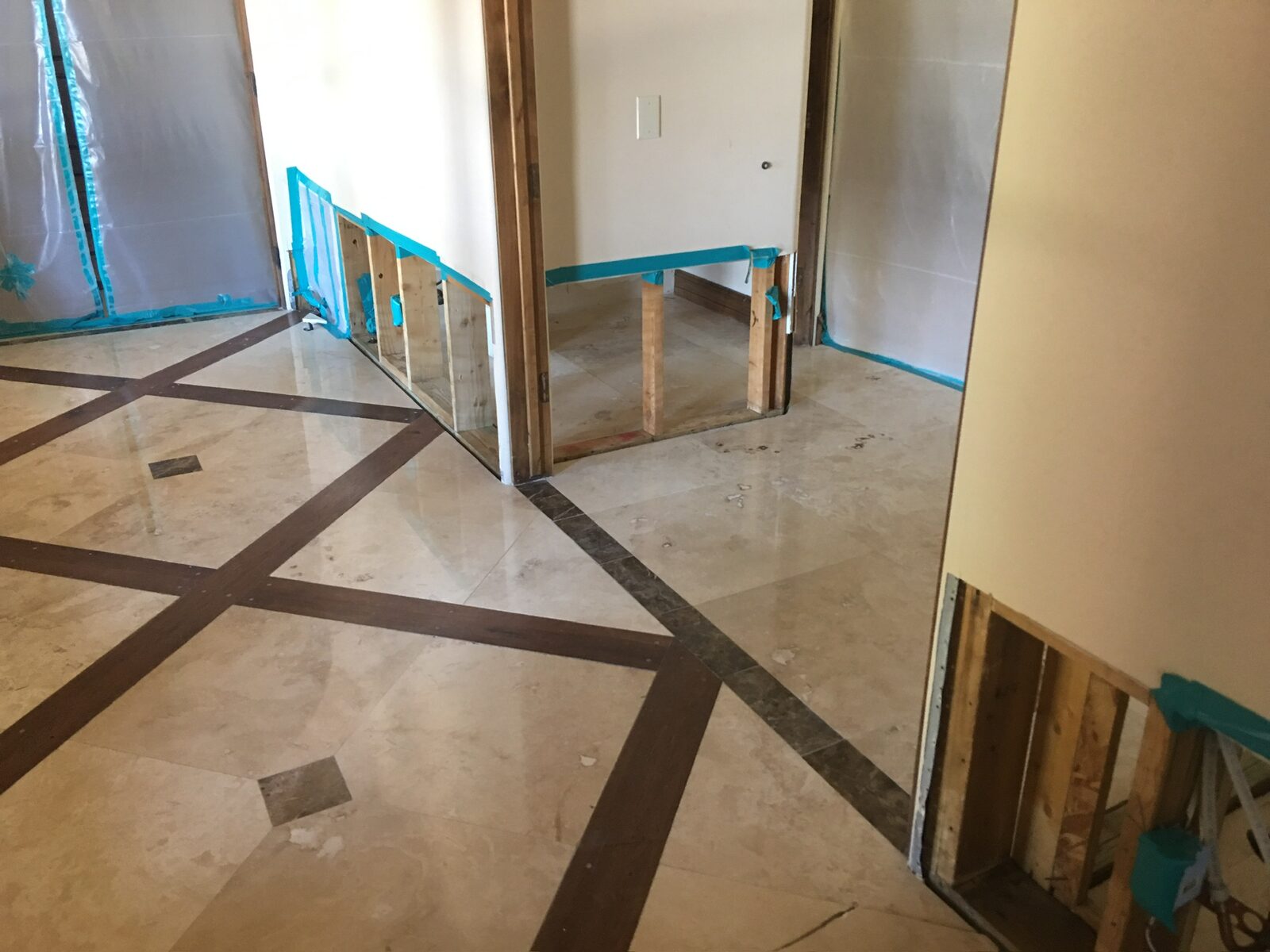
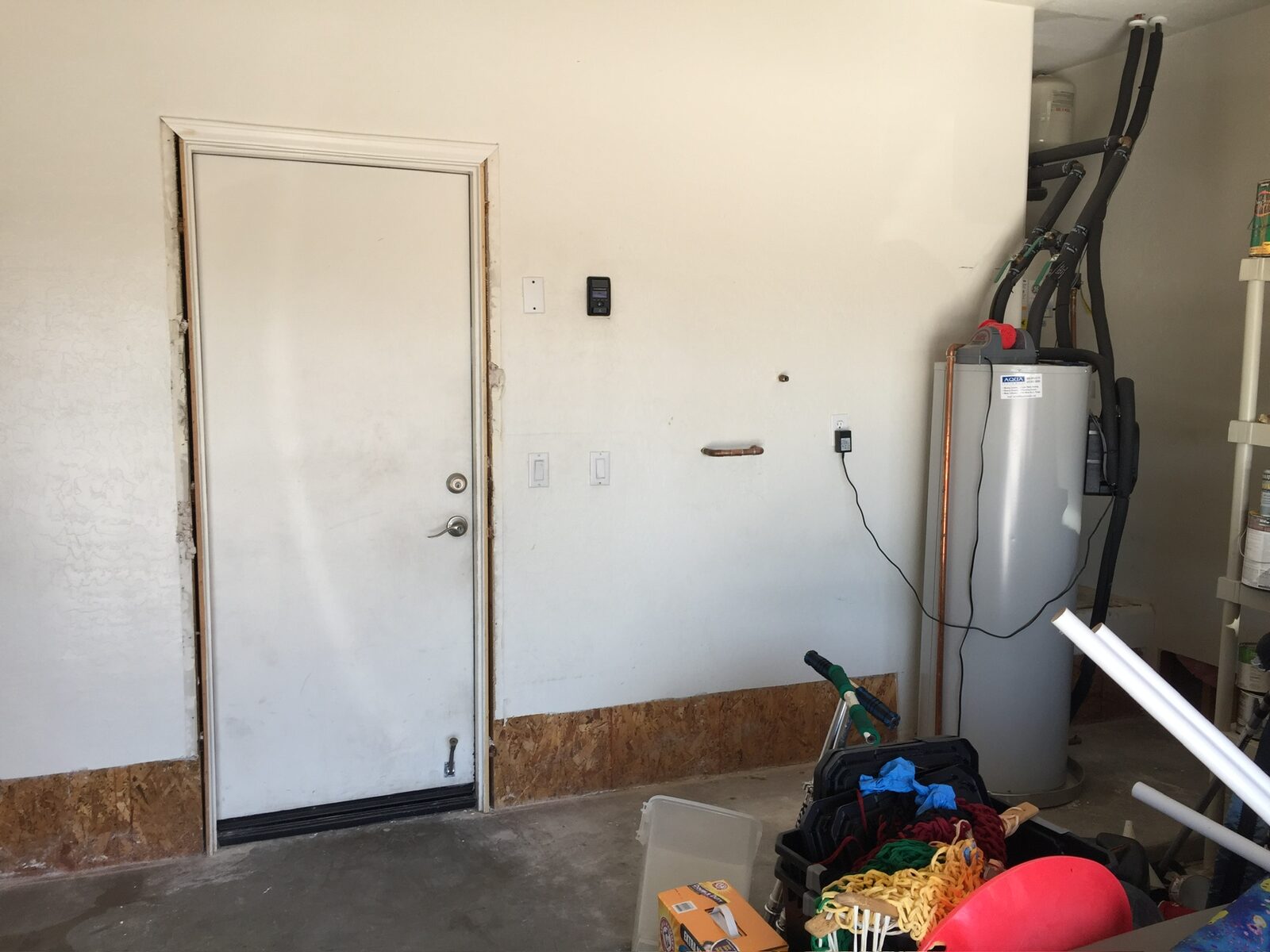
Residential reconstruction work by members of our team. See the full gallery →
More from Gold Water Fire
Abrasive Cleaning Methods for Soot on Framing and Masonry
A look at how abrasive cleaning methods remove soot from wood framing and masonry after a fire, and when each method fits the material.
AC Condensate Line Clogs & the Water Damage They Cause in Phoenix Homes
Why Phoenix AC condensate lines clog every summer, what the water damage looks like, and how to find the source before the ceiling stain spreads again.
Actual Cash Value vs Replacement Cost: Why Your Check Might Not Match the Repair Bill
Confused why your insurance check seems short after fire or water damage? Learn the difference between actual cash value and replacement cost coverage.
Not sure what you're looking at or where it's coming from?
If you've found growth that keeps returning, smells musty without a visible source, or followed a water or fire event in your home, reach out to Gold Water Fire at (480) 999-3339 or Help@goldwaterfire.com. We serve Phoenix, Mesa, Chandler, Scottsdale, Gilbert, Glendale, and the surrounding Valley.
Call (480) 999-3339Water Damage Restoration · Fire Damage Restoration · Reconstruction & Rebuild · Contact Gold Water Fire