
The Containment Steps in a Mold Remediation, In Order
If you have found mold in your home and started reading about what happens next, you are probably somewhere between two feelings: relief that you finally found the source of that smell or that stain, and a new kind of worry about what it takes to actually get rid of it. Maybe you already tried wiping it down once and it came back. Maybe you are wondering if scrubbing it yourself is going to make things worse instead of better. That uncertainty is normal. Mold does not behave like ordinary household mess, and most people have never had a reason to learn how professionals actually contain it before they clean it. Understanding the order of operations, and why each step exists, is a reasonable thing to want before you decide what to do next.
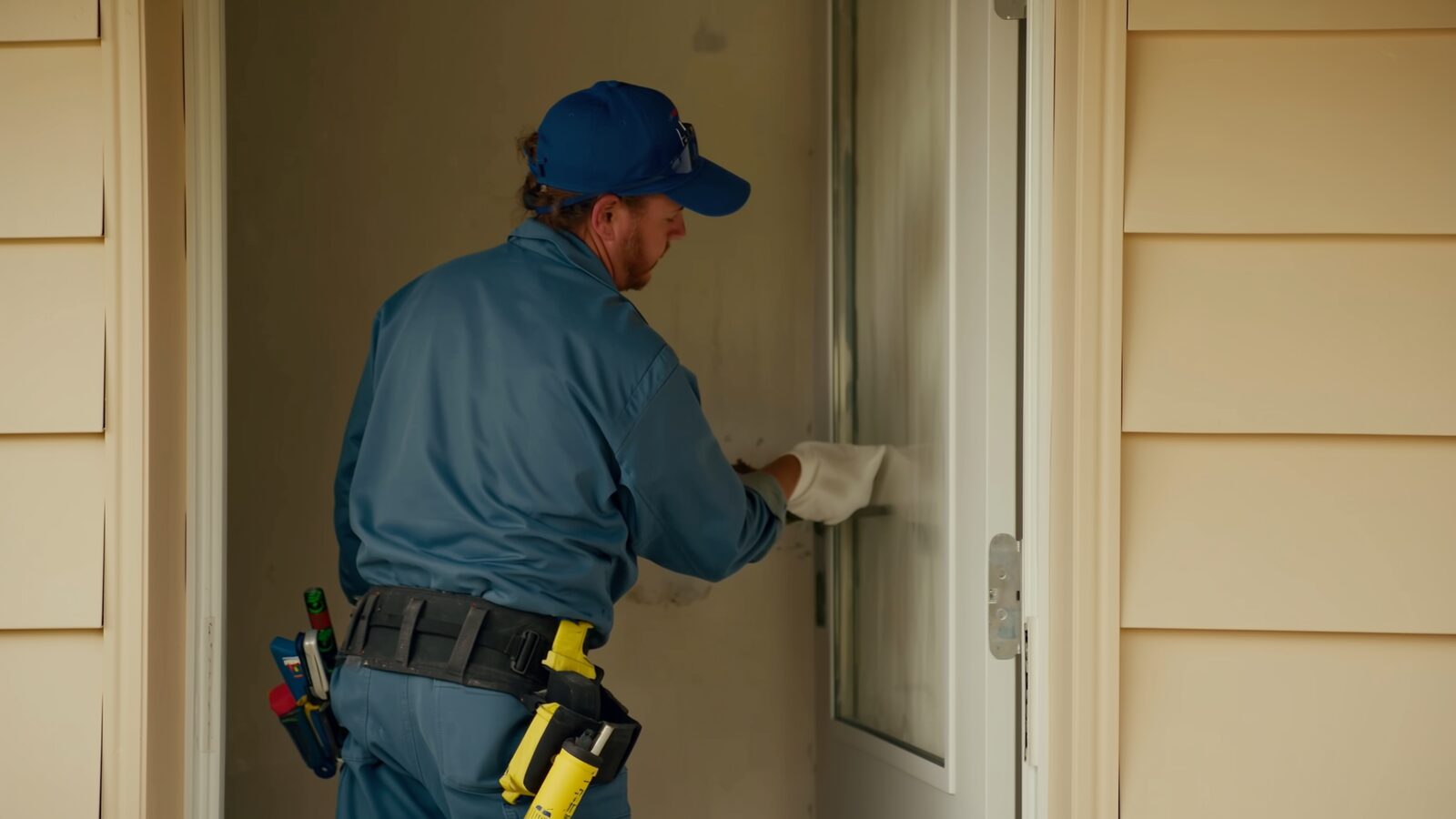
The Containment Steps in a Mold Remediation, In Order
Mold spreads the moment it is disturbed
Mold might look like a fixed stain on a wall or a patch of discoloration under a sink, but the visible growth is only part of the problem. Mold colonies release spores constantly, and disturbing them, by scrubbing, cutting into drywall, pulling up flooring, or even just aggressive air movement from a fan, sends those spores into the air where they can travel through a house and settle somewhere new. This is the reason remediation does not start with cleaning. It starts with containing the space so that whatever gets stirred up during removal stays inside a controlled area instead of spreading to rooms that were never affected in the first place.
How containment is actually built
The specific setup varies with the size and location of the mold, but the sequence generally follows the same logic from start to finish.
1. Assess and define the work area
Before anything is sealed, the affected area gets identified, including how far the mold has traveled behind walls, under flooring, or through insulation. This defines the boundary for containment, which is usually built a few feet beyond the visible damage since mold often extends further than it appears on the surface.
2. Shut down HVAC and seal vents
Any supply or return vents inside the work area are sealed with plastic sheeting and tape, and the HVAC system serving that area is shut off. This stops the ductwork from acting as a highway for spores to reach the rest of the house.
3. Build physical barriers
Plastic sheeting is hung floor to ceiling to physically wall off the work area from the rest of the home. For larger jobs this often includes a decontamination chamber, a small double-doored entry zone where workers and equipment pass through without carrying spores into clean areas of the house.
4. Establish negative air pressure
A negative air machine with a HEPA filter is placed inside the containment area and run continuously. It pulls air out of the sealed space and exhausts it outside the home, which keeps air pressure inside the containment slightly lower than the surrounding rooms. That pressure difference is what actually stops spores from drifting outward through gaps in the plastic.
5. Remove and bag contaminated materials
With containment and negative pressure in place, affected drywall, insulation, flooring, or other porous materials are removed. Contaminated debris is bagged inside the containment area itself before it is carried out, so it does not get exposed to clean air on the way to disposal.
6. Clean and treat remaining surfaces
Non-porous surfaces that can be salvaged, framing, studs, subfloor, are cleaned with antimicrobial treatments. This step happens after demolition so surfaces are not recontaminated by dust and debris still being generated.
7. Dry the space completely
Since mold needs moisture to grow, the containment area is dried thoroughly before anything new goes back in. Skipping this step, or rushing it, is one of the most common reasons mold returns after a remediation.
8. Final clearance and teardown
Once the area has been cleaned, dried, and visually inspected, containment barriers come down. Some remediation plans include third-party air quality testing at this stage before reconstruction begins, though the specific testing standard used varies by provider and situation.
Why skipping steps causes problems later
It can be tempting to shortcut containment, especially for a mold patch that looks small and manageable. But an area that looks contained to the eye is not the same as an area with controlled air pressure and sealed pathways. Mold that gets disturbed without proper containment can end up in HVAC systems, wall cavities in other rooms, or furniture and belongings that were nowhere near the original problem. If the mold in your home followed water damage, whether from a leak, a slow plumbing failure, or a larger flooding event, it is also worth understanding how the original moisture source is handled, since remediation without addressing the underlying water problem tends to be temporary. You can read more about that side of the process on the water damage restoration page.
What happens after remediation is done
Once mold has been removed and the space has dried and cleared, some homes need drywall, flooring, or framing replaced, especially if materials had to be cut out during containment. That rebuild work is a separate phase from remediation itself, and it is worth thinking about early since the two often connect directly. You can see how that phase works on the reconstruction and rebuild page, or reach out through the contact page if you want to talk through what your specific situation looks like.
Questions people ask us
Can I just clean visible mold myself without containment?
For very small areas, some homeowners do handle surface cleaning on their own. But mold spores are microscopic and airborne the moment they are disturbed, so if the affected area is larger than a small patch, or if you are cutting into drywall or removing flooring, containment becomes the difference between solving the problem and spreading it to rooms that were never affected.
Why does containment involve sealing off HVAC vents?
Your HVAC system is one continuous loop of moving air. If a vent inside the work area stays open during remediation, disturbed spores can travel through the ductwork and settle in bedrooms, living rooms, or offices far from where the mold started. Sealing vents before work begins is one of the simplest ways to prevent that spread.
How long does containment stay up during a remediation project?
It depends on the size of the affected area, how long removal and cleaning take, and how long it takes air quality to stabilize afterward. Containment generally stays in place through demolition, cleaning, and drying, and comes down only after the work area has been visually inspected and cleared.
Is negative air pressure the same as just running a fan?
No. A negative air machine is a sealed unit with a HEPA filter that pulls air out of the containment area and exhausts filtered air outside, which is what actually lowers spore counts. A regular fan just moves air around the room and can push spores into places they were not before.
The standard our team works to
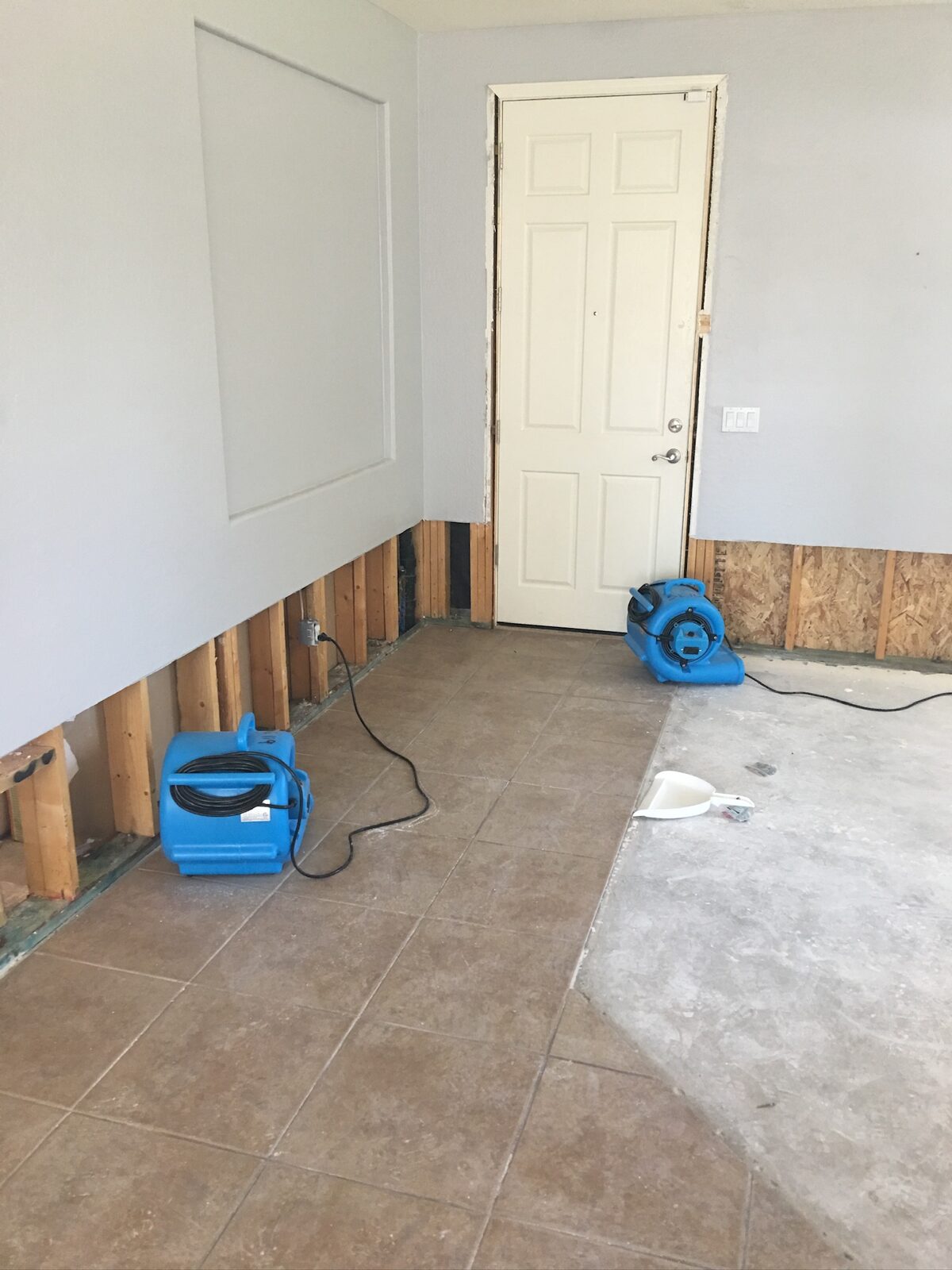
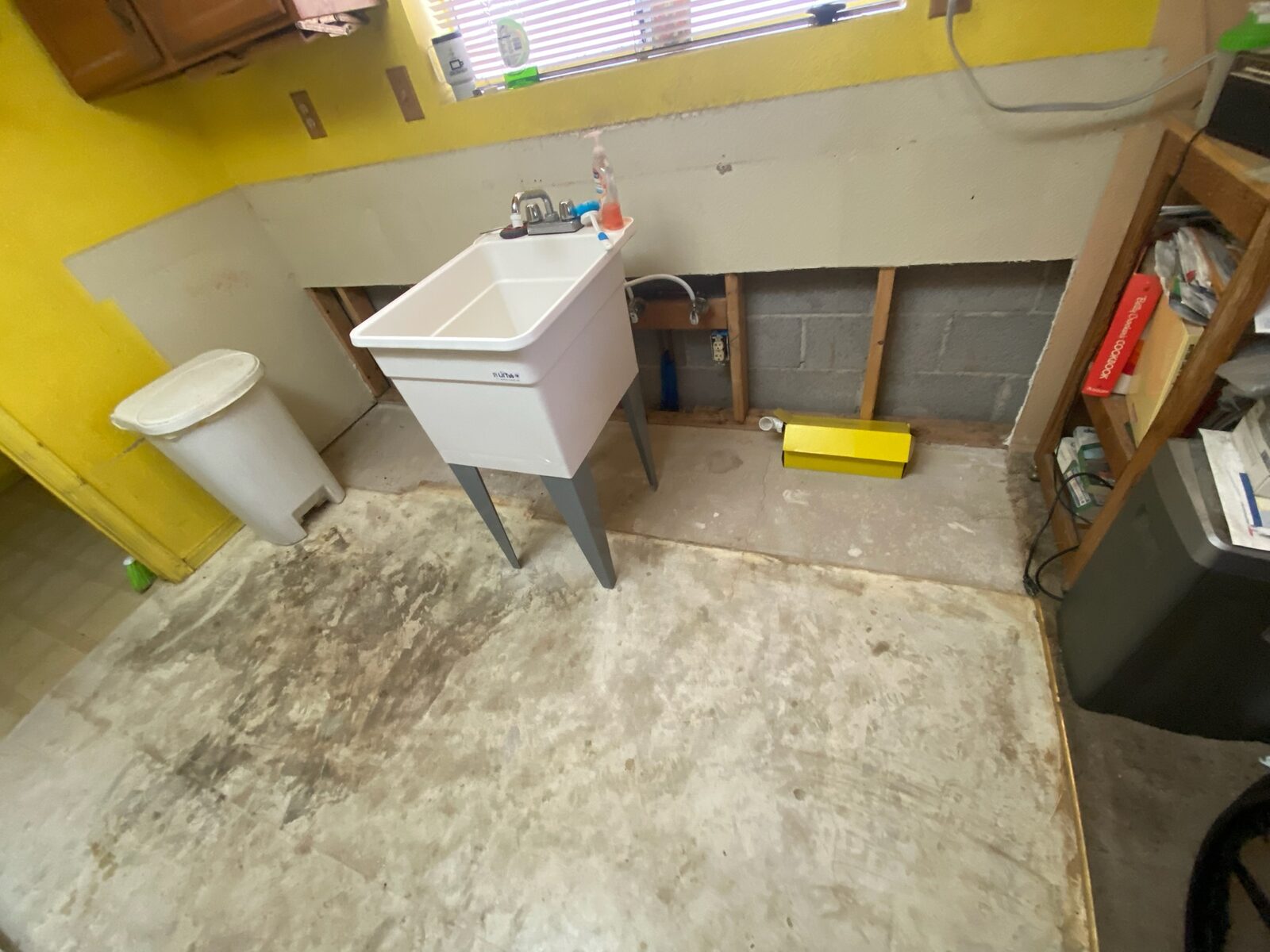
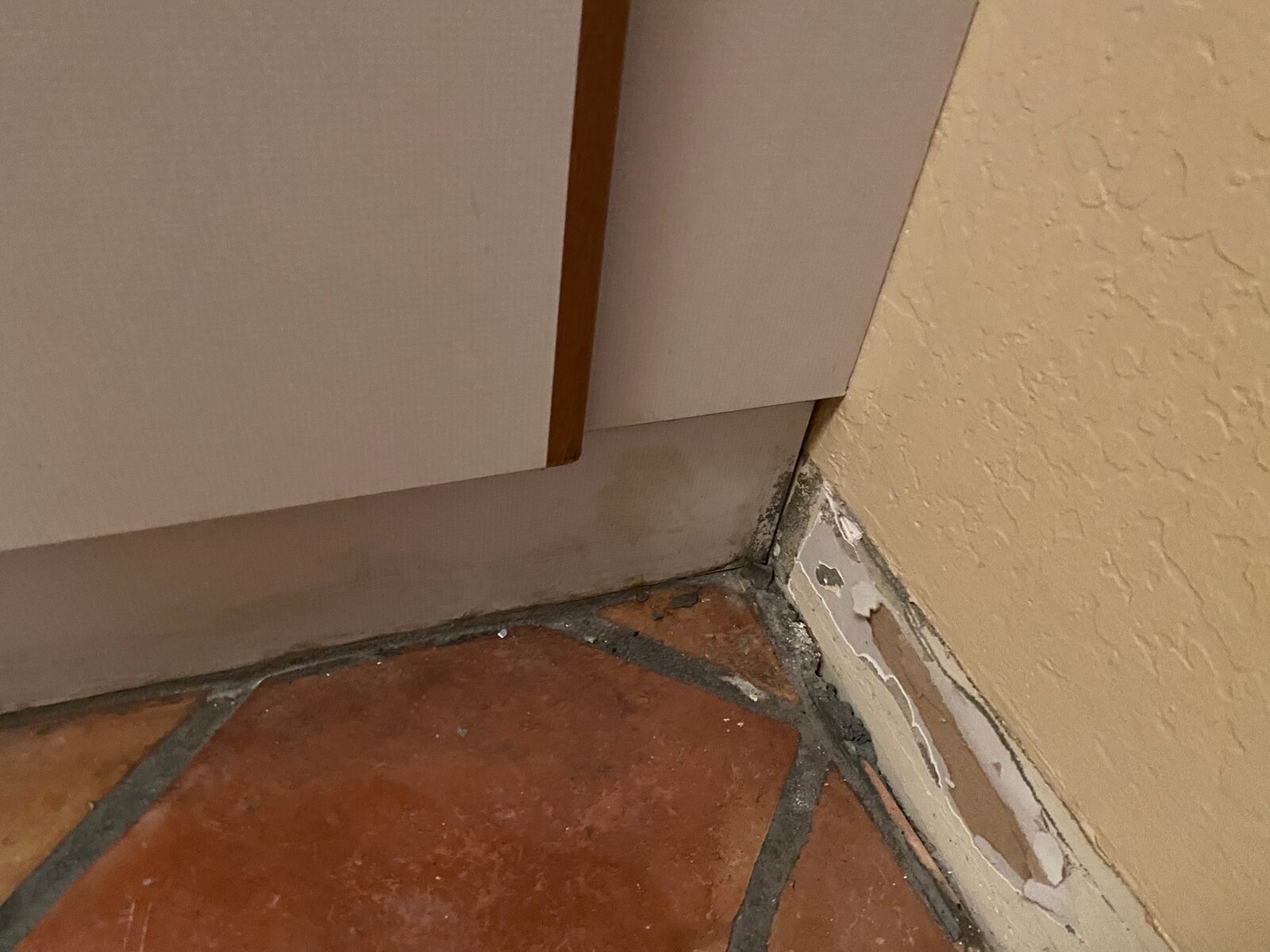
Residential reconstruction work by members of our team. See the full gallery →
More from Gold Water Fire
Abrasive Cleaning Methods for Soot on Framing and Masonry
A look at how abrasive cleaning methods remove soot from wood framing and masonry after a fire, and when each method fits the material.
AC Condensate Line Clogs & the Water Damage They Cause in Phoenix Homes
Why Phoenix AC condensate lines clog every summer, what the water damage looks like, and how to find the source before the ceiling stain spreads again.
Actual Cash Value vs Replacement Cost: Why Your Check Might Not Match the Repair Bill
Confused why your insurance check seems short after fire or water damage? Learn the difference between actual cash value and replacement cost coverage.
Not sure how far the mold has spread in your home?
Mold that follows a leak or flood usually means the water problem needs attention too. Gold Water Fire handles water damage restoration across the Phoenix area and can help you find where the moisture is coming from. Reach the team at (480) 999-3339 or Help@goldwaterfire.com.
Call (480) 999-3339Water Damage Restoration · Fire Damage Restoration · Reconstruction & Rebuild · Contact Gold Water Fire