
The Difference Between Category 1, 2 & 3 Water Damage, and Why It Changes How a Job Is Handled
You have probably been told two different things by two different people. One person looked at the wet floor and said it would dry out on its own. Another said the baseboards and part of the drywall had to come out. Both of them were looking at the same water, and neither of them explained why they disagreed. That gap is where most of the frustration lives: not the water itself, but the sense that the rules keep changing depending on who is standing in your kitchen. It is a reasonable thing to sit with. Water damage is one of the few household problems where the same amount of water can mean a fan and a weekend, or it can mean cutting into a wall, and nothing about looking at the puddle tells you which one you have.
The Difference Between Category 1, 2 & 3 Water Damage, and Why It Changes How a Job Is Handled
Water damage is sorted by what is in the water, not how much of it there is
The restoration industry sorts water losses into three categories. The category has nothing to do with volume. A quarter inch of water across a whole living room can be a lower category than a small backup in a laundry room. What the category describes is contamination: what was dissolved or suspended in the water when it arrived, and what it has picked up since. That single distinction is the reason two people can look at the same wet carpet and reach opposite conclusions. One is thinking about how wet it is. The other is thinking about what is in it.
Category 1: clean water
Water from a sanitary source. A broken supply line, an overflowing sink with the tap running, a water heater tank that split, rainwater that came straight through a roof opening, a burst copper line in a wall. At the moment it escapes, it carries no meaningful contamination. In most Category 1 losses, materials can be dried in place if drying starts before the water sits.
Category 2: gray water
Water with significant contamination that could cause illness or discomfort if swallowed. Washing machine discharge, dishwasher overflow, toilet overflow that contains urine but no solids, water from an aquarium, sump pump failures, and condensate from an HVAC drain pan. There is enough organic and chemical load in it that porous materials it saturates are usually not salvageable.
Category 3: black water
Grossly contaminated water carrying pathogens, toxins, or other harmful agents. Sewage backups, toilet overflow with solids, water from beyond the trap, rising groundwater, and flooding from rivers or washes. Category 3 also covers water that has been in contact with contaminated building materials. This is handled as a containment and removal job first, and a drying job second.
Categories move. They almost always move in one direction
This is the piece that catches homeowners off guard, and it explains why the answer you got on Monday was not the answer you got on Thursday. Clean water does not stay clean. Once Category 1 water sits in a building, it begins picking up whatever it touches: dust and construction debris inside a wall cavity, adhesive and dyes from carpet backing, the paper facing on drywall, whatever was on the floor of a garage, particleboard from the underside of a cabinet. Warm still water in a dark cavity is an environment where bacteria and mold amplify quickly. General industry guidance treats roughly two days as the point where clean water is presumed to have degraded, and in a warm Arizona house with the air conditioning off, that clock runs faster, not slower. So a pipe that broke while you were at work on Friday and was discovered Sunday night is not, functionally, a clean water loss anymore, even though it started as one. The same is true of water that has traveled: water that leaves a second floor bathroom as Category 1 and passes through insulation, a ceiling cavity, and a light fixture before it lands is not the same water when it hits the floor below. And the reverse never happens. Water does not clean itself up while it sits. That one-way movement is why speed matters more in water damage than in almost any other kind of property loss, and why the honest answer to "can this be dried out?" often depends on a question about time rather than a question about the water.
Why the category decides what gets dried and what gets cut out
The category sets the whole plan: what protective equipment gets worn, whether the work area gets sealed off, what antimicrobial products are appropriate, whether air is filtered and exhausted, and above all which materials can be dried in place versus which have to be removed and rebuilt. That last decision is the one that determines cost and timeline, and it is not arbitrary.
Category 1 approach
Extraction, then structural drying with air movers and dehumidifiers, with moisture readings tracked over several days. Carpet is often lifted and dried with the pad replaced. Drywall may get small inspection or ventilation holes near the base rather than full removal. Solid wood, tile, and concrete usually dry and stay. The goal is to return materials to a documented dry standard, not to demolish.
Category 2 approach
Extraction plus removal of porous materials that absorbed the water: carpet pad, most carpet, saturated drywall, wet insulation, particleboard cabinet bases and toe kicks. Semi porous and non porous surfaces are cleaned and treated with an antimicrobial. Drying still happens, but only after the contaminated absorbent materials are gone, because you cannot dry contamination out of a sponge.
Category 3 approach
Containment first: sealing the affected area, negative air pressure, air scrubbing, protective equipment for anyone working. All porous materials in the affected zone come out and are disposed of, typically including drywall cut above the visible water line, insulation, carpet, pad, and affected cabinetry. Remaining structure is cleaned, treated, verified, and only then dried. Rebuild follows as a separate phase of work.
Why cutting is sometimes the faster path
Homeowners often ask restorers to try drying instead of removing. With clean water caught early, that is frequently the right call. With contaminated water, drying a saturated porous material leaves the contamination in place and simply makes it dry contamination, which can become airborne later. Removing it is not upselling, it is the only way to actually resolve it.
Questions that usually narrow it down before anyone arrives
You will not diagnose your own category with certainty, and you should not have to. But a few questions get you most of the way toward understanding which conversation you are about to have. Where did the water come from, exactly? Supply side (the pressurized lines feeding fixtures) points toward Category 1. Drain side, appliance discharge, or anything past a trap points toward Category 2 or 3. How long was it there? If you know the moment it started, say so. If you found it after a weekend away, or the drywall was already soft and stained when you noticed, the water has been working for a while and the category has likely shifted. How far did it travel, and through what? Water that crossed a threshold into a garage, ran under a wall into a closet, or came down through a ceiling has picked things up on the way. What does it smell like? A sour, earthy, or sewage odor is meaningful information. So is the absence of one. What is wet? Tile and sealed concrete are forgiving. Carpet pad, drywall, insulation, laminate flooring, and particleboard cabinetry are absorbent, and they are usually what drives the removal decision. If what you are describing sounds like a clean supply line caught quickly, water damage restoration is the starting point. If materials have to come out and the room needs to be put back, the reconstruction and rebuild side of the work is what follows the drying. And if you would rather just describe it to someone out loud than sort it yourself, you can reach us or call (480) 999-3339.
Questions people ask us
Can Category 3 water damage ever be dried instead of removed?
Not the porous materials. Carpet, pad, insulation, and drywall that absorbed grossly contaminated water are removed rather than dried, because drying leaves the contamination in the material. Non porous and semi porous surfaces such as tile, sealed concrete, framing, and metal can typically be cleaned, treated, verified, and then dried in place.
My pipe broke with clean water. Why is anyone talking about removing drywall?
Two reasons. First, time: clean water that has sat begins to degrade, and general industry guidance treats roughly two days as the point where it is presumed no longer clean. Second, access: even in a genuine clean water loss, wet insulation inside a wall cavity often cannot be dried through intact drywall, so a portion may be opened to reach it.
Does a toilet overflow automatically mean Category 3?
Not automatically. Overflow from the bowl containing urine but no solid waste is generally treated as Category 2. Overflow containing solid waste, or any backup coming from beyond the trap or from the sewer line, is treated as Category 3, which means containment and removal rather than drying in place.
Does the category affect how the loss is documented for insurance?
It usually shapes the documentation. The source of the water, how long it was present, the category assigned, moisture readings, and the materials removed are all typically recorded because they explain why the scope of work looks the way it does. Coverage itself depends on your specific policy and carrier.
The standard our team works to
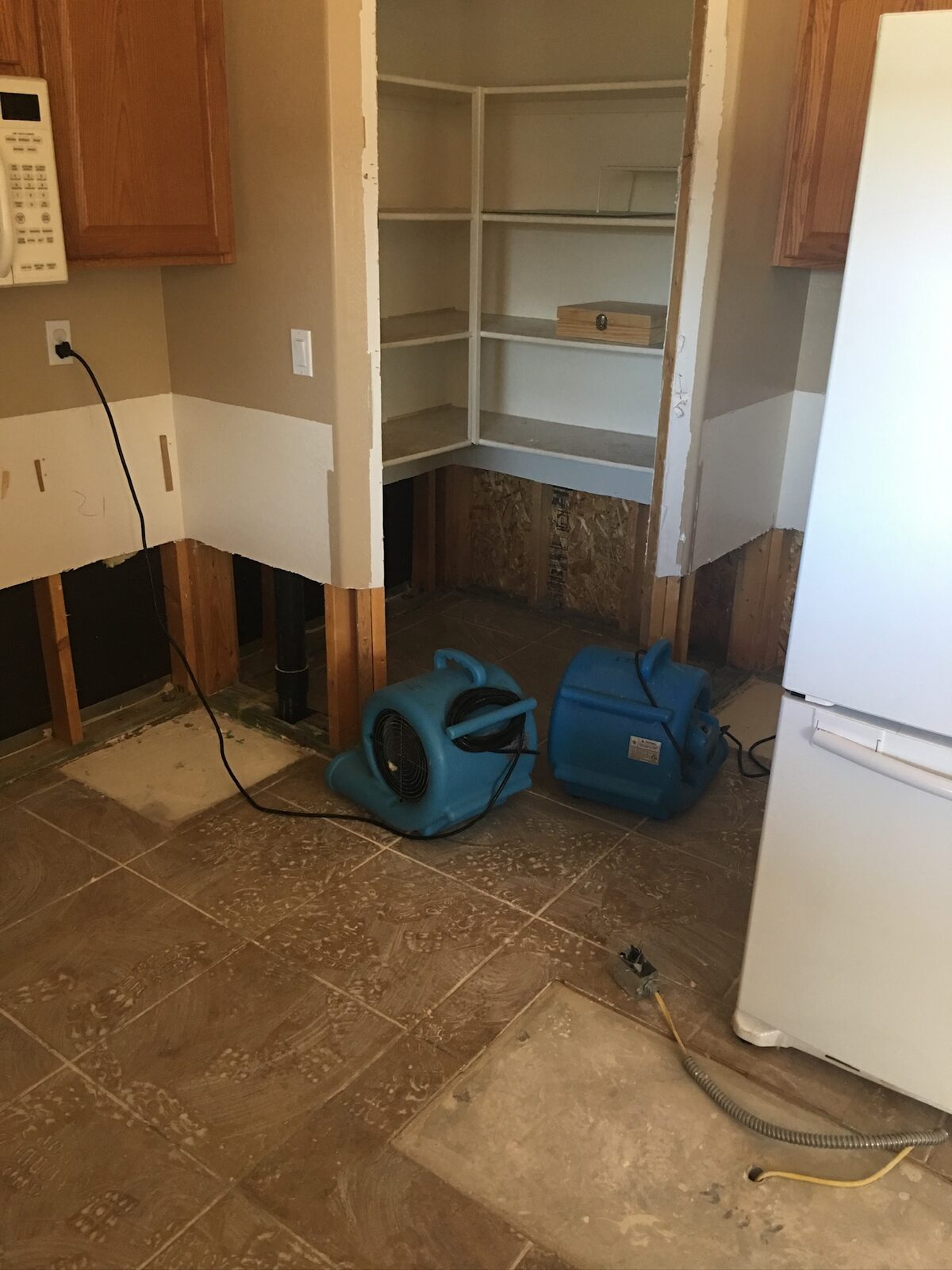
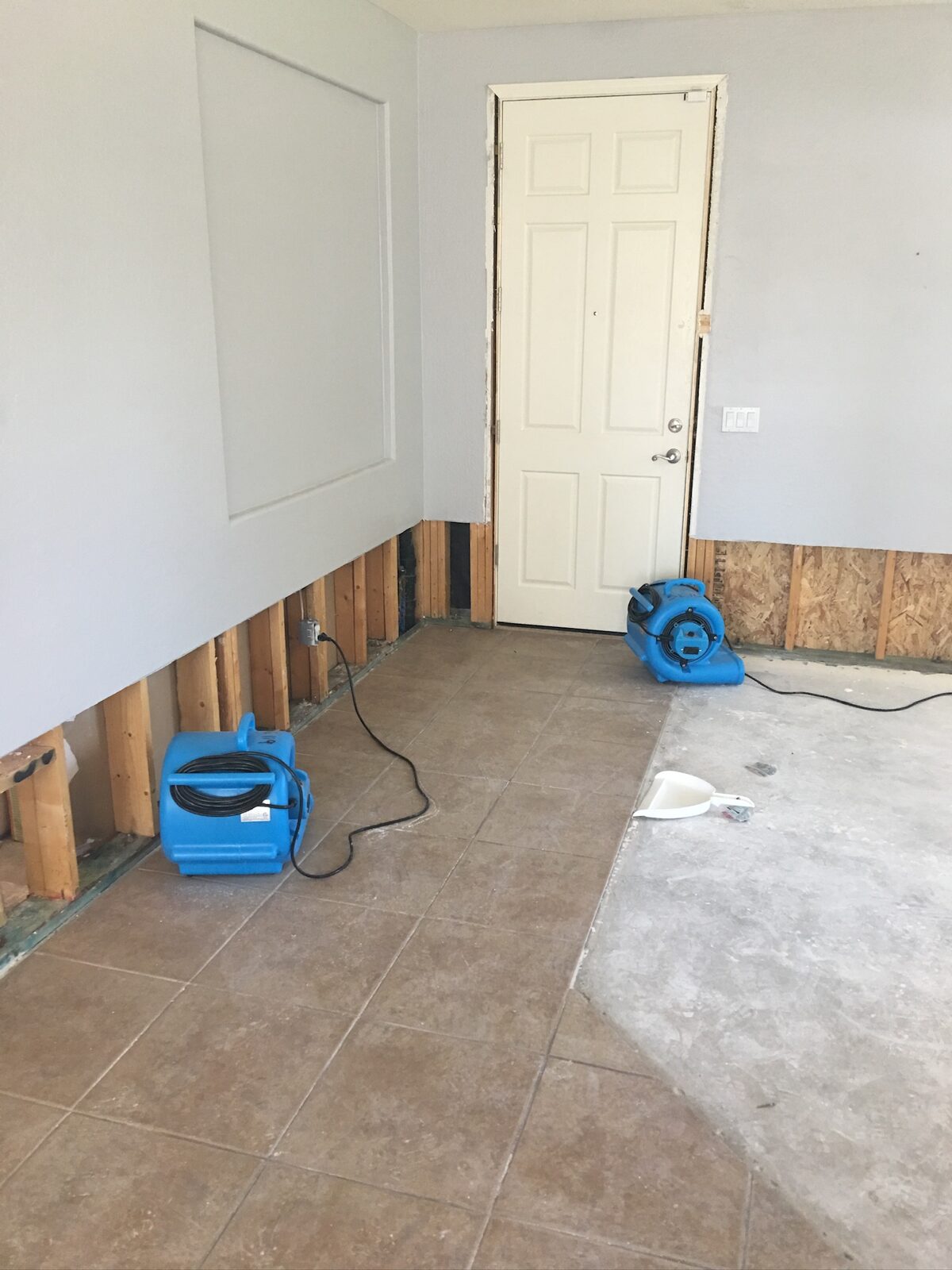
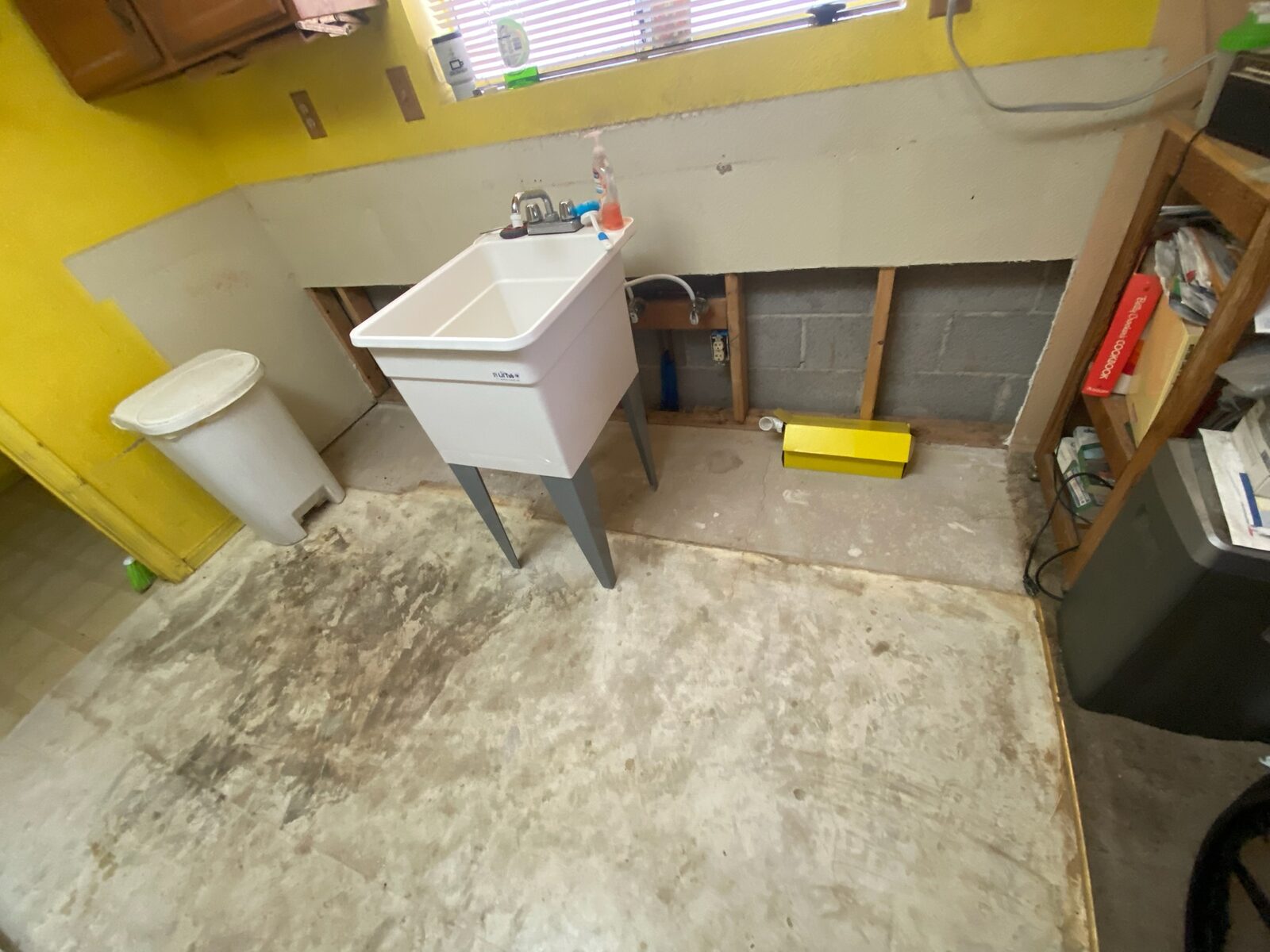
Residential reconstruction work by members of our team. See the full gallery →
More from Gold Water Fire
Abrasive Cleaning Methods for Soot on Framing and Masonry
A look at how abrasive cleaning methods remove soot from wood framing and masonry after a fire, and when each method fits the material.
AC Condensate Line Clogs & the Water Damage They Cause in Phoenix Homes
Why Phoenix AC condensate lines clog every summer, what the water damage looks like, and how to find the source before the ceiling stain spreads again.
Actual Cash Value vs Replacement Cost: Why Your Check Might Not Match the Repair Bill
Confused why your insurance check seems short after fire or water damage? Learn the difference between actual cash value and replacement cost coverage.
Not sure which one you are looking at
If you are standing in a wet room trying to work out whether this dries or comes out, describe it to us and we will tell you what we would be looking for. Gold Water Fire handles water damage restoration, fire damage restoration, and the rebuild afterward across the Phoenix metro area, from Peoria and Avondale out to Queen Creek, San Tan Valley, and Apache Junction. Call (480) 999-3339 or email Help@goldwaterfire.com.
Call (480) 999-3339Water Damage Restoration · Reconstruction & Rebuild · Fire Damage Restoration · About Gold Water Fire · Contact Us