
Drying Hardwood Floors in Place Versus Replacing Them
Standing over a hardwood floor that's cupped, buckled, or gone dark after a leak or flood, it's hard to know if you're looking at a floor that can be saved or one that's already gone. The uncertainty itself is exhausting, especially when every day you wait feels like it might be making the decision for you. There isn't always a clean answer right away, and that's not a sign you're missing something obvious.
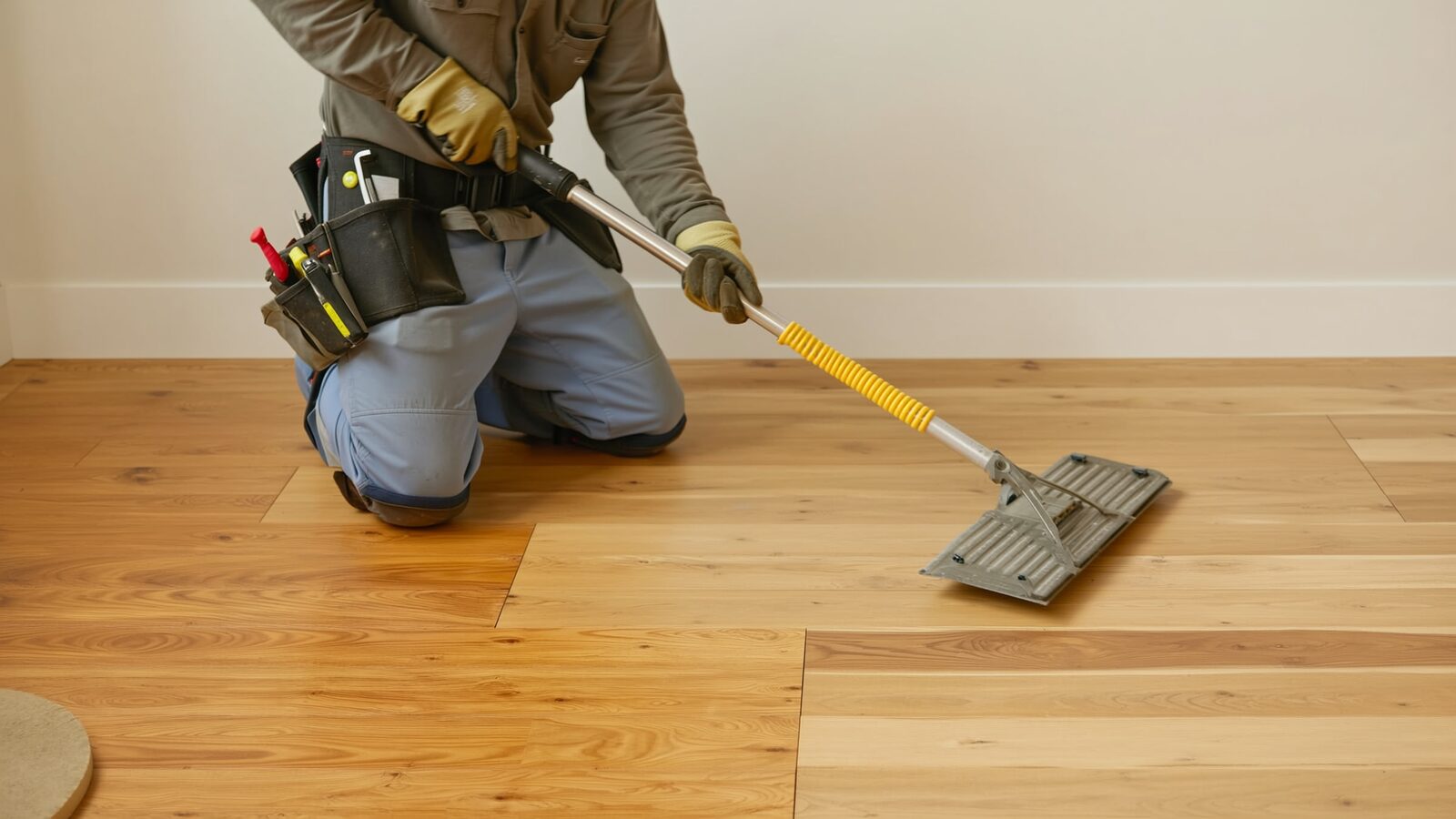
Drying Hardwood Floors in Place Versus Replacing Them
Why hardwood reacts to water the way it does
Wood is hygroscopic, meaning it absorbs and releases moisture from the air and from anything it touches. When water gets underneath or into the planks, the wood fibers swell unevenly. That's what causes cupping, where the edges of each plank rise higher than the center, and crowning, where the center rises above the edges. Both are visible signs the wood has taken on moisture, but they don't automatically mean the floor is ruined. Solid hardwood can often tolerate more moisture exposure and drying time than engineered hardwood, because engineered planks have a thinner wear layer bonded over plywood or composite layers that don't respond to drying the same way solid wood does.
What actually determines dry-in-place versus replace
A few factors matter more than how bad the floor looks on day one. How long the water sat before it was addressed matters a great deal, since wood that's been wet for days behaves differently than wood caught within hours. The source of the water matters too: clean water from a supply line is a different situation than water that carried contaminants, because contaminated water raises hygiene concerns even if the wood itself could technically be dried. The type of flooring matters, since solid hardwood over a subfloor has more recovery potential than engineered wood or floating floors. And what's underneath the floor matters, because a wet subfloor or wet insulation hidden below can keep re-wetting the hardwood even after the surface looks dry.
Signs a floor may still be dryable
Cupping without cracking
Mild to moderate cupping, where planks are still intact and not splitting or separating at the seams, often responds to controlled drying with air movement and dehumidification.
Short exposure time
Floors caught and addressed quickly, before the water has had days to soak into the wood grain and subfloor, generally have better odds of drying back close to their original shape.
Clean water source
A supply line or appliance leak with clear water is a more favorable starting point than water that came from an outside source or a sewage backup.
Stable subfloor
If moisture readings on the subfloor come down at a normal pace during drying, that's a good indicator the whole system is responding rather than trapping water below the surface.
Signs replacement is usually the more realistic path
Some damage patterns are harder to reverse. Warping severe enough that planks have permanently separated from their tongue-and-groove joints won't pull back together with drying alone. Delamination in engineered hardwood, where the layers themselves have started to peel apart, is generally not repairable. Mold growth on or under the planks changes the situation from a drying problem to a remediation problem. And water that sat long enough to cause a musty smell that lingers after the surface dries usually means moisture worked its way into places drying equipment can't fully reach. In those cases, replacing the affected boards, or the full floor if the damage is widespread, tends to be the more dependable outcome.
Why professional moisture readings matter more than a visual check
Hardwood can look dry on the surface while the subfloor underneath is still holding significant moisture. That's the gap that causes problems months later: floors that seem fine get refinished or covered up, and cupping or mold shows up again once the hidden moisture works its way back to the surface. Moisture meters that measure below the surface, not just surface humidity, are what actually tell you whether a floor is ready to be sealed back up or still needs time. This is also why drying timelines aren't one-size-fits-all. A floor in a small bathroom with minimal subfloor exposure dries under very different conditions than a floor spanning an open living area with ductwork or slab underneath. To learn more about how this fits into a broader water loss, see our page on water damage restoration. If flooring damage is part of a larger rebuild after a fire or major water event, our reconstruction and rebuild page covers what that process typically involves.
Questions people ask us
How long can hardwood sit wet before it's too late to save?
There's no single cutoff that applies to every floor, since it depends on the type of wood, the water source, and how much moisture reached the subfloor. Generally, the sooner drying begins, the better the odds of avoiding permanent warping or the need for full replacement.
Can cupped hardwood floors go back to normal after drying?
Mild to moderate cupping often improves significantly once the wood returns to a normal moisture level, though it may need sanding and refinishing afterward to fully flatten the surface. Severe cupping or crowning can leave some permanent unevenness even after drying.
Is engineered hardwood harder to save than solid hardwood?
Generally yes. Engineered hardwood has a thin real-wood layer bonded to composite or plywood underneath, and once water reaches those inner layers, delamination can occur that drying cannot reverse. Solid hardwood is a single material all the way through, which gives it more tolerance for drying and refinishing.
Do I need to remove the baseboards to dry a hardwood floor properly?
In many cases yes, because water travels along the subfloor and can wick up behind baseboards and into the wall cavity. Leaving them in place can trap moisture that a moisture meter behind the wall would otherwise catch.
The standard our team works to
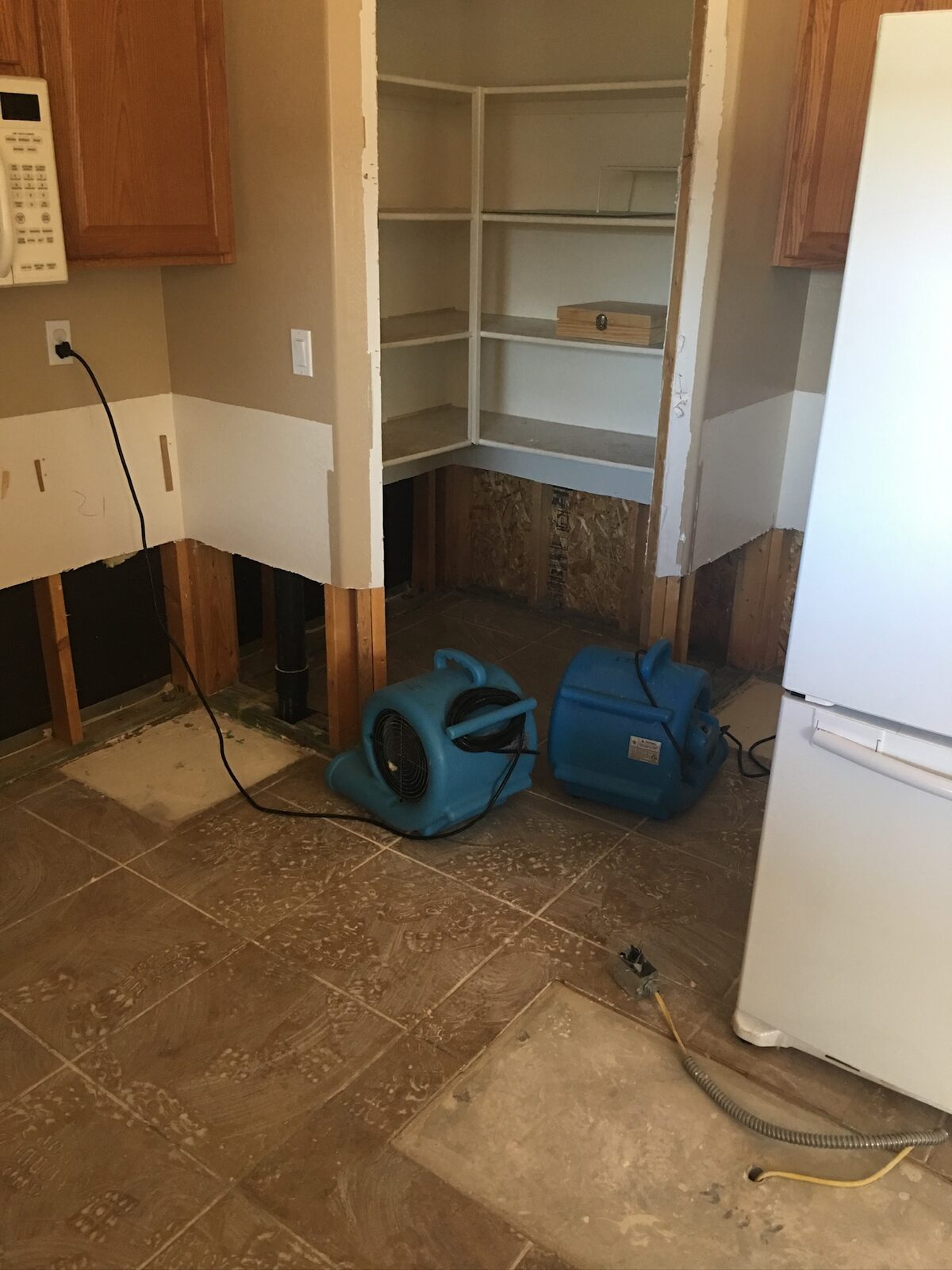
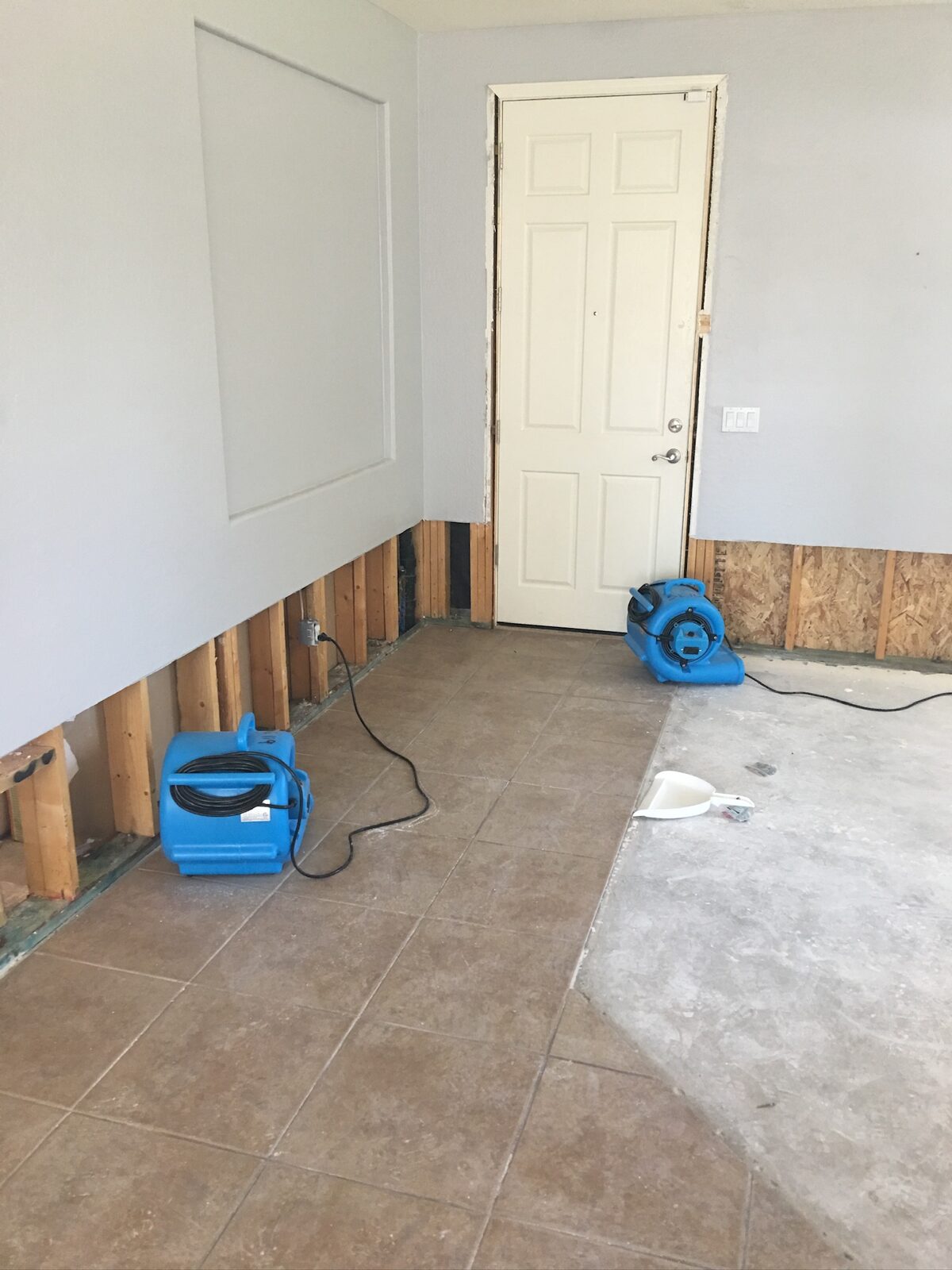
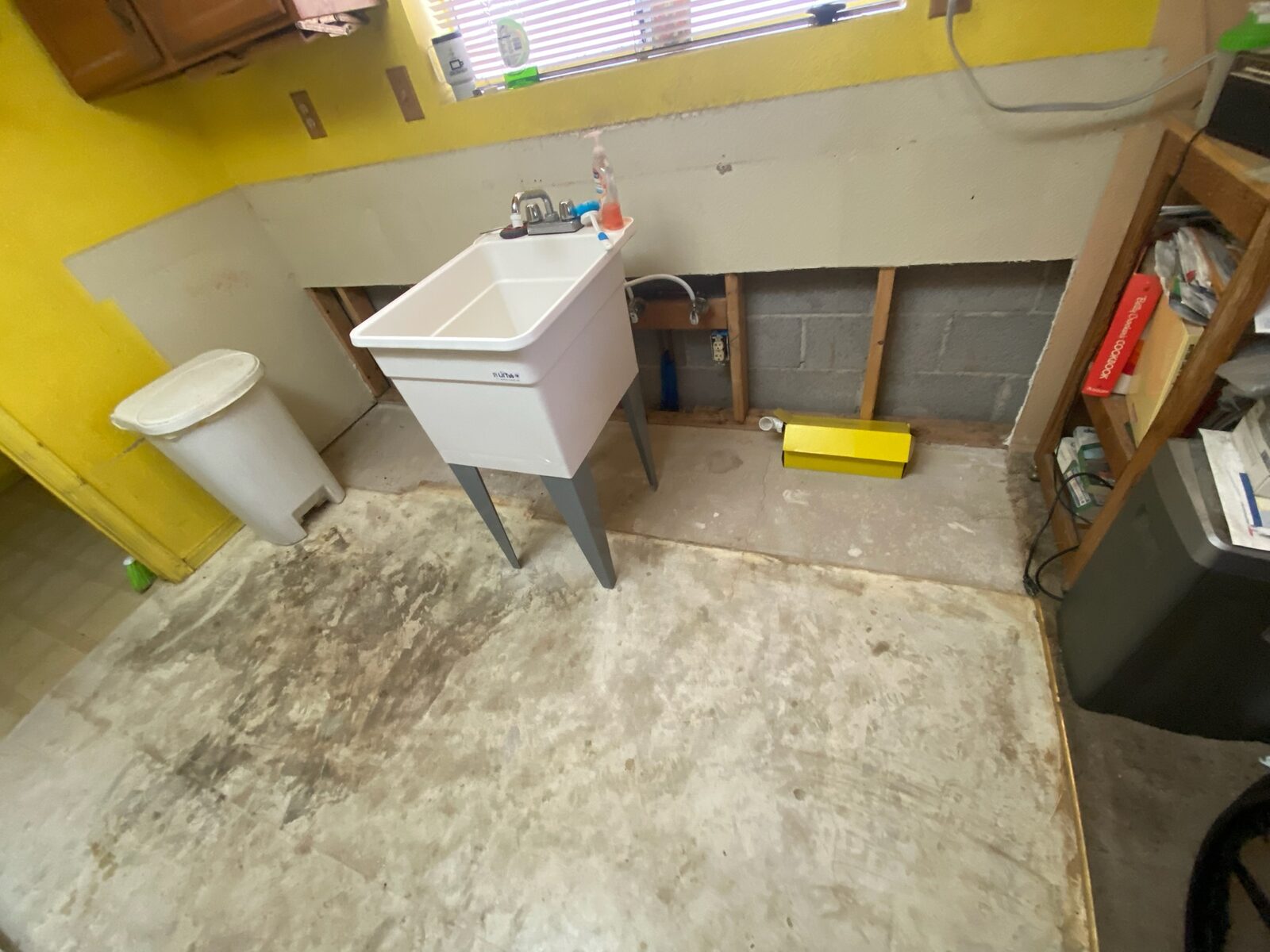
Residential reconstruction work by members of our team. See the full gallery →
More from Gold Water Fire
Abrasive Cleaning Methods for Soot on Framing and Masonry
A look at how abrasive cleaning methods remove soot from wood framing and masonry after a fire, and when each method fits the material.
AC Condensate Line Clogs & the Water Damage They Cause in Phoenix Homes
Why Phoenix AC condensate lines clog every summer, what the water damage looks like, and how to find the source before the ceiling stain spreads again.
Actual Cash Value vs Replacement Cost: Why Your Check Might Not Match the Repair Bill
Confused why your insurance check seems short after fire or water damage? Learn the difference between actual cash value and replacement cost coverage.
Not sure if your floors can be saved?
If you're dealing with water damaged hardwood in the Phoenix area and want an assessment of what's realistic for your specific floor, contact Gold Water Fire to talk through what you're seeing.
Call (480) 999-3339Water Damage Restoration · Reconstruction and Rebuild · Contact Gold Water Fire