
Can You Stay in Your Home During Water Damage Restoration?
Nobody asks this question casually. You ask it standing in a hallway at nine at night, looking at fans you did not choose, doing math about the dog, the kids' school, your mother-in-law's spare room, and how much a hotel costs for a week you did not plan for. And underneath the logistics there is a quieter thing: the house you sleep in has stopped feeling like a place that is simply yours. You are not sure whether that feeling is a real warning or just the shock of the last two days. That uncertainty is exhausting on its own, and it is fair to sit with it for a minute before deciding anything.
Can You Stay in Your Home During Water Damage Restoration?
Sometimes yes, sometimes no, and the difference is not comfort
There is no single rule, and anyone who gives you one is skipping the part that matters. Whether a house is safe to occupy during drying depends on what kind of water came in, how much of the structure is wet, whether the electrical system was touched, what has been cut out or opened up, and who lives there. A clean supply line break in a single bathroom is a very different situation from a sewage backup that traveled under three rooms of flooring. In the restoration trade, water is generally sorted into three categories: clean water from a supply line or water heater, gray water from appliances, sinks, or showers that carries some contamination, and black water from sewage, toilet overflow that included solids, or outside flooding that ran across the ground. Category alone does not settle the question, but it moves the needle harder than anything else on the list.
Five things worth checking before you decide
Walk through these honestly rather than deciding based on how tired you are. Any single one being true does not automatically mean leaving, but two or three together usually does.
Contaminated water reached living space
Sewage or ground water carries bacteria that soaks into carpet pad, drywall bottoms, and subfloor. Those materials get removed rather than dried, and the affected area is typically contained with plastic sheeting and negative air pressure while that happens. During removal, that part of the house is not a place to be, and if it includes the only bathroom or the kitchen, staying gets impractical fast.
The electrical system got wet
Water inside outlets, in a panel, or in ceiling boxes below a second-floor leak means circuits may be shut off until an electrician clears them. Losing power to part of the house is inconvenient. Losing it to the kitchen, the HVAC, or the bedrooms in a Phoenix summer is a different problem entirely, and heat is a real safety issue here, not a comfort complaint.
Kitchen or bathroom is out of service
People underestimate this one. If cabinets are pulled, if the toilet is lifted to dry the subfloor, or if flooring is out across the path between bedroom and bathroom at 2 a.m., the house technically works but daily life does not. Ask specifically which fixtures will be offline and for roughly how long.
Someone in the house is medically vulnerable
Infants, older adults, anyone with asthma, COPD, a suppressed immune system, or an active respiratory infection, plus pregnancy, all raise the bar. Drying stirs dust and, where growth has already started, mold spores. That is worth a conversation with a doctor rather than a guess.
The structure itself was affected
Sagging ceilings, buckled subfloor, a bowed wall, or water that ran into a garage where the water heater and furnace sit are reasons to get a professional opinion before sleeping under it. Ceilings holding water are heavier than they look.
What living through the drying actually feels like
People are usually surprised less by the danger and more by the noise. Air movers and dehumidifiers run continuously, often for several days, and they are loud in a way that makes conversation and sleep genuinely hard. They are not supposed to be turned off overnight, because drying stalls the moment airflow stops and the whole timeline stretches. Expect the house to feel warm and oddly dry, because dehumidifiers give off heat, and expect a bump in the electric bill from equipment that draws real power. Doors get propped, furniture gets blocked up on foam or moved to the middle of rooms, and baseboards may be off with small drill holes in the drywall so air can reach wall cavities. Containment plastic changes traffic paths. Pets are often the deciding factor: many cats and dogs will not settle with that much noise and strange equipment, and a scared animal that knocks over an air mover or slips through a propped door creates a second problem on top of the first. If you do stay, keep children and pets away from equipment cords, do not unplug anything to quiet a room, and ask before opening exterior windows, since Phoenix humidity swings during monsoon season can work directly against the drying plan.
What to ask before you commit to staying or going
You are allowed to ask direct questions and expect direct answers. Ask what category the water was classified as and why. Ask which rooms will be under containment and for how many days. Ask which fixtures, circuits, or appliances will be offline. Ask whether any material is being removed versus dried in place, and whether that removal involves dust. Ask when moisture readings will be taken and what number ends the drying phase. Ask whether the work after drying, meaning drywall, flooring, paint, and cabinetry, will happen with you in the house or not, because the rebuild phase is often longer and messier than the drying phase people brace for. If your insurance policy includes additional living expenses, ask your adjuster what documentation they want before you book anywhere. Keep receipts either way. If you want to walk through your specific situation with someone rather than guess from a webpage, reach out and describe what happened and who lives in the house.
Questions people ask us
Can I turn the fans off at night so I can sleep?
Turning equipment off stops the drying and lets moisture redistribute back into materials that were nearly dry, which usually adds days to the job and raises the risk of mold growth. If the noise is not survivable, that is a strong sign the honest choice is to stay somewhere else for those few nights rather than to compromise the drying.
Is the smell dangerous, or just unpleasant?
A musty or earthy smell generally means microbial growth is already active somewhere, often in materials you cannot see. It is not automatically an emergency, but it is information, and it matters more if anyone in the house has asthma or another respiratory condition. A sharp chemical or sewage odor is a different matter and should be raised immediately with whoever is doing the work.
How long does drying usually take?
It varies with how much water there was, what materials absorbed it, and the conditions in the house, so a responsible answer comes from moisture readings rather than a calendar. What you can ask for is a target: the specific readings that will mean the structure is dry, and updates as those numbers move.
Will my insurance pay for a hotel?
Many homeowners policies include additional living expenses coverage when a covered loss makes a home uninhabitable, but the terms, the limits, and the definition of uninhabitable vary by policy. Call your carrier before you book, ask what they need in writing, and save every receipt.
The standard our team works to
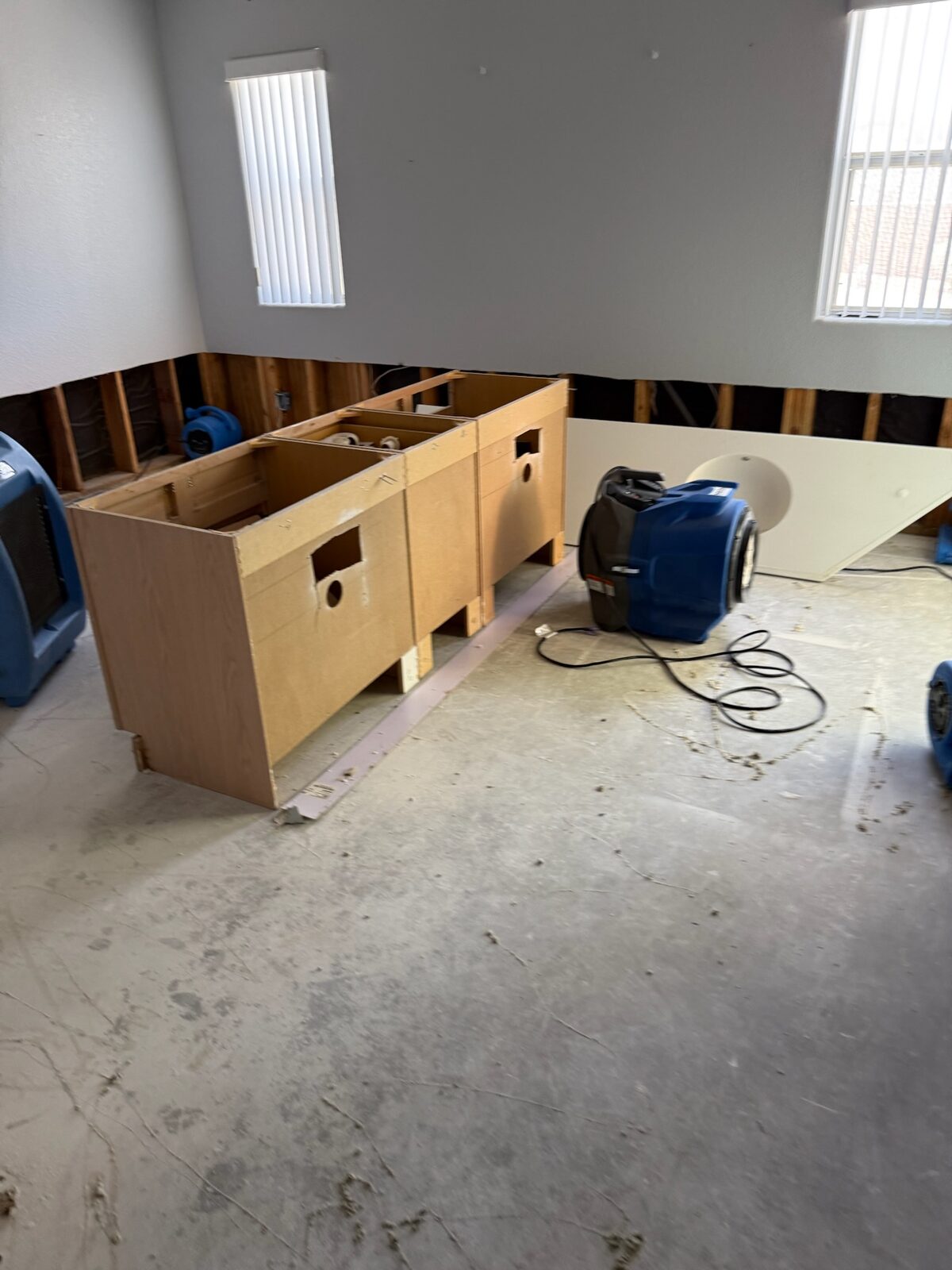
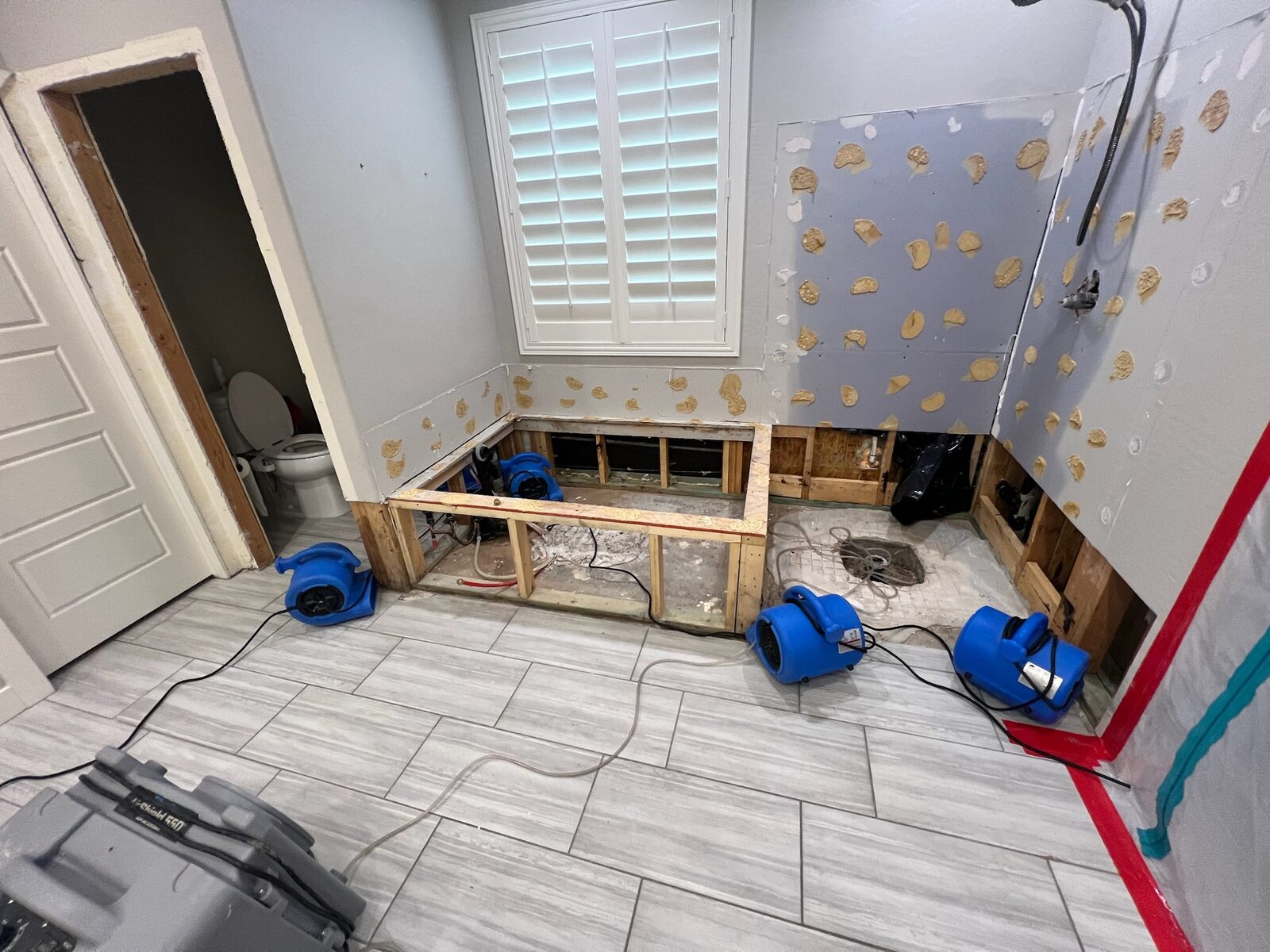
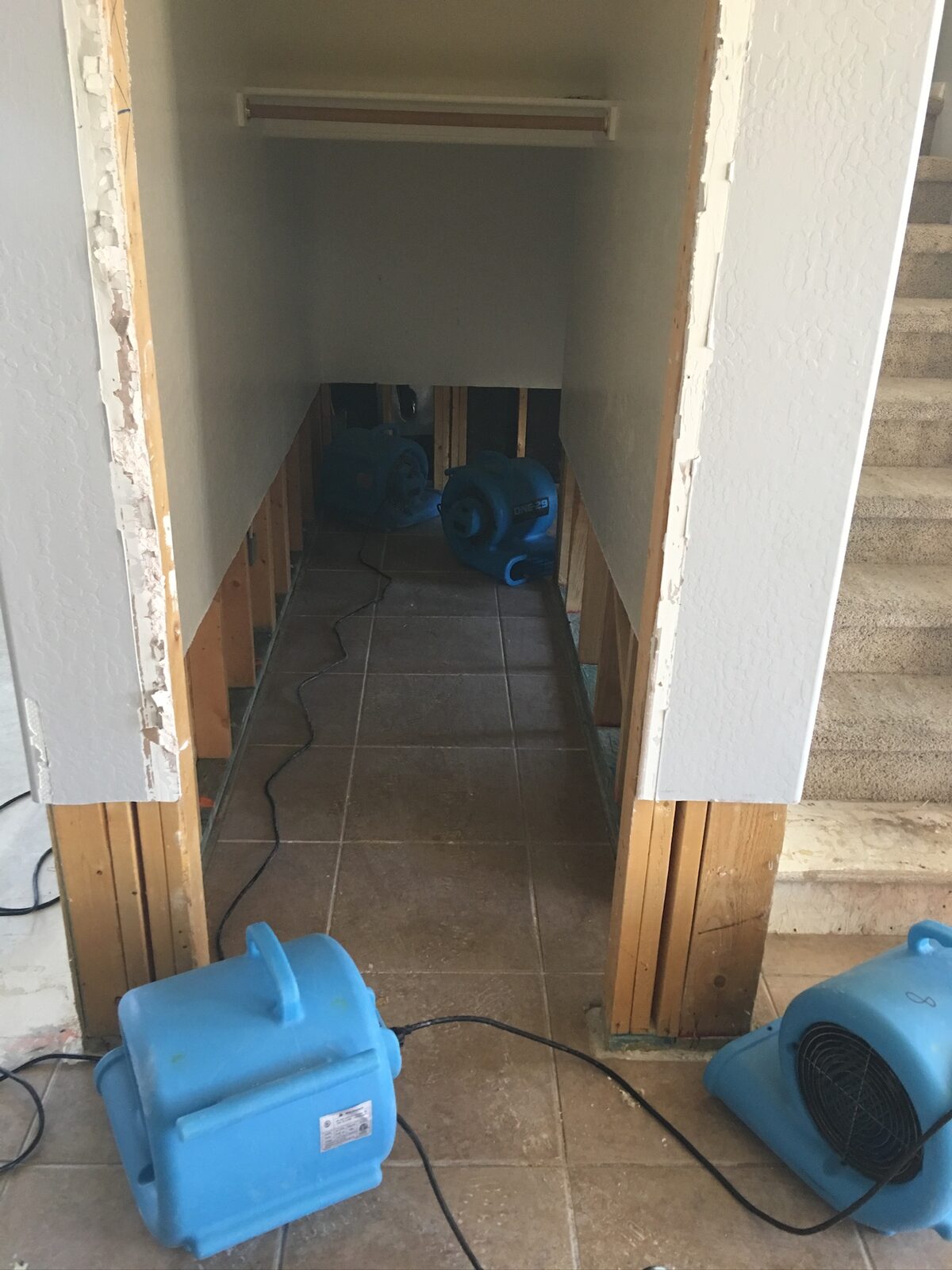
Residential reconstruction work by members of our team. See the full gallery →
More from Gold Water Fire
Abrasive Cleaning Methods for Soot on Framing and Masonry
A look at how abrasive cleaning methods remove soot from wood framing and masonry after a fire, and when each method fits the material.
AC Condensate Line Clogs & the Water Damage They Cause in Phoenix Homes
Why Phoenix AC condensate lines clog every summer, what the water damage looks like, and how to find the source before the ceiling stain spreads again.
Actual Cash Value vs Replacement Cost: Why Your Check Might Not Match the Repair Bill
Confused why your insurance check seems short after fire or water damage? Learn the difference between actual cash value and replacement cost coverage.
Talk it through before you decide
If you are trying to figure out whether your house is workable right now, call Gold Water Fire at (480) 999-3339 or email Help@goldwaterfire.com. We serve the Phoenix metro area, from Peoria and Avondale out to Queen Creek, San Tan Valley, and Apache Junction.
Call (480) 999-3339Water Damage Restoration · Reconstruction & Rebuild · About Gold Water Fire · Contact Us