
How Dry Is Dry? What "Drying Goals" Actually Mean
If you've had water damage before, you probably remember the moment the surface looked dry again, the carpet felt normal underfoot, the drywall seemed fine to the touch, and you assumed it was over. Then weeks later there was a smell, or a soft spot, or a bill for mold remediation you didn't see coming. It's a strange kind of frustration, because nothing looked wrong. You did what you could see. The problem is that "dry to the touch" and "dry" are not the same thing, and almost nobody explains that difference until after it's already cost something.
How Dry Is Dry? What "Drying Goals" Actually Mean
Why the eye and the hand get it wrong
Surfaces dry from the outside in. Air movement and evaporation pull moisture off the top layer of a material fast, sometimes within hours, long before the moisture trapped deeper in the material has anywhere to go. A drywall panel can feel cool and dry on the painted face while the gypsum core, or the paper backing against the stud, is still saturated. Wood flooring can look and feel normal on the surface while the subfloor underneath holds enough moisture to warp the boards weeks later. This is why visual inspection and touch, while useful as a first check, are not treated as a stopping point in restoration work. They tell you what happened on the surface, not what's still happening inside the material.
What a moisture meter is actually measuring
Two types of meters are used for a reason: they answer different questions. A pin-type meter inserts small probes into the material and measures electrical resistance between them, giving a reading tied to actual moisture content at that depth. A non-invasive (penetrating or capacitance-style) meter reads moisture patterns beneath the surface without puncturing the material, which is useful for finish materials you don't want to damage, like a hardwood floor or a painted wall. Neither reading means much on its own. What matters is comparing it to something.
The dry standard: comparing to a material that was never wet
This is the part most homeowners never hear about, and it's the actual answer to 'how dry is dry.' Before drying equipment goes in, an unaffected area of the same material, a different room, the far side of a wall, an unaffected section of subfloor, gets tested and logged as the dry standard. That number becomes the target. A material isn't considered dry because it hits some universal number; it's considered dry when its moisture content comes back in line with a comparable material in the same structure that was never exposed to water. Humidity, building materials, and climate all vary, so a fixed number wouldn't mean the same thing in every house anyway. The comparison is what makes the reading meaningful.
Why drying takes daily monitoring, not a one-time check
Materials don't dry at a steady, predictable rate. A wet wall cavity might lose moisture quickly for the first day, then slow down considerably as the remaining moisture has to migrate through denser material or around insulation. That's why responsible drying work involves checking moisture levels daily (sometimes more often) and adjusting equipment placement, airflow, or dehumidification as the readings change. Pulling equipment early because a room feels dry, or because it's inconvenient to have fans running for another few days, is one of the most common reasons water damage turns into a mold problem later. The readings, not the calendar and not the hand test, are what determine when drying is actually finished.
What happens if a material can't get back to standard
Sometimes a material won't return to a dry standard within a reasonable timeframe, or at all, because it's absorbed too much water, has begun to break down, or was already a poor candidate for drying in place (certain particle board, some insulation types, wet ceiling tile). In those cases the honest answer isn't to keep running fans indefinitely. It's to document the reading, explain why the material is being removed instead of dried, and replace it. Knowing when to stop drying and start removing is as much a part of the process as the drying itself.
Questions people ask us
If a room smells fine and looks fine, does it need to be checked with a meter?
A smell or visible change is a sign moisture has already been sitting long enough to cause secondary damage. The absence of smell or visible change doesn't confirm dryness, since materials can hold moisture well past the point of looking or smelling wet. A moisture reading against a dry standard is the only way to confirm it either way.
How long does it usually take a material to reach a dry standard?
It depends heavily on the material, how much water it absorbed, the humidity and airflow in the space, and the type of material involved. Dense materials and those without good airflow around them take longer than exposed, porous ones. This is why daily monitoring is used instead of a fixed timeline.
Can I just use a hardware store moisture meter myself?
You can get a general reading, but without a documented dry standard from an unaffected area of your own home to compare it to, the number alone won't tell you much. The comparison, not the raw reading, is what determines whether a material is actually dry.
Why did drywall or flooring get removed instead of just dried out?
Some materials break down structurally once saturated, or hold moisture in a way that makes drying in place unreliable within a reasonable timeframe. When a material can't reasonably be brought back to a dry standard, removal and replacement is generally the more honest path than continuing to run equipment.
The standard our team works to
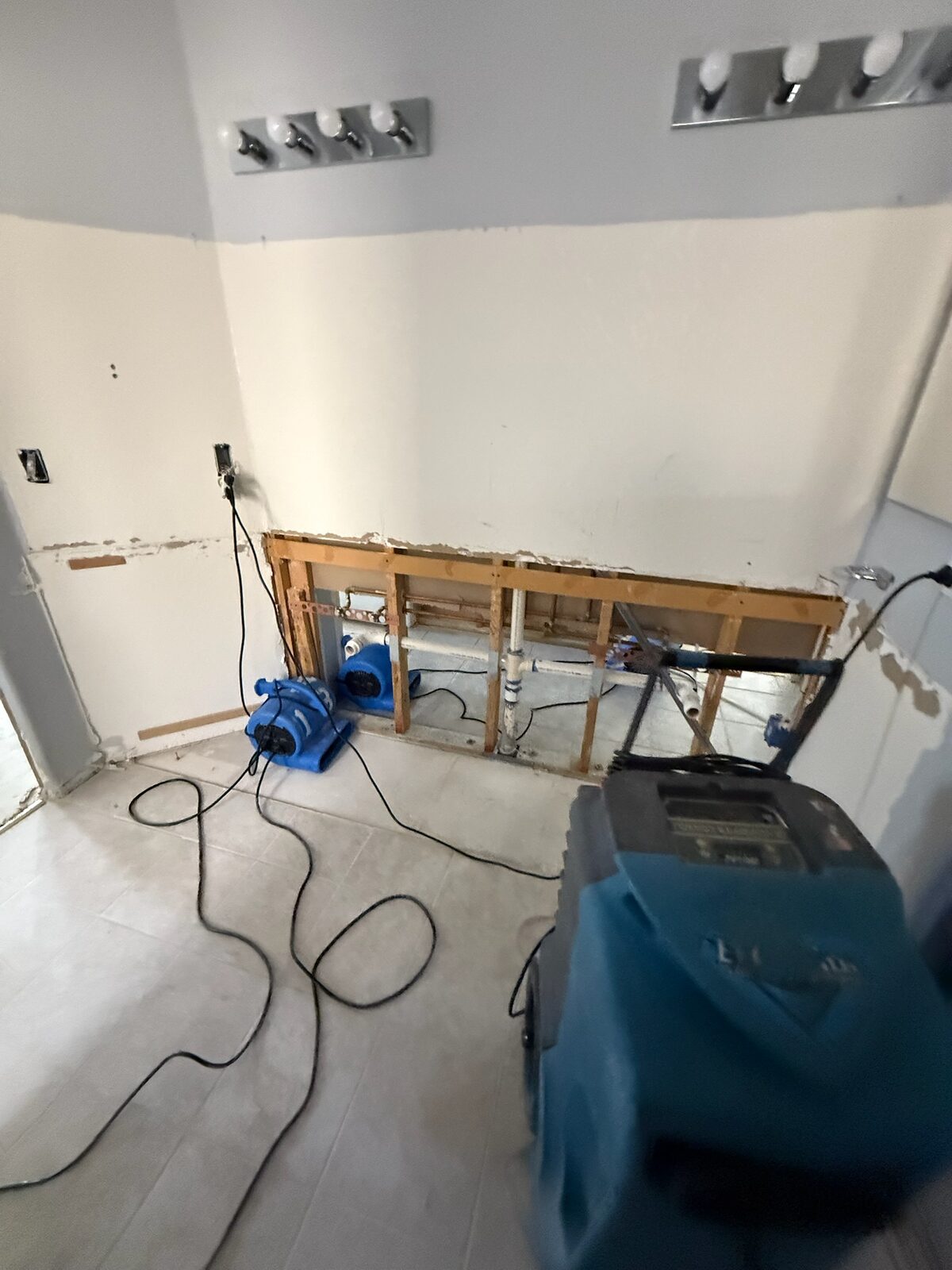
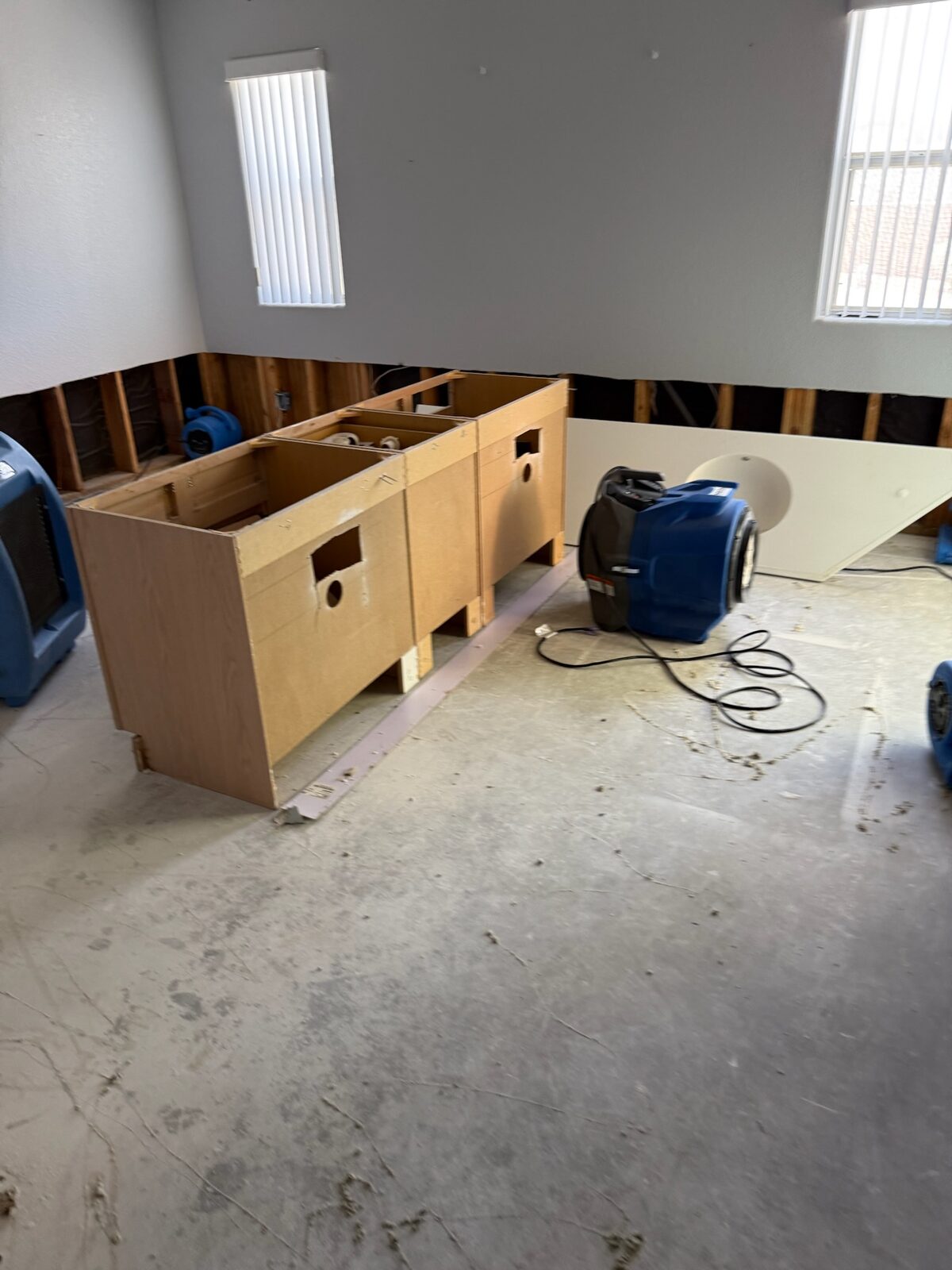
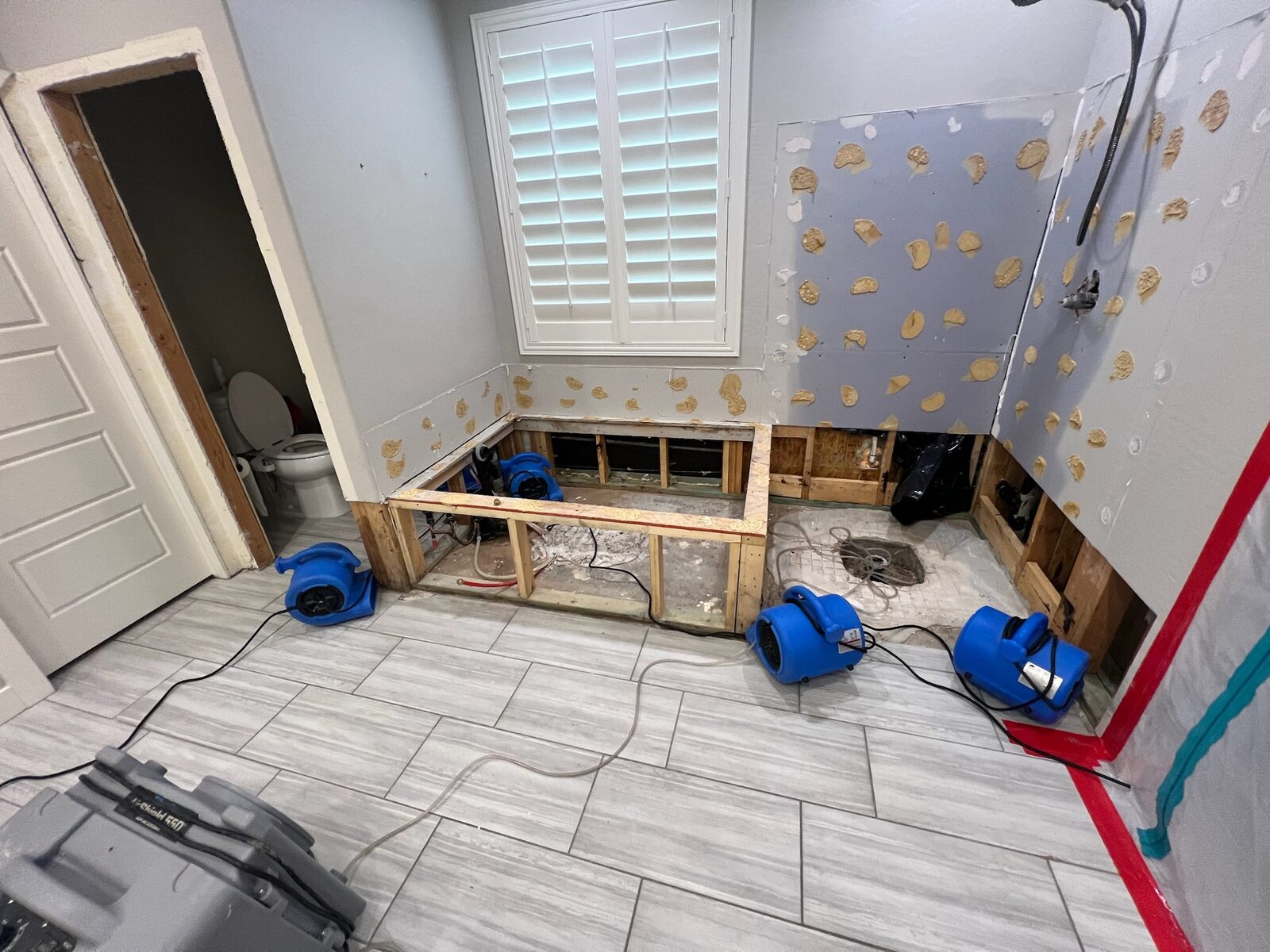
Residential reconstruction work by members of our team. See the full gallery →
More from Gold Water Fire
Abrasive Cleaning Methods for Soot on Framing and Masonry
A look at how abrasive cleaning methods remove soot from wood framing and masonry after a fire, and when each method fits the material.
AC Condensate Line Clogs & the Water Damage They Cause in Phoenix Homes
Why Phoenix AC condensate lines clog every summer, what the water damage looks like, and how to find the source before the ceiling stain spreads again.
Actual Cash Value vs Replacement Cost: Why Your Check Might Not Match the Repair Bill
Confused why your insurance check seems short after fire or water damage? Learn the difference between actual cash value and replacement cost coverage.
Not sure if a past or current leak actually dried out?
If you're dealing with water damage now, or you're wondering whether an old leak was ever fully resolved, Gold Water Fire can walk through what's happening in your home. Reach out through the <a href="/contact.html">contact page</a> or call (480) 999-3339.
Call (480) 999-3339