
Popcorn Ceiling Removal as Part of a Repair
Looking up at a water-stained or smoke-damaged popcorn ceiling and wondering what happens next is its own kind of stress. It's not just the stain. It's the not knowing: does the whole ceiling have to come down, is there asbestos to worry about, will this turn a small repair into a much bigger one. If you're standing in a room staring at that texture and trying to figure out what you're actually dealing with, you're not overthinking it. These are the right questions to sit with before anyone touches a scraper.
Popcorn Ceiling Removal as Part of a Repair
Why popcorn ceilings often can't just be patched
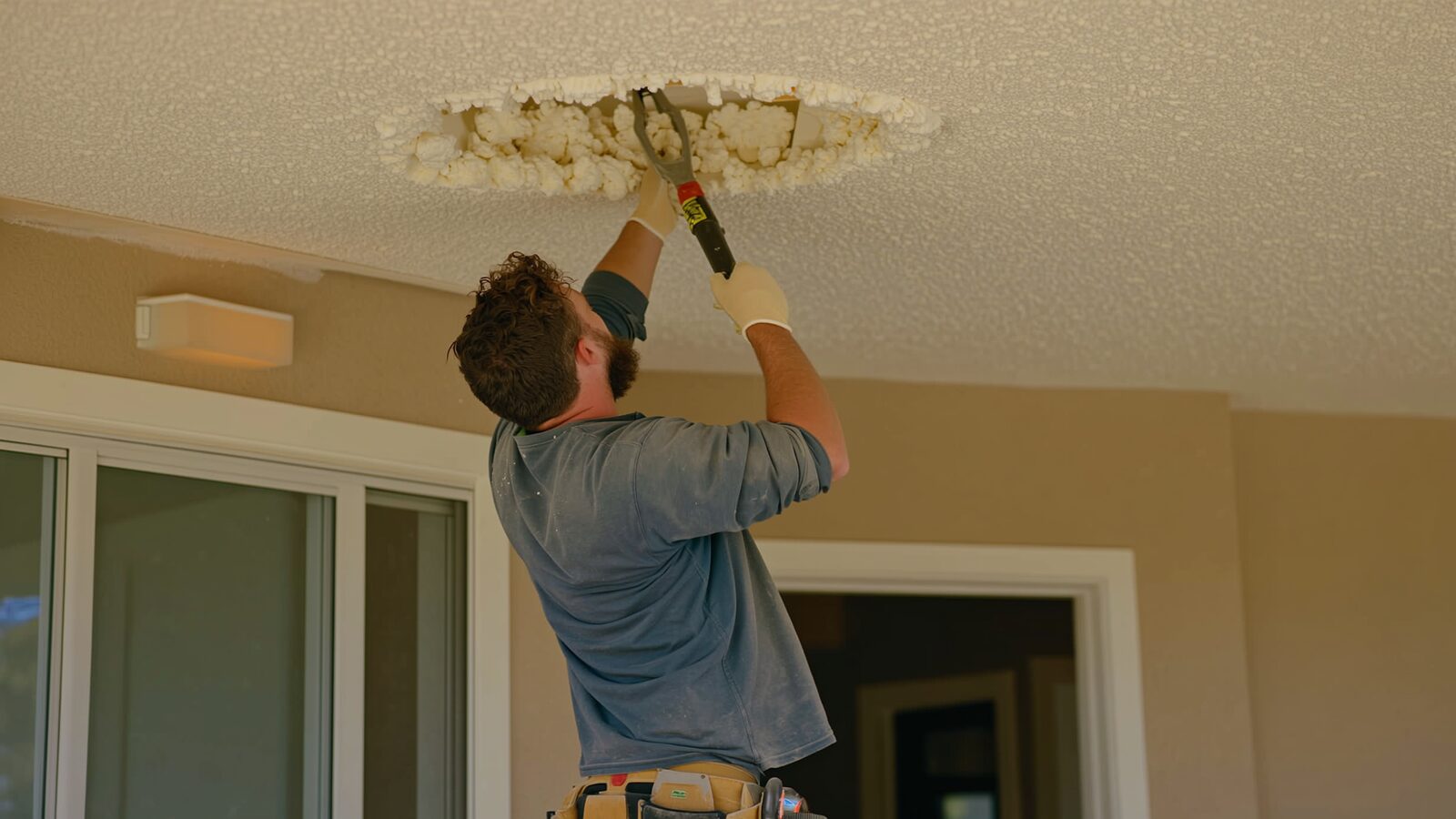
Popcorn (or acoustic) ceiling texture was sprayed on, not layered like paint, so once it's compromised it rarely repairs cleanly. Water intrusion softens the material and breaks its bond to the drywall or plaster underneath, which is why a stain often means the texture is already sagging or crumbling above the surface you can see. Smoke and soot behave differently: the porous texture absorbs odor and discoloration deep into the material, so surface cleaning tends to leave a ghost of the smell or the stain behind. In both cases, patching just the visible spot usually creates an obvious mismatch, since matching decades-old texture by hand is difficult even for someone experienced with it. That's why removal of the affected section, or sometimes the whole ceiling, gets discussed as part of the repair rather than treated as extra work.
The asbestos question, and why it comes first
Homes built or textured before the early 1990s may have popcorn ceilings that contain asbestos, since it was a common additive in that spray texture until it was phased out. This isn't something to guess about. Testing a small sample before any scraping or sanding begins is the standard precaution, because disturbing asbestos-containing material without the right containment and handling creates a health risk that has nothing to do with the original water or fire damage. If a ceiling tests positive, the removal process changes: it typically requires sealed containment, specific safety equipment, and disposal according to local regulations rather than a standard scrape-and-haul approach. If it tests clear, the work can proceed as a more straightforward demolition and refinish.
How removal and refinishing typically proceeds
Containment and prep
The room gets sealed off with plastic sheeting to keep dust and debris out of the rest of the house, and furniture or flooring is covered. Popcorn removal is a messy process even without contamination concerns, so containment matters regardless of the cause of damage.
Wetting and scraping
The texture is lightly misted with water, which softens it and cuts down on airborne dust, then scraped off the drywall or plaster with a wide putty knife or scraper. Damaged sections that were saturated by water or scorched by heat are removed down to sound material.
Drywall assessment
Once the texture is off, the ceiling underneath gets a real look. Water damage often means the drywall itself is soft, warped, or delaminating and needs to be cut out and replaced rather than just re-textured over.
Refinishing the surface
After repairs to the drywall, the ceiling is typically skim-coated, sanded smooth, primed, and painted, or re-textured to match the rest of the home if a full smooth-ceiling look isn't what the homeowner wants.
Patch a section, or remove the whole ceiling?
This usually comes down to how far the damage spread and how visible a seam or texture mismatch would be. A small, contained water spot in a corner might only require removing and refinishing that section. But water travels along ceiling joists and drywall seams, often spreading further than the visible stain suggests, so what looks like a localized problem can turn out to be more widespread once someone opens it up. Smoke damage tends to be even less contained, since soot and odor settle across an entire room rather than staying in one spot. Because popcorn texture is hard to blend seamlessly with new material, many homeowners choose to remove the entire ceiling in a damaged room once any significant portion needs replacing anyway, rather than live with a visible patch line.
Questions people ask us
Do all popcorn ceilings need asbestos testing before removal?
Homes textured before the early 1990s are the main concern, since that's when asbestos was commonly used in the spray texture. Testing a sample before disturbing the material is the standard precaution regardless of the age of the home if you're unsure when the texture was applied.
Can a water-stained popcorn ceiling just be repainted instead of removed?
Sometimes a stain that hasn't compromised the texture's bond to the ceiling can be sealed and repainted. But if the water softened the material or the drywall underneath, painting over it won't address the underlying problem and the texture is likely to keep bubbling or sagging.
Does removing a popcorn ceiling always mean replacing the drywall too?
Not always. If the drywall itself stayed dry and intact and only the texture layer was damaged, the drywall can often be reused after the texture is scraped off and the surface is refinished. Water damage or heat scorching that reached the drywall usually does require replacing it.
How messy is popcorn ceiling removal?
It's a dusty, debris-heavy process even in ideal conditions, which is why containment with plastic sheeting and covered floors is standard practice before any scraping begins.
The standard our team works to
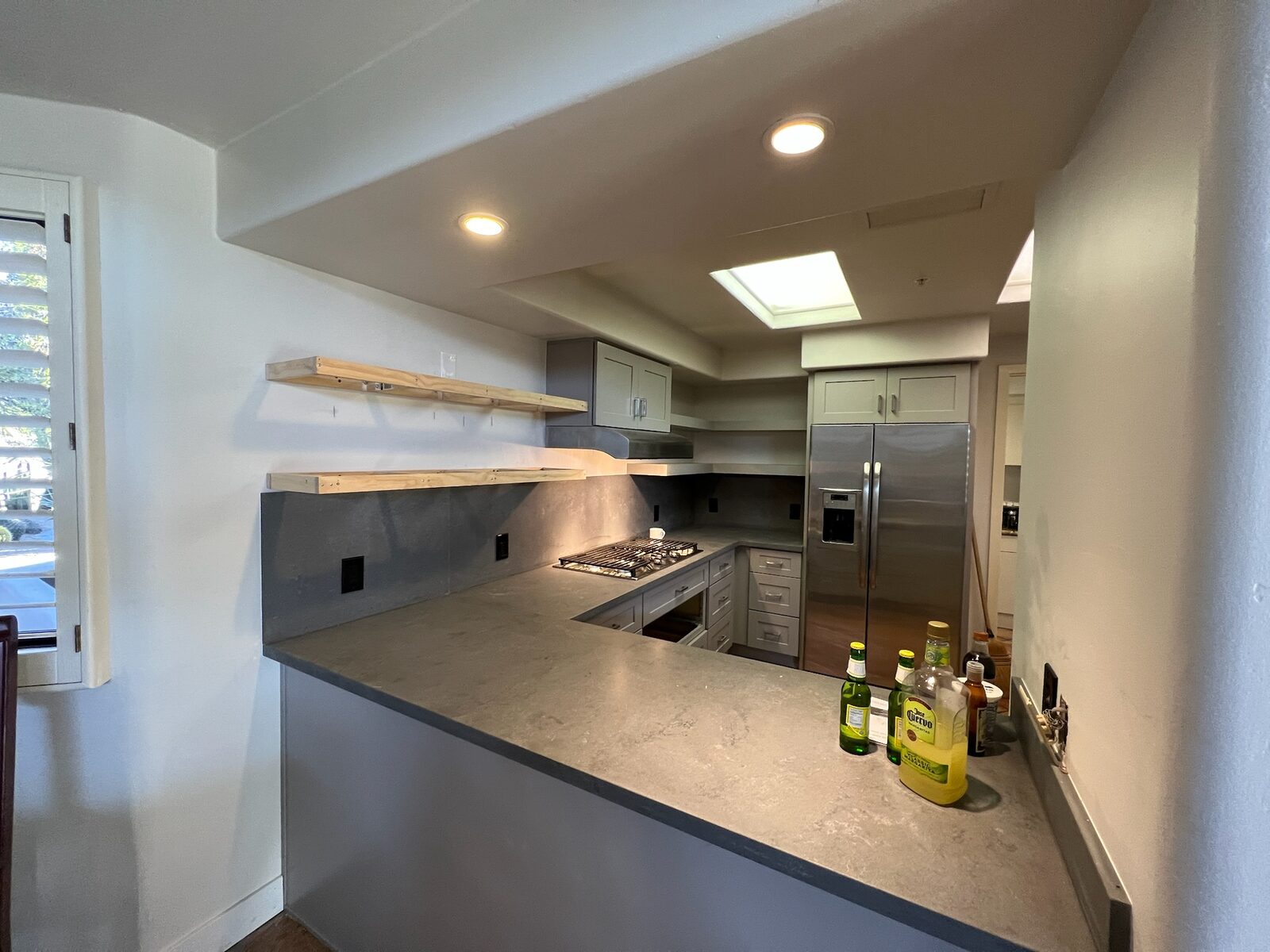
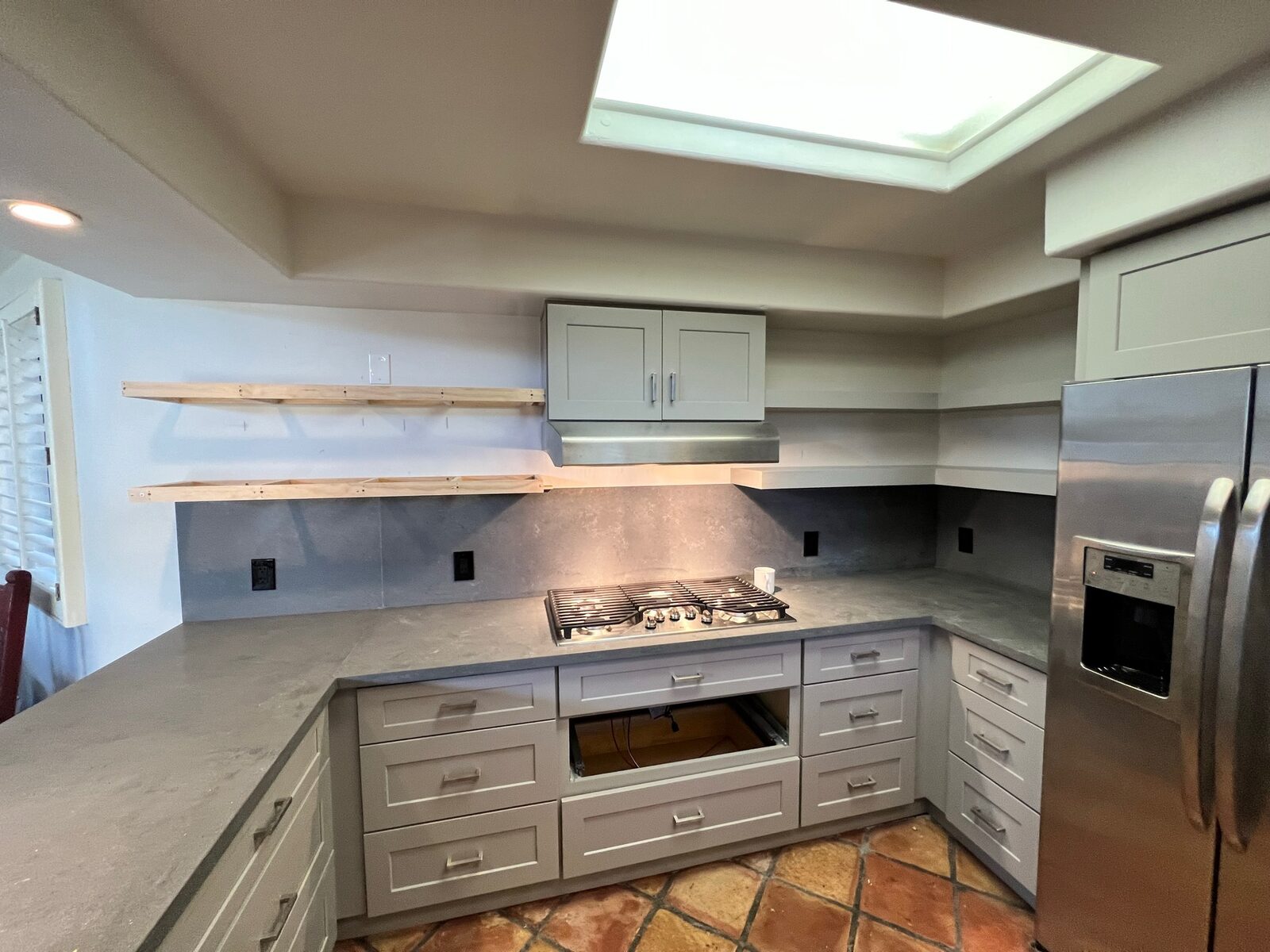
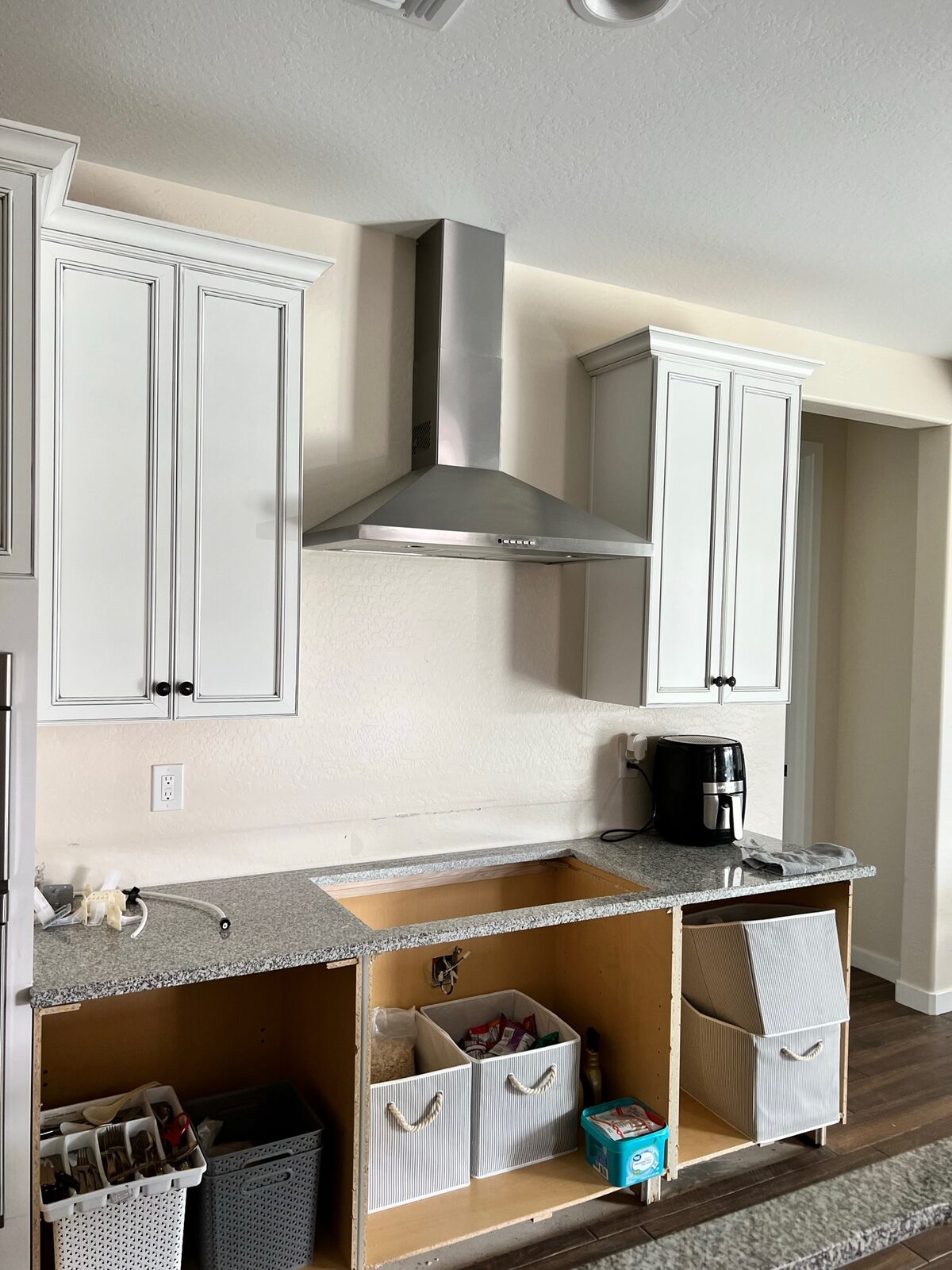
Residential reconstruction work by members of our team. See the full gallery →
More from Gold Water Fire
Abrasive Cleaning Methods for Soot on Framing and Masonry
A look at how abrasive cleaning methods remove soot from wood framing and masonry after a fire, and when each method fits the material.
AC Condensate Line Clogs & the Water Damage They Cause in Phoenix Homes
Why Phoenix AC condensate lines clog every summer, what the water damage looks like, and how to find the source before the ceiling stain spreads again.
Actual Cash Value vs Replacement Cost: Why Your Check Might Not Match the Repair Bill
Confused why your insurance check seems short after fire or water damage? Learn the difference between actual cash value and replacement cost coverage.
Not sure what your ceiling damage actually involves?
If you're dealing with a stained, sagging, or smoke-damaged ceiling and want to understand what repair looks like in your specific situation, Gold Water Fire can take a look and walk you through it. Reach out at (480) 999-3339 or Help@goldwaterfire.com.
Call (480) 999-3339Water Damage Restoration · Fire Damage Restoration · Reconstruction & Rebuild · Contact Gold Water Fire