
What Homeowners Insurance Typically Covers for Water Damage, & What It Typically Excludes
You have read the policy twice now and you still cannot tell whether the thing that happened to your house is the thing the policy is describing. The words feel like they were written to be technically correct rather than understood. And underneath the confusion there is a quieter question you may not have said out loud: why does this keep happening, and why did nobody tell you it would cost this much to find out. That frustration is not a sign you missed something obvious. Water damage coverage is genuinely one of the least intuitive parts of a homeowners policy, and the line between a covered loss and an excluded one is drawn in a place most people would never think to look.
What Homeowners Insurance Typically Covers for Water Damage, & What It Typically Excludes
Sudden and accidental versus gradual and ongoing
Almost every disagreement about water damage coverage traces back to one idea. Standard homeowners policies are written to pay for losses that are sudden and accidental. A supply line under the sink bursts at two in the morning. A water heater tank splits. A washing machine hose lets go while you are at work. These are events, they have a moment they happened, and they are typically covered. What those same policies generally exclude is damage that developed slowly over weeks, months or years. A drain fitting that has been weeping a small amount behind a cabinet. A shower pan that has been letting water past the tile for two seasons. A roof that has been letting a little in with each storm. The insurer's position is usually that this was deterioration or lack of maintenance rather than an accident, and that maintenance is the homeowner's job. This is why the same amount of water and the same ruined cabinet can be paid in one house and denied in another. The question being asked is not how bad is it. The question is how fast did it happen.
Coverage most policies do extend
Wording varies by carrier and by state, so your own policy is the only authority on your own claim. That said, these are the categories that commonly fall inside coverage: Sudden plumbing failures inside the home. Burst supply lines, ruptured water heaters, failed washing machine or dishwasher hoses, cracked toilet supply valves. The resulting damage to drywall, flooring, cabinetry and personal belongings is generally the covered part. Accidental overflow. A tub or sink left running, or an appliance that overflows unexpectedly, usually counts as sudden. Storm-driven water entering through a covered opening. If wind removes shingles or breaks a window and rain then enters, that water damage typically follows the wind claim. Note the sequence: the opening has to have been created by a covered peril first. Water damage caused by putting out a fire. If firefighters soak the house, the water is part of the fire loss. Mitigation costs. Most policies require you to take reasonable steps to prevent further damage after a loss, and the reasonable cost of doing that (extraction, drying equipment, containment) is generally recoverable as part of the claim. That obligation cuts both ways: it means the drying is usually payable, and it means waiting can be held against you. One important limit even inside coverage: policies pay to repair the damage the water caused, not to replace the part that failed. If a water heater bursts, the ruined floor is typically covered and the water heater itself typically is not.
The common exclusions, and why they exist
Flood. Water that arrives from outside and rises across the ground is excluded from essentially every standard homeowners policy in the country. In the Phoenix area this matters more than people expect. Monsoon runoff and sheet flow across desert soil that cannot absorb it fast enough is flooding, not a plumbing loss, and it needs separate flood coverage. Groundwater and seepage. Water pushing up through a slab or in through a foundation wall is normally excluded regardless of how it got there. Sewer and drain backup. Water coming back up through a floor drain or toilet is usually excluded unless a backup endorsement was added. It is an inexpensive add-on that many homeowners do not know they can buy until after they need it. Long-term leakage. Language varies, but many policies exclude damage from continuous or repeated seepage over a period of weeks or more. This is the exclusion that catches slow slab leaks and hidden supply line pinholes. Mold that grew from an excluded or unaddressed source. Mold following a covered sudden loss is often handled at least in part. Mold that grew from a leak that was allowed to continue is commonly capped at a small amount or excluded outright. Neglect and failure to mitigate. If a loss was covered but the homeowner left standing water for days, the carrier may pay for the original damage and decline the damage that accumulated afterward. Wear, rust, corrosion and settling. The failing pipe, the corroded fitting, the cracked slab: these are treated as the condition of the house rather than an accident.
Documenting the loss while it is still documentable
If a claim ends up turning on how fast the water arrived, the evidence for that is in the house right now, and it disappears as soon as the cleanup starts. A few things worth doing before anything is torn out or dried: Photograph the source itself, not just the damage. The split hose, the corroded fitting, the stained ceiling directly under the failed component. Photograph water lines on walls, wet flooring and affected contents, wide shots first so the room is identifiable, then close. Write down the time you discovered it and what you did next, including the call to shut off water and the call to your carrier. Keep the failed part. Do not throw out the burst hose or the split valve. Keep receipts for anything you buy or rent in response. Then stop the water and start drying. Those two things are not in tension with the claim, they are what the policy asks of you. Moisture readings and daily drying logs taken by a restoration crew also become part of the record, which is one practical reason to have water damage restoration work documented from the first visit rather than reconstructed later from memory. If the answer from the carrier does not match what you are seeing, you can ask for the specific policy language relied on, and you can ask for the claim to be reopened with additional documentation. Coverage disputes are not always final on the first call.
Questions people ask us
Does homeowners insurance cover a slab leak?
It depends on how the loss is characterized. Damage from a pipe under the slab that fails suddenly is often treated as a covered sudden loss, while damage from a line that has been seeping for a long period is often excluded as gradual. Many policies also address access separately, meaning the cost to break the concrete to reach the pipe may be handled differently from the cost to repair the pipe itself. Read the water damage and the plumbing access sections of your own policy, and document the failure before repairs begin.
Is monsoon water in my house covered?
It depends on how it got in. If wind damaged the roof or broke a window and rain came through that opening, the water damage typically follows the covered wind loss. If water ran across the yard and came in under a door or through a foundation, that is flooding, which standard homeowners policies exclude and which requires separate flood insurance.
Will filing a water damage claim raise my rates?
That is a question only your carrier or agent can answer for your policy, and it varies by insurer, claim history and state. What is worth knowing is that some homeowners weigh a small claim against the deductible and decide to pay out of pocket. If you are considering that, get the scope and the drying plan documented anyway, because the difference between a small loss and a large one is often just how long the material stayed wet.
What happens if I dry it out myself and the claim is denied later?
Drying quickly is almost always the right call, and most policies require you to prevent further damage. The risk is not in drying, it is in drying without a record. Photograph everything before you start, keep the failed part, and keep moisture readings if you have them. A denial based on the water having been there a long time is much harder to rebut once the walls are dry and the cabinets are in a dumpster.
The standard our team works to
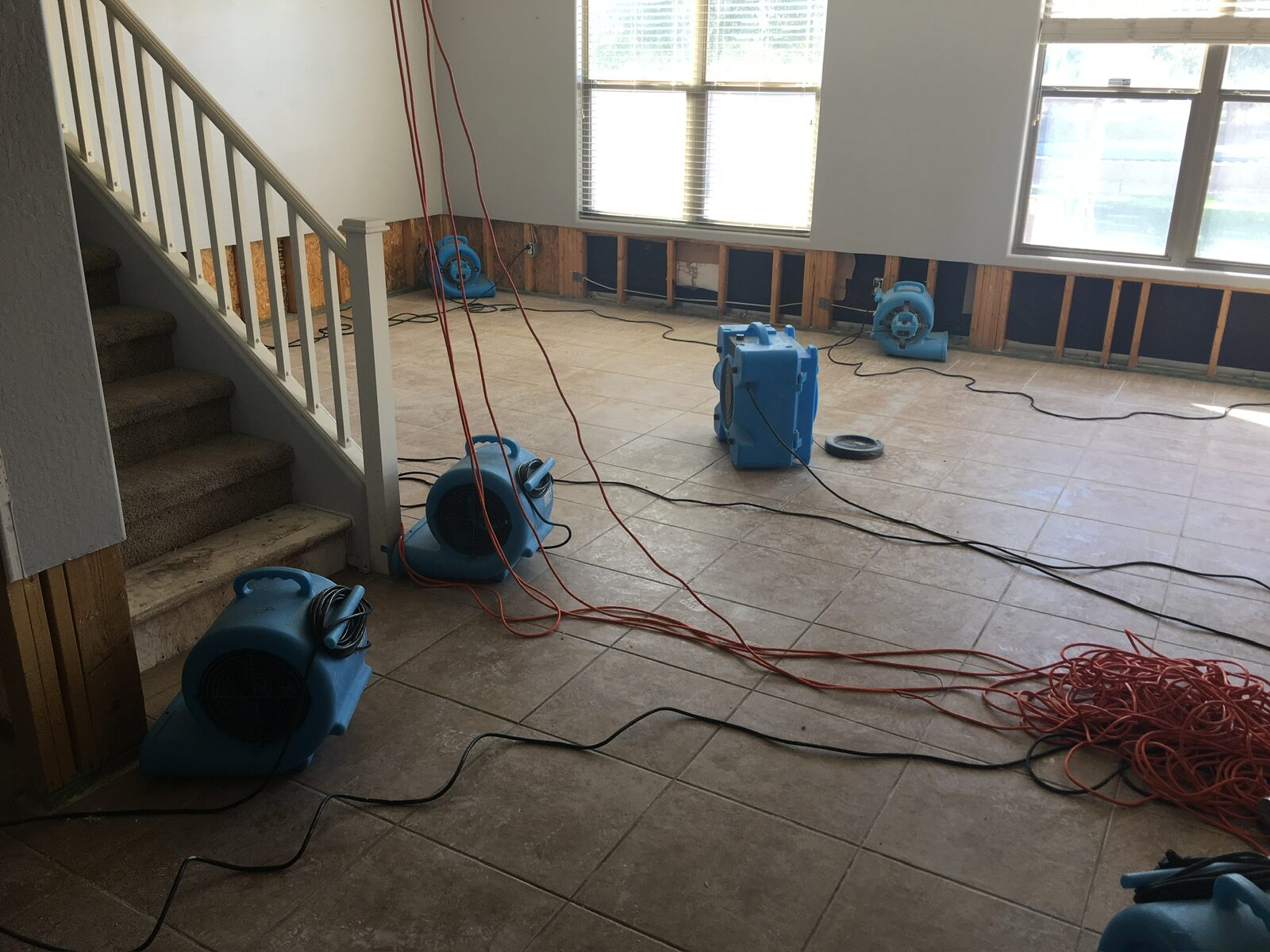
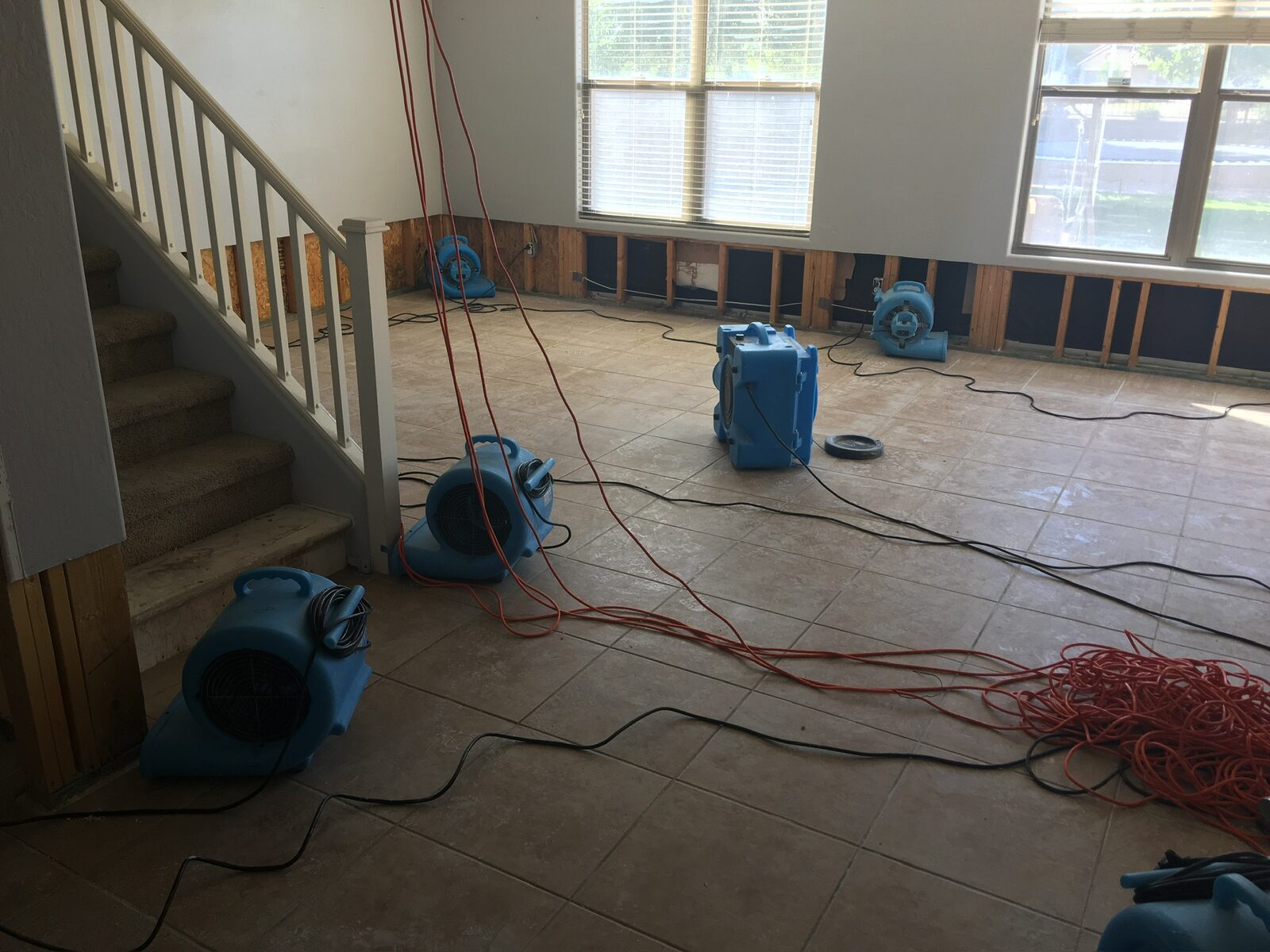
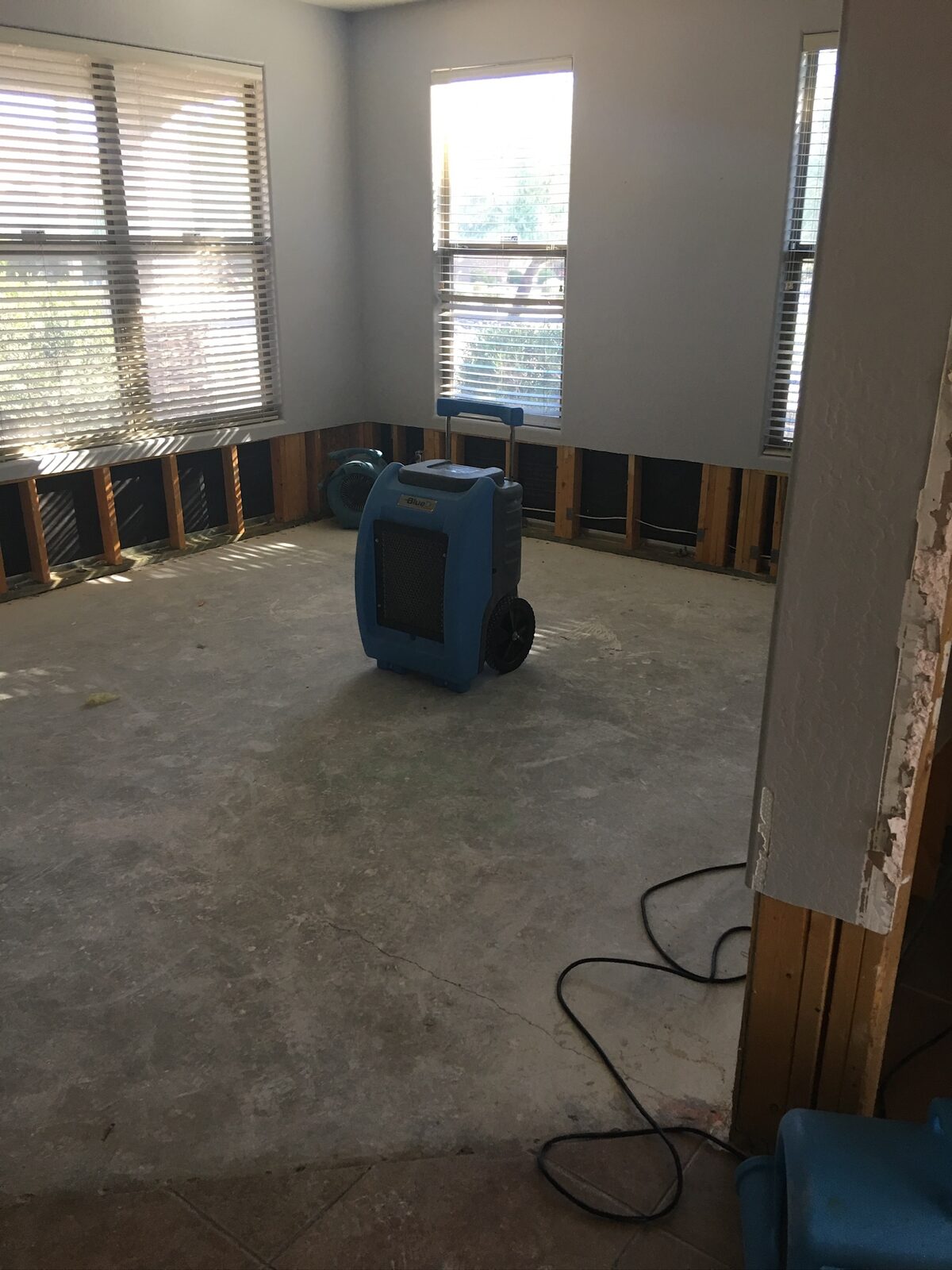
Residential reconstruction work by members of our team. See the full gallery →
More from Gold Water Fire
Abrasive Cleaning Methods for Soot on Framing and Masonry
A look at how abrasive cleaning methods remove soot from wood framing and masonry after a fire, and when each method fits the material.
AC Condensate Line Clogs & the Water Damage They Cause in Phoenix Homes
Why Phoenix AC condensate lines clog every summer, what the water damage looks like, and how to find the source before the ceiling stain spreads again.
Actual Cash Value vs Replacement Cost: Why Your Check Might Not Match the Repair Bill
Confused why your insurance check seems short after fire or water damage? Learn the difference between actual cash value and replacement cost coverage.
Not sure what you are looking at yet
If you are still trying to work out whether what happened in your house is one event or a long-running problem, it is a fair question to ask out loud before you call your carrier. Gold Water Fire works across the Phoenix metro area, from Peoria and Avondale out to Queen Creek, San Tan Valley and Apache Junction. Call (480) 999-3339 or email Help@goldwaterfire.com, or use the contact page and describe what you are seeing.
Call (480) 999-3339Water Damage Restoration · Reconstruction & Rebuild · Fire Damage Restoration · Contact Gold Water Fire · About Gold Water Fire