
Why Smoke Odor Lingers Long After a Fire Is Out, and What Actually Removes It
The fire was put out days or weeks ago. The visible mess is gone, the walls have been wiped down, maybe even painted. Then you walk in after work, or open a closet, or the afternoon heat builds up in the house, and the smell is right back, sharp, sour, unmistakable. You start wondering whether you're imagining it, or whether guests notice it before you do. That smell is not in your head, and it is not a sign that you cleaned wrong. It is chemistry, and it behaves in ways that surprise most homeowners.
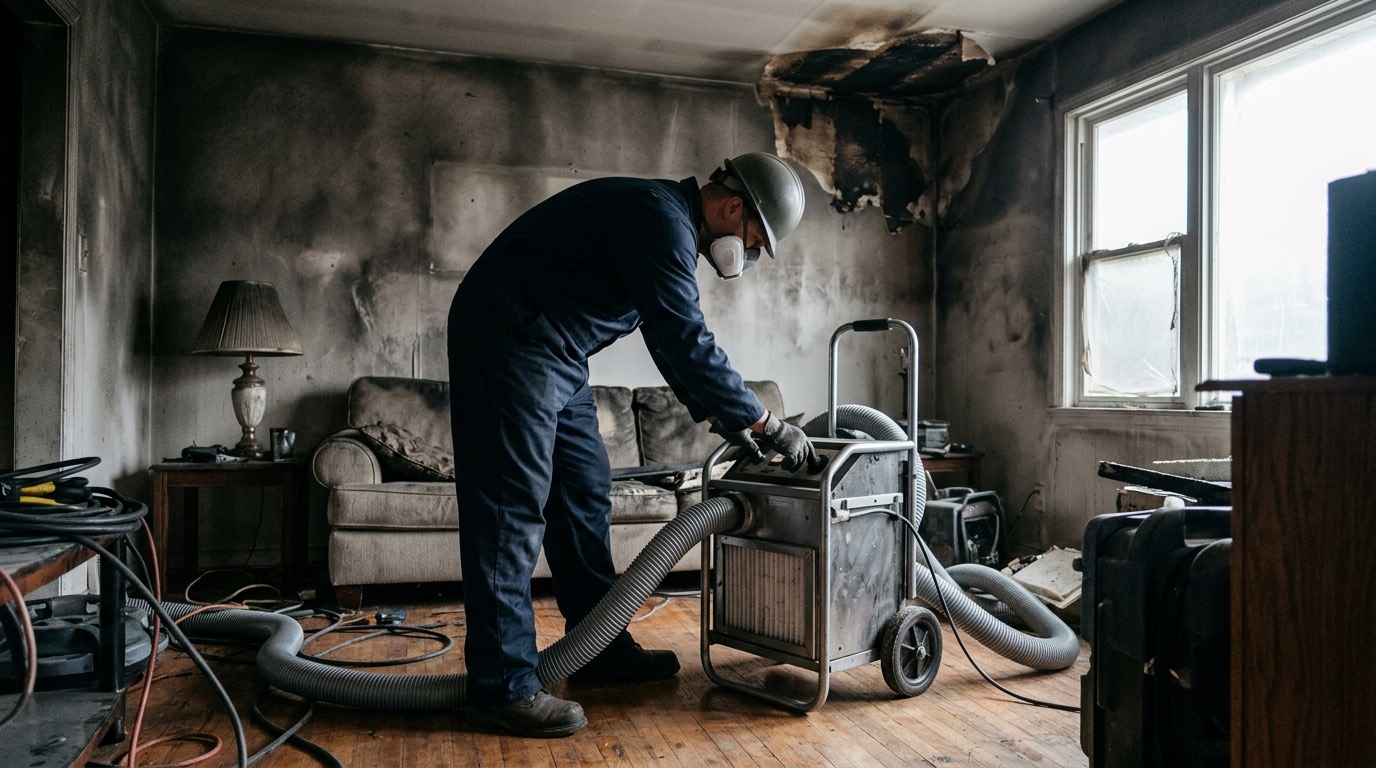
Why Smoke Odor Lingers Long After a Fire Is Out, and What Actually Removes It
Smoke odor is a physical residue, not a smell floating in the air
Burning materials release two things that matter here: microscopic soot particles and volatile organic compounds (VOCs), oil-based, semi-liquid combustion byproducts carried in hot smoke. Hot smoke is under pressure and moves toward cooler surfaces and lower-pressure areas, so it does not stay in the burn room. It travels through wall cavities, along plumbing chases, up through recessed light fixtures, into the attic, and through the return-air side of your HVAC system. When that smoke cools, the oily VOC film deposits on whatever it touches and soaks into anything porous: drywall paper, unfinished framing, insulation, carpet pad, subfloor, upholstery foam, the inside of cabinets, the paper backing of hung art, laundry in drawers. The odor you smell is those compounds slowly releasing back into the air. That is why the smell is not constant. Heat and humidity accelerate the release, which is why a Phoenix house can smell fine at 7 a.m. and strongly of smoke by 4 p.m. once the attic and wall cavities have heated up. Protein fires (grease, meat, anything organic burned on a stove) are a separate problem. They leave almost no visible soot but produce an intensely offensive, greasy film that coats surfaces in a nearly invisible layer. Homeowners routinely clean a protein-fire kitchen until it looks perfect and cannot understand why it still smells.
Masking, sealing over, and airing out all fail for predictable reasons
Ozone candles, deodorizing sprays, and simmering pots add a second smell on top of the first. Your nose adapts to the mix for a while (olfactory fatigue is real), and then the masking agent dissipates and the smoke compounds are still there, still off-gassing. Nothing was removed. Painting over smoke-affected drywall with ordinary latex paint fails because standard paint is permeable to those VOCs; they migrate straight through. Odor comes back through fresh paint in weeks. Only a dedicated shellac- or oil-based sealing primer forms a barrier tight enough to lock residual odor into the substrate, and it only works after the surface has actually been cleaned. Opening windows helps at first, then stops helping, because you are only exchanging room air while the reservoir of residue in the insulation, carpet pad, and HVAC ducts keeps refilling it. And running the air conditioner without changing the filter and cleaning the system recirculates smoke residue through every room, including rooms the fire never reached. The other common failure is scope. If the source material is still in the building (charred framing left in place, smoke-loaded insulation, saturated carpet pad, a soot-coated attic), no amount of surface cleaning will hold. The odor has a supply.
The methods that actually remove smoke odor
Real odor removal follows an order, and skipping steps is why jobs fail. 1. Remove the source. Non-salvageable, heavily smoke-loaded porous material comes out: burned framing, affected insulation, carpet and pad, damaged drywall, contaminated ceiling tile. Insulation in particular holds odor almost permanently and is cheap to replace relative to the trouble it causes. 2. Clean, not just wipe. Soot is cleaned by type. Dry, powdery soot from a fast-burning paper or wood fire is vacuumed with HEPA filtration and lifted with dry chem sponges first. Introducing water or a wet cloth too early smears it into the surface and sets a stain. Greasy or protein residue requires alkaline degreasing agents and agitation. Order matters: wet-cleaning dry soot makes the job worse. 3. Clean the HVAC system. Ducts, plenums, the blower, and the coil hold residue and will re-contaminate finished rooms. Filters get replaced at the end, not the beginning. 4. Treat what is left with an appropriate agent. Thermal fogging uses a heated solvent-based deodorizer that behaves like smoke did. It penetrates the same cracks and cavities and pairs with odor molecules chemically. Hydroxyl generators oxidize odor compounds and can generally run in occupied spaces. Ozone is a stronger oxidizer but requires an unoccupied, sealed structure and careful handling, because it is harmful to breathe and can damage rubber and some plastics. These are tools applied after cleaning, not substitutes for it. 5. Seal remaining substrates. Studs, subfloor, and sound drywall get a shellac- or oil-based odor-blocking primer before new insulation, drywall, flooring, and paint go on. 6. Handle contents separately. Clothing and soft goods usually need specialized laundering or ozone treatment off-site; ordinary home washing frequently leaves odor in fabric. A reliable test at the end: close the house up, let it sit through the heat of the day, then walk in cold. Heat pushes any remaining residue to off-gas. If it is clean after that, it is clean.
When odor work overlaps with rebuilding
Because odor removal often means opening walls, pulling insulation, and taking up flooring, fire recovery usually turns into two connected phases: cleaning and deodorizing the structure, then putting it back together. Sealing primer, new insulation, drywall, texture, paint, trim, cabinetry, and flooring are all part of the odor outcome, not a separate cosmetic step done later by someone else. Gold Water Fire handles fire damage restoration and the reconstruction and rebuild that follows, and also water damage restoration, which matters after a fire, because water used to extinguish it soaks into the same cavities that hold smoke residue, and wet, smoke-loaded material smells worse and can grow microbial problems on top of the odor. Brandon Gurr leads the reconstruction side of the work. The company is licensed in Arizona under AZ ROC #264344 · KB-2 and works across the Phoenix metro area, including Mesa, Chandler, Gilbert, Scottsdale, Glendale, Tempe, Peoria, Queen Creek, and Avondale.
Questions people ask us
Why does the smoke smell get stronger in the afternoon?
Heat drives the oily combustion compounds trapped in drywall, insulation, framing, and carpet pad to release faster into the air. In Arizona, attics and wall cavities get very hot through the afternoon, so a house that seems fine in the morning can smell strongly by late day. It is the same residue, releasing at a higher rate.
Will painting the walls get rid of the smoke smell?
Not with ordinary paint. Standard latex paint is permeable to the compounds causing the odor, so the smell migrates back through it, often within weeks. Odor sealing requires a shellac- or oil-based blocking primer, and it only works after the surface has been properly cleaned and any smoke-loaded insulation or porous material has been removed.
Is an ozone machine safe to run in my house myself?
Ozone is an effective oxidizer but it is harmful to breathe and can degrade rubber, some plastics, and certain finishes. It requires an unoccupied, sealed structure and an airing-out period afterward. Hydroxyl generators are the gentler option that can generally run in occupied spaces. Either way, oxidation is a finishing step. It will not overcome odor that still has a source in the building.
My kitchen fire left no black soot, but it still smells. Why?
That is typical of a protein fire: grease, meat, or other organic material burned on the stove. It produces very little visible soot but leaves a thin, greasy, invisible film with a strong odor across surfaces, including inside cabinets and on ceilings. It has to be degreased with alkaline cleaners and agitation; looking clean and being clean are different things with protein residue.
The standard our team works to
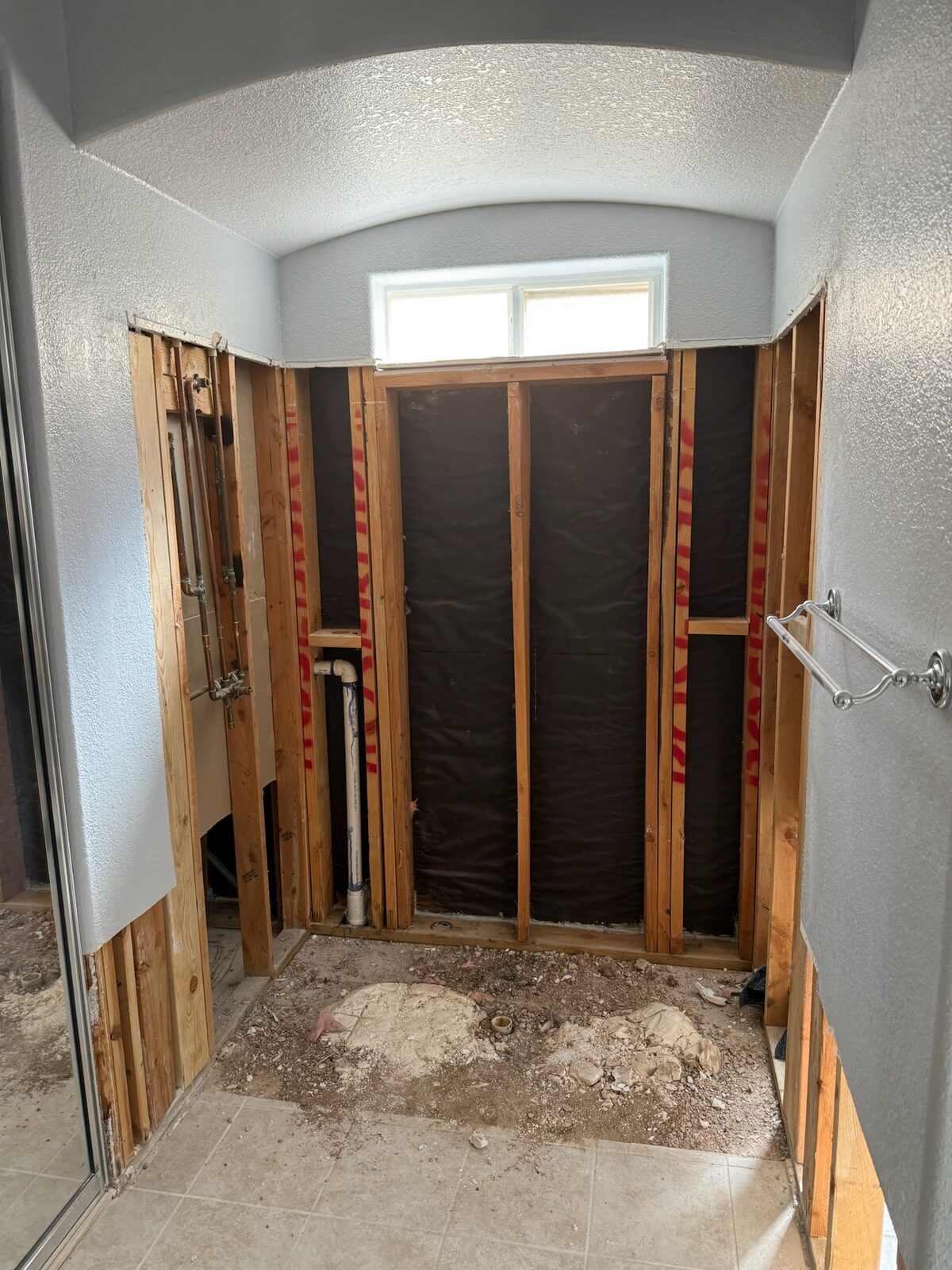
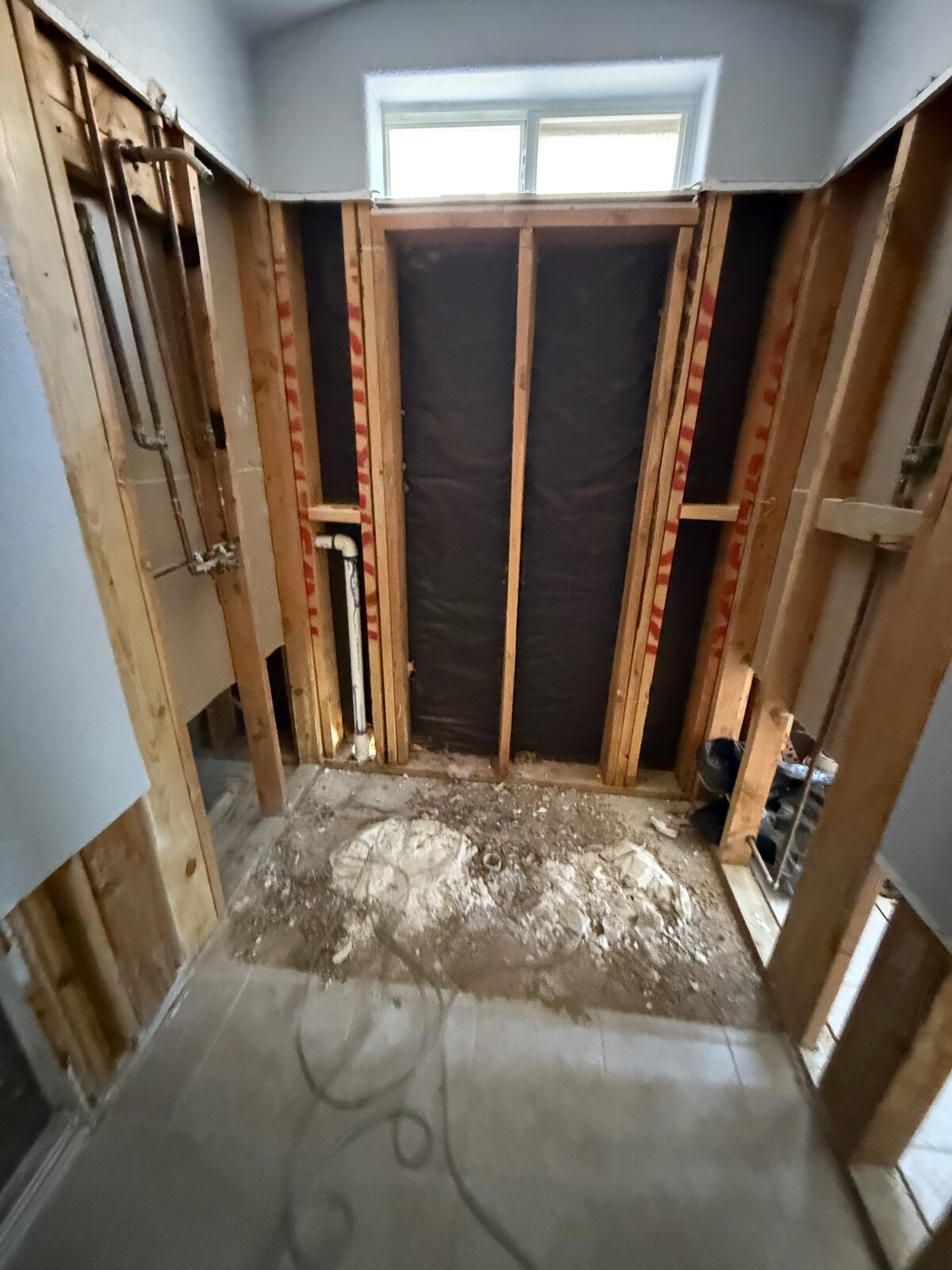
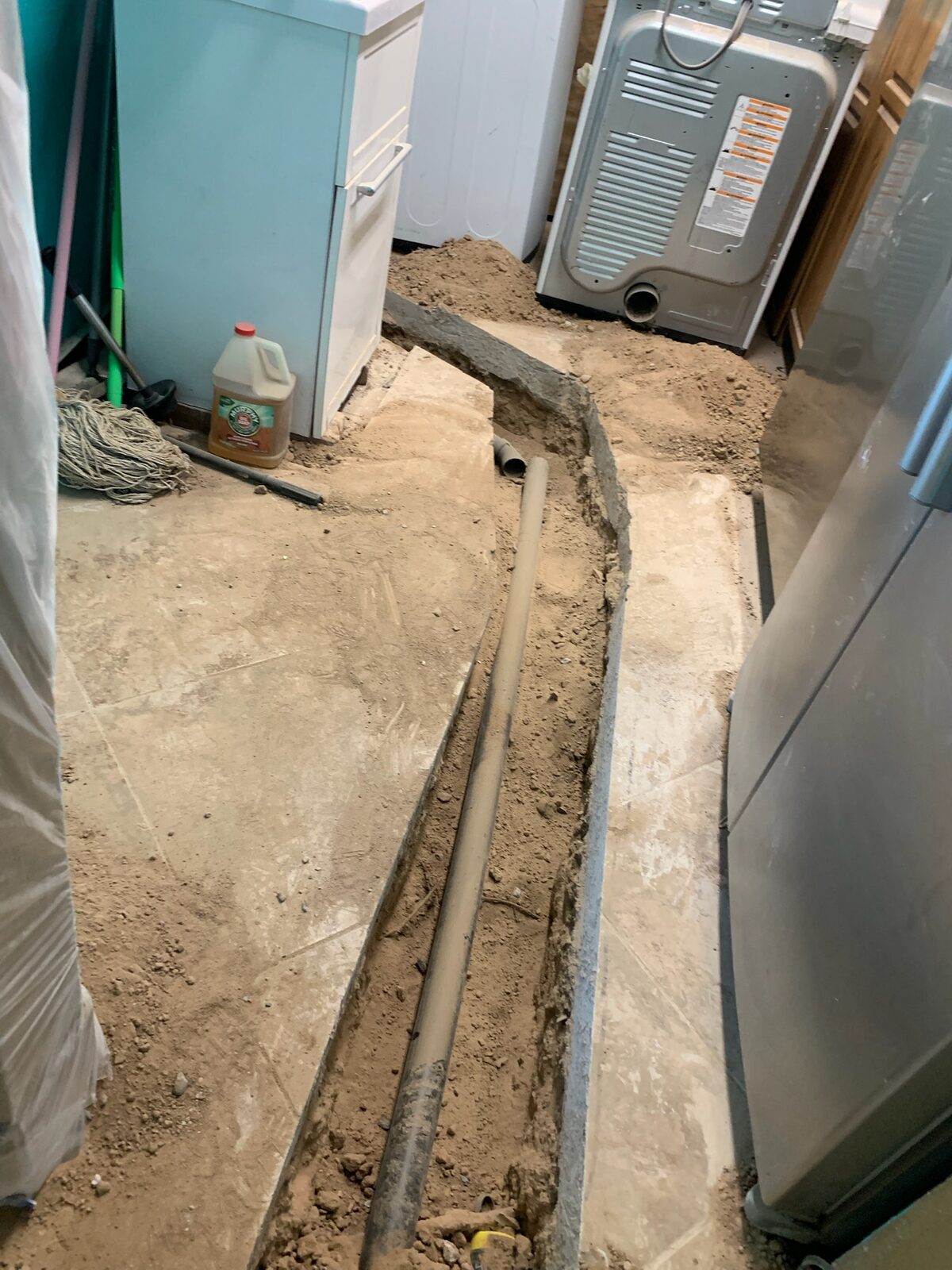
Residential reconstruction work by members of our team. See the full gallery →
More from Gold Water Fire
Abrasive Cleaning Methods for Soot on Framing and Masonry
A look at how abrasive cleaning methods remove soot from wood framing and masonry after a fire, and when each method fits the material.
AC Condensate Line Clogs & the Water Damage They Cause in Phoenix Homes
Why Phoenix AC condensate lines clog every summer, what the water damage looks like, and how to find the source before the ceiling stain spreads again.
Actual Cash Value vs Replacement Cost: Why Your Check Might Not Match the Repair Bill
Confused why your insurance check seems short after fire or water damage? Learn the difference between actual cash value and replacement cost coverage.
Still smelling smoke after the cleanup?
If the odor keeps coming back, something is still holding residue, usually insulation, subfloor, wall cavities, or the HVAC system. Call Gold Water Fire at (480) 999-3339 or email Help@goldwaterfire.com to talk through what you're dealing with. We're based at 221 E Willis Rd Ste 8, Chandler, AZ 85286 and work throughout the Phoenix metro area.
Call (480) 999-3339Fire Damage Restoration · Reconstruction & Rebuild · Water Damage Restoration