
Pet Odor vs Smoke Odor: Different Sources, Different Treatments
You've cleaned the same spot three times and the smell is still there. Or maybe it's not one spot at all, it's in the hallway, the closet, the car, everywhere you go in the house. You start to wonder if you're imagining it, or if something is actually wrong with your sense of smell, or if you're the only one who notices. None of those things are true. Odor that keeps coming back after you've scrubbed, sprayed, and aired out a room usually means the smell was never sitting on the surface to begin with. It's sitting inside something, and that changes everything about how it has to be dealt with.
Pet Odor vs Smoke Odor: Different Sources, Different Treatments
Pet odor and smoke odor come from two different kinds of damage
Pet odor almost always starts as a liquid problem. Urine soaks into grout lines, subfloor, padding under carpet, or the wood underneath a laminate. As it dries, it leaves behind uric acid crystals that reactivate with humidity or heat, which is why a spot can smell fine in the morning and strong again by evening. Smoke odor works differently. It's not a liquid, it's microscopic soot and gas particles produced by combustion, and those particles are small enough to work into drywall pores, HVAC ductwork, insulation, and the fibers of anything soft in the house. One is a chemical residue soaking upward from below. The other is airborne residue settling into everything it touches, including places you never saw flame.
Why surface cleaning fails on both, for different reasons
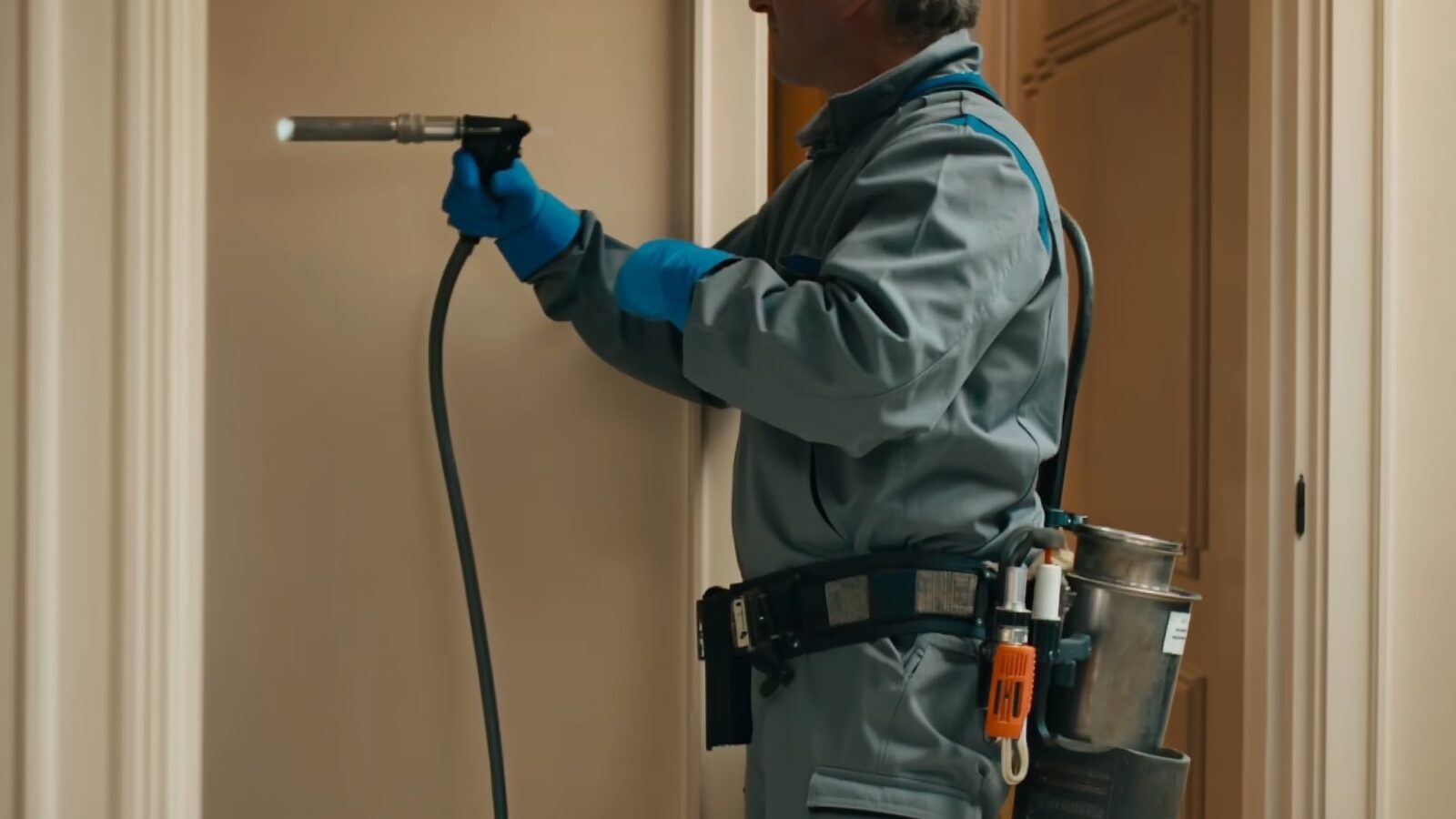
Wiping down a wall after a fire removes visible soot but leaves the odor-causing particles that have already worked into the porous surface underneath the paint. Spraying an air freshener over a pet stain covers the smell for an hour while the uric acid underneath keeps crystallizing. In both cases the source is beneath what you can see or reach with a rag. Pet odor treatment generally needs an enzymatic or oxidizing solution that can reach the same depth the urine did, sometimes requiring the flooring or padding to be pulled up entirely if the contamination has been sitting for a while. Smoke odor treatment generally needs to address the air itself, along with every porous surface the particles landed on, which is why professionals use sealants, thermal fogging, or ozone treatment rather than scented sprays.
How to tell which one you're actually dealing with
If the smell is localized to specific spots and gets stronger with humidity or when the AC kicks on, that points toward pet contamination in flooring or padding. If the smell is present throughout a room or the whole house, changes with air movement, and comes with a faint gray film on surfaces, that points toward smoke residue, even from a fire that happened somewhere else in the building or a wildfire smoke event outside. Sometimes both are present after the same incident, for example a grease fire in a kitchen where a pet then tracked through ash and soot. Identifying which mechanism is at play, moisture-driven or particle-driven, is the first real step toward getting rid of it instead of just masking it for a few days.
When this stops being a DIY job
Store-bought enzyme cleaners can resolve a fresh, small, surface-level pet stain, and a few days of open windows can help with light smoke smell from something like an oven fire. But once odor has been present for weeks, covers a large area, or keeps returning after cleaning, the contamination has likely gone deeper than household products can reach. At that point it becomes a question of what needs to be removed and rebuilt versus what can be treated in place, which is a judgment call worth getting a second opinion on before you spend more money on cleaners that only work for a day. You can read more about how these situations are typically handled on the water damage restoration and fire damage restoration pages.
Questions people ask us
Can pet odor and smoke odor be treated with the same product?
No. Pet odor treatment targets uric acid crystals with enzymatic or oxidizing cleaners that break down the chemical residue in flooring or padding. Smoke odor treatment targets airborne soot particles that have settled into porous surfaces and often requires sealing, fogging, or air treatment rather than a liquid cleaner. Using one approach for the other usually just masks the smell temporarily.
Why does pet odor come back after I've already cleaned it?
Uric acid crystals left behind by dried urine reactivate when humidity rises, which is why a cleaned spot can smell fine one day and strong the next. If the crystals soaked into subfloor, padding, or grout below the surface, a surface cleaning won't reach them, and the smell will keep returning until that layer is treated or removed.
Why can I still smell smoke in rooms that weren't near the fire?
Smoke particles travel through HVAC systems and settle into drywall, insulation, and fabric throughout a building, not just the room where the fire happened. That's why smoke odor often shows up in bedrooms or closets on the opposite side of a house from where the actual fire occurred.
Is it possible to have both pet odor and smoke damage at the same time?
Yes, this happens more often than people expect, especially when a fire event involves ash or soot that pets then track through the house, or when a fire suppression effort introduces water that mixes with existing pet contamination. Each source needs to be identified and treated on its own terms rather than assuming one cleaning method will handle both.
The standard our team works to
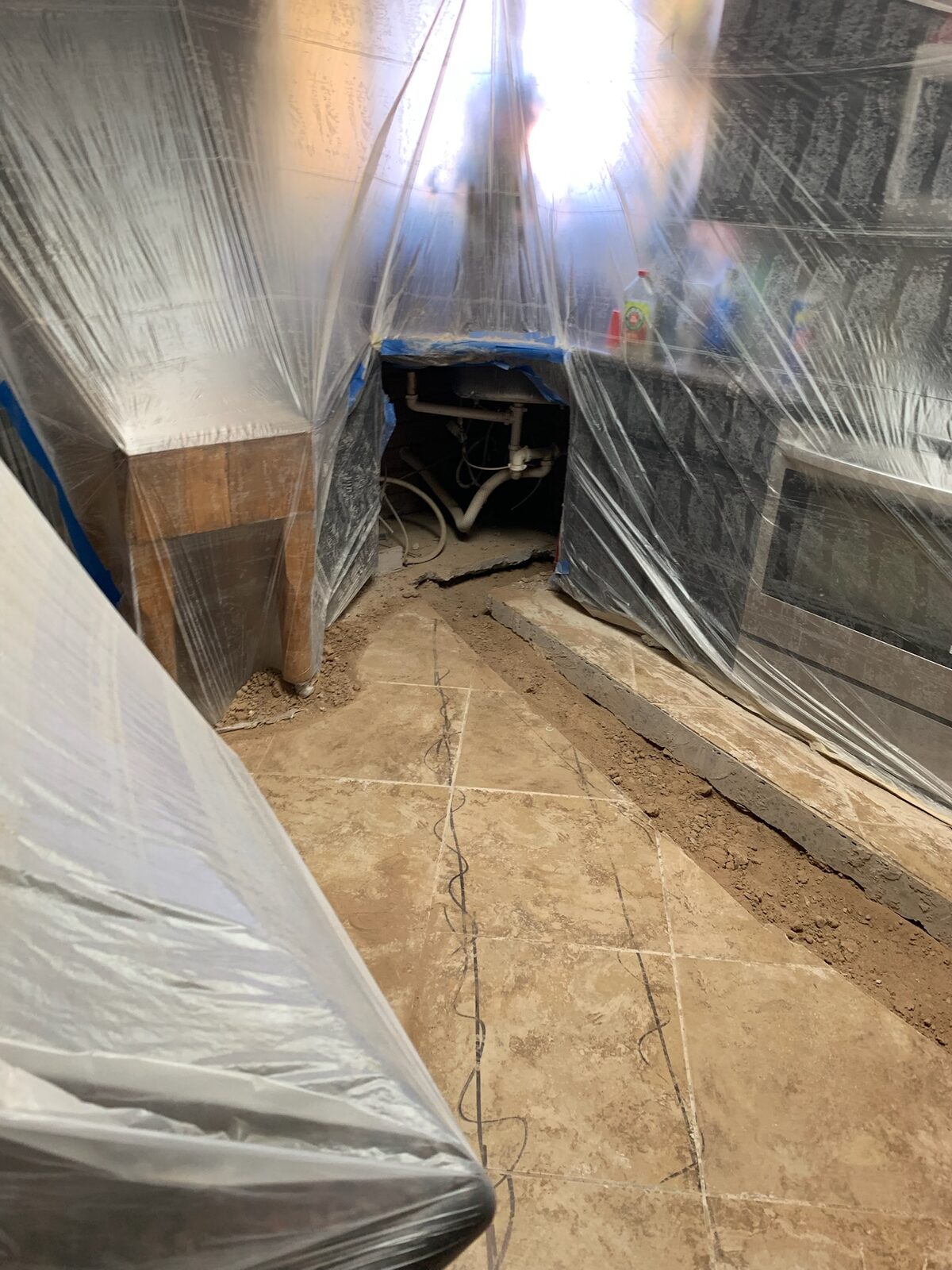
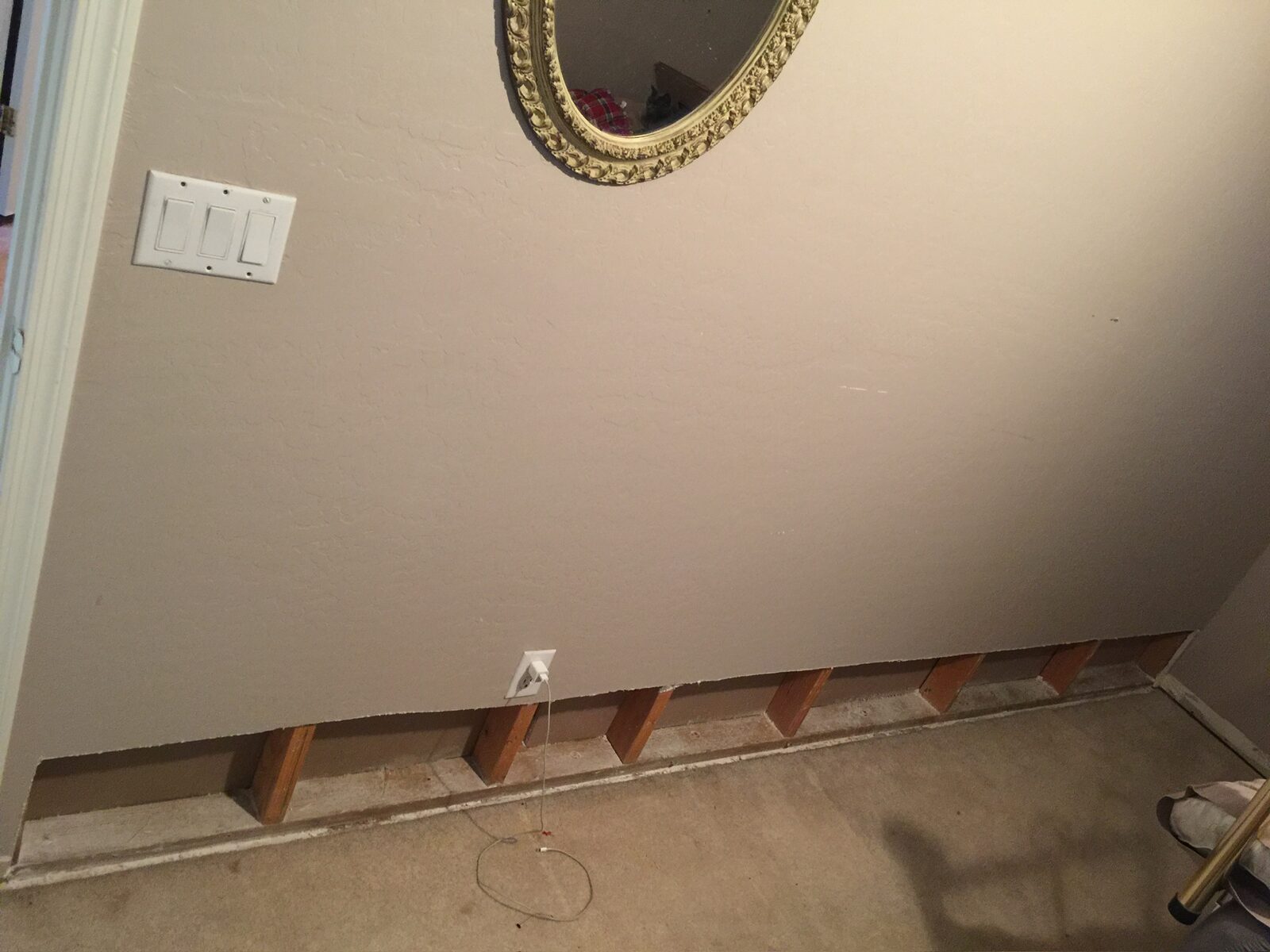
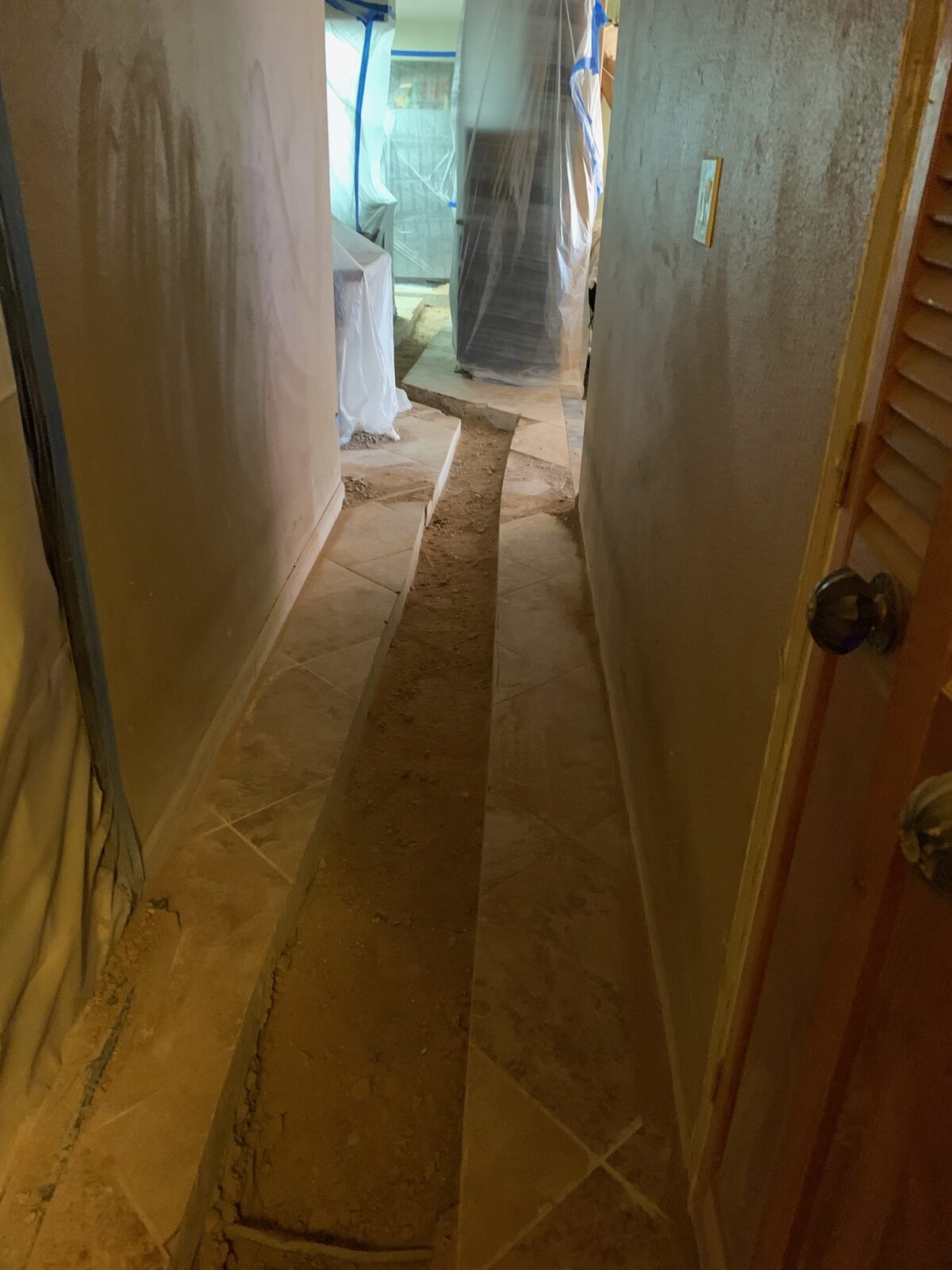
Residential reconstruction work by members of our team. See the full gallery →
More from Gold Water Fire
Abrasive Cleaning Methods for Soot on Framing and Masonry
A look at how abrasive cleaning methods remove soot from wood framing and masonry after a fire, and when each method fits the material.
AC Condensate Line Clogs & the Water Damage They Cause in Phoenix Homes
Why Phoenix AC condensate lines clog every summer, what the water damage looks like, and how to find the source before the ceiling stain spreads again.
Actual Cash Value vs Replacement Cost: Why Your Check Might Not Match the Repair Bill
Confused why your insurance check seems short after fire or water damage? Learn the difference between actual cash value and replacement cost coverage.
Not sure what's causing the smell in your home
If odor keeps returning no matter how much you clean, it usually means the source is deeper than a surface treatment can reach. Contact Gold Water Fire at (480) 999-3339 or Help@goldwaterfire.com to talk through what you're noticing and what it might take to actually resolve it.
Call (480) 999-3339Water Damage Restoration · Fire Damage Restoration · Reconstruction & Rebuild · About Gold Water Fire · Contact Us