
Common Electrical Fire Causes in Homes & How Most of Them Are Preventable
The breaker in the hallway panel trips again. You reset it, and for a few weeks nothing happens, and then it trips again on a Tuesday evening when the dryer and the microwave are both running. Or there is a warm spot on a wall plate you keep touching without quite admitting to yourself why you keep touching it. Or a light that dims when the AC kicks on, and has done that for years, and nobody has ever been able to tell you if that means anything. None of it is an emergency. That is exactly what makes it hard to name. A house does not usually announce an electrical problem clearly. It repeats a small strange thing over and over until you stop noticing it, and the not-knowing sits somewhere underneath the rest of your life. If you have been quietly wondering for a while now whether something in your walls is wrong, that wondering is worth taking seriously, and it is worth understanding before it becomes something else.
Common Electrical Fire Causes in Homes & How Most of Them Are Preventable
Electrical fires almost always start with heat that has nowhere to go
Electricity moving through a wire produces heat. In a healthy circuit, the wire is sized so that heat dissipates harmlessly. An electrical fire happens when something creates more heat than the materials around it can shed: too much current for the wire, or resistance at a point where the connection has gone bad. That heat builds against drywall, insulation, dust, or the plastic body of a receptacle, and eventually something reaches its ignition point. This is why so many electrical fires start inside walls, ceilings, and attics, and why they can burn for a while before anyone sees flame. It is also why the warning signs are usually thermal and sensory rather than visual: warmth, smell, discoloration, a buzz. Those signs tend to appear weeks or months before ignition, which is the genuinely hopeful part of this. The failure is slow. There is almost always time to catch it.
The failures that come up again and again
Most residential electrical fires trace back to a short list of failure modes. Knowing which one matches what your house is doing narrows things down quickly.
Loose or backstabbed connections
Where a wire meets a device or another wire, a loose connection creates resistance, and resistance creates heat at that exact point. Backstabbed outlets (wire pushed into a hole in the back of the receptacle rather than wrapped around the screw) are a common weak point, as are wire nuts that were never twisted down tight. Every heating and cooling cycle loosens the joint a little more. A receptacle that is warm to the touch, or that has a faint brown halo around the slots, is telling you about a connection problem behind it.
Overloaded and extended circuits
A 15-amp circuit is not a suggestion. Space heaters, window units, hair dryers, and toaster ovens each pull heavily on their own, and a single bedroom circuit was rarely designed to carry two of them. Power strips daisy-chained into other power strips defeat the whole point of the breaker. The breaker itself protects the wire in the wall, not the extension cord running under the rug, which is why cords under rugs and furniture are such a persistent cause of fire: they overheat, and nothing in the system notices.
Aging and damaged wiring
Older homes may have wiring whose insulation has gone brittle, cloth-wrapped conductors, ungrounded two-prong circuits, or aluminum branch wiring that expands and contracts at connection points. Damage matters too: a nail or screw driven through a cable during a remodel, rodents chewing insulation in an attic, or a cable pinched where it passes through a stud. None of that is visible from the living room.
Fixtures, appliances, and heat
A bulb with a higher wattage than the fixture is rated for cooks the socket and the wiring above it. Recessed cans buried in blown-in attic insulation trap heat. Old bathroom exhaust fans seize and the motor keeps drawing current. Dryers with lint-packed vents run hotter and longer than they should. Appliance cords that have been crushed behind a moving refrigerator fail at the crush point, not at the plug.
Water and electricity meeting
A roof leak, a slab leak, or a supply line failure that reaches a junction box, a recessed light, or a wall cavity with wiring in it can cause corrosion at connections and eventually arcing. Restoration and electrical problems are more connected than people expect. If you have had water intrusion near ceiling fixtures or outlets, the electrical side deserves a look even after the drying is done. Our overview of water damage restoration covers what happens inside those cavities.
Panels and breakers themselves
Breakers are mechanical devices and they wear out. A breaker that trips repeatedly is doing its job, but a breaker that has tripped many times may no longer trip reliably. Corroded bus bars, double-tapped breakers (two wires under one lug), and panels installed in humid or exposed locations all create heat at the source. A panel that hums, smells hot, or has any scorching visible inside the cover is an immediate call to a licensed electrician.
The signs a house gives before an electrical fire
None of these guarantee a fire is coming. All of them mean something in the system is not working the way it was designed to, and that is worth an electrician's eyes. A persistent smell of hot plastic or a faint fishy odor near an outlet, switch, or panel. That smell is heated PVC insulation, and it is one of the most reliable warning signs there is. Outlets or switch plates that are warm to the touch, or that feel warm only when a particular device is plugged in. Discoloration: brown, yellow, or gray staining around outlet slots, on a switch plate, or on the face of a breaker. Buzzing, sizzling, or crackling from a switch, outlet, or panel. Electricity should be silent. Lights that flicker or dim in a pattern, especially when a large appliance starts. Occasional dimming when the AC compressor kicks on can be normal, but flickering that has gotten worse over time, or that affects only certain rooms, points to a connection issue. Breakers that trip repeatedly on the same circuit, or a GFCI that will not reset. Sparks when you plug something in, plugs that feel loose in the slot, or a mild shock or tingle when touching an appliance. Burning smells with no source you can find. In an attic or wall cavity, you may smell it long before you see anything.
What actually reduces the risk, in rough order of impact
Have the panel and a sample of connections inspected by a licensed electrician if the house is older, if you have recently bought it, or if any of the signs above are present. This is the single highest-value step, because it looks at the parts you cannot. Stop using extension cords as permanent wiring. If a room needs more outlets, the answer is more outlets. Never run cords under rugs, through doorways, or behind furniture that gets pushed against them. Give high-draw appliances their own circuit. Space heaters and window AC units in particular should not share a circuit with anything else, and should plug directly into a wall outlet, never a power strip. Ask about AFCI protection. Arc-fault circuit interrupters are designed to detect the specific electrical signature of arcing, which is the condition ordinary breakers miss entirely. Adding them to bedroom and living area circuits is a targeted fix for the exact failure mode that starts most of these fires. GFCIs, which protect against shock in wet areas, are a separate device and both have a place. Respect fixture wattage ratings and keep insulation clear of recessed cans that are not rated for contact. Clean the dryer vent line, not just the lint screen, and check that appliance cords are not pinched or cracked. Test smoke alarms monthly and replace the units themselves on schedule. Electrical fires often start in concealed spaces, so working alarms buy you the time the slow burn takes away. If a fire has already happened, even a small contained one, the damage extends past what burned. Smoke residue is acidic and keeps working on metal, wiring, and finishes after the flame is out, and firefighting water gets into the same cavities. Our pages on fire damage restoration and reconstruction and rebuild explain how that work is sequenced.
Questions people ask us
My breaker trips every few weeks. Is that dangerous?
A breaker that trips is doing what it was built to do, so the tripping itself is protection, not the danger. The question is why. If it trips only when two heavy appliances run at once, the circuit is overloaded and the fix is redistributing the load or adding a circuit. If it trips at random, with no obvious load, that suggests a short, a ground fault, or a failing breaker, and that needs an electrician. Repeatedly resetting a breaker without finding the cause is the part to avoid, because breakers wear and a heavily cycled one may not trip when it matters.
Why does one outlet feel warm when nothing seems wrong?
Warmth at an outlet usually means resistance at a connection, either where the wire attaches to the receptacle or where that receptacle connects onward to the rest of the circuit. Resistance turns current into heat at a single point. It can also mean the receptacle itself is worn out and no longer gripping the plug blades tightly. Either way, warmth is not normal for an outlet at rest, and it tends to get worse rather than better. Stop using it and have it looked at.
Do I need an electrician, or can I handle some of this myself?
Replacing a cracked appliance cord, clearing insulation away from a recessed can, unplugging a daisy chain of power strips, and cleaning a dryer vent are all reasonable homeowner tasks. Anything inside the panel, anything involving opening a junction box, and any diagnosis of arcing, flickering, or heat you cannot trace should go to a licensed electrician. The failures that cause fires are usually in places that require the power to be off and the box to be open.
There was a small electrical fire but we put it out. Is the house fine now?
Probably not entirely, even if it looks fine. Smoke travels farther than flame and settles in cavities, ductwork, and attic space, and the residue is corrosive enough to keep damaging surfaces and metal after the fact. The wiring at and near the origin point may be compromised even where it did not burn. And whatever caused the fire is still there unless it was found. A licensed electrician should clear the circuit, and the smoke and any water used to put it out should be assessed rather than assumed to be nothing. You can reach us at (480) 999-3339 if you want to talk through what you are seeing.
The standard our team works to
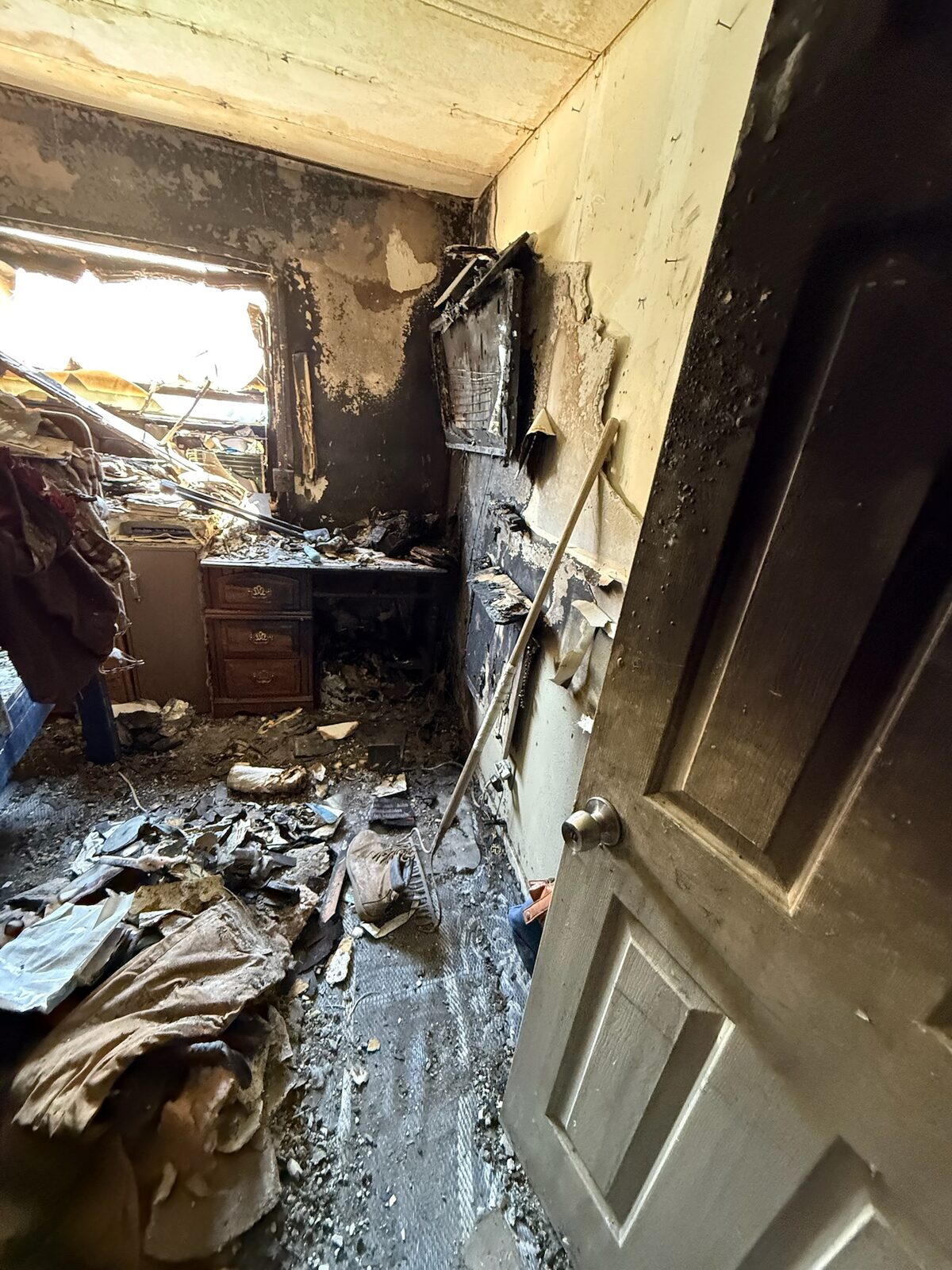
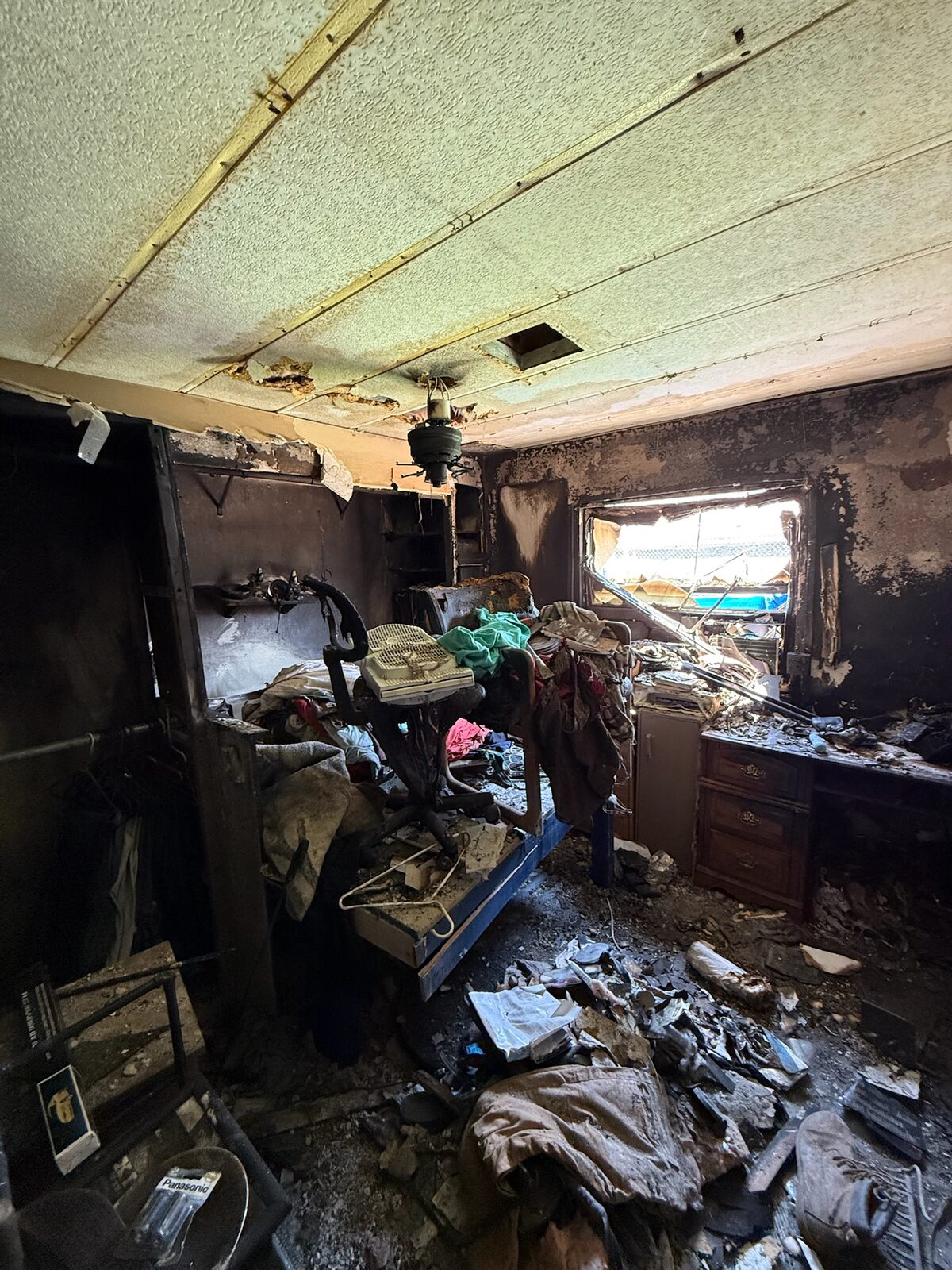
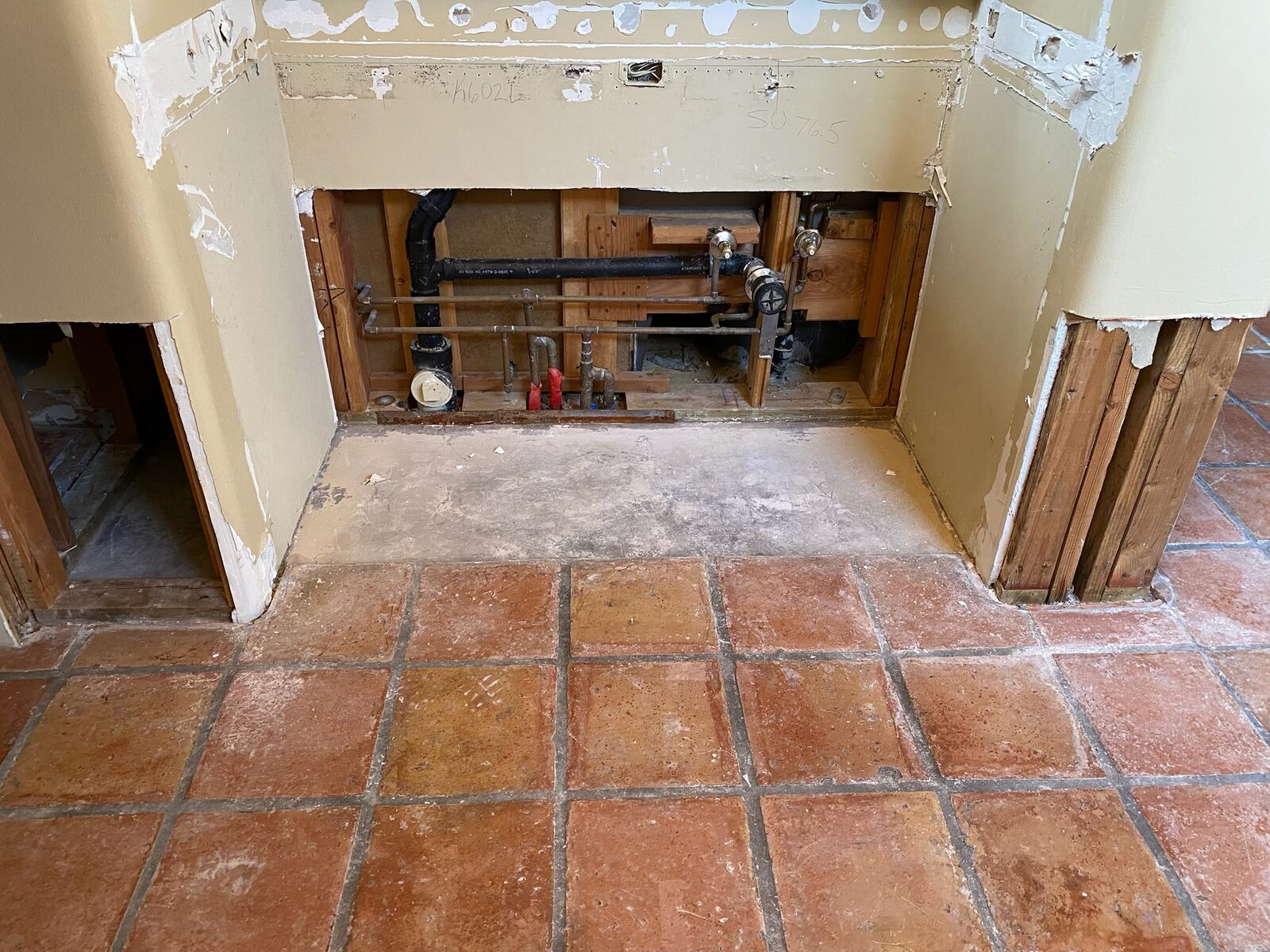
Residential reconstruction work by members of our team. See the full gallery →
More from Gold Water Fire
Abrasive Cleaning Methods for Soot on Framing and Masonry
A look at how abrasive cleaning methods remove soot from wood framing and masonry after a fire, and when each method fits the material.
AC Condensate Line Clogs & the Water Damage They Cause in Phoenix Homes
Why Phoenix AC condensate lines clog every summer, what the water damage looks like, and how to find the source before the ceiling stain spreads again.
Actual Cash Value vs Replacement Cost: Why Your Check Might Not Match the Repair Bill
Confused why your insurance check seems short after fire or water damage? Learn the difference between actual cash value and replacement cost coverage.
If something in your house has been bothering you for a while
You do not need to have it figured out before you call. If there has been a fire, or smoke, or water that reached wiring, and you are not sure what it left behind, Gold Water Fire serves the full Phoenix metro area from Peoria and Avondale out through Mesa, Gilbert, Queen Creek, and San Tan Valley. Call (480) 999-3339 or email Help@goldwaterfire.com and we will talk it through with you.
Call (480) 999-3339Fire Damage Restoration · Water Damage Restoration · Reconstruction & Rebuild · Contact Gold Water Fire · About Our Team